
Madeira: The Complete Travel Guide (2026)
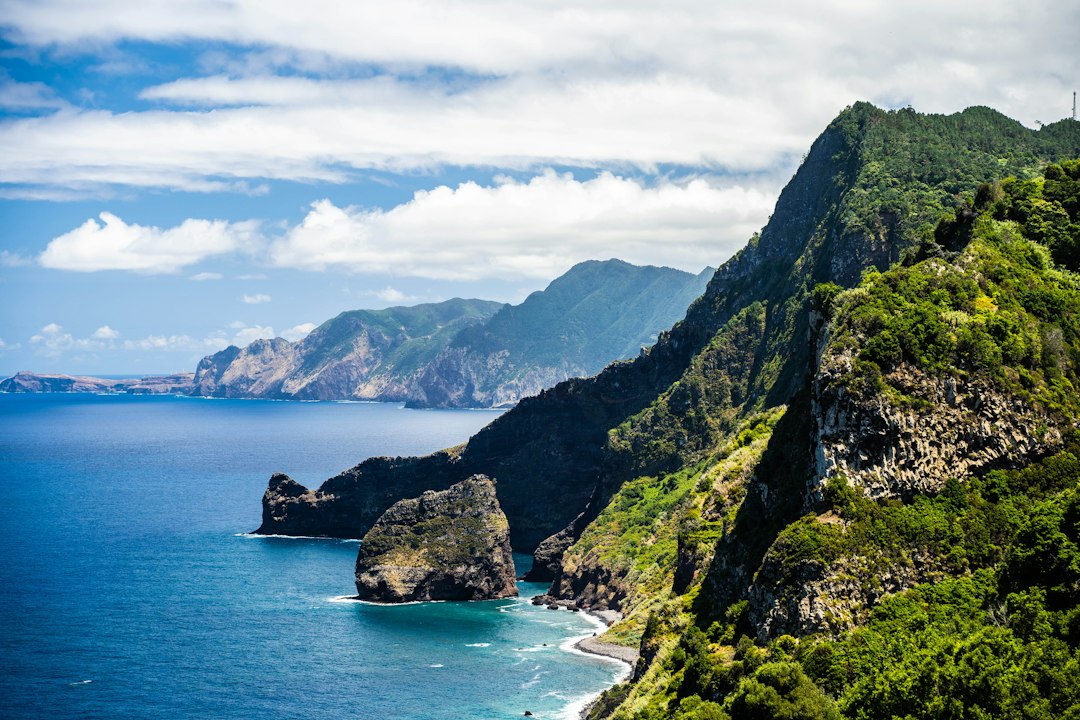
Last reviewed: October 2026 · key facts checked against Wikidata
Madeira Weather by Month: When to Go
| Month | Day | Night | Sea | Rain days | Rain mm | Wind km/h | Good for |
|---|---|---|---|---|---|---|---|
| Jan | 19° | 14° | 20° | 10 | 79 | 15 | – |
| Feb | 19° | 14° | 20° | 9 | 73 | 15 | – |
| Mar | 19° | 14° | 19° | 13 | 85 | 16 | – |
| Apr | 20° | 14° | 20° | 12 | 81 | 15 | – |
| May | 22° | 16° | 21° | 9 | 47 | 14 | Hike |
| Jun | 24° | 18° | 22° | 9 | 76 | 13 | Swim |
| Jul | 26° | 20° | 24° | 4 | 14 | 12 | Swim |
| Aug | 28° | 21° | 25° | 3 | 11 | 13 | Swim |
| Sep | 26° | 20° | 24° | 9 | 39 | 13 | Swim |
| Oct | 25° | 19° | 24° | 12 | 80 | 14 | Swim |
| Nov | 21° | 16° | 23° | 12 | 90 | 15 | – |
| Dec | 20° | 15° | 21° | 11 | 91 | 15 | – |
Sources: ERA5 reanalysis via Open-Meteo, 2016–2025 (10-year average) for air temperature, rain and wind (average daily maximum); Open-Meteo Marine API, 2023–2025 for sea surface temperature. A rain day has at least 1 mm. Area averages; individual years vary.
Madeira Travel Guide: Everything You Need to Know (2026)
Madeira is an autonomous Portuguese archipelago in the Atlantic Ocean, lying approximately 805 km southwest of mainland Portugal at a latitude similar to Casablanca. The main island’s capital, Funchal, is home to around 250,769 residents and sits beneath peaks that rise to 1,862 m at Pico Ruivo. First settled by Portuguese navigators in the 1420s, Madeira has built a global reputation for its laurisilva forest — a UNESCO-listed relic ecosystem covering roughly 15,000 hectares.
Three Things Not to Miss in Madeira
- Levada walks through laurisilva forest — Hike alongside 1,400 km of historic irrigation channels through UNESCO-listed ancient laurel forest.
- Cabo Girão sea cliff viewpoint — Stand on a glass-floored platform 580 m above the Atlantic — one of Europe’s highest sea cliffs.
- Funchal Mercado dos Lavradores — A working covered market since 1940 selling exotic Madeiran passion fruit, espada fish, and hand-embroidery.
Scroll down for our complete travel guide with tips on getting there, where to stay, costs and more.
Reaching Madeira
How do I get to Madeira — by flight or is there a ferry option?
Flying is the only practical choice for most visitors. No scheduled passenger ferry connects Madeira to mainland Portugal or continental Europe — the crossing would exceed 900 km of open Atlantic. Cristiano Ronaldo International Airport (FNC, Funchal) receives direct flights from Lisbon in about 1 hour 45 minutes and from London in roughly 3 hours 30 minutes. TAP Air Portugal, easyJet, Jet2, and Ryanair all serve FNC. Worth knowing: inter-island ferry services do connect Madeira to Porto Santo (the archipelago’s second island), operated by Porto Santo Line, taking about 2 hours 15 minutes one way.
Which airport or port is the best starting point for Madeira?
Cristiano Ronaldo International Airport (FNC) in Santa Cruz is the sole commercial entry point, located approximately 22 km east of Funchal city centre. It handles all international and domestic arrivals. The airport sits dramatically on a coastal platform partly built on pylons over the sea, so approach and departure views are striking. Porto Santo Airport (PXO) serves the smaller sister island only and requires a separate short flight from FNC — about 30 minutes — or the ferry from Funchal harbour. Tip: if your itinerary includes both islands, budget at least one extra day for Porto Santo.
How long does the ferry crossing from Funchal to Porto Santo take?
The Porto Santo Line ferry departs from Funchal’s Porto do Caniçal area and reaches Vila Baleira on Porto Santo in approximately 2 hours 15 minutes each way. Sailings are not daily year-round; the schedule typically runs more frequently in summer (June–September) and reduces to 3–4 departures per week in winter. Return fares are around €55–€65 per adult as of recent seasons — check portosantoline.pt for current 2026 timetables and prices, as schedules change seasonally. The crossing can be rough in Atlantic swell; travellers prone to seasickness should take precautions or consider the short flight instead.
What does a flight to Madeira cost from mainland Europe?
Budget flights from Lisbon to FNC frequently appear below €50 one way when booked 6–8 weeks ahead on TAP or Ryanair. From London, easyJet and Jet2 fares range roughly €80–€200 one way depending on season, with January–March offering the lowest prices and July–August the highest. From Frankfurt or Amsterdam, expect €90–€180 on carriers like Ryanair or Transavia. Tip: Funchal-bound fares spike sharply around New Year’s Eve — Madeira’s fireworks celebrations draw crowds, and peak surcharges can double standard fares. Book at least 3 months ahead for that period. Check Google Flights or Skyscanner for live 2026 pricing.
Are overnight ferries to Madeira worth considering?
No overnight passenger ferry service to Madeira from mainland Portugal or Europe exists in 2026. The Atlantic distance — over 800 km from Lisbon — makes a conventional overnight crossing impractical and no operator runs one. The only overnight sea option is the Porto Santo Line service, but that covers just 42 km between the two Madeiran islands and does not operate as an overnight crossing. Cargo ships occasionally carry passengers but are not a realistic tourist option. We recommend dismissing this as a travel strategy and booking flights instead. The absence of ferry links to Europe is a practical constraint worth factoring into your planning if you are island-hopping from the Canaries or Azores.
Transport on Madeira
Do I need a rental car or scooter to explore Madeira?
A rental car is strongly recommended for exploring beyond Funchal. Madeira’s road network is dramatic — tunnels connect valleys, and mountain villages like Santana or São Vicente are poorly served by public buses. Car hire starts around €25–€45 per day for a small car booked in advance through operators at FNC airport or in Funchal. The island’s roads include steep gradients and tight levada-side tracks, so an automatic transmission is advisable. Scooters are legal but impractical on mountain routes. Caveat: parking in central Funchal is limited and paid — use the car parks near Avenida do Mar and walk. Visitors staying only in Funchal can manage without a car using buses and taxis.
Are there buses between towns in Madeira?
Yes, Horários do Funchal (HF) and SAM operate an island-wide bus network, and Funchal’s urban zone is well covered. From Funchal’s main terminal near Rodoviária, you can reach Câmara de Lobos in about 20 minutes and Ribeira Brava in roughly 50 minutes by bus. However, services to the north coast — Porto Moniz, São Vicente — run infrequently, sometimes just 1–2 departures per day, making independent day trips difficult without a car. Fares are low, typically €1.50–€4 per journey within the island depending on distance. Tip: download the Move-me app or check horariosdofunchal.pt for live route planning in 2026.
What does a rental car cost in Madeira and where should I hire one?
Budget car rental at FNC airport starts around €25–€40 per day for a compact class when booked at least 3–4 weeks ahead through international operators like Europcar, Hertz, or local firm Guerin. Prices rise to €60–€90 per day during August and over Christmas if booked last minute. We recommend comparing via rentalcars.com and confirming full-coverage insurance, as Madeira’s narrow mountain roads increase the likelihood of minor scrapes. A compact or small SUV handles the terrain better than a city car. Picking up at the airport is convenient; returning it there avoids the one-way fee that some Funchal city-centre offices charge.
Which parts of Madeira are accessible by public transport alone?
Funchal itself is fully navigable by public transport — the iconic yellow cable car (Telefórico do Funchal) connects the seafront to Monte in about 15 minutes, and urban buses cover all central neighbourhoods. The coastal village of Câmara de Lobos is reachable in under 30 minutes by bus from Funchal, as is Ribeira Brava in around 50 minutes. The eastern tip around Caniçal and Ponta de São Lourenço is served by SAM bus routes. However, the north coast — including Porto Moniz volcanic pools — and interior mountain villages require either a rental car or joining an organised minibus tour (widely available from Funchal, roughly €35–€55 per person per day).
Can I cycle around Madeira?
Cycling around the entire coast is not realistic — Madeira’s terrain involves extreme elevation changes and roads with no hard shoulders on many mountain sections. Dedicated cycling infrastructure is limited outside Funchal’s Avenida do Mar seafront promenade. Mountain biking on designated trails in the interior, particularly around Pico do Arieiro and Ponta de São Lourenço, is genuinely popular and rewarding. Downhill bike tours — renting from operators in Monte and freewheeling toward Funchal — are a tourist favourite, costing roughly €25–€35 including equipment hire. E-bikes are available from a handful of Funchal rental shops. Caveat: road cycling from hotel to hotel as a tour-style holiday is far better suited to flatter islands like Porto Santo, just 42 km away.
Accommodation on Madeira
Which town in Madeira should I base myself in?
Funchal is the clear base for first-time visitors. As the capital with 250,769 residents, it offers the widest hotel choice, direct airport access (22 km), and the best restaurant and nightlife concentration. The Zona Velha (Old Town) and Hotel Zone along Estrada Monumental are the two main tourist areas. Travellers wanting more tranquility should consider Calheta on the west coast — a quieter village with an artificial sandy beach, about 45 km from Funchal. Santana in the north suits hikers targeting the laurisilva interior. Compared to Porto Santo (the sister island, 2 hours 15 minutes by ferry), Funchal offers far more infrastructure but less open beach space.
What does accommodation in Madeira cost per night?
In Funchal, a solid 3-star hotel averages roughly €80–€130 per night in shoulder season, rising to €150–€220 in August. Four- and five-star properties along Estrada Monumental — such as Pestana or Meliã resorts — typically start at €180–€280 in high season. Self-catering apartments in residential neighbourhoods like São Martinho cost €60–€100 per night and offer better value for stays over 5 nights. Budget hostels in the Funchal centre charge €25–€40 per dorm bed. Worth knowing: a 5-star clifftop resort at Garajau or Caniço can exceed €400 per night but includes sea-view pools unavailable in the city centre.
Which area of Madeira suits which travel style?
Funchal suits urban travellers, food lovers, and those on shorter trips — museums, markets like Mercado dos Lavradores, restaurants, and cable cars are all walkable. Calheta suits families and beach seekers — it has one of the island’s few genuine sandy beaches and a marina. Santana and the north coast attract hikers and nature travellers wanting access to laurisilva levada trails and dramatic coastline at São Vicente. Caniço de Baixo (Garajau) is popular with scuba divers and snorkellers because of its protected marine reserve. Porto Moniz in the northwest suits those wanting volcanic lava pool swimming in a near-isolated setting. Each zone is within 1 hour 30 minutes of Funchal by car.
How far in advance should I book accommodation in Madeira?
For August, book at least 3–4 months ahead — it is Madeira’s peak beach season and popular resort hotels along Estrada Monumental sell out. For New Year’s Eve, which draws visitors for Madeira’s internationally known fireworks display, book 5–6 months in advance as Funchal hotels command premium rates and availability is extremely tight. Shoulder months — April, May, October — typically allow booking 4–6 weeks ahead without difficulty. Last-minute deals occasionally appear on apartments in residential areas like Monte or São Gonçalo, but branded hotels rarely discount within 2 weeks of arrival. Tip: use Booking.com’s free cancellation filter to hold a room early without financial risk.
Are there good apartments or villas with sea views in Madeira?
Yes — Madeira’s steep topography means a large proportion of apartments face the ocean. Platforms like Airbnb and VRBO list sea-view studios in Funchal’s São Martinho neighbourhood from around €70–€110 per night. Clifftop villas near Garajau or Ponta do Sol typically cost €150–€300 per night for a private pool property sleeping 4–6. Traditional Quintas — manor houses converted into boutique accommodation, such as Quinta da Casa Branca in Funchal — offer a distinctly Madeiran alternative to resort hotels, starting around €160 per night. Caveat: properties marketed as “sea view” sometimes face the valley rather than open ocean — request photos from the specific room or balcony before booking.
Madeira Season by Season
When is the best time to visit Madeira?
August is the peak month based on verified climate analysis, offering the warmest sea temperatures and driest conditions on the south coast around Funchal. However, Madeira earns its “Island of Eternal Spring” reputation precisely because it is pleasant year-round. April and May offer lush green landscapes post-winter rain, flowering orchids, and the famous Festa da Flor (Flower Festival) in Funchal. October and November bring warm temperatures (around 22–24°C in Funchal) and fewer crowds. December–January is mild by European standards but wetter in the mountains. We recommend May or October as the best balance of weather, crowds, and value — with August reserved for those prioritising beach and sea swimming conditions.
What is the weather in Madeira like throughout the year?
Madeira’s climate divides sharply by altitude and coast. Funchal on the south coast is warm and sheltered: winter temperatures rarely drop below 16°C and summer peaks around 28°C. The north coast (Santana, São Vicente) receives significantly more rainfall year-round due to prevailing Atlantic winds hitting the mountains. Above 1,000 m at peaks like Pico do Arieiro, cloud, fog, and even frost are possible in January–February. The levada trail system in the interior is best hiked from April–June and September–October when cloud cover is lower. Sea temperature peaks around 24°C in August–September. Worth knowing: Madeira can experience Saharan dust events (calima) in summer, reducing visibility and air quality briefly.
When does Madeira get overcrowded?
Funchal’s seafront and Mercado dos Lavradores feel crowded whenever cruise ships dock — up to 6 ships simultaneously call at Funchal’s cruise terminal, depositing thousands of passengers for a few hours. This happens year-round but peaks from October to April (cruise season). August brings the highest number of resort-hotel guests. The Ponta de São Lourenço peninsula hiking trail, one of the island’s most popular, becomes very busy on weekends between June and September — arrive before 9:00 to find parking. New Year’s Eve in Funchal is intentionally crowded — the waterfront fireworks display attracts visitors specifically. Quieter months for exploring are January–March, excluding the New Year spike.
Is there a worthwhile shoulder season in Madeira?
Absolutely. April–May and October–November are the strongest shoulder seasons. In May, Funchal hosts the Festa da Flor (Flower Festival), typically over a long weekend, filling streets with floral installations — a genuinely unique cultural event worth timing around. October offers warm south-coast temperatures around 23–25°C, calm seas ideal for whale-watching excursions from Calheta or Funchal marina, and hotel rates roughly 20–30% below August peaks. Compared to the Canary Islands — Tenerife sits just 450 km south — Madeira in shoulder season is typically less crowded on hiking trails and more atmospheric in its town centres. We recommend October as the single best value month overall.
When does the beach and watersports season in Madeira begin?
Madeira has very limited natural sandy beaches — the main ones are small black-sand coves at Prainha and the artificial golden-sand beach at Calheta, plus the lagoon at Porto de Garajau. Most swimming is from lava rock platforms and sea pools, which are usable from approximately April onwards as temperatures rise. The Porto Moniz natural lava pools — among the island’s most visited swimming spots — are accessible year-round but most enjoyable from June to September when sea temperatures reach 22–24°C. Watersports (surfing, jet-skiing, parasailing) officially ramp up with rental operators from May, peaking through August. For surfing, the north coast around Paul do Mar draws experienced surfers from October to March for Atlantic swell.
Budgeting for Madeira
What does a daily budget cost in Madeira?
A budget traveller staying in a hostel dorm (€30–€40/night), eating local pratos do dia (set lunch menus) for around €8–€12, and using public buses can manage on €55–€75 per day. A mid-range traveller in a 3-star hotel (€100–€130/night), dining at sit-down restaurants, and taking one organised tour per day should budget €150–€200 per day. A comfort traveller in a 4-star resort with dinner, wine, and car hire should allow €250–€350 per day. Compared to the Azores — where food costs are slightly lower — Madeira’s tourist infrastructure and hotel quality push accommodation costs somewhat higher, particularly in Funchal’s Estrada Monumental resort strip.
Is Madeira more expensive than the Portuguese mainland?
For accommodation, Madeira is broadly comparable to Lisbon in peak season and slightly cheaper than Cascais or Sintra resort areas. Groceries at local supermarkets (Continente, Pingo Doce) cost around 5–10% more than mainland prices due to shipping costs for imports. Petrol is similarly priced but car hire can be slightly cheaper than Lisbon city rates. Restaurant meals are generally good value — a prato do dia with wine in a local tasca costs €10–€14, comparable to Lisbon’s Mouraria or Intendente neighbourhoods. The honest caveat: resort-zone restaurants along Funchal’s Lido strip charge tourist-premium prices — €18–€30 for mains — that significantly exceed local neighbourhood spots just 10 minutes’ walk inland.
What expenses in Madeira are unavoidable?
Airport transfer or car hire is the first unavoidable cost — a taxi from FNC to Funchal centre costs approximately €25–€35; a shared transfer is cheaper at around €10–€15 per person. If you hire a car, budget €25–€45 per day plus fuel. Entrance fees add up: the Telefórico do Funchal cable car costs around €16 return; the Monte toboggans (wicker basket rides) cost €30 per person. Restaurants in tourist zones include a couvert charge (€2–€5 per person) for bread and olives — you can legally refuse it. Travel insurance is not legally required but is strongly advised given the cost of medical evacuation if needed. Budget at least €10–€15 per person in unexpected transport costs from mountain-road diversions.
What does food cost in Madeira — local versus tourist restaurant prices?
At a local tasca or casa de pasto in residential Funchal (neighbourhoods like Santo António or Monte), a full set lunch — soup, main, dessert, and a glass of local wine — costs €9–€13 per person. A grilled espetada (beef skewer) or espada com banana (black scabbard fish with banana) at a mid-range restaurant in the Old Town runs €14–€22 per main. Tourist-facing waterfront restaurants on Avenida do Mar charge €22–€35 for mains. A bottle of Madeira wine in a shop costs as little as €8–€15 for a quality Rainwater or Verdelho — the same bottle on a restaurant wine list can reach €40. Poncha — the island’s signature aguardente cocktail — costs €2–€4 at a local bar.
What are the best beaches in Madeira?
Madeira’s coastline is predominantly volcanic cliff and lava rock, so conventional sandy beaches are scarce. The Calheta artificial beach on the west coast uses imported golden sand and is the island’s most family-friendly swimming spot, with calm waters and a marina nearby. Prainha, near Caniçal in the east, is the island’s only significant natural black-sand beach. The Porto Moniz lava pools in the northwest — natural tidal rock pools reinforced with concrete walls — offer spectacular Atlantic-facing swimming in a UNESCO-protected landscape. The sister island Porto Santo, accessible by 2 hour 15 minute ferry, has a 9 km uninterrupted golden-sand beach and is Madeira’s answer to conventional beach holidays.
What to Do on Madeira
What are the top sights in Madeira beyond the beaches?
The PR1 Levada do Caldeirão Verde trail in Queimadas leads through old-growth laurisilva forest to a dramatic waterfall — one of the finest walking routes in Portugal. Cabo Girão, at 580 m, offers a glass-floored skybridge over Europe’s highest sea cliff. The Monte Palace Tropical Garden above Funchal displays 100,000 plant species across terraced gardens with 18th-century azulejo tile murals. Pico do Arieiro (1,818 m) delivers panoramic above-cloud views and connects via the PR1.3 trail to Pico Ruivo, Madeira’s highest point at 1,862 m. The Mercado dos Lavradores in Funchal, operating since 1940, is worth a weekday morning visit before cruise passengers arrive.
What watersports activities are available in Madeira?
Madeira offers a strong range of Atlantic watersports. Whale and dolphin watching is one of the island’s most distinctive activities — resident sperm whales are present year-round, and operators like Lobosonda and Ventura do Mar run trips from Funchal marina for around €50–€65 per adult. Scuba diving at the Garajau Marine Reserve near Caniço involves visibility up to 30 m and encounters with eagle rays and barracuda. Surfing is best on the north coast at Paul do Mar and Jardim do Mar from October to March. Big-game fishing charters from Funchal marina target blue marlin and tuna. Kayaking, paddleboarding, and coasteering are available from operators at Calheta and Machico from May to October.
What is the culinary highlight of Madeira?
Espada com banana — black scabbard fish served with fried banana and passion fruit — is Madeira’s most iconic dish and is found almost nowhere else in the world. The deep-water espada (Aphanopus carbo) is caught by local fishermen at depths exceeding 800 m off Madeira’s coast, making it genuinely unique to the island’s fishing culture. Pair it with a glass of Verdelho Madeira wine from producers like Blandy’s or Henriques & Henriques, whose lodges in Funchal offer tastings. Poncha — a cocktail of aguardente, honey, and citrus — originated in Câmara de Lobos, Churchill’s favourite painting village, and costs under €3 in local bars there. We recommend Câmara de Lobos as the most authentic setting for both dishes.
Which parts of Madeira are still off the beaten track?
The Paul da Serra plateau in the west — a high moorland at around 1,400 m crossed by a single road — sees few tourists despite dramatic treeless scenery and resident harrier hawks. The village of Faial on the north coast, near the distinctive Eagle Rock pinnacle, attracts far fewer visitors than Santana despite equal scenic value. The Vereda da Ponta de São Jorge levada walk through northern terraced vineyards is little visited compared to the southern trails. Ponta do Pargo — Madeira’s westernmost point — has a lighthouse and clifftop trails essentially free of crowds year-round. Compared to the interior trails near Queimadas (busy on weekends), these western and northern spots offer genuine solitude even in August.
How many days do I need in Madeira?
5–7 days gives a thorough first visit. Day 1–2: Funchal — Old Town, Mercado dos Lavradores, Monte Palace, cable car, and dinner in Câmara de Lobos. Day 3: West coast circuit by car — Cabo Girão, Calheta beach, Paul da Serra plateau, Porto Moniz lava pools. Day 4: Mountain interior — Pico do Arieiro sunrise, PR1.3 ridge walk to Pico Ruivo. Day 5: North coast — Santana, São Vicente, Ribeira Brava. Day 6–7: Add a Porto Santo day trip or overnight (€55–€65 ferry return) for the 9 km sand beach. Travellers with only 3 days should focus exclusively on Funchal and one mountain drive. A week is the minimum to do both coastline and interior justice.
Madeira at a Glance
| Population | 250,769 |
|---|---|
| Currency | EUR (€) |
| Official language | Portuguese |
| Time zone | Western European Time |
Source: Wikidata, retrieved October 2026.
Portugal › Madeira
More Destinations in Portugal
Essential Resources for Planning Your Trip to Madeira
- (PDF) 255 Island tourism carrying capacity in the UNESCO … — official visitor information
- Wikivoyage: Madeira — community travel guide & practical tips
- Wikipedia: Madeira — history, geography & background
- Warning – Embassy of Portugal in Paris — how to get there and around
Data Sources
Key facts on this page (population, currency, language, time zone) come from Wikidata, climate figures from Open-Meteo. The retrieval date is shown next to the facts table.