
Gorges du Verdon: The Complete Travel Guide (2026)
Last reviewed: October 2026 · key facts checked against Wikidata
Gorges du Verdon Travel Guide: Everything You Need to Know (2026)
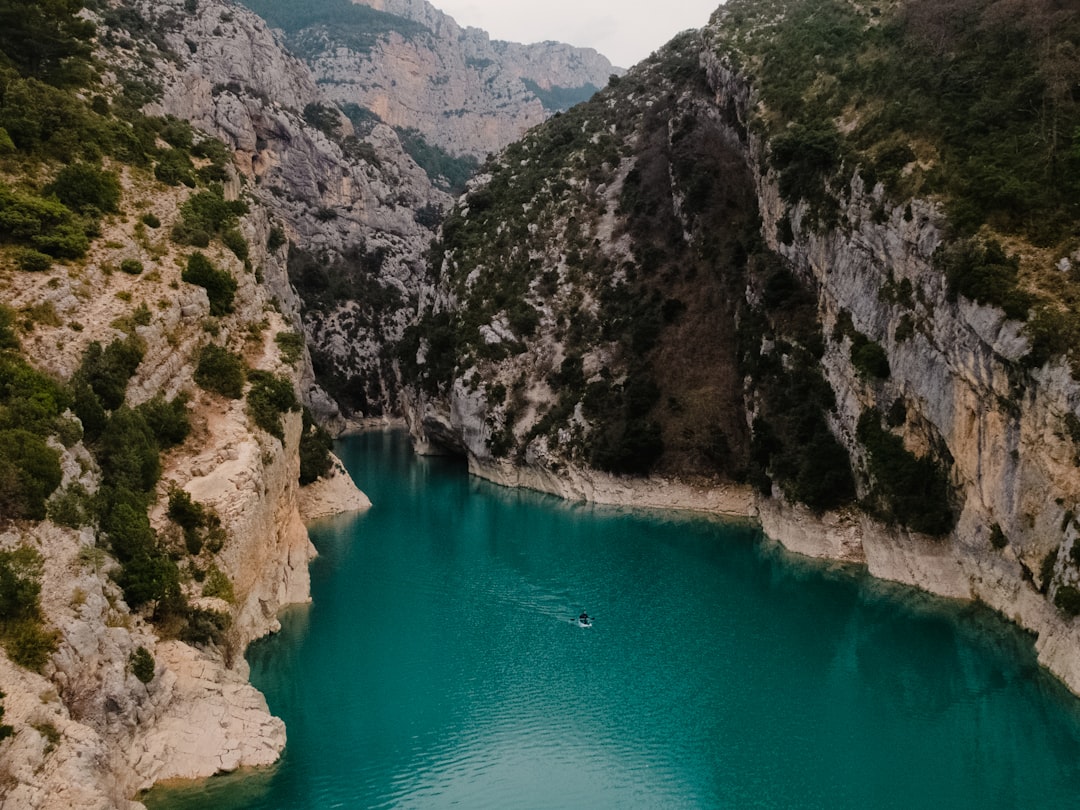
The Gorges du Verdon is Europe’s largest canyon, stretching 25 km through Provence-Alpes-Côte d’Azur in southeastern France and plunging up to 700 metres deep. The Verdon River, named for its extraordinary turquoise-green colour, carves between the towns of Castellane and Moustiers-Sainte-Marie. In 2026, this dramatic landscape remains one of France’s most spectacular natural wonders — and still surprisingly undervisited compared to the Riviera just 90 minutes away.
Top 3 Highlights at a Glance
- Sentier Martel — A 14 km rim-to-river trail through tunnels and ladders — the gorge’s most dramatic hiking experience, requiring a guided exit.
- Lac de Sainte-Croix — A 2,200-hectare turquoise reservoir where you can kayak directly into the gorge entrance for under €15.
- Route des Crêtes (D23) — A cliff-edge road offering 14 vertiginous viewpoints over the 700-metre-deep canyon — best driven at sunrise.
Scroll down for our complete travel guide with tips on getting there, where to stay, costs and more.
Getting There
How do I best reach the Gorges du Verdon?
Drive — there is no train or direct bus to the gorge itself. In my experience, the most practical approach is by rental car from Marseille (approximately 2 hours) or Nice (approximately 2.5 hours). The D952 road along the south rim and the D23 Route des Crêtes are both accessible only by private vehicle. My tip: fill up in Castellane or Moustiers-Sainte-Marie before entering — petrol stations inside the gorge zone do not exist. What surprised me is how few travellers realise there is literally no other reliable way to explore the full canyon length without a car.
Which airport is closest to the Gorges du Verdon?
Marseille Provence Airport (MRS) is the most practical gateway, approximately 130 km from the gorge. Nice Côte d’Azur Airport (NCE) is roughly 150 km away and offers more international connections. In my experience, MRS is better for budget travellers since low-cost carriers including Ryanair and easyJet serve it heavily, often with fares under €50 from northern Europe. The caveat most guides omit: neither airport has direct public transport onward to the gorge — you must hire a car at the airport or the journey becomes a logistical nightmare involving three bus changes.
How long is the journey from a major city to the Gorges du Verdon?
From Marseille, expect 1 hour 50 minutes by car via the A51 autoroute toward Aix-en-Provence then northeast on the D952. From Nice, allow 2 hours 30 minutes via Grasse and Castellane. From Paris, driving takes approximately 8 hours — fly to Marseille instead. My tip: the final 40 km into the gorge on winding mountain roads adds significant time beyond what GPS predicts. I recommend building in an extra 30 minutes for the last stretch, especially if you’re arriving with luggage and children. Road quality is good but tight in spots.
Are there direct bus connections to the Gorges du Verdon?
Seasonal bus service exists but is severely limited. Zou! regional buses run a summer-only service connecting Digne-les-Bains to Castellane, operating June through September only. From Castellane, there is no onward bus into the gorge itself. In my experience, relying on buses means you’ll see Castellane and nothing else of the canyon. The honest caveat: even the seasonal bus runs just 1-2 times daily, making spontaneous exploration impossible. If you’re committed to car-free travel, book a guided minibus tour from Nice or Marseille — operators like Taxis des Gorges run full-day excursions for approximately €85 per person.
Is a rental car necessary to explore the Gorges du Verdon?
Yes — a rental car is non-negotiable for any meaningful exploration. The gorge spans 25 km with key viewpoints separated by 5-15 km of cliff road. In my experience, even staying in Moustiers-Sainte-Marie or Castellane, you cannot reach the Sentier Martel trailhead, the Couloir Samson overlook, or the Point Sublime without a vehicle. Rent from Marseille or Nice airports where rates start at approximately €35/day for a compact car. The caveat: parking at popular viewpoints along the D23 fills completely by 10:00 AM in July and August — arriving early is the single most important logistical move.
Accommodation
Which towns make good bases for exploring the Gorges du Verdon?
Moustiers-Sainte-Marie is my top recommendation — a medieval village perched beneath a cliff at the western gateway, with excellent restaurants and direct access to Lac de Sainte-Croix. Castellane suits hikers best, sitting at the eastern entrance near the Sentier Martel trailhead. La Palud-sur-Verdon is the smallest of the three but sits directly on the north rim, putting you within 5 minutes of the best viewpoints. My honest warning: Aiguines looks charming on Instagram but has almost no restaurants or shops — charming for one night, frustrating for three.
Where should I stay near the Gorges du Verdon?
Stay in Moustiers-Sainte-Marie for the best combination of atmosphere, dining, and gorge access. The village has around 700 inhabitants but hosts boutique hotels like La Bastide de Moustiers, Alain Ducasse’s guesthouse, and more affordable chambres d’hôtes from €80/night. For hikers, Gîte d’étape de La Maline places you directly on the Sentier Martel route inside the canyon — book this 3-4 months ahead. Campers should consider Camping du Verdon near La Palud, which has direct canyon access. What surprised me: the nicest views often come from modest gîtes, not the expensive hotels.
What does accommodation cost near the Gorges du Verdon?
Budget camping starts at €15-20 per pitch per night at sites like Camping Castillon near Castellane. Mid-range gîtes and B&Bs in Moustiers-Sainte-Marie run €80-130/night for a double room. A solid 3-star hotel in Castellane costs approximately €100-150/night in peak summer. La Bastide de Moustiers, the Ducasse property, charges €250-400/night depending on the room. My tip: accommodation 15 km outside the gorge zone in towns like Riez or Valensole costs 30% less and still puts you within a 20-minute drive. The caveat: options are genuinely limited — this is a rural area, not a resort town.
How far in advance should I book accommodation at the Gorges du Verdon?
Book 4-6 months ahead for July and August visits — this is not an exaggeration. In my experience, the best rooms in Moustiers-Sainte-Marie and riverside gîtes are gone by February for peak summer. The Gîte de la Maline on the Sentier Martel trail opens bookings on January 1st and fills within days. Shoulder season visits in June or September need 6-8 weeks lead time. What surprised me: even campsites in the gorge sell out in July. If you’re travelling last-minute in August, expect to base yourself in Digne-les-Bains, 30 km away, and drive in daily.
When is the best time to visit the Gorges du Verdon?
July, August, and September are the verified best months based on climate data. In my experience, late June and September offer the optimal balance — warm enough for kayaking and hiking but without the August crush. The Verdon River is warmest in July-August, reaching approximately 18-20°C, ideal for swimming. May offers stunning wildflowers but the water remains cold at 12-14°C. My honest caveat: August is genuinely overwhelming at peak viewpoints — parking queues on the D23 can stretch 500 metres. I recommend September as the single best month: warm water, golden light, and crowds down by 40% compared to August.
Best Time to Visit
How does the weather affect activities at the Gorges du Verdon?
Summer heat above 35°C makes midday hiking dangerous — the canyon walls trap heat and reflect it intensely. Start the Sentier Martel before 7:30 AM or you’ll be hiking the exposed sections in brutal afternoon sun. Kayaking on Lac de Sainte-Croix is comfortable from June through September. The Route des Crêtes is open year-round but can ice over in January and February, making it genuinely hazardous. Spring brings occasional thunderstorms that can flood canyon floor paths with zero warning — always check Météo-France before descending to river level. In my experience, the gorge is dramatically beautiful in all seasons but only accessible for full activities in summer.
Are there local festivals worth attending at the Gorges du Verdon?
Moustiers-Sainte-Marie hosts a summer faïence pottery festival celebrating the town’s 17th-century ceramic heritage, typically held in late July. Castellane runs a medieval market in August that draws regional artisans. The Fête de la Lavande in nearby Valensole (approximately 25 km west) occurs in mid-July when the famous purple lavender fields are in full bloom — genuinely spectacular and worth combining with a gorge visit. My tip: the Foire de la Truffe in Aups (about 40 km south) in January offers a completely different, crowd-free reason to visit the broader region in winter.
When does the Gorges du Verdon get crowded?
July 14th through August 20th is the absolute peak — parking lots overflow, kayak rental queues exceed 45 minutes, and the best viewpoints feel like theme parks. French domestic tourism drives this entirely: the grandes vacances empties cities and fills Provence. In my experience, weekends in June and September also get surprisingly busy on the D23 road. The overlooked truth: even in August, the canyon floor trails see 80% fewer people than the rim roads — most tourists never leave their cars. Arriving at Point Sublime before 8:30 AM gives you the view essentially alone, even in high summer.
What does a daily budget cost at the Gorges du Verdon?
Budget travellers camping and self-catering can manage €50-60/day per person. A mid-range day — gîte accommodation, one restaurant lunch, kayak rental, and petrol — runs €120-150/day for two people sharing costs. The Sentier Martel hike is free beyond a €5 shuttle fee from La Maline. Kayak rental at Lac de Sainte-Croix costs €12-18 for 2 hours. A restaurant lunch in Moustiers costs €18-28 per person for a plat du jour with wine. My honest warning: petrol costs add up quickly on the winding gorge roads — budget an extra €15-20/day for fuel if you’re doing full rim-to-rim driving.
Is the Gorges du Verdon cheaper or more expensive than other French regions?
More expensive than rural Provence but significantly cheaper than the Côte d’Azur, just 90 km south. A restaurant meal that costs €45/person in Nice costs €25-30 in Castellane. Accommodation runs roughly 40% less than equivalent quality in Aix-en-Provence. The hidden cost most guides miss: there is no supermarket inside the gorge zone — the nearest Intermarché is in Castellane or Riez. Buying picnic supplies before entering saves €10-15/day versus buying at tourist-priced snack stands near viewpoints. In my experience, the gorge punches above its weight for value, especially for activity-focused travellers where the main attractions — hiking and swimming — cost almost nothing.
Budget
What free highlights are there at the Gorges du Verdon?
The entire Route des Crêtes (D23) with its 14 viewpoints is completely free — just drive and stop. Swimming in the Verdon River at the Couloir Samson entry point near Point Sublime costs nothing. The village of Moustiers-Sainte-Marie and its Notre-Dame-de-Beauvoir chapel hike (262 steps, free) is outstanding. The Sentier Martel itself is free to walk — only the shuttle transport costs €5. In my experience, the gorge’s most memorable moment — watching the turquoise river 700 metres below from the Falaise des Cavaliers viewpoint at sunrise — costs exactly €0 and beats anything at a paid attraction.
What do local specialities cost at the Gorges du Verdon?
Provence lamb (agneau de sisteron) as a main course runs €22-28 at a sit-down restaurant in Moustiers. A bowl of soupe au pistou costs €9-12. Local lavender honey from a roadside producer near Valensole costs €6-9 for 250g — far better value than tourist shops. Moustiers faïence pottery starts at €15 for small pieces and reaches €200+ for plates. A glass of local Côtes de Provence rosé costs €4-6 in a village café. My tip: buy your olive oil and tapenade directly from Coopérative Oléicole de Moustiers where prices are 25% lower than boutique shops in the village center.
Which route do you recommend for 5-7 days at the Gorges du Verdon?
Day 1: Arrive Marseille, drive to Moustiers-Sainte-Marie (2 hours), explore the village and chapel. Day 2: Kayak on Lac de Sainte-Croix, swim in the gorge entrance. Day 3: Drive the Route des Crêtes (D23) at sunrise, afternoon hike from La Palud. Day 4: Full-day Sentier Martel hike — start at Point Sublime, exit at La Maline via shuttle. Day 5: Drive south rim D952 to Castellane, visit Lac de Castillon. Day 6: Day trip to Valensole lavender plateau (July) or Gorges du Daluis as an alternative canyon. Day 7: Return to Marseille via Verdon Natural Park viewpoints.
What are the must-see sights at the Gorges du Verdon?
Point Sublime on the north rim delivers the definitive canyon panorama — the gorge drops 700 metres straight down from the viewpoint. Lac de Sainte-Croix is a 2,200-hectare turquoise reservoir where you can kayak directly into the gorge mouth. The village of Moustiers-Sainte-Marie with its legendary star hanging on a chain 227 metres above the village — placed by a knight returning from crusades — is genuinely magical. The Sentier Martel trail along the canyon floor takes you through hand-cut tunnels with headlamp sections. My honest take: skip the Castellane medieval clock tower unless you have spare time — it’s pleasant but not worth a detour.
What natural highlights does the Gorges du Verdon region offer?
Beyond the gorge itself, the Valensole Plateau — 25 km west — produces lavender across 13,000 hectares, peaking in mid-July. The Gorges de Trévans near Estoublon offers a quieter canyon experience with a 2-hour walking circuit. Lac de Castillon, a turquoise alpine reservoir 12 km northeast of Castellane, sees almost no tourists. The Préalpes de Digne to the north contain the UNESCO Géoréserve de Haute Provence — a geological park with ammonite fossils the size of dinner plates. What surprised me: the endemic Griffon vulture (gyps fulvus) was reintroduced here and you can watch them soaring on thermals over the canyon walls most mornings.
Routes & Highlights
What local specialities should I try at the Gorges du Verdon?
Sisteron lamb (agneau de Sisteron) — raised on mountain herbs just 40 km north — is the region’s signature dish and unlike any lamb I’ve eaten elsewhere. Tian provençal (layered roasted vegetables) appears on every menu and should be ordered as a starter. Miel de lavande (lavender honey) from the Valensole plateau is extraordinary on local cheeses. Banon cheese — a small goat cheese wrapped in chestnut leaves and tied with raffia — comes from a village 50 km north and is protected by AOC status. My tip: the Tuesday market in Castellane sells all these directly from producers at prices 30-40% below restaurant menus.
What activities are available at the Gorges du Verdon?
White-water rafting on the Verdon River runs Grade III-IV rapids through the canyon — operators in Castellane charge approximately €45-55 per person for a half-day. Via ferrata routes along the canyon walls cater to all levels, with equipment rental at €20/day from Aboard Rafting in Castellane. Rock climbing at Les Calanques du Verdon near Rougon offers 400+ established routes. Paragliding from Castellane with tandem flights costs approximately €100. Canyoning descents take 4-6 hours and cost €65-85 with a guide. In my experience, the combination of kayaking Lac de Sainte-Croix in the morning and hiking the rim in the afternoon makes the perfect single day.
What distinguishes the Gorges du Verdon from other French regions?
The colour of the water — that specific electric turquoise-green caused by glacial minerals — exists nowhere else in France. At 700 metres deep and 25 km long, it dwarfs any other French canyon; the next deepest, Gorges du Tarn, reaches only 500 metres. What sets it apart experientially: you can swim, kayak, hike, climb, and drive through the same landscape in a single day. In my experience travelling France for over a decade, no other region combines Provence village culture with genuine alpine wilderness this seamlessly. The honest caveat: it lacks the cultural depth of the Loire Valley or Alsace — it’s primarily a nature destination, and you should go in expecting that.
Which day trips are possible from the Gorges du Verdon?
Aix-en-Provence sits 90 km southwest — a polished university city worth 6-7 hours for Cézanne’s studio and the Cours Mirabeau. Sisteron is 55 km north with a dramatic citadel perched on a limestone blade — allow 3 hours. Riez, just 20 km west, contains Roman ruins including 4 standing columns from a 1st-century temple — often completely empty of tourists. Grasse, 80 km southeast, is the world’s perfume capital with free factory tours. My tip: the Valensole lavender plateau in July makes a stunning 45-minute drive that most gorge visitors completely skip despite being one of France’s most photogenic landscapes.
Are there language barriers at the Gorges du Verdon?
English is spoken at most activity operators and mid-range hotels — the adventure tourism industry here depends on international visitors. However, village restaurants and local markets in Castellane and Moustiers operate predominantly in French. In my experience, basic French phrases — une table pour deux, l’addition s’il vous plaît, où sont les toilettes — go an extremely long way with locals. Google Translate’s camera function handles all menus instantly. The honest caveat: at the Tuesday Castellane market, vendors may have zero English — bring a translation app and don’t be embarrassed to use it. Locals appreciate the attempt at French far more than the assumption of English.
Practical Tips
Which apps do you recommend for visiting the Gorges du Verdon?
Komoot is essential — it has detailed offline trail maps for every hiking route including the Sentier Martel, with elevation profiles and surface types. Météo-France (the official French weather service) is more accurate than any international weather app for the specific microclimate of the gorge. Park4Night identifies legal camping spots and overnight parking areas throughout the gorge zone — invaluable for van travellers. Too Good To Go works in Castellane and Moustiers for discounted end-of-day meals from local bakers. Google Maps offline covers the D952 and D23 in detail, but download it before arriving — mobile signal drops to zero inside sections of the canyon.
Are there medical facilities near the Gorges du Verdon?
Castellane has a small medical centre (cabinet médical) with a GP available weekdays. The nearest full hospital is Centre Hospitalier de Digne-les-Bains, approximately 50 km north — a 50-minute drive on mountain roads. For emergencies, call 15 (SAMU) or 112 — helicopter rescue operates in the gorge for serious injuries and arrives in approximately 20-30 minutes in summer. In my experience, the activity operators in Castellane are extremely safety-conscious and carry first aid equipment. My honest warning: mobile signal for emergency calls is unreliable inside the canyon floor — a group member should stay at a signal point if someone is injured below.
How safe is the Gorges du Verdon?
Criminally, it’s very safe — the gorge zone is rural Provence with essentially zero theft or violence risk. The real danger is environmental: flash floods on the canyon floor kill approximately 2-3 hikers per decade in France’s southern canyons. Check Vigicrues (flood warning app) before any canyon floor hike. Driving the D23 Route des Crêtes requires concentration — the road is single-lane in places with unguarded drop-offs. Heat exhaustion on exposed summer hikes is underestimated: I’ve seen day hikers without water collapse on the Sentier Martel in August. My rule: carry 3 litres of water per person for any canyon hike, regardless of how short it looks on the map.
What are common traveller mistakes at the Gorges du Verdon?
Arriving without a car and expecting to see the gorge by any other means — this strands people in Castellane. Starting hikes after 10 AM in July and August — the canyon traps heat and afternoon temperatures on the Sentier Martel reach 40°C+. Not booking the Gîte de la Maline in advance for the Sentier Martel — groups attempt the 14 km route, find the exit locked and have to backtrack in darkness. Visiting only the viewpoints from the car without descending to the river — the colour and scale only make sense from water level. Underestimating driving times: Google Maps shows 22 km between viewpoints but the mountain road takes 35+ minutes, not 20.
Which accommodation types suit the Gorges du Verdon best?
Chambres d’hôtes (B&Bs) in Moustiers-Sainte-Marie are my top recommendation — family-run, atmospheric, and typically include breakfast with local honey and Provençal jams for €85-120/night. Gîtes ruraux (self-catering cottages) work perfectly for groups of 4-6 with kitchen access, averaging €800-1,200/week in summer. Camping along the gorge is genuinely excellent — Camping Verdon Carajuan near La Palud has direct trail access and costs approximately €18/pitch. The van-life community is well-served by designated overnight areas. What I’d avoid: large chain hotels in Digne-les-Bains — they’re soulless, and the extra 45-minute daily drive to the gorge destroys the morning light advantage.
More Destinations in Europe
Explore our complete travel guides for more Europe destinations: Île de Porquerolles Travel Guide (2026), Île Rouzic Travel Guide (2026), Saint-Étienne Travel Guide (2026), Toulon Travel Guide (2026), Burgund Travel Guide (2026).
Gorges du Verdon at a Glance
| Currency | EUR (€) |
|---|---|
| Official language | French |
| Time zone | UTC+01:00 |
Source: Wikidata, retrieved October 2026.
Useful Resources for Planning Your Trip to Gorges du Verdon
- Wikipedia: Gorges du Verdon — history, geography and background
- Lonely Planet: Gorges du Verdon — itineraries and travel inspiration
- TripAdvisor: Gorges du Verdon — hotels, restaurants and traveller reviews
🎥 Gorges du Verdon Travel Videos
Verdon Gorge, France Don’t skip this when visiting Provence …
Johlene Orton
You are currently viewing a placeholder content from Vimeo. To access the actual content, click the button below. Please note that doing so will share data with third-party providers.
More InformationYou are currently viewing a placeholder content from YouTube. To access the actual content, click the button below. Please note that doing so will share data with third-party providers.
More InformationYou need to load content from reCAPTCHA to submit the form. Please note that doing so will share data with third-party providers.
More InformationYou are currently viewing a placeholder content from GetYourGuide. To access the actual content, click the button below. Please note that doing so will share data with third-party providers.
More Information