
Savoie Mont Blanc: The Complete Travel Guide (2026)
Last reviewed: October 2026 · key facts checked against Wikidata
Savoie Mont Blanc Travel Guide: Everything You Need to Know (2026)
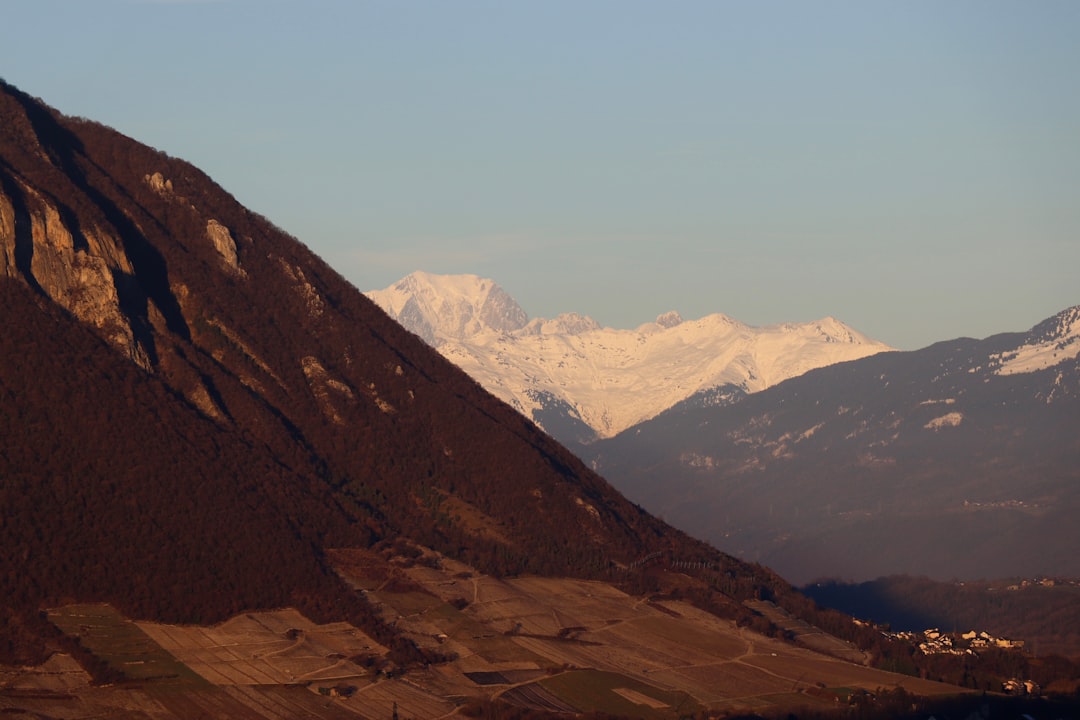
Savoie Mont Blanc encompasses two French Alpine departments — Savoie and Haute-Savoie — covering roughly 10,416 km² and home to around 1.2 million residents. The region cradles Mont Blanc, Western Europe’s highest peak at 4,808 metres, and hosted the very first Winter Olympics in Chamonix in 1924. From glacier walks to world-class cheese caves, this is one of France’s most geographically dramatic and culinarily serious destinations.
Top 3 Highlights at a Glance
- Aiguille du Midi, Chamonix — Cable car to 3,842 m delivers face-to-face views of Mont Blanc’s summit ridge — unmatched anywhere in the Alps.
- Annecy Old Town & Lake — Medieval canals feed directly into Europe’s cleanest natural lake, with water clarity exceeding 12 metres depth visibility.
- Les Arcs & Paradiski Ski Area — 425 km of linked pistes connecting Les Arcs and La Plagne form one of the world’s largest ski domains.
Scroll down for our complete travel guide with tips on getting there, where to stay, costs and more.
Getting There
How do I best reach Savoie Mont Blanc?
Fly into Geneva (GVA) — it is the single best gateway for all of Savoie Mont Blanc. In my experience, Geneva sits just 80 km from Chamonix and 45 km from Annecy, making it far more practical than any French airport. By car, you clear Swiss customs and hit the French Alps in under 60 minutes. Train travelers should note that Eurostar runs direct London–Paris, then a TGV to Chambéry (around 2 hours) or Annecy (2h15). The caveat most guides skip: flying into Lyon Saint-Exupéry (LYS) saves money on Ryanair routes but adds 1h45 of driving through non-scenic motorway to reach the mountains.
Which airport is closest to Savoie Mont Blanc?
Geneva International (GVA) is the closest practical airport for most of Savoie Mont Blanc. My tip: Chambéry Airport (CMF) is technically inside the region at just 10 km from Chambéry city centre, and handles direct seasonal charter flights from the UK and Scandinavia — ideal for ski season. What surprised me is how cheap those UK charter routes get in January, sometimes under €80 one-way. However, CMF has almost no flights outside ski season (November–April), so for summer visits GVA wins every time. Lyon (LYS) is a fallback at roughly 100 km from Chambéry but adds significant drive time through flat, uninteresting autoroute.
How long is the journey from major hubs to Savoie Mont Blanc?
Journey times vary sharply by destination within the region. From Geneva airport to Chamonix: 1 hour 15 minutes by car. From Geneva to Annecy: 45 minutes. From Paris Gare de Lyon by TGV to Chambéry: 2 hours exactly. In my experience, the train to Chambéry then a local TER train onward to Albertville or Bourg-Saint-Maurice adds another 45–90 minutes depending on your final valley. The honest caveat: road transfers during ski season weekends (Friday–Sunday, January–February) on the A41 and N212 can double those times due to resort traffic jams. I always recommend arriving mid-week or on Saturday morning before 9 a.m. to dodge the worst of it.
Are there direct bus connections in Savoie Mont Blanc?
Yes — Flixbus and Ouibus serve Chambéry and Annecy from Paris and Lyon. For resort transfers, Altibus is the specialist operator running direct buses from Geneva and Lyon airports to over 30 ski resorts including Méribel, Val Thorens, and Les Gets — book at altibus.com. My tip: a one-way Altibus transfer from Geneva to Chamonix costs around €35 and takes about 1h30. The trade-off: buses run to fixed schedules and during heavy snowfall can be delayed by 2–3 hours with no compensation. For villages in the Maurienne Valley or off the main tourist circuit, local Transdev Savoie buses exist but run 3–4 times daily maximum — a rental car becomes essential there.
Is a rental car necessary to explore Savoie Mont Blanc?
For Annecy and Chamonix specifically, no car is needed. Both towns have excellent shuttle and bus networks. But for everywhere else — yes, a rental car transforms your trip. I recommend: rent from Geneva airport where competition keeps prices at €35–55/day for a standard hatchback, significantly cheaper than picking up in France. The caveat most guides hide: winter tyres are legally mandatory in Savoie from November 1 to March 31 — most rental agencies include them automatically but verify this in writing before signing. Without them you risk a €135 fine and potential refusal of entry to certain mountain roads. Chains or snow socks may also be required above 1,500 m in storm conditions.
Accommodation
Which towns make good bases in Savoie Mont Blanc?
Annecy is my top pick for non-skiers and summer visitors — it has the lake, the old town, and excellent train connections. Chamonix is unbeatable for alpine adventure year-round. Chambéry works brilliantly as a budget base with fast rail access; it’s a real Savoyard city with zero tourist inflation. For skiing specifically, Méribel sits at the geographical heart of the 3 Vallées (the world’s largest ski area at 600 km of pistes) and gives the most flexibility. In my experience, Megève delivers luxury without the altitude headaches of higher resorts and suits families particularly well. Avoid basing yourself in Albertville — it’s a transit hub, not a destination, despite its 1992 Winter Olympics fame.
Where should I stay in Savoie Mont Blanc?
In my experience, your choice breaks down by priority. For lake and architecture lovers: stay in Annecy’s Vieille Ville (Old Town) or the Bonlieu quarter right on the water. For serious skiers: stay ski-in/ski-out in Les Arcs 1950 — a purpose-built village at 1,950 m with zero car dependency. For summer hikers: the Les Houches valley floor near Chamonix is quieter and 15–20% cheaper than central Chamonix. My tip: apartment rentals via Erna Low or Peak Retreats in traditional Savoyard chalets beat standard hotels for groups of 4+, typically working out to €50–80 per person per night including a kitchen, which slashes food costs dramatically.
What does accommodation cost in Savoie Mont Blanc?
Costs span a wide range depending on season and location. In Annecy, a clean 3-star hotel room runs €100–140/night in summer peak. In Chamonix, budget hostels like Chamonix Lodge start at €35–45/dorm bed. Ski resort apartments average €180–350/night for a 4-person studio in February half-term — this is the absolute peak. The caveat: many Alpine accommodations quote prices per week only during ski season (Saturday–Saturday), so short stays are either unavailable or carry a 30–40% supplement. In my experience, Chambéry offers the best value in the region — a comfortable 3-star hotel runs €75–95/night year-round with no seasonal surcharges and excellent rail access to the mountains.
How far in advance should I book accommodation in Savoie Mont Blanc?
For February school holiday ski weeks — book 9 to 12 months ahead, no exceptions. I have personally seen every chalet and apartment in Val Thorens sold out by March for the following February. For July and August lake and mountain summer holidays, 4–6 months is realistic for Annecy and Chamonix. The honest warning most travel sites skip: Christmas and New Year week in any resort is actually harder to book than February — book by January of the same year at the absolute latest, ideally the prior spring. For shoulder season (May, June, October, early November), you can book 2–4 weeks out without panic, and often find last-minute deals of 20–30% below rack rate.
When is the best time to visit Savoie Mont Blanc?
Based on verified climate data, June through September delivers the most reliable conditions. My clear recommendation: July and early August for lake swimming, hiking, and via ferrata — the Col du Géant and TMB (Tour du Mont Blanc) are fully accessible, wildflowers blanket the meadows, and the Aiguille du Midi cable car runs at full capacity. Late June is my personal favourite — crowds are 30% thinner than August and everything is open. For skiing, January and March are the sweet spots — January for reliable powder after Christmas crowds disperse, March for long daylight and spring snow. May and November are genuinely dead shoulder months with many restaurants and lifts closed.
Best Time to Visit
How does the weather affect activities in Savoie Mont Blanc?
Weather dictates everything here. Above 2,000 m, summer afternoon thunderstorms are routine — I always start hikes by 7 a.m. to summit before the clouds build after noon. The Aiguille du Midi cable car closes in winds above 80 km/h, which happens roughly 15–20 days per winter. In my experience, September is the most stable month across the whole region — clear skies, cooling temperatures, and the summer tourist rush over. For skiing, heavy snowfall is exciting but closes mountain passes like the Col de l’Iseran and Col du Mont Cenis, adding hours to driving routes. Always check viaMichelin road conditions before mountain drives in winter. Temperatures in valley towns like Annecy sit around 26–28°C in July, very comfortable.
Are there local festivals worth attending in Savoie Mont Blanc?
Absolutely. Annecy International Animated Film Festival (MIFA) every June draws 15,000+ industry professionals and animators — the lake screenings are free and genuinely magical. In Megève, the Art on Ice festival in January features world-class figure skating with live music. Chamonix hosts the Ultra-Trail du Mont Blanc (UTMB) every late August — a 171 km mountain race that transforms the town into a festival of endurance sport, with free spectator zones that are electric. My tip: book UTMB week accommodation 18 months ahead — it is the single hardest booking in the region. In Chambéry, the Festiv’Alpes folklore festival in July showcases traditional Savoyard music and crafts without the tourist markup of resort towns.
When does Savoie Mont Blanc get crowded?
Two peaks exist: February school holidays (resorts are at absolute capacity) and late July to mid-August (lakes and hiking trails overrun). The Gorges du Fier near Annecy sees queues of 45+ minutes on August weekends. What surprised me: the week of August 15 (French national holiday) is when domestic French tourism peaks — every campsite and lakeside hotel within 50 km of Annecy is full. In ski season, weekends throughout January and February see resort lift queues of 20–30 minutes at peak hours. My recommendation: visit resorts midweek in ski season and plan any popular hike — the Lac Blanc near Chamonix, for example — before 8 a.m. in August to claim a parking spot at the Flégère trailhead.
What does a daily budget cost in Savoie Mont Blanc?
Budget travelers doing hostels and self-catering can manage €65–80/day. A comfortable mid-range traveler — 3-star hotel, two restaurant meals, one paid activity — should budget €150–200/day in summer. Ski season inflates this sharply: add €40–60/day for a lift pass in most resorts. In my experience, the Chamonix Mont-Blanc ski pass costs €67/day (2025–26 season price), and that’s before equipment rental at roughly €25–35/day. The hidden cost: parking in Annecy old town runs €3–4/hour with a daily cap of €18. My tip: stay in Chambéry and use TER trains to day-trip — you can cut accommodation costs by 40% compared to staying in Annecy itself.
Is Savoie Mont Blanc cheaper or more expensive than other French regions?
More expensive than most French regions — on par with Paris in peak ski season, and cheaper only compared to the French Riviera in summer. A crêpe in Chamonix centre costs €10–13, the same item in Lyon costs €6–8. Restaurant mains in ski resorts average €22–32, versus €14–18 in Chambéry. The honest truth: resort prices are essentially a captive market tax — once you’re in Val d’Isère or Courchevel, competition is minimal and prices reflect that. My tip: eat lunch at mountain hut restaurants (refuges) rather than resort piste-side cafeterias — the food is often better, portions larger, and prices 10–15% lower despite similar altitude. The refuge du Lac Blanc near Chamonix does a proper Savoyard plate for around €16.
Budget
What free highlights are there in Savoie Mont Blanc?
More than people expect. Walking Annecy’s old town canals and the Jardins de l’Europe costs nothing and takes 3–4 hours properly done. The Promenade du Lac in Annecy is a free 7 km lakeside path. Hiking in the Vanoise National Park — France’s oldest, established in 1963 — is entirely free with 700 km of marked trails. What surprised me: the Cascade du Dard waterfall near Chamonix (Les Houches road) is a spectacular free walk taking 25 minutes return. The Château de Menthon-Saint-Bernard near Annecy is free to view from the outside and inspired Disney’s Sleeping Beauty castle. Village markets in Megève (Tuesday and Friday mornings) are free to browse and excellent for local produce.
What do local specialities cost in Savoie Mont Blanc?
Savoie is France’s cheese and charcuterie capital — prices reflect quality. A portion of tartiflette (the region’s signature reblochon and potato gratin) at a mountain restaurant runs €16–22. A fondue savoyarde for two with local wine averages €45–60 total. At supermarkets like Carrefour in Annecy, a whole Reblochon cheese (the authentic variety carries the red label) costs €8–11. My tip: buy Beaufort cheese directly from a fruitière (cooperative dairy) — the one in Beaufort-sur-Doron village sells directly at €22–26/kg, versus €32–38/kg in resort tourist shops. A vin de Savoie bottle (Roussette or Mondeuse grape) starts at €8 in a supermarket and is criminally underrated and underpriced for its quality.
Which route do you recommend for 5–7 days in Savoie Mont Blanc?
In my experience, this circuit works beautifully: Day 1–2: Annecy — old town, lake swim at Plage d’Albigny, boat rental. Day 3: drive the N508 to Chamonix via Megève (stop 90 minutes, market and architecture). Day 4–5: Chamonix — Aiguille du Midi cable car on day 4 morning (book online the night before), afternoon Mer de Glace glacier rack railway, evening in rue du Dr Paccard for fondue. Day 5: hike Lac Blanc trail (4 hours, 750 m elevation gain). Day 6: Beaufortain valley — cheese dairy visit, Lac de Roselend (stunning reservoir at 1,557 m). Day 7: Chambéry — Château des Ducs de Savoie and the Fontaine des Elephants before departure. Total driving: roughly 280 km.
What are the must-see sights in Savoie Mont Blanc?
The Aiguille du Midi (3,842 m) is non-negotiable — nothing in the Alps delivers that visual punch at that accessibility level. Annecy old town and lake belong on any European highlights list, not just an Alpine one. The Gorges de l’Arve near Chamonix and the Mer de Glace glacier — retreating at an alarming 3–5 metres annually, making it both spectacular and sobering. In my experience, the Château de Chillon is technically in Switzerland but 25 km from the French border and worth the detour. The Route des Grandes Alpes — a 700 km mountain road from Thonon-les-Bains to Nice — passes through the region and is one of Europe’s great drives. Do at least the section from Bourg-Saint-Maurice to Val d’Isère.
What natural highlights does Savoie Mont Blanc offer?
The density of natural spectacle here is genuinely unmatched in France. Mont Blanc at 4,808 m dominates, but the Vanoise glacier complex — covering 100 km² — is equally staggering up close. The Lac d’Annecy at 45 km² is the largest natural lake in France after Lake Geneva and has Europe’s cleanest recorded water quality for a lake of its size. What surprised me: the Réserve Naturelle des Hauts de Chartreuse bordering the region’s western edge offers chamois and ibex sightings at 1,500–2,000 m altitude with almost zero tourists. The Cirque du Fer à Cheval near Sixt-Fer-à-Cheval — a natural amphitheater of 52 waterfalls — is one of France’s most dramatic geological formations and remains genuinely uncrowded even in July.
Routes & Highlights
What local specialities should I try in Savoie Mont Blanc?
Six things I insist on eating here: Tartiflette — Reblochon, potato, lardons, onion, white wine, baked until molten. Diots au vin blanc — pork sausages braised in Savoie white wine, a brasserie staple. Fondue savoyarde — always specify Beaufort or Comté blend, not the tourist supermarket mix. Croziflette — tartiflette’s lesser-known cousin made with crozets (buckwheat pasta squares) instead of potato; far more interesting. Génépi liqueur — distilled from alpine artemisia plants at high altitude, unique to this region; a shot costs €4–6 in a refuge. My tip: for cheese, ask specifically for Abondance AOP — a semi-hard cow’s milk cheese from the Abondance valley that’s more nuanced than Reblochon and harder to find outside the region.
What activities are available in Savoie Mont Blanc?
The activity list here is genuinely exhaustive across all seasons. Winter: skiing across 600 km of pistes in the 3 Vallées, ice climbing in the Argentière glacier area, dog sledding in Les Saisies. Summer: the Tour du Mont Blanc (TMB) — 170 km, 11 stages, one of Europe’s great long-distance hikes; via ferrata routes graded from beginner to extreme; paragliding from Planpraz above Chamonix (tandem flights around €150); white-water kayaking on the Isère River near Bourg-Saint-Maurice. Cycling: the Col de la Madeleine and Col du Galibier are Tour de France legendary climbs, open June–September. Lake Annecy offers windsurfing, paddleboarding, and open-water swimming at 21–23°C in July and August.
What distinguishes Savoie Mont Blanc from other French regions?
Three things set it apart absolutely. First: vertical drama at civilized access — you can have breakfast at lake level in Annecy at 447 m altitude and stand at 3,842 m on the Aiguille du Midi by 10 a.m., no mountaineering required. Second: the gastronomy is hyper-local in a way that even Burgundy or Périgord can’t match — most Savoyard dishes require ingredients grown within 30 km of where you eat them, protected by strict AOP rules. Third: the bilingual Franco-Italian-Savoyard cultural identity — Savoie only formally became part of France in 1860 (a fact locals will tell you unprompted). This gives the architecture, dialect, and food culture a distinct edge that feels genuinely different from mainstream French tourism. In my experience, no other French region delivers this concentration of nature, gastronomy, and athletic culture simultaneously.
Which day trips are possible from Savoie Mont Blanc?
From Annecy: Geneva (Switzerland) is 45 minutes by car — do the Old Town, UN quarter, and Jet d’Eau fountain. Talloires village on the eastern Annecy lakeshore is a perfect half-day. From Chamonix: cross into Italy via the Mont Blanc Tunnel to Courmayeur — a beautiful Italian Alpine town with noticeably cheaper food and wine. The tunnel toll costs €65 return for a car. From Chambéry: the Chartreuse monastery (Grande Chartreuse) is 45 minutes and still partially closed to visitors — approach via the forest road for the exterior view. In my experience, the Les Bauges massif between Annecy and Chambéry is the most underrated day trip in the region — medieval villages, chamois herds, and virtually no tourists.
Are there language barriers in Savoie Mont Blanc?
In major tourist areas — Chamonix, Annecy, Megève — English is widely spoken in hotels, restaurants, and ski schools. Chamonix in particular has a significant British and Anglophone expat community; some shops operate primarily in English. The honest caveat: in smaller valley villages — the Maurienne, Tarentaise, or Beaufortain valleys — French is essential and locals may have limited patience with non-French speakers. My tip: learning 10 key phrases in French plus the words ’fromage’, ’fondue’, ’piste de ski’, and ’refuge’ gets you surprisingly far. Local Savoyard dialect words like ’chabert’ (landlord/innkeeper) or references to ’la dent du chat’ (a local landmark) signal cultural respect and open doors immediately.
Practical Tips
Which apps do you recommend for visiting Savoie Mont Blanc?
Six apps I use personally. Organic Maps — offline Alpine maps that work without signal above 2,000 m, critical in the backcountry. Refuges.info — books mountain hut nights across the entire French Alps, mandatory for TMB hikers. SNCF Connect — train tickets for all regional TER connections. Meteoblue — mountain-specific weather with hour-by-hour altitude forecasts far superior to standard weather apps in Alpine terrain. Géoportail — France’s official IGN topographic maps, free and incredibly detailed. Altibus app — for airport transfer booking. My tip: download Vanoise National Park’s official trail app before entering — it flags protected zones where camping and lighting fires carry €750 fines, information that standard hiking apps miss entirely.
Are there medical facilities in Savoie Mont Blanc?
Yes — the region is well-equipped for a mountain area. Centre Hospitalier Annecy-Genevois is the main regional hospital with a 24-hour A&E and helicopter evacuation coordination. Chamonix has its own medical centre on Avenue de la Plage with ski injury specialists open daily in season. The caveat almost no guide mentions: mountain rescue (PGHM — Peloton de Gendarmerie de Haute Montagne) is free in France, unlike Switzerland or Austria — but your travel insurance must cover helicopter evacuation which costs €3,000–8,000 even for a short flight. I never enter the mountains here without European Health Insurance Card (EHIC/GHIC for UK travelers) plus dedicated mountain rescue insurance. Altitude sickness becomes a real factor above 3,000 m — ascend gradually if sensitive.
How safe is Savoie Mont Blanc?
Extremely safe in terms of crime — petty theft is the main risk and even that is low outside of Annecy’s old town on August weekend evenings when pickpockets target festival crowds. Mountain safety is the genuine concern here. The PGHM executes around 1,200 rescue operations annually in the Mont Blanc massif alone — avalanches, crevasse falls, and exposure are real risks for those who venture beyond marked trails without proper equipment. My firm advice: never hike alone above 2,500 m without telling someone your route and expected return time. Avalanche risk forecasts are published daily at data.avalanches.org — check them without fail in winter. Road safety: mountain driving in ice requires experience; the D902 to Tignes and D1006 to Val d’Isère have steep switchbacks that catch unprepared drivers.
What are common traveller mistakes in Savoie Mont Blanc?
Five mistakes I see repeatedly. 1: Booking the Aiguille du Midi walk-up — in summer, same-day tickets sell out by 8 a.m.; book online the evening before. 2: Underestimating altitude — hiking in trainers to Lac Blanc at 2,352 m in cotton clothing ends badly when afternoon temperatures drop to 8°C even in July. 3: Driving to Annecy old town — the centre is largely pedestrianised and parking costs €18/day; park at Parking Courier and walk 8 minutes. 4: Only visiting in ski season — summer Savoie is arguably more spectacular and 40% cheaper. 5: Eating exclusively in resort restaurants — descending just 5 km to a valley village like Saint-Gervais-les-Bains from Chamonix cuts meal prices by 30–40% with no loss in quality and a genuine local atmosphere.
Which accommodation types suit Savoie Mont Blanc best?
In my experience, accommodation type should match your trip purpose precisely. Mountain refuges (from €22–35 half-board per person) are non-negotiable for TMB trekkers and offer the most authentic Alpine social experience. Savoyard chalets with catered service suit ski groups of 6+; operators like Ski Total run excellent options in Les Gets and Morzine from €180/person/week all-in during January. Boutique hotels in Annecy’s Vieille Ville (expect €130–180/night) suit romantic summer breaks. Gîtes ruraux (rural self-catering farmhouses) in the Beaufortain valley run €600–900/week for 6 people and deliver the best value in the region. My honest warning: résidence de tourisme apartments in purpose-built ski stations often look good in photos but feel soulless and poorly maintained — read recent reviews on TripAdvisor, not just the booking platform.
More Destinations in Europe
Explore our complete travel guides for more Europe destinations: Great Advice for Ski Travelers, Rome Travel Guide (2026), Porto Travel Guide (2026), Île de Piana Travel Guide (2026), Paris Travel Guide (2026).
Savoie Mont Blanc at a Glance
| Currency | EUR (€) |
|---|---|
| Official language | French |
| Time zone | UTC+01:00 |
Source: Wikidata, retrieved August 2026.
Useful Resources for Planning Your Trip to Savoie Mont Blanc
- Wikipedia: Savoie Mont Blanc — history, geography and background
- Lonely Planet: Savoie Mont Blanc — itineraries and travel inspiration
- TripAdvisor: Savoie Mont Blanc — hotels, restaurants and traveller reviews
🎥 Savoie Mont Blanc Travel Videos

Before You Trek Tour du Mont Blanc | 11 Truths You Need to …
Travel Light Mel

Tour du Mont Blanc – 4 Essential Tips From an Expert Guide
57hours
Tour de Mont Blanc: 12 Avoidable Mistakes Hikers Make
Travel Light Mel
You are currently viewing a placeholder content from Vimeo. To access the actual content, click the button below. Please note that doing so will share data with third-party providers.
More InformationYou are currently viewing a placeholder content from YouTube. To access the actual content, click the button below. Please note that doing so will share data with third-party providers.
More InformationYou need to load content from reCAPTCHA to submit the form. Please note that doing so will share data with third-party providers.
More InformationYou are currently viewing a placeholder content from GetYourGuide. To access the actual content, click the button below. Please note that doing so will share data with third-party providers.
More Information