
Caen: The Complete Travel Guide (2026)

Last reviewed: September 2026 · key facts checked against Wikidata
Caen Travel Guide: Everything You Need to Know (2026)
Caen, the prefecture of Calvados in Normandy, sits just 15 km inland from the coast and holds a population of 107,229 in the city proper — yet anchors a functional urban area of 109,400 people. Founded by William the Conqueror in the 11th century, it became one of the most strategically bombed cities of World War II, with over 75% of its buildings destroyed in the summer of 1944. Today it stands as Normandy’s second-largest urban area and a genuine gateway to the D-Day landing beaches.
Top 3 Highlights at a Glance
- Mémorial de Caen — Europe’s most comprehensive WWII peace museum, covering 14,000 sq metres across 4 floors of permanent exhibits.
- Château de Caen — William the Conqueror’s 11th-century fortress — one of the largest medieval enclosures in Europe at 5.6 hectares.
- Abbaye aux Hommes — William the Conqueror’s own burial church, a masterpiece of Romanesque architecture completed in 1077.
Scroll down for our complete travel guide with tips on getting there, where to stay, costs and more.
Arrival & Airport
How do I get to Caen — by train, car, or flight?
Take the train from Paris Saint-Lazare — it’s the fastest and most practical option. Caen train station sits right in the city centre, and direct TGV/Intercités services run in roughly 2 hours from Paris. Tickets start around €25 booked in advance on SNCF Connect. In my experience, booking 3–4 weeks ahead on OUIGO or Intercités cuts costs dramatically. My tip: avoid driving from Paris unless you plan to tour the D-Day beaches immediately, as parking in central Caen is paid and scarce. The honest caveat most guides skip: trains on weekends and French school holiday Fridays sell out fast — always book ahead.
Which airport is closest to Caen?
Caen-Carpiquet Airport (CFR) is your closest option, sitting just 7 km west of the city centre. It handles a handful of domestic and seasonal European routes, mainly via Hop! and occasional charter operators. In my experience, direct flights into CFR are limited and often expensive for international travellers. A far better entry point is Paris Charles de Gaulle (CDG), roughly 230 km away, where you connect by train from Paris Saint-Lazare. What surprised me: Ryanair serves Dinard Airport (DNR), about 95 km away, which is cheaper but requires a rental car or long bus connection — only worthwhile if you’re touring Brittany and Normandy together.
How long does the journey to Caen take from Paris?
From Paris Saint-Lazare to Caen Gare, the direct Intercités train takes exactly 2 hours. By car on the A13 motorway, expect 2 to 2.5 hours depending on traffic, plus €18–€22 in tolls each way. I recommend the train every time — you arrive directly at the city centre without parking stress. The caveat: some trains require a change at Lisieux, adding 30–45 minutes, so always filter for direct services on SNCF Connect. From CDG Airport specifically, factor in a 30-minute RER B transfer to Saint-Lazare before your train, making total journey time roughly 2 hours 45 minutes.
Do I need a rental car to explore Caen itself?
No — Caen city centre is fully walkable and well-served by its TWISTO tram network. For the city’s monuments, including the Château, both Abbeys, and the Mémorial, no car is needed. However, if the D-Day beaches — Omaha, Gold, Utah — are on your itinerary, a rental car is essentially mandatory. Beach distances range from 20 to 75 km from Caen, and public bus connections are infrequent and slow. Rental cars from Caen Gare start around €40/day with major agencies like Europcar or Hertz. My honest warning: book your rental at least 2 weeks ahead in June and July — demand spikes sharply around D-Day anniversary commemorations on June 6th.
City Transport
What are the best areas to stay in Caen?
Stay in the Centre-Ville neighbourhood, within walking distance of the Château and both Abbeys. The area around Place Saint-Sauveur gives you restaurant access and tram connections. Quartier Saint-Jean, just south of the train station, suits budget travellers — cheaper hotels and easy rail access. For a more residential, quieter feel, the Beaulieu district near the university is 15 minutes by tram from the centre. I recommend Centre-Ville for first-timers — everything is under 20 minutes on foot. The trade-off: parking in Centre-Ville costs €15–€25 per day, so if you arrive by car, factor that into your accommodation budget.
What does accommodation cost per night in Caen?
A solid 3-star hotel in Centre-Ville costs €80–€120 per night for a double room. Budget options near the train station — ibis, ibis Budget — run €55–€75 per night. The upscale Hôtel Le Dauphin (a converted 16th-century priory) prices at around €130–€160. Apartments on Airbnb in the Beaulieu or Saint-Jean areas start at €60–€90 per night. In my experience, Caen is meaningfully cheaper than Rouen or coastal Normandy resorts. The honest caveat: prices jump 30–50% around the June 6th D-Day anniversary — book that period 3–4 months out if you want anything at a reasonable rate.
How far in advance should I book accommodation in Caen during high season?
For June — especially the first 2 weeks around the D-Day anniversary on June 6th — book 4 months in advance minimum. This is non-negotiable: Caen fills with international delegations, veterans’ groups, and guided tour operators. For July and August, 6–8 weeks ahead is sufficient. Shoulder months like May, September, and October need just 2–3 weeks lead time. What surprised me: the Mémorial de Caen draws 350,000+ visitors annually, concentrated between May and September, so the city is never truly quiet in summer. For Christmas market visits in December, book 4–6 weeks ahead — it’s locally popular but rarely on foreign tourists’ radar.
What special accommodation types are worth considering in Caen?
The Hôtel Le Dauphin, a converted 16th-century priory inside the city walls, is genuinely unique — stone vaulted ceilings, exposed timber beams, and a respected on-site restaurant. For something rural with easy day-trip access, chambres d’hôtes (B&Bs) in the Suisse Normande south of Caen offer countryside stays from €70–€90/night including breakfast. The Abbaye d’Ardenne, northwest of Caen, operates as a cultural heritage centre with occasional guest accommodation — rare and atmospheric. My tip: Normandy farmhouses listed on Gîtes de France often include kitchen facilities and sleep 4–6 people, dropping per-person costs to €25–€35/night for groups.
Accommodation & Neighbourhoods
What are the must-see sights in Caen?
Three sights are non-negotiable. First: the Mémorial de Caen — Europe’s most complete WWII museum, requiring 3–4 hours minimum and costing €22 adult entry. Second: the Château de Caen, William the Conqueror’s 11th-century fortress enclosing free grounds and two excellent museums — entry to grounds is free, museums inside cost €5–€8. Third: the Abbaye aux Hommes (Saint-Étienne Church), William’s own burial church, offering free guided tours Tuesday through Sunday. What most guides omit: the lesser-visited Abbaye aux Dames opposite is equally beautiful and almost always uncrowded — it is Normandy’s finest example of 11th-century female-founded religious architecture.
What can I experience for free in Caen?
Caen offers a genuinely strong list of free experiences. The Château de Caen’s outer grounds are free to enter and dramatic at any hour. The Abbaye aux Hommes guided tours are free Tuesday–Sunday. Caen’s Sunday morning market at Place Courtonne — running since the medieval era — costs nothing to browse and showcases Normandy cheese, cider, and seafood. The city’s canal and port area (Bassin Saint-Pierre) makes for a pleasant free evening walk. In my experience, the Jardins de l’Hôtel de Ville beside the castle are largely missed by visitors but genuinely beautiful. Honest caveat: the Mémorial is not free and is too important to skip — budget €22 for it regardless.
Which day trips from Caen are most worthwhile?
The D-Day landing beaches are the obvious and unmissable answer — Omaha Beach is 45 minutes by car, and the American Cemetery at Colleville-sur-Mer ranks among the most moving sites in France. Bayeux, just 30 km west, holds the original 11th-century Bayeux Tapestry and is reachable by train in 20 minutes for around €6. Mont-Saint-Michel is 90 minutes by car (130 km) — tight for a half-day but doable as a full day. My tip: Honfleur, 60 km northeast, is one of Normandy’s most photogenic harbour towns and works perfectly as an afternoon trip. The honest caveat: all D-Day beach sites need a car — bus connections are impractical without a tour.
What are the local specialities to eat and drink in Caen?
Tripes à la mode de Caen — slow-cooked beef tripe with cider and calvados — is the city’s most famous dish, historically protected by a dedicated brotherhood since 1952. Order it at Le Bouchon du Vaugueux in the medieval quarter. Camembert, Livarot, and Pont-l’Évêque cheeses are all produced within 40 km of the city. Normandy cream-based sauces (sauce normande) feature on nearly every restaurant menu. For drinks: Cidre de Normandie AOC (around €4 per glass) and Calvados apple brandy are the regional staples. What surprised me: Normandy’s butter — particularly Isigny AOP butter — is genuinely outstanding and available at every market for €3–€4 per 250g block.
Highlights & Must-Sees
What makes Caen unique compared to other French cities?
Caen is the only major French city that was almost entirely rebuilt after WWII destruction yet retained its medieval monuments — the contrast between William the Conqueror’s 11th-century fortress and the clean postwar reconstruction around it is architecturally striking. It functions as the primary hub for all D-Day commemoration tourism, hosting international ceremonies every June 6th. The Mémorial de Caen has no real equivalent in France in terms of its dedicated WWII peace narrative. In my experience, Caen also has a distinctive Norman culinary identity — richer, more butter-and-cream-forward than anywhere else in France — that feels genuinely regional rather than a tourist performance. Its 15 km proximity to the coast without being a coastal city gives it a calm that Honfleur or Deauville never offers.
How many days are worthwhile in Caen?
2 full days cover Caen’s city highlights comfortably. Day 1: Mémorial de Caen (4 hours), Château and its museums (2 hours), evening in the Quartier Vaugueux restaurant district. Day 2: Abbaye aux Hommes, Abbaye aux Dames, Sunday market if applicable, canal walk. Add 1–2 days minimum if you’re visiting the D-Day beaches — Omaha Beach, the American Cemetery, Pointe du Hoc, and the Overlord Museum near Colleville alone justify a half-day. My honest recommendation: plan 4 days total to do Caen and the beaches justice without feeling rushed. Travellers who allocate only 1 day almost universally regret skipping the Mémorial.
When is the best time to visit Caen?
September is the optimal month — verified by climate analysis. Crowds drop sharply after August 15th, accommodation prices fall by 20–30%, and temperatures stay pleasant at around 17–19°C. May is a strong second choice: the Normandy countryside is lush, the D-Day beaches are manageable before summer peaks, and hotels are available with 2–3 weeks’ notice. Avoid the first 2 weeks of July and August unless you’ve booked months ahead — Caen is genuinely busy. June 6th anniversary week is uniquely atmospheric but operationally challenging: expect road closures, full hotels, and large official delegations. In my experience, an early October visit offers the best value — golden light, quiet museums, and Calvados harvest tastings at nearby distilleries.
What local festivals and events in Caen are worth planning around?
The D-Day Anniversary commemorations on June 6th are the most significant — international ceremonies at the American Cemetery at Colleville-sur-Mer and events throughout Caen draw world leaders in milestone years. Jazz à Caen typically runs in October, bringing free and ticketed performances to venues across the city. The Normandy Prestige horse racing festival at Hippodrome de Caen (July–August) is a genuine local event, not a tourist fabrication. Le Marché de Noël on Place Saint-Sauveur in December is small but authentic — 10 days running from late November. My tip: the Fête de la Musique on June 21st sees free live music across every neighbourhood plaza — one of the best free experiences you can have in any French city.
Food & Drink
How does the weather in Caen affect what I can do?
Caen has a temperate oceanic climate — mild but genuinely rainy year-round. Rain is possible in any month, but winters (December–February) average 10–12°C with frequent grey skies, limiting beach day trips. Spring (April–May) brings variable weather but manageable conditions for outdoor touring. Summer is the most reliable: July–August average 20–22°C with long daylight hours, ideal for the D-Day beaches and coastal drives. In my experience, the Mémorial de Caen is entirely indoors and worth visiting in any weather — it’s a perfect rainy day solution. My honest warning: Normandy’s weather is famously unpredictable — pack a waterproof layer regardless of what the forecast says when you leave home.
How crowded does Caen get in peak season?
The Mémorial de Caen receives 350,000+ visitors annually, with the majority concentrated between June and August. Inside the museum, wait times for parking reach 30–45 minutes on summer weekend mornings — arrive before 9:30am to avoid queues. The city centre itself is busy but not oppressively so by major French city standards. June 6th week is the absolute peak — road closures, official delegations, and full hotels transform the city. D-Day beach sites like Omaha get crowded between 10am and 3pm throughout July and August. My tip: visit Pointe du Hoc first — it opens at 9am, draws fewer visitors than Omaha, and is arguably more viscerally impactful. Avoid the Mémorial car park on Saturday mornings in July entirely.
How safe is Caen for tourists?
Caen is a safe city for tourists by any European standard. Violent crime targeting visitors is rare. The area to exercise basic urban awareness is the Chemin Vert and Guérinière districts in the northern periphery — these are residential social housing areas with occasional petty crime, but tourists have no reason to visit them. Centre-Ville, the Château area, and Quartier Vaugueux are entirely safe at all hours. Standard precautions apply at the train station (Gare de Caen): keep bags close, particularly on Friday evenings. In my experience, Caen feels noticeably calmer and less pressured than Paris or Marseille. The biggest practical risk for most visitors is traffic — Caen’s postwar road layout is fast and not always pedestrian-friendly.
Is English widely spoken in Caen?
More so than most similarly-sized French cities — English proficiency is meaningfully higher due to Caen’s deep WWII heritage tourism industry. Staff at the Mémorial de Caen are reliably bilingual, and hotels and restaurants in Centre-Ville generally manage English adequately. The honest caveat: outside the tourist circuit — neighbourhood cafes, local markets, municipal offices — French-only service is the norm. Learn these 4 phrases: ”Bonjour” (greeting), “S’il vous plaît” (please), “L’addition, s’il vous plaît” (the bill), and “Parlez-vous anglais?” (Do you speak English?). In my experience, making even a minimal French effort in Caen is met with warmth rather than the Parisian indifference sometimes encountered in the capital. A translation app like Google Translate handles every other situation.
Practical Tips
What is a realistic daily budget for visiting Caen?
Budget traveller: €80–€100/day covering ibis-level accommodation (€55–€70), a crêperie lunch (€12–€15), self-service dinner from market produce, and one paid attraction. Mid-range: €150–€180/day including a 3-star Centre-Ville hotel, sit-down lunch at a brasserie (€18–€25), dinner in Quartier Vaugueux (€30–€40), and the Mémorial entry (€22). Comfortable: €220–€280/day with Le Dauphin or equivalent, full Norman restaurant menus, a guided D-Day beach tour (€60–€90), and a Calvados distillery visit. The hidden cost most guides miss: D-Day beach guided tours run €60–€95 per person and are significantly better than self-touring without context. Budget for at least one.
How does Caen’s public transport network work?
Caen is served by TWISTO, operating 2 tram lines and 30+ bus routes. A single ticket costs €1.70; a 10-trip carnet costs €13.50; and a 24-hour pass runs €4.50. The Tram Line A runs from the university district through Centre-Ville to the coastal suburb of Hérouville-Saint-Clair, passing the train station. For the Mémorial de Caen, take Tram Line A to Bernières stop then bus 12 — total journey from the centre is about 25 minutes. In my experience, the network is reliable and adequate for city sightseeing. My honest caveat: it does not serve the D-Day beaches — for those, a rental car or organised tour is your only realistic option.
Which apps do you recommend for visiting Caen?
SNCF Connect — essential for booking and managing train tickets from Paris and to Bayeux; download before you travel. TWISTO app — Caen’s own public transport app for real-time tram and bus tracking and mobile ticketing. Google Maps works reliably in Caen for navigation but misses some pedestrian shortcuts through the Château grounds — cross-check with Maps.me offline when in areas with poor signal. Too Good To Go is active in Caen — I’ve collected €8 bags of Normandy pastries and cheese from participating boulangeries for €3.99. Météo-France (or its website) gives the most accurate local forecasts — always check the night before any D-Day beach day trip. For translation: Google Translate’s camera function handles menus in under 2 seconds.
More Destinations in Europe
Explore our complete travel guides for more Europe destinations: Nancy Travel Guide (2026), Versailles Travel Guide (2026), Cannes Travel Guide (2026), Perpignan Travel Guide (2026), Rennes Travel Guide (2026).
Caen at a Glance
| Population | 109,400 |
|---|---|
| Currency | EUR (€) |
| Official language | French |
| Time zone | UTC+01:00 |
Source: Wikidata, retrieved September 2026.
Useful Resources for Planning Your Trip to Caen
- Wikipedia: Caen — history, geography and background
- Lonely Planet: Caen — itineraries and travel inspiration
- TripAdvisor: Caen — hotels, restaurants and traveller reviews
🎥 Caen Travel Videos
![[4K] Caen France Travel Guide | Walking Through Normandy's ...](https://img.youtube.com/vi/CjqCjsHiZNM/hqdefault.jpg)
[4K] Caen France Travel Guide | Walking Through Normandy’s …
Wind Walk Travel Videos ʬ
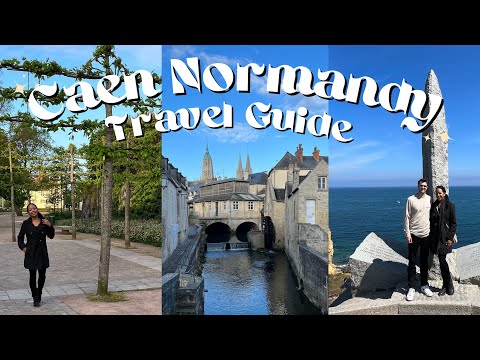
Normandy France Travel Guide: Caen’s Charm, WWII Tours …
Tiffy Diamond
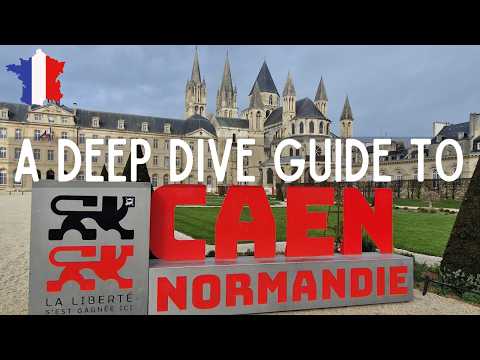
CAEN: The Most UNDERRATED City in FRANCE?
Pinned on Places
You are currently viewing a placeholder content from Vimeo. To access the actual content, click the button below. Please note that doing so will share data with third-party providers.
More InformationYou are currently viewing a placeholder content from YouTube. To access the actual content, click the button below. Please note that doing so will share data with third-party providers.
More InformationYou need to load content from reCAPTCHA to submit the form. Please note that doing so will share data with third-party providers.
More InformationYou are currently viewing a placeholder content from GetYourGuide. To access the actual content, click the button below. Please note that doing so will share data with third-party providers.
More Information