
Vienna: The Complete Travel Guide (2026)

Last reviewed: September 2026 · key facts checked against Wikidata
Vienna Travel Guide: Everything You Need to Know (2026)
Vienna, Austria’s capital and home to 1,973,403 residents, sits at 151 metres above sea level along the Danube and has been a major European cultural centre since the Habsburg Empire peaked in the 18th century. It consistently ranks as the world’s most liveable city in the Economist Intelligence Unit index, a title it has held for five consecutive years. The historic Ringstrasse boulevard alone stretches nearly 5 kilometres and connects more UNESCO-listed monuments per kilometre than almost any street in Europe.
Top 3 Highlights at a Glance
- Schönbrunn Palace & Gardens — The 1,441-room Habsburg summer residence with Europe’s oldest zoo, founded in 1752, all on one ticket.
- Naschmarkt — Vienna’s 1.5-kilometre open-air market with 120 stalls selling everything from Austrian Liptauer to Persian spices.
- Vienna State Opera (Staatsoper) — Standing tickets cost just €4 and put you inside one of the world’s top opera houses, built in 1869.
Scroll down for our complete travel guide with tips on getting there, where to stay, costs and more.
Arrival & Airport
How do I get to Vienna — by train, plane, or bus?
Fly into Vienna International Airport (VIE), located 18 km southeast of the city centre in Schwechat, for most international arrivals. In my experience, the train is the best option for travellers coming from Prague (4 hours), Budapest (2.5 hours), or Munich (4 hours) via direct Railjet or Nightjet services — all arriving at Wien Hauptbahnhof. FlixBus also serves Vienna cheaply from neighbouring capitals, though journey times are significantly longer. The honest caveat: budget airlines often land at Bratislava Airport (BTS) in Slovakia, 60 km away, which sounds convenient but adds 90 minutes of transfer time to your total door-to-door journey.
Which airport is closest to Vienna — and is there a second option?
Vienna International Airport (VIE) in Schwechat, 18 km from the city centre, is your primary gateway. The City Airport Train (CAT) runs non-stop to Wien Mitte station in exactly 16 minutes and costs €14.90 one way — fast but overpriced. My tip: the S7 suburban train covers the same route in 25 minutes for just €4.20 using a standard Vienna transport ticket. The second option, Bratislava Airport (BTS), serves Ryanair routes and is technically closer to eastern Vienna than the city centre itself, but the bus transfer is slow. I only recommend BTS if the fare difference exceeds €60.
How long does the journey from Vienna airport to the city take?
The City Airport Train (CAT) reaches Wien Mitte in 16 minutes flat — the fastest option. The S7 train takes 25 minutes and costs a fraction of the price. By taxi, expect 30 to 45 minutes depending on traffic and a fare around €35 to €45. What surprised me: Uber is consistently €8 to €12 cheaper than street taxis from VIE, and the pickup at Terminal 3 is straightforward. The honest warning most guides omit: during rush hour on weekdays, the B11 express bus to Schwedenplatz can take over 60 minutes — avoid it between 7–9am and 4–7pm.
Do I need a rental car to explore Vienna?
No — a rental car in Vienna is a liability, not an asset. The public transport network covers every tourist district, and parking costs €3.60 per hour in the city centre’s short-stay zones. In my experience, the U-Bahn, trams, and S-Bahn handle 95% of what visitors need. I recommend a car only if you plan day trips to Klosterneuburg (13 km), the Vienna Woods (Wienerwald), or Burgenland wine country, where trains become infrequent. If you do hire one, pick up at the airport rather than the city centre to avoid the labyrinthine parking situation in districts 1 through 9.
City Transport
What are the best areas to stay in Vienna?
District 1 (Innere Stadt) puts you inside the Ringstrasse with the Stephansdom at your doorstep — but hotels here cost €180 to €350 per night. My recommendation for value and atmosphere is District 7 (Neubau), Vienna’s creative quarter with independent boutiques, cocktail bars, and trams to the centre in 8 minutes. District 4 (Wieden) near Naschmarkt suits food-focused travellers. Avoid basing yourself in District 15 or 16 — they are affordable but require two U-Bahn changes to reach main sights, costing you 30 minutes each way. For families, District 13 (Hietzing) near Schönbrunn offers space and calm.
What does accommodation cost per night in Vienna?
An economy hotel in Vienna runs around €90 per night based on current Numbeo data. Mid-range options in Neubau (District 7) or Mariahilf (District 6) average €120 to €160 per night for a clean double room. Design boutique hotels in District 1 start at €200. My tip: Airbnb apartments in District 4 or 8 offer better space-per-euro than hotels, averaging €75 to €110 per night for a one-bedroom. The caveat nobody mentions: Vienna charges a city tax (Ortstaxe) of €3.02 per person per night, which is added at checkout and often omitted from booking.com listed prices.
How far in advance should I book accommodation in Vienna during high season?
Book at least 8 weeks ahead for July and September, Vienna’s best travel months based on climate data. During Vienna Opera Ball (late January/February), the Wiener Festwochen (May–June), and New Year’s Eve, book 4 to 6 months in advance — those three periods drive hotel prices up by 40 to 60%. In my experience, last-minute deals in Vienna are rare compared to other European capitals because corporate travel fills hotels even on weekdays. My tip: Tuesday and Wednesday nights in shoulder season (October–November) can yield rooms in Neubau for €80 to €95, a genuine saving of €40 over weekend rates.
Are there special or unique accommodation types in Vienna worth trying?
Yes — Palais hotels converted from Habsburg-era aristocratic mansions are genuinely special and not found outside Vienna and Budapest. Palais Coburg and Palais Hansen Kempinski are headline names, but the smaller Hotel Topazz on Lichtensteg offers a boutique art-deco experience from €150. What surprised me: Vienna has several Heurigen guesthouses in the 19th district (Döbling) and 21st district (Floridsdorf) wine villages — rooms in family-run wine estates start at €65 and include breakfast with local Grüner Veltliner. These are a 20-minute U-Bahn ride from the centre and almost never mentioned in mainstream travel guides.
Accommodation & Neighbourhoods
What are the absolute must-sees in Vienna?
Three non-negotiables: Schönbrunn Palace (full Grand Tour ticket €32, book online to skip the 45-minute queue), the Kunsthistorisches Museum on Maria-Theresien-Platz (the world’s fourth-largest art museum, ticket €21), and an evening at the Vienna State Opera with a €4 standing ticket booked online from 8am the day before. In my experience, most visitors over-invest time at St. Stephen’s Cathedral (Stephansdom) — the interior is free but the tower climb (€6) is genuinely worth the 343-step ascent for the rooftop view over District 1.
What can I experience for free in Vienna?
More than most European capitals. The Naschmarkt costs nothing to wander and graze. The KunsthausWien courtyard and Hundertwasserhaus exterior in District 3 are free and photograph beautifully. Every Sunday morning, the Naschmarkt flea market is free to browse — I found a vintage Austrian hunting hat there for €8. The Spanish Riding School white horses can be watched during morning training sessions for €17, but the inner courtyard of the Imperial Palace (Hofburg) is free. My honest caveat: Vienna’s free walking tours (tip-based, around €10 to €15 expected) are worth doing on day one — I recommend the 2.5-hour Original Vienna Tours departure from Albertinaplatz.
Which day trips from Vienna are worth the travel time?
Klosterneuburg Monastery, 13 km north, is a 20-minute train ride from Franz-Josefs-Bahnhof and rarely crowded — entry €16, dramatically undervisited. Krems and the Wachau Valley (75 km west, 1 hour by train from Wien Hauptbahnhof) offers UNESCO-listed vineyard landscapes and Riesling tasting from €8 per flight. Bratislava is only 80 km east and reachable by Twin City Liner hydrofoil in 75 minutes (€29 one way) — a genuine European capital as a day trip. My warning: Hallstatt is a 3-hour drive — doable as a day trip from Vienna but exhausting; save it for a dedicated Salzkammergut stay.
What are Vienna’s local specialities and where should I eat them?
The Wiener Schnitzel is mandatory — order it at Figlmüller Bäckerstrasse where the schnitzel overhangs the plate (€22, book ahead). Tafelspitz (boiled prime beef) at Meixner’s Gastwirtschaft in District 12 costs €18 and is what Viennese actually eat. For coffee culture, a Melange (Vienna’s cappuccino) at Café Central on Herrengasse (€5.50) is worth every cent despite the tourist crowds. My tip: Beisl restaurants in Neubau (District 7) serve three-course lunches for €12 to €15 — the same meal costs €28 near the Stephansdom. Seek out Würstelstand sausage kiosks after midnight — a Käsekrainer with bread costs €4 and is a local institution.
Highlights & Must-Sees
What makes Vienna genuinely unique compared to other European capitals?
Vienna is the only major European capital where a €4 ticket gets you a standing spot at one of the world’s top opera houses on the same night. The coffee house (Kaffeehaus) culture is UNESCO-listed as intangible cultural heritage — sitting for 3 hours over one coffee is not just tolerated, it is expected. What surprised me: Vienna has wine-growing districts inside city limits — the Heuriger taverns of Grinzing and Neustift am Walde in District 19 serve wine grown on the hillside behind the building. No other city of nearly 2 million people has functioning vineyards this close to its urban core.
How many days should I spend in Vienna to do it justice?
4 full days is the minimum for first-time visitors. Day 1: District 1 and Stephansdom area. Day 2: Schönbrunn and Naschmarkt. Day 3: Museum Quarter (MuseumsQuartier, MQ) and Kunsthistorisches Museum. Day 4: a day trip to Klosterneuburg or the Wachau. A 6-day stay lets you add the Belvedere Palace, a Heuriger evening in District 19, and the Vienna Woods (Wienerwald). My honest caveat: 2 days is enough to see the postcard highlights, but you will miss the coffee-house rhythm, the flea market, and the neighbourhood life in Neubau that makes Vienna genuinely different from a day tour.
When is the best time to visit Vienna?
July and September are Vienna’s sweet spots based on 5-year climate analysis. July delivers long evenings, outdoor Heuriger season, and the Donauinselfest (Europe’s largest free open-air festival on Donauinsel). September is my personal preference — summer crowds drop by roughly 30%, the harvest season opens Wachau wine trails, and daytime temperatures stay around 20°C. Vienna in December is genuinely beautiful for the Christmas markets (Rathausplatz market opens November 15), but hotel prices spike 35 to 50%. Avoid August if you dislike heat and crowds — it is the peak tourist month and several local restaurants close as Viennese themselves take holidays.
Are there local festivals in Vienna worth planning your trip around?
Vienna Opera Ball (Wiener Opernball) in late January or February is the most famous — tickets start at €345 for a seat, but watching the procession outside the Staatsoper costs nothing and is spectacular. Wiener Festwochen (May to June) offers 5 weeks of theatre and music across the city, with free outdoor performances on Rathausplatz. Donauinselfest in late June draws 3 million visitors over 3 days — all concerts are free. My tip: the Viennale Film Festival in October is world-class and underattended by international tourists; tickets cost €12 and screenings happen in historic cinemas like Gartenbaukino on Parkring.
Food & Drink
How does Vienna’s weather affect what activities you can do?
November through March closes outdoor terraces and makes the Prater amusement park and Donauinsel far less appealing. Museums, Kaffeehaus culture, and the opera and concert season are at their best in winter — the Musikverein and Staatsoper run full programmes from October to June. In my experience, April is unpredictable — I got sunburned one day and rained on the next in the same week. Summer unlocks beach bars on the Donaukanal (the inner Danube channel), the outdoor Votivkino cinema, and Schönbrunn’s open-air concerts. My warning: Vienna’s July heat now regularly hits 35°C — museums with air conditioning become very popular and queue times at Schönbrunn can hit 90 minutes without pre-booked tickets.
How crowded does Vienna get in peak season, and how should I plan around it?
August and December are Vienna’s two most crowded periods. Schönbrunn Palace queues hit 45 to 90 minutes without pre-booking. The Stephansdom viewing platform has a 30-minute wait by 11am on summer weekends. My strategy: arrive at major sights by 8:30am — Schönbrunn opens at 8am — and you will beat 80% of the crowds. The Kunsthistorisches Museum is far less crowded than the Louvre or Prado despite comparable collections; I walked in without waiting on a Tuesday in August. The honest caveat: Naschmarkt on Saturday morning is genuinely overwhelming with roughly 30,000 visitors — go on a Friday afternoon instead for the same stalls with a fraction of the crowd.
How safe is Vienna for travellers?
Vienna is one of Europe’s safest capitals — it ranks in the top 5 globally on the EIU Safe Cities Index. Violent crime targeting tourists is exceptionally rare. The realistic risk is pickpocketing on U-Bahn lines U1 and U2 during peak hours, particularly around Karlsplatz and Stephansplatz, and at the Rathausplatz Christmas market. In my experience, the Prater park after midnight and the area around Westbahnhof at night feel uncomfortable but are not genuinely dangerous. My tip: keep your phone in a front pocket on tram lines 1 and 2 along the Ringstrasse — those routes are popular with tourist-targeting opportunists. Overall, a solo female traveller can move through Vienna confidently at any hour.
Is English widely spoken in Vienna?
Yes — English is spoken confidently in District 1, the Museum Quarter, and Neubau. Hotel staff, most restaurant servers, and transport workers handle English without difficulty. What surprised me: Viennese people appreciate a simple ”Grüß Gott” greeting and a ”Bitte” (please) — using them noticeably improves service in traditional Beisl restaurants and Kaffeehäuser where older staff may default to German. In Heuriger taverns in Districts 19 and 21, English fluency drops sharply — carry a translation app. The honest note: Viennese German dialect (Wienerisch) sounds different from standard German, and even fluent German speakers from northern Germany find it challenging.
Practical Tips
What is a realistic daily budget for visiting Vienna?
Budget travellers spending €80 to €100 per day can cover a hostel dorm (€30), cheap meals at Würstelstände and Beisl lunch specials (€20), a daily transport pass (€8), and one paid sight. A comfortable mid-range day — economy hotel, two restaurant meals, two sights — costs €150 to €200 based on Numbeo-verified prices: cheap meal around €14, mid-range dinner for two around €35. My tip: the Vienna City Card (48 hours, €19.90) includes unlimited public transport and discounts at over 210 attractions — it pays for itself on day one if you visit Schönbrunn and use the U-Bahn more than twice. Hidden budget tip: MuseumsQuartier courtyard is free to sit in and brings your own picnic goods from Naschmarkt at €5 to €8.
How does Vienna’s public transport network work — and is it easy to use?
Vienna’s Wiener Linien network runs 5 U-Bahn lines, 28 tram routes, and 130 bus lines — it is genuinely world-class. A single ticket costs €2.40, a 24-hour pass €8, and a 48-hour pass €14.10. The U-Bahn runs until 12:30am on weekdays and 24 hours on Friday and Saturday nights — I have never needed a taxi in Vienna because of this. My tip: buy the Vienna City Card rather than individual tickets if you plan to move around a lot. One concrete warning: tram line D along the Ringstrasse looks scenic but is one of the slowest ways to cross the city — take the U2 underground instead and save 15 minutes each direction.
Which apps do you recommend for getting around and enjoying Vienna?
Wiener Linien (official transport app) shows real-time departures for every U-Bahn, tram, and bus — essential and free. Wegfinder is Austria’s trip-planner equivalent of Citymapper and works seamlessly for multi-modal journeys. For food, Falstaff is the local restaurant guide used by Viennese themselves — far more reliable than TripAdvisor for Beisl recommendations. WienMobil integrates transport, e-scooters, and bike-share (Citybike Wien) in one app — the bike-share’s first hour is free. My tip: download Kulturticket for same-day discounted tickets to the Staatsoper, Volksoper, and Burgtheater — I booked a Beethoven concert for €12 two hours before curtain.
More Destinations in Europe
Explore our complete travel guides for more Europe destinations: Île de Kerners Travel Guide (2026), Île de Piana Travel Guide (2026), Budapest Travel Guide (2026), Porto Travel Guide (2026), Savoie Mont Blanc Travel Guide (2026).
Vienna at a Glance
| Population | 2,028,289 |
|---|---|
| Currency | EUR (€) |
| Official language | German, Austrian Sign Language |
| Time zone | UTC+01:00 |
Source: Wikidata, retrieved September 2026.
Useful Resources for Planning Your Trip to Vienna
- Wikipedia: Vienna — history, geography and background
- Lonely Planet: Vienna — itineraries and travel inspiration
- TripAdvisor: Vienna — hotels, restaurants and traveller reviews
🎥 Vienna Travel Videos

YouTube
Happy to Wander (Travel Tips & Inspo)
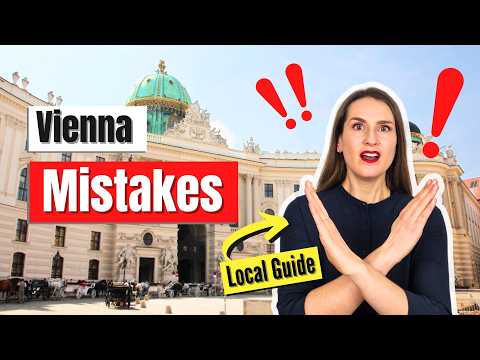
5 biggest mistakes tourist ALWAYS make in Vienna – by local …
Grete the Austrian Guide – Grete Walz

10 Vienna Must See Sights – by Viennese Local Guide Grete …
Grete the Austrian Guide – Grete Walz
You are currently viewing a placeholder content from Vimeo. To access the actual content, click the button below. Please note that doing so will share data with third-party providers.
More InformationYou are currently viewing a placeholder content from YouTube. To access the actual content, click the button below. Please note that doing so will share data with third-party providers.
More InformationYou need to load content from reCAPTCHA to submit the form. Please note that doing so will share data with third-party providers.
More InformationYou are currently viewing a placeholder content from GetYourGuide. To access the actual content, click the button below. Please note that doing so will share data with third-party providers.
More Information