
Marrakesch: The Complete Travel Guide (2026)
Marrakesch Travel Guide: Everything You Need to Know (2026)
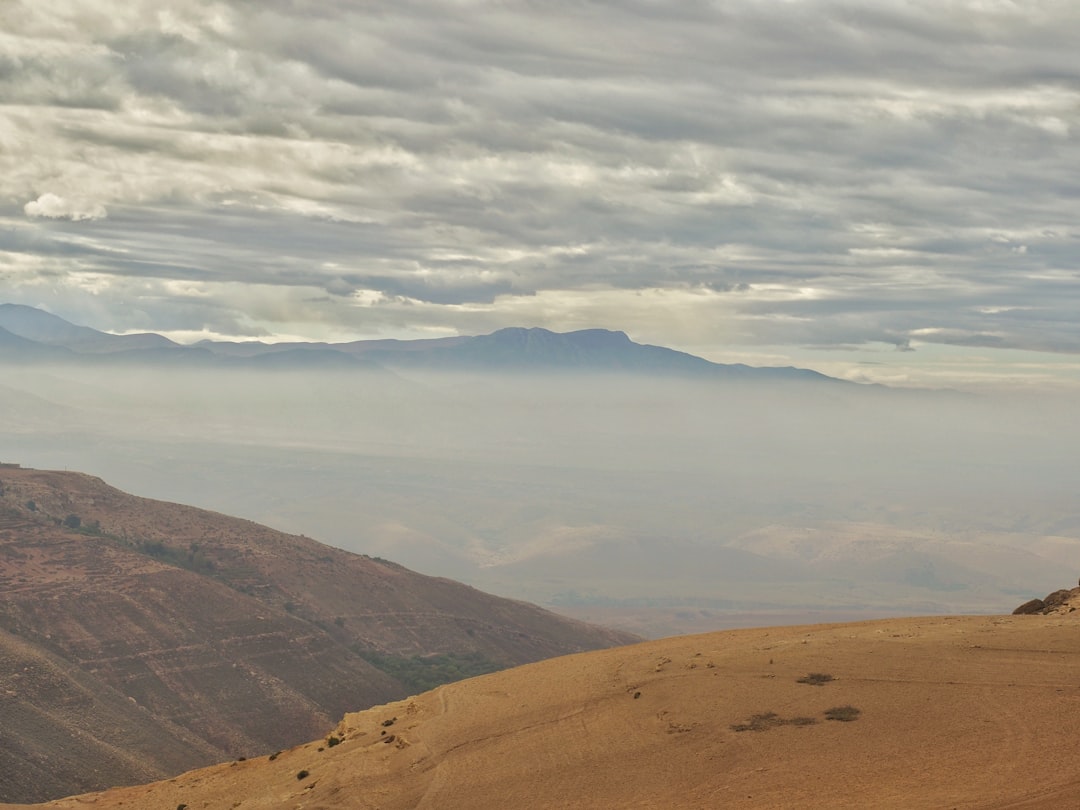
Marrakech sits at 465 metres above sea level on the edge of the Haouz Plain, with a population of 1,002,697 making it Morocco’s fourth-largest city and one of four imperial capitals. Founded in 1070 by the Almoravid dynasty, the medina alone packs more than 1,000 years of layered Islamic architecture into a labyrinth smaller than 6 square kilometres. What surprises most first-timers is how dramatically the Atlas Mountains — rising to 4,167 metres at Jebel Toubkal just 60 km away — dominate the southern skyline on a clear winter morning.
Three Things Not to Miss in Marrakesch
- Jemaa el-Fna at Dusk — The world’s only UNESCO-listed living cultural space transforms at sunset into a 200-stall open-air theatre of musicians, storytellers and food smoke.
- Bahia Palace — A 19th-century vizier’s residence with 8,000 square metres of zellige tilework and carved cedar ceilings that no photograph adequately captures.
- Yves Saint Laurent Museum — Opened in 2017, this purpose-built museum holds 5,000 haute-couture pieces and explains exactly why Marrakech shaped modern fashion’s colour palette.
Scroll down for our complete travel guide with tips on getting there, where to stay, costs and more.
How to Reach Marrakesch
How do I get to Marrakech?
Fly directly into **Marrakech Menara Airport (RAK)**, located just **6 km southwest** of Jemaa el-Fna — one of the most centrally placed airports I have encountered in North Africa. In my experience, **Ryanair, easyJet and Royal Air Maroc** operate the most reliable and affordable European routes, with fares from **DH 300–800 one-way** from major hubs when booked 6–8 weeks out. There are no useful train connections to Marrakech from Europe. The honest caveat most guides skip: connecting through **Casablanca Mohammed V Airport (CMN)** on Royal Air Maroc is sometimes cheaper than flying RAK direct, but the transfer adds **2.5 hours** minimum to your journey.
Which airport is closest to Marrakech?
**Marrakech Menara Airport (RAK)** is the only relevant airport — it sits **6 km** from the medina walls. I recommend it without hesitation over flying into Casablanca. From RAK, a **petit taxi** to Jemaa el-Fna costs a fixed **DH 70–100** day rate (insist on the meter or agree the price before boarding). The **Airport Bus Line 19** runs every 30 minutes for just **DH 30** but drops you at Place du 16 Novembre in Gueliz, not the medina gate. What surprised me: the terminal is small enough that baggage reclaim rarely takes more than 15 minutes, even on busy winter charter days.
How long does the journey from the airport to Marrakech city centre take?
By taxi, **Marrakech Menara Airport to Jemaa el-Fna takes 10–15 minutes** in normal traffic — one of the quickest airport transfers I have experienced anywhere. My tip: avoid arriving between **17:00 and 19:00**, when the Av. Mohammed VI corridor backs up and doubles journey time. The **Bus 19** takes **25–35 minutes** to Gueliz and an additional 10-minute walk to the medina. Ride-hailing apps like **Careem** quote fixed fares around **DH 60–80**, removing negotiation entirely. The honest warning: unmetered petit taxis at the arrivals kerb will open at **DH 200** — walk 50 metres to the taxi rank and the price halves.
Do I need a car in Marrakech?
No — a car inside the **medina is useless and often prohibited**. The historic core is pedestrian-only, and alleyways average **1.2 metres wide**. For the city itself, petit taxis, Careem and walking cover everything efficiently. I recommend renting a car only if you plan a day trip to **Ourika Valley** or the **Agafay Desert**, where public transport is sparse. **Avis and Europcar** at RAK quote from **DH 350/day** for a basic manual. The caveat: Marrakech traffic around **Avenue Mohammed V in Gueliz** is aggressive and parking is genuinely stressful — first-time visitors to Morocco should not rent a car for the city portion of their trip.
Marrakesch Public Transport Explained
What are the best areas to stay in Marrakech?
Stay in the **medina (old city)** for atmosphere or **Gueliz** for comfort and convenience. Inside the medina, the **Bab Doukkala and Mouassine** neighbourhoods offer riad stays without the maximum tourist density of the central souk area. Gueliz, the French-built new town along **Avenue Mohammed V**, suits travellers who prioritise air-conditioned restaurants, gyms and reliable Wi-Fi. In my experience, the **Hivernage** district — between Gueliz and the medina — is ideal for families: quieter, walkable to Jemaa el-Fna in 20 minutes, with larger hotel pools. The honest trade-off: medina riads are romantic but orientation inside the derbs (alleyways) takes at least one full day to master.
What does accommodation cost per night in Marrakech?
Budget hostels in the medina run **DH 120–200/night** for a dorm bed. A solid mid-range riad with breakfast costs **DH 600–1,200/night** for a double room. Design boutique riads in **Mouassine** charge **DH 1,500–3,000/night** and justify it with private plunge pools and rooftop terraces. Five-star resorts like **La Mamounia** start at **DH 5,000/night** and regularly hit DH 12,000 in peak winter weeks. My tip: riads in the **Mellah (old Jewish quarter)** near Place des Ferblantiers offer 20–30% lower prices than equivalent properties in the Mouassine neighbourhood, with genuinely more authentic street life outside the door. Breakfast is usually included in riad rates — confirm before booking.
How far in advance should I book accommodation in Marrakech during high season?
Book **at least 3 months ahead for December, March and April** — these are peak months and quality riads with fewer than 8 rooms sell out entirely. In my experience, the **New Year week (Dec 28–Jan 3)** requires 4–5 months lead time for anything under DH 2,000/night. The honest warning most guides skip: Marrakech hosts major international events like the **Marrakech International Film Festival** (usually November) and **COP-adjacent summits**, which cause city-wide sellouts with no pattern. Check the Moroccan cultural calendar before assuming shoulder-season availability. For October visits, booking **6–8 weeks out** is usually sufficient for mid-range riads.
Are there special accommodation types worth trying in Marrakech?
Yes — stay in a **riad** at least once. A riad is a traditional courtyard house, typically 2–4 storeys built inward around a central fountain or orange tree, with no windows facing the street. The silence they create inside the medina is remarkable. **Dar Cherifa** in Mouassine operates as both a cultural space and boutique guesthouse — a genuinely unique experience. For something different, **Agafay Desert eco-lodges** 35 km outside the city (like **Scarabeo Camp**) offer glamping with Atlas Mountain views from around **DH 1,800/night**. The trade-off: rooftop rooms in riads are stunning but often lack proper insulation — January nights at 465 metres elevation drop to **8–10°C**, so request a heated room explicitly.
Neighbourhoods of Marrakesch
What are the must-sees in Marrakech?
Three are non-negotiable. **Jemaa el-Fna** is the medieval square that UNESCO classified as Intangible Cultural Heritage — go at sunset, not midday. **Bahia Palace** (entry **DH 70**) shows 19th-century Moroccan palatial architecture at its most elaborate. The **Saadian Tombs**, rediscovered in 1917 after being sealed for 200 years, cost just **DH 70** and contain 66 royal graves in a space barely 30 metres long. My tip: visit the tombs at **08:30** when the gates open — by 10:00 the queue stretches 40 minutes. What surprised me: the **Mellah souk** near Place des Ferblantiers is largely overlooked by tour groups but sells the best silver jewellery at genuinely negotiable prices.
What can I experience for free in Marrakech?
Quite a lot. **Jemaa el-Fna** during the day is entirely free to walk through and watch. The **Majorelle Garden exterior walls and adjacent street art** around Rue Yves Saint Laurent are free to photograph. Wandering the **souks of the medina** — from the dyers’ quarter (Souk Sebbaghine) to the carpenters’ street — costs nothing. The **Koutoubia Mosque gardens** are free and offer the best unobstructed minaret view in the city. In my experience, the **Mellah cemetery** at the edge of the Jewish quarter is one of the most atmospheric and completely overlooked spots in Marrakech — free, rarely visited, and genuinely moving. The honest caveat: accepting any “free” guided tour from a stranger in the medina is never actually free.
Which day trips from Marrakech do you recommend?
Three stand out. **Ourika Valley** is just **32 km south** and takes 45 minutes by grand taxi (shared, **DH 25/person**) — the Berber villages and Atlas river scenery are completely unlike the city. **Ait Benhaddou** (a UNESCO kasbah used in Game of Thrones) is **190 km east** — a long day but manageable with a hired driver for around **DH 500–700**. **Essaouira**, the Atlantic port city, is **170 km west** and served by **Supratours buses** for **DH 90 each way** — I recommend it as an overnight rather than a day trip to avoid the 2.5-hour bus each way. The trade-off: many operators sell “Sahara day trips” from Marrakech — the actual dunes at **Merzouga** are 560 km away, so a one-day version is a 12-hour bus ordeal.
What local specialities should I eat in Marrakech?
Start with **tanjia Marrakchia** — slow-cooked lamb sealed in a clay urn and left in a hammam furnace overnight. It is eaten almost exclusively in Marrakech and is genuinely different from tagine. **Msemen** (layered flatbread with argan honey) makes the best breakfast, found at medina stalls from **DH 5**. **Bistilla** (pigeon pastilla with almond and cinnamon inside flaky pastry) at **Dar Yacout** or **Le Foundouk** is a formal-dinner revelation. The honest warning: the food stalls on **Jemaa el-Fna at night** are atmospheric but overpriced at **DH 120–200/meal** — identical food costs **DH 40–60** at lunchtime in the workers’ restaurants on **Rue Riad Zitoun el-Kedim**, 200 metres away.
What to See in Marrakesch
What makes Marrakech unique compared to other Moroccan cities?
Marrakech is the only Moroccan city where the **imperial past, Berber culture and international design world collide in one walkable space**. Fes has a deeper medina but no equivalent of the Yves Saint Laurent Museum or the Majorelle Garden — a **1 hectare cobalt-blue botanical garden** that attracted 900,000 visitors in 2023. The city’s **Gnawa music tradition** (inscribed on UNESCO’s Intangible Heritage list in 2019) is heard live on Jemaa el-Fna every evening, something you cannot replicate elsewhere. What surprised me most: Marrakech functions simultaneously as a working Moroccan city of 1 million people and one of Africa’s top luxury tourism destinations — that tension creates an energy that polished Gulf resort cities simply cannot manufacture.
How many days do I need in Marrakech?
**3 full days covers the medina core thoroughly; 5 days adds a day trip and real neighbourhood depth.** Day 1: medina sights and Jemaa el-Fna at dusk. Day 2: Majorelle Garden in the morning (book timed entry, **DH 150**), Gueliz neighbourhood, rooftop dinner. Day 3: Bahia Palace, Saadian Tombs, Mellah souk, hammam session. I recommend adding a **4th day for an Ourika Valley excursion** if Atlas scenery interests you. The honest caveat: travellers who rush Marrakech in 2 nights almost universally say they left too soon — the medina reveals itself slowly, and the first day is mostly orientation and getting lost. Build in unscheduled hours deliberately.
When is the best time to visit Marrakech?
**March, April, October and November** are the four best months. Spring brings temperatures of **20–26°C**, wildflowers on the Atlas foothills and manageable crowd levels. October and November deliver the same temperatures post-summer with the added bonus of the **Marrakech Popular Arts Festival** (July) already done and the **Film Festival** (November) adding cultural programming. In my experience, **April** is the single best month: roses bloom in the Ourika Valley for the **Rose Festival at El Kelaâ M’Gouna** (130 km away), temperatures rarely exceed 28°C in the city, and the light for photography is exceptional in the late afternoon medina alleys. Avoid July and August — **38–42°C** daily highs make midday sightseeing genuinely unpleasant.
What local festivals in Marrakech are worth attending?
**Marrakech International Film Festival** (November, exact 2026 dates TBC) is worth building your trip around — outdoor screenings happen on **Jemaa el-Fna** itself, films are subtitled in French and English, and celebrity sightings in Gueliz restaurants are common. The **Marrakech Popular Arts Festival** in July fills the El Badi Palace ruins (**DH 20 entry**) with Gnawa musicians, Berber dancers and Fantasia horsemen for 1 week. **Eid al-Adha** (date shifts annually — in 2026 it falls around June 7) transforms the medina profoundly but also closes most museums for **2–3 days**. My honest tip: Ramadan (February–March 2026 approximately) is not a bad time to visit — the post-iftar energy on Jemaa el-Fna after sunset is unlike any other time of year.
Marrakesch Food Scene
How does the weather affect activities in Marrakech?
**Summer heat above 38°C forces a complete restructuring of your day.** In July and August, I recommend visiting any outdoor sight before **10:00** and again after **18:00**, spending midday in a riad or air-conditioned museum. The **Majorelle Garden is unbearable in July midday** — go at opening (08:00) when it is 24°C and quiet. Winter (December–February) is genuinely cold in the evening at **465 metres elevation** — pack a warm layer for Jemaa el-Fna night markets when temperatures drop to **8°C**. Spring and autumn allow full-day outdoor activity without restriction. The honest caveat: Marrakech receives **250mm of rain annually** (mostly November–March), and when it does rain, the unpaved sections of the medina become muddy and treacherous — pack shoes with grip.
How crowded does Marrakech get in peak season?
**December–January and Easter week are the most crowded periods** — Jemaa el-Fna at 19:00 becomes genuinely difficult to navigate. The **Majorelle Garden caps visitors** with timed entry tickets that sell out **2–3 weeks in advance** during Christmas week. In my experience, the main souk arteries (Souk Smarine, Souk el-Attarine) are walkable but slow from 10:00–13:00 in peak season; heading there at **08:30** gives you 90 minutes of near-empty lanes. The honest number: Marrakech received approximately **3.5 million international tourists** in 2023 — the medina infrastructure has not scaled proportionally. The **Bahia Palace queue** can hit 45 minutes at 11:00 in April; pre-purchasing the **DH 70 ticket** online cuts that to zero.
How safe is Marrakech for travellers?
**Marrakech is safe for tourists by African and regional standards**, but petty crime is common. Pickpocketing peaks on **Jemaa el-Fna at night** and in the dense souk corridors — use a crossbody bag with a zip, not a backpack. The aggressive **faux guide** issue is real: young men will attach themselves to you, walk you to a destination and demand payment. My tip: when lost, enter any shop and ask for directions — shopkeepers reliably help without obligation. Solo women travellers should expect verbal harassment on quieter derbs after dark, particularly around **Bab Doukkala** — not dangerous, but persistent and exhausting. The neighbourhood of **Gueliz is noticeably more relaxed** than the medina for solo travellers in the evening. The police tourist brigade (**Brigade Touristique**) is genuinely responsive — save the number **0524-38-46-01**.
Is English widely spoken in Marrakech?
**In tourist-facing businesses, yes — English is reliable in the medina.** Most riad staff, souk vendors targeting visitors, restaurant servers in Gueliz and museum ticket offices communicate in English competently. What surprised me: Marrakech vendors typically open in French, then Spanish, then English — French remains the prestige second language from the colonial era. Away from tourism, Arabic (Darija dialect) and Tamazight dominate. Learning **5 phrases in Darija** changes interactions dramatically: “shhal hada” (how much is this?), “ghali bezzaf” (too expensive) and “la shukran” (no thank you) are the three that pay off most in the souks. The honest caveat: English in pharmacies and government offices outside the tourist zone is minimal — have a translation app ready.
Local Know-How for Marrakesch
What is the daily budget for travelling in Marrakech?
**Budget traveller: DH 350–500/day. Mid-range: DH 800–1,400/day. Comfort: DH 2,000–4,000/day.** Budget covers a dorm bed (**DH 150**), street food and medina lunches (**DH 80**), taxis (**DH 50**) and two paid sights (**DH 140**). Mid-range adds a riad double room (**DH 700**), sit-down dinners in Gueliz (**DH 200**) and a hammam session (**DH 150–300** at a tourist hammam like **Les Bains de Marrakech**). The hidden cost most budgets miss: **guided excursions**. A half-day Ourika Valley trip with a legitimate agency costs **DH 350–500/person** and is worth every dirham versus navigating independently. My honest warning: Marrakech has a wide price spread — the same tagine costs **DH 45** at a workers’ restaurant and **DH 180** at a terrace restaurant overlooking Jemaa el-Fna.
How does public transport work in Marrakech?
**The medina is walk-only; the wider city relies on petit taxis and buses.** Petit taxis (beige Dacia/Fiat sedans) run on meters within the city — a standard cross-city fare is **DH 15–30**. Bus network **ALSA Marrakech** covers Gueliz, Hivernage and the train station reliably; Line 1 and Line 3 are the most useful for tourists. A single bus ticket costs **DH 4**. The **Marrakech train station** (Avenue Hassan II, Gueliz) connects to Casablanca in **3 hours** for **DH 145–210** on ONCF rail — I consider this the best intercity option in Morocco. The honest gap: there is no metro, no tram and no ride-hailing equivalent to Uber that operates city-wide — **Careem** works but coverage is inconsistent outside Gueliz at peak times.
Which apps do you recommend for Marrakech?
**Four apps I actually used daily in Marrakech: Maps.me, Careem, Google Translate and XE Currency.** Download **Maps.me offline maps** of Marrakech before arrival — Google Maps loses GPS signal consistently inside the narrow medina derbs, while Maps.me handles them better. **Careem** (regional ride-hailing) gives fixed-price taxi quotes and eliminates negotiation. **Google Translate with Arabic camera mode** reads menu boards and souk price tags — set the source language to Arabic (Modern Standard, not Darija, but it gets 70% accuracy). **XE Currency** with a saved DH/EUR or DH/USD pair lets you instantly sanity-check souk prices during negotiation. My honest addition: download **Bolt** as a backup to Careem — in my experience one or the other always has surge pricing and you want the alternative ready.
Marrakesch at a Glance
| Population | 1,002,697 |
|---|---|
| Currency | Moroccan dirham (DH) |
| Official language | Arabic, Standard Moroccan Tamazight |
| Time zone | UTC+01:00 |
Source: Wikidata, retrieved September 2026.
Morocco › Marrakesch
More Destinations in Morocco
Essential Resources for Planning Your Trip to Marrakesch
- Africa Watch: Morocco tourism gains momentum — official visitor information, passes & events
- Wikipedia: Marrakesch — history, geography & background
- Wikivoyage: Marrakesch — community travel guide & practical tips
- Marrakesch — Lonely Planet — expert itineraries & travel inspiration
- Marrakesch — TripAdvisor — hotels, restaurants & traveller reviews
- Travel info – Getting around Morocco — how to get around
- Numbeo: Cost of Living in Marrakesch — current prices & cost comparison
- Timeanddate: Marrakesch Weather & Climate — forecasts & climate statistics
More Perspectives on Marrakesch
Marrakesch Travel Videos
Watch these videos for a visual preview before your trip:
- MARRAKECH, MOROCCO | 10 BEST Things To Do In & Around Marrakech
- 3 Days in Marrakech Travel Guide – 20 of the Best Things To Do in Marrakech
- Traveling to MARRAKECH in 2026? You Need to Watch This Travel Guide!
Data Sources
This page was compiled using data from Wikipedia, Wikidata, Open-Meteo (climate), Numbeo (cost of living) and REST Countries. Information is updated regularly.
Marrakesch Travel Discussions on Reddit
Real traveller experiences and community advice: