
Trikala: The Complete Travel Guide (2026)
Trikala Travel Guide: Everything You Need to Know (2026)
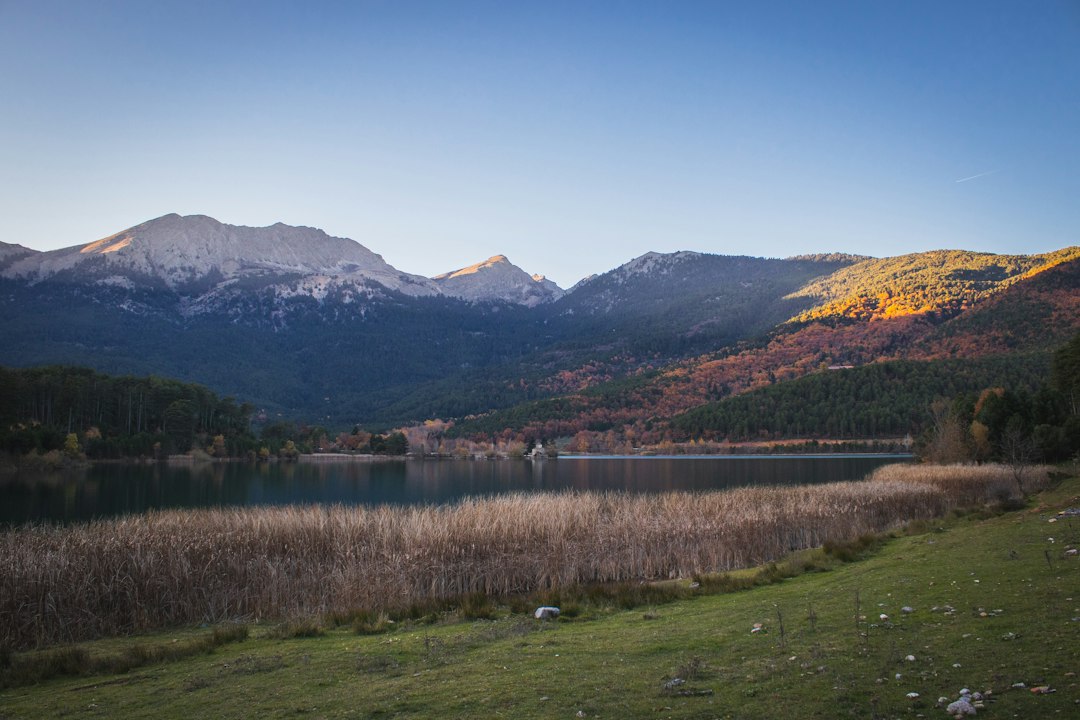
Trikala is a city of 61,608 residents in northwestern Thessaly, Greece, sitting at 115 metres above sea level along the Lithaios river. Founded on the site of ancient Trikke — one of Greece’s oldest continuously inhabited cities — it serves as the capital of the Trikala regional unit and sits just 20 kilometres from the UNESCO-listed Meteora rock monasteries. What surprised me most was how few international travellers use Trikala as a base, making it one of mainland Greece’s most underrated urban stops.
Three Things Not to Miss in Trikala
- Meteora Day Trip — Only 20 km away, six active monasteries perch on sandstone pillars rising up to 400 metres — a sight genuinely unlike anywhere else on Earth.
- Frourio of Trikala — A Byzantine fortress overlooking the Lithaios river with a rooftop café and panoramic views, restored in the 15th century by the Ottomans.
- Manavika Square & Old Bazaar — A living Ottoman-era marketplace with stone-paved alleys where local butchers and spice sellers have traded continuously for over 500 years.
Scroll down for our complete travel guide with tips on getting there, where to stay, costs and more.
How to Reach Trikala
How do I get to Trikala?
The fastest overland route is by intercity bus (KTEL) or train from Athens. In my experience, the **KTEL bus from Athens Liossion terminal takes roughly 4 hours** and costs around **€22–€28** one-way — more reliable than the train on this corridor. From Thessaloniki, buses take approximately **3 hours**. Direct buses also run from Larissa in **45 minutes**. My tip: book KTEL tickets online at least a day ahead in summer, because seats sell out fast. The caveat most guides omit is that the train service to Trikala is slow and involves a change at Palaiofarsalos — stick to the bus.
Which airport is closest to Trikala?
The closest usable airport is **Thessaloniki Airport Makedonia (SKG)**, roughly **220 km north**, followed by **Athens Eleftherios Venizelos (ATH)** at approximately **330 km south**. I recommend flying into Thessaloniki if you want to enter northern Greece with flexibility — from SKG, a bus or rental car to Trikala takes around **2.5–3 hours**. Athens gives you more international connections but adds travel time. The honest caveat: neither airport is close, so Trikala is not a fly-in-and-drop destination. Budget at least **€15–€30** for onward ground transport from whichever hub you use.
How long does the journey to Trikala take from major hubs?
From **Athens**, budget **4 hours by KTEL bus** or up to **5.5 hours by train** with a connection. From **Thessaloniki**, the KTEL bus runs in approximately **3 hours**. From **Larissa** — the nearest rail junction city — you can reach Trikala in **45 minutes by bus**. In my experience, the Larissa-to-Trikala leg is smooth and cheap at around **€5**. What surprised me is that driving from Athens via the E75 motorway takes only **3 hours** in light traffic, making a rental car genuinely competitive with the bus if you plan to explore the Pindus mountains or Meteora independently.
Do I need a car in Trikala?
For the city itself, no — Trikala’s centre is compact and walkable, with the **Frourio, Manavika Bazaar, and Lithaios riverfront** all within a 1.5 km radius. However, I strongly recommend renting a car if you want to explore the **Pindus mountain villages** or reach Meteora on your own schedule rather than relying on tour vans. Rental cars in Trikala city start around **€35–€50 per day** from local agencies near the KTEL bus station. The caveat: parking in the historic centre can be frustrating on weekday mornings — target the riverside lots instead.
Trikala Public Transport Explained
What are the best areas to stay in Trikala?
I recommend basing yourself in the **city centre near Plateia Riga Fereou** or along the **Lithaios riverfront** — both put you within a 10-minute walk of the Frourio, the old bazaar, and the best tavernas. The neighbourhood of **Varousi**, the old Ottoman quarter climbing the hill below the Frourio, is atmospheric and quiet at night. Avoid booking hotels on the outer ring roads: they save you nothing meaningful and cost you time. My tip: the riverside strip has the most pleasant morning walk in the city and concentrates the majority of café terraces.
What does accommodation cost per night in Trikala?
Budget guesthouses and rooms in Trikala run **€35–€55 per night** for a clean double. Mid-range hotels with private bathrooms and breakfast land at **€65–€95**. There are no five-star properties in the city — the top-end option is a comfortable four-star near the centre at roughly **€110–€130 per night**. In my experience, Trikala is noticeably cheaper than Athens or Thessaloniki for equivalent quality. The honest caveat: the supply of genuine boutique hotels is thin — if atmosphere matters to you, book the Varousi neighbourhood early, as those few restored stone guesthouses fill up fast in summer.
How far in advance should I book accommodation in Trikala during high season?
For **August** — the peak travel month — book at least **6–8 weeks ahead**, especially if you want anything in the **Varousi quarter** or with a Frourio view. The Meteora tourism overflow pushes day-trippers to stay in Trikala when Kalambaka hotels sell out, so demand spikes sharply in late July and August. For **October** — the other recommended travel month — **2–3 weeks** is usually sufficient. What most guides omit: the city hosts a large Christmas village event in December that books nearby guesthouses surprisingly fast — plan **4 weeks ahead** if visiting then.
Are there special or unique accommodation types in Trikala?
Trikala’s most distinctive option is the cluster of **restored Ottoman-era stone houses in Varousi** converted into small guesthouses — some with original wooden ceilings and views down to the Lithaios. A few agrotourism properties sit in the foothills of **Koziakas mountain**, about **15 km west**, offering rooms with forest views and home-cooked dinners for around **€60–€80** per night. In my experience, these mountain stays are the true hidden gem — completely off the standard tourist loop. The caveat: most have no online booking system, so you will need to call or email directly, and English language skills at these properties can be limited.
Neighbourhoods of Trikala
What are the must-see sights in and around Trikala?
Three things I consider non-negotiable: the **Frourio of Trikala** (the Byzantine-Ottoman fortress, free entry, open daily), the **Manavika old bazaar** with its continuous 500-year trading history, and of course **Meteora** just 20 km away. Within the city, the **Koursoum Mosque** — a rare intact 16th-century Ottoman mosque — is often overlooked by visitors rushing to the fortress. The **Lithaios riverside park** is genuinely lovely at dusk. My tip: climb to the Frourio at sunset, then descend to Varousi for dinner — that two-hour loop encapsulates the city’s entire character efficiently.
What can I experience for free in Trikala?
Quite a lot, honestly. The **Frourio fortress grounds** are free and open to the public. Walking the **Varousi neighbourhood** costs nothing and rewards with Ottoman-era architecture around every corner. The **Lithaios riverside path** stretches several kilometres and is one of the most pleasant urban walks in Thessaly. The **Koursoum Mosque exterior** and surrounding gardens are freely accessible. My tip: the city also has a free **Municipal Art Gallery** near the central square with rotating Greek contemporary exhibitions. The one honest caveat: Trikala’s free attractions close or reduce hours on Mondays — plan accordingly.
Which day trips from Trikala are worth doing?
**Meteora is the absolute priority** — the monasteries are 20 km away, reachable in under **30 minutes by car or 1 hour by local bus**. Beyond Meteora, the village of **Elati on Koziakas mountain** (25 km west) offers pine forest hiking and a completely different landscape in under an hour. **Larissa**, the Thessaly regional capital, is **45 minutes by bus** and worth a half-day for its Roman-era theatre. What most guides omit: the hot springs at **Smokovo** (45 km south) are genuine thermal baths used by locals for centuries and cost only **€5 entry** — virtually no tourists.
What local specialities should I eat in Trikala?
Trikala sits in prime livestock country, so **kokoretsi** (spit-roasted offal) and **kontosouvli** (slow-cooked pork on a spit) are the dishes I recommend trying first — you will find both at tavernas in the **Varousi quarter**. The region produces excellent **feta and graviera cheese** sold in the Manavika market. **Trachanas soup** — a fermented wheat-and-milk porridge — is the local winter comfort dish. My tip: the best value meal in the city is the **mageirefta** (oven-cooked daily stews) served at lunchtime in small neighbourhood restaurants near **Plateia Polytechniou** for around **€7–€10** per person.
What to See in Trikala
What makes Trikala unique compared to other Greek cities?
Three things set Trikala apart. First, its extraordinary **geographic position** — within 20 km of Meteora and at the foot of Pindus — makes it the most adventure-accessible mid-sized city in mainland Greece. Second, it has a **living Ottoman urban fabric** in Varousi that survived destruction and is not a reconstruction. Third, Trikala operates Greece’s first **autonomous shuttle bus network** (launched 2016), a genuine smart-city experiment that still runs today. In my experience, it is the only Greek city outside Athens where I have seen municipal driverless mobility tested at scale — a genuinely unexpected talking point for a city of 61,608 people.
How many days should I spend in Trikala?
**2 full days covers the city itself comfortably**; add a third day exclusively for Meteora and you have a complete, satisfying visit. Day 1: Frourio, Varousi, Manavika bazaar, riverside dinner. Day 2: Koursoum Mosque, Municipal Gallery, half-day excursion to Elati or Smokovo springs. Day 3: early departure to Meteora, timing your monastery visits before 10:00 to beat the tour buses. My honest caveat: travellers who try to squeeze Trikala into a single day as a Meteora add-on almost always regret not staying overnight — the city genuinely rewards an evening and morning.
When is the best time to visit Trikala?
Based on verified climate data, **August and October** are the two optimal months. August delivers reliably warm, dry conditions ideal for Meteora hiking and the Pindus foothills, though the city gets busy with Greek domestic tourists. October is my personal preference — temperatures are comfortable (typically **18–22°C**), crowds thin dramatically, and the Thessaly plain turns golden. The caveat most guides omit: **July in Trikala can be brutal** — the inland basin traps heat and temperatures regularly exceed **38°C**, making afternoon sightseeing genuinely unpleasant. If July is your only option, start every outdoor activity before 09:00.
Are there local festivals in Trikala worth attending?
The most distinctive event is **Trikala Christmas Village** (late November through January 6), which transforms the Frourio and riverside into an elaborate illuminated winter market — it draws visitors from across Thessaly and has grown significantly since 2015. In summer, the **Meteora-Rocks Festival** (typically July) takes place in Kalambaka, 20 km away, with international rock acts performing against the backdrop of the monasteries. Local **Apokries (Carnival) celebrations** in February are authentic and crowd-free by Greek standards. My tip: the Christmas Village is genuinely impressive but book accommodation **6 weeks ahead** — it is far more popular than most foreign travel guides acknowledge.
Trikala Food Scene
How does the weather in Trikala affect what activities I can do?
Trikala’s inland position creates a **continental microclimate** — hotter summers and colder winters than coastal Greece. This directly shapes your options: summer heat (July-August peaks above **38°C**) limits midday hiking but makes evening riverfront dining perfect. Spring (April-May) is ideal for **Pindus mountain trekking** before snowmelt ends. October offers the best conditions for **Meteora monastery walks** — cooler air, fewer crowds, better light for photography. Winter (December-February) brings occasional snow to the city at **115m elevation** — the Koziakas mountain above gets heavy snowfall and attracts Greek skiers to the **Pertouli ski area** (35 km west).
How crowded does Trikala get in peak season?
The city itself never reaches the saturation levels of Santorini or Mykonos — Trikala remains fundamentally a **Greek domestic destination**. Peak crowding occurs in **August** when Greek families holiday and overflow from Kalambaka (the town at Meteora’s base) fills Trikala hotels. The Frourio and Varousi can feel genuinely busy on August evenings. The honest caveat: **Meteora itself gets severely overcrowded** in July-August — some monasteries limit visitor numbers and queues at **Megalou Meteorou monastery** can reach 45 minutes. Visit Meteora on a weekday in October and you will have the clifftop paths nearly to yourself.
How safe is Trikala for travellers?
Trikala is **very safe by any European standard** — petty crime rates are low and violent incidents involving tourists are essentially unheard of. The Varousi quarter is perfectly safe to walk at night, and the riverside park stays populated and well-lit until midnight in summer. The one caveat worth mentioning: **road safety on mountain routes** toward Pindus and Koziakas is a genuine concern — narrow, unlit roads with sharp bends catch overconfident drivers. In my experience, driving after dark on the Elati mountain road is genuinely risky. Stick to daylight hours for any mountain driving and the overall safety picture is excellent.
Is English widely spoken in Trikala?
In hotels, restaurants, and tourist-facing businesses, **yes** — English is workable throughout the city centre. Younger Greeks (under 40) in Trikala generally speak competent English. However, in the **Manavika bazaar**, older market traders, and neighbourhood kafeneions (traditional coffee houses), Greek is the default and you may find zero English spoken. In my experience, this is not a problem — a few Greek words and Google Translate get you through every situation. My tip: learning **”Poso kani?” (How much?)** and **”Efcharisto” (Thank you)** earns you immediate goodwill from older locals in the market.
Local Know-How for Trikala
What is the daily budget for travelling in Trikala?
A **budget traveller** spending carefully can manage on **€50–€65 per day** — a hostel or simple room (€35), local lunches (€8–€10), bus transport, and free sights. A **mid-range traveller** staying in a comfortable hotel with one restaurant dinner per day should budget **€100–€130 per day**. My tip: food costs in Trikala are noticeably lower than Athens — a full taverna meal with wine runs **€15–€22 per person**. The hidden cost most travellers miss is the **Meteora monastery entry fees**: each monastery charges **€3**, and visiting all six costs **€18 per person** — budget this separately from your daily city spend.
How does public transport work within Trikala?
Within the city, Trikala operates **municipal buses** covering the main districts, and uniquely, the **Kargo autonomous shuttle** — Greece’s first driverless public shuttle, running a fixed route near the city centre since 2017. City bus tickets cost around **€1.20** per ride. For Meteora, a **KTEL local bus** runs from Trikala bus station to Kalambaka (**€2.50, 40 minutes**) with connections to the monastery area. My honest caveat: inter-district buses run infrequently on weekends and stop early — by 21:00 most lines are done. For Koziakas mountain villages, there is effectively no usable public transport, making a car or taxi essential.
Which apps do you recommend for getting around Trikala?
**Google Maps** covers Trikala well for walking and driving navigation — it correctly identifies the Varousi lanes and Frourio access path. **KTEL Thessalias** has a functional (if basic) website for bus times, but no dedicated app — save the schedule as a screenshot. **Bolt** operates in Trikala for taxis — in my experience, coverage is thin but functional during daytime, typically delivering a driver within **8–12 minutes** in the city centre. For Meteora monastery research and timing, **the official Meteora website** (meteorameteora.gr) is more reliable than third-party tour apps. **XE Currency** is useful for tracking the euro if you are arriving from a non-eurozone country.
Trikala at a Glance
| Population | 61,608 |
|---|---|
| Currency | EUR (€) |
| Official language | Greek |
| Time zone | UTC+02:00 |
Source: Wikidata, retrieved September 2026.
Greece › Trikala
More Destinations in Greece
Essential Resources for Planning Your Trip to Trikala
- Tourism-Travel – KTEL TRIKALON SA — official visitor information, passes & events
- Wikipedia: Trikala — history, geography & background
- Wikivoyage: Trikala — community travel guide & practical tips
- Castle | Greece | Attractions — expert itineraries & travel inspiration
- THE 15 BEST Things to Do in Trikala (2026) — hotels, restaurants & traveller reviews
- 2026 Trikala Travel Guide: must-see attractions, popular … — how to get around
- Numbeo: Cost of Living in Trikala — current prices & cost comparison
- Timeanddate: Trikala Weather & Climate — forecasts & climate statistics
More Perspectives on Trikala
- 2026 Trikala Travel Guide: must-see attractions, popular food, …
- Trikala Travel Guide & Travel Tips
- Discovering the charm of Trikala city in Greece
Trikala Travel Videos
Watch these videos for a visual preview before your trip:
- Trikala Greece | Travel guide: Meteora – Elati | Top attractions
- Meteora, Greece: Complete Travel Guide | One of the BEST Things to Do in Greece
- Trikala – An all year-round destination
Trikala Travel Discussions on Reddit
Real traveller experiences and community advice:
- Larissa, Trikala or Kalabaka for a trip to Meteora?
- Travel to Greece during Christmas : r/GreeceTravel
- Questions about Kalambaka, Meteora & Delfi : r/travel
Data Sources
This page was compiled using data from Wikipedia, Wikidata, Open-Meteo (climate), Numbeo (cost of living) and REST Countries. Information is updated regularly.