
Adjara: The Complete Travel Guide (2026)
Adjara Travel Guide: Everything You Need to Know (2026)
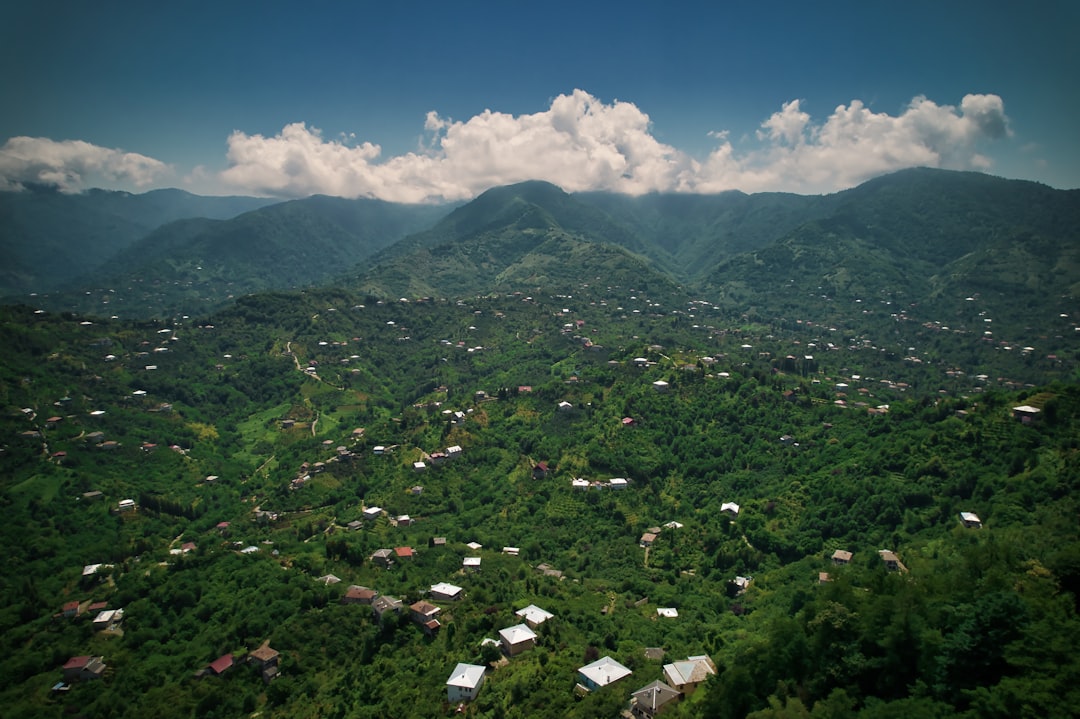
Adjara is Georgia’s subtropical southwestern corner, an Autonomous Republic hugging the Black Sea coast at the foot of the Lesser Caucasus Mountains, sharing a border with Turkey just 15 km south of Batumi. With a regional population of 402,929, Batumi serves as the capital and Georgia’s second most populous city, sitting at nearly sea level while mountain villages like Khulo perch above 1,000 m altitude. This collision of coastline, alpine terrain, and Ottoman-influenced culture makes Adjara one of the most geographically and culturally layered regions in the entire Caucasus.
Three Things Not to Miss in Adjara
- Batumi Boulevard — A 7 km Black Sea promenade lined with architectural landmarks — the dancing fountains alone draw crowds after dark.
- Machakhela National Park — Georgia’s only temperate rainforest, where trails pass 500-year-old yew trees just 30 km from the coast.
- Goderdzi Pass — A 2,025 m alpine pass connecting inner Adjara to Samtskhe-Javakheti — open year-round and stunning in winter snow.
Scroll down for our complete travel guide with tips on getting there, where to stay, costs and more.
How to Reach Adjara
How do I best reach Adjara from abroad?
Fly directly into Batumi International Airport — it is the single most efficient entry point. **Batumi Airport (BUS)** sits just **5 km from the city centre**, with direct flights from Istanbul, Moscow, Tel Aviv, Dubai, and several European cities. Alternatively, arrive at **Tbilisi International Airport (TBS)** and take a marshrutka or train to Batumi — the journey is roughly **5 hours by train** or **4.5 hours by minibus**. In my experience, flying directly into BUS saves a full travel day and costs surprisingly little in high season. The caveat most guides skip: BUS has limited winter flight schedules, so check carefully if you’re visiting between November and February.
Which airport is closest to Adjara?
**Batumi International Airport (BUS)** is the nearest airport, located **5 km from Batumi city centre** — about a **10-minute taxi ride**. It handles international traffic primarily from Turkey, the Gulf, Israel, and Russia. My tip: a licensed airport taxi costs around **₾20–₾30** to the centre, while a ride-share app like Bolt or Yandex Go cuts that to **₾12–₾18**. The honest caveat is that BUS remains a small regional airport with no business-class lounges and limited dining options airside, so eat before you board your departing flight. For wider flight availability, **Tbilisi Airport (TBS)** is the secondary option, **350 km away**.
How long is the journey from Tbilisi to Adjara?
Tbilisi to Batumi takes **4 hours 30 minutes by overnight train** or **4 hours 45 minutes by daytime train**. The overnight sleeper on the **Tbilisi–Batumi route** departs around 23:00 and arrives by 07:30 — I consider this the smartest option because you save on a hotel night and wake up in Adjara. Marshrutka minibuses from **Tbilisi’s Didube terminal** take roughly **4.5–5 hours** and cost around **₾20–₾25** per seat. What surprised me: the train is actually more comfortable and more reliable than the minibus, yet many travellers default to the minibus thinking it’s faster — it rarely is.
Are there direct bus connections into Adjara?
Yes, direct marshrutka services connect Adjara to every major Georgian city daily. **Tbilisi to Batumi** departs from **Didube Bus Terminal** and costs **₾25–₾30**. From **Kutaisi**, the journey takes about **2 hours** and costs **₾10–₾15**. International buses also run directly from **Istanbul to Batumi**, crossing the Turkish border at Sarpi — a **6–7 hour overnight journey** priced around **$15–$25 USD**. My tip: book Istanbul buses through Turkish operators like Metro Turizm at least 2 days ahead in summer. The caveat most travellers discover too late: marshrutkas leave when full, not on a fixed schedule, so arrive early at the terminal.
Is a rental car necessary in Adjara?
For Batumi city alone, no — you absolutely do not need a car. But for Adjara’s mountain interior, a rental car is close to essential. Villages like **Khulo, Shuakhevi, and the Goderdzi Pass** have minimal public transport, and the road scenery along the **Adjara Military Highway** is half the experience. I recommend renting from Batumi city rather than the airport to save roughly **₾30–₾50** per day in airport surcharges. Expect to pay **₾80–₾130 per day** for a basic hatchback. The critical warning most guides omit: mountain roads in upper Adjara require a **4×4 vehicle** between October and April — a compact car will leave you stranded on unpaved passes.
Sleeping in Adjara
Which towns in Adjara make good bases?
**Batumi** is the overwhelmingly practical base — it has the airport, all transport links, the widest range of hotels, and the Black Sea beach. For mountain exploration, **Khulo** serves as the gateway to upper Adjara and sits at roughly **900 m altitude**, offering a far quieter, more authentic experience. **Shuakhevi** is emerging as a ski-and-hiking base near **Goderdzi ski resort**. In my experience, splitting 7 days between Batumi (4 nights) and Khulo or Shuakhevi (3 nights) gives the most complete picture of Adjara. The honest trade-off: Khulo has limited dining and accommodation options compared to Batumi’s cosmopolitan restaurant scene.
Where should I stay in Adjara?
In Batumi, I recommend the **Old Town district** or the northern **Rustaveli Street corridor** for walkability and character. The **New Boulevard zone** has high-rise casino hotels that are cheaper than they look but noisy on weekends. In the mountains, guesthouses in **Khulo** and **Beshumi** offer full board for **₾60–₾80 per person per night** — some of the best-value hospitality in Georgia. What surprised me: Adjaran guesthouse hosts typically include **homemade wine, churchkhela, and adjarian khachapuri** in the room price without advertising it. Avoid the beachfront tower hotels on **Rustaveli Avenue** during July–August unless you book well in advance — they sell out and inflate prices aggressively.
What does accommodation cost in Adjara?
Budget guesthouses in mountain villages cost **₾40–₾70 per night** including breakfast. Mid-range hotels in central Batumi run **₾120–₾200 per night** for a double room in peak season. A quality boutique hotel in **Batumi’s Old Town**, like those near **Piazza Square**, costs **₾180–₾280** in July–August. Four-star beach hotels on the **New Boulevard** spike to **₾300–₾450** in peak summer. In my experience, the mountain guesthouses represent the single best accommodation value in all of Georgia — full board, family hospitality, and mountain views for under ₾80. The unavoidable caveat: Batumi hotel prices can triple between May and August compared to the November–March low season.
How far in advance should I book accommodation in Adjara?
For July and August in Batumi, book **at least 6–8 weeks ahead** — the city attracts enormous numbers of Georgian domestic tourists plus visitors from Armenia, Azerbaijan, Turkey, and Israel simultaneously. **Goderdzi ski resort** accommodation sells out in January and February, so book **3 months in advance** for winter skiing. Mountain guesthouses in places like **Khulo and Beshumi** are generally bookable **1–2 weeks ahead** even in peak season, because foreign tourist volume there is low. My tip: Booking.com has reasonable Batumi coverage, but local Georgian platforms and direct guesthouse phone calls get you better rates in the mountains. What surprised me: New Year’s Eve in Batumi is as chaotic as peak summer — book even earlier for that period.
When is the best time to visit Adjara?
**June through September** is the optimal window for coast-and-mountain travel in Adjara. June offers lush green landscapes after the spring rains without July’s peak-season crowds. September is my personal favourite month — water temperatures remain warm at **22–24°C**, crowds thin dramatically after Georgian school resumes, and the mountains turn amber. For skiing at **Goderdzi**, January–February is the target window with reliable snow above 1,800 m. The honest trade-off: Adjara’s subtropical climate means even summer sees brief heavy rain showers — pack a compact waterproof jacket regardless of the month. I recommend avoiding **October–November** for beach purposes as the Black Sea becomes stormy and grey.
When to Travel to Adjara
How does the weather in Adjara affect activities?
Adjara’s subtropical coast gets **2,500–2,800 mm of rainfall per year** — more than almost anywhere else in Georgia — so outdoor plans need flexibility. Beach and watersports are best from **late June through mid-September** when temperatures reach **28–32°C** and rain is intermittent rather than persistent. Mountain hiking in **Machakhela National Park** and the **Kintrishi Protected Areas** is ideal May–October, but trails above 1,800 m can hold snow until late May. In my experience, morning starts before 10:00 are essential for mountain day trips — afternoon cloud build-up and rain showers are routine in summer. The hidden warning: Goderdzi Pass road can close without notice in early winter even when the resort is technically open — always check locally before driving up.
Are there local festivals in Adjara worth attending?
**Batumoba Festival** in early June celebrates Batumi’s founding and fills the boulevard with folk music, traditional Adjaran dance, food stalls, and fireworks — one of the liveliest regional festivals in Georgia. The **Adjara Wine Festival** in autumn (typically October) takes place in villages like **Khulo**, showcasing the region’s distinctive Adjaran white wines and chacha grape brandy. **Black Sea Jazz Festival** in Batumi draws international acts to the Boulevard stage each July — tickets cost **₾30–₾80** depending on the concert. In my experience, Batumoba in June is the single best festival timing to visit if you want culture without peak-season hotel prices. The caveat: exact festival dates shift annually — verify on the **Batumi City Hall** website before booking flights around them.
When does Adjara get overcrowded?
**July and August** are brutally crowded in Batumi — the beach is elbow-to-elbow, restaurant queues stretch 30 minutes, and Batumi Boulevard becomes a slow-moving human traffic jam after 19:00. Georgian domestic tourists, who make up the majority of summer visitors, flood in from Tbilisi and eastern Georgia for their annual Black Sea holiday. **New Year’s Eve** (December 31–January 2) is Batumi’s second peak, with the city hosting massive celebrations that fill every hotel. In my experience, the mountain interior of Adjara — **Khulo, Beshumi, Goderdzi** — stays genuinely uncrowded even in August, making it the perfect escape from Batumi’s summer intensity. My tip: schedule Batumi for a weekday and the mountains for the weekend, not the reverse.
What does a daily budget cost in Adjara?
A realistic daily budget for Adjara is **₾80–₾120 per person** for a mid-range independent traveller in 2026. This covers a guesthouse or budget hotel (**₾50–₾70**), 3 meals at local restaurants (**₾25–₾35**), and local transport (**₾5–₾15**). A budget backpacker staying in hostels and eating at khinkali houses can get by on **₾50–₾60 per day**. A comfortable mid-range Batumi experience with a decent hotel and restaurant dinners runs **₾150–₾220 per day**. What surprised me: Adjara is significantly cheaper than Western European beach destinations at comparable quality — a full Adjaran dinner with wine for 2 people costs under **₾80** at most non-tourist restaurants. The honest caveat: Batumi casino hotels and beachfront restaurants charge Tbilisi-level prices, so eating one block inland saves 30–40% immediately.
Is Adjara cheaper or more expensive than other Georgian regions?
Batumi is the **most expensive city in Georgia after Tbilisi**, largely because of summer tourism demand and casino-hotel infrastructure. However, Adjara’s mountain interior is among the **cheapest regions in the country**. In villages like **Khulo**, a full dinner with homemade wine costs **₾15–₾25**. Compared to Kazbegi — Georgia’s other popular mountain destination — Adjara’s highlands are roughly **20–30% cheaper** with far fewer foreign tourists. Restaurant prices on **Batumi’s beachfront boulevard** match or exceed Tbilisi costs, while the same meal 3 streets inland costs half as much. In my experience, Adjara’s value depends entirely on where and how you spend — mountain village life here is extraordinary value; Batumi waterfront is Georgia’s most tourist-inflated zone.
Daily Costs in Adjara
What free highlights are there in Adjara?
**Batumi Boulevard itself** — all 7 km of it — is completely free to walk and genuinely spectacular, especially at night when the fountain and light installations run. The **Old Town of Batumi** is a free-roaming neighbourhood of Ottoman, Soviet, and Art Nouveau architecture requiring no entry fee. **Machakhela Canyon** trails in the national park have no entry charge. The **Botanical Garden of Batumi** costs only **₾10** for adults — arguably the best ₾10 you spend in all of Georgia for its 108 hectares of subtropical plant collections. In my experience, the free self-guided walk from **Piazza Square** through the Old Town to the alphabet tower and then along the boulevard at sunset is one of the finest 2-hour city experiences in the Caucasus, beating paid tours completely.
What do local specialities cost in Adjara?
Adjara’s signature dish — **Adjarian khachapuri** (a boat-shaped bread filled with cheese, egg, and butter) — costs **₾8–₾15** at a local bakery or restaurant, depending on size. **Khinkali** (Georgian soup dumplings) run **₾0.80–₾1.20 per piece**, and a filling order of 10 costs under **₾12**. A full sit-down dinner at a non-tourist local restaurant in the **Bagrationi Street area** of Batumi averages **₾25–₾40 per person with wine**. Adjara-specific **walnut-stuffed eggplant (nigvziani badrijani)** and **bean stew (lobiani)** are typically **₾6–₾10** as starters. My tip: eat Adjarian khachapuri only at places where you can see the wood-fired **tone oven** through the window — tourist versions served in plastic melamine dishes are a poor imitation.
Which route do you recommend for 5–7 days in Adjara?
**Day 1–2:** Arrive Batumi, walk the Old Town and Boulevard, visit **Batumi Botanical Garden**, eat Adjarian khachapuri at a tone oven bakery near **Piazza Square**. **Day 3:** Day trip to **Machakhela National Park** — the canyon trail to the suspension bridge takes 3 hours return. **Day 4:** Drive or minibus to **Khulo** (2 hours), base yourself overnight, and take the cable car over the valley — a uniquely Adjaran experience. **Day 5:** Continue to **Beshumi alpine meadows** (1,900 m altitude) for hiking with Black Sea panoramas. **Day 6:** Cross **Goderdzi Pass** and spend the afternoon at the ski resort zone before returning to Batumi. **Day 7:** Half-day at **Sarpi border beach** (5 km from Turkey), then depart. This route requires a 4×4 rental or a private driver for days 4–6.
What are the must-see sights in Adjara?
**Batumi Botanical Garden** — founded in 1912, 108 hectares of subtropical flora on a Black Sea cliff — is unmissable. **Petite Imatra Waterfall** in Machakhela canyon is a 20-minute drive from the coast and disproportionately beautiful for how few tourists find it. **Goderdzi Pass** at **2,025 m** provides the most dramatic mountain scenery in the region. In Batumi city, the **Ali and Nino kinetic sculpture** on the boulevard is a genuine engineering marvel — two steel figures that walk toward each other and merge every 10 minutes. The **Mosque of Batumi** in the Old Town, one of the few active mosques in Georgia, represents the region’s Ottoman cultural inheritance. In my experience, tourists who skip the mountain interior and spend all 7 days in Batumi miss the deeper, stranger, more beautiful half of Adjara entirely.
What natural highlights does Adjara offer?
Adjara packs extraordinary natural diversity into a **100 km north-to-south span**. **Machakhela National Park** protects Georgia’s only temperate rainforest, with trails winding through colchic forest containing trees over 500 years old. **Kintrishi Protected Areas** hosts brown bears, lynx, and chamois — I saw chamois on the ridge above **Beshumi** on my last September visit. The **Black Sea coast** at **Kvariati** and **Gonio** has cleaner, less crowded beaches than central Batumi. **Beshumi alpine meadows** at 1,900 m bloom with wildflowers from June through August. The honest caveat: Adjara’s high annual rainfall means rivers and waterfalls are dramatic but trails can be muddy — proper hiking boots are not optional, they are mandatory for anything beyond the Batumi promenade.
What Not to Miss in Adjara
What local specialities should I try in Adjara?
**Adjarian khachapuri** is non-negotiable — it was born here and the boat-shaped version with raw egg yolk stirred into the centre is the authentic form. **Shkmeruli** (chicken braised in garlic-cream sauce) originates from the Adjara-adjacent Racha region but appears on every local menu. **Adjarian churchkhela** uses different nut ratios than Kartlian versions — look for the distinctly darker walnut-heavy strands sold near **Batumi market**. **Chacha** (grape-based spirit, 50–60% alcohol) from Adjaran village distilleries is rougher and stronger than commercial versions — try it with honey at a guesthouse in **Khulo**. What surprised me: Adjara’s Muslim-heritage villages historically produced less pork than other Georgian regions, so local menus lean heavily on walnut-based vegetable dishes that are extraordinary in their own right — don’t skip them expecting khinkali exclusively.
What activities are available in Adjara?
The activity range in Adjara is one of the widest of any Georgian region. **Beach and watersports** along the Black Sea coast run from June through September — banana boats, jet skis, and parasailing are all available at **Batumi beach** for **₾20–₾60 per activity**. **Hiking** in Machakhela and Kintrishi can be done independently or with guides from Batumi for **₾50–₾100 per person per day**. **Skiing and snowboarding** at **Goderdzi resort** runs December–March, with lift passes costing **₾50–₾80 per day**. **Paragliding** launches from ridges above **Khulo** with tandem flights at **₾150–₾200**. **White-water rafting** on the Adjaris-Tskali River near **Khelvachauri** is available May–September. In my experience, combining beach mornings with mountain afternoons in a single June day is uniquely possible in Adjara — nowhere else in Georgia offers that.
What distinguishes Adjara from other Georgian regions?
Adjara’s distinctness rests on 3 pillars no other Georgian region replicates simultaneously. First, it is the **only Georgian region with a Black Sea coast** open to international beach tourism at scale. Second, its **Ottoman and Muslim cultural heritage** — visible in Batumi’s Old Town architecture, the active mosque, and culinary traditions — creates a cultural texture entirely different from Kartlian or Kakhetian Georgia. Third, it is an **Autonomous Republic** with its own governance, history of separatist tension (resolved by 2004), and distinct regional identity. In my experience, the contrast between a casino-lit Batumi evening and a guesthouse dinner in a **Khulo village where the host speaks no English and pours chacha from an unlabelled jar** encapsulates the breadth of Georgia better than any single region in the country.
Which day trips from Adjara are possible?
From Batumi, the strongest day trips all fall within **1–2.5 hours** by road. **Gonio Fortress** — a 1st-century Roman fort **15 km south of Batumi** near the Turkish border — takes 30 minutes to reach and 90 minutes to explore. **Kobuleti** wetlands and beach town lie **25 km north** along the coast and are excellent for birdwatching. **Machakhela Canyon** is a **45-minute drive** east — bring a packed lunch and walk the suspension bridge trail. **Batumi Botanical Garden** technically qualifies as a half-day rather than day trip given it’s only **9 km from the city centre**. For ambitious travellers, **Vardzia cave monastery** in Samtskhe-Javakheti is reachable in **3 hours via the Goderdzi Pass** — a full but spectacular day. My tip: hire a driver for the Goderdzi–Vardzia route rather than driving yourself; the pass road demands local knowledge.
Are there language barriers in Adjara?
Georgian is the official language and the dominant tongue throughout Adjara. In **Batumi’s tourist zones**, English is spoken adequately at hotels, major restaurants, and tour operators — you will manage fine without Georgian. In mountain villages like **Khulo, Shuakhevi, and Beshumi**, English speakers are rare; Russian functions as a practical second language with guesthouse owners over 40. Turkish is widely understood near **Sarpi and Batumi** due to proximity and trade history. In my experience, learning 5 Georgian phrases — **gmadlobt** (thank you), **gamarjoba** (hello), **diakh** (yes), **ara** (no), and **ra ghirs** (how much?) — genuinely transforms your interactions with village guesthouse hosts who are delighted by any effort. Download **Google Translate with Georgian offline** before arrival; the camera translation mode handles menus passably well.
Before You Go to Adjara
Which apps do you recommend for visiting Adjara?
**Bolt** is the essential rideshare app in Batumi — more reliable and transparent than street taxis, with fares **30–50% cheaper** than flagging a cab. **Maps.me** with Georgia downloaded offline outperforms Google Maps for mountain trails and rural roads in upper Adjara where mobile data is patchy. **Georgian Railways app** (or their website) books Tbilisi–Batumi train tickets — reserve the sleeping car berths at least **3 days ahead** in summer. **Windy.com** is my personal recommendation for mountain weather forecasting around **Goderdzi Pass** — it tracks wind and cloud at altitude far better than generic weather apps. **WhatsApp** is universally used by guesthouses and local guides for booking and communication. The caveat: Batumi’s mobile coverage is excellent, but **above 1,500 m in the Adjara range**, Magti network outperforms Geocell — buy a **Magti SIM** at the airport for **₾10–₾15** including 10 GB data.
Are there medical facilities in Adjara?
Batumi has solid medical infrastructure for a city its size. **Batumi Medical Centre** on **Chavchavadze Street** handles emergencies and has English-speaking staff on rotation. **Republican Hospital of Adjara** is the regional referral centre for serious cases. Pharmacies (**aptiaki**) are plentiful in central Batumi and stocked with European generic equivalents of most medications. In mountain villages, the nearest reliable medical care is typically back in Batumi — **1.5–2.5 hours by road** from places like Khulo. In my experience, travel insurance with **medical evacuation coverage** is genuinely important for Adjara’s mountains, not a box-ticking exercise. The honest caveat: altitude sickness is not a concern at Adjaran elevations (max ~2,600 m), but broken bones from trail falls are a real mountain risk — carry a basic first aid kit and charged phone at all times above the treeline.
How safe is Adjara for travellers?
Adjara is very safe by international standards — petty crime in Batumi is low, and violent crime against tourists is exceptionally rare. **Batumi’s casino strip** on the boulevard draws gambling tourists from Azerbaijan and Russia, and occasional late-night confrontations happen near casino exits after midnight, but these rarely involve foreign visitors. The mountain interior is completely safe and locals are notably hospitable. Road safety is the genuine risk most guides understate: **mountain roads above Khulo** are narrow, poorly marked, and share lanes with agricultural vehicles — drive at 20 km/h on hairpin sections and never at night. In my experience, solo female travellers report feeling comfortable in Batumi and in mountain guesthouses — Adjaran hospitality culture extends genuinely to all guests. The only firm rule: never accept unlicensed taxis outside **Batumi train station** at night.
What are common traveller mistakes in Adjara?
The single biggest mistake is spending the entire trip in **Batumi without venturing into the mountain interior** — most travellers who do this leave feeling they missed the real Adjara. Second: renting a **standard 2WD hatchback** and attempting the **Goderdzi Pass** road without checking current road conditions — this ends in either a broken car or a turned-around trip. Third: eating exclusively on **Batumi Boulevard** where prices are inflated and quality is average — walk 3 streets inland to **Chavchavadze or Pushkin Street** for authentic food at half the price. Fourth: underestimating **Adjara’s rainfall** — visitors in June–August who pack only summer clothes get caught in downpours without layers. My tip: the marshrutka from Batumi to Khulo costs **₾8** and takes **2 hours** — it is one of Georgia’s great underrated journeys and almost no foreign tourists are on it.
Which accommodation types suit Adjara best?
In Batumi, **boutique hotels in the Old Town** (near **Piazza Square**) offer the best balance of character and location — expect to pay **₾150–₾220 per night**. For budget travellers, **hostels along Ninoshvili Street** in central Batumi run **₾25–₾40 per dorm bed**. In the mountains, **family guesthouses** (Georgian: **sakhli**) in Khulo, Shuakhevi, and Beshumi are the only realistic option and also the best one — full board for **₾60–₾90 per person** is standard, and the food quality often exceeds Batumi restaurants. **Eco-lodges and glamping** are emerging near **Goderdzi resort** for visitors wanting mountain comfort without roughing it. In my experience, a guesthouse booking in the Adjaran mountains, made by WhatsApp message with a photo of your intended arrival date, is accepted cheerfully within the hour — the informality is part of the appeal, not a red flag.
Adjara at a Glance
| Population | 402,929 |
|---|---|
| Currency | Georgian lari (₾) |
| Official language | Georgian |
| Time zone | UTC+04:00 |
Source: Wikidata, retrieved September 2026.
Georgia › Adjara
Essential Resources for Planning Your Trip to Adjara
- Wikipedia: Adjara — history, geography & background
- Wikivoyage: Adjara — community travel guide & practical tips
- Adjara Arts Museum | Batumi, Georgia | Attractions — expert itineraries & travel inspiration
- THE 15 BEST Things to Do in Adjara Region (2026) — hotels, restaurants & traveller reviews
- Aka Group Travel Offers group and individual tours all around … — how to get around
- Numbeo: Cost of Living in Adjara — current prices & cost comparison
- Timeanddate: Adjara Weather & Climate — forecasts & climate statistics
More Perspectives on Adjara
- Adjara Travel Guide 2026: Top places, Things to do & Itinerary
- A guide to visiting Adjara mountains in Georgia
- 15 Things to Do in Upper Adjara, Georgia
Adjara Travel Videos
Watch these videos for a visual preview before your trip:
- Discover Ajara: UNESCO-protected forests, legendary Georgian hospitality and futuristic architecture
- 48 Hours in Batumi, Georgia!! (Full Documentary) Adjarian Khachapuri and Attractions Tour!
- Don’t Visit BATUMI Georgia Without Watching This! (2024 Guide)
Adjara Travel Discussions on Reddit
Real traveller experiences and community advice:
- Georgia (Svaneti and Adjara), July 2024 : r/travel
- My parents-in-law had a trip to Georgia planned a while …
- Advice on Georgia : r/solotravel
Data Sources
This page was compiled using data from Wikipedia, Wikidata, Open-Meteo (climate), Numbeo (cost of living) and REST Countries. Information is updated regularly.