
Borjomi: The Complete Travel Guide (2026)
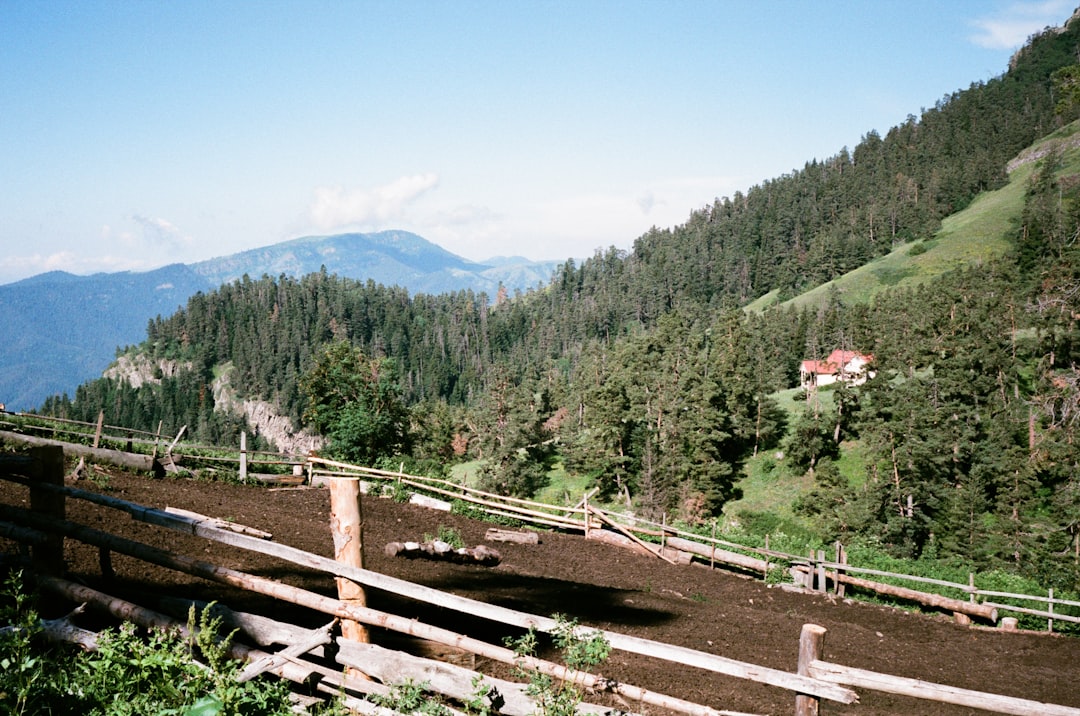
Borjomi Travel Guide: Everything You Need to Know (2026)
Borjomi is a Georgian spa resort town of 11,194 residents nestled at 820 m altitude in the dramatic Borjomi Gorge, just 165 km southwest of Tbilisi. Founded as a resort in the 19th century under Russian Imperial rule, it became famous worldwide for its naturally carbonated mineral water, which has been exported commercially since 1894. The Borjomi-Kharagauli National Park — one of Europe’s largest protected forest areas at over 85,000 hectares — begins right at the town’s eastern edge.
Three Things Not to Miss in Borjomi
- Borjomi Central Park & Mineral Spring — Drink free sulfuric mineral water straight from the source in a park that has drawn health-seekers since the 1840s.
- Borjomi-Kharagauli National Park Trails — Hike 700 km of marked trails through old-growth Caucasian forest starting literally from the town boundary.
- Romanov Palace (Likani Palace) — The Imperial-era summer residence of the Romanov family sits 3 km from the centre inside a walled estate.
Scroll down for our complete travel guide with tips on getting there, where to stay, costs and more.
How to Reach Borjomi
How do I get to Borjomi from Tbilisi or other Georgian cities?
The fastest option is a marshrutka (minibus) from Tbilisi’s Didube terminal — **3 hours, roughly 10 GEL (~3.5 USD)**. In my experience, the early morning departures around **8:00 AM** fill fastest, so arrive 20 minutes early. A direct train runs from Tbilisi’s Central Station via Gori to Borjomi-Parki station; the journey takes **about 4.5 hours** but the scenery through the Mtkvari Valley is genuinely rewarding. My tip: skip the train if you’re short on time — the marshrutka is faster and more frequent. What surprised me is that there is no direct bus from Kutaisi; you must transfer in Khashuri, adding **45 minutes** to your journey.
Which airport is closest to Borjomi?
**Tbilisi International Airport (TBS)** is the primary gateway, **165 km from Borjomi’s centre**. Kutaisi International Airport (KUT) is technically closer at roughly **140 km** by road, but onward connections are far less convenient — no direct marshrutka exists from KUT to Borjomi. In my experience, flying into TBS and catching a marshrutka from Didube terminal is the smoothest route. The caveat most guides omit: TBS to Didube takes **30-40 minutes by metro** (Line 2 to Didube station, **1 GEL**), so budget **at least 1.5 hours** between landing and boarding your Borjomi bus.
How long does the journey to Borjomi take from Tbilisi?
By marshrutka from Didube, expect **3 hours under normal conditions**. By private taxi, the same route runs **2.5 hours** and costs around **80-100 GEL (~28-35 USD)** shared among passengers — worth it for groups of 3 or more. The train clocks **4.5 hours** but stops at Borjomi-Parki station, which is actually more central than the main station. My honest warning: the road through the Borjomi Gorge narrows significantly after Khashuri, and marshrutka drivers treat overtaking as a competitive sport — this section genuinely unsettles some passengers.
Do I need a rental car in Borjomi?
No — the town itself is fully walkable within **30 minutes end to end**. I explored every central sight and the national park trailheads without any vehicle. However, if you plan to visit **Akhaltsikhe’s Rabati Fortress** (28 km) or the cave town of **Vardzia** (75 km), a rental car saves enormous time. Local taxis charge roughly **30 GEL one-way to Akhaltsikhe**. The trade-off: renting in Borjomi itself is expensive and inventory is thin — rent in Tbilisi instead if a road trip is on your agenda. Fuel costs approximately **2.90 GEL per litre** as of 2025.
Borjomi Public Transport Explained
What are the best areas to stay in Borjomi?
I recommend the **Central Park strip** along Merab Kostava Street as your base — you’re within a **5-minute walk** of the mineral spring, the main park entrance, and the best restaurants. The **Likani neighbourhood**, 3 km west toward the Romanov Palace, is quieter and greener but requires a taxi or a pleasant riverside walk to reach anything. Budget travellers tend to cluster in guesthouses on **Rustaveli Street**, which runs parallel to the river and offers cheaper rooms without sacrificing central access. Avoid booking anything advertised as being near the train station — it’s a **20-minute walk uphill** from the actual town activity.
What does accommodation in Borjomi cost per night?
A clean guesthouse with breakfast on **Rustaveli Street** runs **30-50 GEL (~10-17 USD) per person**. Mid-range hotel rooms — private bathroom, air conditioning, often with mineral water spa access — cost **100-180 GEL (~35-62 USD) per double**. The top-end option is **Crowne Plaza Borjomi**, where rack rates hit **400-600 GEL (~138-207 USD)** in summer. In my experience, the sweet spot is a family-run guesthouse at **60-80 GEL** for a private double — you get home-cooked breakfast, local tips, and far more character than any hotel. The hidden cost: spa treatments at hotel facilities are priced separately, typically **50-80 GEL per session**.
How far in advance should I book accommodation in Borjomi during high season?
For **July and August**, book **at least 6-8 weeks ahead** — Borjomi is overwhelmingly popular with Georgian domestic tourists who book the moment school holidays are announced. What surprised me: the town’s 11,194 residents are vastly outnumbered by visitors in peak weeks, and quality rooms genuinely sell out. For the shoulder months of **May, June, and September**, **2-3 weeks** is usually sufficient. I recommend using **Booking.com** since many local guesthouses list only there and not on Airbnb. The caveat: cancellation policies at smaller guesthouses are often non-refundable within **48 hours** — read them carefully.
Are there special or unique accommodation types in Borjomi?
Yes — **mineral water spa hotels** are Borjomi’s defining accommodation quirk, and they’re worth experiencing once. Properties like **Hotel Intourist Borjomi** channel actual Borjomi mineral water into private baths in-room or in dedicated spa suites. Prices for spa-access rooms start around **200 GEL (~69 USD) per night**. For something more atmospheric, several **Soviet-era sanatoriums** have been partially renovated and accept guests — creepy in the best way, with grand staircases and faded murals intact. My tip: a night in one of these sanatorium-hotels gives you a physical sense of Borjomi’s 19th-century health-resort identity that no museum can replicate.
Neighbourhoods of Borjomi
What are the must-sees in Borjomi?
Three sights I consider non-negotiable: **Borjomi Central Park** with its free mineral spring tap (open daily, no charge), the **Borjomi-Kharagauli National Park** trailhead — take the **Green Trail** up to the ridge for views over the gorge — and **Likani Palace**, the Romanov summer residence **3 km from the centre**. The park cable car runs **500 m up the hillside to a secondary spring** for about **5 GEL each way** and gives the best panorama of the gorge without hiking. What most guides omit: the Soviet-era **Borjomi History Museum** on Kostava Street charges just **5 GEL entry** and contains genuinely fascinating exhibits on the mineral water industry’s imperial history.
What can I experience for free in Borjomi?
Drinking the famous mineral water directly from the **Central Park spring tap** costs nothing — this is the single most authentic Borjomi experience and it’s completely free. The riverside **Borjomi Central Park** itself has no entry fee for the main promenade area. Hiking trails inside **Borjomi-Kharagauli National Park** are free for day visitors on the lower trails; only overnight and deep-backcountry routes require a **10 GEL permit**. In my experience, the **evening passeggiata** along Kostava Street when Georgian families stroll after dinner is one of the most charming free experiences in the entire Samtskhe-Javakheti region — and completely invisible in any guidebook.
Which day trips from Borjomi are worth taking?
**Akhaltsikhe and Rabati Fortress** is the obvious choice — **28 km, 40 minutes by marshrutka (3 GEL)**, and the fortress complex is legitimately impressive, though the interior restoration is controversially modern. **Vardzia cave monastery**, a 12th-century cliff-carved city of **3,000 rooms**, is **75 km south (2 hours)** and requires either a taxi for **80 GEL round-trip** or a marshrutka with a transfer. My honest caveat: Vardzia is extraordinary but the road is rough for the final 20 km — go by taxi unless you enjoy bouncing. **Bakuriani ski resort** sits **36 km away** and is worth a half-day visit even in summer for the alpine meadow walks.
What local specialities should I eat and drink in Borjomi?
Start with **Borjomi mineral water itself** — drinking it at the source tastes sharper and more sulfuric than the bottled version, and that contrast is genuinely interesting. For food, Samtskhe-Javakheti’s signature dish is **Meskhuri khinkali** — the local version of Georgian dumplings, slightly smaller and more garlicky than Tbilisi’s — served at **Retro Café on Kostava Street** for about **1.50 GEL per piece**. **Churchkhela** (walnut-and-grape-must candy) is sold at every market stall for **3-5 GEL per string**. My tip: order **mtsvadi** (wood-fired pork skewers) at riverside restaurants in the evening — the smoke from pine wood gives them a flavour you won’t replicate anywhere else.
What to See in Borjomi
What makes Borjomi unique compared to other Georgian destinations?
Borjomi is the only Georgian town whose identity is completely built around a single natural product — its **sulphuric-bicarbonate mineral water**, bottled commercially since **1894** and exported to over 40 countries. Nowhere else in Georgia can you hike into a **UNESCO-candidate national park** within **10 minutes of your hotel front door**. The layered history — Imperial Russian spa culture, Soviet sanatorium architecture, and modern Georgian tourism — coexists on a single street in a way that feels genuinely unrepeatable. What surprised me most: Borjomi’s gorge geography means the town is **dramatically vertical**, with forested cliffs rising 400 m directly above the central boulevard — the visual drama alone justifies the visit.
How many days should I spend in Borjomi?
**2 full days** cover all central sights comfortably. Day 1: Central Park, the mineral spring, the cable car, and Likani Palace. Day 2: a proper hike into **Borjomi-Kharagauli National Park** — the **Green Trail loop takes 4-5 hours** for the standard circuit. A **3rd day** makes sense only if you want to add a day trip to Vardzia or Bakuriani. In my experience, travellers who stay **4 or more days** without hiking ambitions run out of genuinely new things to do in the town itself — Borjomi is superb but compact. The honest trade-off: using Borjomi as a **base for Akhaltsikhe and Vardzia** rather than an end destination in itself maximises every extra day.
When is the best time to visit Borjomi?
**August** is the climatically optimal month based on verified 5-year climate analysis — warm, with the national park trails in full greenery and all facilities open. **June and September** are my personal preference: fewer Georgian domestic tourists, the same trail conditions, and noticeably lower accommodation prices. May brings lush post-spring foliage and is excellent for hiking. Winter (December-February) at **820 m altitude** means genuine snowfall, and while Borjomi doesn’t operate as a ski resort itself, the snow-covered gorge is beautiful and hotels drop rates by **40-50%**. My caveat: several riverside restaurants close entirely from **November to March**, so dining options thin out significantly in the off-season.
Are there local festivals in Borjomi worth attending?
**Borjomoba**, the town’s annual mineral water and culture festival, typically runs in **late August** and fills the central park with live Georgian polyphonic music, craft stalls, and free tastings of the mineral water in theatrical quantities. It’s completely free to attend and one of the most authentic small-town Georgian festivals I’ve encountered — genuinely attended by locals, not staged for tourists. The **Tbilisoba spillover effect** in early October brings Georgian cultural performances to the region. My warning: Borjomoba weekend pushes accommodation prices up **30-40%** and rooms sell out **10-12 weeks in advance** — if you want to attend, book the moment dates are announced, typically in June.
Borjomi Food Scene
How does the weather in Borjomi affect outdoor activities?
At **820 m altitude**, Borjomi runs noticeably cooler than Tbilisi year-round — expect temperatures **5-7°C lower** than the capital at any given time of year. Summer hiking in the national park is comfortable precisely because of this altitude buffer; **July and August afternoons** reach around **25°C** rather than Tbilisi’s brutal **35°C+**. Rain is possible in any month, and the gorge channels moisture — pack a **light waterproof jacket** even in July. Winter snow makes the upper park trails impassable without equipment from **December to March**. My tip: the **shoulder-season rain in May** creates spectacular waterfalls along the gorge walls that simply don’t exist in dry August — a trade-off worth knowing.
How crowded does Borjomi get in peak season?
In **July and August**, Borjomi is genuinely packed — the central park promenade functions at capacity on weekend evenings, and the cable car queue can stretch to **45 minutes**. Georgian domestic tourism drives this: the town of **11,194 residents** can see its daytime population triple in peak weeks. The riverside restaurants overflow by **7:00 PM**, and parking near the park becomes chaotic. My practical tip: arrive at the mineral spring **before 9:00 AM** to drink in peace and take photos without crowds. The honest trade-off: Borjomi’s lively peak-season atmosphere is actually part of its charm — the Georgian family vacation energy is infectious, but if you hate crowds, September is categorically the better choice.
How safe is Borjomi for tourists?
Borjomi is extremely safe — I walked alone at **midnight** along the riverside and felt zero threat. Georgia consistently ranks among the safest countries in Eastern Europe for tourists, and Borjomi’s resort-town character makes it particularly unthreatening. Petty theft is rare but not unknown in the central park during peak-season crowds — keep your phone in a front pocket. The one genuine hazard: the gorge road outside town has no guardrails in sections and local drivers move fast, so **never walk on the road shoulder after dark**. There are no medical emergencies I’d flag specifically to Borjomi, but the nearest hospital with full facilities is in **Akhaltsikhe, 28 km away**.
Is English widely spoken in Borjomi?
Frankly, **less than in Tbilisi** — expect Russian and Georgian to dominate in most interactions. Hotel staff at the **Crowne Plaza and larger guesthouses** speak functional English, but at smaller family guesthouses and local restaurants, Russian is the fallback language for non-Georgian speakers. In my experience, showing **Google Translate** on your phone immediately dissolves any awkward communication moment with locals, who are genuinely warm and patient. My tip: learn **5 Georgian phrases** — “madloba” (thank you), “gamarjoba” (hello), “ra ghirs?” (how much?), “khinkali” and “mtsvadi” — and you’ll get a noticeably warmer reception everywhere in Borjomi.
Local Know-How for Borjomi
What is the daily budget for travelling in Borjomi?
On a **budget**, plan **40-60 GEL (~14-21 USD) per day** — guesthouse bed, khinkali lunch, a park entry, and a local dinner. A **comfortable mid-range day** runs **100-150 GEL (~35-52 USD)**, covering a private hotel room, restaurant meals, the cable car, and a taxi day trip to Akhaltsikhe. **Splurge days** at Crowne Plaza with spa treatment and a guided national park tour push toward **400 GEL (~138 USD)**. What surprised me: food in Borjomi is strikingly affordable even at tourist-facing restaurants — a full Georgian meal with wine rarely exceeds **25 GEL (~8.50 USD)** per person outside the hotel dining rooms.
How does public transport work in and around Borjomi?
Within the town, you won’t need transport — **everything central is within 1.5 km**. Marshrutkas to **Akhaltsikhe** depart from the central bus stand roughly **every 30-40 minutes from 8:00 AM to 5:00 PM** and cost **3 GEL**. The **Tbilisi marshrutka** runs multiple daily departures from the same stand for **10 GEL**. Local taxis are unmetered — always agree on a price before getting in; a ride anywhere within town should be **3-5 GEL**. My warning: the last marshrutka back from Akhaltsikhe to Borjomi departs around **6:00 PM** — miss it and you’re paying **30 GEL for a taxi** whether you budgeted for it or not.
Which apps do you recommend for visiting Borjomi?
**Yandex Maps** outperforms Google Maps for navigating the gorge road and locating guesthouses that lack a Google presence — essential in Borjomi. **Bolt** operates in Georgia and you can call a taxi from Borjomi to Akhaltsikhe or Bakuriani with a fixed price shown in advance; it works in Borjomi with **3-5 minute wait times**. **Maps.me** with offline Georgian maps is my non-negotiable backup when gorge topography kills your mobile signal on the hiking trails. For translation, **Google Translate’s Georgian camera mode** handles menus written in the **Mkhedruli script** — genuinely transformative when you’re staring at a handwritten menu board with zero Latin letters in sight.
Borjomi at a Glance
| Population | 11,194 |
|---|---|
| Official language | Georgian |
Source: Wikidata, retrieved August 2026.
Georgia › Borjomi
More Destinations in Georgia
Essential Resources for Planning Your Trip to Borjomi
- Wikipedia: Borjomi — history, geography & background
- Wikivoyage: Borjomi — community travel guide & practical tips
- Borjomi Central Park | Attractions — expert itineraries & travel inspiration
- THE 15 BEST Things to Do in Borjomi (2026) — hotels, restaurants & traveller reviews
- 7-day Trek in the Borjomi-Kharagauli National Park, Georgia — how to get around
- Numbeo: Cost of Living in Borjomi — current prices & cost comparison
- Timeanddate: Borjomi Weather & Climate — forecasts & climate statistics
More Perspectives on Borjomi
- Borjomi Uncovered: A Travel Blogger’s Insider Guide
- 23 Things to Do in Borjomi, Georgia
- Is Borjomi worth visiting?
Borjomi Travel Videos
Watch these videos for a visual preview before your trip:
- A Facetious Guide to Borjomi
- Best Places To Visit In Borjomi | Georgia Travel Vlog
- Hiking in Borjomi National Park 🇬🇪 Georgia Travel Vlog
Borjomi Travel Discussions on Reddit
Real traveller experiences and community advice:
- Travel guide to Borjomi, Georgia : r/places_for_interest
- Traveling to Bakuriani/Borjomi : r/Sakartvelo
- Borjomi or Mtskheta : r/Sakartvelo
Data Sources
This page was compiled using data from Wikipedia, Wikidata, Open-Meteo (climate), Numbeo (cost of living) and REST Countries. Information is updated regularly.