
Bahrain: The Complete Travel Guide (2026)
Last reviewed: August 2026 · key facts checked against Wikidata
Bahrain Travel Guide: Everything You Need to Know (2026)
Bahrain is a compact island kingdom of 33 natural islands in the Persian Gulf, home to 160,691 citizens and spanning just 780 square kilometers — making it one of the world’s smallest countries. Founded as a modern state in 1971 after independence from Britain, it sits connected to Saudi Arabia via the 25-kilometer King Fahd Causeway. What surprises most visitors is how much history, cuisine, and desert coastline this tiny nation packs into a single long weekend.
Top 3 Highlights at a Glance
- Bahrain Fort (Qal’at al-Bahrain) — A UNESCO World Heritage Site dating back 4,000 years with sweeping Gulf views from its ancient ramparts.
- Al-Qaisariya Souq, Muharraq — Bahrain’s oldest covered market, where pearl-trading heritage survives in 19th-century coral-stone arcades.
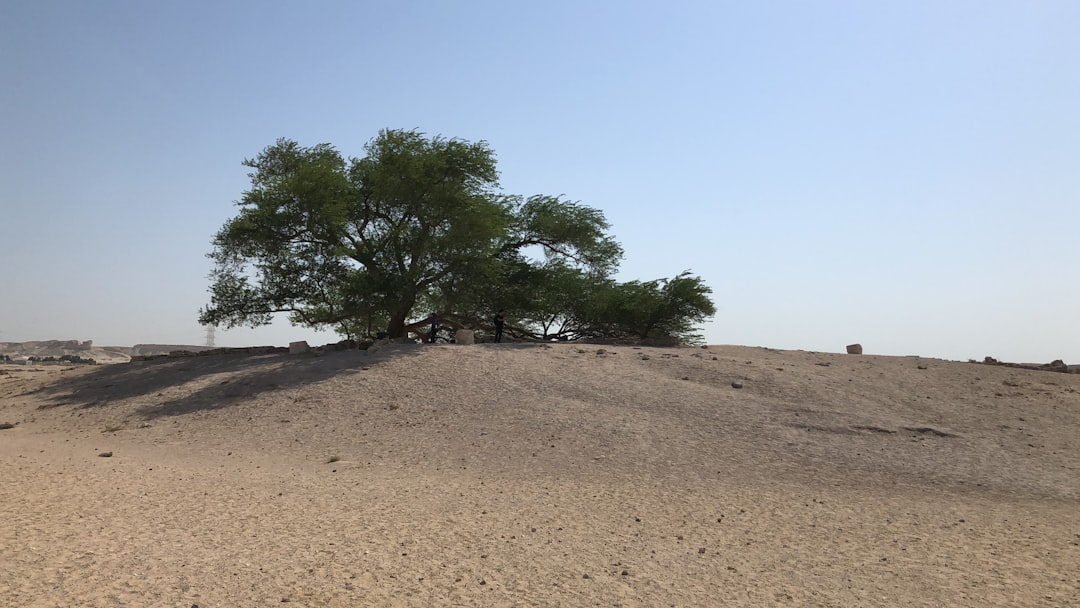
- Tree of Life — A 400-year-old Prosopis cineraria tree thriving alone in the desert with no visible water source within kilometers.
Scroll down for our complete travel guide with tips on getting there, where to stay, costs and more.
Getting There & Transport
Which airports are the best entry points into Bahrain?
Bahrain International Airport (BAH) in Muharraq is your only practical entry point — and it handles everything well. In my experience, BAH is compact and efficient, with immigration typically taking under 20 minutes for most nationalities. Gulf Air is the national carrier, but Emirates, Qatar Airways, and flydubai all fly here with competitive fares. The airport completed a major $1.1 billion terminal expansion in 2021, so facilities are genuinely modern. My honest caveat: there are no other commercial airports in Bahrain, so if BAH faces disruption, your only overland alternative is the King Fahd Causeway from Saudi Arabia, which requires Saudi entry clearance.
How do I get from Bahrain International Airport to my first accommodation?
Take a metered taxi — the ride to Manama city centre costs roughly BHD 3–5 (around $8–13) and takes 15 minutes. My tip: use the official taxi rank outside arrivals, not touts inside the terminal. Uber also operates in Bahrain and is often cheaper, typically BHD 2.5–4 for the same route. The public bus Line 1 runs to Manama for just BHD 0.20 but takes 45 minutes with luggage stops — fine if you’re budget-conscious. What surprised me: there is no airport rail link, so rideshares genuinely are the smart call. Avoid unlicensed cabs quoting flat rates — they routinely overcharge tourists by 50%.
What transport options are there within Bahrain?
Bahrain’s transport options are taxi, Uber, rental car, and limited public bus — that’s your full list. Uber dominates daily urban travel and is cheap; a cross-Manama ride rarely exceeds BHD 2–3 ($5–8). The Bahrain Public Transport Company operates buses, with fares at BHD 0.20–0.50, but routes focus on Manama and Muharraq and run infrequently outside rush hours. My tip: for exploring beyond Manama’s Seef District or the heritage sites in Muharraq, Uber is far more practical than buses. What surprised me: the country is so small — roughly 48 km north to south — that you can reach virtually any destination within 30 minutes. There is no rail or metro system as of 2026.
Do I need a rental car in Bahrain?
For most visitors, no — Uber is so affordable and frequent that a rental car is unnecessary. In my experience, a rental car adds real value only if you plan to cross into Saudi Arabia via the King Fahd Causeway or visit the Tree of Life and Al Areen Wildlife Sanctuary independently in one day. Rentals from Avis or Budget at BAH airport start at around BHD 15–25 ($40–66) per day including basic insurance. The honest caveat: Bahrain traffic around the Seef Mall and diplomatic area is genuinely gridlocked on Thursday and Friday evenings — Uber drivers navigate this better than tourists in unfamiliar rental cars. International driving licenses are accepted for stays under 3 months.
How good is the public transport network between regions in Bahrain?
Public transport in Bahrain covers urban Manama reasonably, but inter-island and rural connections are poor. The Bahrain Public Transport Company runs 37 routes across the main island, connecting Manama to Muharraq, Riffa, and Isa Town for BHD 0.20–0.50 per journey. My honest warning: buses run every 30–60 minutes outside peak times, and the Southern Governorate — home to the Tree of Life and Bahrain Fort — has very limited coverage. What surprised me: there is no ferry service between Bahrain Island and the smaller islands like Hawar Islands, so those require a licensed tour boat. For anything beyond central Manama, budget BHD 10–15 per day for Uber and skip the bus frustration entirely.
Accommodation
Which regions should I stay in when visiting Bahrain?
Stay in Manama’s Diplomatic Area or Seef District for your first visit — this is where most hotels, restaurants, and the Bahrain World Trade Center are concentrated. My tip: the Adliya neighbourhood is where savvy travellers base themselves for its walkable restaurant strip and boutique guesthouses. Muharraq — the old island connected by a 2.5 km causeway bridge — suits heritage seekers drawn to the Pearl Trail and historic wind-tower houses. The Southern Governorate near Sakhir offers resort-style options near the Formula 1 circuit but feels isolated without a car. I recommend avoiding Juffair unless you enjoy a district dominated by hotel bars catering to weekend Saudi visitors — it’s lively but not culturally authentic.
What does good accommodation cost per night in Bahrain?
Expect to pay BHD 35–60 ($93–159) per night for a solid mid-range hotel in Manama. Budget guesthouses in Adliya start at around BHD 20–28 ($53–74). Luxury five-star properties like the Four Seasons Bahrain Bay start at BHD 120–180 ($318–477) per night. In my experience, the sweet spot is a 4-star business hotel in the Seef or Diplomatic Area, where you get Gulf views, a pool, and breakfast for around BHD 50–65 ($133–172). The honest caveat: hotel prices in Bahrain spike dramatically during the Bahrain Grand Prix weekend in March — rates at mid-range properties can triple. Book F1 weekend accommodation at least 6 months ahead or look in Muharraq, which stays calmer.
When should I book hotels in Bahrain — how far in advance?
Book at least 4–6 weeks ahead for standard travel periods — Bahrain is not dramatically oversubscribed outside peak events. My tip: the Bahrain Grand Prix (Formula 1) in late March is the single exception where 6 months advance booking is mandatory for any decent property. National Day on December 16 also creates a local booking crunch. What surprised me: Bahrain sees a strong Saudi weekend influx every Thursday–Friday, so hotels in the Juffair and Seef districts fill up by Wednesday evening for popular weekends. For travel in February, March, April, November, or December — the best climate months — aim for 3–4 weeks minimum lead time. Online booking via Booking.com consistently undercuts hotel direct rates by 10–15%.
When is the best time to travel to Bahrain?
Travel in February, March, April, November, or December — these months offer the most comfortable conditions based on verified climate data. In my experience, February and March are ideal: temperatures hover around 18–24°C, skies are clear, and outdoor sights like Bahrain Fort and the Tree of Life are genuinely enjoyable. April edges warmer at around 26–30°C but remains pleasant before the brutal summer sets in. My honest warning: June through September brings temperatures above 38°C with humidity topping 90% — outdoor exploration becomes genuinely dangerous after 10am. December coincides with National Day festivities and pleasant 15–20°C evenings, making it the most festive month to visit.
How does peak season affect prices in Bahrain?
Peak season hits Bahrain in two distinct waves and prices respond sharply. The Formula 1 Grand Prix in late March is the biggest spike — hotel rates triple, flight costs from Europe jump by 40–60%, and restaurant tables in Adliya and the Diplomatic Area need advance booking. My tip: the second wave is Saudi national holidays and Eid al-Adha, when weekend visitors from Saudi Arabia flood hotels in Seef and Juffair, pushing mid-range room rates up by 30–50%. What surprised me: Ramadan is actually an excellent time for price-conscious travellers — hotels drop rates by 20–30% and the night-time atmosphere in the old souqs of Muharraq is extraordinary. Budget travellers should target November or early February for the best value.
Best Time to Visit
Which regions in Bahrain have different climate zones?
Bahrain is small enough that there are no dramatically different climate zones — the entire country shares the same Gulf desert climate. That said, the northern coastline around Manama and Muharraq benefits from sea breezes that reduce felt temperatures by 3–5°C compared to the interior. The southern and central areas — including Sakhir, Isa Town, and areas near the Tree of Life — are noticeably hotter and drier, with dust more frequent. In my experience, the Hawar Islands in the south feel marginally cooler due to Gulf air circulation, but the difference is minor. The honest caveat: Bahrain’s climate is uniformly harsh in summer and uniformly pleasant in winter — geography plays almost no role in your planning decisions here.
What are the rainy seasons in Bahrain?
Bahrain’s rainfall is minimal — the country averages just 77mm of rain per year total, making it one of the driest nations on Earth. The closest thing to a rainy season runs from December through February, when brief showers occur sporadically, averaging 10–14mm per month. In my experience, rain in Bahrain means 1–3 cloudy days with light showers, not sustained precipitation. My honest warning: when it does rain — particularly in January — Bahrain’s road drainage is genuinely poor, and flash flooding in underpasses near Manama’s Government Avenue is a real hazard. Avoid driving through flooded underpasses: drainage can take 2–3 hours. The rest of the year is effectively rain-free, so pack sunscreen, not an umbrella.
What does a trip to Bahrain cost per person per day?
Budget travellers can manage on BHD 25–35 ($66–93) per day, staying in a guesthouse in Adliya and eating at local Filipino or Indian restaurants. Mid-range travellers spending comfortably — a 4-star hotel, lunches in restaurants, entry fees, and Uber — should budget BHD 60–90 ($159–238) per day. Luxury travellers at the Four Seasons or Ritz-Carlton Bahrain should count on BHD 180–250 ($477–663) per day including meals and activities. In my experience, food and transport are genuinely cheap in Bahrain compared to neighbours — a shawarma lunch costs BHD 0.8–1.2 and an Uber across Manama is BHD 1.5–2.5. The cost spike comes exclusively from accommodation and any alcohol.
How expensive is food in Bahrain?
Food in Bahrain covers every budget and is generally excellent value. A shawarma or machboos rice plate from a local restaurant in Muharraq or the Manama souq area costs BHD 1–2.5 ($2.65–6.60). A sit-down lunch at a mid-range Bahraini restaurant like Asha’s or Bu Qtair’s runs BHD 5–10 ($13–26) per person. Fine dining at restaurants in the Diplomatic Area or Four Seasons reaches BHD 25–50 ($66–132) per head. My tip: the Manama Central Market (Souq Al Jubail) offers the cheapest and most authentic eating — grilled fish and lemon rice for under BHD 2. The caveat: alcohol at restaurants and hotel bars is priced like a Western capital — a beer costs BHD 2.5–4 ($6.60–10.60).
What hidden costs should I expect in Bahrain?
The biggest hidden cost is alcohol — Bahrain permits it, but hotel bar and licensed restaurant prices are steep. A bottle of wine at a restaurant costs BHD 15–25 ($40–66), and non-hotel licensed venues in Juffair add a 10–15% service charge automatically. My honest warning: taxis from the airport that quote ‘flat rates’ to tourists routinely charge BHD 8–12 for a ride worth BHD 3–4 on the meter — always insist on the meter or use Uber. Museum entry fees are minor (Bahrain National Museum costs BHD 0.5–2), but the Bahrain Fort audio guide runs BHD 3 extra. Sim card setup at the airport costs BHD 5–8 more than buying at a Batelco or Zain outlet in Manama — wait until you’re in town.
Budget & Costs
How much cash should I bring to Bahrain?
Bring enough cash for your first 24 hours — roughly BHD 20–30 ($53–80) covers taxi, dinner, and incidentals. The Bahraini Dinar (BHD) is one of the world’s highest-valued currencies at roughly $2.65 per BHD, so ATMs are your best source. ATMs at Bahrain International Airport (BAH) dispense BHD immediately on arrival, and networks including Mastercard and Visa work reliably. My tip: exchange money at Al Ansari Exchange or UAE Exchange outlets in Manama rather than airport counters, which charge a 5–8% spread. The honest caveat: many smaller restaurants in Muharraq’s old quarter and petrol stations remain cash-only, so carry BHD 10–15 in small notes at all times. Avoid carrying excessive cash — petty theft near crowded souqs does happen.
Which credit cards are accepted in Bahrain?
Visa and Mastercard are accepted at virtually all hotels, malls, and mid-range restaurants in Manama. American Express works at five-star properties and Seef Mall retailers but is rejected at roughly 30% of mid-range venues. In my experience, contactless payment is widely available and fast across Bahrain City Centre and Seef Mall. My honest warning: small souq vendors, traditional restaurants in Muharraq, budget guesthouses, and independent petrol stations are frequently cash-only — this catches travellers off guard. Maestro/debit cards work at ATMs but are unreliable at point-of-sale terminals. My tip: tell your home bank you’re travelling to Bahrain before departure — Bahrain transactions occasionally trigger fraud blocks due to the country’s financial hub status.
Which regions of Bahrain must I not miss?
Three areas are non-negotiable for a complete Bahrain experience. First: Muharraq Island — the old capital with pearl-trade history, wind-tower houses, and the UNESCO-listed Pearling Path, a self-guided 3.5 km walking trail. Second: the Southern Governorate near Zallaq and Sakhir, where the Tree of Life, Bahrain Fort, and Al Areen Wildlife Sanctuary cluster within 20 km of each other. Third: Manama’s old Bab al-Bahrain souq and Adliya district, where the authentic street-food culture and independent galleries sit side by side. What surprised me: most tourists spend all their time in Seef and the Diplomatic Area — these are modern and pleasant but interchangeable with any Gulf city. Push beyond them.
What are the tourist highlights of Bahrain?
Bahrain’s top highlights punch well above the country’s size. Bahrain Fort (Qal’at al-Bahrain) is a 4,000-year-old UNESCO World Heritage Site overlooking the Gulf — entry costs just BHD 2. The Bahrain National Museum in Manama is the finest museum in the Gulf for pre-Islamic history and costs BHD 0.5. The Al-Qaisariya Souq in Muharraq is a 19th-century covered market still selling pearls, spices, and textiles. The Tree of Life near Sakhir — a single tree thriving in the desert for 400 years — is genuinely mysterious and free. My tip: combine the Pearling Trail in Muharraq with an afternoon at the nearby Shaikh Isa bin Ali House for a complete picture of Bahrain’s pearl-trading golden age.
What experiences in Bahrain are found nowhere else on Earth?
Three experiences are genuinely unique to Bahrain. First: pearl diving in the Gulf — Bahrain was the world’s original pearl-trade capital, and several operators in Muharraq still offer traditional dive experiences for around BHD 15–25 ($40–66). Second: driving across the 25 km King Fahd Causeway from Bahrain to Saudi Arabia at sunset — the scale of the open Gulf with two nations connected by a single road is extraordinary. Third: visiting the Tree of Life alone at night — arrive after 8 pm on a weekday and the site is completely empty, the desert silence and inexplicable ancient tree lit only by stars. What surprised me: Bahrain also hosts the world’s only underwater archaeological site open to divers — the submerged ruins off the northern coast near Manama’s shoreline.
Regions & Highlights
Which areas in Bahrain are overcrowded — and what are quieter alternatives?
Adliya’s Block 338 restaurant strip gets genuinely crowded on Thursday and Friday nights — arrive before 7 pm or after 10 pm. The Bab al-Bahrain Souq in central Manama is tourist-heavy and prices at market stalls are inflated by 20–40% compared to Muharraq’s Al-Qaisariya Souq, which sees far fewer tourists. During the F1 Grand Prix weekend, every beach club and brunch spot in the Seef District is over-capacity. My tip: swap crowded Al Dar Islands beach trips for a visit to Hawar Islands via a licensed tour boat — the journey takes 45 minutes from Al Dur Port and the beaches are nearly deserted. The Riffa area and Royal Golf Club surroundings offer uncrowded parks and the Riffa Fort with almost no other visitors.
How many days do I need to explore Bahrain properly?
3 full days cover Bahrain thoroughly; 4–5 days allow a relaxed pace with beach time and day trips. In my experience, day one belongs to Manama — the National Museum, Bab al-Bahrain souq, and Adliya dining. Day two: Muharraq Island and the full Pearling Trail (3.5 km). Day three: the southern sites — Bahrain Fort, Tree of Life, and Al Areen Wildlife Sanctuary. A fourth day allows a King Fahd Causeway day trip into Al Khobar, Saudi Arabia if your visa allows. My honest caveat: travellers trying to compress Bahrain into a single day from Dubai or Abu Dhabi consistently regret rushing the Muharraq heritage district — it genuinely needs half a day minimum to absorb.
Do I need a visa to visit Bahrain?
Citizens of GCC countries (Saudi Arabia, UAE, Kuwait, Qatar, Oman) enter Bahrain visa-free. Citizens of 49 countries including the UK, USA, EU member states, and Australia qualify for a visa on arrival or free e-visa — apply at evisa.gov.bh before travel. The e-visa costs BHD 9 ($23.85) for a 2-week single-entry visa. My tip: apply online minimum 72 hours before departure to avoid airport delays. The honest caveat: Israeli passport holders face a more complex entry process — check current regulations at the Bahrain Embassy directly, as rules have evolved since the 2020 Abraham Accords. South Asian and African passport holders face stricter scrutiny and should verify visa eligibility carefully rather than assuming on-arrival access.
What languages are spoken in Bahrain?
Arabic is the official language, but English is effectively a second language across all tourist and business contexts. In my experience, hotel staff, restaurant servers, taxi drivers, and shop workers in Manama, Seef, and Muharraq speak functional to fluent English — communication difficulties are rare. Malayalam, Urdu, Hindi, and Tagalog are widely spoken in labour communities, and in Manama’s Indian and Filipino restaurant neighbourhoods you’ll hear them constantly. My honest observation: learning 3–5 Arabic phrases (shukran = thank you; kam hatha = how much is this; law samaht = please) earns genuine warmth from locals that English alone doesn’t generate. Street signage is in both Arabic and English throughout the island, so navigation is straightforward.
What cultural rules do I need to know before visiting Bahrain?
Bahrain is the most socially liberal Gulf state, but respect for Islamic culture is still essential. Dress modestly outside hotel pools and beach clubs — cover shoulders and knees in the Bab al-Bahrain souq, Muharraq, and mosques. Public displays of affection between unmarried couples can draw police attention, even though enforcement is inconsistent. Alcohol is legal at licensed venues but drinking in public spaces and non-licensed areas is illegal and carries a BHD 100+ fine. During Ramadan, eating, drinking, or smoking in public during daylight hours is illegal for all visitors — not just Muslims. My honest warning: photographing government buildings, military installations, and the Royal Palace area in Riffa can result in camera confiscation and questioning — always ask before pointing your lens at official buildings.
Practical Tips
How safe is Bahrain for tourists?
Bahrain is safe for tourists in all main areas — petty crime against visitors is genuinely low. In my experience, walking at night in Manama’s Diplomatic Area, Adliya, and central Muharraq feels secure. The honest caveat: political protests occasionally flare in Shia-majority villages in the Northern and Central Governorates — areas like Nuwaidrat, Sanabis, and Duraz — and these can involve tear gas and road closures. Check the UK FCDO or US State Department travel advisories before and during your trip for current flashpoints. Avoid photographing protests entirely. Traffic accidents are a more statistically real risk — Bahraini roads see aggressive driving, and pedestrian infrastructure outside central Manama is poor. Road fatalities per capita are significantly above the EU average.
What health precautions should I take before travelling to Bahrain?
No vaccinations are legally required to enter Bahrain unless arriving from a yellow fever endemic country, in which case proof of yellow fever vaccination is mandatory. My recommended precautions: ensure Hepatitis A and Typhoid vaccinations are current if you plan to eat at local markets or street stalls. In my experience, heat exhaustion is the primary real health risk — summer visitors particularly underestimate how dangerous 38–46°C heat with 85%+ humidity is during outdoor activity. Carry 1 litre of water per hour of outdoor activity in summer. Tap water in Bahrain is technically safe but tastes heavily chlorinated — bottled water is BHD 0.1–0.2 everywhere. Travel insurance with medical evacuation is essential: hospital treatment at Salmaniya Medical Centre is good, but private hospitals like American Mission Hospital charge steep rates for uninsured foreigners.
What SIM card or eSIM options are available in Bahrain?
Batelco and Zain are Bahrain’s two main operators — both offer prepaid tourist SIMs with solid 4G/5G coverage across the entire island. At the airport, expect to pay BHD 7–10 ($18.55–26.50) for a SIM including 5GB data. My tip: buy from a Batelco or Zain shop in Seef Mall or Al Dana Mall in Manama — prices drop to BHD 4–6 for the same packages, and staff walk you through setup properly. eSIMs via Airalo now work seamlessly in Bahrain — a 1GB Bahrain eSIM costs around $4.50 and activates before you land. What surprised me: Batelco’s network outperforms Zain in the southern governorate near the Tree of Life and Sakhir, where Zain coverage can drop to 3G. For stays over 7 days, Batelco’s BHD 8 package with 15GB is outstanding value.
Which apps do you recommend for travelling in Bahrain?
My essential app list for Bahrain: Uber — works flawlessly across the island, far more reliable than hailing taxis. Careem is the Gulf’s local ride-hail alternative and occasionally cheaper than Uber for longer trips. Google Maps covers Bahrain comprehensively including Muharraq’s old lanes, which surprised me given how small the country is. Talabat is the dominant food delivery app if you want local restaurant food delivered to your hotel — minimum order around BHD 1–3. For currency conversion, XE Currency handles the Bahraini Dinar accurately. WhatsApp is essential — Bahraini businesses from guesthouses to tour operators communicate almost exclusively via WhatsApp rather than email. My honest warning: VoIP calls via WhatsApp are not blocked in Bahrain, unlike neighbouring UAE — make use of this.
What are the most common traveller mistakes in Bahrain?
The biggest mistake is spending the entire trip in Manama’s Seef District and Diplomatic Area — these are interchangeable with Dubai and miss Bahrain’s actual identity entirely. Second mistake: visiting the Tree of Life at midday in summer without water — the site has zero shade and temperatures exceed 42°C between May and September. Third: booking a hotel in Juffair expecting a local experience — it’s a nightlife district built for Gulf weekend tourism. My honest warning: assuming all souq vendors in Bab al-Bahrain are selling authentic Bahraini crafts — most items are imported. For genuine pearls and local craft, go to Al-Qaisariya Souq in Muharraq and ask for sellers who source locally. Finally: underestimating traffic on Thursday afternoons when Saudi visitors arrive via the Causeway — allow an extra 45 minutes for any cross-city journey.
Bahrain at a Glance
| Population | 1,569,666 |
|---|---|
| Currency | Bahraini dinar (BD) |
| Official language | Arabic |
| Time zone | UTC+03:00 |
Source: Wikidata, retrieved August 2026.
Essential Resources for Planning Your Trip to Bahrain
- The UNESCO-listed Bahrain Fort attracted … — official visitor information, passes & events
- Wikipedia: Bahrain — history, geography & background
- Wikivoyage: Bahrain — community travel guide & practical tips
- Bahrain travel – Lonely Planet | Middle East — expert itineraries & travel inspiration
- THE 15 BEST Things to Do in Bahrain (2026) — hotels, restaurants & traveller reviews
- Discover the Kingdom — how to get around
- Numbeo: Cost of Living in Bahrain — current prices & cost comparison
- Timeanddate: Bahrain Weather & Climate — forecasts & climate statistics
More Perspectives on Bahrain
Bahrain Travel Videos
Watch these videos for a visual preview before your trip:
- How To Spend 2 Days In BAHRAIN | Travel Itinerary
- Bahrain Travel Guide: The Most Liberal Country in the Gulf
- Bahrain Travel Guide: 11 BEST Places to Visit in Bahrain (& Top Things to Do)
Bahrain Travel Discussions on Reddit
Real traveller experiences and community advice:
- Would you recommend a 2 week trip to Bahrain to US …
- First Impression of Bahrain as a tourist
- Travel to Bahrain tomorrow or cancel? Need advice
Data Sources
This page was compiled using data from Wikipedia, Wikidata, Open-Meteo (climate), Numbeo (cost of living) and REST Countries. Information is updated regularly.