
Bologna: The Complete Travel Guide (2026)
Last reviewed: September 2026 · key facts checked against Wikidata
Bologna Travel Guide: Everything You Need to Know (2026)
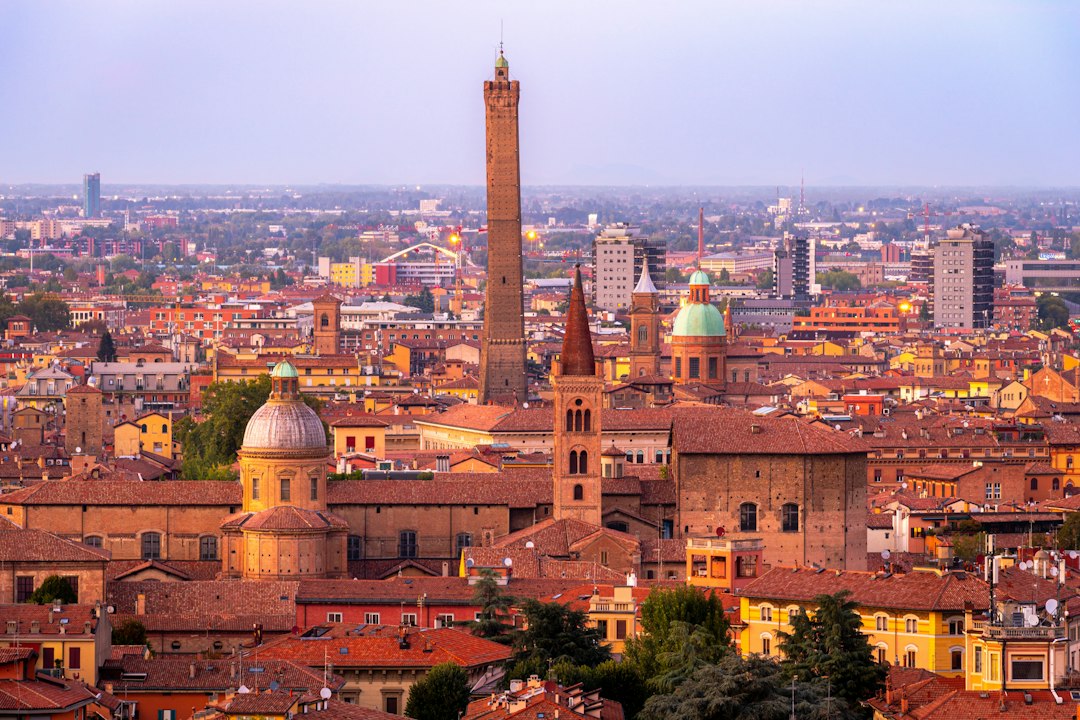
Bologna, home to the world’s oldest continuously operating university (founded 1088), sits at 54 metres above sea level in the heart of Emilia-Romagna and counts 387,971 residents within city limits. Known as ‘La Grassa’ (The Fat One) for its extraordinary food culture and ‘La Rossa’ (The Red One) for its terracotta rooftops and leftist political history, it punches far above its weight for a city of its size. Over 38 kilometres of historic porticoes — a UNESCO World Heritage Site since 2021 — make it one of Europe’s most walkable and rain-proof cities.
Three Things Not to Miss in Bologna
- Portico di San Luca — The world’s longest portico — 3.8 km, 666 arches — climbs to the Sanctuary of the Madonna di San Luca with panoramic Apennine views.
- Piazza Maggiore & The Two Towers — Bologna’s medieval heart features the 97-metre Torre degli Asinelli, climbable for the best rooftop panorama in the city.
- Quadrilatero Market — A labyrinth of medieval lanes packed with butchers, cheese shops, and pasta makers selling fresh tortellini since the 13th century.
Scroll down for our complete travel guide with tips on getting there, where to stay, costs and more.
Arriving in Bologna: Airport & Transfers
How do I get to Bologna — by train, plane, or car?
Train is my top recommendation for reaching Bologna — it beats flying for most European travellers. Bologna Centrale sits on Italy’s main high-speed rail corridor, with Frecciarossa trains from Milan in 67 minutes and Rome in under 2 hours. In my experience, trains from Florence take just 37 minutes and cost as little as €9.90 booked in advance on Trenitalia or Italo. If you’re flying in, Bologna Guglielmo Marconi Airport (BLQ) is only 6 km from the centre — a Marconi Express train takes 7 minutes to Bologna Centrale for €9.50. The honest caveat: Ryanair routes into Aeroporto di Forli (FRL), 74 km away, look cheap but add taxi costs that erase any savings.
Which airport is closest to Bologna?
Bologna Guglielmo Marconi Airport (BLQ) is your airport — just 6 km northwest of the city centre. The dedicated Marconi Express rail shuttle runs every 15 minutes from 5:45am to 11:45pm, arriving at Bologna Centrale in 7 minutes flat for €9.50. I recommend buying the ticket at the automated machines before boarding; inspectors do check. Taxis from BLQ to the centre cost a fixed €15 — genuinely one of Italy’s fairest airport taxi deals. What most guides skip: if you land after 11:45pm, the Marconi Express stops running and you’ll need that taxi. A second option is Aeroporto di Forli (FRL), used by budget carriers, but it’s 74 km away and requires a bus-train combo adding 90+ minutes.
How long does the journey from the airport to Bologna city centre take?
From Bologna Guglielmo Marconi Airport (BLQ), the journey to Bologna Centrale station takes exactly 7 minutes on the Marconi Express — this is genuinely one of Europe’s fastest airport-to-city links. A taxi covers the same 6 km in around 15 minutes depending on traffic, for a flat fee of €15. My tip: if you’re staying near the Via dell’Indipendenza corridor, the train drops you closer to your hotel than a taxi. The one caveat most travellers miss is that BLQ has only one small terminal, so baggage claim can add 20-30 minutes at peak times on Friday evenings, effectively negating the 7-minute train advantage.
Do I need a rental car to explore Bologna?
No — skip the rental car for Bologna itself without hesitation. The historic centre is a ZTL (Zona a Traffico Limitato) zone, meaning most streets are restricted to residents 24/7, and fines of €100+ are automatically issued to non-resident plates. In my experience, the city’s 6 km diameter historic core is entirely walkable in 25 minutes end to end. Where a car makes sense: day trips to Modena (40 km), Parma (97 km), or the Apennine hills if you want flexibility beyond train schedules. I recommend renting from Bologna Centrale station’s Hertz or Europcar desks rather than the airport to avoid ZTL entry from day one. Budget €45-70/day for a compact car including basic insurance.
Getting Around Bologna
What are the best areas to stay in Bologna?
Stay within the Portico Belt — the area between Piazza Maggiore and Via Zamboni (the university district) covers everything worth seeing on foot. My top pick is the Quadrilatero neighbourhood, wedged between the market lanes and the Two Towers: you wake up 3 minutes from the best food stalls in the city. Via dell’Indipendenza hotels suit first-timers wanting a straight walk from Bologna Centrale to the main square. The honest warning: avoid anything billed as ‘near the station’ on the Via Boldrini side — it’s functional but characterless and 10 minutes further from the action than it looks on maps. For a quieter vibe, Santo Stefano neighbourhood near the eponymous basilica complex offers boutique B&Bs and fewer tourist crowds.
What does accommodation cost per night in Bologna?
Bologna sits mid-range for Italian cities. A solid 3-star hotel near Piazza Maggiore runs €90-130/night in shoulder season. Boutique B&Bs in the Quadrilatero area average €75-110/night. In my experience, the sweet spot is a 4-star property near Via Indipendenza during October’s shoulder season, where rates drop to €110-150/night versus €180-230/night in peak summer. Budget travellers can find hostel dorm beds at Ostello San Filippo Neri from €28/night. The caveat most booking sites hide: Bologna hosts major trade fairs at BolognaFiere — including COSMOPROF and MOTOR SHOW — that spike hotel prices by 200-300% on specific weekends regardless of season. Always cross-check your dates against the BolognaFiere calendar before booking.
How far in advance should I book accommodation in Bologna during high season?
For July and September (Bologna’s best travel months), book 6-8 weeks ahead minimum for quality options near the centre. My rule: if your dates fall within 2 weeks of any BolognaFiere trade fair, book 3-4 months ahead — I’ve seen 3-star rooms jump from €95 to €290/night overnight when SANA or Cersaie exhibitions open. October is a double-edged sword: superb autumn light and food festival season, but EIMA agricultural fair (November) starts pushing prices up from mid-October. For solo travellers or couples at boutique B&Bs in Santo Stefano, 3-4 weeks ahead is usually sufficient outside fair periods. What surprised me: Christmas week in Bologna is genuinely quiet and affordable — €70-90/night for excellent central hotels.
Are there special or unique accommodation types in Bologna?
Bologna offers a genuinely distinctive stay: historic palazzo apartments converted into short-term rentals inside the portico belt. Several 16th-century buildings along Via Santo Stefano and Strada Maggiore have been split into apartments retaining original frescoed ceilings and terracotta floors, renting from €85-120/night — better value than equivalent hotel rooms. In my experience, staying in one transforms the trip: you shop at the Mercato delle Erbe like a local and eat in your own kitchen. For a splurge, Grand Hotel Majestic già Baglioni on Via Indipendenza occupies a frescoed 18th-century palace from €220/night. The honest caveat: many palazzo apartments have no elevator and steep medieval staircases — check this explicitly if you have heavy luggage or mobility concerns.
Where to Stay in Bologna
What are the absolute must-sees in Bologna?
Three non-negotiables in my book. First, climb the Torre degli Asinelli — 498 steps, 97 metres, the best urban panorama in northern Italy; entry costs €5. Second, walk the full Portico di San Luca: 3.8 km, 666 arches, ending at a hilltop sanctuary with Apennine views — it’s free and far more rewarding than any museum. Third, spend a morning inside the Quadrilatero market between Via Pescherie Vecchie and Via Drapperie: this is medieval urban planning still functioning as a food market, and the mortadella from Tamburini alone is worth the detour. My warning: the Piazza Maggiore itself is beautiful but the surrounding cafes charge €6-8 for an espresso — walk one block to pay €1.20 like a local.
What can I experience for free in Bologna?
Bologna rewards the budget-conscious more than almost any Italian city of its size. The entire 38 km portico network is free to walk, including the full Portico di San Luca. Entry to Basilica di Santo Stefano — actually a complex of 7 interconnected churches dating to the 5th century — costs nothing. The Museo Civico Medievale is free on the first Sunday of each month. In my experience, the most underrated free experience is the University of Bologna’s anatomical theatre at Archiginnasio, which costs only €3 but feels almost free for what you see: a 17th-century operating theatre carved entirely from wood. Street-level architectural wandering through Via Zamboni and Piazza Verdi costs nothing and reveals more of Bologna’s soul than any paid tour.
Which day trips from Bologna are most worthwhile?
Modena is my top pick — 40 km, 25 minutes by train from €5, home to the Enzo Ferrari Museum, a UNESCO cathedral, and the world’s finest balsamic vinegar producers. Parma at 97 km (55 minutes, from €8) deserves a full day for its Baptistery, Correggio frescoes, and the obligation to eat actual Prosciutto di Parma at source. Ravenna (74 km, 1 hour, from €7) contains 8 UNESCO-listed Byzantine mosaic sites that genuinely leave you speechless. What most guides omit: the Apennine hill towns — specifically Dozza, 30 km south, has an entire village covered in murals and a medieval wine cellar (Enoteca Regionale) charging just €5 for tastings. Skip Ferrara unless you have a cycling obsession; it’s flat and requires a full day for limited return.
What are Bologna’s signature local specialities I must try?
Bologna earned ‘La Grassa’ for a reason — this is the undisputed culinary capital of Italy. Tortellini in brodo (meat-filled pasta in capon broth) is the dish: order it at Trattoria Anna Maria on Via Belle Arti for around €14. Authentic Bolognese ragù is served on tagliatelle, never spaghetti — any restaurant using spaghetti is cooking for tourists. Mortadella from the Quadrilatero market is a revelation versus the supermarket version you know. In my experience, the most underrated local eat is tigelle: small round flatbreads filled with squacquerone cheese and cured meats, found at street counters for €3-4. Pair everything with Pignoletto, the local sparkling white wine from the Colli Bolognesi hills, available by the glass from €4.
Bologna Highlights & Must-Sees
What makes Bologna genuinely unique compared to other Italian cities?
Bologna’s uniqueness lies in three intersecting facts no other Italian city can claim simultaneously. It has the world’s oldest university (1088), giving it a permanent student population of 85,000+ that keeps it intellectually alive and commercially real year-round — restaurants here serve locals, not tourists. Its 38 km UNESCO portico network means you can walk the entire historic centre in the rain without an umbrella. And it sits at the epicentre of Italy’s food production triangle — Parmigiano-Reggiano, Prosciutto di Parma, Mortadella, balsamic vinegar, and fresh pasta all originate within 100 km. What surprised me most: unlike Florence or Venice, Bologna has almost no souvenir-only shops. The stores selling pasta, cheese, and wine on Via Pescherie Vecchie are where locals actually shop.
How many days should I plan for Bologna?
3 full days is the sweet spot for Bologna itself. Day 1: historic centre — Piazza Maggiore, Two Towers, Quadrilatero market, and the porticoes of Via dell’Indipendenza. Day 2: deeper culture — Archiginnasio, Santo Stefano basilica complex, the MAMbo contemporary art museum (€6 entry), and an evening in Piazza Verdi with students. Day 3: Portico di San Luca walk in the morning (2 hours), afternoon cooking class at one of the La Vecchia Scuola Bolognese pasta schools from €80/person, evening at an enoteca in the Mercato di Mezzo. The honest caveat: if you’re using Bologna as a base for regional day trips to Modena, Parma, and Ravenna, budget 5-6 days total. One day is not enough — it produces the shallow impression that Bologna is ‘just another Italian city,’ which is exactly wrong.
When is the best time to visit Bologna?
September and October are my definitive recommendation — verified by 5-year climate analysis alongside July. September delivers warm days around 24°C, harvest season produce flooding the Quadrilatero market, and the start of the truffle season from the Apennines. October adds spectacular terracotta autumn light that makes the rooftops glow, the Mortadella Festival (Mortadella Please!) in mid-October, and hotel rates dropping 15-20% versus summer peak. July is hot — often 32-34°C — but the university empties out and tourist numbers are surprisingly manageable. My warning: avoid the last week of April (COSMOPROF beauty fair) and first week of November (EIMA agricultural fair) unless you’ve booked accommodation 3+ months ahead and accepted inflated prices. Christmas and January are cold but genuinely affordable and crowd-free.
Are there local festivals in Bologna worth attending?
Mortadella Please! in mid-October is the one I’d specifically time a trip around: a 3-day street food festival in Piazza Maggiore celebrating Bologna’s most iconic product, with free tastings and producers from across Emilia-Romagna. Biografilm Festival (international biography film festival) runs in June for 10 days across historic cinema venues — tickets from €8 and heavily attended by locals rather than tourists. The Bologna Jazz Festival in November fills venues across the city for 3 weeks with free and ticketed concerts from €15. In my experience, the most overlooked annual event is ART CITY Bologna, running parallel to the Artissima fair in early November — many private palazzos and studios open free to the public for one weekend. What most guides skip: Bologna’s weekly Flea Market at Piazza VIII Agosto every Friday and Saturday is genuinely excellent for vintage finds.
Eating & Drinking in Bologna
How does the weather in Bologna affect what activities I can do?
Bologna’s weather is more extreme than most visitors expect for northern Italy. Summers hit 32-35°C with high humidity from the Po Valley — afternoon outdoor sightseeing becomes genuinely unpleasant in July-August, so I shift heavy walking to before 11am and after 6pm. The portico network is Bologna’s genius solution: 38 km of covered walkways mean light rain never disrupts your plans. Winters are cold and foggy — January averages around 3°C with dense Po Valley fog that can last for days, but all the indoor experiences (Archiginnasio, MAMbo, cooking classes) become more appealing and uncrowded. Spring (April-May) brings pleasant 18-22°C conditions but also rain. My tip: September hits the weather sweet spot — warm enough for the Portico di San Luca walk without arriving drenched in sweat.
How crowded does Bologna get in peak season?
Compared to Florence (45 minutes away), Bologna is refreshingly uncrowded even at peak. July and August bring the most domestic Italian tourists plus food pilgrims, but queue times at the Torre degli Asinelli stay under 30 minutes even in peak weeks — versus 2-hour waits at Florence’s Uffizi. The Quadrilatero market gets busy Saturday mornings (10am-1pm) when locals shop alongside tourists, but this adds atmosphere rather than frustration. The genuine crowd problem is trade fair weekends at BolognaFiere: the city’s hotel capacity drops to near-zero and even good restaurants are booked solid. What surprised me: Bologna in August is quieter than Bologna in October, because the 85,000 university students leave for summer, reducing the city’s usual buzz. My tip: arrive Tuesday-Wednesday for the calmest experience any time of year.
How safe is Bologna for travellers?
Bologna is one of Italy’s safest major cities — I’ve walked it at 2am without a moment’s concern. Violent crime against tourists is extremely rare. The one genuine issue is pickpocketing around Bologna Centrale station and the Via dell’Indipendenza pedestrian strip — use a zipped crossbody bag and you’ve eliminated 95% of risk. The area immediately around the station’s eastern exit (Via Boldrini side) has visible street dealing in the evenings — it’s not dangerous but can feel unsettling; simply walk through without engaging. In my experience, Piazza Verdi during late-night student gatherings is lively but entirely safe, just loud. The honest caveat: Bologna’s leftist political culture occasionally produces demonstrations near Piazza Maggiore — these are overwhelmingly peaceful but can disrupt traffic and public transport for a few hours.
Is English widely spoken in Bologna?
English is functional but not universal in Bologna. At hotels, major restaurants in the centre, and tourist sites like the Torre degli Asinelli, you’ll have no communication issues. However, Bologna is not Florence — it’s a real working Italian city, and at the Quadrilatero market stalls, neighbourhood trattorias, and local bars, staff often speak minimal English. In my experience, this is a feature not a bug: learning 5 Italian phrases (including ‘tagliatelle al ragù, per favore’) gets you treated entirely differently. University staff and students speak excellent English — if lost near Via Zamboni, any student is a reliable resource. The honest caveat: menus at genuine local trattorias on Strada Maggiore are sometimes Italian-only, which I’d argue is a reliable quality indicator.
Practical Tips for Bologna
What is the daily budget for travelling in Bologna?
Based on verified Numbeo data, budget realistically as follows. A cheap meal costs around €21 (approximately $23 USD at current rates), a mid-range dinner for 2 runs €38 ($41.60 USD), and a local bus ticket is €1.50 ($2.66 USD). My honest daily budget breakdown: Budget traveller €65-85/day (hostel dorm, market lunches, one sit-down dinner, 1 paid sight). Mid-range €130-170/day (3-star hotel, two restaurant meals, aperitivo drinks, Torre degli Asinelli + 1 museum). Comfortable €220-280/day (4-star boutique hotel, full trattoria dinners with wine, cooking class or guided tour). The most important caveat: wine and aperitivo culture in Bologna means your drinks bill can silently double your food spend — Spritz Aperol costs €4-6 at a good bar versus €8-12 at Piazza Maggiore tourist terraces.
How does public transport work in Bologna?
Bologna’s public transport is run by TCAR/Tper and is honest about its limitations: the historic centre is so walkable (6 km diameter) that buses are mainly useful for reaching the periphery. A single bus ticket costs €1.50 (valid 75 minutes) and a day pass runs €5. Buy tickets at tabacchi shops or the Tper app before boarding — on-bus purchase costs €2. The Marconi Express rail shuttle between BLQ airport and Bologna Centrale at €9.50 is the one transit line every visitor uses. In my experience, the only time buses genuinely help tourists is reaching Fiera District (BolognaFiere) or the Portico di San Luca starting point at Porta Saragozza (Bus 20 from the centre). The city currently has no metro — a tram network is under construction but won’t be operational before 2027.
Which apps do you recommend for getting around and exploring Bologna?
Five apps I use every Bologna trip. Trenitalia or Italo for booking high-speed trains to Modena, Parma, and Ravenna in advance — the cheapest fares disappear fast. Tper app for Bologna bus tickets and real-time arrivals, saving the tabacchi queue. TheFork (ElTenedor) for restaurant reservations — essential for popular spots like Trattoria Anna Maria which books up 1-2 weeks ahead. Google Maps works reliably for portico navigation but I cross-reference with Ulmon CityMaps2Go for offline use when my signal drops in medieval lanes. For food specifically, La Cucina Italiana app provides regional recipe context that makes the Quadrilatero market visits far more meaningful. The honest warning: ignore TripAdvisor’s top-10 Bologna restaurants — the list skews heavily toward tourist-optimised places near Piazza Maggiore rather than genuinely local spots.
Bologna at a Glance
| Population | 387,971 |
|---|---|
| Currency | EUR (€) |
| Official language | Italian |
| Time zone | Europe/Rome |
Source: Wikidata, retrieved September 2026.
Italy › Bologna
More Destinations in Emilia-Romagna
More Destinations in Italy
Related Travel Guides
Essential Resources for Planning Your Trip to Bologna
- Bologna Public Transport Guide: Tickets, Airport & ZTL — official visitor information, passes & events
- Wikipedia: Bologna — history, geography & background
- Wikivoyage: Bologna — community travel guide & practical tips
- Bologna travel – Lonely Planet | Italy, Europe — expert itineraries & travel inspiration
- THE 15 BEST Things to Do in Bologna (2026) — hotels, restaurants & traveller reviews
- Getting here — how to get around
- Numbeo: Cost of Living in Bologna — current prices & cost comparison
- Timeanddate: Bologna Weather & Climate — forecasts & climate statistics
More Perspectives on Bologna
- 19 Best Things to Do in Bologna (Italy’s Food Capital!)
- Bologna, Italy Travel Guide: Is It Worth Visiting?
- We just returned from Bologna! Some tips …
Bologna Travel Videos
Watch these videos for a visual preview before your trip:
- Top Things to Do in Bologna, Italy | Ultimate Bologna Travel Guide
- Top Things to Do in Bologna, Italy | ULTIMATE Bologna Travel Guide
- 3 Days in BOLOGNA, ITALY Travel Guide: What to Do in Bologna
Bologna Travel Discussions on Reddit
Real traveller experiences and community advice:
- Bologna – worth a trip? : r/ItalyTravel
- We just returned from Bologna! Some tips …
- Bologna it’s a good destination for a 5/6 days solo travel?
Data Sources
This page was compiled using data from Wikipedia, Wikidata, Open-Meteo (climate), Numbeo (cost of living) and REST Countries. Information is updated regularly.