
Parma: The Complete Travel Guide (2026)
Last reviewed: September 2026 · key facts checked against Wikidata
Parma Travel Guide: Everything You Need to Know (2026)
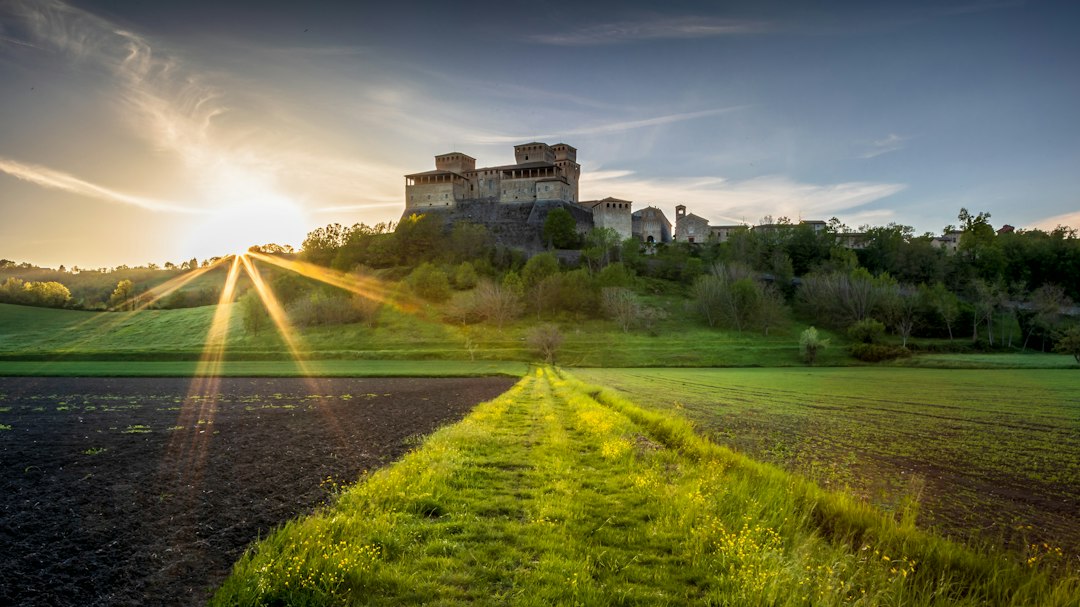
Parma sits at 69 metres above sea level in Emilia-Romagna, northern Italy, with a population of 196,764 — making it the second most populous city in the region after Bologna. Founded by the Romans in 183 BC, it sits roughly 120 km southeast of Milan and has produced two of the world’s most imitated foods: Prosciutto di Parma and Parmigiano-Reggiano. What surprises most visitors is that despite this global culinary fame, Parma remains refreshingly underrun by mass tourism compared to Florence or Venice.
Three Things Not to Miss in Parma
- Battistero di Parma — One of Italy’s finest Romanesque baptisteries, built in 1196, with 16 sculpted exterior portals most visitors walk past without stopping.
- Salumeria Garibaldi — A 100-year-old deli on Via Farini where you taste Prosciutto di Parma cut by hand — the irreplaceable benchmark for everything you eat after.
- Teatro Regio — Parma’s 1829 opera house is considered Italy’s most passionate opera crowd — locals whistle off-key tenors in real time.
Scroll down for our complete travel guide with tips on getting there, where to stay, costs and more.
How to Reach Parma
How do I get to Parma — by train, car, or flight?
By high-speed train from Milan, Parma is your fastest option — 35 minutes on Italo or Frecciarossa from Milano Centrale. From Bologna, it takes 35-40 minutes. Rome to Parma by train runs roughly 3.5 hours with a change at Bologna. I recommend arriving by train: Parma station sits 10 minutes on foot from the historic centre. The honest caveat: if you plan to visit surrounding Parma countryside or Prosciutto factories outside the city, a car becomes necessary on day two or three. Flying into Bologna Guglielmo Marconi Airport (BLQ), then taking a 90-minute bus or train connection, is the realistic flight option if you are coming internationally.
Which airport is closest to Parma?
Bologna Guglielmo Marconi Airport (BLQ) is your practical gateway, roughly 100 km from Parma city centre. From BLQ, take the Aerobus shuttle to Bologna Centrale station, then a regional Trenitalia train to Parma — total journey around 90 minutes. Milan Malpensa (MXP) is another option at roughly 160 km, useful if you are flying in from North America or Asia on intercontinental connections. My tip: avoid Parma’s own airport for international travel — it handles only minimal charter and cargo traffic as of 2026. BLQ has the widest choice of European low-cost routes, including Ryanair and easyJet, which keeps fares genuinely competitive. Book your Bologna-to-Parma train ticket in advance via Trenitalia.com to lock in the cheapest fares around €8-12.
How long does the journey from Bologna to Parma take?
Direct regional trains from Bologna Centrale to Parma station take 35-40 minutes — I have done this route a dozen times and it is one of the most reliable short hops in northern Italy. Fast Frecciarossa trains cover it in under 30 minutes but cost more. The trade-off: regional trains run every 30-60 minutes and are far cheaper at around €8, while Frecciarossa tickets hit €20-35 for a marginal time saving. By car via the A1 autostrada, the journey is roughly 100 km and takes about 55 minutes in light traffic — but tolls add approximately €7 each way. In my experience, the train wins for city-centre arrival convenience: Parma station drops you 700 metres from the Battistero and the main historic core.
Do I need a rental car to explore Parma?
No, for Parma city itself you do not need a car — the centro storico is entirely walkable within a 20-minute radius. Public buses handle the outer districts. My tip: resist renting a car until day two or three specifically for the Langhirano prosciutto factories (18 km south) or the Terme di Salsomaggiore (30 km away) — those are genuinely inaccessible by public transport on a practical schedule. Car rental from Parma station costs around €35-55 per day for a compact with basic insurance. The honest warning most guides skip: Parma’s historic centre is a ZTL zone (restricted traffic zone) with automatic cameras — driving a rental into the centre without a permit earns you a €100+ fine weeks after you return home.
Parma Public Transport Explained
What are the best areas to stay in Parma?
Stay in the centro storico between Piazza Garibaldi and the Battistero — you are within walking distance of every major sight, the covered Mercato della Ghiaia, and the best salumerias. The Oltretorrente neighbourhood across the Torrente Parma river is my personal favourite: it is the working-class, university-heavy district with authentic trattorias and almost zero tourist crowds at night. Viale Frugoni near the station suits business travellers who want quick train access but it lacks atmosphere. Avoid booking anything labelled ‘near the hospital zone’ on the eastern edge — it requires a 20-minute bus ride to reach anything interesting. In my experience, spending €10 extra per night to be inside the centre saves you time and taxi costs every single day.
What does accommodation cost per night in Parma?
A solid 3-star hotel in the centro storico runs €80-120 per night in 2026. Boutique 4-star options like Hotel Torino near Piazza Garibaldi sit at €130-180. Budget travellers can find B&Bs and guesthouses in Oltretorrente for €55-75, though room sizes shrink accordingly. Apartments via Airbnb average €70-100 per night for a one-bedroom in the centre — genuinely better value for stays of 3 nights or more. The caveat: Parma hosts major food and opera festivals in September and October that push rates up 30-40% with minimum stay requirements. During the Verdi Festival in October, even mid-range hotels sell out 6 weeks ahead. Outside those windows, Parma is one of the more affordable mid-size Italian cities for accommodation.
How far in advance should I book accommodation in Parma during high season?
For June and September — Parma’s best travel months — book accommodation at least 6-8 weeks ahead. September is particularly tight because the Cibus food trade fair and Festival Verdi overlap, creating a dual crunch where hotels within 5 km of the centre fill completely. For July and August, Parma empties somewhat as Italians leave for the coast, so last-minute deals appear — I have booked good 3-star rooms 4 days out in August at 20% below listed rates. Christmas market weekends in December require 3-4 weeks advance booking. My honest tip: use Booking.com’s free cancellation filter as your baseline and only commit to non-refundable rates once your travel dates are locked — Parma’s hotels rarely enforce strict cancellation during off-peak windows anyway.
Are there special or unique accommodation types in Parma worth considering?
Yes — agriturismo stays in the Parma hills (Appennino Parmense) around Tizzano Val Parma are genuinely special and cost €70-110 per night including breakfast made from estate products. You wake up to Parmigiano-Reggiano producers next door and prosciutto ageing in cellars below your room — that experience exists nowhere else in the world at this price. Several historic palazzi in the centro storico have been converted into apartment-style rentals with original frescoed ceilings for €100-150 per night; search specifically on Halldis or Homeaway Italy. The honest caveat: agriturismo options require a rental car, and most hosts communicate primarily in Italian — arrive with Google Translate downloaded offline and a printed confirmation.
Neighbourhoods of Parma
What are the must-see sights in Parma?
Three sights I consider non-negotiable: the Battistero di Parma (entry €10), whose Antelami sculptures from 1196 rank among Europe’s finest Romanesque work; the Camera di San Paolo (entry €3), a small room entirely frescoed by Correggio in 1519 that most visitors to Italy never find; and the Galleria Nazionale inside Palazzo della Pilotta, housing Correggio’s masterwork ‘Madonna of St Jerome’ and Da Vinci’s ‘La Scapiliata.’ What surprised me most: all three are within a 7-minute walk of each other. Locals also insist on the Teatro Farnese inside the same Pilotta complex — a 1618 all-wood theatre that looks stage-set perfect. Skip the Toschi Museum unless you have a specific interest in local history; it adds time without proportionate reward.
What can I experience for free in Parma?
More than most Italian cities of similar size. Piazza del Duomo with the Romanesque cathedral exterior and adjacent Battistero facade cost nothing to admire from the outside — and the detail at eye level rivals what you see inside. The Parco Ducale is a free, beautifully maintained 17th-century formal garden 10 minutes from the centre, genuinely stunning in June. Walking Strada della Repubblica and the Oltretorrente district costs nothing and reveals daily Parmigiano life better than any museum. The Mercato della Ghiaia covered market runs Tuesday through Saturday mornings — free to enter and the best place to taste-test local products with zero obligation. My tip: the Pilotta courtyard is freely accessible even if you skip the paid galleries inside.
Which day trips from Parma are worth doing?
Busseto (30 km west) is the birthplace of Giuseppe Verdi with his house-museum open for €8 — essential for anyone with even a passing interest in opera. Fontanellato (18 km northwest) holds the Rocca Sanvitale, a moated Renaissance castle with a Parmigianino fresco room that stops visitors cold — entry €9 and crowds are thin year-round. For food tourism, the Prosciutto di Parma Consortium offers factory tours in Langhirano (18 km south) for around €15, bookable online. Bologna is a 35-minute train ride for a half-day city combination that works well. My honest caveat: Cinque Terre is sometimes marketed as a Parma day trip at roughly 3 hours each way — that is too far and turns a scenic coastal experience into an exhausting transit exercise. Skip it as a day trip.
What local specialities must I try in Parma?
In my experience, four things are non-negotiable in Parma. Prosciutto di Parma — the real DOP version served hand-sliced at a proper salumeria like Salumeria Garibaldi on Via Farini — costs around €3-5 for a generous plate and tastes categorically different from anything exported. Parmigiano-Reggiano aged 36 months or more: buy a wedge directly from Caseificio San Pier Damiani on the edge of the city. Tortelli d’erbetta — pasta stuffed with ricotta and Swiss chard in butter and sage — is Parma’s signature primo and costs €9-12 at a neighbourhood trattoria. Finally, culatello di Zibello, a cured meat more prized and expensive than prosciutto, available at specialist shops for around €6-8 per 100g. Avoid the tourist menus near the Battistero — they substitute industrial product for genuine DOP items.
What to See in Parma
What makes Parma unique compared to other Italian cities?
Parma is the only mid-size Italian city where food culture is genuinely institutional rather than performative — Prosciutto di Parma, Parmigiano-Reggiano, culatello, and Felino salami are all produced within 40 km of the city centre, and locals have a forensic, almost religious relationship with their quality. The city also produced Correggio and Parmigianino, two Renaissance painters whose sfumato technique directly influenced Baroque art across Europe, yet their key works sit in Parma in relative quiet. And unlike Bologna or Florence, the centro storico has no hop-on-hop-off buses, no selfie-stick vendors, and no queues at major museums — entry to the Camera di San Paolo takes under 3 minutes. What surprised me most is that Parma feels like a genuinely inhabited Italian city rather than a preserved exhibit.
How many days should I spend in Parma?
3 full days covers Parma comfortably without rushing: Day 1 for the Piazza del Duomo complex, Palazzo della Pilotta, and an evening in Oltretorrente. Day 2 for the Parco Ducale, Mercato della Ghiaia, and a prosciutto factory visit in Langhirano. Day 3 for Busseto or Fontanellato as a half-day trip plus slow afternoon eating. Extending to 5 days rewards travellers who want to explore the Appennino Parmense hill villages or attend an evening at Teatro Regio (season runs October through April). The honest caveat: visiting in under 2 days means you will spend most of your time eating without context — Parma’s food culture makes far more sense after you have seen the production landscape around it.
When is the best time to visit Parma?
June and September are Parma’s optimal months based on climate analysis. June delivers warm, dry days around 24-26°C, the Parco Ducale in full bloom, and outdoor dining until 10 pm. September combines harvest season excitement — fresh Parmigiano-Reggiano production restarts, prosciutto cellars are at peak aroma — with the Festival Verdi from late September into October at Teatro Regio. July and August work but hit 32-35°C with high humidity from the Po Valley; the city slows and some family-run restaurants close for 2-3 weeks. My honest caveat: September hotel demand spikes due to trade fairs at Fiere di Parma, which is Europe’s major food industry exhibition hub — book early or face inflated rates and minimum stays.
Are there local festivals in Parma worth attending?
Festival Verdi in late September and October is the essential one — performances at Teatro Regio honour Parma-born Giuseppe Verdi, and tickets start at €25 for upper gallery seats rising to €150+ for stalls. The Parma audience is notoriously exacting; booing a poor tenor is considered civic duty, which makes even mediocre nights electrifying. Cibus (May, every two years) is the international food fair at Fiere di Parma — not primarily tourist-facing but trade-day passes sometimes open to the public for around €30 and are extraordinary for food professionals. The Natale a Parma Christmas market in December fills Piazza Garibaldi with local producers selling genuine DOP products — more authentic than the generic craft markets of northern European-style markets found elsewhere in Italy.
Parma Food Scene
How does Parma’s weather affect what activities I can do?
Parma’s Po Valley position creates genuine extremes: winter fog from November through February makes outdoor exploration grey and sometimes dismal — but this is precisely when Teatro Regio opera season peaks and Parmigiano-Reggiano ageing cellars are at their most photogenic. Summer heat above 33°C pushes outdoor sightseeing into early mornings before 10 am and evenings after 6 pm; midday is best spent in the air-conditioned Galleria Nazionale. Cycling the flat city terrain works beautifully in June and September when temperatures sit around 22-25°C in the morning. The one caveat I always mention: spring (March-April) brings unpredictable rain — the Parco Ducale gardens are worth the occasional shower, but prosciutto factory visits in Langhirano work in any weather since you are inside ageing cellars the entire time.
How crowded does Parma get in peak season?
By Italian standards, Parma stays genuinely uncrowded — even in peak June and September, you will not queue more than 10-15 minutes at the Battistero or Galleria Nazionale. The Camera di San Paolo limits visitors to small groups, which creates a brief wait on weekend mornings but never exceeds 20 minutes. The Mercato della Ghiaia on Saturday mornings is busy with locals, not tourists — the crowd dynamic is Italian shoppers, not tour groups. The honest trade-off: Fiere di Parma trade fair weeks (primarily May and September) fill every hotel within 20 km with Italian business travellers, not tourists, meaning restaurants near the centro storico are packed at lunchtime with expense-account diners and prices at nearby restaurants edge up noticeably.
How safe is Parma for travellers?
Parma is one of northern Italy’s safest mid-size cities — petty crime rates are low by European urban standards and the centro storico feels secure at all hours. I have walked from Oltretorrente to the station at midnight without any concern. The main risk is opportunistic bag-snatching near Parma Centrale station and on Viale Villetta, which attracts occasional pickpocket activity during busy market mornings — use a crossbody bag and keep your phone in a front pocket. The area around Viale Frugoni after midnight can feel edgy but is not dangerous. Emergency services are responsive: the Ospedale Maggiore is a full university hospital on Via Gramsci, roughly 1.5 km from the centre. In my experience, Parma requires less vigilance than Bologna or Milan but the same basic street awareness any European city demands.
Is English widely spoken in Parma?
Less than in Florence or Milan — and that is part of Parma’s authentic appeal. In hotels and major tourist sites like the Galleria Nazionale and Teatro Regio, English is spoken competently. At neighbourhood trattorias in Oltretorrente, salumerias, and local markets, Italian is the default and staff rarely switch languages. My tip: learning 5 key phrases (ordering food, asking prices, saying thank you politely) generates a disproportionate warmth response from Parma locals who genuinely appreciate the effort. Google Translate’s camera mode handles menus instantly. University students around Piazza della Pace often speak excellent English if you need directions. The honest caveat: prosciutto factory tours in Langhirano are conducted almost exclusively in Italian — book a bilingual guided tour through a Parma-based agency if you want to understand what you are seeing.
Local Know-How for Parma
What is the daily budget for travelling in Parma?
Budget traveller staying in a Oltretorrente B&B (€60), eating at local bars for breakfast (€3), a trattoria lunch (€12-15), and aperitivo-plus-snacks for dinner (€10-12) lands at roughly €85-100 per day total. Mid-range travellers in a centro storico 3-star hotel (€100) with a proper restaurant dinner (€25-35) spend €150-170 per day. Local transport costs approximately €1.73 per single bus ticket (verified Numbeo figure) — but the centre is walkable enough that most visitors spend under €5 on transport per day. The honest hidden cost: quality Parmigiano-Reggiano and culatello at proper shops adds €15-25 per shopping stop that never appears in budget estimates but that no serious food traveller skips. Museum entries total around €25-30 if you visit the Battistero, Pilotta, and Camera di San Paolo in one day.
How does public transport work in Parma?
TEP (Trasporti e Parcheggi) operates Parma’s urban bus network with fares at approximately €1.73 per single journey (verified 2026 figure). A day pass costs around €4.50 and covers unlimited rides. The centre is flat and compact enough that most travellers use buses only for the train station to centre run (Line 8 or Line 21, roughly 10 minutes) or for reaching the Fiere di Parma exhibition district on the eastern edge. Bike-share via Bicipolitana (Parma’s dedicated cycling network with 80 km of bike paths) is genuinely excellent — day hire costs around €5 and the flat terrain makes cycling the fastest way to move between sights. My honest warning: bus schedules thin out after 9 pm on weeknights, so plan evening restaurant outings in Oltretorrente on foot or budget for a €6-8 taxi back.
Which apps do you recommend for getting around and enjoying Parma?
Trenitalia or Italo apps for booking trains to and from Parma — always check both for price differences on the same route. TEP Parma app for real-time bus departures and digital tickets, though the interface is Italian-only. Google Maps with offline Parma map downloaded before arrival handles navigation reliably including walking routes through the centro storico. TheFork (ElTenedor) lists Parma restaurants with real Italian reviews and online reservation — filter by ‘traditional Emilian cuisine’ to avoid tourist traps. Arté museum app covers the Galleria Nazionale collection with English audio commentary. My personal tip: download Duolingo or set Google Translate to offline Italian before landing — it transforms interactions at the Mercato della Ghiaia and family-run salumerias where no translation app is provided for you.
Parma at a Glance
| Population | 196,764 |
|---|---|
| Currency | EUR (€) |
| Official language | Italian |
| Time zone | Europe/Rome |
Source: Wikidata, retrieved September 2026.
Italy › Parma
More Destinations in Emilia-Romagna
More Destinations in Italy
Related Travel Guides
Essential Resources for Planning Your Trip to Parma
- Wikipedia: Parma — history, geography & background
- Wikivoyage: Parma — community travel guide & practical tips
- Parma travel – Italy, Europe — expert itineraries & travel inspiration
- THE 15 BEST Things to Do in Parma (2026) — hotels, restaurants & traveller reviews
- Cinque Terre in the Italian Riviera and Parma the UNESCO … — how to get around
- Numbeo: Cost of Living in Parma — current prices & cost comparison
- Timeanddate: Parma Weather & Climate — forecasts & climate statistics
More Perspectives on Parma
- A 3 day trip to Parma, Italy – Travel Gems and Mishaps
- 15+ Fun Things to Do in Parma, Italy
- A Delicious Emilia Romagna Travel Guide
Parma Travel Videos
Watch these videos for a visual preview before your trip:
- Parma, Italy Travel Guide: Must-See Spots for Your Bologna Day Trip
- Northern Italy Travel Guide: Bologna, Modena & Parma
- Visit Parma – Italy: Things to Do – What, How and Why to enjoy it (4K)
Parma Travel Discussions on Reddit
Real traveller experiences and community advice:
- Is My Day Trip to Parma, Italy worth it? : r/travel
- 5 days in Parma : r/ItalyTravel
- Day Trip To Parma? : r/parma
Data Sources
This page was compiled using data from Wikipedia, Wikidata, Open-Meteo (climate), Numbeo (cost of living) and REST Countries. Information is updated regularly.