
Bretagne: The Complete Travel Guide (2026)

Last reviewed: October 2026 · key facts checked against Wikidata
Bretagne Travel Guide: Everything You Need to Know (2026)
Brittany (Bretagne) is France’s rugged northwestern peninsula stretching 1,200 km of dramatic coastline, home to around 3.4 million people and over 2,000 megalithic monuments — more than anywhere else on Earth. The region was an independent duchy until 1532 and still fiercely guards its Celtic identity, distinct language, and seafaring culture. From the Pink Granite Coast to the Gulf of Morbihan, Bretagne rewards travellers who dig deeper than the postcard shots.
Top 3 Highlights at a Glance
- Gulf of Morbihan — A near-landlocked inland sea containing 42 islands, best explored by boat from Vannes or Auray.
- Alignements de Carnac — Over 3,000 standing stones arranged in parallel rows — the largest megalithic site on the planet.
- Saint-Malo’s Intra-Muros — A fully intact 12th-century walled city jutting into the English Channel with rampart walks above the sea.
Scroll down for our complete travel guide with tips on getting there, where to stay, costs and more.
Getting There
How do I best reach Bretagne?
By TGV high-speed train is the most practical option. Paris Montparnasse to Rennes takes 1 hour 25 minutes — one of France’s fastest rail links. From Rennes you reach Brest in a further 1 hour 30 minutes by TGV. Driving from Paris is 350 km and takes roughly 3.5 hours on the A11/A81. Ferries from Portsmouth or Poole to Saint-Malo or Roscoff are a romantic alternative but take 6–14 hours. My tip: fly only if you’re coming from outside France — regional air connections rarely beat the train on total door-to-door time, and Bretagne’s train network is genuinely excellent.
Which airport is closest to Bretagne?
There is no single gateway — Bretagne has four regional airports. Rennes–Saint-Jacques (RNS) is the largest and best connected, with flights from London, Dublin, and several French cities. Brest Bretagne Airport (BES) serves western Finistère and has direct Ryanair and Air France routes. Nantes Atlantique (NTE), just south of the regional border, is the most internationally connected hub, 50 km from the southern Bretagne coast. Quimper (UIP) is the most convenient for the Finistère coast but has limited routes. What surprised me: Nantes is often cheaper to fly into and an easy onward rail hop into the region.
How long is the journey from the capital to Bretagne?
From Paris Montparnasse, Rennes is 1 hour 25 minutes by TGV — faster than many metro commutes in other capitals. Brest, at Bretagne’s western tip, is 3 hours 30 minutes direct. Quimper takes 3 hours 50 minutes. By car the Paris–Rennes drive is roughly 3.5 hours in normal traffic, but expect 5+ hours on summer Fridays when Parisians flood the autoroutes. In my experience, the train wins every time: you arrive in Rennes centre without the stress, and a standard second-class TGV ticket booked 6–8 weeks ahead costs around €25–€55.
Are there direct bus connections into Bretagne?
Yes, but buses are far slower than the train. FlixBus runs Paris to Rennes in approximately 4–5 hours for as little as €9 if booked early. BlaBlaBus (Ouibus) covers the same corridor. Within Bretagne, BreizhGo is the regional bus network connecting towns not served by rail — fares are capped at €2 per trip across the entire region, which is genuinely useful for coastal villages. The honest caveat: rural Bretagne buses run infrequently, sometimes 2–3 times daily, and Sunday services nearly vanish. I recommend buses only for budget travellers or short hops between coastal towns.
Is a rental car necessary in Bretagne?
Yes, for coastal exploration — no train reaches the Pink Granite Coast or Cap Fréhel. The rail network covers Rennes, Saint-Malo, Brest, Quimper, and Vannes well, but the most spectacular scenery lies on the Crozon Peninsula, the Côte Sauvage, and the interior Monts d’Arrée — all car-only territory. Rent from Rennes or Brest stations where competition keeps prices around €30–€50 per day for a small car. My tip: collect the car after your first train journey, not at the airport — airport surcharges add €10–€20 per day. Parking in Quimper and Vannes old towns fills by 10 a.m. in July.
Accommodation
Which towns in Bretagne make good bases?
Rennes is the best all-round base — it has the TGV, a lively student scene, and is 70 km from Saint-Malo. Vannes is ideal for the Gulf of Morbihan and Carnac. Quimper puts you within 30 minutes of Concarneau and the Crozon Peninsula. Saint-Malo suits travellers focused on the northern coast, Mont Saint-Michel day trips (60 km away), and ferry arrivals. I recommend avoiding Brest as a leisure base — it’s a working port city rebuilt after WWII bombing and lacks the charm of the others. For absolute coastal immersion, Cancale or Perros-Guirec work as smaller bases in peak summer.
Where should I stay in Bretagne?
Your choice of base shapes the entire trip. Stay in Vannes’ medieval centre for Gulf of Morbihan access and evening restaurant culture. Choose Saint-Malo Intra-Muros for atmosphere — you’ll be inside the historic walled city — but book at least 3 months ahead for July. For nature-focused trips, gîtes ruraux (rural self-catering cottages) around Finistère offer space and garden access from €70–€120 per night. Boutique hotels in Quimper’s old quarter run €90–€140. In my experience, staying outside the famous walled towns saves 30–40% on accommodation without sacrificing access — Dinard is a 13-minute ferry from Saint-Malo.
What does accommodation cost in Bretagne?
Budget varies sharply by location and season. A mid-range double room in Rennes or Quimper costs €80–€120 per night year-round. In Saint-Malo or Carnac in July–August, expect €150–€250 for the same quality. Camping is big here — Bretagne has over 600 campsites and pitches start at €15–€25 per night. Gîtes ruraux sleep 4–6 people from €600–€900 per week in shoulder season, making them exceptional value for families. What surprised me: 3-star hotels in Brest run €65–€85 year-round — the city’s industrial reputation keeps prices genuinely low compared to coastal towns.
How far in advance should I book accommodation in Bretagne?
For July and August, book 4–6 months ahead without hesitation — particularly in Saint-Malo, Carnac, and the Gulf of Morbihan area. These towns see capacity strain in peak summer, and any accommodation near a beach or rampart fills fast. For June and September, 6–8 weeks ahead is sufficient. Shoulder season (April–May, October) needs only 2–3 weeks of lead time, and you’ll find last-minute deals. My tip: gîtes and campsites fill even earlier than hotels because families book full weeks. If you’re flexible on dates, mid-week arrivals (Tuesday–Wednesday) reliably offer 10–20% lower rates on booking platforms.
When is the best time to visit Bretagne?
June, July, August, and September are the strongest months based on climate data. July and August deliver the warmest temperatures and the longest days — crucial for coastal walking and watersports. June is my personal favourite: crowds are lighter than August, the countryside is green and flowering, and the Festival de Cornouaille in Quimper (late July) approaches without August chaos. September offers warm seas — 17–18°C — emptier beaches, and excellent seafood season. The honest caveat: even in peak summer Bretagne is not the Mediterranean — expect cloud and occasional Atlantic showers in any month. Pack a waterproof regardless.
Best Time to Visit
How does the weather affect activities in Bretagne?
Atlantic weather means rapid changes — sunshine, cloud, and rain can alternate within hours even in July. Coastal hiking on the GR34 sentier côtier is possible year-round but genuinely hazardous on headlands like Pointe du Raz in winter storms. Watersports (surfing, kayaking) peak from June to September when sea temperatures reach 16–19°C. Cycling the Vélodyssée route along the coast is best April–October before roads get muddy. In my experience, build buffer days into your itinerary — a morning’s rain often clears to a spectacular afternoon, so indoor attractions like Musée des Beaux-Arts in Rennes or Château de Vitré slot in perfectly.
Are there local festivals in Bretagne worth attending?
Absolutely — Bretagne’s festival calendar is exceptional. Festival Interceltique de Lorient in early August is Europe’s largest Celtic festival: 800,000 visitors over 10 days with pipe bands, Breton dancers, and concerts. Festival de Cornouaille in Quimper (late July) celebrates Breton culture with 4,500 performers. La Route du Rock in Saint-Malo (August) is a respected indie music festival in a sea fortress — Cap Malo site is unlike any other venue in France. Book accommodation 6 months ahead for Lorient festival week — the entire city sells out. My tip: smaller pardon religious processions in May–September in villages like Sainte-Anne-d’Auray are deeply authentic and tourist-free.
When does Bretagne get crowded?
July 14 to August 20 is the absolute peak — French school holidays send millions of Parisians to the coast and capacity strains visibly in Saint-Malo, Carnac, Perros-Guirec, and the Pointe du Raz. Expect queues of 45–60 minutes at Carnac megalith viewpoints and 2-hour waits for boats in the Gulf of Morbihan. The D786 coast road between Paimpol and Tréguier becomes gridlocked on sunny August weekends. My honest warning: the Alignements de Carnac themselves are fenced off in summer — you cannot walk among the stones July–August, only view from perimeter paths. Visit in April, May, or October to walk between the megaliths freely.
What does a daily budget cost in Bretagne?
Budget traveller: €60–€80 per day covering a campsite pitch, crêperie meals, and free coastal walks. Mid-range: €120–€160 per day for a 3-star hotel, sit-down restaurant lunch and dinner, and one paid attraction. Comfort level: €200–€280 per day in a boutique hotel with seafood restaurant evenings. A galette-saucisse (Breton street sausage crêpe) costs €3–€4; a full crêperie lunch runs €12–€18. Museum entries average €6–€10. The Gulf of Morbihan boat trip from Vannes costs €18–€22. In my experience, Bretagne is 15–25% cheaper than the French Riviera for equivalent quality, making it outstanding value for a French coastal holiday.
Is Bretagne cheaper or more expensive than other French regions?
Bretagne is notably cheaper than Normandy, the Côte d’Azur, and Paris for accommodation and restaurants. A 3-course dinner in a good Vannes restaurant runs €28–€38 per person including wine — the same quality meal in Nice or Paris costs €50–€70. Seafood is the exception: a plateau de fruits de mer (shellfish platter) for two at a Cancale oyster bar costs €45–€65 but represents genuine luxury at fair price. Petrol follows national French prices. The honest caveat: beware the tourist bubble in Saint-Malo Intra-Muros where crêperies charge €14–€18 for what locals pay €9–€12 for 2 km away.
Budget
What free highlights does Bretagne offer?
The GR34 coastal path — 1,800 km of free walking along the entire Breton coastline — is Bretagne’s greatest free attraction. The rampart walk around Saint-Malo’s walls is free and takes 45 minutes. Viewing the Alignements de Carnac from the perimeter (outside fenced season) costs nothing. Pointe du Raz, Bretagne’s dramatic westernmost headland, is free to reach on foot — only the car park charges €5. Every Breton pardon religious festival is free to attend. Markets in Rennes’ Place des Lices (Saturday mornings, one of France’s largest) cost nothing to browse. In my experience, three full days of Bretagne’s best scenery can be enjoyed for near zero entry fees.
What do local specialities cost in Bretagne?
Bretagne’s food is both distinctive and affordable at local level. Cancale oysters direct from the tidal market stalls cost €6–€8 per dozen — extraordinary value for the world’s finest setting. A galette complète (buckwheat crêpe with egg, ham, cheese) in a village crêperie costs €8–€11. A bowl of cotriade (Breton fish stew) runs €12–€15. Kouign-amann pastry from a Douarnenez bakery — its town of origin — costs €2–€3 per slice. A glass of Breton cider (cidre bouché) is €3–€5. My tip: avoid crêperies on Saint-Malo’s main tourist drag and walk 3 streets inland — quality rises and prices drop by 25–30%.
Which route do you recommend for 5–7 days in Bretagne?
Day 1: Arrive Rennes by TGV, explore the medieval timber-frame quarter and Musée de Bretagne. Day 2: Drive to Saint-Malo (1 hour), walk the ramparts, take the ferry to Dinard. Day 3: Head west along the Pink Granite Coast via Paimpol to Perros-Guirec — hike the Sentier des Douaniers among rose-coloured boulders. Day 4: Continue to Quimper — cathedral, old town, crêperies. Day 5: Crozon Peninsula loop — Pointe de Pen-Hir sea stacks, Camaret-sur-Mer fishing village. Day 6–7: East to Vannes, Gulf of Morbihan boat trip, Carnac megaliths. My honest caveat: this route requires a rental car — attempting it by public transport adds 2–3 days in transfer time.
What are the must-see sights in Bretagne?
Alignements de Carnac — 3,000 standing stones, 5,000 years old, no equivalent exists on Earth. Saint-Malo Intra-Muros — intact walled city with Atlantic views from every rampart. Gulf of Morbihan — 42-island inland sea with Neolithic passage tombs on Île Gavrinis. Pointe du Raz — France’s most dramatic sea headland with 100-metre drops to crashing Atlantic swells. Château des Ducs de Bretagne in Nantes (border city, debated region, but historically Breton) — free courtyard, paid museum, 15th-century ducal palace. In my experience, the Crozon Peninsula consistently surprises travellers most — it combines fjord-like estuaries, WWII bunkers, and surf beaches in one 70 km drive.
What natural highlights does Bretagne offer?
Bretagne’s natural assets are extraordinary in variety. The Côte de Granit Rose (Pink Granite Coast) near Perros-Guirec presents surreal rose-tinted rock formations worn into sculptures by the sea. The Monts d’Arrée in central Finistère — topping at only 384 metres — feel genuinely wild and Celtic, with moorland, granite tors, and peat bogs. The Baie du Mont Saint-Michel has Europe’s highest tidal range at 14 metres, exposing vast sand flats twice daily. Île d’Ouessant, 20 km off the tip of Finistère, hosts Atlantic seabirds and Europe’s most powerful lighthouse signal. My tip: the Rade de Brest estuary at low tide is one of France’s most underrated birdwatching spots.
Routes & Highlights
What local specialities should I try in Bretagne?
Start with galettes de sarrasin — buckwheat crêpes filled with savoury ingredients, invented in Bretagne and nowhere near as good elsewhere in France. Follow with Cancale oysters, eaten standing at tidal-flat stalls with a squeeze of lemon. Homard à l’armoricaine (lobster in tomato-cream sauce) is the region’s grand classic. Cotriade, a fisherman’s stew of multiple species, is honest and deeply local. For sweet: kouign-amann from Douarnenez, far breton (prune custard cake), and salted butter caramels from Henri Le Roux in Quiberon — the shop that invented salted caramel as a confection in 1977. Wash everything down with cidre fermier bouché — Breton farmhouse cider at 5–7% alcohol.
What activities are available in Bretagne?
Coastal hiking on the GR34 is the signature activity — you can walk the entire 1,800 km in sections or pick a 2-hour stretch near Ploumanac’h. Surfing centres on La Torche beach in Finistère, one of France’s top Atlantic surf spots with consistent swells. Sea kayaking in the Gulf of Morbihan lets you paddle between islands at your own pace — rental starts at €20 per half-day in Vannes. Cycling the Loire à Vélo and Vélodyssée routes enters Bretagne’s coast. Sailing from La Trinité-sur-Mer or Brest is deeply embedded in local culture. For history, Château de Vitré, Fort La Latte, and Cairn de Gavrinis are outstanding. Even in rain, thalassotherapy spa centres in Dinard and Quiberon offer half-day treatments from €50.
What distinguishes Bretagne from other French regions?
Bretagne is the only French region with a living Celtic language — Breton (Brezhoneg) — still spoken by approximately 200,000 people and taught in Diwan schools. Its megalithic heritage predates Stonehenge by 1,000 years. The cuisine is built on buckwheat, butter, and the sea rather than French classical traditions. Culturally, residents identify as Breton first — road signs are bilingual, music festivals celebrate Celtic rather than French identity, and the distinctive Breton flag (Gwenn-ha-du) flies from more buildings than the tricolore. What surprised me most: the emotional weight of this identity is genuine, not performed for tourists — locals at a village pardon or fest-noz (night festival) are not staging folklore.
Which day trips are possible from Bretagne?
Mont Saint-Michel from Saint-Malo is 60 km and one of France’s top experiences — allow a full day and book tidal timing carefully. From Rennes, Fougères (50 km) has the largest surviving medieval fortress in Europe. Île de Groix is a 45-minute ferry from Lorient and has pink sand beaches and car-free roads. Belle-Île-en-Mer, Bretagne’s largest island, is 45 minutes by ferry from Quiberon — Claude Monet painted its coastline in 1886 and it remains strikingly beautiful. From Roscoff, Île de Batz is a 15-minute crossing with a lighthouse and botanical garden. My honest caveat: island ferries in high season need advance ticket booking — same-day tickets sell out by 9 a.m.
Are there language barriers in Bretagne?
French is the primary language everywhere. Breton appears on road signs and menus but no functional communication barrier exists — no one expects tourists to speak it. In tourist towns like Saint-Malo, Vannes, and Carnac, English is widely understood in hotels, restaurants, and at major attractions — the British tourist connection is centuries-deep here. Further inland and in smaller fishing villages, English drops sharply. In my experience, a few words of French go a very long way in Bretagne — locals respond warmly to any attempt, far more so than in Paris. Google Translate handles menus and museum signage perfectly. Breton cultural signage is bilingual by law since 2004.
Practical Tips
Which apps do you recommend for Bretagne?
SNCF Connect (train booking and real-time departures) is non-negotiable for rail travel. BreizhGo app covers regional bus times and the €2 flat fare system. Komoot or AllTrails for GR34 coastal trail navigation — download offline maps before heading to the Crozon Peninsula where signal drops. Météo-France for the most accurate Atlantic weather forecasts — 3-hour precision matters here. Tide-France app is essential if you plan to walk across tidal flats near Mont Saint-Michel or explore sea caves. For restaurants, LaFourchette (TheFork) covers Rennes and Vannes well. Google Maps works reliably for driving but misses some coastal track closures — supplement with Komoot for hiking.
Are there medical facilities in Bretagne?
Yes — Bretagne has solid healthcare infrastructure. CHU de Rennes (Rennes University Hospital) is a major facility with emergency services. Brest, Quimper, and Lorient each have full hospitals with 24-hour emergency departments. Smaller towns like Vannes and Saint-Malo have clinics and pharmacies open 6 days a week. The honest caveat: rural western Finistère and island communities have only basic medical posts — serious emergencies require evacuation to Brest or Quimper. EU citizens with a EHIC/GHIC card receive state healthcare at reduced cost. Non-EU travellers should carry comprehensive travel insurance. Pharmacies (identified by a green cross) are exceptionally helpful for minor issues and can recommend doctors directly.
How safe is Bretagne?
Bretagne is one of France’s safest regions — violent crime is rare and tourist-targeting theft is far lower than in Paris or the Côte d’Azur. Rennes has the usual urban caution required of any French city of 225,000 people but is genuinely calm by French standards. The coast and rural areas feel completely safe at all hours. The real safety concern is natural hazard: Atlantic tides are fast and powerful — 14-metre tidal range in the Mont Saint-Michel bay has claimed lives. Never walk on tidal flats without checking tide times. Coastal paths near Pointe du Raz have vertical drops — stay on marked trails. Rip currents at surf beaches like La Torche are strong; swim only at flagged zones.
What are common traveller mistakes in Bretagne?
The biggest mistake: visiting Carnac in July–August and expecting to walk among the stones — they’re fenced off. Go in April, May, or October. Second mistake: underestimating driving distances — the Crozon Peninsula looks close on a map but takes 1 hour 45 minutes from Quimper on winding roads. Third: eating in Saint-Malo’s main tourist square where crêpes cost €14–€18 and quality is mediocre. Walk 3 streets inland. Fourth: not checking ferry timetables for islands — last boats leave as early as 6 p.m. in shoulder season. Fifth: assuming July weather means guaranteed sunshine — pack a waterproof regardless. In my experience, the travellers who enjoy Bretagne most are those who slow down and spend 3+ nights in one base rather than rushing the coast in 2 days.
Which accommodation types suit Bretagne best?
Gîtes ruraux are Bretagne’s standout accommodation type — self-catering cottages in stone farmhouses, often with gardens and sea views, sleeping 4–8 people from €700–€1,200 per week in July. They’re booked through Gîtes de France (the national network) and suit families or groups perfectly. Chambres d’hôtes (B&Bs) in old manoirs and stone longères offer the most atmospheric overnight experience for couples — €75–€130 including breakfast. Campsites are exceptional in quality — Bretagne’s 600+ sites range from basic municipal pitches at €12 to 5-star holiday parks with pools at €45 per night. For city breaks in Rennes or Vannes, 3-star hotels in the old quarter offer the best location-to-price ratio at €90–€130.
More Destinations in Europe
Explore our complete travel guides for more Europe destinations: Biarritz Travel Guide (2026), Avignon Travel Guide (2026), Île des Embiez Travel Guide (2026), Orléans Travel Guide (2026), Carcassonne Travel Guide (2026).
Bretagne at a Glance
| Currency | EUR (€) |
|---|---|
| Official language | French |
| Time zone | UTC+01:00 |
Source: Wikidata, retrieved October 2026.
Useful Resources for Planning Your Trip to Bretagne
- Wikipedia: Bretagne — history, geography and background
- Lonely Planet: Bretagne — itineraries and travel inspiration
- TripAdvisor: Bretagne — hotels, restaurants and traveller reviews
🎥 Bretagne Travel Videos

I Spent 7 Days in Brittany — Here’s What’s Actually Worth It
JuliaSomething | Travel Guides & Road Trips
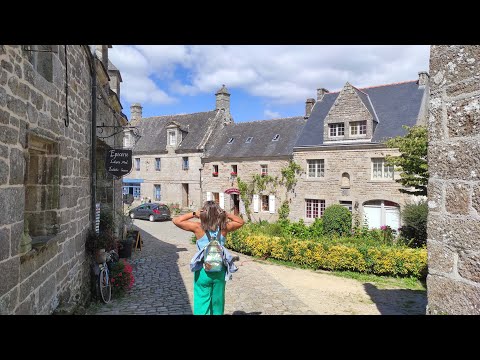
Explore Brittany: The Complete Travel Guide | Part 1 🗺️
Horizonte sin final

BRITTANY TRAVEL GUIDE: Carnac, Vannes, Auray & Quiberon
Sophie Nadeau
You are currently viewing a placeholder content from Vimeo. To access the actual content, click the button below. Please note that doing so will share data with third-party providers.
More InformationYou are currently viewing a placeholder content from YouTube. To access the actual content, click the button below. Please note that doing so will share data with third-party providers.
More InformationYou need to load content from reCAPTCHA to submit the form. Please note that doing so will share data with third-party providers.
More InformationYou are currently viewing a placeholder content from GetYourGuide. To access the actual content, click the button below. Please note that doing so will share data with third-party providers.
More Information