
Brest: The Complete Travel Guide (2026)

Last reviewed: October 2026 · key facts checked against Wikidata
Brest Travel Guide: Everything You Need to Know (2026)
Brest is a dynamic port city of roughly 140,000 inhabitants at the far western tip of Brittany, founded as a major naval base under Cardinal Richelieu in the 17th century and sitting just 24 km from the Atlantic Ocean’s open waters. Almost entirely rebuilt after World War II left it 80% destroyed, it wears its brutalist-meets-maritime identity with pride. The city hosts one of Europe’s premier maritime festivals, the Fêtes Maritimes, drawing over 500,000 visitors every four years.
Top 3 Highlights at a Glance
- Château de Brest & National Maritime Museum — France’s oldest active military site, continuously occupied for over 1,700 years, with free entry to the castle exterior and stunning harbour views.
- Océanopolis — One of Europe’s largest aquarium complexes with 10,000 marine species across three climate-themed pavilions — unmissable for ocean depth.
- Cours Dajot Promenade — A 300-metre clifftop walkway built by Napoleon’s prisoners offering a panoramic sweep of Europe’s largest military harbour.
Scroll down for our complete travel guide with tips on getting there, where to stay, costs and more.
Arrival & Airport
How do I get to Brest — by train, plane, or car?
The fastest option is flying into Brest Bretagne Airport (BES), just 7 km from the city centre. In my experience, Air France and Transavia run direct flights from Paris Orly in 1 hour 20 minutes, and Ryanair connects from several European cities seasonally. Alternatively, a TGV high-speed train from Paris Montparnasse takes 3 hours 45 minutes and drops you right at Brest city centre station — my preferred choice for avoiding airport faff. By car from Paris, budget 5 hours on the A11/N165. The honest caveat: train tickets booked less than a week in advance spike to €80–€120 one way, so book early.
Which airport is closest to Brest?
Brest Bretagne Airport (BES) is the only real option, located 7 km northwest of the city centre in Guipavas. It’s a small regional airport — don’t expect a huge terminal. What surprised me is how limited international connections are outside summer; most routes funnel through Paris. Ryanair offers seasonal direct flights from London Stansted, Brussels Charleroi, and a handful of other European cities. If BES has no good fare for your dates, Nantes Atlantique (NTE), roughly 280 km away, gives you far more airline choices — but that’s a 3-hour drive south, which largely defeats the purpose.
How long does the journey to Brest take from major French cities?
From Paris Montparnasse by TGV, the journey is 3 hours 45 minutes — comfortable and scenic through the Loire valley. From Rennes, expect 1 hour 20 minutes by TER regional train. From Nantes, it’s roughly 2 hours 30 minutes by train. My tip: the train arrives at Brest Gare, centrally located — you’ll be at your hotel within 10 minutes on foot or by local bus. The trade-off is that train frequency drops sharply on Sundays; I once waited 2 hours for a connection from Rennes on a Sunday evening, so always check the SNCF Connect app for Sunday timetables before committing.
Do I need a rental car in Brest?
No — for the city itself, you absolutely do not need a car. Brest’s Téléphérique cable car, Bibus bus network with 24 lines, and the compact city centre make it very walkable. However, if you plan to explore the Crozon Peninsula (35 km south), the Presqu’île de Plougastel, or inland Finistère villages, a rental car becomes essential — public transport to those areas is infrequent or nonexistent. I recommend hiring from Europcar at Brest Gare rather than the airport to save on airport surcharges. Compact cars start at €35–€50 per day in shoulder season, rising to €70+ in August.
City Transport
What are the best areas to stay in Brest?
My top pick is the Rue de Siam / Port de Commerce area — it’s the beating heart of the city, walkable to the castle, the cable car, and the port. The Saint-Martin neighbourhood uphill from the port is quieter with local bakeries and fewer tourists, ideal if you want a neighbourhood feel. Avoid booking in Lambézellec or Bellevue on the city’s outskirts — they’re residential suburbs with nothing walking distance. For first-timers, staying within 500 metres of Place de la Liberté puts you central to everything. What surprised me is how affordable and pleasant the waterfront hotels near Port du Moulin Blanc are for a longer stay.
What does accommodation cost per night in Brest?
In my experience, Brest is genuinely affordable compared to French cities like Bordeaux or Lyon. A solid 3-star hotel near Rue de Siam costs €70–€100 per night. Budget options like ibis or B&B Hôtels run €55–€75. A well-equipped Airbnb apartment near the port averages €65–€90 per night for two people. The honest caveat: during the Fêtes Maritimes (held every 4 years, next edition 2026), prices triple — I’ve seen rooms that normally cost €80 jump to €250+, and they sell out 6–9 months in advance. Outside that event, you can comfortably book 2–3 weeks ahead and still find good rates.
How far in advance should I book accommodation in Brest during high season?
For standard summer travel in July and August, booking 4–6 weeks ahead is sufficient for most hotels. However, 2026 is a potentially significant year — check whether the Fêtes Maritimes de Brest 2026 is scheduled, as this event historically packs every room within 50 km of the city. If it falls in your travel window, book immediately — ideally 6–9 months out. My tip: the Formule 1 and ibis Budget on the ring road release cancellable rooms that you can reserve with no penalty up to 48 hours before arrival, making them a smart placeholder while you finalize plans.
Are there special or unusual accommodation types in Brest?
Brest has one genuinely special option: staying aboard a tall ship or converted vessel moored in the Port de Plaisance du Moulin Blanc — I recommend checking with local sailing associations ahead of the Fêtes Maritimes, as private boat rentals become available. The Hôtel de la Corniche offers rooms with direct views over the Rade de Brest harbour, which at sunset is spectacular. For families, gîtes in the Plougastel-Daoulas area just 12 km east combine self-catering space with strawberry farm countryside — the region is France’s strawberry capital. Budget: gîtes from €90–€130 per night for a full cottage.
Accommodation & Neighbourhoods
What are the must-see sights in Brest?
Three non-negotiables: the Château de Brest (France’s oldest military garrison, continuously occupied since the 3rd century AD, free exterior access), the Océanopolis aquarium (entry €22 adult / €15 child, allow 3 hours minimum), and the Cours Dajot promenade for harbour panoramas. I also strongly recommend taking the Brest Téléphérique cable car — at €1.70 per ride, it crosses the Penfeld river gorge and is one of only two urban cable cars in France used as public transport. The Musée des Beaux-Arts de Brest on Rue Traverse deserves 90 minutes and charges just €5 entry.
What can I experience for free in Brest?
More than you’d expect. The Cours Dajot promenade costs nothing and delivers the finest view of Europe’s largest military harbour. The Jardins de l’Explorateur botanical garden near Océanopolis is free year-round. The Halles Saint-Louis covered market is free to wander and peaks on Saturday mornings — go before 10am for the freshest Breton oysters and galettes. The Penfeld river walk from the naval arsenal gate down to the port is underrated and completely free. What surprised me is how much of the city’s maritime identity you absorb just walking the 1.2 km between the castle and the commercial port.
Which day trips from Brest are worth taking?
The Crozon Peninsula, 45 minutes by car or 90 minutes by bus (Ligne 37 from Brest centre), is unmissable — its Pointe de Pen-Hir clifftops rival anything in Ireland. Landerneau, just 20 minutes by TER train (€4 each way), is a charming riverside town with the only inhabited bridge in France, the Pont de Rohan. For something more dramatic, drive the D791 along the Aulne estuary to Châteaulin — 55 km of inland Brittany at its quietest. The honest caveat: without a car, Crozon requires careful bus timing — the last return bus leaves by 6:30pm in summer, earlier off-season.
What local specialities should I try in Brest?
Brest sits at the heart of Finistère’s food culture. The non-negotiable is kouign-amann — a caramelised butter cake invented in nearby Douarnenez; the best version I’ve had in Brest is at Boulangerie Le Blé Noir near Rue de Siam. Order a plateau de fruits de mer at any port-side brasserie: oysters from the Baie de Brest, local langoustines, and brown shrimp, typically €28–€45 for two. The galette de sarrasin (buckwheat crêpe) with andouille sausage is the working lunch of choice — budget €8–€12 at a local crêperie. My tip: avoid the tourist crêperies immediately beside the castle; walk 3 streets inland for 30% lower prices.
Highlights & Must-Sees
What makes Brest unique compared to other French cities?
Brest is the only major French city almost entirely rebuilt after WWII — 80% was destroyed between 1940 and 1944 — giving it a brutalist honesty that’s rare in France. It houses France’s premier naval base, and the Penfeld river that bisects the city remains an active military zone you can see but not enter. The Téléphérique cable car used as everyday public transport is found in only one other French city. And the Fêtes Maritimes de Brest, held every 4 years, is Europe’s largest gathering of traditional sailing vessels — over 500,000 visitors in 4 days. In my experience, Brest locals are more authentically proud and less performative about tourism than anywhere else in Brittany.
How many days in Brest are worthwhile?
2 full days covers the city’s core highlights comfortably. Add a third day if you want to do a day trip to the Crozon Peninsula — which I strongly recommend, as it’s one of the most dramatic coastlines in Western Europe. A 4-day visit gives you time to explore Plougastel-Daoulas, the naval museum, and the Landerneau day trip without feeling rushed. What most guides omit: Brest itself is fairly compact and you’ll run out of in-city highlights after day 2 — the city is best treated as a base for exploring the Finistère coast rather than a destination in isolation. Don’t try to squeeze it into a single overnight stop.
When is the best time to visit Brest?
June through September offers the most reliable weather and the longest daylight hours — Brest sits at nearly 48°N latitude, meaning July gives you light until nearly 10pm. July and August are peak months: busier, pricier, but the harbour and Crozon are at their most spectacular. My personal preference is June — crowds are thinner, coastal walks are green, and hotel rates are 20–30% lower than August. September is excellent for mild weather and near-empty beaches. The honest caveat: Brest is one of France’s rainiest cities — it receives around 1,200mm of rain annually — so even in summer, pack a waterproof layer. A sunny Brest day, though, is genuinely breathtaking.
Are there local festivals in Brest worth attending?
The crown jewel is the Fêtes Maritimes de Brest, held every 4 years (check if 2026 is an edition — if so, it’s a once-in-four-years reason to visit). Over 500,000 people descend for 4–5 days of tall ships, concerts, and harbour spectacle. Bout du Monde Festival in nearby Crozon (August, roughly 35 km away) is a world music festival drawing 35,000 attendees across 3 days — smaller, more accessible, and genuinely magical on the cliff-edge site. In December, Brest en Lumières transforms the harbour with light installations — free and uncrowded. My tip: book accommodation before buying festival tickets, not after.
Food & Drink
How does Brest’s weather affect what I can do there?
Brest’s oceanic climate means mild temperatures year-round — rarely below 4°C in winter or above 22°C in summer — but wind and rain are constant companions. Outdoor coastal activities like hiking Crozon or sailing are best June–September, when rain days drop to roughly 12 per month versus 20 in January. The Téléphérique, Océanopolis, and the castle are all-weather activities that work in any season. What surprised me is that winter Brest is quietly charming — the naval museum is uncrowded, restaurants are half-full, and the Atlantic storm-watching from Cours Dajot between November and February is genuinely dramatic. Just bring a windproof jacket, not an umbrella.
How crowded does Brest get in peak season?
Brest is not Paris — it doesn’t get overwhelmingly crowded even in August. The main pressure points are Océanopolis (queues of 30–45 minutes on peak August days without pre-booking), the Cours Dajot on sunny weekends, and the Halles Saint-Louis on Saturday mornings. During the Fêtes Maritimes, the entire city centre is impassable without planning — 500,000 people in 4 days for a city of 140,000 is extraordinary. Outside that event, even July and August feel manageable. My tip: book Océanopolis tickets online at least the night before — it saves queuing and you get €1.50 off the gate price.
How safe is Brest for travellers?
Brest is very safe by European urban standards. The centre around Rue de Siam and Place de la Liberté is active and well-lit at night with no meaningful threat to travellers. The Recouvrance neighbourhood across the Penfeld, historically rough, has gentrified significantly in the last decade and is now home to street art and independent cafes. The honest caveat: like any port city, the area immediately around the Gare SNCF late at night attracts some loitering, and lone travellers should avoid poorly lit side streets between the station and the port after midnight. Petty theft is rare but not zero — use standard bag-awareness at the Saturday market.
Is English widely spoken in Brest?
Less than you’d expect for a city its size. Brest is proudly Breton and French-speaking — English proficiency is moderate in hotels and tourist sites, but drops off quickly in local crêperies, the market, and neighbourhood shops. In my experience, younger staff at Océanopolis and the castle museum speak solid English; older local restaurant owners often do not. My tip: download Google Translate with French offline before arrival and learn 5 key phrases — even a bad attempt at French is warmly received here. The SNCF Connect app and Bibus bus app both have English interfaces, which saves significant navigation stress.
Practical Tips
What is the daily budget for travelling in Brest?
On a mid-range budget, expect €80–€120 per person per day including accommodation, meals, and one paid attraction. Broken down: €70–€90 for a hotel room (split two ways = €35–€45 per person), €25–€35 for food (crêperie lunch at €10, harbour brasserie dinner at €20–€25), and €10–€15 for transport and entry fees. Budget travellers staying in hostels (from €22 per night at Auberge de Jeunesse de Brest) and eating from the market can get by on €45–€55 per day. The only unavoidable splurge I recommend: the plateau de fruits de mer at least once — budget €30–€35 for two and it’s worth every cent.
How does public transport work in Brest?
Bibus operates Brest’s bus network with 24 lines plus the iconic Téléphérique cable car — all on the same ticket system. A single ride costs €1.70, a 10-trip carnet is €13.50, and a 24-hour pass is €4.20 — excellent value. The Téléphérique crosses the Penfeld gorge in 3 minutes and runs until 8:30pm weekdays, shorter hours on weekends. Lines 2 and 3 from the central Place de la Liberté reach most tourist sites including Océanopolis. The honest caveat: Sunday frequency drops to roughly every 30–45 minutes on most lines, making a car useful if you want flexibility on Sundays. Download the BreizhGo app for real-time tracking.
Which apps do you recommend for getting around and enjoying Brest?
My essential four: SNCF Connect for all train bookings and live departure boards from Brest Gare — buy tickets here, not at the machine. BreizhGo covers all regional transport including Bibus and cross-Finistère buses to Crozon. Google Maps with offline Brest map downloaded — works reliably even in the Penfeld gorge where signal drops. TheFork (LaFourchette) for restaurant reservations — essential during festival periods and often unlocks €5–€10 discounts at participating brasseries. Bonus: Météo-France app (the national weather service) gives hyperlocal Brest forecasts that are significantly more accurate than Google Weather for this Atlantic microclimate.
More Destinations in Europe
Explore our complete travel guides for more Europe destinations: Aquitaine Travel Guide (2026), Normandie Travel Guide (2026), Chartres Travel Guide (2026), Vendee Travel Guide (2026), Ajaccio Travel Guide (2026).
Brest at a Glance
| Currency | EUR (€) |
|---|---|
| Official language | French |
| Time zone | UTC+01:00 |
Source: Wikidata, retrieved October 2026.
Useful Resources for Planning Your Trip to Brest
- Wikipedia: Brest — history, geography and background
- Lonely Planet: Brest — itineraries and travel inspiration
- TripAdvisor: Brest — hotels, restaurants and traveller reviews
🎥 Brest Travel Videos
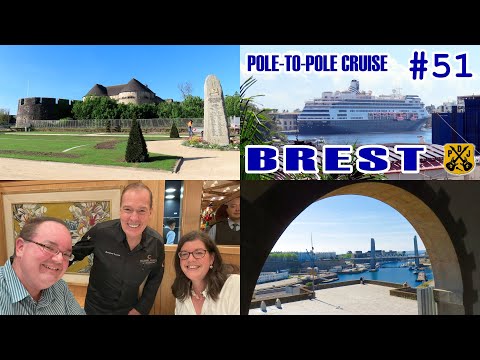
Brest, France – Food & History City Walking Tour, Jacques …
ParoDeeJay

France Travel Vlog | Exploring Brest, France
Wanderlust Alley

VISITING BREST, FRANCE | TRAVEL DIARIES | Nicole Deli
NicoleDeli
You are currently viewing a placeholder content from Vimeo. To access the actual content, click the button below. Please note that doing so will share data with third-party providers.
More InformationYou are currently viewing a placeholder content from YouTube. To access the actual content, click the button below. Please note that doing so will share data with third-party providers.
More InformationYou need to load content from reCAPTCHA to submit the form. Please note that doing so will share data with third-party providers.
More InformationYou are currently viewing a placeholder content from GetYourGuide. To access the actual content, click the button below. Please note that doing so will share data with third-party providers.
More Information