
Nancy: The Complete Travel Guide (2026)
Last reviewed: October 2026 · key facts checked against Wikidata
Nancy Travel Guide: Everything You Need to Know (2026)
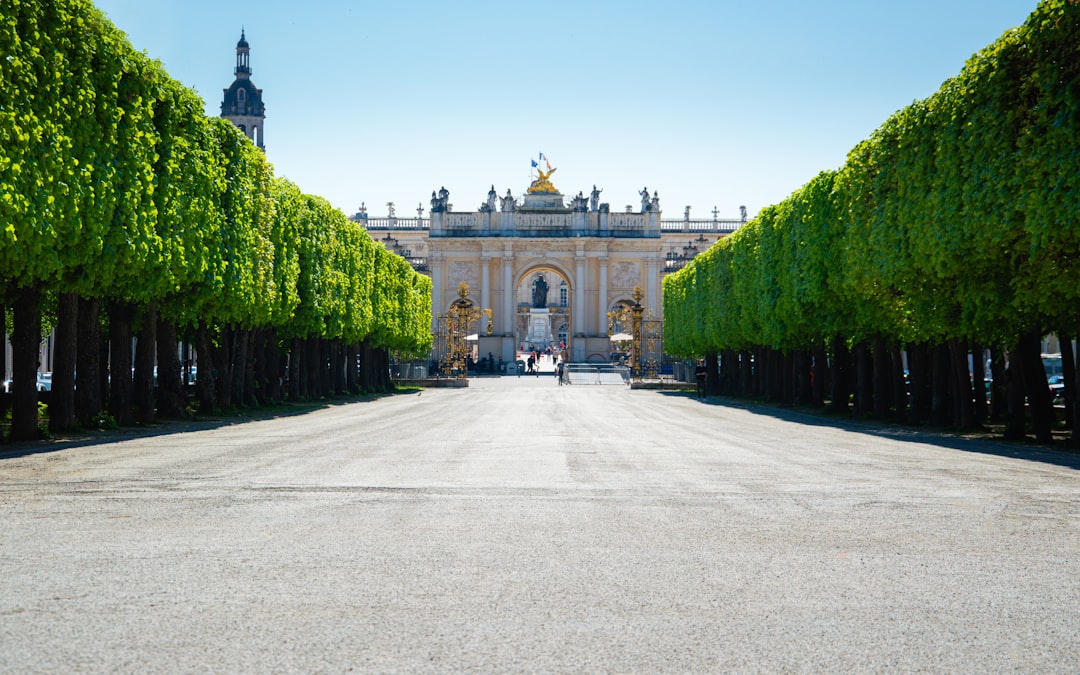
Nancy is a mid-sized city of approximately 104,000 residents in the Lorraine region of northeastern France, founded in the 11th century and sitting roughly 310 km east of Paris. The city rose to European prominence under Duke Stanisław Leszczyński in the 18th century, whose urban planning legacy earned the central Place Stanislas a UNESCO World Heritage Site designation in 1983. What surprised me most: this is one of France’s most architecturally rewarding cities, yet it receives a fraction of the tourist traffic of Strasbourg just 145 km away.
Top 3 Highlights at a Glance
- Place Stanislas — An 18th-century royal square with gilded wrought-iron gates, UNESCO-listed, considered one of Europe’s finest baroque ensembles.
- Musée de l’École de Nancy — Home to the world’s largest collection of Art Nouveau furniture and objects, housed in a stunning original 1909 villa.
- Parc de la Pépinière — A 23-hectare public garden anchored by a Rodin sculpture and a free zoo — Nancy’s beloved green lung since 1765.
Scroll down for our complete travel guide with tips on getting there, where to stay, costs and more.
Arrival & Airport
How do I get to Nancy?
Take the TGV from Paris Gare de l’Est — it’s the fastest and most practical option. Direct TGV trains run in approximately 90 minutes and cost €25–€75 depending on how early you book via SNCF Connect. I recommend booking at least 3 weeks ahead for the cheapest Ouigo or TGV fares. From Strasbourg, a regional TER train covers the 145 km in about 1 hour 20 minutes for roughly €20. By car from Paris, it’s 310 km on the A4 motorway, but toll fees add roughly €25 each way. My tip: skip the car entirely — Nancy’s centre is compact and walkable, making a vehicle more hindrance than help.
Which airport is closest to Nancy?
Aéroport de Nancy-Metz (ENC) is the official local airport, located 30 km south near Tomblaine, but it serves almost no scheduled commercial flights as of 2026. In my experience, the most practical choice is Strasbourg Airport (SXB), 145 km away, with connections to Paris, London, and other European cities. Luxembourg Findel Airport (LUX) is 100 km northeast and offers strong intercontinental links including transatlantic routes. From LUX, a bus-train combination via Luxembourg City station puts you in Nancy in about 90 minutes for under €20. The honest caveat: Nancy has no convenient direct airport for most international travellers, so budget an extra half-day for onward connections.
How long does the journey to Nancy take from major hubs?
From Paris Gare de l’Est by TGV, the journey takes 90 minutes. From Strasbourg by TER regional train, expect 1 hour 20 minutes. From Luxembourg City by train, the trip runs 1 hour 10 minutes and costs around €15–€25. Flying into Charles de Gaulle (CDG) and then taking the TGV adds roughly 4 hours door-to-door including airport transit. What surprised me: Nancy is genuinely close to multiple European capitals — Metz is only 55 km north and reachable in 35 minutes by TER for under €10, making a twin-city itinerary very easy.
Do I need a car to explore Nancy?
No — for Nancy itself, a car is unnecessary and actively inconvenient. The historic centre around Place Stanislas, the Vieille Ville, and the Art Nouveau quarter are all walkable within a 20-minute radius. Nancy has two tram lines (T1 and T2) and a solid bus network run by Stan that covers outer districts for €1.60 per trip. My honest caveat: if you plan day trips to the Moselle Valley wine villages, Verdun (90 km west), or the Vosges foothills, a rental car saves significant time. Europcar and Hertz both operate from Nancy train station, with compact cars from roughly €35–€50 per day.
City Transport
What are the best areas to stay in Nancy?
Stay in the Centre Historique within walking distance of Place Stanislas — this gives you immediate access to the main sights without needing transport. The Quartier Art Nouveau around Rue Stanislas and Boulevard Charles V is my personal favourite: quieter, beautiful architecture, and still central. Budget travellers do well near Gare de Nancy, where 2-star hotels cluster and tram access is instant. I’d avoid the Plateau de Haye district entirely — it’s a residential suburb with no tourist infrastructure. What surprised me: even Nancy’s most central hotels are rarely full, so last-minute room availability is often better here than in comparable French cities.
What does accommodation cost per night in Nancy?
Budget well: Nancy is meaningfully cheaper than Paris or Strasbourg. A 3-star hotel near Place Stanislas runs €75–€120 per night. The landmark Grand Hôtel de la Reine, directly on Place Stanislas, charges €150–€220 for its setting alone — and it’s worth budgeting for at least one night. Hostels and budget hotels near Gare de Nancy start at €45–€65. Airbnb apartments in the Centre Historique average €60–€90 per night for a one-bedroom. My tip: the Best Western Plus Centre on Rue Raymond Poincaré consistently delivers value at around €85. Unlike Paris, there’s essentially no price gouging for single occupancy here.
How far in advance should I book accommodation in Nancy during high season?
For most of the year, 1–2 weeks ahead is sufficient — Nancy doesn’t sell out the way major French tourist cities do. The honest caveat: three windows demand earlier booking. First, the Nancy Jazz Pulsations festival in October fills the city’s mid-range hotels; book 6–8 weeks ahead. Second, the Christmas market (late November to December) draws regional visitors heavily; book 4–6 weeks out. Third, the Fêtes de la Saint-Nicolas in early December is a city-wide spectacle that packs accommodation fast. For summer travel in June–September, booking 2 weeks ahead is genuinely fine. The Grand Hôtel de la Reine is the only property that consistently books up regardless of season.
Are there special or unusual accommodation types in Nancy?
Yes — Nancy offers two genuinely distinctive stays. The Grand Hôtel de la Reine occupies an 18th-century mansion directly on Place Stanislas with rooms that overlook the gilded gates; it’s a historic property with no real equivalent in Lorraine. For Art Nouveau enthusiasts, the Hôtel d’Haussonville near the Pépinière park operates in a restored patrician townhouse with period detailing. My tip: the Villa Mathieu, a chambres d’hôtes (B&B) in the Art Nouveau quarter, provides a private villa experience for around €95 per night with a breakfast that includes local Bergamote sweets. Standard chain hotels like Ibis and Novotel sit within 500 m of the station for reliable but characterless stays.
Accommodation & Neighbourhoods
What are the absolute must-sees in Nancy?
Three sights are genuinely non-negotiable. First, Place Stanislas — arrive at dusk when the gold ironwork catches the last light; the square is 315 m long and completely pedestrianised. Second, the Musée de l’École de Nancy on Rue du Sergent Blandan, the definitive Art Nouveau museum globally, open Tuesday–Sunday with entry at €6. Third, the Cathédrale Notre-Dame de l’Annonciation and the connected Chapelle des Cordeliers, which houses the tombs of the Dukes of Lorraine. In my experience, most visitors underestimate how much the Parc de la Pépinière adds to a day — free entry, a Rodin original, and a working rose garden with over 130 varieties.
What can I experience for free in Nancy?
Quite a lot, actually. Place Stanislas, Place de la Carrière, and Place d’Alliance — all three UNESCO-listed squares — cost nothing to walk and photograph. The Parc de la Pépinière with its rose garden and small zoo is completely free. The Musée des Beaux-Arts on Place Stanislas offers free entry on the first Sunday of each month. Street-level Art Nouveau architecture throughout the Rue Majorelle and Avenue Foch corridor is a free outdoor museum. My tip: the market at Marché Central runs Tuesday, Thursday, and Saturday mornings and showcases Lorraine produce at zero entry cost. Nighttime Place Stanislas with its illuminated fountains and gilded gates is arguably the best free show in northeastern France.
Which day trips from Nancy are most worthwhile?
Metz is the strongest day trip — 55 km north by TER train in 35 minutes for about €10 return, with the jaw-dropping Centre Pompidou-Metz and the Gothic cathedral of Saint-Étienne. Verdun, 90 km west, is essential for WWI history; the Ossuary of Douaumont holds the remains of 130,000 soldiers. By car, the Route des Vins de Lorraine through villages like Toul and Pagney-derrière-Barine is a half-day loop. I also recommend Épinal, 70 km south, for the old town and Musée de l’Image. The honest caveat: Verdun requires a car or organised tour — public transport connections are poor and a round trip takes a full day.
What local specialities should I try in Nancy?
Nancy has three culinary signatures you won’t replicate elsewhere. Bergamotes de Nancy are hard amber sweets flavoured with bergamot oil, sold since 1850 and protected by a registered trademark — buy them at Lefèvre-Lemoine on Rue Saint-Dizier. Macarons de Nancy are the original French macaron: flat, chewy, almond-based — nothing like the Parisian version — made by the Maison des Sœurs Macarons since 1793. Quiche Lorraine originated here; the authentic version contains no cheese, only lardons and egg custard. For dinner, order tourte Lorraine (pork and veal pastry) at Le Gastrolâtre near Place Stanislas. My tip: wash everything down with Mirabelle eau-de-vie, distilled from the tiny golden plum that Lorraine grows in greater quantity than anywhere else on earth.
Highlights & Must-Sees
What makes Nancy unique compared to other French cities?
Nancy is the only French city that was deliberately designed as a Baroque royal showcase by a deposed Polish king. Duke Stanisław Leszczyński, father-in-law of Louis XV, transformed Nancy between 1752 and 1756 into an architectural set piece that influenced city planning across Europe. This produces something rare: a medium-sized French provincial city with genuinely world-class urban design at its core. It’s also the undisputed birthplace of the École de Nancy, the French Art Nouveau movement, giving it two completely distinct architectural identities within walking distance. What surprised me: Nancy feels lived-in and un-touristy despite its UNESCO status — the café terraces on Place Stanislas serve locals, not just visitors.
How many days should I spend in Nancy?
Two full days is the minimum; three days is the sweet spot. Day 1: Place Stanislas, Musée des Beaux-Arts, Vieille Ville, evening at a brasserie on the square. Day 2: Musée de l’École de Nancy (budget 2 hours), Art Nouveau walking tour of Rue Majorelle, Pépinière park. Day 3: day trip to Metz or the Vosges foothills. In my experience, visitors who rush through in a single day uniformly regret missing the Art Nouveau quarter. If you have 4+ days, add Verdun. The honest caveat: Nancy’s nightlife is modest — it’s a university city with good bars around Place du Marché but no major club scene, so evenings are best spent at restaurants rather than hunting for late entertainment.
When is the best time to visit Nancy?
Based on climate data, June through September are the optimal travel months — warm temperatures, long daylight hours, and all museums and café terraces operating at full capacity. July and August are the warmest, with average highs around 25°C. My personal preference is late September, when summer crowds thin, the Mirabelle plum harvest defines local menus, and the light on Place Stanislas turns golden. December deserves a special mention: the Fêtes de la Saint-Nicolas (first weekend of December) and Christmas market make Nancy one of France’s most atmospheric winter destinations. Avoid January and February — the city is quiet, some restaurants close for holidays, and rain is frequent.
Are there local festivals in Nancy worth attending?
Three festivals genuinely justify timing your trip around them. Nancy Jazz Pulsations (mid-October, running since 1973) transforms the city for 10 days with free outdoor stages and ticketed concerts from €15–€35; it draws around 150,000 attendees and is one of France’s oldest jazz festivals. The Fêtes de la Saint-Nicolas (first Saturday of December) features a parade through the old town celebrating Lorraine’s patron saint — the crowd reaches 100,000 people and the atmosphere is genuinely unlike anything in Paris. The Braderie de Nancy (May) is a city-wide street sale spanning the entire centre. My tip: for jazz, book accommodation in August to secure September and October dates.
Food & Drink
How does the weather in Nancy affect what I can do there?
Nancy sits in a continental climate zone that means real winters and proper summers. Summer (June–September) is ideal for the café terrace culture on Place Stanislas, the rose garden in Pépinière, and day trips into the Vosges. Autumn brings reliable rain but also the best festival calendar and mirabelle season. Winter makes outdoor sightseeing uncomfortable but doesn’t close any major attraction — and December’s Christmas market on Place Stanislas is genuinely spectacular under the gilded ironwork. The honest caveat: spring (March–May) is unpredictable — I’ve experienced sunny 18°C days and cold grey drizzle in the same week. Pack layers for any shoulder-season visit. Museums and indoor Art Nouveau sights make Nancy more weather-proof than beach destinations.
How crowded does Nancy get in peak season?
Nancy never reaches the overcrowding of Paris, Strasbourg, or Bordeaux — even in July and August, Place Stanislas remains pleasantly manageable rather than oppressively packed. The Musée de l’École de Nancy sometimes has 15–20 minute waits on summer weekends, but advance booking isn’t necessary. The Grand Hôtel de la Reine fills up fastest; mid-range hotels stay available. My honest caveat: December is genuinely crowded for a city this size — the Christmas market and Saint-Nicolas festival bring regional visitors from across Lorraine, Alsace, and Luxembourg, and restaurant tables on Place Stanislas require booking 3–4 days ahead. For a summer visit, simply walk in — the relaxed pace is one of Nancy’s most underrated assets.
How safe is Nancy?
Nancy is safe by any European standard. The Centre Historique, Vieille Ville, and Art Nouveau quarter are all low-risk at any hour. In my experience, the worst you’ll encounter near Place Stanislas is aggressive restaurant touts, not crime. The honest caveat: the area around Gare de Nancy at night warrants standard city alertness — petty theft and occasional confrontations do occur, consistent with most French train stations. The Haut-du-Lièvre district in the northwest is a disadvantaged banlieue where tourists have no reason to go. Use common sense with bags on the T1 and T2 tram lines during rush hour. France’s emergency number is 17 (police) or 15 (medical) — the main CHU de Nancy hospital is 3 km from the centre.
Is English widely spoken in Nancy?
Less so than in Paris or Strasbourg, but enough for practical travel. Staff at hotels on Place Stanislas, the Musée de l’École de Nancy, and the tourist office on Place Stanislas speak functional to good English. Restaurant staff in the tourist centre manage English menus and basic orders. My honest caveat: venture into a neighbourhood brasserie or market stall and you’ll need French or a translation app — this is a French regional city, not an international hub. Google Translate’s camera function handles French menus perfectly. Learning five words — bonjour, s’il vous plaît, merci, l’addition (the bill), and une carafe d’eau (tap water) — will markedly improve how locals respond to you. University students near Place Carnot often speak solid English.
Practical Tips
What is the daily budget for travelling in Nancy?
Nancy is genuinely affordable by French city standards. A budget traveller spending nights in a hostel or 2-star hotel near the station can manage €70–€90 per day including accommodation, a sit-down lunch, museum entry, and transport. A mid-range traveller staying in a 3-star near Place Stanislas, eating one proper restaurant dinner, and visiting two paid museums should budget €130–€170 per day. The Musée des Beaux-Arts costs €6, the Musée de l’École de Nancy €6, and a three-course dinner at Le Capu on Place Stanislas runs €28–€38 per person. My tip: a brasserie lunch with plat du jour and carafe of house wine costs €14–€18 and is always better value than tourist menus near the square.
How does public transport work in Nancy?
Nancy’s network is operated by Stan (Réseau Stan) and covers the city with 2 tram lines and 18 bus routes. The T1 tram connects the train station to the city centre and university in under 10 minutes. A single ticket costs €1.60, a 10-trip carnet is €13, and a 24-hour pass costs €4.20 — excellent value if you’re making 3+ trips. Trams and buses run from roughly 5:30 AM to midnight. In my experience, the tram is the only connection you’ll genuinely need as a tourist; the rest of the historic centre is walkable in 15–20 minutes end to end. The honest caveat: night bus service after midnight is thin, so budget €10–€15 for a taxi back to your hotel after a late dinner.
Which apps do you recommend for visiting Nancy?
Five apps make a Nancy trip significantly smoother. SNCF Connect is essential for booking TGV and TER trains — set price alerts for the Paris–Nancy route to catch €25 flash fares. Stan mobile (the local transport app) shows real-time tram arrivals and sells tickets digitally. Google Maps handles Nancy’s walkable centre well; download the offline map before arrival. Musement lists combined tickets and timed entries for the main museums. For food, TheFork (LaFourchette) covers Nancy restaurant bookings and often shows 10–20% discount offers on weekdays. My tip: download Navitia as a backup for public transport — it integrates national and regional connections better than Google Maps for French regional rail in the Lorraine area.
More Destinations in Europe
Explore our complete travel guides for more Europe destinations: Île de Porquerolles Travel Guide (2026), Chamonix Travel Guide (2026), Mallorca Travel Guide (2026), Île Rouzic Travel Guide (2026), Île de Noirmoutier Travel Guide (2026).
Nancy at a Glance
| Currency | EUR (€) |
|---|---|
| Official language | French |
| Time zone | UTC+01:00 |
Source: Wikidata, retrieved October 2026.
Useful Resources for Planning Your Trip to Nancy
- Wikipedia: Nancy — history, geography and background
- Lonely Planet: Nancy — itineraries and travel inspiration
- TripAdvisor: Nancy — hotels, restaurants and traveller reviews
🎥 Nancy Travel Videos

The Don’ts of Visiting Nancy, France
Wolters World

Explore Nancy, France: Top 10 Must-Visit Places
Frenk Talks
You are currently viewing a placeholder content from Vimeo. To access the actual content, click the button below. Please note that doing so will share data with third-party providers.
More InformationYou are currently viewing a placeholder content from YouTube. To access the actual content, click the button below. Please note that doing so will share data with third-party providers.
More InformationYou need to load content from reCAPTCHA to submit the form. Please note that doing so will share data with third-party providers.
More InformationYou are currently viewing a placeholder content from GetYourGuide. To access the actual content, click the button below. Please note that doing so will share data with third-party providers.
More Information