
Dordogne: The Complete Travel Guide (2026)
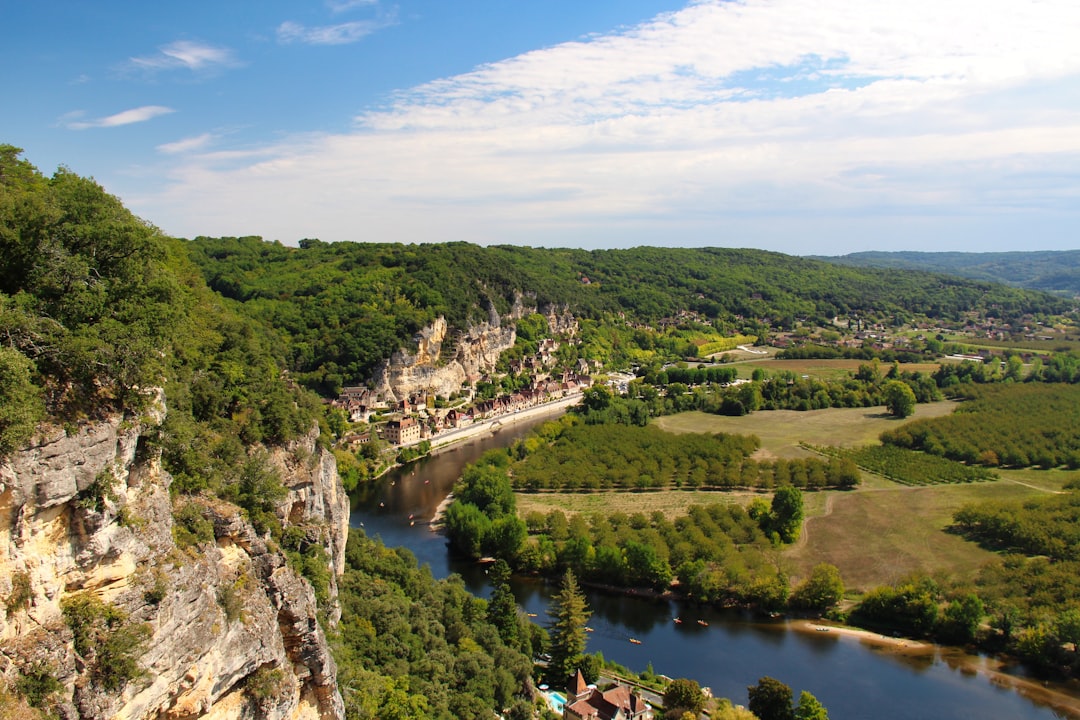
Dordogne Travel Guide: Everything You Need to Know (2026)
The Dordogne department in southwest France covers 9,060 km² and is home to 416,384 residents, making it one of the least densely populated departments in the country. Its prehistoric credentials are staggering — the Vézère Valley alone contains over 150 prehistoric sites, including the Lascaux cave paintings dated to 17,000 years ago. Sitting roughly 500 km south of Paris and straddling the ancient county of Périgord, this is a destination where medieval castles outnumber traffic lights.
Top 3 Highlights at a Glance
- Lascaux IV Cave Museum — The world’s finest replica of 17,000-year-old prehistoric paintings, indistinguishable from the sealed original caves nearby.
- Château de Beynac — A 13th-century clifftop fortress rising 150 metres above the Dordogne River with panoramic views across four castles simultaneously.
- Sarlat-la-Canéda Market — Saturday morning market in France’s best-preserved medieval town, selling black truffles for up to €1,000 per kilo in winter.
Scroll down for our complete travel guide with tips on getting there, where to stay, costs and more.
Getting There
How do I best reach the Dordogne region?
By car from Paris via the A20 motorway is the most practical option — roughly 5.5 hours from Paris. In my experience, driving is not just convenient here, it’s essentially mandatory once you arrive. You can also take a TGV from Paris Montparnasse to Périgueux in about 3 hours 45 minutes with one change at Bordeaux, which works if you plan to rent a car on arrival. What most guides omit: the A89 toll road between Bordeaux and Périgueux adds €8–12 in tolls each way. Budget carriers like Ryanair occasionally fly to Bergerac Airport (EGC) from the UK, making it the fastest entry point for British travelers.
Which airport is closest to the Dordogne?
Bergerac Airport (EGC) is the closest, sitting just 90 km southeast of Périgueux and within the department itself. My tip: Bergerac suits you perfectly if you’re flying from the UK — Ryanair and others run seasonal routes from London Stansted, Bristol, and Edinburgh. The caveat most travelers miss is that Bergerac has very limited routes and almost no connections from outside the UK or Ireland. If you’re flying from North America or elsewhere in Europe, Bordeaux Airport (BOD), 120 km west of Sarlat, gives you far more options and is served by Air France, easyJet, and Vueling. Car hire desks exist at both airports.
How long is the journey from a major city to the Dordogne?
From Bordeaux, the drive to Sarlat-la-Canéda — the region’s tourist capital — takes 1 hour 45 minutes covering 160 km. From Paris, expect 5 to 6 hours by car or 4 hours by train to Périgueux with a Bordeaux connection. What surprised me: the train to Les Eyzies or Sarlat from Bordeaux is genuinely slow — the regional TER train takes nearly 3 hours for what is a 1.5-hour drive. I recommend taking the fast TGV to Bordeaux Saint-Jean, then renting a car immediately. Toulouse to Sarlat is also feasible at 2 hours 15 minutes by car, making it a solid alternative gateway.
Are there direct bus connections to and within the Dordogne?
Direct long-distance bus links to the Dordogne are limited and not reliable as a primary transport method. FlixBus serves Périgueux from Bordeaux and Paris, with the Paris route taking 6+ hours. Within the department, the Périgord Bus network connects major towns like Périgueux, Bergerac, and Sarlat but runs only 3–5 times daily on most routes and stops completely on Sundays. My honest warning: if you plan to reach Les Eyzies, Beynac, or La Roque-Gageac by bus alone, you will fail — these villages have zero usable public transport. The bus network is adequate for getting between the three main towns, nothing more.
Is a rental car necessary in the Dordogne?
Yes, absolutely — a rental car is not optional in the Dordogne, it is the trip. In my experience, 90% of the region’s best sites — prehistoric caves, riverside châteaux, walnut farms — are inaccessible without your own wheels. Rent from Bergerac Airport (EGC) or Bordeaux (BOD) where desks from Europcar, Hertz, and Avis operate daily. Budget €40–65 per day for a standard automatic. My tip: book at least 6 weeks ahead in July and August when supply genuinely runs out. The trade-off worth knowing: Dordogne roads are beautiful but narrow — a compact car like a Renault Clio handles the village lanes far better than any SUV.
Accommodation
Which towns in the Dordogne make good bases?
Sarlat-la-Canéda is the undisputed best base for first-timers — 200+ medieval buildings in the old town and central access to the Vézère Valley caves and the Dordogne River châteaux within 30 km in any direction. I recommend Périgueux as a base if you want a working French city with a proper Saturday market at Place de la Clautre and the stunning Saint-Front Cathedral. Beaulieu-sur-Dordogne suits slow travelers who want riverside calm over tourist infrastructure. What most guides skip: Brantôme, nicknamed the Venice of Périgord, is a beautiful base for northern Dordogne with 12th-century abbey ruins and far fewer crowds than Sarlat in peak season.
Where should I stay in the Dordogne?
For atmosphere, stay inside Sarlat’s medieval centre — even one night in a stone-walled gîte on Rue des Consuls is worth the premium. For château-style immersion, the Périgord Noir area between Sarlat and Les Eyzies offers dozens of converted manor houses and chambres d’hôtes. My tip: gîtes ruraux — self-catering farmhouses rented weekly — deliver the best value and the most authentic experience. Book through Gîtes de France directly for vetted properties. The honest trade-off: staying in a remote gîte is magical but means a 20–40 minute drive to any restaurant, so stock up at the Sarlat market on Saturday mornings before retreating to the countryside.
What does accommodation cost per night in the Dordogne?
In my experience, budget €80–120 per night for a solid double room in a chambre d’hôtes in the Périgord Noir. Hotels in Sarlat’s old town run €110–180 in July and August. A self-catering gîte for 4–6 people costs €900–1,800 per week in peak summer, which works out cheaper than hotel rooms per person. The cheapest legitimate option: camping with a river view near Domme or La Roque-Gageac from €18–28 per pitch per night. What surprises most travelers: even budget accommodation in Dordogne is genuinely charming — stone buildings and terracotta tiles are the norm, not the exception, even at lower price points.
How far in advance should I book accommodation in the Dordogne?
Book 6–9 months ahead for July and August — this is not an exaggeration. The best chambres d’hôtes and converted farmhouses in the Périgord Noir fill completely by January for summer. In my experience, the window for last-minute deals in high season is essentially nonexistent for quality properties. Shoulder season (May, June, September) allows booking 4–6 weeks in advance with good availability. My tip: if you miss the good gîtes, check Airbnb for cancellations in Les Milandes or Domme — owners occasionally re-list. The honest warning: don’t leave Sarlat accommodation to chance — the old town has fewer than 15 hotels and they sell out fast, especially around the Sarlat Film Festival in November.
When is the best time to visit the Dordogne?
July and September are the best months, based on verified climate analysis. July delivers reliably warm, sunny days ideal for river swimming and château visits. September is my personal favourite — harvest season brings walnut and tobacco picking, truffle season begins in late September, crowds drop sharply after the French school return in early September, and temperatures sit at a pleasant 22–25°C. The trade-off: July is peak season with maximum crowds at Lascaux IV and Sarlat’s Saturday market. June is an excellent alternative — warm, green, and 20–30% cheaper than July rates. I’d avoid August weekends specifically around Sarlat and Les Eyzies — the traffic on the D704 is genuinely frustrating.
Best Time to Visit
How does the weather in the Dordogne affect which activities you can do?
The Dordogne has a semi-oceanic climate with warm summers and mild, wet winters. Summer temperatures regularly reach 30–33°C in July, making midday walks uncomfortable — I recommend visiting Lascaux IV or Font-de-Gaume caves in the heat of the afternoon and saving outdoor walks for before 10am and after 5pm. Canoe trips on the Dordogne River between La Roque-Gageac and Beynac are best from May to September when water levels suit paddling. Winter brings the truffle season — Périgueux Truffle Market runs every Saturday from December to February — but château grounds often close, so plan accordingly. Spring rain makes the limestone valleys intensely green but can flood low river paths near Domme.
Are there local festivals in the Dordogne worth attending?
Absolutely — the Sarlat Film Festival in November is one of France’s most respected regional cinema events, drawing industry figures and filling every hotel. In my experience it’s one of Europe’s most underrated cultural weekends. The Périgueux Truffle and Foie Gras Market runs every Saturday morning in December and January at Place Saint-Louis — this is world-class gastronomy tourism at zero entry cost. Bergerac Wine Festival in late May celebrates the Bergerac AOC and Monbazillac appellations with producer tastings from €5–15. The honest caveat: the Sarlat Medieval Festival in summer is extremely crowded and somewhat commercialized — treat it as fun rather than authentic history.
When does the Dordogne get crowded, and how bad does it get?
July and August bring the worst crowds, concentrated at Sarlat-la-Canéda, Les Eyzies, and the Lascaux IV museum. The D706 river road between Beynac and Domme becomes a slow-moving queue on August afternoons. What surprises most visitors: the French domestic tourism wave is as significant as international — Paris families descend on Périgord en masse in August. My tip: arrive at Lascaux IV before 9:30am to avoid the school groups that fill it by 11am. September 1st is a genuine cliff-edge — the moment French schools restart, the region exhales. The northern Périgord Vert around Brantôme and Nontron stays quieter all summer because most tourists never venture that far north.
What does a daily budget cost for the Dordogne?
Budget €80–110 per person per day for a comfortable mid-range trip including accommodation, meals, and one paid attraction. Broken down: €50–70 for a shared chambre d’hôtes room, €25–35 for food (market picnic lunch, restaurant dinner), and €15–25 for entry fees like Lascaux IV at €15 or a château at €8–12. A shoestring budget using camping (€18 per pitch), market picnics, and free sites like the hilltop village of Domme can bring daily costs to €40–55 per person. The hidden escalator: car hire and fuel adds €20–30 per person per day on top of everything else — factor this in from day one, not as an afterthought.
Is the Dordogne cheaper or more expensive than other French regions?
The Dordogne is moderately priced by French standards — cheaper than Provence or the Côte d’Azur but slightly pricier than the Lot or Corrèze next door. A restaurant dinner for two with wine in Sarlat’s old town costs €60–90, compared to €90–140 in Saint-Rémy-de-Provence. The honest trade-off: Dordogne’s reputation for gastronomy means even budget restaurants serve duck confit and walnut tarts at fair prices — you get genuine quality for the money. Périgueux and Bergerac are noticeably cheaper than Sarlat for the same meal quality. My tip: buy foie gras, walnuts, and Pécharmant wine directly from farm shops (fermes auberges) to save 30–40% over Sarlat market prices.
Budget
What free highlights are there in the Dordogne?
The hilltop bastide village of Domme is free to walk and offers one of the finest views in southwest France across the Dordogne River valley — no entry fee for the village itself. The Vézère Valley walking trail past cliff dwellings near La Roque Saint-Christophe costs nothing to observe from below. Périgueux Cathedral Saint-Front — a UNESCO World Heritage Site — charges no admission. In my experience, the best free experience is driving the D703 river road at golden hour from Beynac to Castelnaud when the châteaux glow amber over the river. The Bergerac old town vineyards walk is self-guided and free, and the Saturday market in Périgueux charges nothing to browse.
What do local specialities cost in the Dordogne?
A duck confit main course at a local restaurant costs €16–22. A foie gras starter runs €12–18. The famous Périgord black truffle reaches €800–1,200 per kilo at peak winter markets — but you can taste truffle in an omelette at a Sarlat restaurant for €18–24. Monbazillac dessert wine by the bottle at a Bergerac vineyard tasting room costs €8–14 — extraordinary value for a world-class sweet wine. My tip: the Noix du Périgord (PDO walnuts) sold at farm gates cost €6–9 per kilo versus €14–18 in Sarlat tourist shops. The honest caveat: restaurants on Sarlat’s central Place de la Liberté charge a 20–30% premium purely for location.
Which route do you recommend for 5–7 days in the Dordogne?
Day 1: Arrive Bordeaux, drive to Bergerac — explore the old town and taste Pécharmant at Château Tirecul. Day 2: Drive to Sarlat — Saturday market if timing allows, explore medieval streets. Day 3: Lascaux IV in the morning (book ahead), then Les Eyzies Prehistoric Museum — the Vézère Valley in one full day. Day 4: Canoe the Dordogne River from La Roque-Gageac to Beynac — 2 hours, €15–20 per person. Visit Château de Castelnaud (€10.50). Day 5: Drive north to Périgueux — Saint-Front Cathedral, Saturday truffle market in season. Days 6–7: Explore Brantôme and Bourdeilles château in the peaceful north. My tip: don’t try to do this loop without a car.
What are the must-see sights in the Dordogne?
Lascaux IV in Montignac is non-negotiable — the full-scale replica of 17,000-year-old paintings is technically more impressive than the original caves, which are closed to the public. Château de Beynac rising 150 metres above the river is the most dramatic castle in the region. La Roque Saint-Christophe — a 1 km-long troglodyte fortress carved into a cliff face occupied from prehistoric times to the 16th century — costs €9.50 entry and is genuinely unique in Europe. Sarlat-la-Canéda’s medieval core is worth at least a half-day. In my experience, the often-skipped Grotte de Font-de-Gaume near Les Eyzies contains the last publicly accessible original Ice Age polychrome cave paintings in the world — more moving than Lascaux.
What natural highlights does the Dordogne region offer?
The Dordogne River valley between Souillac and Beynac offers some of the most beautiful river scenery in France — limestone cliffs, châteaux reflections, and canoe routes over 40 km. The Forêt Barade near Le Bugue is a dense ancient oak forest ideal for walking in spring. Gouffre de Proumeyssac near Le Bugue is a show cave with a massive underground crystal dome — €10.90 entry, 45 minutes. The Périgord Vert (Green Périgord) in the north around Nontron is rolling bocage farmland with virtually no tourists. What surprised me: the Célé and Lot gorges just south of the department boundary near Cajarc are equally spectacular and far less visited than anything within Dordogne proper.
Routes & Highlights
What local specialities should I try in the Dordogne?
Foie gras de canard (duck foie gras) is the defining dish — try it as a mi-cuit (semi-cooked) terrine rather than the cheaper pâté versions. Duck confit with sarladaise potatoes (cooked in duck fat with garlic) is the regional plate you’ll eat at every price point. Périgord black truffle (Tuber melanosporum) shaved over scrambled eggs is the luxury experience. Noix du Périgord — AOC walnuts used in salads, oils, and cakes — are something you’ll take home. My tip: order tourteau fromager for dessert — a charred walnut-flour cake that looks burned but tastes magnificent. Wash everything down with Bergerac Rouge or Pécharmant, both criminally undervalued Bordeaux-style reds at €8–15 a bottle.
What activities are available in the Dordogne?
Canoeing the Dordogne River between La Roque-Gageac and Beynac (9 km, €14–18 per canoe) is the classic activity and genuinely unmissable. Cave art tours — book Font-de-Gaume weeks ahead as only 12 people per group enter the original prehistoric paintings. Château cycling along the Dordogne Valley cycling route (EuroVelo 3) works well on flat river sections. Truffle hunting with a certified guide near Sorges costs €35–50 per person and includes a tasting. Hot air balloon flights over the Périgord Noir launch from Domme and Sarlat at €195–250 per person for a 45-minute flight — worth it for the château views. Wine tasting at Château Monbazillac is free with cellar tour booking.
What distinguishes the Dordogne from other French regions?
Three things set Dordogne apart from every other French region. First, the concentration of prehistoric sites — over 150 in the Vézère Valley alone — is unmatched anywhere on Earth outside of southern Africa. Second, the density of medieval castles: over 1,000 châteaux in the department, more than any comparably sized area of France. Third, the gastronomic identity is hyperlocal and legally protected — Noix du Périgord AOC, Périgord black truffle, and foie gras de canard are all traceable to specific farms within the department. In my experience, no other French region delivers this combination of prehistoric, medieval, and culinary depth within such a compact, driveable area. It rewards slow travel more than almost anywhere in Europe.
Which day trips are possible from the Dordogne?
Rocamadour in the Lot department sits 75 km southeast of Sarlat — a vertical medieval pilgrimage village clinging to a cliff, easily done in 3 hours round trip. Cahors (80 km south) offers the Pont Valentré — a fortified 14th-century bridge — and Cahors Malbec wine tastings. Bordeaux is 2 hours west and fully worth a day for the Cité du Vin museum (€20 entry) and wine-focused lunch in Saint-Pierre district. My honest recommendation: skip the overrated day trip to Lourdes (3+ hours each way) — it eats a full day for a single site. Instead, the Célé Valley (60 km south) with its riverside hamlets and limestone cliffs is a day-trip revelation that 95% of Dordogne visitors never find.
Are there language barriers in the Dordogne?
English is spoken at Lascaux IV, major châteaux, and Sarlat tourist restaurants — enough for comfortable navigation of the highlights. But the honest reality: the Dordogne draws heavily on French and Dutch domestic tourism, not English-speaking markets, so the local assumption is you speak French. In my experience, venturing off the tourist trail to fermes auberges, local markets in Brantôme, or Périgueux shops requires basic French or patience with phone translation. Google Translate’s camera function handles menus perfectly. The surprising detail: there’s a large British expat community in the department — some villages near Eymet are effectively English-speaking — so you’ll find English help in unexpected places, including from fellow travelers at campsites.
Practical Tips
Which apps do you recommend for visiting the Dordogne?
Géoportail (France’s official mapping app) is more accurate than Google Maps for rural Dordogne lanes and tracks — essential for navigating to remote châteaux and farms. SNCF Connect handles train bookings to Périgueux and Bergerac. Too Good To Go works in Périgueux and Bergerac for discounted restaurant surplus meals. Lascaux website booking (lascaux.fr) must be done in advance — there’s no third-party app. My tip: download offline Google Maps for the entire Dordogne before you arrive — rural signal drops to zero in the Forêt Barade and northern Périgord Vert. Windy is useful for checking afternoon thunderstorm likelihood in July before committing to a full canoe day on the river.
Are there medical facilities in the Dordogne?
Périgueux has the main hospital — Centre Hospitalier de Périgueux — with a full A&E department. Sarlat and Bergerac each have smaller hospitals with emergency services. In my experience, response times for ambulances (SAMU — call 15) in rural areas can reach 20–35 minutes depending on your location, so carry basic first aid supplies. Pharmacies are reliable and well-stocked across the department — French pharmacists can treat minor issues without a GP appointment. The important caveat: European Health Insurance Card (EHIC/GHIC) covers EU and UK travelers for emergency care, but you typically pay upfront and claim back — carry €200 in emergency cash or ensure your travel insurance covers medical repatriation.
How safe is the Dordogne for travelers?
The Dordogne is extremely safe — among the lowest crime rates of any tourist region in France. In my experience traveling here repeatedly, petty crime directed at tourists is rare outside of Sarlat’s Saturday market crowds where pickpocketing occasionally occurs. The genuine safety concern is road safety: narrow Dordogne lanes with blind corners, combined with GPS routing tourists onto farm tracks, causes accidents. Drive slowly and pull over for oncoming tractors rather than forcing a pass. Wild swimming in the Dordogne River carries an undertow risk near Beynac — swim only at designated plages like Vézac beach. The department has no significant social unrest or terrorism risk — it’s rural France at its most tranquil.
What are common traveller mistakes in the Dordogne?
The biggest mistake: underestimating driving times on rural D-roads. What looks like 30 km on a map takes 50–60 minutes on winding single-track roads. Second mistake: booking Lascaux IV on the day — it regularly sells out weeks ahead in summer, and showing up without tickets means no entry. Third: eating every meal in Sarlat’s tourist centre when 5 km outside town the quality doubles and the price drops 30%. My personal warning from experience: Font-de-Gaume cave near Les Eyzies only allows 12 visitors per session and is bookable just 2 weeks ahead online — yet it’s the most extraordinary prehistoric site in the region. Most visitors miss it entirely because they don’t know to book specifically this far in advance.
Which accommodation types suit the Dordogne best?
Gîtes ruraux (self-catering country cottages) suit the Dordogne better than hotels — the region’s entire identity is built around slow rural life, and a stone farmhouse with a private garden and walnut trees outside delivers that completely. Book through Gîtes de France or Clévacances for quality-vetted properties. Chambres d’hôtes (B&Bs in private homes) are my favourite option for solo travelers or couples — breakfast often includes homemade walnut jam and duck rillettes, and owners give genuine local knowledge. Campsites along the Dordogne River near La Roque-Gageac are beautifully positioned. The accommodation type I’d avoid: large chain hotels in Périgueux’s commercial zone — functional but completely misses the point of being in Périgord.
More Destinations in Europe
Explore our complete travel guides for more Europe destinations: Nice Travel Guide (2026), Saint-Étienne Travel Guide (2026), Île de Cavallo Travel Guide (2026), Île de Pomègues Travel Guide (2026), Tours Travel Guide (2026).
Dordogne at a Glance
| Population | 417,614 |
|---|---|
| Currency | EUR (€) |
| Official language | French |
| Time zone | UTC+01:00 |
Source: Wikidata, retrieved August 2026.
Useful Resources for Planning Your Trip to Dordogne
- Wikipedia: Dordogne — history, geography and background
- Lonely Planet: Dordogne — itineraries and travel inspiration
- TripAdvisor: Dordogne — hotels, restaurants and traveller reviews
🎥 Dordogne Travel Videos

A Fairytale Region in France You NEED to Visit! 🏰 Dordogne Périgord 🇫🇷
Johlene Orton

Traveling the Dordogne: France’s Best Kept Secret! 🤐
A Traveling Perspective
Dordogne France Travel: Top Sites and Tips
Just Traveling Thru
You are currently viewing a placeholder content from Vimeo. To access the actual content, click the button below. Please note that doing so will share data with third-party providers.
More InformationYou are currently viewing a placeholder content from YouTube. To access the actual content, click the button below. Please note that doing so will share data with third-party providers.
More InformationYou need to load content from reCAPTCHA to submit the form. Please note that doing so will share data with third-party providers.
More InformationYou are currently viewing a placeholder content from GetYourGuide. To access the actual content, click the button below. Please note that doing so will share data with third-party providers.
More Information