
La Maddalena: The Complete Travel Guide (2026)
Last reviewed: October 2026 · key facts checked against Wikidata
La Maddalena Weather by Month: When to Go
| Month | Day | Night | Sea | Rain days | Rain mm | Wind km/h | Good for |
|---|---|---|---|---|---|---|---|
| Jan | 14° | 9° | 15° | 10 | 74 | 31 | – |
| Feb | 15° | 9° | 14° | 8 | 53 | 28 | – |
| Mar | 16° | 10° | 14° | 10 | 57 | 29 | Hike |
| Apr | 19° | 12° | 16° | 9 | 55 | 27 | Hike |
| May | 22° | 15° | 18° | 8 | 62 | 26 | – |
| Jun | 28° | 20° | 22° | 4 | 18 | 24 | Swim |
| Jul | 31° | 23° | 25° | 1 | 5 | 26 | Swim |
| Aug | 31° | 23° | 26° | 3 | 16 | 24 | Swim |
| Sep | 27° | 20° | 24° | 8 | 55 | 25 | Swim |
| Oct | 23° | 17° | 22° | 9 | 59 | 25 | Hike |
| Nov | 18° | 13° | 20° | 12 | 93 | 27 | – |
| Dec | 15° | 10° | 17° | 9 | 67 | 28 | – |
Sources: ERA5 reanalysis via Open-Meteo, 2016–2025 (10-year average) for air temperature, rain and wind (average daily maximum); Open-Meteo Marine API, 2023–2025 for sea surface temperature. A rain day has at least 1 mm. Area averages; individual years vary.
La Maddalena Travel Guide: Everything You Need to Know (2026)
La Maddalena is an island town of 10,592 inhabitants situated in the Maddalena Archipelago off the northeastern tip of Sardinia, separated from the island by the Strait of Bonifacio just 500 metres wide at its narrowest point. The archipelago comprises 7 main islands and over 60 smaller islets, forming a protected national park since 1994. The town sits at just 27 metres above sea level and serves as the only permanently inhabited settlement in the archipelago.
Three Things Not to Miss in La Maddalena
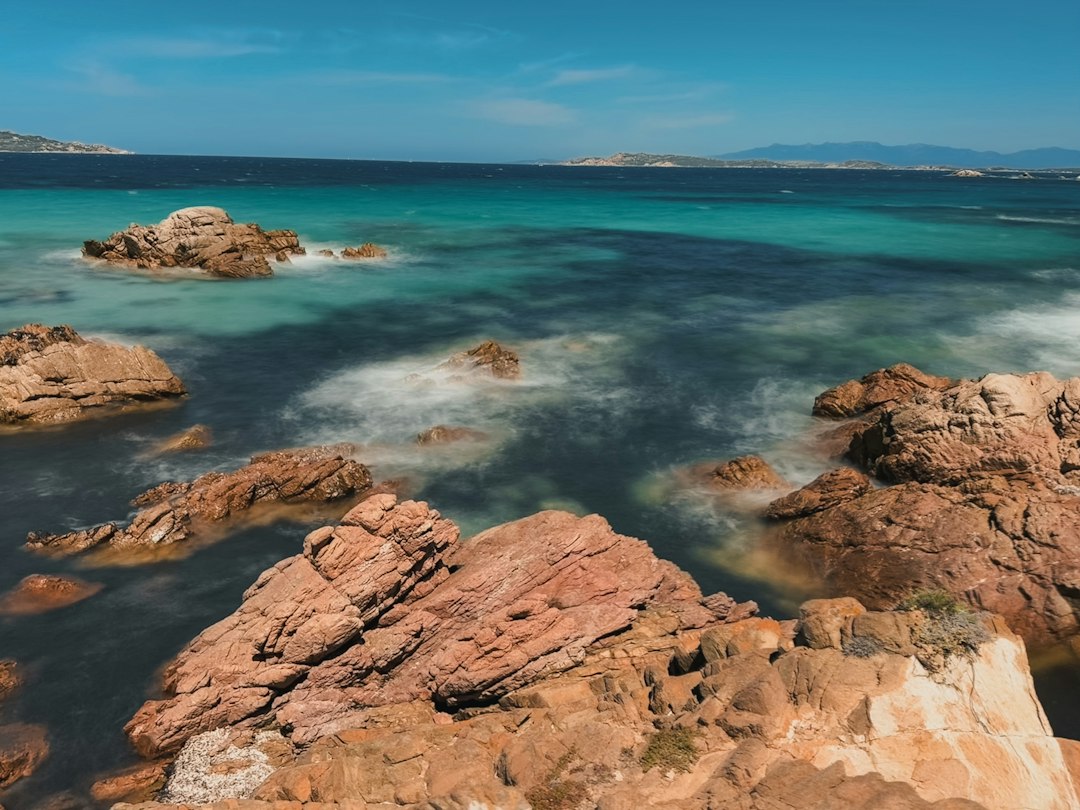
- La Maddalena Archipelago National Park — Italy’s only island national park protects 60-plus islets with granite-sculpted coves and turquoise waters of exceptional clarity.
- Spiaggia di Cala Coticcio, Caprera — Called ‘Tahiti of Italy’ by Italian travellers, this double-bay beach on Caprera island is accessible only by boat or a 45-minute hike.
- Casa Garibaldi, Caprera — The preserved home of Italian unification hero Giuseppe Garibaldi, who lived and died on Caprera, now a museum with his original furnishings.
Scroll down for our complete travel guide with tips on getting there, where to stay, costs and more.
Getting to La Maddalena: Ferry or Flight
How do I get to La Maddalena — by flight or ferry?
Ferry from Palau is the primary access route; no airport exists on La Maddalena itself. You fly into Olbia Costa Smeralda Airport (OLB), roughly 35 km south of Palau, then travel overland to Palau and board the ferry. Alternatively, Alghero Fertilia Airport (AHO) is an option from certain European budget routes, though it adds approximately 170 km of road transfer. The ferry crossing from Palau takes around 15–20 minutes and runs frequently year-round. Worth knowing: in July and August, car spaces on ferries fill quickly, so foot-passenger crossings are more reliable for a quick visit.
Which airport or port is the best starting point for La Maddalena?
Olbia Costa Smeralda Airport (OLB) is the best starting point, located approximately 35 km from Palau, the mainland ferry terminal for La Maddalena. From OLB, the drive to Palau via the SS125 takes roughly 40–50 minutes by car or taxi. Palau’s ferry port is well-organised with car and foot-passenger services operated by Delcomar and Enermar; check their timetables directly for current schedules. Tip: arriving at Palau port at least 30 minutes before departure is advisable in peak season. Alghero airport is cheaper for some routes but adds significant transfer distance.
How long does the ferry crossing to La Maddalena take?
The Palau–La Maddalena ferry crossing takes approximately 15–20 minutes on standard ro-ro ferries. Services run roughly every 30–60 minutes throughout the day, with increased frequency in summer months. Delcomar and Enermar are the two main operators on this route; both carry vehicles and foot passengers. Timetables extend from early morning until late evening, typically 6:00 to 24:00 in high season, with reduced hours in winter. Worth knowing: the crossing is short enough that seasickness is rarely an issue, even in choppy conditions, but the strait can be windy in spring and autumn.
What does a ferry ticket to La Maddalena cost?
A foot-passenger return ticket on the Palau–La Maddalena crossing costs approximately €5–€8 per adult; check current fares directly with Delcomar or Enermar as tariffs are revised seasonally. Taking a car across costs substantially more — roughly €25–€45 return depending on vehicle size and season. Booking online via the operators’ websites can secure car spaces in advance, which is strongly recommended in July and August. Worth knowing: if you plan to explore the archipelago by boat rather than by road, leaving your car in Palau’s paid car parks (approximately €10–€15 per day) and crossing as a foot passenger is both cheaper and less stressful.
Are overnight ferries to La Maddalena worth it?
Overnight ferry services do not operate on the short Palau–La Maddalena route; the 15–20 minute crossing makes overnight services irrelevant here. If you are travelling to Sardinia from the Italian mainland, overnight ferries from Civitavecchia, Genova, or Livorno to Olbia are a practical option, arriving in the morning ready for the onward drive to Palau. Operators including Grimaldi Lines, Corsica Sardinia Ferries, and Tirrenia serve the mainland–Olbia route. Cabins on those longer crossings (typically 6–10 hours) are worth booking for comfort, especially in August when demand peaks. Check Traghetti.com for comparative pricing.
Getting Around La Maddalena
Do I need a rental car or scooter on La Maddalena?
A rental car is not essential on La Maddalena island itself, but very useful for exploring Caprera and reaching remote beaches. The main town is compact and walkable, and local taxis cover key points. Scooters and bicycles are popular and available from rental shops along Via Amendola and near the port, costing approximately €30–€50 per day for a scooter. For Caprera, a bicycle or scooter is ideal since traffic is light and the island is relatively flat near the coast. Worth knowing: bringing a car from the mainland adds significant ferry cost; many visitors leave their car in Palau and hire a scooter on arrival.
Are there buses between towns on La Maddalena?
Local bus services on La Maddalena are operated by ARST and cover the main town and connections across the causeway to Caprera. However, the network is limited in frequency — services to Caprera run a handful of times daily and are not reliable for reaching remote coves. In summer, a tourist mini-train and seasonal shuttle services supplement public transport to popular beaches. Tip: for flexibility, renting a bicycle, scooter, or small electric car on the island is far more practical than relying on buses, especially if you want to reach Cala Coticcio or the northern beaches of Caprera without fixed timetables.
What does a rental car cost on La Maddalena — and where do I hire one?
Small car rental on La Maddalena costs approximately €40–€80 per day in peak season, with prices lower in May, June, and October. Several local agencies operate near the port and ferry terminal, including small independent outfits that also rent scooters and bicycles. For advance booking, national platforms like Rentalcars.com or Sicily by Car (active in Sardinia) are worth comparing. Worth knowing: vehicle availability is genuinely limited on the island — if you need a car for a specific date in July or August, book at least 4–6 weeks ahead. Alternatively, renting in Palau and bringing the vehicle across by ferry gives more choice.
Which parts of La Maddalena are accessible by public transport?
The main town of La Maddalena is fully walkable from the ferry port, with the market, waterfront promenade, and historic centre all within a 10-minute walk. ARST buses connect the town to Caprera via the causeway, stopping at key points including near Casa Garibaldi. However, the most scenic beaches — such as Cala Coticcio and Cala Brigantina on Caprera — require either a private vehicle, rental scooter, or boat excursion. The smaller islands of the archipelago (Spargi, Budelli, Santa Maria) are accessible only by boat; excursions depart from the main port and cost approximately €30–€50 per person.
Can I cycle around La Maddalena island?
Cycling on La Maddalena and Caprera is genuinely enjoyable and practical for most visitors. The terrain is relatively flat near the coast, with some short climbs inland. Bicycle hire is available from rental shops near the port area for approximately €10–€20 per day for a standard bike, or more for e-bikes. A loop around La Maddalena island covers roughly 20–25 km and is manageable in a half-day. Crossing to Caprera adds distance but rewards with quieter roads and dramatic scenery. Worth knowing: July and August temperatures regularly exceed 30°C, so early morning starts are strongly recommended; bring water as facilities on rural stretches are sparse.
Where to Stay on La Maddalena
Which town should I base myself in on La Maddalena?
La Maddalena town is the only practical base — it is the sole urban settlement in the archipelago and sits directly at the ferry port. The waterfront Via Amendola and the streets behind the church of Santa Maria Maddalena concentrate most hotels, restaurants, and rental shops. Staying here means zero transfer time to ferries and easy access to boat excursion operators. Compared to Palau on the mainland (a 15-minute ferry ride away), La Maddalena town gives you immediate archipelago access and a more atmospheric island feel. Worth knowing: accommodation variety is limited — book early to avoid being pushed back to the mainland.
What does accommodation cost per night on La Maddalena?
A mid-range hotel in La Maddalena costs approximately €80–€150 per night in shoulder season (May, June, September, October) and rises to €150–€250 or more in July and August. Budget guesthouses and B&Bs can be found from around €60–€80 in lower season. Self-catering apartments are popular and often better value for stays of 3 nights or more, with options from roughly €90–€120 per night in a two-bedroom unit. Worth knowing: La Maddalena has fewer accommodation options than comparable Sardinian resort towns like Santa Teresa Gallura (approximately 30 km south), so the limited supply drives prices up noticeably in peak weeks.
Which area of La Maddalena suits which travel style?
The town centre waterfront suits travellers who want restaurants, evening life, and ferry access without a vehicle. Caprera’s coastal tracks are ideal for hikers, cyclists, and history enthusiasts visiting Casa Garibaldi. The northern beaches of Caprera — including Cala Coticcio — are for those willing to walk or hire transport for seclusion and clear water. Boat-based travellers who join full-day archipelago excursions from the main port get the widest exposure to uninhabited islands like Budelli (famous for its pink-tinged Spiaggia Rosa, now protected and no longer swimmable). Worth knowing: there is no significant nightlife district; the island suits couples, families, and nature-focused visitors more than party travellers.
How far in advance do I need to book La Maddalena accommodation?
Book 3–4 months ahead for July and August stays — accommodation on La Maddalena is scarce relative to demand. For the first two weeks of August in particular, quality options sell out by April or May. Shoulder season (June, September, October) requires 4–6 weeks lead time for decent choice. Worth knowing: unlike larger Sardinian resorts, La Maddalena has no large hotel chains — most properties are family-run B&Bs and small hotels with 10–20 rooms, which means availability disappears fast and last-minute bookings at reasonable prices are uncommon in peak season. Booking.com and direct hotel websites are the main channels.
Are there good apartments or villas with sea views on La Maddalena?
Yes — self-catering apartments with sea views are available on La Maddalena, primarily listed on Airbnb and Booking.com, with some direct rental agencies in town. Properties with waterfront or elevated views above the straits command a premium, typically €120–€200 per night for a two-bedroom apartment in July. The residential streets above the ferry port and along the southeastern coast offer the best sea-facing positions. Worth knowing: villas with private pools are rare on the island compared to mainland Sardinian resorts like Porto Cervo (approximately 50 km south) — those seeking luxury villa experiences typically base themselves in the Costa Smeralda area and day-trip to La Maddalena.
Best Time to Visit La Maddalena
When is the best time to visit La Maddalena?
June, September, and October offer the best balance of warm weather, manageable crowds, and reasonable prices. July and August are warm and sunny but bring significant visitor numbers and higher costs. Based on climate analysis, the best travel months are June through October. June delivers warm sea temperatures (around 22–23°C) and far quieter beaches than high summer. October remains mild enough for swimming and hiking, with dramatically fewer visitors. Worth knowing: the national park boat excursions to islands like Budelli and Spargi operate reliably from May through October; outside this window, services are heavily reduced and some restaurants and hotels close entirely from November to March.
What is the weather like throughout the year on La Maddalena?
La Maddalena has a classic Mediterranean climate — hot, dry summers and mild, wetter winters. Summer (June–August) sees average highs above 28–30°C with minimal rainfall and consistent sunshine. September and October remain warm (roughly 22–25°C) with occasional short rain showers. Winter (November–February) is mild by northern European standards but windy, with temperatures around 10–14°C; the Mistral and Tramontane winds can be strong through the Strait of Bonifacio. Spring (March–May) warms gradually and sees blooming macchia scrubland. Worth knowing: the island sits at just 27 metres elevation, so altitude cooling is negligible — shade and hydration matter in July and August.
When does La Maddalena get overcrowded?
The first two weeks of August are peak congestion — ferries from Palau carry queues of vehicles, beaches fill by mid-morning, and prices spike. Italian school holidays (late June to early September) drive the bulk of domestic tourism. 14 August to 16 August (Ferragosto weekend) is the single busiest period of the year; parking in Palau and on the island becomes extremely difficult and boat excursions book out days in advance. Compared to Porto Cervo (50 km south), La Maddalena attracts a more Italian domestic crowd rather than international luxury tourists, but the pressure on limited infrastructure is equally intense. Tip: visiting in the last week of June avoids the worst while keeping good beach conditions.
Is there a worthwhile shoulder season on La Maddalena?
May and October are the most rewarding shoulder months. In May, the macchia scrubland is in bloom, sea temperatures reach roughly 19–20°C (cool but refreshing), and the archipelago excursion boats are running with space available. October brings warm sunshine, sea temperatures still around 22°C, and dramatically lower prices — hotel rates can be 30–40% cheaper than August peaks. Most restaurants and rental operators remain open through October. Worth knowing: compared to a 2-week July stay, a 10-day October trip to La Maddalena can easily save €300–€500 per couple in accommodation alone, while offering clearer underwater visibility for snorkelling due to reduced boat traffic.
When does the beach and watersports season begin on La Maddalena?
The beach and watersports season effectively begins in mid-May, when sea temperatures reach approximately 19–20°C and most boat excursion operators launch their summer timetables. By early June, kayak and snorkelling rental operations around the port are fully active. Scuba diving centres, including those operating out of the main town, typically open for the season in April or May; check with Centro Sub La Maddalena for current opening dates. The peak watersports period runs through September. Worth knowing: windsurfing and sailing conditions are excellent in the Strait of Bonifacio corridor due to reliable wind patterns, but strong Mistral gusts in May and June can close beaches to swimming temporarily.
What La Maddalena Costs
What does a daily budget cost on La Maddalena?
A realistic mid-range daily budget runs approximately €120–€180 per person, including accommodation, meals, and a boat excursion or rental activity. Budget travellers staying in a B&B, eating at local restaurants, and using free beaches can manage roughly €70–€90 per day. A typical day breaks down as: accommodation share €50–€80, lunch €15–€20 at a local trattoria, dinner €25–€35, plus €20–€30 for transport, snorkelling hire, or park entry. Tip: buying provisions from the covered market near the centre and picnicking on a beach cuts food costs significantly. La Maddalena runs noticeably more expensive than inland Sardinian towns like Tempio Pausania (approximately 55 km south).
Is La Maddalena more expensive than the Sardinian mainland?
Yes — La Maddalena runs 15–25% more expensive than comparable coastal towns on the Sardinian mainland. The island’s isolation means most food and supplies are ferried across, adding logistical cost that flows through to restaurant and supermarket prices. Restaurant mains typically cost €16–€26 in mid-range establishments versus €12–€20 in mainland towns like Palau or Arzachena. Accommodation is similarly inflated by limited supply relative to summer demand. Worth knowing: the nearby Costa Smeralda resorts (Porto Cervo, Baia Sardinia) are dramatically more expensive still — La Maddalena sits in a middle tier, offering genuine island character without the ultra-luxury pricing of the Costa Smeralda circuit.
What expenses on La Maddalena are unavoidable?
The Palau–La Maddalena ferry (approximately €5–€8 return foot passenger) is unavoidable for every visitor. Boat excursions into the national park archipelago (typically €30–€50 per person for a full day) are effectively essential to experiencing the destination’s core appeal — the uninhabited islands cannot be reached otherwise. Sunscreen and water need budgeting daily given intense summer sun and sparse facilities on remote beaches. Car or scooter hire adds €30–€80 per day if you plan to explore beyond the town. Worth knowing: the national park itself does not currently charge a general admission fee, but landing fees on certain protected islands like Budelli may apply; verify with your excursion operator.
What does food cost on La Maddalena — local versus tourist prices?
A lunch menu (primo, secondo, water) at a local trattoria off the main waterfront costs approximately €15–€22. A pizza at a mid-range restaurant runs €9–€14. Waterfront tourist restaurants on Via Amendola charge notably more — expect €20–€30 for a main course of fresh seafood. A morning espresso at a bar is typically €1.20–€1.50. Buying groceries at the Conad or local alimentari in town and self-catering cuts costs significantly. Local speciality — spaghetti ai ricci di mare (sea urchin pasta) — costs roughly €18–€25 depending on the restaurant. Tip: lunch deals at inland-facing restaurants represent the best value-to-quality ratio.
What are the best beaches on La Maddalena?
Cala Coticcio on Caprera is the standout — turquoise double bay accessible by a 45-minute trail from the road or by boat, with extraordinary water clarity. Spiaggia del Relitto (Caprera) is a wide sandy beach with easy parking access, ideal for families. Cala Spalmatore on La Maddalena island is popular and reachable by scooter in under 10 minutes from town. For uninhabited island beaches, Cala Santa Maria on Santa Maria Island and Cala Corsara on Spargi are best reached via organised boat excursions from the main port. Worth knowing: Spiaggia Rosa on Budelli is closed to swimming to protect its pink quartz sand — viewing it from the water is still possible.
Beaches & Experiences on La Maddalena
What are the top sights on La Maddalena beyond the beaches?
Casa Garibaldi on Caprera is the primary cultural sight — a well-preserved museum in the home where Giuseppe Garibaldi lived from 1855 until his death in 1882, with entry approximately €4–€6; check current hours with the Compendio Garibaldino directly. The Museo Diocesano in the town centre holds sacred art and local history. The Naval Museum reflects La Maddalena’s long history as a NATO and Italian Navy base. Walking the old town lanes around Piazza Umberto I takes roughly 1–2 hours. The causeway and bridge to Caprera itself is a scenic drive or cycle. Worth knowing: a boat circumnavigation of the full archipelago is arguably the single most rewarding non-beach activity available.
What watersports activities are available on La Maddalena?
Snorkelling and scuba diving are the headline activities — the crystal-clear waters of the national park host remarkable visibility, with dive sites around Spargi and Caprera. Kayak and canoe rental is available near the port, with half-day routes to nearby coves costing approximately €25–€40. Sailing and motor boat hire (with or without skipper) allows independent archipelago exploration; prices start around €150–€300 per day for small motorboats. Windsurfing and kitesurfing are possible at Cala Spalmatore and the northern coast where wind conditions are reliable. Excursion boats offering snorkelling stops at multiple archipelago sites in a single day are the most popular option for non-sailors.
What is the culinary highlight of La Maddalena?
Fresh-caught seafood is the undisputed culinary identity of La Maddalena — particularly aragosta (Sardinian spiny lobster), ricci di mare (sea urchin), and bottarga (cured mullet roe). Spaghetti ai ricci di mare is the dish most closely associated with the island and appears on most restaurant menus at approximately €18–€25. Local bread — civraxiu and pane carasau — is typically served with meals. The fishing harbour at the eastern end of town sometimes sells direct from boats in the early morning. Worth knowing: seafood quality is genuine here rather than imported, unlike some larger tourist resorts, but prices reflect this — budget travellers should seek menù fisso (set menu) options at lunch.
Which parts of La Maddalena are still off the beaten track?
The eastern coast of Caprera — accessible only on foot via the national park trail network — sees far fewer visitors than the main beaches. Trails from Poggio Rasu lead to secluded coves with no facilities; bring your own water and food. The smaller archipelago islands of Razzoli and Santa Maria are reached by fewer excursion boats than Budelli or Spargi and offer quieter landings. On La Maddalena island itself, the northern tip around Punta Rossa is less visited than the main western beaches. Compared to the heavily visited Costa Smeralda coast (50 km south), even the busier parts of La Maddalena feel low-key — the national park status meaningfully limits development.
How many days do I need on La Maddalena?
3–4 full days covers La Maddalena and Caprera comfortably. Day 1: explore the town and hire a scooter for La Maddalena island’s beaches. Day 2: full-day boat excursion to Budelli, Spargi, and Santa Maria (approximately €35–€50). Day 3: cycle or walk Caprera, visit Casa Garibaldi, and hike to Cala Coticcio. Day 4 allows for a second beach day, diving, or a day trip to Palau (15-minute ferry) or Santa Teresa Gallura (30 km from Palau). Worth knowing: a 2-day visit is feasible but leaves almost no time for the national park boat excursion and Caprera combined — rushing both undersells the archipelago’s appeal significantly.
La Maddalena at a Glance
| Population | 10,592 |
|---|---|
| Currency | EUR (€) |
| Official language | Italian |
| Time zone | Europe/Rome |
Source: Wikidata, retrieved October 2026.
Italy › La Maddalena
More Destinations in Sardinia
More Destinations in Italy
Essential Resources for Planning Your Trip to La Maddalena
- Visit La Maddalena Archipelago – Sardinian island group — official visitor information
- Wikivoyage: La Maddalena — community travel guide & practical tips
- Wikipedia: La Maddalena — history, geography & background
- 2026 Recommended Guides in La Maddalena (Updated … — how to get there and around
- Parco Nazionale dell’Arcipelago di La Maddalena | Italy — itineraries & inspiration
Data Sources
Key facts on this page (population, currency, language, time zone) come from Wikidata, climate figures from Open-Meteo. The retrieval date is shown next to the facts table.