
Île de Houat: The Complete Travel Guide (2026)
Île de Houat Travel Guide: Everything You Need to Know (2026)
Île de Houat is a tiny French island off the southern Brittany coast in the Morbihan department, home to just 246 permanent residents and sitting at 27 metres above sea level. The island stretches roughly 5 km long and 1.5 km wide, making it one of the most intimate car-free escapes in the entire Atlantic. Its twin island Hoëdic lies just a few kilometres southeast, and together they guard the entrance to the Baie de Quiberon.
Top 3 Highlights at a Glance
- Plage de Treac’h er Goured — Houat’s longest beach stretches nearly 1 km of white sand — rare for Brittany and genuinely Caribbean in appearance.
- Village de Houat (Port) — A whitewashed village of 246 souls with blue-shuttered cottages and zero cars — completely unlike mainland France.
- Coastal Path Circuit — A 13 km loop around the entire island reveals dramatic cliffs, hidden coves, and unobstructed Atlantic panoramas.
Scroll down for our complete travel guide with tips on getting there, where to stay, costs and more.
Arrival & Airport
How do I get to Île de Houat?
Ferry from Quiberon is your only realistic option — there is no airport on Houat. In my experience, the most reliable operator is Compagnie Océane, running ferries from Quiberon’s port (Port Maria). The crossing takes approximately 45 minutes. Ferries also depart seasonally from La Turballe, Le Croisic, and Vannes, but those journeys can run 2–3 hours. My tip: always book the Quiberon departure for speed and frequency. The honest caveat most guides skip — sailings are cancelled in rough Atlantic weather, sometimes for 24–48 hours at a stretch, so never book an unmissable flight home the morning after your last night on the island.
Which airport is closest to Île de Houat?
Lorient Bretagne Sud Airport (LRT) is the nearest airport, roughly 55 km from Quiberon by road. What surprised me is how few direct international routes serve LRT — in practice, most visitors fly into Nantes Atlantique (NTE), which is approximately 130 km from Quiberon, offering far better connections from Paris, London, and Amsterdam. I recommend NTE for international arrivals and LRT only if you’re already flying within France. From NTE, a TGV to Auray (the nearest major rail hub) takes under 1 hour 30 minutes, then a bus or taxi covers the final 30 km to Quiberon.
How long does the journey to Île de Houat take?
From Paris, plan 4–5 hours door-to-dock minimum. The fastest route is TGV Paris Montparnasse to Auray (2 hours 20 minutes), then a regional bus or taxi 30 km to Quiberon (45 minutes), then the 45-minute ferry. In my experience, the Auray–Quiberon bus timetable is poorly coordinated with ferry departures in low season — always check Compagnie Océane’s sailing schedule first, then build your train booking around it. The honest warning: summer traffic on the D768 into Quiberon (a narrow peninsula road) can add 30–60 minutes to your drive or taxi in July and August.
Do I need a car to visit Île de Houat?
Absolutely not — cars are banned on Île de Houat entirely. This is one of the few genuinely car-free islands in France, and the whole island is walkable end-to-end in under 2 hours. My tip: leave your car at the paid car park in Quiberon (approximately €8–12 per day in high season) before boarding the ferry. You’ll want a good pair of walking shoes and ideally a daypack. The trade-off: you cannot bring large luggage easily, so pack light. A wheelie suitcase on a cobblestone island path is a nightmare I’ve witnessed firsthand. Use a soft hiking bag instead.
City Transport
What are the best areas to stay on Île de Houat?
The single village — simply called Houat — is your only base. With just 246 residents, the island has no neighbourhoods in the urban sense. The village clusters around the harbour, and every accommodation is within a 10-minute walk of both the port and the main beaches. My recommendation is to prioritise gîtes or rental cottages on the northern side of the village, which face toward Plage de Treac’h er Goured and catch the best afternoon light. Camping is available at the island’s one campsite, roughly 500 metres from the port. There are no hotels in the conventional sense — only gîtes, chambres d’hôtes, and the campsite.
What does accommodation cost per night on Île de Houat?
Expect to pay €80–€150 per night for a gîte or chambre d’hôtes. Houat has extremely limited accommodation — supply is tight against summer demand. A private gîte sleeping 4 runs €100–€180 per night in July and August. The island campsite charges roughly €12–€18 per person per night. What most guides omit: there is no hotel, so if your gîte booking falls through, your only alternative is the campsite or the last ferry back. I recommend having a backup gîte shortlisted on Gîtes de France (the official directory) before you confirm travel dates, especially for stays longer than 2 nights.
How far in advance should I book accommodation on Île de Houat in high season?
Book at least 3–4 months ahead for July and August. Houat has perhaps 20–25 rentable properties for the entire island — this is not hyperbole, supply is genuinely that limited. What surprised me is that French families rebook the same gîte year after year, meaning properties effectively never appear on open platforms. My tip: contact Houat’s mairie (town hall) directly in January or February — they maintain a local accommodation list that never appears on Booking.com or Airbnb. For the campsite, booking 6–8 weeks ahead is typically sufficient, but weekends in August fill completely.
Are there special accommodation types worth seeking out on Île de Houat?
Yes — traditional Breton stone gîtes are the standout choice. These low granite cottages with blue or white shutters are authentically local and feel nothing like a standard French holiday rental. Some sleep just 2 people and sit metres from the coastal path. My personal favourite category: gîtes with a private terrace facing the Atlantic — on a 27-metre-elevation island, even modest height gives sweeping sea views. The honest caveat: island gîtes are old stone buildings and rarely have air conditioning, which is generally fine — summer temperatures on Houat typically stay between 18°C and 24°C — but insulation and hot water can be inconsistent. Read reviews carefully before booking.
Accommodation & Neighbourhoods
What are the must-sees on Île de Houat?
The 13 km coastal circuit path is non-negotiable. It rings the entire island and takes 3–4 hours at a relaxed pace. Plage de Treac’h er Goured, the main beach, is nearly 1 km long with sand quality that genuinely rivals the Mediterranean. The village church of Saint-Gildas, dating to the 17th century, takes just 10 minutes to visit but anchors the island’s historic identity. The small natural history display near the mairie explains the island’s unique geology and flora — free to enter and done in 20 minutes. My tip: walk the southern cliffs at low tide to access hidden coves that disappear completely at high water — check tide tables on Marees.fr before you go.
What can I experience for free on Île de Houat?
Almost everything costs nothing — Houat is refreshingly uncommercialised. The entire coastal path is free, all beaches are public, and the village itself is an open-air experience. What surprised me is the island’s protected natural status — Houat is part of a Natura 2000 zone, meaning the dune ecosystems, coastal heathland, and rock formations are legally preserved and entirely accessible to walkers at no charge. Birdwatching is exceptional in spring — puffins occasionally appear on offshore rocks. Sunset from the western cliffs near Pointe du Vieux Château costs nothing and delivers some of the most dramatic Atlantic light I’ve seen anywhere in France.
Which day trips are possible from Île de Houat?
The sister island Hoëdic is the obvious and best day trip. Compagnie Océane runs a seasonal connection between Houat and Hoëdic — the crossing takes approximately 20 minutes. Hoëdic is even smaller and quieter, with its own beach and neolithic dolmen. From Houat, you can also day-trip back to Quiberon (45 minutes) and explore the dramatic Côte Sauvage, one of Brittany’s most spectacular cliff coastlines, on foot or by rented bike. The honest caveat: day trips depend entirely on ferry timetables, which in shoulder season run only 1–2 times daily — missing your return ferry means sleeping somewhere you hadn’t planned.
What local specialities should I eat on Île de Houat?
Fresh oysters and spider crab (araignée de mer) from local fishermen. Houat’s small fishing fleet lands shellfish daily, and the island’s single restaurant and the small épicerie (grocery shop) both sell whatever came in that morning. My tip: buy directly from fishermen at the quayside — a kilo of moules (mussels) costs around €3–€5, dramatically cheaper than any restaurant. The broader Morbihan speciality worth seeking is kouign-amann, the buttery Breton pastry, available from the village bakery when it opens (hours are seasonal and unreliable). The honest warning: the island has 1 restaurant — it is excellent but fully booked by noon in summer. Reserve the moment you arrive.
Highlights & Must-Sees
What makes Île de Houat unique compared to other French islands?
Houat is one of the last genuinely car-free, uncommercialised Atlantic islands in France. Unlike Belle-Île-en-Mer, 20 km to the west, Houat has resisted mass tourism infrastructure entirely — no hotels, no tourist shops, no organised excursions, no beach bars. The permanent population of just 246 people means visitor numbers are physically constrained by ferry capacity, not by choice. What surprised me most: the island genuinely functions as a living fishing community, not a museum of one. Lobster pots stack against real houses. Children cycle to the village shop. It is France as it existed before Instagram, and that is its entire value.
How many days are worthwhile on Île de Houat?
2 full nights (3 days) is the sweet spot. Day 1: complete the full 13 km coastal circuit. Day 2: beach day at Treac’h er Goured plus a late afternoon trip to Hoëdic. Day 3: morning swim, village exploration, afternoon ferry back. One night is too rushed — you’ll spend half your time packing and ferry-watching. Four nights is plenty only if you’re actively seeking total digital detox and slow reading time. My honest assessment: Houat rewards the unhurried. If you’re ticking boxes, 2 nights is perfect. If you want to genuinely decompress, 4–5 nights transforms it into something close to a meditation retreat.
When is the best time to visit Île de Houat?
June is the optimal month — based on climate analysis, it offers the best balance of weather, ferry frequency, and manageable crowds. The Atlantic light in June is extraordinary — long evenings stretching past 10pm. July and August are warmer but the island’s capacity is genuinely strained, with day-trippers from the mainland flooding the single beach. My tip: the last two weeks of June hit the sweet spot — school holidays haven’t started, ferry schedules are at full summer frequency, and the coastal heathland blooms with gorse and sea thrift. What most guides omit: September is nearly as good as June, with warmer sea temperatures (around 18°C) and zero crowds.
Are there local festivals worth attending on Île de Houat?
The Pardon de Saint-Gildas in mid-August is the island’s defining cultural event. This traditional Breton religious procession around the village and church of Saint-Gildas draws islanders and a modest number of informed visitors. It’s the kind of authentic Breton festival that has completely disappeared from the tourist-heavy mainland coastal towns. In my experience, attending the pardon and then sharing dinner with local families at the quayside afterwards is the single most memorable cultural moment the island offers. There are no ticketed events, no stages, no vendors — just a community observing a tradition it has maintained for centuries. Arrive a day early to secure accommodation.
Food & Drink
How does the weather affect activities on Île de Houat throughout the year?
Atlantic weather dominates everything — wind is the primary variable, not rain. Houat sits fully exposed to westerly Atlantic swells, and even in summer a 30-knot wind can cancel ferries and make the coastal path uncomfortable. Swimming is realistic from late June through mid-September when sea temperatures reach 17–19°C. Outside that window, the island is spectacular for walking but cold and raw. My honest caveat: don’t visit between November and March unless you actively enjoy dramatic storm-watching from a stone cottage — ferry frequency drops to 2–3 per week and the village has virtually no open services. Spring (April–May) can be beautiful but unpredictable.
How crowded does Île de Houat get in peak season?
July and August bring genuine overcrowding by Houat’s tiny standards. The island’s single large beach, Treac’h er Goured, becomes genuinely packed on calm summer weekends when multiple ferry loads of day-trippers arrive simultaneously. The population of 246 can be outnumbered by day visitors on a single August Saturday. What most guides omit: the ferry operator Compagnie Océane physically limits how many passengers sail — so peak-season day tickets can sell out. My tip: if visiting in August, stay overnight to enjoy the island before 10am and after 6pm, when day-trippers have departed and the place returns to its true self. Morning and evening Houat is completely different from midday Houat.
How safe is Île de Houat?
Île de Houat is exceptionally safe — effectively zero crime risk. A permanent population of 246 in a tight-knit fishing community means anonymity doesn’t exist. Petty theft is essentially unheard of. The genuine safety concerns are environmental, not social: the coastal path has unfenced cliff sections where a 20–30 metre drop to the sea is unmarked, and Atlantic tide changes are fast and dramatic — the tidal range around Houat reaches 4–5 metres. My tip: download Marees.fr or Tide Chart before hiking to hidden coves — what is a beach at low tide becomes a rock shelf under 1.5 metres of water 3 hours later. That is the only real danger on the island.
Is English widely spoken on Île de Houat?
English is minimally spoken — French is essential. The island operates entirely in French, and the small number of year-round residents — 246 people, many of them traditional Breton fishing families — rarely need English in daily life. The single restaurant, the épicerie, and the campsite reception staff may have basic English, but do not rely on it. My tip: learn five key French phrases before visiting — especially how to ask about ferry times (‘À quelle heure part le prochain ferry pour Quiberon?’) and whether the restaurant has availability (‘Avez-vous une table pour ce soir?’). A translation app on your phone works fine as a backup, but mobile data reception on parts of the island is poor.
Practical Tips
What is the daily budget for visiting Île de Houat?
Budget €60–€80 per person per day excluding accommodation. The ferry return from Quiberon costs approximately €22–€28 per adult. A sit-down lunch at the island’s restaurant runs €18–€28 per person. Buying fresh shellfish and bread from the village shop and eating on the beach drops food costs to €10–€15 per day. The island has no entry fees, no museums, and no paid activities — the coastal path and beaches are free. What surprised me: the épicerie prices are noticeably higher than mainland supermarkets (everything arrives by ferry), so bring snacks and a good picnic from Quiberon before you cross to keep costs controlled.
How does public transport work on Île de Houat?
There is no public transport on Île de Houat — the island is entirely car-free. Walking is the only mode of transport on the island itself. The 13 km coastal path and the village are navigable entirely on foot. Some visitors bring folding bikes on the ferry — Compagnie Océane allows bicycles for a small surcharge (approximately €5–€8 each way) — and the flat central track across the island’s spine is bikeable. My honest assessment: on an island 5 km long, you don’t need wheels. The one situation where a bike genuinely helps is reaching the far western tip quickly at golden hour, saving a 40-minute walk each way.
Which apps do you recommend for visiting Île de Houat?
Compagnie Océane’s own app or website is essential — book it before anything else. For navigation, download Maps.me or Organic Maps with offline Brittany maps — mobile data on the island’s eastern cliffs is patchy and Google Maps offline coverage is unreliable. Marees.fr (French tide chart app) is non-negotiable for planning cove access safely. I recommend Météo-France for Atlantic weather forecasts — it is far more accurate for Breton maritime conditions than international weather apps. For the ferry back, set a phone alarm 90 minutes before departure — the walk from the far beach to the port takes 25–30 minutes and people genuinely miss their boat every summer.
More Destinations in Europe
Explore our complete travel guides for more Europe destinations: Villeurbanne Travel Guide (2026), Lyon Travel Guide (2026), Budapest Travel Guide (2026), Île du Levant Travel Guide (2026), Orléans Travel Guide (2026).
Useful Resources for Planning Your Trip to Île de Houat
- Wikipedia: Île de Houat — history, geography and background
- Lonely Planet: Île de Houat — itineraries and travel inspiration
- TripAdvisor: Île de Houat — hotels, restaurants and traveller reviews
🎥 Île de Houat Travel Videos
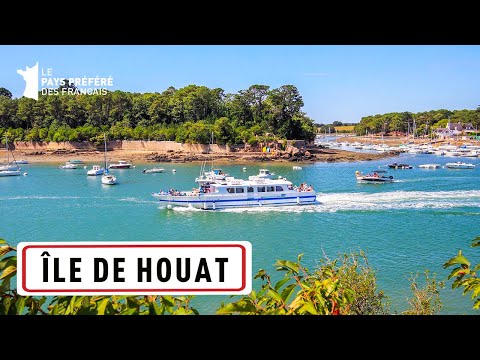
Houat Island – Brittany Region – Stéphane Bern – The French …
Le Pays préféré des Français
You are currently viewing a placeholder content from Vimeo. To access the actual content, click the button below. Please note that doing so will share data with third-party providers.
More InformationYou are currently viewing a placeholder content from YouTube. To access the actual content, click the button below. Please note that doing so will share data with third-party providers.
More InformationYou need to load content from reCAPTCHA to submit the form. Please note that doing so will share data with third-party providers.
More InformationYou are currently viewing a placeholder content from GetYourGuide. To access the actual content, click the button below. Please note that doing so will share data with third-party providers.
More Information