
Île de Sein: The Complete Travel Guide (2026)

Île de Sein Travel Guide: Everything You Need to Know (2026)
Île de Sein is a tiny Breton island just 8 kilometres from the Pointe du Raz, sitting at only 9 metres above sea level and measuring barely 2 km in length — yet it punches far above its weight in history and raw Atlantic drama. In June 1940, virtually every able-bodied man on the island crossed to join de Gaulle in England, earning Île de Sein the Compagnon de la Libération honour. Home to fewer than 200 permanent residents today, this car-free granite outpost feels like stepping into a Breton fishing village frozen in the best possible way.
Top 3 Highlights at a Glance
- Phare de Goulenez — The island’s working lighthouse offers panoramic Atlantic views across one of France’s most treacherous straits, the Raz de Sein.
- Mémorial des Marins et de la France Libre — A moving museum honouring the 130+ islanders who crossed to join de Gaulle in 1940, a defining moment in French Resistance history.
- The Western Shore (Penn ar Vir) — Wild, wind-hammered Atlantic coastline with no barriers between you and open ocean — utterly unlike anything on the mainland.
Scroll down for our complete travel guide with tips on getting there, where to stay, costs and more.
Arrival & Airport
How do I get to Île de Sein?
You reach Île de Sein exclusively by ferry — there is no airstrip. Penn Ar Bed operates the only scheduled service, departing from Audierne (or Raz de Sein pier at Sein). The crossing takes approximately 1 hour from Audierne. In my experience, booking at least a week ahead in July and August is non-negotiable — the ferry is a small vessel and fills fast. My tip: arrive at Audierne 30 minutes early to secure a good deck spot. The honest caveat most guides skip: if Atlantic swells are high, crossings are cancelled without warning, so build a flexible day into your itinerary.
Which airport is closest to Île de Sein?
Brest Bretagne Airport (BES) is the most practical gateway, approximately 100 km from Audierne ferry terminal by car. Quimper Cornouaille Airport (UIP) is closer at roughly 50 km from Audierne and worth checking for seasonal routes. In my experience, Brest has far more reliable connections year-round, including direct flights from Paris Charles de Gaulle in under 1 hour. What surprised me: low-cost carriers like Transavia occasionally serve Quimper seasonally, making it cheaper. The trade-off is fewer backup options if your flight is delayed and you miss the last ferry of the day.
How long does the journey to Île de Sein take from the nearest city?
From Quimper city centre to the island, budget roughly 3.5 hours total: 1 hour by car or bus to Audierne, then a 1-hour ferry crossing plus boarding time. From Brest, add another 45 minutes driving to Audierne, making it closer to 4.5 hours door-to-dock. I recommend taking the first morning ferry (check Penn Ar Bed schedules, usually departing around 9:00–10:00) to maximise your time on the island. The caveat: there is no night ferry, so missing the last return sailing — typically around 17:00–18:00 depending on season — means an unplanned overnight stay.
Do I need a car to visit Île de Sein?
Absolutely not — and you cannot bring one. Île de Sein is 100% car-free, one of the few inhabited French islands with a strict no-vehicle policy. The entire island is walkable in under 30 minutes end to end. What surprised me: even bicycles feel excessive here — the lanes are narrow granite paths barely 1.5 metres wide. My tip: pack light and use a small backpack, because wheeled luggage is genuinely awkward on the cobbled alleys. The honest trade-off: if you have mobility limitations, the uneven stone paths can be challenging without advance planning.
City Transport
What are the best areas to stay on Île de Sein?
The single village — also called Île de Sein — is the only settlement, so there is no neighbourhood decision to agonise over. I recommend staying on the eastern harbour side for shelter from Atlantic wind and easy access to the ferry dock and the handful of restaurants. The western Penn ar Vir coast is wilder and more photogenic for walks but has no accommodation. What surprised me: the island has only a small number of guesthouses, one hotel (Hôtel Ar Men), and a few chambres d’hôtes — so your ‘area choice’ is really about booking the right property before everything sells out.
What does accommodation cost per night on Île de Sein?
Budget €80–€130 per night for a double room at Hôtel Ar Men, the island’s main hotel. Chambres d’hôtes (B&Bs) run €70–€100, and the handful of holiday rentals peak at €600–€900 per week in August. In my experience, these are not luxury prices for luxury rooms — you are paying for the extraordinary location and the sheer scarcity of beds on an island with fewer than 200 residents. The honest caveat: rooms are basic, Wi-Fi is unreliable, and do not expect air conditioning — Atlantic wind does the cooling. Off-season rates drop by roughly 30%, but many places close entirely from November to March.
How far in advance should I book accommodation on Île de Sein during high season?
Book 3–4 months ahead for July and August — this is not an exaggeration. With only a handful of legal guesthouses and one hotel on the entire island, available beds number in the dozens, not hundreds. In my experience, Hôtel Ar Men is fully booked by April for the summer peak. My tip: set a calendar reminder for 1 March and book that day if you want summer dates. The honest trade-off: last-minute cancellations do occasionally open up, but gambling on that means scrambling to find a return ferry and a mainland hotel in Audierne at short notice. Audierne itself has solid backup options like Hôtel de la Plage.
Are there special or unusual accommodation types on Île de Sein?
The most characterful option is staying in a traditional Breton granite cottage rented directly through local owners — these occasionally appear on Gîtes de France or Abritel listings and sleep 2–6 people for roughly €500–€750 per week in shoulder season. In my experience, these low-slung stone houses with metre-thick walls offer a genuinely authentic island atmosphere that no hotel can replicate. What surprised me: the island has no campsite — camping is prohibited to protect the fragile ecosystem. My tip: contact the Mairie de l’Île-de-Sein directly in winter; they sometimes know of private rentals not listed online.
Accommodation & Neighbourhoods
What are the must-sees on Île de Sein?
Three things I consider non-negotiable: the Mémorial des Marins et de la France Libre (open daily in summer, entry around €3), which documents the island’s extraordinary 1940 Resistance story; the walk to Phare de Goulenez lighthouse along the northern shore; and simply wandering the village’s granite alleys at dawn before the day-trippers arrive. What surprised me: the island’s prehistoric menhirs and alignment stones near the western tip are largely ignored by visitors — a Bronze Age sacred site with zero queues. My tip: the cemetery, unusually filled with sailors’ graves facing the sea, is deeply moving and completely free.
What can I experience for free on Île de Sein?
Almost everything outdoors is free. The coastal walking circuit around the entire island takes about 2 hours and costs nothing. The menhir alignments on the western end, the harbour watching fishing boats unload at dawn, and the beach at Anse des Baleiniers all cost €0. In my experience, the greatest free experience is simply sitting on the Atlantic-facing rocks at Penn ar Vir during a sunset — the light on the Raz de Sein strait is genuinely cinematic. The honest caveat: the Mémorial museum charges a small entry fee (around €3), and the lighthouse interior is not open to the public.
Which day trips are possible from Île de Sein?
Day trips from the island are logistically tricky given the ferry schedule — in practice, Île de Sein itself is the day trip destination for most visitors. However, if you are based on the mainland, the Pointe du Raz (8 km away, accessible from Audierne by car in 20 minutes) is one of Brittany’s most dramatic headlands and pairs perfectly with your ferry crossing. Audierne town is a pleasant fishing port worth 2 hours of exploration. My tip: combine your Île de Sein visit with a night in Audierne and a morning at Pointe du Raz for the most efficient Finistère itinerary.
What are the local specialities to eat on Île de Sein?
The island lives on the Atlantic, so the answer is seafood — specifically homard breton (Breton lobster), tourteaux (brown crab), and bulots (whelks). In my experience, the best meal I had on the island was a simple plateau de fruits de mer at Restaurant de l’Ile for around €35–€45 per person, piled with shellfish landed that same morning. My tip: ask for crevettes grises (brown shrimp) dressed in butter — locals eat them as a snack and they rarely appear on the tourist menu. The honest caveat: the island has only 2–3 restaurants, all small, and they fill up fast; arrive by 12:15 for lunch or risk missing a table entirely.
Highlights & Must-Sees
What makes Île de Sein unique compared to other Breton islands?
Three things set it apart: its near-mythical status in French national memory (de Gaulle reportedly said ‘Île de Sein is a quarter of France’ after the 1940 crossing), its extreme flatness at just 9 metres maximum elevation making it eerily vulnerable to storms, and its total car-free, almost medieval village layout. Unlike Belle-Île or Île de Groix, Île de Sein has no tourist infrastructure to speak of — no souvenir hypermarkets, no surf schools, no packed beach bars. What surprised me: locals still speak Breton among themselves, one of the last Atlantic island communities where the language is genuinely alive daily.
How many days do I need on Île de Sein?
2 nights / 3 days is my strong recommendation. One day is genuinely not enough — day-trippers see the village and leave, missing the island’s atmosphere entirely. By day 2, you fall into the local rhythm: morning fishing boat arrivals, afternoon coastal walks, evening at one of the tiny harbour bars. The honest trade-off: after 3 days, the island’s compact 2 km length means you will have covered every path twice. For a dedicated writer, photographer, or anyone seeking genuine disconnection, 5 days is extraordinary. I recommend arriving on the first morning ferry and departing on the last afternoon ferry to maximise every hour.
When is the best time to visit Île de Sein?
June, July, August, and September offer the best conditions based on climate data. June is my personal favourite — long Atlantic evenings, wildflowers on the western cliffs, and noticeably fewer crowds than August. July and August bring the most reliable weather but also the maximum day-tripper pressure. September is excellent: ferry schedules are still full, the sea is at its warmest, and the island exhales as summer families leave. The honest caveat: Atlantic weather means wind and brief rain are possible in any month. I have had a stunning clear October visit but also a grey, battered August — pack a waterproof regardless of season.
Are there local festivals on Île de Sein worth attending?
The most significant event is the Fête de la Saint-Guénolé in late June, the island’s patron saint celebration, involving a mass, a procession to the harbour, and the blessing of the fishing fleet — a genuinely moving, uncommercialized local tradition. In my experience, this is worth timing your visit around if possible. Bastille Day (14 July) is celebrated with surprising energy for such a small community — fireworks over the harbour are spectacular against the dark Atlantic sky. The honest caveat: neither event is heavily publicised online; contact the Mairie de l’Île-de-Sein directly for exact dates, as they shift slightly year to year.
Food & Drink
How does Atlantic weather affect activities on Île de Sein?
Wind is the defining fact of life here — the island sits fully exposed in the Atlantic with zero natural shelter on its western side. On calm days, the coastal walk is sublime; in a Force 6 gale, walking the western shore requires real effort and waterproofs. My tip: check Météo-France marine forecasts the evening before any planned activity — the difference between a 15 km/h breeze and a 50 km/h Atlantic gust changes the entire experience. The honest trade-off: stormy weather makes the island dramatically beautiful for photography but makes the 1-hour ferry crossing deeply unpleasant for anyone prone to seasickness. Take anti-nausea tablets as a precaution.
How crowded does Île de Sein get in peak season?
August is genuinely overwhelming for a community of under 200 residents. The morning ferry from Audierne can deposit 200+ day-trippers onto an island whose single main street is barely 4 metres wide. In my experience, the village between 11:00 and 16:00 in August feels more like a crowded festival than a remote Atlantic outpost. My tip: if visiting in August, take the earliest possible morning ferry, explore before 10:30, eat lunch, and enjoy the island again after 16:30 when the day-trippers leave on the afternoon boat — the transformation is remarkable. Staying overnight means you have the island almost entirely to yourself before 9:00 and after 17:00.
How safe is Île de Sein for travellers?
Île de Sein is exceptionally safe — petty crime is essentially nonexistent on an island of under 200 people where everyone knows everyone. In my experience, locals leave bikes and equipment unlocked without concern. The real safety consideration is maritime and weather risk: the Raz de Sein strait has currents reaching 8 knots and is considered one of the most dangerous passages on the French Atlantic coast — do not swim in the strait. The honest caveat: the island has no hospital; the nearest emergency facility is in Audierne, accessible only by ferry or emergency helicopter. Travellers with serious medical conditions should factor this isolation into their planning.
Is English widely spoken on Île de Sein?
English is spoken at a basic level in the hotel and main restaurants, but do not count on it for nuanced conversation. The island is Breton first, French second, and English is a distant third — many older residents speak Breton as their primary language. In my experience, a few phrases of French go an enormous distance here and are received with genuine warmth. My tip: download Google Translate’s offline French pack before you arrive — mobile data on the island is intermittent. The honest trade-off: the language barrier is part of the authentic experience; this is not a destination that has smoothed its edges for international tourists, which is precisely its appeal.
Practical Tips
What is the daily budget for visiting Île de Sein?
Budget €80–€120 per person per day including accommodation, meals, and the ferry. Broken down: €35–€65 for a half-share of a double room, €30–€45 for two proper meals (breakfast at your guesthouse, seafood lunch or dinner), and €5–€10 for drinks and the museum entry. The ferry costs approximately €30–€38 return from Audierne. What surprised me: there are virtually no paid activities beyond the museum — the island’s entire appeal is free. The honest trade-off: eating well requires spending, as the restaurants have little competition and price accordingly; budget eating options are limited to one crêperie and the small island shop.
How does public transport work on and around Île de Sein?
On the island itself, there is no public transport — the island is entirely on foot. Getting to the ferry at Audierne from Quimper involves Breizh Go bus line 57, running roughly 4 times daily with a journey of about 1 hour 15 minutes; a ticket costs approximately €2. In my experience, the bus timing aligns reasonably well with ferry departures in summer, but I recommend checking Breizhgo.bzh to confirm connections the day before. The honest caveat: outside summer, bus frequency drops sharply and a car becomes close to essential for reaching Audierne. Taxis from Quimper to Audierne cost roughly €60–€80 and must be pre-booked.
Which apps do you recommend for visiting Île de Sein?
Five apps I used directly: Météo-France (marine forecasts — essential before every ferry crossing), Penn Ar Bed’s own booking portal or Brittany Ferries app for ferry tickets, Breizhgo for bus connections to Audierne, Maps.me with an offline Finistère map downloaded before arrival (mobile data on the island is unreliable), and Google Translate with French offline pack. My tip: download everything before you leave Quimper or Brest, as 4G on the island drops to 2G or nothing in the western half. The honest caveat: there is no Uber, no Bolt, and no rideshare app that functions here — old-fashioned phone numbers for local taxis are more useful than any app once you are on the mainland near Audierne.
More Destinations in Europe
Explore our complete travel guides for more Europe destinations: Rome Travel Guide (2026), Provence Travel Guide (2026), Dubrovnik Travel Guide (2026), Burgund Travel Guide (2026), Normandie Travel Guide (2026).
Useful Resources for Planning Your Trip to Île de Sein
- Wikipedia: Île de Sein — history, geography and background
- Lonely Planet: Île de Sein — itineraries and travel inspiration
- TripAdvisor: Île de Sein — hotels, restaurants and traveller reviews
🎥 Île de Sein Travel Videos
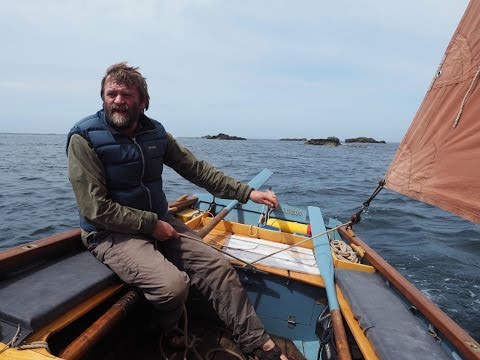
Voyage to the Ile de Sein
Roger Barnes

Back to My Roots in Brittany – Île de Sein & Audierne Adventure
4X4XPLORE
You are currently viewing a placeholder content from Vimeo. To access the actual content, click the button below. Please note that doing so will share data with third-party providers.
More InformationYou are currently viewing a placeholder content from YouTube. To access the actual content, click the button below. Please note that doing so will share data with third-party providers.
More InformationYou need to load content from reCAPTCHA to submit the form. Please note that doing so will share data with third-party providers.
More InformationYou are currently viewing a placeholder content from GetYourGuide. To access the actual content, click the button below. Please note that doing so will share data with third-party providers.
More Information