
Île de Porquerolles: The Complete Travel Guide (2026)

Île de Porquerolles Travel Guide: Everything You Need to Know (2026)
Île de Porquerolles is France’s largest island in the Îles d’Hyères group, covering 1,254 hectares off the Var coast of Provence, with a permanent population of just 200 residents. The island sits at 38m elevation and is reachable in 15 minutes by ferry from the La Tour Fondue peninsula. Over 80% of the island is protected national park land, making it one of the most ecologically preserved Mediterranean islands in all of Europe.
Top 3 Highlights at a Glance
- Plage de la Courtade — The island’s most accessible white-sand beach sits just 10 minutes’ walk east of the village, with turquoise water rivalling the Caribbean.
- Fort Sainte-Agathe — A 15th-century circular tower overlooking the harbour houses rotating exhibitions on Porquerolles’ unique marine biodiversity.
- Cap d’Armes Lighthouse — A 30-minute bike ride south delivers you to the island’s southern tip with 180-degree open-sea panoramas from 50m cliffs.
Scroll down for our complete travel guide with tips on getting there, where to stay, costs and more.
Arrival & Airport
How do I get to Île de Porquerolles?
Take the ferry from La Tour Fondue — it’s the only practical access point. The crossing takes 15 minutes and departs from Presqu’île de Giens, near Hyères. TLV ferries run the route year-round, with crossings every 30 minutes in summer and hourly in low season. Return tickets cost around €20 per adult. In my experience, arriving on the first morning boat (around 7:30am) is the single best move — you’ll have the village square to yourself for at least an hour before day-trippers flood in. Warning most guides omit: the last ferry back is earlier than you expect — check the exact schedule the day before, as it shifts seasonally and missing it is an expensive mistake.
Which airport is closest to Île de Porquerolles?
Toulon-Hyères Airport (TLN) is the closest, just 5km from the La Tour Fondue ferry terminal. It receives direct flights from Paris Orly and a handful of European cities in summer. My tip: if TLN has no direct connection from your city, fly into Nice Côte d’Azur (NCE), roughly 130km east, and take the train to Hyères station, then a taxi or bus to La Tour Fondue. The NCE option sounds long but works smoothly — the train to Hyères takes around 90 minutes and costs roughly €25. What surprised me: TLN’s summer schedule is slim and sells out fast, so book TLN flights at least 8 weeks in advance if that’s your route.
How long does the journey to Île de Porquerolles take from major cities?
From Paris, expect a total travel time of roughly 4.5 to 5.5 hours door-to-ferry. The TGV from Paris Gare de Lyon to Toulon takes 3h15 and costs around €40–€80 booked in advance. Add a 20-minute taxi from Toulon station to La Tour Fondue (or 40 minutes by bus), plus the 15-minute ferry. From Marseille, the whole journey takes under 2 hours — train to Toulon in 40 minutes, then transfer. In my experience, driving from Marseille and parking at La Tour Fondue is equally fast. Honest caveat: parking at La Tour Fondue in July costs around €15–€20 per day and fills by 9am — arrive before 8am or you’ll park 2km away.
Do I need a car to explore Île de Porquerolles?
Absolutely not — cars are banned for visitors on Île de Porquerolles. Bicycles are the primary transport, and the island’s 12km length is entirely manageable on two wheels. Rental bikes are available at 5–6 shops clustered around the village square, costing around €14–€18 per day for a standard bike or €25–€35 for an e-bike. My tip: rent the e-bike if you plan to reach the southern cliffs — the terrain gets hilly fast and the sun is brutal. What most guides omit: bike hire shops open at 9am, and every single one sells out of e-bikes by 10:30am in July — book online the evening before or show up at opening. Walking is also viable for the village and northern beaches.
City Transport
What are the best areas to stay on Île de Porquerolles?
There is essentially one settlement: the village of Porquerolles, centred on Place d’Armes. Staying on the island itself is the dream option — only a handful of hotels exist given the 200-person permanent population. Le Mas du Langoustier on the western tip is the island’s most celebrated property, a 30-minute bike ride from the village, set in pine forest with its own beach. For something more central, small guesthouses and rental apartments cluster within 500 metres of the ferry dock. My honest trade-off: staying on the island costs significantly more than sleeping in Hyères or Le Lavandou on the mainland and ferrying over daily. If budget matters, mainland basing is genuinely practical given the 15-minute crossing.
What does accommodation cost per night on Île de Porquerolles?
Expect to pay €180–€350 per night for a mid-range hotel room on the island in peak season. Le Mas du Langoustier sits at €350–€600+ per night in July and August and is worth every cent for a special occasion. Budget guesthouses and rental rooms go for €120–€180. What surprises most visitors: there are fewer than 10 accommodation options on the entire island, so choice is genuinely limited. In my experience, self-catered apartments booked through private rental platforms offer the best value at €100–€160 per night for a studio. Honest caveat: if you’re basing yourself on the mainland in Hyères, expect to pay €60–€120 for a comfortable hotel, which frees up significant budget for food and activities.
How far in advance should I book accommodation on Île de Porquerolles during high season?
Book at least 4–6 months in advance for July and August stays on the island itself. This is not hyperbole — with fewer than 10 accommodation options serving an island that receives tens of thousands of summer visitors, rooms at places like Le Mas du Langoustier are fully reserved by February for the following August. My tip: set calendar reminders for January 1st if you want peak-season on-island accommodation. For mainland bases in Hyères or Giens, 6–8 weeks ahead is usually sufficient outside of the first two weeks of August, when the entire French nation is on holiday. What most guides omit: the French school holiday calendar creates a specific crunch — the last week of July and first two weeks of August are categorically the hardest booking window.
Are there special or unique accommodation types on Île de Porquerolles?
The island’s most distinctive stay is Le Mas du Langoustier, a vine-covered Provençal bastide with its own private bay, 2.5km west of the village. It feels more like a private estate than a hotel — breakfast arrives with fig jam made from trees on the property. Beyond hotels, a small number of private villas are available through rental platforms, occasionally including historic winery properties tied to the island’s Domaine de la Courtade vineyard. My tip: renting a villa with a group of 6 or more actually makes Porquerolles surprisingly affordable at around €60–€80 per person per night. Honest caveat: camping is strictly prohibited on the island — the national park rules are enforced and fines are real.
Accommodation & Neighbourhoods
What are the must-see sights on Île de Porquerolles?
Three sights stand above the rest. Fort Sainte-Agathe — built in 1531 — guards the harbour and costs €3 to enter, with rotating exhibits on the island’s ecology. The Cap d’Armes Lighthouse at the southern tip is a 6km bike ride from the village and delivers the most dramatic coastal views on the island — go at golden hour. Finally, Plage Notre-Dame, on the northeast coast, is consistently ranked among France’s top 10 beaches — a 3km ride through pine forest followed by a short walk. In my experience, combining all three in a single day is absolutely achievable on an e-bike, starting early. What most guides omit: Fort Sainte-Agathe closes unpredictably in low season — call ahead on +33 4 94 12 30 40 to confirm.
What can I experience for free on Île de Porquerolles?
Most of the island’s best experiences cost nothing beyond the ferry ticket. The national park trail network — over 50km of marked paths — is completely free and takes you through scented maquis, vineyards, and cliff-edge panoramas. Plage de la Courtade and Plage du Langoustier have no entry fees and no sunbed rental culture — you bring a towel and pick your spot. The village square, Place d’Armes, is surrounded by eucalyptus trees and has a free pétanque court that locals actually use. In my experience, watching the sunrise from the northern lighthouse path costs nothing and is one of the most beautiful moments I’ve had in Provence. Honest caveat: snorkelling gear rental runs about €10–€15 per day, which is worth it — the Posidonia seagrass meadows below the surface are extraordinary.
Which day trips are possible from Île de Porquerolles?
The two neighbouring Îles d’Hyères — Île de Port-Cros and Île du Levant — are the natural day trips. Port-Cros is a strict national park with zero vehicles and extraordinary underwater snorkelling trails, reachable by ferry in around 45 minutes from Porquerolles’ port or directly from Le Lavandou on the mainland. Île du Levant is famous for its naturist community covering 90% of the island — interesting, different, and easy to visit clothed in the small village section. From the mainland ferry terminal at La Tour Fondue, the Var coast towns of Hyères and Toulon are worth half-day visits. My tip: dedicate your full first day to Porquerolles before planning any island-hopping — it needs more time than most visitors allocate.
What local specialities should I try on Île de Porquerolles?
The island’s own wine is the unmissable starting point. Domaine de la Courtade produces organic white and rosé under the AOC Côtes de Provence label, and you can visit the estate for tastings — a glass on site costs around €5–€8. Sea urchin (oursin) is harvested locally and served simply with bread at quayside restaurants — a plate runs €12–€18 in season (October to April). The classic Provençal lunch is tielle — a spiced octopus pie — washed down with a cold local rosé. In my experience, the best food on the island is at L’Olivier restaurant near Place d’Armes, where a three-course set lunch runs around €35. Honest caveat: dinner options are limited and pricey — the island shuts down early by mainland French standards.
Highlights & Must-Sees
What makes Île de Porquerolles unique compared to other French islands?
Two things set it apart from anywhere else in France. First, 82% of the island is owned and protected by the French state as a national park — a deliberate conservation decision made in 1971 that prevents the development seen on Corsica or the Balearics. Second, the complete ban on private motor vehicles for visitors gives the island a timeless, pre-automobile atmosphere you simply cannot find on comparably beautiful Mediterranean islands. What surprised me most: the island has an active, working organic vineyard (Domaine de la Courtade) producing wine praised in Paris restaurants, which is extraordinary for a place with only 200 permanent residents. In my experience, no other Mediterranean island balances ecological purity with genuine Provençal culture this successfully.
How many days should I spend on Île de Porquerolles?
2 full days is the sweet spot — enough to cover the beaches, the southern cape, the fort, and a vineyard visit without rushing. A single day works as a strong day trip from the mainland but leaves you feeling like you only scratched the surface. Three or more nights is genuinely worthwhile if you want to hike every trail, kayak the northern coast, and experience the island after the day-trippers leave on the 5pm ferry. In my experience, the island changes character entirely after 5:30pm when the majority of visitors depart — the village square becomes genuinely Provençal and locals reappear. Honest caveat: more than 4 nights can feel slow — the island is 12km long and there’s a real ceiling on new things to discover after day three.
When is the best time to visit Île de Porquerolles?
June and September are the best months — warm enough to swim (sea temperature around 22–24°C), uncrowded compared to July-August, and with full ferry and restaurant services running. The verified best travel window based on climate data is June, July, and August, but my honest recommendation is to weight toward June’s first three weeks or the entirety of September. July and August are spectacular but the island absorbs 10,000+ day-trippers on peak summer weekends, which overwhelms the trails and beaches. In my experience, the first week of June — when French schools are still in session — delivers near-perfect conditions with 40% fewer visitors than late July. Winter (November–March) sees many restaurants and most accommodation close entirely.
What are local festivals and events on Île de Porquerolles?
The island’s most atmospheric annual event is the Fête de la Saint-Pierre in late June, honouring the patron saint of fishermen with a harbourside procession, local wine, and music on Place d’Armes — free to attend. The Domaine de la Courtade hosts occasional harvest events in September when you can participate in grape picking for a day. Hyères on the mainland (a 15-minute ferry plus short transfer) runs the Festival International de Mode et de Photographie each April, which draws international crowds and fills every bed in the region. My tip: the harvest period in late September is my favourite time on the island — the vendange buzz in the vineyard, the empty beaches, and the golden light make it extraordinary. Book 3 months ahead for September weekends.
Food & Drink
How does weather affect activities on Île de Porquerolles?
The Mistral wind is the variable that most guides ignore. This northwesterly wind can reach 80–100 km/h and arrives without much warning, shutting down kayaking, paddleboarding, and even comfortable cycling on the exposed southern cliffs. In my experience, the Mistral typically blows for 3-day cycles — if it’s calm on arrival, you likely have a 3-day window. Summers are reliably hot at around 28–32°C, making the shadeless southern trail punishing between noon and 3pm — hike it in the morning. Autumn brings perfect hiking weather with cooler temperatures around 18–22°C. Honest caveat: the ferry from La Tour Fondue is occasionally cancelled in rough weather — always have a mainland backup plan if you’re on a tight departure schedule.
How crowded does Île de Porquerolles get in peak season?
Extremely crowded on weekends in July and August — this is not an exaggeration. The island receives more than 6,000 day-trippers on peak summer Saturdays, which is 30 times its permanent population of 200. Plage de la Courtade becomes genuinely packed by 11am, and the single village bakery runs out of croissants before 9am. In my experience, visiting midweek in late July is dramatically more pleasant than any weekend — visitor numbers drop by roughly 40% on Tuesdays and Wednesdays. My tip: walk or cycle to Plage du Grand Langoustier on the western tip — it adds 5km of cycling but reliably has space even in peak season because most day-trippers don’t venture that far. The northern cliffs trail is also consistently quieter than the main beach circuit.
How safe is Île de Porquerolles?
Île de Porquerolles is extremely safe — it’s one of the most low-risk destinations in all of France. Petty crime is negligible on an island of 200 permanent residents where most visitors arrive for nature. The real safety considerations are environmental: the southern cliff paths have unguarded drops, particularly around Cap d’Armes, so keep children within arm’s reach and wear proper footwear — not flip-flops. The sea off the northern beaches is calm, but the southern coast faces open Mediterranean swell and is unsuitable for swimming. In my experience, the only genuine hazard is summer heat exhaustion — the treeless southern trail in July can hit 35°C with zero shade for 2km stretches. Carry at least 1.5 litres of water per person and start southern hikes before 9am.
Is English widely spoken on Île de Porquerolles?
Basic English is spoken in tourist-facing businesses — ferry staff, bike rental shops, and most restaurants manage English competently. However, the island’s 200 permanent residents are entirely French-speaking and the village has a distinctly local, non-touristy atmosphere once you step off the main square. In my experience, learning 5 key French phrases transforms interactions enormously: ‘Bonjour’, ‘Un vélo électrique, s’il vous plaît’, ‘L’addition, s’il vous plaît’, ‘Merci beaucoup’, and ‘Où est…?’ will carry you through 90% of situations. The Domaine de la Courtade winery staff speak reasonable English during tasting season. Honest caveat: menus at smaller restaurants are French-only — bring Google Translate with offline French downloaded before boarding the ferry, as mobile data can be patchy on the island’s western end.
Practical Tips
What is the daily budget for visiting Île de Porquerolles?
Expect €80–€120 per person per day for a comfortable mid-range experience staying on the mainland and day-tripping. That breaks down roughly as: ferry €20 return, bike rental €18, lunch at a restaurant €25–€35, snacks and drinks €15, and optional winery tasting €10. Staying overnight on the island adds €120–€350 per night for accommodation. In my experience, the most cost-efficient approach is basing in Hyères (hotels from €65/night) and ferrying over for 2 full days. Honest caveat: there are no supermarkets on the island — the village has a small épicerie where a bottle of water costs €2.50 and a baguette €2, so buying provisions on the mainland before the morning ferry saves noticeably on a multiday trip.
How does public transport work on and around Île de Porquerolles?
On the island, there is no public transport — bicycles and walking are the only options for visitors, with motor vehicles banned. Reaching the ferry terminal at La Tour Fondue from Hyères town centre is possible via the Var Lib bus line 67, which runs roughly every 90 minutes in summer and costs €3. From Toulon, the train to Hyères takes 20 minutes and runs hourly, costing around €5. TLV Ferries operates the Porquerolles crossing year-round — tickets are purchased at the terminal or online. In my experience, buying return ferry tickets online the evening before saves the 10–15 minute queue at the booth in peak season. Honest caveat: the bus from Hyères to La Tour Fondue is timed poorly relative to early morning ferries — a taxi (€12–€15) is more reliable for the first boat.
Which apps do you recommend for visiting Île de Porquerolles?
Four apps make the trip substantially smoother. First, TLV Ferries’ own website (book via browser, no app needed) for ferry tickets — saves queuing. Second, Komoot for offline trail maps of the island’s national park network — download the Porquerolles area pack (free) before you board, as connectivity drops on the western trails. Third, Windy is essential for checking Mistral forecasts — check it every morning as a Force 6+ Mistral makes the southern cliff route genuinely dangerous on a bike. Fourth, Google Translate with offline French downloaded handles menus and signage. My tip: Maps.me is a reliable backup for offline navigation when Google Maps struggles with the island’s unmarked forest tracks. None of these require a local SIM — download everything on mainland WiFi before departing.
More Destinations in Europe
Explore our complete travel guides for more Europe destinations: Huelva Travel Guide (2026), Lisbon Travel Guide (2026), Lanzarote Travel Guide (2026), Île de Noirmoutier Travel Guide (2026), Madrid Travel Guide (2026).
Useful Resources for Planning Your Trip to Île de Porquerolles
- Wikipedia: Île de Porquerolles — history, geography and background
- Lonely Planet: Île de Porquerolles — itineraries and travel inspiration
- TripAdvisor: Île de Porquerolles — hotels, restaurants and traveller reviews
🎥 Île de Porquerolles Travel Videos
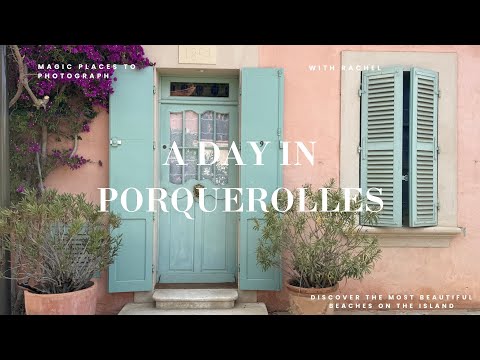
Discovering Porquerolles | France’s Most Beautiful Island …
The Art of Seeing For Photographers
You are currently viewing a placeholder content from Vimeo. To access the actual content, click the button below. Please note that doing so will share data with third-party providers.
More InformationYou are currently viewing a placeholder content from YouTube. To access the actual content, click the button below. Please note that doing so will share data with third-party providers.
More InformationYou need to load content from reCAPTCHA to submit the form. Please note that doing so will share data with third-party providers.
More InformationYou are currently viewing a placeholder content from GetYourGuide. To access the actual content, click the button below. Please note that doing so will share data with third-party providers.
More Information