
Matera: The Complete Travel Guide (2026)
Last reviewed: September 2026 · key facts checked against Wikidata
Matera Travel Guide: Everything You Need to Know (2026)
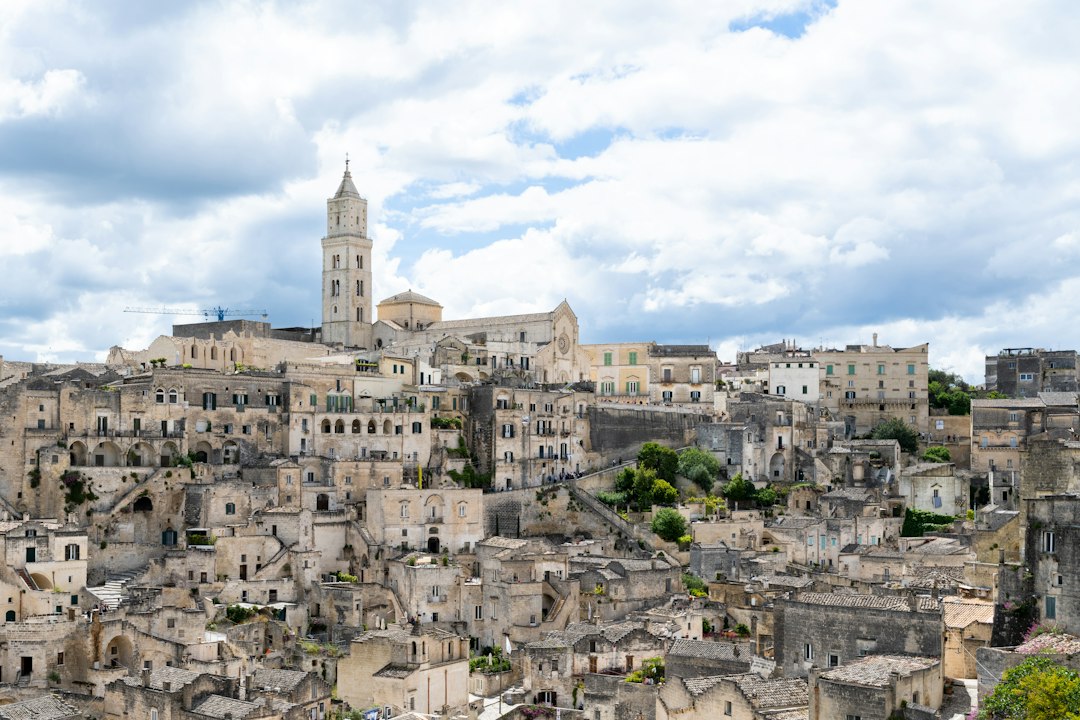
Matera sits at 401 metres above sea level in Basilicata, Southern Italy, and is home to roughly 59,685 people — yet it punches far above its weight as one of Europe’s most visually arresting cities. The Sassi districts, two cave-riddled cliffside neighbourhoods carved into a ravine, have been continuously inhabited for an estimated 9,000 years, making this one of the oldest permanently settled urban sites on Earth. Matera served as a European Capital of Culture in 2019, and the surge of global attention that followed has permanently reshaped its tourism infrastructure.
Three Things Not to Miss in Matera
- Sassi di Matera — Two cave-city districts — Sasso Caveoso and Sasso Barisano — hold 9,000 years of unbroken human habitation carved into living rock.
- Casa Grotta di Vico Solitario — A fully furnished rupestrian cave home showing exactly how families lived here until the government forced evacuations in the 1950s.
- Murgia Plateau & Gravina Canyon — The ravine opposite the Sassi offers a free panoramic viewpoint and ancient rock-cut churches reachable in under 30 minutes on foot.
Scroll down for our complete travel guide with tips on getting there, where to stay, costs and more.
Arriving in Matera: Airport & Transfers
How do I best get to Matera?
Fly into Bari Karol Wojtyła Airport (BRI), roughly 65 km northeast of Matera — that is your most practical entry point. From BRI, Flixbus and Ferrovie Appulo Lucane (FAL) buses connect directly to Matera’s bus terminal in about 1 hour 20 minutes, costing around €5–€8. I recommend pre-booking even the bus, because afternoon departures sell out. The honest caveat most guides omit: Matera has no train station on the main national network, so pure rail travellers arriving from Rome or Naples must change at Taranto or take the FAL narrow-gauge line from Bari — charming but slow at 100 minutes minimum.
Which airport is closest to Matera?
Bari (BRI) is the closest useful airport at 65 km, handling most domestic and European routes including Ryanair and easyJet connections. Brindisi (BDS) is a secondary option at roughly 130 km — viable if you find a significantly cheaper fare, but the transfer time jumps to nearly 2 hours by bus or car. In my experience, Bari is almost always the better choice unless Brindisi saves you more than €50 per person. What surprised me: Naples Airport (NAP) at 230 km is technically reachable by car in under 3 hours but is almost never worth the distance unless you are combining a broader South Italy itinerary.
How long does the journey to Matera take from nearby cities?
From Bari city centre, the FAL bus takes 1 hour 20 minutes and costs €5–€8. By rental car on the SS99, the same journey is around 1 hour. From Naples, driving takes approximately 3 hours via the A3 Autostrada. From Rome, budget 4.5 hours by car or a cumbersome 5–6 hour journey by bus-and-train combination. My tip: if you are travelling from Rome, flying to Bari and connecting onward is genuinely faster than any ground option. The caveat most guides omit is that driving into the historic Sassi area is restricted — you park outside and walk in, which adds 15–20 minutes to any arrival.
Do I need a rental car in Matera?
No — for Matera itself you absolutely do not need a car. The Sassi, Piazza Vittorio Veneto, and the Murgia viewpoints are all walkable, and the city is compact enough to cover on foot in a concentrated stay. Where a car genuinely adds value is for day trips into Basilicata — the Pollino National Park, Aliano, or the Metapontum coastline are poorly served by public buses. Rental prices from Bari airport start at around €35–€45 per day for a small car. The trade-off: parking near the Sassi is genuinely stressful, paid zones cost €1.50–€2 per hour, and the medieval streets were not designed with vehicles in mind.
Getting Around Matera
What are the best areas to stay in Matera?
Stay inside the Sassi if your budget allows — waking up in a cave hotel cut directly into the tufa rock is the defining Matera experience. Sasso Barisano is the more restored, restaurant-lined cave district and is my first recommendation. Sasso Caveoso is quieter and slightly more atmospheric but has fewer food options within walking distance at night. The Piano (upper modern city around Piazza Vittorio Veneto) is cheaper and convenient for buses, but staying there feels like visiting Matera rather than living it. The honest caveat: accommodation inside the Sassi means uneven stone paths, no car access, and climbing 100–200 steps with luggage — factor this in if you have mobility concerns.
What does accommodation cost per night in Matera?
Cave hotels inside the Sassi — the iconic category — run €120–€300 per night for a double room at properties like Sextantio Le Grotte della Civita (top-end, around €250+) or Locanda di San Martino (mid-range, around €130–€180). Budget guesthouses and B&Bs in the upper Piano district start at €55–€80. Apartments with Sassi views rent from €80–€120 per night and suit couples or families. In my experience, the cave hotels justify the premium once — the architecture alone is worth the splurge for at least one or two nights. The trade-off: even mid-range Sassi properties charge a city tax of €1.50–€3 per person per night on top of quoted rates.
How far in advance should I book accommodation in Matera during high season?
Book cave hotels 3–4 months in advance for July and August — the best Sassi properties genuinely sell out. For the shoulder months of May, June, and September, 6–8 weeks ahead is usually sufficient. The key thing most travellers miss: Matera hosts periodic film productions and cultural events (it was a Bond filming location), and when these occur, even mid-range options in the Piano district fill fast. My tip: check dates around the Festa della Madonna della Bruna on 2 July — that week sees a 20–30% price spike and very limited availability. Off-season from November to February, you can book 2–3 weeks out with no pressure.
Are there special or unique accommodation types in Matera?
Yes — Matera is one of the few places on Earth where you sleep inside a cave carved from tufa limestone, and several properties have converted ancient rupestrian dwellings into boutique hotels with modern amenities. Sextantio Le Grotte della Civita is the most celebrated, preserving the raw cave aesthetic with minimal intervention — stone walls, no paint, no frills beyond exceptional beds. Aquatio Cave Luxury Hotel & SPA offers a cave spa experience starting around €200 per night. Beyond hotels, some local families rent out authentic cave apartments through Airbnb for €80–€110 per night, giving you the experience without the hotel markup. My honest warning: cave rooms have no natural light and limited ventilation — not ideal for anyone with claustrophobia.
Where to Stay in Matera
What are the must-see sights in Matera?
The Sassi di Matera themselves are the sight — both Sasso Barisano and Sasso Caveoso must be walked in full, ideally at dusk when the tufa glows amber. Casa Grotta di Vico Solitario (entry around €3) is a furnished cave home that makes the pre-1950s poverty tangible and unmissable. The Cathedral of Matera on the ridge between the two Sassi offers free entry and a striking Norman-Romanesque facade built in 1270. The Museo Nazionale Ridola holds prehistoric finds from the region for around €5 entry. My tip: walk the Belvedere di Murgia Timone across the ravine for the photograph of Matera that everyone associates with the city — it requires a 20-minute drive or 45-minute walk from the Sassi.
What can I experience for free in Matera?
Walking the entire Sassi di Matera costs nothing — the streets, stairways, and viewpoints are fully public. The Belvedere Piazza Giovanni Pascoli overlooking Sasso Caveoso is free and arguably the best in-city viewpoint. The exterior of the 1270 Cathedral and all rupestrian church facades in the ravine can be admired without paying. The Gravina Canyon trail (Murgia Plateau side) is free to hike and takes about 2 hours return. Every Sunday morning, the Piazza Vittorio Veneto hosts an informal local market where you can graze on samples of local bread and cheese at no obligation. In my experience, a free half-day walking circuit of both Sassi and their viewpoints is honestly the core Matera experience — paid attractions supplement rather than define the visit.
Which day trips from Matera are worth doing?
Alberobello with its UNESCO trulli is 80 km northeast and reachable in 1.5 hours by car — an easy and visually rewarding half-day. Metaponto on the Ionian Coast is only 45 km south, offering Greek archaeological ruins and a beach strip in under 1 hour. Pietrapertosa and Castelmezzano — twin mountain villages connected by the Volo dell’Angelo zip line (around €30 per ride) — sit roughly 75 km west and take about 1.5 hours to reach. My honest caveat: without a car, nearly all these trips require expensive taxis or infrequent regional buses with journey times that double. I recommend renting a car for at least one day specifically for day-tripping.
What local specialities should I eat in Matera?
Start with Pane di Matera IGP — a durum wheat sourdough with a hard crust and dense yellow crumb, protected by EU geographical indication status and sold in every bakery for around €4–€6 per loaf. Crapiata is a dense legume-and-grain soup eaten on 1 August as a local tradition, but served year-round in trattorias. Peperoni cruschi (crunchy dried red peppers fried in olive oil) appear on almost every antipasto plate and are Basilicata’s most addictive snack. The local pasta shape is strascinati, typically served with lamb ragù or wild mushroom sauce for around €10–€14 per plate. My tip: avoid the tourist-menu restaurants on the main Sassi tourist trail — walk 5 minutes uphill to the Piano district for the same dishes at 30% lower prices.
Matera Highlights & Must-Sees
What makes Matera unique compared to other Italian cities?
Matera is the only major European city where an entire residential urban district is carved directly into living rock — not simply built on old foundations but literally excavated from a cliff. The Sassi were inhabited continuously for roughly 9,000 years, making them among the oldest urban settlements on Earth. As recently as the 1950s, approximately 15,000 people still lived in cave dwellings without running water or electricity before a government resettlement program forcibly relocated them. That recent, raw poverty — combined with its current status as a luxury travel destination — creates a layered tension found nowhere else in Italy. The city also appeared as ancient Jerusalem in Mel Gibson’s ‘The Passion of the Christ’ (2004) and as a Bond location in ’No Time to Die’ (2021), testament to its singular visual power.
How many days in Matera are worthwhile?
2 full days is the honest minimum; 3 days is the sweet spot. Day 1: walk both Sassi districts thoroughly, visit Casa Grotta, climb to the Cathedral ridge, and watch sunset from Piazza Giovanni Pascoli. Day 2: cross to the Murgia Plateau for the panoramic viewpoint, explore a rupestrian church, and spend the afternoon in the Museo Nazionale Ridola. A third day allows a day trip to Alberobello or the Ionian coast. What surprised me: many visitors try Matera as a single-night stop from Bari, which is a genuine mistake — the city changes dramatically between day and evening light, and rushing through both Sassi in 4 hours means missing the depth that makes it exceptional.
When is the best time to visit Matera?
September and October are my firm first choice — temperatures sit around 20–25°C, crowds drop noticeably after the August peak, and the light on the tufa stone is extraordinary in autumn. May and June are excellent alternatives with spring wildflowers on the Murgia Plateau. July and August are the verified peak months with the best weather but also the highest prices and most crowded narrow paths. The caveat guides rarely mention: Matera in December and January is genuinely beautiful in the cold dry air with almost no tourists, and cave hotels drop to 40–50% of summer rates — if you are not beach-focused, winter here is an underrated choice. Avoid the 2 July Festa della Bruna week unless you specifically want the festival crowd.
Are there local festivals in Matera worth attending?
The Festa della Madonna della Bruna on 2 July is Matera’s defining annual event — a procession of a papier-mâché float through the Sassi, culminating in its ritual destruction by the crowd at midnight. It has been held continuously for over 600 years and is genuinely unlike any other Italian festival. In summer, the Matera Outdoor Festival uses the Sassi as a backdrop for open-air cinema and live music (free and ticketed events from around €10–€25). The FIM — Festival Internazionale di Matera in autumn brings world music acts to cave venues and rupestrian churches. My tip: book accommodation 4–5 months ahead for Bruna week — it is the one period where the entire Sassi hotel stock sells out completely.
Eating & Drinking in Matera
How does the weather in Matera affect what activities you can do?
Matera at 401 metres elevation has a continental-influenced Mediterranean climate — summers are hot and dry, winters are genuinely cold with occasional snow. July and August peak around 32–35°C, making midday Sassi walking sweaty and draining — start before 9:00am and after 5:00pm. The Murgia Plateau hike is best done in spring or autumn when ground is firm and temperatures sit below 25°C. Winter cave hotels are atmospherically superb but outdoor evening dining disappears after November. What surprised me: the Sassi stone paths become genuinely slippery when wet — rubber-soled shoes are not optional in October–March. Rain also reduces visibility for the iconic panoramic photographs from the Murgia viewpoint.
How crowded does Matera get in peak season?
August is the most crowded month — the narrow Sassi stairways feel genuinely congested between 10:00am and 4:00pm, and the Casa Grotta can have queues of 30–40 minutes. The Matera 2019 Capital of Culture effect permanently raised the tourist baseline: visitor numbers tripled between 2015 and 2020 and have not returned to previous levels. My honest assessment: Matera never reaches the overwhelming saturation of Cinque Terre or Amalfi — it is still manageable even in August if you structure your day correctly. Go to the Murgia viewpoint at 7:00am and you will likely have it entirely to yourself. The trade-off: in shoulder season you gain tranquility but some restaurants and cave hotels reduce hours or close on weekdays.
How safe is Matera for tourists?
Matera is very safe — it consistently ranks among Basilicata’s lowest-crime urban centres, and I have never felt any security concern across multiple visits. Petty theft is rare compared to Naples or Rome, though the usual precautions apply around busy viewpoints in peak season. The genuine safety concern most guides ignore is physical rather than criminal: the Sassi stairways and paths are uneven, steep, and poorly lit after dark — twisted ankles are common, especially after rain or in flip-flops. Carry a phone torch after sunset when exploring the lower cave sections. Emergency medical care is available at the Ospedale Madonna delle Grazie, roughly 2 km from the Sassi.
Is English widely spoken in Matera?
In Sassi hotels, cave restaurants, and tourist-facing businesses, English is reliably spoken — the 2019 Capital of Culture investment included significant hospitality training. Outside the Sassi in the Piano district’s local bars, bakeries, and markets, English drops off sharply and Italian is essential. My tip: download Google Translate with the Italian offline pack before arriving — it is invaluable for menus, bus timetables, and market conversations. What surprised me: younger Materani (under 35) often speak decent English from social media and tourism exposure, while older locals frequently speak a Lucanian dialect that even standard Italian speakers find challenging. A few words of Italian — buongiorno, grazie, un caffè per favore — go a measurably long way here.
Practical Tips for Matera
What is a realistic daily budget for Matera?
Budget traveller: €80–€110 per day — staying in a Piano B&B (€55–€70), eating at local trattorias (€12–€16 per meal), and paying for 2–3 paid attractions. Mid-range: €150–€220 per day — a cave hotel in Sasso Barisano (€130–€180) plus sit-down dinners with local wine (€25–€35 per person). Splurge: €300+ per day — Sextantio Le Grotte della Civita plus a tasting menu at a Sassi restaurant. The honest caveat: Matera is not cheap for Southern Italy — the cave hotel premium means you pay more per night here than in comparably sized Basilicatan towns. Food, however, remains genuinely affordable if you eat where locals eat in the Piano rather than on the main Sassi tourist circuit.
How does public transport work within and around Matera?
Within Matera, walking is the only viable option in the Sassi — no buses or taxis penetrate the cave districts. City buses (CSTP lines) connect the Piano district and outer neighbourhoods but are irrelevant for most tourist movements. For regional connections, FAL buses link Matera to Bari (roughly 1 hour 20 minutes, €5–€8), Taranto (about 1.5 hours), and Potenza (around 1.5 hours). The FAL narrow-gauge railway to Bari is charming but slower than the bus. My honest warning: regional bus frequency outside the Bari corridor drops to 2–4 departures per day — missing the last bus to Taranto means an expensive €60–€80 taxi. Always photograph the return timetable when you arrive at any regional bus stop.
Which apps do you recommend for visiting Matera?
Maps.me or Google Maps offline — download the Matera region before arriving; mobile signal inside the deeper Sassi cave sections is patchy. Trenitalia and FlixBus apps for booking onward connections from Bari. TheFork (ElTenedor) for restaurant reservations — top Sassi restaurants fill weeks ahead in summer and booking online avoids the awkward walk-in conversation in Italian. Duolingo or Google Translate with offline Italian for the Piano district. The one app most guides omit: Artecard Basilicata — a regional museum pass app that covers the Museo Nazionale Ridola and several Matera churches for a flat fee of around €15–€20, saving meaningful money if you plan to visit 3 or more paid cultural sites.
Matera at a Glance
| Population | 59,685 |
|---|---|
| Currency | EUR (€) |
| Official language | Italian |
| Time zone | Europe/Rome |
Source: Wikidata, retrieved September 2026.
Italy › Matera
More Destinations in Italy
Related Travel Guides
Essential Resources for Planning Your Trip to Matera
- Trip to Matera, a UNESCO World Heritage Site — official visitor information, passes & events
- Wikipedia: Matera — history, geography & background
- Wikivoyage: Matera — community travel guide & practical tips
- Matera travel – Basilicata, Italy, Europe — expert itineraries & travel inspiration
- THE 15 BEST Things to Do in Matera (2026) — hotels, restaurants & traveller reviews
- How to Get to Matera, Italy: Private Transfers and Tours — how to get around
- Numbeo: Cost of Living in Matera — current prices & cost comparison
- Timeanddate: Matera Weather & Climate — forecasts & climate statistics
- The Sassi and the Park of the Rupestrian Churches of Matera
More Perspectives on Matera
- Matera Travel Guide: Things to Do in Italy’s Cave City
- Matera Travel Guide: Best Things to Do, See, and Eat in …
- A Local’s Favorite Things to Do in Matera, Italy
Matera Travel Videos
Watch these videos for a visual preview before your trip:
- Matera, Italy bucket list: 10 best things to see and do in the Sassi of Matera
- MATERA TRAVEL GUIDE | Best Things to Do in Matera, Italy | Incredible History, Views & No Crowds
- MATERA TRAVEL GUIDE 🗝️ Top 10 Things To Do In Matera, Italy 🏛️ Italy’s Ancient Stone & Cave City! 🌄
Matera Travel Discussions on Reddit
Real traveller experiences and community advice:
- My trip to Matera, Italy : r/travel
- Matera is one of the most unexpectedly cool cities I’ve ever …
- Review: Vetera Matera Hotel Stay – Relais & Châteaux
Data Sources
This page was compiled using data from Wikipedia, Wikidata, Open-Meteo (climate), Numbeo (cost of living) and REST Countries. Information is updated regularly.