
Sardinia: The Complete Travel Guide (2026)
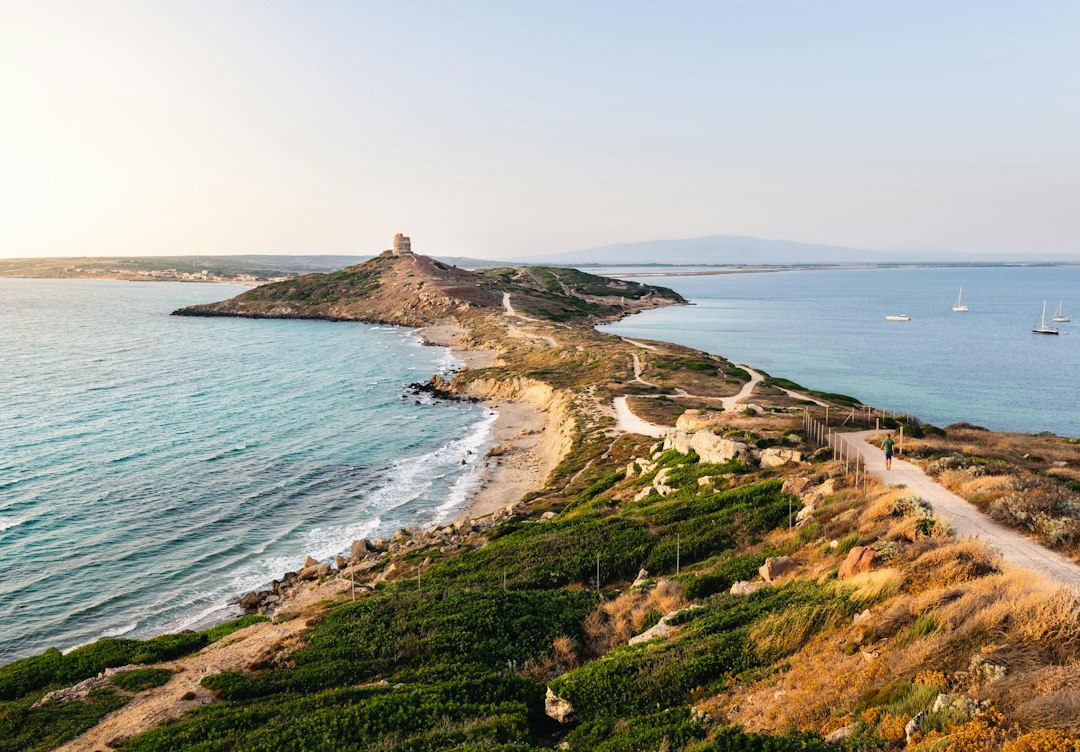
Last reviewed: October 2026 · key facts checked against Wikidata
Sardinia Weather by Month: When to Go
| Month | Day | Night | Sea | Rain days | Rain mm | Wind km/h | Good for |
|---|---|---|---|---|---|---|---|
| Jan | 14° | 8° | 15° | 8 | 46 | 21 | – |
| Feb | 15° | 9° | 15° | 6 | 40 | 21 | Hike |
| Mar | 16° | 10° | 15° | 8 | 48 | 22 | Hike |
| Apr | 19° | 11° | 17° | 8 | 42 | 22 | Hike |
| May | 23° | 15° | 19° | 7 | 55 | 21 | Hike |
| Jun | 28° | 20° | 23° | 3 | 11 | 21 | Swim |
| Jul | 32° | 22° | 26° | 0 | 1 | 23 | Swim |
| Aug | 31° | 22° | 27° | 2 | 12 | 21 | Swim |
| Sep | 28° | 20° | 26° | 5 | 31 | 20 | Swim |
| Oct | 24° | 17° | 23° | 6 | 41 | 19 | SwimHike |
| Nov | 19° | 13° | 20° | 11 | 76 | 19 | – |
| Dec | 16° | 10° | 17° | 8 | 54 | 20 | Hike |
Sources: ERA5 reanalysis via Open-Meteo, 2016–2025 (10-year average) for air temperature, rain and wind (average daily maximum); Open-Meteo Marine API, 2023–2025 for sea surface temperature. A rain day has at least 1 mm. Area averages; individual years vary.
Sardinia Travel Guide: Everything You Need to Know (2026)
Sardinia is the second-largest island in the Mediterranean Sea, covering 24,090 km² and home to 1,628,384 residents. Positioned 200 km west of mainland Italy and just 16.5 km south of Corsica, it holds some of Europe’s oldest human settlements, including the mysterious Nuraghe towers built from around 1800 BCE. The island’s coastline stretches over 1,800 km, encompassing turquoise lagoons, granite cliffs, and beaches consistently ranked among Europe’s clearest waters.
Three Things Not to Miss in Sardinia
- Costa Smeralda — Glamorous 55 km stretch of emerald-hued coves and white-sand beaches developed from 1962 by the Aga Khan.
- Su Nuraxi di Barumini — UNESCO-listed Nuraghe complex dating to around 1500 BCE — Sardinia’s most complete Bronze Age monument.
- Cala Goloritzé — Dramatic sea-arch beach in the Gulf of Orosei, reachable only on foot or by boat, with waters measuring Pantone-clear blue.
Scroll down for our complete travel guide with tips on getting there, where to stay, costs and more.
Ferries & Flights to Sardinia
How do I get to Sardinia — by flight or ferry?
Flying is faster and usually cheaper — flight time from Rome is roughly 45 minutes, from Milan about 1 hour 10 minutes. Three international airports (Cagliari-Elmas, Olbia Costa Smeralda, Alghero-Fertilia) serve the island year-round. Ferry crossings from Civitavecchia (Rome’s port) take 14–20 hours overnight, while Genoa to Porto Torres runs about 11–13 hours. Budget carriers Ryanair and Wizz Air connect to many Northern European cities, particularly from April to October. Tip: ferries make sense only if you want to bring your own car or enjoy a leisurely departure — for time-efficiency, fly.
Which airport or port in Sardinia is the best starting point?
Your best entry point depends on your first destination. Cagliari-Elmas Airport (CAG) serves the south and centre, handling the highest year-round passenger volume. Olbia Costa Smeralda Airport (OLB) in the northeast is ideal for the Costa Smeralda and Gallura region. Alghero-Fertilia Airport (AHO) suits the northwest coast and Alghero’s historic centre, just 12 km from town. Porto Torres is the main northern ferry port, linked by bus to Sassari (20 minutes, about €3). Worth knowing: Olbia airport gets congested in July–August — allow extra buffer time for connections.
How long does the ferry crossing to Sardinia take?
Crossing time ranges from 6 to 20 hours depending on the route. Livorno to Olbia with Moby Lines or Grimaldi runs roughly 9–10 hours. Civitavecchia (near Rome) to Olbia or Cagliari takes 14–16 hours. Genoa to Porto Torres is approximately 12–13 hours. The short Bonifacio (Corsica) to Santa Teresa Gallura crossing is just 50 minutes on Moby Lines — a useful option if combining both islands. Fares vary widely by season; book through Grimaldi Lines, Moby, or Tirrenia and check their official sites for exact schedules. Caveat: summer sailings sell out weeks in advance, especially for vehicle decks.
What does a flight or ferry to Sardinia cost?
Flights from mainland Italy start around €30–€60 one-way on Ryanair or ITA Airways in shoulder season; expect €90–€180 in peak July–August. From northern Europe (London, Amsterdam, Berlin), budget fares of €60–€130 are common in May or September — check Ryanair and easyJet directly. Ferry prices depend heavily on cabin type and vehicle size: a passenger-only ticket on Civitavecchia–Olbia runs roughly €35–€80; adding a standard car adds €50–€150. A cabin for overnight crossings adds another €30–€90. Tip: book ferry plus car as a bundle on Grimaldi Lines or Tirrenia at least 2–3 months ahead for summer departures.
Are overnight ferries to Sardinia worth it?
Yes — if you’re bringing a car or travelling from Genoa or Civitavecchia, overnight ferries save a hotel night and deliver you fresh in the morning. Grimaldi and Tirrenia operate comfortable cabin-equipped ferries with restaurants, Wi-Fi, and sun decks. A 4-berth cabin from Civitavecchia costs roughly €60–€120 extra per cabin — competitive with a budget hotel. The trade-off: cabins in July–August book out fast, and the onboard experience varies significantly by operator. Worth knowing: the Genoa–Porto Torres route is popular with French and Swiss travellers driving south, so it fills earlier than the Rome-area crossings.
Moving Around Sardinia
Do I need a rental car or scooter in Sardinia?
Yes — a rental car is strongly recommended for Sardinia. Public buses connect major towns but miss the coastal paths, inland Barbagia villages, and beach access roads that define the island’s best experiences. The SS125 coastal road in the Ogliastra requires your own wheels. Scooters are viable only for day trips from established resort towns like Alghero or Santa Teresa Gallura. Rental rates at Cagliari and Olbia airports start around €35–€60 per day in May–June; July–August prices rise to €70–€120 per day — book months ahead through Europcar, Hertz, or Sixt. Caveat: many beach car parks charge €5–€15 per day in summer.
Are there buses between towns in Sardinia?
Yes, but service is infrequent and slow outside major routes. ARST (Azienda Regionale Sarda Trasporti) operates the island-wide network connecting Cagliari, Sassari, Nuoro, Oristano, and Olbia. The Cagliari–Sassari express takes about 3 hours for roughly €12–€17. Smaller villages and coastal areas may have only 1–2 buses per day or none at all outside summer. The narrow-gauge Trenino Verde tourist train links inland Barbagia between June and September, primarily for scenic interest rather than transport efficiency. Tip: ARST publishes timetables on its official website — always cross-check the day-of-week service, as Sunday frequency drops sharply.
What does a rental car in Sardinia cost — and where do I hire one?
Budget around €40–€70 per day in shoulder season (May, June, September, October); high season (July–August) pushes rates to €80–€130 per day for a compact class. Hiring at the airport is most convenient — Cagliari-Elmas (CAG) and Olbia (OLB) both host Hertz, Europcar, Avis, and local agency Sardiniarentacar. A week-long hire in September via a comparison platform like Rentalcars.com often comes in at €280–€400 total including basic insurance. Caveat: excess liability on rentals in Sardinia can be high — always read the collision damage waiver details and consider purchasing excess insurance through a third-party provider before departure.
Which parts of Sardinia are accessible by public transport?
The four provincial capitals are well-connected; coastal resorts and rural villages are not. Cagliari, Sassari, Nuoro, and Oristano all have regular ARST bus and Trenitalia rail links. From Cagliari, trains reach Iglesias in about 1 hour and Oristano in 1 hour 15 minutes. The Costa Smeralda resorts (Porto Cervo, Baja Sardinia) are difficult without a car — an occasional summer shuttle bus operates from Olbia, but schedules are limited. Worth knowing: the Trenino Verde narrow-gauge railway offers scenic routes from Mandas to Arbatax (about 5 hours) between June and September, booking via Fondazione Ferrovie della Sardegna.
Can I cycle around Sardinia?
Partial cycling is feasible; a full island circuit is only for serious tourers. Sardinia has invested in cycling infrastructure — the Sardinia Cycling Route (Percorso Cicloturistico della Sardegna) spans roughly 1,500 km of mapped roads. The Alghero–Bosa coastal road is a well-regarded scenic stretch of about 45 km. Terrain is hilly to mountainous in the interior (Gennargentu peaks at 1,834 m), making electric bikes popular. E-bike and mountain bike rentals are available in Alghero, Dorgali, and Cagliari for roughly €30–€50 per day. Caveat: summer heat above 35°C on exposed roads between July and August makes midday cycling dangerous — plan for early-morning starts.
Choosing a Base on Sardinia
Which town in Sardinia should I base myself in?
Choose your base by region and travel style. Cagliari suits urban explorers — the capital offers museums, the Castello district, and day-trip access to the Nora archaeological site (40 km south). Alghero in the northwest blends Catalan architecture with beach proximity, ideal for couples. Olbia is a practical hub for Costa Smeralda day trips but lacks character as a destination itself. Dorgali in the Ogliastra is the best base for Cala Goloritzé hikes and Gennargentu excursions. Nuoro gives access to authentic Barbagia culture. Compared to Corsica’s Ajaccio (just 200 km north), Sardinian bases generally offer more budget accommodation diversity.
What does accommodation in Sardinia cost per night?
Expect €70–€130 per night for a solid mid-range double in shoulder season. A well-reviewed 3-star hotel in Cagliari or Alghero averages €80–€110 in May or October. Peak July–August prices in Costa Smeralda resorts jump to €200–€500+ per night for comparable quality — Porto Cervo and Baja Sardinia rank among the priciest resort areas in the Mediterranean. Budget travellers can find agriturismo (farm stays) in the Barbagia interior from €50–€80 per night including breakfast. Hostel dorms in Cagliari run about €25–€35 per night. Tip: booking directly with smaller agriturismi sometimes unlocks a 10% discount versus online travel agencies.
Which area of Sardinia suits which travel style?
**Costa Smeralda suits luxury beach seekers; the Ogliastra coast suits adventurers; Cagliari suits culture-focused travellers. Families with children do well in the sheltered coves around Villasimius in the southeast, where waters are calm and facilities are developed. Hikers and cyclists gravitate to Supramonte** limestone plateaus near Dorgali, where trails lead to Tiscali cave village. Wine and food travellers should prioritise Oristano province for Vernaccia wine estates and flamingo lagoons at Sinis Peninsula. Couples on a luxury budget are best placed at a resort hotel on the Arzachena coast near Porto Cervo. Each zone requires its own car-based base — island-hopping between zones in a single week is tiring.
How far in advance should I book accommodation in Sardinia?
Book peak-season (July–August) accommodation at least 3–4 months in advance. Costa Smeralda luxury villas and boutique hotels frequently sell out by April for August dates. Mid-range hotels in Alghero and Villasimius typically fill by May for summer. Shoulder season (May, June, September) allows 4–6 weeks lead time in most locations outside Porto Cervo. Winter (November–March) requires little advance booking — many coastal hotels close entirely between October and April. Worth knowing: ferry-plus-accommodation bundles offered by Sardinia Ferries or Tirrenia can occasionally undercut booking separately, especially for family groups with a vehicle.
Are there apartments or villas with sea views in Sardinia?
Yes — Sardinia has an extensive villa and apartment rental market, concentrated around Costa Smeralda, the Gulf of Orosei, and Villasimius. A private villa with pool and sea view near Arzachena runs €1,500–€5,000 per week in August, dropping to €700–€1,500 in June or September. Apartments in Alghero old town with sea or harbour views list on Airbnb for roughly €80–€160 per night in summer. Agencies such as Sardegna.com and HomeAway specialise in the island. Caveat: cancellation policies for summer villas are strict — most require 30–50% non-refundable deposits and final payment 8 weeks before arrival. Read contracts carefully.
When to Come to Sardinia
When is the best time to visit Sardinia?
June and September are the sweet-spot months for Sardinia. Based on verified climate data, the best travel months are June, July, August, and September — but July and August bring intense crowds and 35°C+ temperatures. June offers warm sea temperatures (around 22–24°C), long daylight hours, and fewer tourists. September maintains beach-worthy warmth with noticeably thinner crowds after the Italian school year restarts on 1 September. May is increasingly popular for hikers and cyclists before summer heat peaks. Compared to Sicily (roughly 200 km southeast at its nearest point), Sardinia’s peak season crowds are more concentrated in resort enclaves rather than spread island-wide.
What is the weather in Sardinia like throughout the year?
Sardinia has a Mediterranean climate with hot, dry summers and mild, wet winters. Summer (June–September) is reliably sunny with temperatures between 28°C and 38°C on the coast; the interior can be slightly cooler. Winter (December–February) brings temperatures of 8°C–14°C in Cagliari and occasional snowfall on the Gennargentu massif above 1,800 m. Spring (March–May) is green and pleasant, ideal for walking. The Maestrale wind from the northwest can make coastal swimming choppy even in summer — particularly on the west coast around Alghero and Oristano. Annual rainfall is concentrated between October and February; the interior mountain zone around Nuoro receives more precipitation than the coast.
When does Sardinia get overcrowded?
The island is at peak capacity in the two weeks around Ferragosto (15 August). Italian domestic tourism dominates in August — beaches near Villasimius, Pula, and Costa Smeralda become densely packed. The SS125 coastal highway can see stop-start traffic in August between Tortolì and Arbatax. Porto Cervo and Cala di Volpe host a high-end international crowd throughout July–August. Quieter alternatives: the beaches around Teulada in the far southwest and the Sinis Peninsula near Oristano remain comparatively uncrowded even in August, partly because they lack large hotel infrastructure. After 1 September, crowding drops sharply across almost all zones.
Is there a worthwhile shoulder season in Sardinia?
Yes — May and September are excellent shoulder-season choices. In September, sea temperatures hover around 24–25°C, accommodation prices fall 20–40% versus August, and many restaurants still run full menus. May is ideal for hiking — wildflowers cover the Supramonte and Gennargentu, and guided trekking with operators like Ecotur Sardegna in Dorgali operates from April. The grape harvest in the Cannonau vineyards of Nuoro province runs September–October, making agriturismo stays particularly appealing. Worth knowing: some smaller beach bars and boat-tour operators close after the first week of October, so verify schedules if visiting late season.
When does the beach and watersports season in Sardinia begin?
The beach season officially opens in mid-May, when sea temperatures reach 18–20°C — tolerable for swimming. Watersports operators in Alghero, Santa Teresa Gallura, and Villasimius typically launch from 1 May, with full programmes running by early June. Windsurfing and kitesurfing peak in spring (April–June) and again in September on the west coast, particularly at Porto Pollo near Palau, where the Maestrale wind is consistent. Scuba diving operators such as Capo Caccia Diving Center near Alghero open year-round for wreck dives but have the fullest instructor availability from June. The sea reaches its warmest (26–28°C) in August.
Costs on Sardinia
What does a daily budget cost in Sardinia?
Budget travellers can manage on €70–€90 per day; mid-range travellers should plan for €130–€200. A budget day covers a hostel dorm (€30), supermarket lunch (€8–€12), a trattoria dinner (€20–€30), and local bus transport. Mid-range includes a 3-star hotel (€90–€120), sit-down lunches, restaurant dinners with wine (€35–€55 per person), and a rental car share. Luxury visitors at Costa Smeralda easily spend €400–€800+ per day once marina restaurants, designer boutiques, and 5-star resorts are included. Worth knowing: beach amenity rentals (sunbed plus umbrella) at popular beaches like Cala Brandinchi cost €15–€30 per set per day — this adds up over a week.
Is Sardinia more expensive than mainland Italy?
Sardinia’s coastal resorts are significantly more expensive than comparable mainland Italian areas, but the interior is comparable to southern Italy. A cappuccino in a bar in Cagliari’s old town costs the standard Italian €1.20–€1.50; the same drink at a Costa Smeralda beach club can be €6–€10. Ferry and flight costs add €60–€200 per person to a trip compared with driving to, say, the Amalfi Coast. Compared to Corsica (just 16.5 km north), Sardinia is generally more affordable — French prices on Corsica for food and accommodation run 15–25% higher than equivalent Sardinian options. The island’s interior (Barbagia, Ogliastra inland) remains genuinely budget-friendly.
What unavoidable expenses should I plan for in Sardinia?
Car hire, ferry or flight, and beach access are the three costs most travellers underestimate. A car for 7 days runs €280–€700 depending on season. Beach parking in summer at protected coves charges €5–€15 per day. Some beaches (Cala Goloritzé, La Pelosa near Stintino) require a reservation fee of €3–€10 per person to protect the ecosystem — book through official municipal portals. Boat excursions to the Grotte di Nettuno near Alghero cost around €15–€25 per person for the sea route. Restaurant cover charges (coperto) of €1.50–€3 per person apply in most sit-down restaurants. Travel insurance covering ferry cancellations is worth considering for summer travel.
What does food cost in Sardinia — local trattoria versus tourist restaurants?
A three-course lunch at a local trattoria costs €18–€28 per person; the same experience at a tourist-facing restaurant in Porto Cervo or Stintino runs €50–€90. Sardinian staples — porceddu (roast suckling pig), malloreddus pasta, and Cannonau wine — are best value in inland towns like Oristano or Nuoro, where a full meal with house wine averages €22–€30 per person. Supermarket chains (Conad, Despar, CRAI) are well-distributed — a week of self-catering from a supermarket in Cagliari costs roughly €80–€120 for two people. Tip: markets in Cagliari’s San Benedetto Market sell local pecorino, cured meats, and fresh fish at prices well below restaurant margins.
What are the best beaches in Sardinia?
Cala Goloritzé, La Pelosa, and Cala Luna consistently rank among the island’s finest. Cala Goloritzé (Ogliastra) is accessible only by 2.5-hour hike or boat from Baunei — its natural stone arch and turquoise depths make the effort worthwhile. La Pelosa near Stintino (northwest) requires a reservation in summer (€3 per person) to manage visitor numbers. Cala Luna, accessible by boat from Cala Gonone in 30 minutes, offers a vast white sand crescent framed by sea caves. Families favour the calm lagoon-style waters of Piscinas (southwest) and Villasimius (southeast). Worth knowing: Sardinia’s beaches are protected by regional law — removing sand, shells, or stones carries fines up to €3,000.
Beaches, Coves & Highlights of Sardinia
What are the top sights in Sardinia beyond the beaches?
**Su Nuraxi di Barumini, Cagliari’s Castello district, and the Grotte di Nettuno are unmissable inland and coastal attractions. Su Nuraxi (UNESCO, circa 1500 BCE) near Barumini is the island’s defining prehistoric monument — guided tours run daily and cost roughly €10–€12** per adult. Cagliari’s hilltop Castello quarter contains the Cittadella dei Musei with the National Archaeological Museum (entry about €5). The Grotte di Nettuno near Alghero is a dramatic sea cave accessible by boat or via 656 steps down the Capo Caccia cliff face. Tiscali, a Bronze Age village inside a collapsed cave in the Supramonte, requires a guided half-day hike — book via Dorgali’s local guide associations.
What watersports activities are available in Sardinia?
Sardinia supports a full range: scuba diving, kitesurfing, windsurfing, kayaking, and sailing. Diving is concentrated around Capo Caccia (northwest), the Tavolara Marine Reserve (northeast), and the Carloforte wreck sites off San Pietro Island. The Strait of Bonifacio between Santa Teresa Gallura and Corsica is a recognised sailing corridor — bareboat charter prices start around €1,200–€2,000 per week for a 30-foot vessel (check Navigare SRL or Click&Boat). Porto Pollo near Palau is considered one of the best kitesurfing spots in the Mediterranean due to consistent Maestrale winds. Kayak tours of the Gulf of Orosei sea caves are bookable through Atlantis Diving Center in Cala Gonone from approximately €45 per half-day.
What is the culinary highlight of Sardinia?
Porceddu (slow-roasted suckling pig over myrtle wood) is Sardinia’s most iconic dish. Cooked for 4–6 hours over aromatic myrtle branches, it is the centrepiece of village festivals and agriturismi menus across the Barbagia region. Malloreddus — small ridged semolina dumplings served with Campidanese sausage ragù — are the quintessential Sardinian pasta, widely available for €10–€14 in trattorias. Bottarga (salted, cured grey mullet roe) from the Oristano lagoons is a luxury ingredient grated over pasta or served in thin slices — a 100g pack costs €15–€30 at local markets. Cannonau, a robust red wine indigenous to Sardinia, pairs with all of the above and starts at €5–€8 per bottle in supermarkets.
Which parts of Sardinia are still off the beaten track?
**The Sulcis-Iglesiente southwest, the Sinis Peninsula, and inland Barbagia villages see a fraction of the tourist volume of Costa Smeralda. The Sulcis coast near Teulada has kilometres of undeveloped beaches — Spiaggia di Tuerredda is accessible on a quiet dirt track. The Sinis Peninsula** near Oristano hosts Is Arutas beach (composed of quartz granules rather than sand), Phoenician ruins at Tharros, and flamingo colonies at Stagno di Cabras, all with minimal infrastructure. Villages in Barbagia — Orgosolo (famous for political murals), Ovodda, Fonni — offer authentic agriturismo stays with almost no English-speaking tourist infrastructure. Worth knowing: Barbagia hosts a series of October–November village festivals called Cortes Apertas, showcasing crafts and food.
How many days do I need in Sardinia?
10–14 days gives a well-rounded Sardinia trip; a focused 7-day visit covers one or two regions properly. A week in the south (Cagliari, Villasimius, Nora, Barumini) or the north (Alghero, Costa Smeralda, Santa Teresa Gallura) is coherent and avoids exhausting drives. Crossing the entire island — south to north — takes about 3.5–4 hours by car on the SS131, so combining regions in 7 days is feasible but rushed. For comparison, Corsica to the north offers a similar landscape in a smaller area (8,680 km² versus Sardinia’s 24,090 km²) and can feel more manageable in 5–7 days. First-time visitors often underestimate driving times on Sardinia’s winding coastal roads, where 60 km can take 1.5–2 hours.
Sardinia at a Glance
| Population | 1,628,384 |
|---|---|
| Currency | EUR (€) |
| Official language | Italian, Sardinian |
| Time zone | UTC+01:00 |
Source: Wikidata, retrieved October 2026.
Italy › Sardinia
More Destinations in Italy
Related Travel Guides
Essential Resources for Planning Your Trip to Sardinia
- Things to do & Places to visit in Sardinia – Italia.it — official visitor information
- Wikivoyage: Sardinia — community travel guide & practical tips
- Wikipedia: Sardinia — history, geography & background
- What airport and accommodation for Sardinia trip without a … — how to get there and around
- Sardinia Travel 2026 – Italy — itineraries & inspiration
Data Sources
Key facts on this page (population, currency, language, time zone) come from Wikidata, climate figures from Open-Meteo. The retrieval date is shown next to the facts table.