
Taormina: The Complete Travel Guide (2026)
Last reviewed: September 2026 · key facts checked against Wikidata
Taormina Travel Guide: Everything You Need to Know (2026)
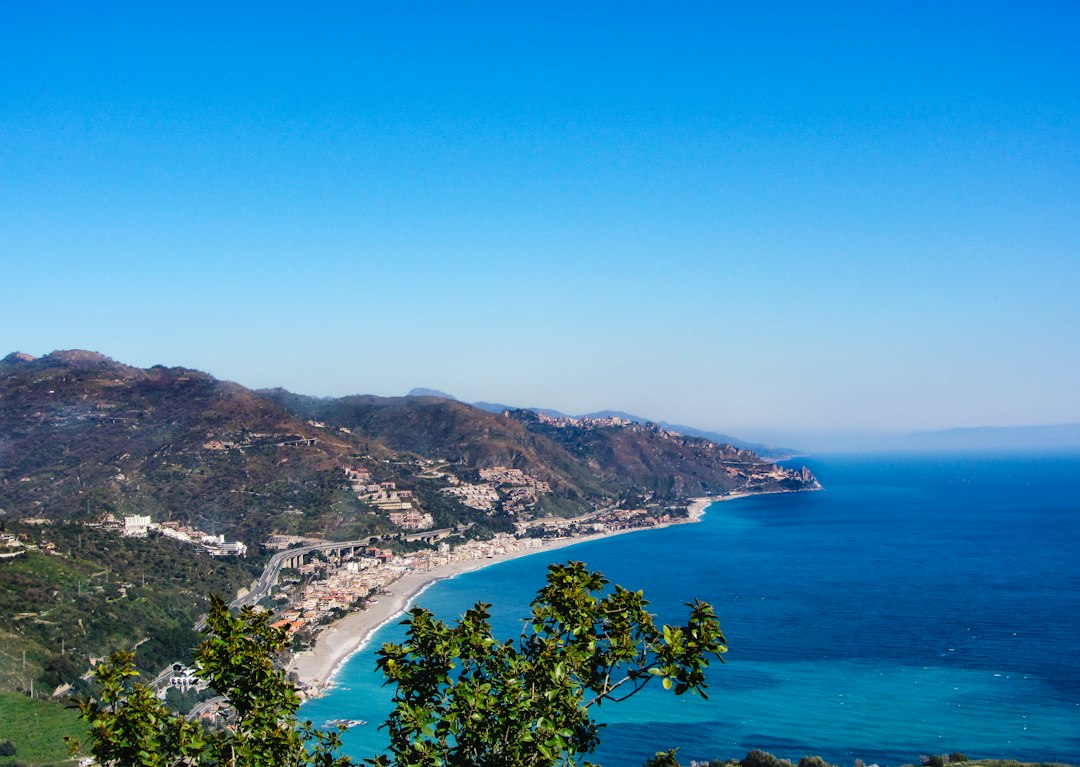
Taormina sits at 204 metres above sea level on Sicily’s east coast, a clifftop town of 10,471 residents that has drawn travellers since the 19th century. The ancient Greek Theatre here — built in the 3rd century BC — frames a jaw-dropping backdrop of Mount Etna across the Ionian Sea. Highway A18 connects it to Messina, just 50 km north, making it one of southern Italy’s most accessible yet dramatically positioned destinations.
Three Things Not to Miss in Taormina
- Teatro Antico di Taormina — A 3rd-century BC Greek theatre with Mount Etna as its living stage backdrop — unmatched in the Mediterranean.
- Isola Bella — A pebble cove nature reserve reached by aerial tramway built in 1992, nicknamed the Pearl of the Ionian.
- Corso Umberto I at Sunset — The 800-metre pedestrian main street lined with baroque archways turns gold at dusk — no filter needed.
Scroll down for our complete travel guide with tips on getting there, where to stay, costs and more.
How to Reach Taormina
How do I get to Taormina?
Fly into Catania Fontanarossa Airport (CTA), 55 km south, then take a direct bus or taxi. In my experience, the Interbus shuttle from CTA to Taormina is the smartest move — it costs around €6-8 and takes roughly 75 minutes, dropping you near the cable car station. Alternatively, trains stop at Taormina-Giardini station on the coast below town, requiring a bus or taxi up the hill. What surprised me: Ryanair and easyJet fly directly into CTA from most major European cities, so international connections are genuinely strong. Avoid arriving by car if you can — parking in Taormina itself is a daily headache.
Which airport is closest to Taormina?
Catania Fontanarossa (CTA) is your airport — 55 km south of Taormina. It handles international routes from London, Berlin, Amsterdam, and most major European hubs year-round, with frequencies spiking between June and September. A second option is Reggio Calabria Airport (REG) on the mainland, roughly 90 km away via the Strait of Messina ferry, but I recommend against it unless you’re already in Calabria. My tip: book CTA arrivals — the road transfer on the A18 motorway is straightforward and the Interbus timetable is reliable. The caveat most guides omit: CTA gets severely congested in July and August, so build a 90-minute buffer into your transfer plan.
How long does the journey to Taormina take from Catania?
Direct bus from Catania Fontanarossa takes 75 minutes on a good day. By taxi or private transfer, expect 50-60 minutes along the A18 motorway, costing approximately €70-90 fixed rate. By train from Catania Centrale to Taormina-Giardini station, it’s around 50 minutes for a fare of roughly €4.90, but then you need a local bus or €10 taxi up the steep hill to the old town. In my experience, the Interbus shuttle is the best balance of price and convenience. The honest warning: summer traffic between Catania and Taormina on weekend afternoons can double journey times — plan arrivals on weekday mornings.
Do I need a car in Taormina?
No — and I actively advise against driving into Taormina’s historic centre. The old town is almost entirely pedestrianised, parking costs €2-4 per hour at the Lumbi car park, and narrow medieval lanes make navigation genuinely stressful. The Interbus network covers routes to Catania, Messina, and Giardini Naxos efficiently. For day trips to Mount Etna or Castelmola, local buses or organised tours costing €35-65 per person work perfectly. The one exception: if you plan to explore remote inland Sicilian towns like Savoca or Forza d’Agrò, a hire car from Catania Airport — around €30-50 per day — genuinely opens up the region. Don’t hire it to park in Taormina though.
Taormina Public Transport Explained
What are the best areas to stay in Taormina?
Stay inside or immediately below the centro storico for the full Taormina experience. Via Roma and the streets flanking Corso Umberto I put you within a 5-minute walk of the Greek Theatre and top restaurants. For sea access without sacrificing town charm, the Mazzarò district at the base of the cable car offers beach hotels with direct Ionian views — ideal if mornings on the water matter to you. Giardini Naxos, 3 km south, is noticeably cheaper and has wider sandy beaches but feels like a different town entirely. In my experience, first-time visitors who stay in Mazzarò miss the magic of Taormina’s clifftop evening atmosphere — I always recommend at least 2 nights up top.
What does accommodation cost per night in Taormina?
Expect a genuine range. Budget guesthouses and B&Bs in the old town start around €70-90 per night in shoulder season. Mid-range hotels like Hotel Victoria or Hotel Condor run €120-180 in June and September. The famous San Domenico Palace, a 14th-century monastery converted into a Four Seasons property, charges upward of €700 per night in peak season — it hosted the G7 summit in 2017. What most guides skip: Giardini Naxos offers equivalent comfort for 30-40% less than Taormina proper. My tip: aim for a room with an Etna-facing terrace — the €20-30 premium over a courtyard room is worth every cent.
How far in advance should I book accommodation in Taormina during high season?
For July and August, book at least 4-5 months ahead — full stop. Taormina’s desirable hotels sell out by March for peak summer, and the town physically cannot expand its room stock given the cliff geography. June and September need 6-8 weeks advance booking for good mid-range options. The Taormina Arte festival in July draws international opera and film crowds, so check those exact dates — prices spike a further 15-25% that week. What surprised me: even October, increasingly popular as a warm shoulder month, now books up fast for weekends. My honest warning: last-minute deals almost don’t exist in Taormina — this isn’t a destination where you can wing accommodation.
Are there special or unique accommodation types in Taormina?
Absolutely — and they’re one of Taormina’s genuine pleasures. Several converted monastery cells near Piazza del Duomo have been turned into boutique rooms with original stone arches and frescoed ceilings, renting from €100-150 per night. The San Domenico Palace (Four Seasons) occupies a full 14th-century Dominican convent with cloistered gardens — historically the most photographed building in Sicily. For something dramatic, cliff-edge villas in the Castelmola hamlet above town rent by the week from €1,500-2,500 with private terraces overlooking both Etna and the Ionian. My tip: search Airbnb for tonnara — old tuna fishing houses converted to apartments near Mazzarò beach — they offer a genuinely local atmosphere rare in Taormina’s tourist-heavy centre.
Neighbourhoods of Taormina
What are the must-see sights in Taormina?
Three are non-negotiable. First, the Teatro Antico (Greek Theatre) — entry costs €10 and it’s the finest ancient theatre view in Europe, with Etna as backdrop. Second, Isola Bella, reached via the 1992 cable car for €3 each way, a tiny nature reserve island connected to the mainland by a narrow pebble bar — arrive before 9am to beat the crowds. Third, Piazza IX Aprile — the main clifftop terrace square framed by Torre dell’Orologio with a free, panoramic view across the bay that genuinely stops you in your tracks. Beyond those three, Castelmola village 5 km uphill and the Palazzo Corvaja (free exterior) reward an extra half-day.
What can I experience for free in Taormina?
More than you’d expect from a premium Sicilian resort town. Corso Umberto I — the 800-metre pedestrian spine of the old town — is a baroque architectural gallery you walk for free. Piazza IX Aprile costs nothing and delivers a sunset view over the Ionian worth far more. The exterior of Palazzo Corvaja, a 15th-century Norman-Arab-Gothic palace, impresses without any entry fee. The public gardens (Villa Comunale) — donated to the town by Florence Trevelyan in the 1800s — offer free entry and extraordinary Etna views from ornate Victorian pavilions. In my experience, an evening passeggiata along Corso Umberto at around 7pm is Taormina at its most authentic and costs exactly €0.
Which day trips from Taormina are possible?
Mount Etna is the star — organised jeep or hiking tours depart daily and cost €35-75 per person depending on altitude reached; the summit crater sits at 3,357 metres. Catania, Sicily’s second city, is 55 km south by bus or train — a 90-minute round-trip day covers the fish market, Piazza del Duomo, and volcanic basalt streets. Savoca and Forza d’Agrò, the villages where Coppola filmed The Godfather scenes, are reachable by car in 20-30 minutes and feel completely untouched. Giardini Naxos — the beach town directly below — is a 10-minute bus ride down. My honest caveat: Taormina is so activity-dense that most travellers underestimate how much the town itself demands — don’t cram more than 2 day trips into a 5-day stay.
What local specialities should I try in Taormina?
Start with arancini — Sicilian rice balls stuffed with ragù or pistachios, available at any rosticceria for €2-3 each. Swordfish (pesce spada) is the local catch of the Strait of Messina — order it at Ristorante La Piazzetta near Piazza del Duomo for around €18-22 a plate. Granita con brioche for breakfast is non-negotiable — Caffè Wunderbar on Piazza IX Aprile serves it where Tennessee Williams and Truman Capote once sat, at roughly €5-6. Bronte pistachios from the slopes of Etna appear in everything from gelato to pasta — a tub of pistachio cream costs about €8 and makes a better souvenir than anything sold in tourist shops.
What to See in Taormina
What makes Taormina unique compared to other Sicilian towns?
The convergence of three things you don’t find together anywhere else: a 3rd-century BC Greek theatre still used for live performances, a permanently visible active volcano (Etna at 3,357 metres) as the backdrop, and a clifftop position 204 metres above a functioning beach resort. Taormina was Sicily’s first purpose-built tourist destination — 19th-century Grand Tour travellers like Goethe referenced it specifically. What this means practically: the infrastructure for international visitors is genuinely polished compared to inland Sicily, but the historic fabric hasn’t been bulldozed for hotels. The honest trade-off: that same 19th-century tourist legacy means Taormina is more expensive and more crowded than almost anywhere else on the island — go in September if you want the atmosphere without the crush.
How many days are worthwhile in Taormina?
3 full days hits the sweet spot — here’s exactly how I’d use them. Day 1: Teatro Antico in the morning (€10 entry), Corso Umberto passeggiata, sunset at Piazza IX Aprile. Day 2: Cable car to Isola Bella before 9am, afternoon at Mazzarò beach, evening dinner in the old town. Day 3: Day trip to Mount Etna (full day, depart 8am). A 4th day allows Catania or the Godfather villages by car. What I warn against: stretching to 5+ days in Taormina itself — the town is small enough that you’ll exhaust its walkable sights by day 3 and start overpaying for atmosphere. Pair it with Syracuse (2 days) and Agrigento (1 day) for a complete eastern Sicily circuit.
When is the best time to visit Taormina?
September is my top recommendation without hesitation. Sea temperatures hit 25-26°C, crowds drop by roughly 40% versus August, hotel prices fall 20-30%, and Etna views are at their clearest. June is a strong second — warm, pre-peak pricing, and long daylight hours. Climate data confirms June, August, September, and October as the best travel months, but August trades ideal conditions for maximum crowding and pricing. October has surprised me with warm swimming conditions and empty Greek Theatre visits — it’s genuinely underrated. Avoid July’s last two weeks unless you’ve pre-booked everything: Taormina Arte festival fills every hotel and Corso Umberto becomes shoulder-to-shoulder.
Are there local festivals worth attending in Taormina?
Taormina Arte in July is the flagship — an international festival of opera, ballet, cinema, and theatre performed inside the ancient Greek Theatre itself, with tickets from €25-120 depending on the production. It’s a genuinely extraordinary experience and worth planning a trip around, but book accommodation 5+ months ahead. The Taormina Film Festival overlaps in late June/early July — screenings under the stars attract European cinema industry figures and a glamorous crowd. In August, the Feast of San Pancrazio (August 23) fills the streets with processions and free open-air food stalls. My honest caveat: these festivals are wonderful but they also represent Taormina at peak saturation — if you hate crowds, treat them as reasons to avoid those exact weeks.
Taormina Food Scene
How does weather affect activities in Taormina throughout the year?
Taormina sits at 204 metres elevation, meaning it’s consistently a few degrees cooler than the coast below — a meaningful difference in August heat. Beach season at Mazzarò and Isola Bella runs practically from May through October. The Greek Theatre is open year-round but winter visits (December-February) can be windy and cold enough to cut short the experience. Mount Etna excursions above 2,000 metres require proper layering even in July — I’ve been cold in a t-shirt up there in August. Spring (March-April) brings wildflowers to the hillsides and zero crowds, but Isola Bella water is 15-17°C — swimmable only for the determined. Rain concentrates in November through January; the town stays open but many restaurants reduce hours.
How crowded does Taormina get in peak season?
Brutally crowded — I won’t sugarcoat it. In August, Corso Umberto I at midday feels like Oxford Street at Christmas: 10,000+ daily visitors funnelled through an 800-metre lane designed for a medieval population. The cable car to Isola Bella runs queues of 45-60 minutes between 10am and 4pm. The Greek Theatre sells out performance nights entirely. Hotel rooms within the walls cost 30-50% more than September. What most guides omit: the parking situation at Lumbi becomes genuinely chaotic on August weekends, creating traffic jams on the access road that delay arrivals by over an hour. If August is your only window, arrive at every sight before 9am — it’s the single most effective crowd-avoidance strategy available.
How safe is Taormina for travellers?
Taormina is extremely safe by any European standard. Violent crime is essentially non-existent in the old town. The main risk is pickpocketing on Corso Umberto I during peak August crowds — I keep my wallet in a front zip pocket there as a matter of habit. The cable car and clifftop walls are all properly maintained. The one genuine hazard: the steep staircases and uneven basalt stone streets cause twisted ankles regularly, especially after evening rain — wear shoes with grip, not sandals. Mazzarò beach has undertow on windy days; heed the flag system. Medical facilities: the nearest hospital is Ospedale San Vincenzo in Taormina itself, adequate for emergencies. The town’s tourist-dependency means locals are broadly helpful to visitors.
Is English widely spoken in Taormina?
Yes — more so than almost anywhere else in Sicily. Taormina’s 150-year history as an international tourist destination means hotel staff, restaurant owners, and most shop workers in the centro storico speak functional to fluent English. At Caffè Wunderbar and restaurants along Via Patricio, menus are routinely in 4 languages. The honest caveat: venture 10 minutes outside the tourist core — to Castelmola or local alimentari — and Italian becomes necessary. Learning 5 key phrases (per favore, grazie, il conto, un tavolo per due, quanto costa) earns disproportionate goodwill even where English is available. In my experience, speaking even broken Italian in Taormina triggers a noticeably warmer response from older locals who remember when visitors made no effort at all.
Local Know-How for Taormina
What is the daily budget for travelling in Taormina?
Budget traveller staying in a hostel dorm or basic B&B: €80-100 per day covering accommodation (€25-35 dorm share), granita breakfast (€5), one sit-down lunch (€15-18), Greek Theatre entry (€10), cable car (€6), and a pizza dinner (€12-15). Mid-range traveller: €150-220 per day with a decent hotel, two restaurant meals, and an Etna tour. Luxury: €400+ once you factor in San Domenico Palace rates and fine dining. What surprises most visitors: drinks at Piazza IX Aprile viewpoint bars cost €8-12 per cocktail — a deliberate location premium. My tip: eat your main meal at lunch (pranzo) when fixed menus run €12-18 for courses that cost €35+ at dinner in the same restaurant.
How does public transport work in and around Taormina?
Three systems matter. First, the Interbus network connects Taormina to Catania Airport (€6-8, 75 min) and Messina (€5, 60 min) with reliable timetables — buy tickets at the bus terminal near Via Luigi Pirandello. Second, Trenitalia trains stop at Taormina-Giardini on the coast, €4.90 from Catania — connecting bus up the hill costs €1.90 and runs every 30 minutes. Third, the aerial tramway (funivia) from the main gate area down to Mazzarò beach costs €3 each way and runs approximately every 15 minutes. Within the old town, everything is on foot — the historic centre is fully pedestrianised. My warning: the last funivia runs around 8pm in summer and 1 hour earlier in winter — miss it and it’s a steep €10 taxi down to the beach hotels.
Which apps do you recommend for visiting Taormina?
Interbus doesn’t have a great app, so bookmark their website for timetables and buy tickets on board or at tabacchi shops. Trenitalia app handles all rail legs — buy in advance for the Catania-Taormina route to skip queues. Google Maps works well in Taormina but Maps.me (offline capable) is my backup when data fails on mountain trails near Etna. TheFork (ElTenedor) lets you book Taormina restaurant tables in advance — critical for July-August evenings at places like Ristorante Al Duomo. Aroundme locates the nearest pharmacy or ATM quickly. For Etna: AllTrails has mapped the main hiking routes with elevation profiles. My honest note: Taormina’s WiFi coverage is strong throughout the centro storico — most cafes offer free access, so an Italian SIM isn’t strictly necessary for a short stay.
Taormina at a Glance
| Population | 10,471 |
|---|---|
| Currency | EUR (€) |
| Official language | Italian |
| Time zone | Europe/Rome |
Source: Wikidata, retrieved September 2026.
Italy › Taormina
More Destinations in Sicily
More Destinations in Italy
Essential Resources for Planning Your Trip to Taormina
- What to see in Taormina, Sicily without a car? — official visitor information
- Wikivoyage: Taormina — community travel guide & practical tips
- Wikipedia: Taormina — history, geography & background
- Taormina Sicily Travel Guide 2026 | Isola Bella, Mount Etna … — how to get there and around
- La Capannina | Italy | Attractions — itineraries & inspiration
Data Sources
Key facts on this page (population, currency, language, time zone) come from Wikidata, climate figures from Open-Meteo. The retrieval date is shown next to the facts table.