
Vanuatu: The Complete Travel Guide (2026)
Last reviewed: August 2026 · key facts checked against Wikidata
Vanuatu Travel Guide: Everything You Need to Know (2026)
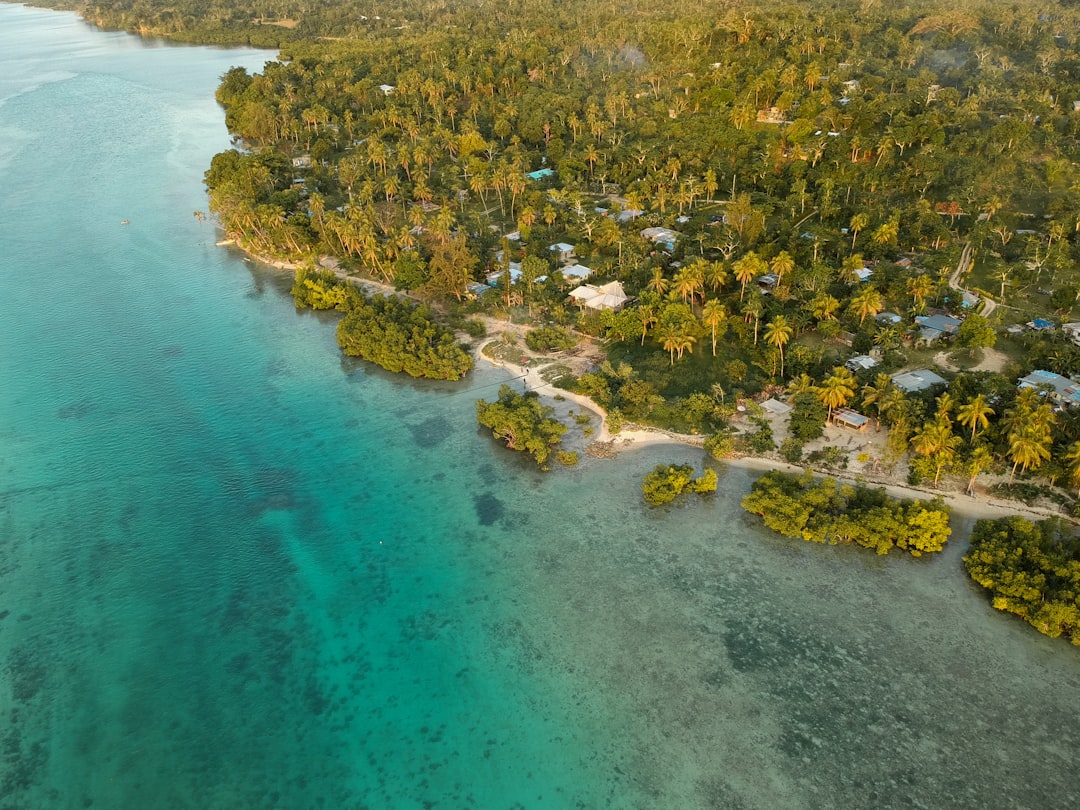
Vanuatu is a South Pacific archipelago of 83 islands stretching over 1,300 km, sitting 1,750 km east of northern Australia with a population of 63,701 on its capital island Efate alone. The country gained independence in 1980 and speaks three official languages — English, French, and Bislama. What most travelers don’t realize: you’re arriving at one of the Pacific’s most geologically active destinations, home to one of the world’s most accessible active volcanoes.
Three Things Not to Miss in Vanuatu
- Mount Yasur Volcano, Tanna — One of the world’s most accessible active volcanoes — you stand at the rim watching lava explosions from just 100 meters away.
- Blue Holes, Espiritu Santo — Freshwater sinkholes of surreal turquoise clarity, fed by underground springs and surrounded by jungle — unlike any beach experience.
- Champagne Beach, Espiritu Santo — Consistently rated among the Pacific’s top 3 beaches — 800 meters of white sand with zero resort development directly on it.
Scroll down for our complete travel guide with tips on getting there, where to stay, costs and more.
Getting to Vanuatu & Getting Around
Which airports are the best entry points into Vanuatu?
Bauerfield International Airport (VLI) in Port Vila, Efate, is the main international gateway — fly here first. In my experience, 95% of international visitors land at VLI, which receives direct flights from Brisbane, Sydney, Auckland, Nouméa, and Fiji. Airlines serving VLI include Air Vanuatu, Qantas, Virgin Australia, and Air New Zealand. A second international airport exists at Pekoa Airport (SON) on Espiritu Santo, receiving occasional regional flights from Nouméa. My tip: unless you’re coming from New Caledonia specifically, route everything through VLI — it has the most reliable connections and all car hire options. What surprised me: Air Vanuatu schedules can change with little notice, so book refundable domestic onward tickets whenever possible.
How do I get from the airport to my first accommodation in Vanuatu?
Bauerfield Airport sits just 6 km from central Port Vila — a taxi takes roughly 15 minutes. I recommend pre-arranging a hotel transfer or using an official airport taxi — fixed fares run approximately 1,500–2,000 VUV (around USD 12–17) into town. There is no public bus directly from the terminal. My tip: agree the price before you get in — meters are not standard in Vanuatu. If your resort is in Erakor or Mele Bay, budget for a slightly longer ride of 20–25 minutes depending on traffic. The caveat most guides skip: arriving on a Sunday means very few taxis wait at the rank — your hotel pickup is essential. Always carry small VUV notes for tipping drivers.
What transport options are there within Vanuatu?
Inter-island travel within Vanuatu runs on domestic flights and ferries. Air Vanuatu operates domestic routes connecting Port Vila to Tanna (30 min), Santo (50 min), Malekula, and Ambae. Fares start around USD 80–120 one way. Minibuses called ’taxis’ or bush taxis operate on Efate for around 150 VUV (USD 1.20) per leg — they run along fixed routes and are the authentic local way to move. On Tanna and Santo, 4WD truck-taxis navigate dirt roads. Ferries like Big Sista connect major islands weekly but take 10–20 hours with basic facilities. What surprised me: there is no rail, no Uber equivalent, and schedules shift constantly — build buffer days into your itinerary. I recommend domestic flights over ferries for time efficiency.
Do I need a rental car in Vanuatu?
On Efate (Port Vila), a rental car genuinely transforms your trip — I recommend it for 4 or more days. The sealed ring road around Efate is 169 km and takes about 3.5 hours uninterrupted, but you’ll want full days exploring. Rental rates start at USD 70–90 per day for a compact; a 4WD costs USD 110–140 and is essential if you’re venturing to Eton Beach or Emaon on unpaved roads. On Tanna, roads are rough volcanic track — hire a local 4WD driver through your lodge rather than self-driving. On Espiritu Santo, a car is needed to reach Champagne Beach (50 km from Luganville). The honest caveat: international driving licences are required, and roadside assistance is essentially non-existent outside Port Vila. Carry a spare tyre.
How good is the public transport network between regions in Vanuatu?
Bluntly: Vanuatu’s inter-regional public transport is unreliable and not suited to tight itineraries. Minibuses on Efate run frequently between Port Vila’s market and Mele for 150 VUV, but beyond the main town they thin out dramatically. Ferry services like Tifitifi and Big Sista cover northern islands but run once or twice weekly on schedules that shift. In my experience, missing a ferry means waiting 5–7 days for the next departure. Domestic flights are far more dependable for island-hopping, though even Air Vanuatu delays flights when load factors are low. My tip: treat all published timetables as aspirational and build 2 buffer days per island hop. The honest trade-off: if you have time flexibility, slow travel by ferry reveals authentic Vanuatu; if you have 10 days or fewer, fly between islands.
Where to Stay in Vanuatu
Which regions of Vanuatu should I stay in?
Stay in Port Vila (Efate) as your base — it has the infrastructure, restaurants, and connectivity to organize everything else. The best accommodation strip runs along Erakor Lagoon and Nambatu, combining lagoon views with walking distance to town. For a volcano experience, stay near the base of Mount Yasur on Tanna — lodges like those in White Grass put you 20 minutes from the crater at sunrise. For diving and remote beaches, base yourself in Luganville on Espiritu Santo — it’s Vanuatu’s second city with real services. What surprised me: Malekula Island is extraordinary for custom culture and almost entirely off the tourist radar, but infrastructure is minimal — bring supplies. I avoid recommending the main tourist strip of Kumul Highway in Port Vila as a stay — it’s loud and lacks character.
What does good accommodation cost per night in Vanuatu?
In my experience, decent mid-range accommodation in Port Vila runs USD 100–160 per night for a bungalow or guesthouse room with air conditioning and breakfast. Budget backpacker dorms cost USD 25–35 at places like those near Nambatu market. Boutique resorts on Efate’s lagoon charge USD 200–350 per night — the trade-off being genuine quality and access to water sports. On Tanna near Yasur, lodges cost USD 60–130 including meals (essential since there are no restaurants near the volcano). On Espiritu Santo in Luganville, mid-range hits USD 80–130. My tip: accommodation outside Port Vila almost always includes meals in the rate — factor that in when comparing apparent prices. Truly budget stays mean guesthouses with shared cold showers for USD 30–50, which are functional but basic.
When should I book hotels in Vanuatu — how far in advance?
For Port Vila outside peak season, 4–6 weeks ahead is sufficient for most mid-range options. However, for July and August (Australian school holiday peak) and Christmas to New Year, I recommend booking 3–4 months in advance — quality resorts on Erakor Lagoon sell out completely. On Tanna, accommodation near Yasur Volcano is extremely limited — fewer than 10 lodges exist near the crater, and I’ve seen them booked solid in August with nothing available for walk-ins. For Espiritu Santo dive packages, book 2–3 months ahead in peak season. The caveat most travelers miss: some small island guesthouses don’t have reliable email or websites — contact through Vanuatu Tourism Office or booking agents who maintain direct phone relationships with properties.
When is the best time to travel to Vanuatu?
September and November are the sweet spots — confirmed by climate analysis and my own experience. These months fall between the dry season peak and the cyclone season, delivering warm temperatures around 25–27°C, lower humidity than summer, and far thinner crowds than July-August. April through June is also solid — rainfall decreases, seas calm, and prices drop after Easter. What surprised me: July and August feel like peak Europe in Port Vila — Australian and New Zealand families dominate and prices spike 20–30%. Avoid January through March firmly — this is cyclone season, and Vanuatu has been devastated by Category 5 storms including Cyclone Pam in 2015. Flights cancel, roads flood, and some outer islands become inaccessible for weeks. My tip: if diving is your priority, October and November offer the best underwater visibility around Santo.
How does peak season affect prices in Vanuatu?
Peak season in Vanuatu runs July through August and the Christmas fortnight — driven almost entirely by Australian and New Zealand school holidays. In my experience, resort rates in Port Vila and Erakor jump 25–40% above shoulder season prices during these windows. A bungalow that costs USD 120 in October will list at USD 165–175 in August. Domestic flight prices also inflate — Air Vanuatu’s Port Vila to Tanna route can double during school holidays. What most guides omit: cruise ship days in Port Vila (the port receives ships 3–4 days per week in peak season) cause surges in market prices and extremely crowded conditions at Ekasup Cultural Village. My tip: check cruise schedules at portvilacruise.com and plan main sightseeing on non-ship days — the difference in experience is dramatic.
Best Time to Visit Vanuatu
Which regions of Vanuatu have different climate zones?
Vanuatu’s 83 islands span 12 degrees of latitude, creating meaningful climate variation. The northern islands — Espiritu Santo, Malekula, and the Banks Islands — are hotter, more humid, and receive 3,000–4,000mm of rainfall annually, with a more defined wet season. Efate and the central islands have a classic tropical climate — warm year-round with a drier period May through October. Tanna in the south is cooler, especially on the high plateau near Yasur — nights can drop to 15°C in July, and the volcano itself sits at 361 meters altitude. What surprised me: the Banks and Torres Islands in the far north receive so much rain that travel there is genuinely difficult outside May–September. The southern island of Aneityum has the mildest, driest climate in the country — ideal for snorkeling.
What are the rainy seasons in Vanuatu?
November through April is cyclone and heavy rain season in Vanuatu — this is when I strongly advise against travel, especially to outer islands. January, February, and March are the worst months: monthly rainfall in northern Vanuatu can exceed 400mm, and cyclones are a genuine threat. Cyclone season officially runs November 1 to April 30. The southern islands tend to see the cyclone impact most severely — Tanna took direct hits in both 2015 and 2022. What most guides understate: even in the ‘dry season’ of June–October, the north can receive heavy afternoon downpours that close dirt roads for hours. My tip: if visiting Espiritu Santo specifically for Millennium Cave trekking, go in August or September when river levels are manageable — high water makes the cave crossing dangerous and sometimes impassable.
What does a trip to Vanuatu cost per person per day?
Budget traveler staying in dorms and eating local: USD 60–80 per day. Mid-range traveler with a private bungalow, one restaurant meal, and activities: USD 150–220 per day. Comfortable resort traveler with guided excursions: USD 300–450 per day. In my experience, the single biggest daily variable is activities — a Mount Yasur night crater visit costs USD 120–150 per person including transfer, and diving at SS President Coolidge wreck costs USD 80–100 per dive. What surprises most visitors: Vanuatu is significantly more expensive than Southeast Asia and comparable to Fiji or the Maldives for mid-range travel, despite its developing-world infrastructure. My tip: cut costs by eating at Port Vila Central Market (meals from USD 3–5) and booking activities directly with local operators rather than through resort concierge desks.
How expensive is food in Vanuatu?
Food costs range dramatically by setting. At Port Vila Central Market, a plate of rice, fish, and local greens costs USD 2.50–4. A mid-range restaurant lunch in the Nambatu waterfront area runs USD 12–20. A full dinner at a quality restaurant like those along Kumul Highway costs USD 25–45 per person without alcohol. Local Bislama eateries called nakamals sell kava and simple food for under USD 5. Supermarkets (Au Bon Marché is the main chain) carry imported goods at inflated prices — a block of cheese costs USD 8–12, and wine from Australia or France runs USD 18–30 per bottle. My honest caveat: imported food is where costs spiral for self-caterers. Stick to local produce — fresh tuna, capsicum, taro, and coconut crab are excellent and affordable at the market.
What hidden costs should I expect when visiting Vanuatu?
The costs that blindside visitors to Vanuatu: First, departure tax of USD 50 is charged at Bauerfield Airport — sometimes not included in flight prices. Second, resort fees of USD 15–25 per night are added by some Efate resorts outside quoted room rates. Third, transfer costs: getting from Port Vila to attractions like Eton Beach (45 km) or Blue Lagoon Efate costs USD 30–60 return without your own car. Fourth, activity mark-ups: booking a Tanna volcano trip through your Port Vila hotel adds 30–50% over local operator prices. Fifth, medical costs — travel insurance is essential; the nearest serious hospital is in Brisbane, 2,700 km away. In my experience, budget an extra USD 30–40 per day beyond your planned spend to cover these gaps. Tipping is not mandatory but appreciated — 200–500 VUV for guides is fair.
What a Trip to Vanuatu Costs
How much cash should I bring to Vanuatu?
Bring USD 300–500 in cash converted to Vanuatu Vatu (VUV) for a 7-day trip, in addition to your card. Outside Port Vila, cash is the only payment method — Tanna, Malekula, and most outer islands have no ATMs and no card readers. In Port Vila, ANZ and Bred Bank ATMs on Kumul Highway are reliable and dispense VUV — withdrawal limits are typically 20,000 VUV (USD 167) per transaction. ATM fees average USD 4–6 per withdrawal. My tip: withdraw enough before leaving Port Vila for your entire outer island stay — I once got stranded on Tanna with insufficient cash and no way to access more. Exchange USD or AUD at Port Vila airport or town banks — airport rates are 3–5% worse than in-town rates. Do not rely on hotels for currency exchange; their rates are poor.
Which credit cards are accepted in Vanuatu?
Visa and Mastercard are accepted at most Port Vila restaurants, resorts, and larger shops — expect a 2–3% surcharge on card transactions, which is standard and non-negotiable. American Express is accepted at a handful of high-end resorts but almost nowhere else. In Luganville on Espiritu Santo, card acceptance is patchier — maybe 60% of businesses take cards. Outside these two cities, cash is essential. My tip: never assume a rural guesthouse or local tour operator takes cards even if their website suggests they do — confirm before you arrive. What surprised me: some dive operators on Santo prefer Australian dollars in cash over VUV, since they import equipment from Australia. Carry a mix of VUV for daily spending and AUD or USD as backup for larger transactions. Contactless payment is available in Port Vila’s main supermarkets.
Which regions of Vanuatu must I not miss?
Three regions are non-negotiable. First: Tanna Island — the volcano at Yasur is genuinely one of the world’s great natural experiences and nothing I’ve seen elsewhere compares. Second: Espiritu Santo — combines the SS President Coolidge wreck dive (one of the top 5 dive sites globally, at 21–73 meters depth) with Champagne Beach and the Blue Holes. Third: Efate itself — most people dismiss Port Vila as a stopover, but the Blue Lagoon at Pango and the island ring road reveal a beautiful, accessible version of Vanuatu. What I’d skip on a short trip: the Banks Islands and Torres Group — stunning but require 3+ extra days of logistics for incremental reward. Malekula is worth adding for a 14-day+ itinerary if traditional culture is your priority.
What are the tourist highlights in Vanuatu?
The headline attractions are: Mount Yasur Volcano on Tanna — lava explosions visible from the rim at distances of under 100 meters; SS President Coolidge near Luganville — a 196-meter WWII troop ship sunk in 1942 and now the world’s most accessible large wreck dive; Champagne Beach on Santo — consistently ranked among the Pacific’s finest stretches of sand; Blue Holes (both Efate and Santo) — freshwater sinkholes of extraordinary clarity; and Ekasup Cultural Village outside Port Vila for kastom ceremony demonstrations. What surprised me: land diving on Pentecost Island — men jump from 30-meter wooden towers with vines tied to their ankles, the origin of bungee jumping — runs April through June only and costs USD 200–250 per person including transport.
What experiences in Vanuatu are found nowhere else on earth?
Three experiences are genuinely unique to Vanuatu. First: Naghol land diving on Pentecost Island — towers up to 30 meters high, vine bungee jumping performed as a yam harvest ritual, practiced since the 12th century. This is the original bungee jump and runs only April to June. Second: standing at the active rim of Mount Yasur at night and watching lava bombs arc into the sky — it’s legally accessible in a way no other active volcano on earth is. Third: kava culture — Vanuatu produces the world’s strongest kava (noble varieties with kavalactone content 30% higher than Fiji varieties), and drinking it in a traditional nakamal in darkness with local men is a ritual with no equivalent elsewhere. In my experience, these three experiences alone justify the journey from anywhere.
Regions & Highlights of Vanuatu
Which areas of Vanuatu are overcrowded — what are quieter alternatives?
Port Vila’s waterfront strip and Mele Cascades are the most tourist-saturated spots — on cruise ship days (3–4 per week August through October), Mele Cascades receives 800+ visitors and feels like a theme park. My alternative: Eton Beach on Efate’s east coast — equally beautiful black-sand shore with a fraction of the visitors and a local village atmosphere. On Tanna, Yasur at peak midday hours gets crowded with tour groups; go at sunrise (6:00–7:30am) when you’ll likely share the crater rim with fewer than 10 people. Champagne Beach on Santo gets busy when cruise ships tender in — those occur 2–3 times monthly and are listed in advance. The quietest corners: Ambrym Island for volcanic landscape and black magic culture — extraordinary but requires planning and 2 extra travel days from Port Vila.
How many days do I need in Vanuatu?
10–12 days is the minimum to do Vanuatu justice across three islands. In my experience, the ideal breakdown is: 3 days Port Vila/Efate (ring road, Blue Lagoon, local food market); 3 days Tanna (Yasur volcano, kastom villages, Whitegrass plateau); 4 days Espiritu Santo (President Coolidge dive, Champagne Beach, Millennium Cave, Blue Holes). If you only have 7 days, do Port Vila plus either Tanna or Santo — not both. The honest caveat: domestic flight connections eat half a day each way, and delays are common. Do not plan a 5-day trip expecting to see three islands — you’ll spend most of your time in airports and transit. For land diving on Pentecost, add 2 dedicated days on top of your base itinerary between April and June.
Do I need a visa to enter Vanuatu?
No visa required for most nationalities — citizens of 60+ countries including Australia, New Zealand, UK, USA, Canada, EU nations, and Japan receive a 30-day visa-free stamp on arrival at Bauerfield Airport. Extensions to 60 days can be applied for at the Immigration Department on Kumul Highway in Port Vila for a fee of approximately USD 50. Your passport must be valid for at least 6 months beyond your departure date — this is strictly enforced. What most guides don’t mention: Vanuatu runs a Citizenship by Investment program (one of the world’s cheapest at around USD 130,000), which means you’ll encounter marketing for it at the airport. My tip: always carry a printed copy of your onward flight — immigration officers do occasionally ask for proof of departure, especially for travelers arriving without hotel bookings.
What languages are spoken in Vanuatu?
Vanuatu has 3 official languages: Bislama (the national creole), English, and French — a direct legacy of its joint British-French colonial administration called the Condominium until independence in 1980. In practice, Bislama is what everyone speaks daily — it’s a creole English base that’s surprisingly easy to pick up: ‘Tangkyu tumas’ means thank you very much. In Port Vila, English is spoken well in tourism contexts. On the French-influenced islands — Tanna, Malekula, and parts of Santo — French is more prevalent in schools and government. Additionally, Vanuatu has over 100 indigenous languages across its islands — the highest language density per capita of any country on earth. My tip: learning 10 Bislama phrases wins enormous goodwill — locals genuinely light up when visitors try.
What cultural rules do I need to know before visiting Vanuatu?
Respect kastom (custom) law — it is legally binding on traditional land. Before entering any village on Tanna, Malekula, or outer islands, ask permission from the chief and pay a small kastom fee of 200–500 VUV. Photographing people, ceremonies, or sacred sites without explicit permission is a serious offense and will cause genuine conflict. Women should carry a sarong — remote villages expect covered shoulders and knees, and even in Port Vila, modest dress is respected outside beach areas. Kava nakamals are male-dominated spaces in outer islands; women entering without invitation is inappropriate. What surprised me: Sunday is deeply observed even in Port Vila — most local businesses, markets, and some restaurants close entirely. Plan your arrival day and first 24 hours around this. My tip: small gifts — pens, notebooks, or fishing line — are far more appreciated than money in villages.
Practical Tips for Vanuatu
How safe is Vanuatu for travelers?
Vanuatu is one of the safer destinations in the Pacific — violent crime against tourists is rare. Port Vila has petty theft in the markets around the main bus terminal and along the waterfront after dark; keep bags zipped and phones pocketed. The Nambatu and Kumul Highway central area feels safe at night for restaurant dining. What the safety guides consistently understate: the main dangers are natural and infrastructural. Roads on Tanna are genuinely dangerous in rain — cliff-edge tracks with no barriers, driven fast by local truck-taxis. Yasur Volcano occasionally has increased activity requiring evacuation — check the Vanuatu Meteorology and Geo-Hazards Department (VMGD) alert level before visiting (Level 2 is normal for visits; Level 3 means stay back). Water safety: currents around Hideaway Island are unpredictable. Travel insurance with medical evacuation cover is non-negotiable.
What health precautions should I take before visiting Vanuatu?
Malaria prophylaxis is recommended for all outer islands — Efate (Port Vila) itself is considered lower risk but not zero. Consult a travel doctor 6–8 weeks before departure. Recommended vaccinations: Hepatitis A, Typhoid, Tetanus, and Hepatitis B. Dengue fever is present year-round — long sleeves at dawn and dusk and DEET-based repellent are essential, especially during wet season. Tap water in Port Vila is generally treated but I always drink bottled water (500 VUV for a 1.5L bottle). The critical health caveat most guides avoid: the nearest facility for serious trauma or surgery is Brisbane, a 2.5-hour medical evacuation flight. Port Vila’s Vila Central Hospital handles emergencies but has limited surgical capacity and no ICU to international standards. Travel insurance with USD 500,000 evacuation cover minimum is not optional — it’s essential. Pack a basic medical kit including oral rehydration salts.
What SIM card or eSIM options are available in Vanuatu?
Digicel Vanuatu is the dominant carrier — buy a SIM at the airport arrivals hall or Digicel store on Kumul Highway for approximately USD 3–5 including a starter credit. Top-up bundles offering 3GB data for 7 days cost around USD 10–12. A second carrier, TVL (Telecom Vanuatu Limited), exists but has inferior coverage outside Port Vila. eSIM options: Airalo and Holafly both offer Vanuatu eSIM plans starting around USD 12 for 1GB. Coverage on outer islands is patchier — Tanna and Santo have reasonable Digicel signal near main towns but zero signal in jungle interiors and near the Yasur crater. What surprised me: some remote lodge areas have Wi-Fi via satellite that’s more reliable than mobile data. My tip: download offline maps for Efate, Tanna, and Santo on Maps.me before departing Port Vila.
Which apps do you recommend for traveling in Vanuatu?
My essential app list for Vanuatu: Maps.me with offline Vanuatu maps downloaded before leaving Port Vila — Google Maps’ rural coverage is poor. VMGD App (Vanuatu Meteorology and Geo-Hazards Department) for volcano activity alerts and cyclone warnings — check it daily on Tanna. XE Currency for live VUV conversions — the rate fluctuates against AUD and USD. WhatsApp is universally used in Vanuatu for communication — local tour operators and guesthouses exclusively use it; email responses can take 3–5 days while WhatsApp gets answered in minutes. Air Vanuatu’s website (not an app) for checking domestic flight status — changes happen with 2–3 hour notice. For diving on Santo: DAN Bouyancy App for dive planning. The honest caveat: data speeds outside Port Vila are slow — download everything you need before leaving Kumul Highway’s 4G zone.
What are common traveller mistakes in Vanuatu?
In my experience, these are the mistakes I see repeatedly. First: not pre-booking Tanna accommodation — arriving without a booking means sleeping in your hire car. Second: trying to do Port Vila, Tanna, and Santo in 7 days — the logistics defeat you and you see nothing properly. Third: ignoring volcano alert levels — I’ve watched tourists push past Level 3 barriers at Yasur and it is genuinely dangerous. Fourth: booking all activities through resort concierge — you pay 30–50% more than booking directly with local operators. Fifth: not carrying VUV cash for outer islands — card machines don’t exist outside the two main cities. Sixth: arriving in January or February during cyclone season and being stranded when flights cancel. Seventh: underestimating the sun — equatorial UV at this latitude causes burning in under 20 minutes — reef-safe SPF 50 and a rash vest for water activities are non-negotiable.
Vanuatu at a Glance
| Population | 300,019 |
|---|---|
| Currency | Vanuatu vatus (VT) |
| Official language | Bislama, French, English |
| Time zone | UTC+11:00 |
Source: Wikidata, retrieved August 2026.
Essential Resources for Planning Your Trip to Vanuatu
- Vanuatu Tourism Office – Vanuatu Islands: Discover Pacific … — official visitor information, passes & events
- Wikipedia: Vanuatu — history, geography & background
- Wikivoyage: Vanuatu — community travel guide & practical tips
- Vanuatu travel – Lonely Planet | Australia & Pacific — expert itineraries & travel inspiration
- THE 15 BEST Things to Do in Vanuatu (2026) — hotels, restaurants & traveller reviews
- Vanuatu International Travel Information — how to get around
- Numbeo: Cost of Living in Vanuatu — current prices & cost comparison
- Timeanddate: Vanuatu Weather & Climate — forecasts & climate statistics
More Perspectives on Vanuatu
- Vanuatu Travel Guide (Updated 2026)
- Vanuatu Islands: Discover Pacific Paradise & Adventure
- Vanuatu Travel Advice & Safety
Vanuatu Travel Videos
Watch these videos for a visual preview before your trip:
- Vanuatu Vacation Travel Guide | Expedia
- Vanuatu Travel Guide: Everything You Need to Know
- 1 Week in Vanuatu TRAVEL GUIDE – Blue Lagoons and Remote Beaches
Vanuatu Travel Discussions on Reddit
Real traveller experiences and community advice:
- Have you ever been to Vanuatu? Is it a popular vacation …
- All you need to know about Vanuatu, before travelling there …
- r/vanuatu
Data Sources
This page was compiled using data from Wikipedia, Wikidata, Open-Meteo (climate), Numbeo (cost of living) and REST Countries. Information is updated regularly.