
Le Havre: The Complete Travel Guide (2026)

Le Havre Travel Guide: Everything You Need to Know (2026)
Le Havre sits at the mouth of the Seine on the English Channel, a city of 172,074 people rebuilt almost entirely after WWII bombing and designated a UNESCO World Heritage Site in 2005 for Auguste Perret’s radical concrete architecture. Founded in 1517 by Francis I, it remains France’s largest container port and a genuine working-class port city that most Paris-bound tourists fly straight past — their loss entirely.
Top 3 Highlights at a Glance
- MuMa – Musée d’Art Moderne André Malraux — The glass-and-steel ‘eye’ building holds France’s second-largest Impressionist collection after the Orsay, including 200+ Boudin works.
- Saint-Joseph Church — Perret’s 107-metre concrete tower-lantern floods the interior with 12,768 coloured-glass panels — nothing else looks like it in France.
- Les Bains des Docks — Jean Nouvel’s geometric public swimming complex in the old docks is a masterpiece of contemporary architecture open year-round.
Scroll down for our complete travel guide with tips on getting there, where to stay, costs and more.
Arrival & Airport
How do I get to Le Havre?
Take the direct train from Paris Saint-Lazare — it’s the easiest and most practical option. SNCF intercity trains run the route in 2 hours 10 minutes, with tickets from €15 booked in advance on the SNCF Connect app. My tip: buy at least 3 weeks ahead for the cheapest fares. From Rouen, the journey is just 50 minutes. By car from Paris, the A13/A29 motorway takes roughly 2 hours 15 minutes depending on traffic. There is no high-speed TGV service directly to Le Havre, which surprises many visitors — the intercity line is comfortable but not fast. What surprised me: the train arrives right into the city centre at Gare du Havre, meaning no onward transfer needed.
Which airport is closest to Le Havre?
Octeville-sur-Mer Airport (LEH) is the local airport just 10 km from the city centre, but it handles almost no commercial passenger flights — don’t rely on it. In my experience, the realistic options are Rouen Airport (URO) at 85 km or Paris Charles de Gaulle (CDG) at 200 km. CDG is served by every major carrier and is where I always fly in. From CDG, a direct SNCF train via Paris Saint-Lazare takes around 3 hours total, costing €30–€55. There are also direct coach services from CDG operated by FlixBus for around €15–€25, but they take closer to 3 hours 30 minutes. The honest caveat: Le Havre’s lack of a functioning commercial airport is its biggest transport weakness.
How long does the journey to Le Havre take from Paris?
By direct train from Paris Saint-Lazare, the journey takes exactly 2 hours 10 minutes to 2 hours 25 minutes depending on the service. I recommend the non-stop ‘Intercités’ trains over the ones stopping at Rouen and Yvetot, which add 20 minutes. By car, expect 200 km and roughly 2 hours 15 minutes on the A13 motorway, but Paris ring-road congestion can push that past 3 hours on weekday mornings. FlixBus from Bercy Seine coach station takes around 3 hours for as little as €5 if booked weeks out. My honest trade-off: the train is faster and drops you centrally, but if you plan to explore Normandy’s coast beyond Le Havre, driving gives you freedom that public transport simply cannot match.
Do I need a car in Le Havre?
No — for Le Havre city itself, a car is unnecessary and parking is genuinely irritating. The entire UNESCO-listed Perret district and the waterfront are walkable within 20 minutes of the train station. My tip: arrive by train, explore on foot and by the local LiA bus network, and only rent a car if you plan day trips to Étretat (30 km north) or Honfleur (60 km east). Car rental at the station from Europcar or Hertz costs around €40–€70 per day. The warning most guides omit: Le Havre’s port road infrastructure is designed for trucks, not tourists — driving through the industrial zones is stressful and poorly signposted for visitors. If the Alabaster Coast is your goal, rent a car for just 1–2 days.
City Transport
What are the best areas to stay in Le Havre?
Stay in the Centre Perret — the UNESCO-listed rebuilt city grid between the train station and the waterfront. This puts you within 10 minutes’ walk of MuMa, Saint-Joseph Church, and the ferry terminal. My experience: the Boulevard François 1er corridor has the best mix of hotels and restaurants without being purely tourist-facing. The Quartier Saint-François near the old docks is the most atmospheric neighbourhood, with the lighthouse and Les Bains des Docks nearby. Avoid booking in the peripheral residential zones like Caucriauville — they’re far from everything interesting and taxi rides add up fast. For sea views, hotels facing the Bassin du Commerce or the Plage du Havre are worth the small premium. The beach-facing Boulevard Albert 1er strip is pleasant but slightly isolated from the cultural core.
What does accommodation cost in Le Havre?
Le Havre is meaningfully cheaper than Paris. A solid 3-star hotel in the Centre Perret costs €75–€110 per night for a double room. Budget travellers can find clean 2-star options near the station for €55–€75. The top address is the Hôtel Pasino Le Havre, a 4-star with casino attached, running €130–€180 per night. What surprised me: there are almost no true luxury hotels here — this is a working port city, not a resort. Self-catering apartments via Airbnb around Quartier Saint-François run €60–€90 per night for a one-bedroom. My honest caveat: during the Normandie Impressionniste festival years (biennial event) or Armada de Rouen overflow weekends, prices jump 30–40% and availability drops fast — book 3 months ahead for those dates.
How far in advance should I book accommodation in Le Havre during high season?
For July and August, book 6–8 weeks in advance minimum — Le Havre fills up faster than most mid-size French cities because it sits on the Normandy tourist circuit and receives cruise ship passengers from its ferry terminal. My tip: June is the sweet spot — the best travel month based on climate data, and hotels are 15–20% cheaper than July with better availability. For the Armada de Rouen tall ships festival (held every 4–5 years), book 6 months ahead — the entire Seine valley sells out. The warning most guides skip: the city receives a significant number of P&O and Brittany Ferries passengers from the UK who book local hotels as a buffer night — this absorbs inventory fast in peak periods. Booking directly with the hotel often saves €10–€15 over OTA platforms.
Are there special accommodation types worth trying in Le Havre?
Yes — staying in a Perret-era apartment converted to a holiday rental is genuinely unique to Le Havre. These 1950s concrete buildings with their distinctive modular facades are listed UNESCO heritage, and waking up inside one gives context that no hotel can. Find them through Airbnb or Abritel in the Rue de Paris and Boulevard de Strasbourg areas for €60–€85 per night. My tip: the Hôtel Vent d’Ouest is a charming 3-star boutique with maritime-themed rooms and excellent breakfast for around €95 — it punches well above its price. What surprised me: there are no youth hostels with serious infrastructure in the city centre; the nearest HI hostel is in Étretat, 30 km away. For ferry travellers catching an early morning departure, hotels near the Gare Maritime on the Quai de Southampton save a taxi fare.
Accommodation & Neighbourhoods
What are the must-sees in Le Havre?
Three non-negotiable sights: MuMa (André Malraux Museum of Modern Art) with its extraordinary Impressionist collection including 200+ Boudin paintings — entry is €8, free on the first Sunday of each month. Saint-Joseph Church, Perret’s 1951 concrete masterpiece with its 107-metre tower flooding the interior with coloured light — free to enter. And the Appartement Témoin, a preserved 1950s show-flat inside a Perret building that reveals exactly how post-war reconstruction was meant to be lived — tickets €6. My honest addition: the waterfront Plage du Havre, a real city beach stretching 2 km right next to the port, is completely free and genuinely surprising for a working industrial city. Skip the Château-Musée — it’s underwhelming relative to the time it costs.
What can I experience for free in Le Havre?
More than you’d expect from a French city. The entire Perret UNESCO district is free to walk and photograph — I spent half a day just mapping the architectural details of the street grid on foot. Saint-Joseph Church entry is free. The Plage du Havre is a free, clean urban beach. The Signal lighthouse and the old Quartier Saint-François are free to explore. MuMa offers free entry on the first Sunday of every month. The Jardins Suspendus — hanging gardens on the old Sainte-Adresse fort hillside — are free and give the best panoramic view over the port and estuary. My tip: the port itself runs free public viewing areas along the Quai de Southampton where you can watch container ships from close range — oddly thrilling, and something most guide books never mention.
Which day trips from Le Havre are worth doing?
Étretat is the unmissable day trip — the iconic chalk cliff arches are 30 km north and reachable by LiA bus No. 24 in 45 minutes for €2.50. Go on a weekday morning to beat the crowds that pack the clifftop path by noon in summer. Honfleur is 60 km east across the Normandy Bridge — no direct public transport, so rent a car or join a guided tour from Le Havre; it’s utterly worth it. Rouen is 85 km by train in 50 minutes (from €12) and pairs perfectly with Le Havre for a 2-city Normandy loop. My honest caveat: D-Day beaches from Le Havre are 130–180 km away — technically doable in a day but genuinely exhausting; better to base yourself in Bayeux for those.
What local specialities should I try in Le Havre?
Order sole normande — sole poached in cream, mussels, and shrimp — at least once; it’s the defining dish of this coastline. The port means seafood is genuinely fresh: moules marinières served in the Quartier Saint-François restaurants cost €12–€16 for a generous pot. Teurgoule is a Norman spiced rice pudding that locals still eat seriously. Le Havre has its own aperitif culture around calvados (apple brandy) and pommeau (apple aperitif) — order either at a bar on Rue Victor Hugo for €4–€6. My tip: avoid the overpriced tourist brasseries on the waterfront promenade and instead eat at the weekday lunch menus in restaurants off Place de l’Hôtel de Ville — a 3-course formule with wine runs €15–€19. The city’s immigrant communities also mean genuinely good Vietnamese and West African restaurants, reflecting Le Havre’s port history.
Highlights & Must-Sees
What makes Le Havre unique compared to other French cities?
Le Havre is the only city in France — possibly in Europe — where an entire post-war urban reconstruction by a single architect holds UNESCO World Heritage status. Auguste Perret’s 1945–1964 grid isn’t just history; it’s a living city where people shop, commute, and raise families inside heritage buildings. What surprised me deeply: Le Havre has no medieval old town — it was obliterated in September 1944 — so instead of Gothic churches and cobblestones, you get a radical modernist experiment in concrete and light. The city is also France’s largest container port, meaning the scale of the industrial landscape right beside a public beach and modern architecture museum creates a visual tension found nowhere else in France. It is proudly unglamorous, and that honesty is exactly what makes it compelling.
How many days are worthwhile in Le Havre?
2 full days covers Le Havre’s highlights thoroughly without padding. Day 1: walk the Perret district in the morning, visit MuMa (budget 2 hours), lunch in Quartier Saint-François, afternoon at Saint-Joseph Church and the Appartement Témoin. Day 2: morning at Les Bains des Docks or the Jardins Suspendus, afternoon day trip to Étretat by bus. My honest caveat: a 3rd day starts to feel stretched unless you’re genuinely passionate about mid-century architecture. If you’re touring Normandy, Le Havre works perfectly as 1 night + 1 full day combined with Honfleur and Étretat in a wider loop. What I’d never do: treat it as a half-day stop — the city rewards slow walking and genuine curiosity, and rushing through gives a falsely industrial impression.
What is the best time to visit Le Havre?
June is the optimal month based on Le Havre’s climate data — long daylight hours, the beaches are usable, tourist crowds are lighter than July–August, and hotel prices are 15–20% lower. July and August are warm and lively but the city fills with French domestic tourists and UK ferry arrivals. My experience: May is nearly as good as June — the Jardins Suspendus and cliffside walks are beautiful in late spring. Avoid November through February if possible — Le Havre’s seafront position on the English Channel means persistent wind, rain, and grey skies that make the concrete architecture feel genuinely bleak. The city’s flat elevation at 2 metres above sea level means no altitude buffer against Channel weather. Spring and early summer is when Le Havre is at its most compelling.
Are there local festivals in Le Havre worth attending?
Les Escales du Cargo is Le Havre’s standout annual cultural festival — a world music event held in September along the docks, free to attend, attracting around 25,000 visitors over three days. My tip: it’s one of the best free music festivals in northern France and almost unknown outside the region. The biennial Normandie Impressionniste festival (next edition 2026) transforms the city with exhibitions linking the port’s visual heritage to the Impressionist movement — genuinely exceptional programming. The Armada de Rouen tall ships race occasionally stops at Le Havre and draws enormous crowds. Le Havre en Lumières is a December light-projection event mapping Perret’s facades — free, atmospheric, and perfectly suited to the architecture. Check lehavretourisme.com for exact 2026 dates before booking.
Food & Drink
How does the weather in Le Havre affect activities?
Le Havre sits directly on the English Channel at 2 metres elevation with no natural windbreaks — wind is a constant reality, even in summer. The beach and cliff walks at Étretat are best in calm weather, so morning visits before sea breezes pick up are smarter. What surprised me: even on overcast days, MuMa and the indoor architectural sights make Le Havre completely viable as a bad-weather destination — in fact, the dramatic cloud light over Perret’s concrete is genuinely beautiful. Summer sea swimming at Plage du Havre is realistic in July–August (water temperature around 18–19°C) but cool by Mediterranean standards. Rain is distributed fairly evenly year-round; a packable waterproof jacket is non-negotiable kit. My honest caveat: the city’s Channel exposure means weather forecasts change fast — always check the morning of planned cliff walks.
How crowded does Le Havre get in peak season?
Far less crowded than Honfleur or Mont-Saint-Michel — Le Havre’s working-port identity keeps mass tourism at bay even in peak July and August. The main pressure point is Étretat, which you visit as a day trip and which genuinely becomes overwhelmed by noon in summer. Within Le Havre itself, MuMa can have a 30-minute queue on summer weekends — arrive at opening (11:00) to walk straight in. The Plage du Havre gets busy on hot weekends but stretches 2 km so there’s always space. My experience: even in August, you can walk the Perret streets in relative peace compared to any comparable French heritage town. The UK ferry traffic adds a specific wave of arrivals on Thursday and Sunday evenings — hotel restaurants near the Gare Maritime feel noticeably busier on those nights.
How safe is Le Havre?
Le Havre is safe for tourists in all the areas you’re likely to visit. The Centre Perret, Quartier Saint-François, and the waterfront are active and well-lit with no serious risk. My honest caveat: like all French port cities, Le Havre has peripheral neighbourhoods — particularly Quartier de l’Eure and parts of Mont-Gaillard — where petty theft and social tensions exist, but tourists have zero reason to visit those areas. Pickpocketing risk in the city centre is lower than in Paris but apply standard precautions in the market at Place du Général de Gaulle. What surprised me: the city has a strong working-class community culture that makes random street harassment rare. At night, the central bar and restaurant zone around Rue Victor Hugo is lively and entirely safe until well past midnight.
Is English widely spoken in Le Havre?
More than in most French cities of its size — the port’s history of receiving British and international ships creates a practical English familiarity. Staff at hotels, major museums like MuMa, and the tourist office on Quai de Southampton all speak functional to good English. My honest experience: in local restaurants off the main tourist circuit, especially around Place de l’Hôtel de Ville, menus are French-only and English may be limited — carry Google Translate or a menu photo translator. The ferry terminal staff are bilingual by necessity. What surprised me: many young Havrais in the bar scene around Rue Jules Lecesne are happy to switch to English and curious about foreign visitors — this isn’t a city exhausted by tourism. Attempting even basic French is genuinely appreciated and opens doors faster than in Paris.
Practical Tips
What is the daily budget for Le Havre?
Budget traveller: €65–€80 per day covering a 2-star hotel (€55–€65), self-catering breakfast, a cheap lunch formule (€12–€15), one museum entry (€6–€8), and a simple dinner (€16–€20). Mid-range: €120–€160 per day with a 3-star hotel (€85–€110), two proper restaurant meals, and transport to Étretat. My tip: the city’s biggest budget advantage is that its top sights — the Perret district, Saint-Joseph Church, the beach, Jardins Suspendus — are all free. Le Havre is measurably cheaper than Rouen and dramatically cheaper than Paris; a sit-down lunch here costs roughly 30% less than the same quality meal in the 6th arrondissement. The honest caveat: wine and calvados at port-city bars is priced for locals, not tourists — €4–€6 per glass is realistic and fair.
How does public transport work in Le Havre?
The LiA network (Ligne en Île) operates buses and the tramway line T running from the train station through the city centre to the beach. A single ticket costs €1.70, a 10-trip carnet €13.50. My tip: the tram covers the key axis perfectly — Gare du Havre to Plage in 12 minutes. Bus No. 1 and No. 5 serve the main cultural sights. The Vélolib-style bike share called Le Vélo offers 30-minute free rides on the first use and costs €1 per hour after that — entirely adequate for the flat city centre. What surprised me: Le Havre’s street grid is so logical (Perret designed it on a strict module) that once you understand the Rue de Paris spine running north-south, orientation becomes effortless. Download the LiA app for real-time bus tracking.
Which apps do you recommend for visiting Le Havre?
SNCF Connect — non-negotiable for booking trains from Paris or Rouen; book here before any third-party site. LiA (the local transport app) for real-time bus and tram tracking within the city. Google Maps works reliably for walking navigation — Le Havre’s grid is easy but the port roads are confusing without it. Too Good To Go is actively used by Le Havre’s bakeries and restaurants — I picked up a €3.99 magic bag worth €12 of pastries from a boulangerie near Rue Jules Lecesne. Outdooractive or Komoot for planning the cliff walks near Étretat and the coastal path. My honest caveat: Le Havre has no dedicated tourist app worth downloading — the official Tourisme Le Havre website is better accessed via mobile browser than any app. Keep XE Currency on hand since the euro symbol (€) should be your default but exchange rate awareness matters for UK visitors crossing from Portsmouth.
More Destinations in Europe
Explore our complete travel guides for more Europe destinations: Annecy Travel Guide (2026), Limousin Travel Guide (2026), Besançon Travel Guide (2026), Île dOléron Travel Guide (2026), Rome Travel Guide (2026).
Useful Resources for Planning Your Trip to Le Havre
- Wikipedia: Le Havre — history, geography and background
- Lonely Planet: Le Havre — itineraries and travel inspiration
- TripAdvisor: Le Havre — hotels, restaurants and traveller reviews
🎥 Le Havre Travel Videos
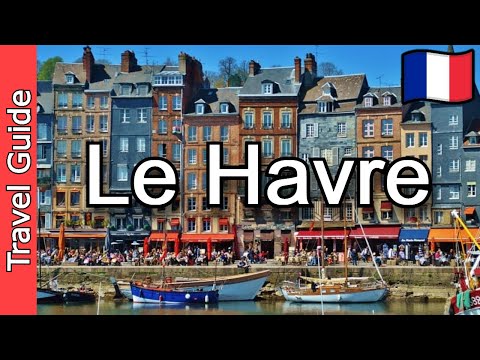
Le Havre, France 🇫🇷 Travel Guide: 20 Must Visit Spots in Le Havre!
Destination Perfect
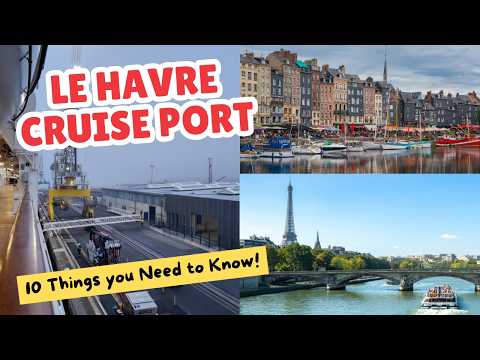
Le Havre Cruise Port Guide : 10 Things YOU NEED to Know!
Solo Travel 1974

Is Le Havre worth visiting? Should you explore or take an excursion…
McNally-Vine Cruises
You are currently viewing a placeholder content from Vimeo. To access the actual content, click the button below. Please note that doing so will share data with third-party providers.
More InformationYou are currently viewing a placeholder content from YouTube. To access the actual content, click the button below. Please note that doing so will share data with third-party providers.
More InformationYou need to load content from reCAPTCHA to submit the form. Please note that doing so will share data with third-party providers.
More InformationYou are currently viewing a placeholder content from GetYourGuide. To access the actual content, click the button below. Please note that doing so will share data with third-party providers.
More Information