
Reims: The Complete Travel Guide (2026)

Last reviewed: September 2026 · key facts checked against Wikidata
Reims Travel Guide: Everything You Need to Know (2026)
Reims, home to 182,592 residents, sits 129 km northeast of Paris on the Vesle river and has crowned 33 French kings inside its Gothic cathedral. Founded by the Gauls and later a Roman city called Durocortorum, it became the undisputed capital of Champagne — both the wine and the historic region. Today it pairs one of France’s greatest medieval monuments with some of the finest Champagne house cellars on the planet.
Top 3 Highlights at a Glance
- Cathédrale Notre-Dame de Reims — One of Europe’s finest Gothic cathedrals, with over 2,300 original sculpted figures on its west facade alone.
- Champagne House Cellars (Veuve Clicquot & Taittinger) — Miles of UNESCO-listed chalk tunnels beneath the city, some stretching 18 km, store millions of ageing bottles.
- Palais du Tau — The former archbishop’s palace directly beside the cathedral holds original royal coronation treasures dating to Clovis I.
Scroll down for our complete travel guide with tips on getting there, where to stay, costs and more.
Arrival & Airport
How do I best get to Reims?
The fastest option is the TGV from Paris Gare de l’Est, arriving at Reims Centre station in 45 minutes and costing around €20–€35 booked in advance on SNCF. I recommend this over driving — parking in central Reims is genuinely frustrating near the cathedral. From Charles de Gaulle Airport, a direct TGV takes about 1 hour and runs several times daily. Eurostar travellers can connect via Paris. My honest caveat: cheap TGV fares sell out weeks ahead, so booking last-minute will cost you €60+ for the same seat.
Which airport is closest to Reims?
Paris Charles de Gaulle (CDG) is your practical gateway, sitting roughly 130 km southwest of Reims. A direct TGV from CDG’s Terminal 2 rail station reaches Reims in under 60 minutes — no need to go into Paris first, which most travellers waste time doing. Reims has its own small airport, Reims-Champagne (RHE), but it serves almost no commercial routes as of 2026, so ignore it for international arrivals. My tip: pre-book your TGV ticket the moment you have a flight confirmation, as CDG–Reims slots fill quickly in June and September.
How long does the journey to Reims take from Paris?
By TGV it’s 45 minutes from Paris Gare de l’Est — that’s genuinely faster than reaching many Paris suburbs. Driving the A4 motorway covers 129 km but realistically takes 1 hour 30 minutes with typical traffic, and tolls add roughly €12 each way. The regional Intercités train takes around 1 hour 30 minutes and is cheaper at €15–€20, but runs less frequently. What surprised me: the TGV is so fast that Reims works brilliantly as a day trip from Paris, though staying overnight to do a proper Champagne cellar evening tour is far more rewarding.
Do I need a rental car in Reims?
No — Reims city centre is completely walkable and you do not need a car. The cathedral, Palais du Tau, all major Champagne houses (Taittinger, Veuve Clicquot, Ruinart), and the central food market sit within a 20-minute walk of each other. I rented a car once to reach the Montagne de Reims regional park and the smaller village producers near Épernay, and that makes sense for a day excursion. The honest trade-off: street parking near the cathedral costs €2 per hour and disappears entirely on market days. For the city alone, skip the car entirely.
City Transport
What are the best areas to stay in Reims?
Stay within the cathedral quarter (Centre-Ville) — you’ll walk to every major sight in under 10 minutes. The streets around Place Drouet-d’Erlon, Reims’s main pedestrian boulevard, have the highest concentration of restaurants, brasseries, and wine bars. For a quieter option, the Boulingrin market district two blocks northwest offers more local atmosphere and cheaper dining. I’d avoid booking accommodation near the train station unless you’re on a very early departure — that pocket feels transient and misses the city’s real charm. Mid-range hotels in the centre start around €90–€130 per night.
What does accommodation cost in Reims?
A solid 3-star hotel in the cathedral quarter costs €90–€130 per night for a double room. Budget options like Ibis Reims Centre run €65–€85. The standout splurge is Château Les Crayères, a Relais & Châteaux property set in a private park 2 km from the cathedral, where rooms start at €300+ and the two-Michelin-star restaurant justifies the price if you can afford it. Self-catering apartments on Airbnb average €75–€110. The honest warning: during the Fêtes Johanniques in June and harvest weekends in September, every decent hotel adds a 20–30% premium and sells out completely.
How far in advance should I book accommodation in Reims during high season?
For June and September — the best travel months — book at least 8 weeks ahead for central hotels. The vendanges (Champagne harvest) in mid-September is the single hardest weekend to find a room in all of Champagne country; I’d push that to 3 months in advance. For the rest of the year, 2–3 weeks is sufficient. What most guides omit: Reims hosts major Formula E and motorsport events at Circuit de Reims occasionally, and conference season in spring fills hotels faster than tourism does. Always check the city’s events calendar before assuming you have flexibility.
Are there special or unique accommodation types in Reims?
Yes — the most distinctive option is staying at a Champagne producer’s estate (domaine) in the villages surrounding Reims, such as Hautvillers (where Dom Pérignon worked) or Bouzy, roughly 20 km southeast. These maison d’hôtes typically charge €100–€160 for a double and include a private cellar tasting. Inside Reims itself, L’Assiette Champenoise offers boutique rooms attached to its Michelin-starred kitchen. My honest caveat: rural domaine stays require a car for the evenings, so they suit self-drive visitors only. For first-time visitors without a car, a central Reims hotel beats the rural romance on practicality.
Accommodation & Neighbourhoods
What are the absolute must-sees in Reims?
Three non-negotiables: Cathédrale Notre-Dame de Reims (entry free, interior), the Palais du Tau (€9 adult entry), and at least one Champagne house cellar tour. I’d choose Taittinger for its extraordinary 4th-century Roman chalk galleries beneath the city — tours run daily and cost €28 including a tasting. The Salle de Reddition — the small schoolroom on Rue Franklin Roosevelt where Germany surrendered to the Allies on 7 May 1945 — is chronically overlooked and genuinely moving. Also: the Musée des Beaux-Arts opposite the cathedral costs €4 and contains a rare Cranach collection that belongs in a much more famous museum.
What can I experience for free in Reims?
The cathedral’s exterior — arguably the finest Gothic facade in France — costs nothing and deserves 45 minutes of unhurried looking. The Basilique Saint-Rémi in the southern quarter is free to enter and, in my experience, more atmospheric than the cathedral for quiet contemplation; it’s UNESCO-listed and houses the tomb of Saint Remigius. Place du Forum sits on the footprint of the Roman forum and still shows excavated Roman ruins visible through street-level glass panels at no cost. The Promenade des Sacres, a green walking trail linking all the coronation-linked monuments, is entirely free and takes about 90 minutes end to end.
Which day trips from Reims are most worthwhile?
Épernay is the essential day trip — just 26 km south and reachable by train in 25 minutes for around €6. Its Avenue de Champagne is lined with the grand headquarters of Moët & Chandon, Perrier-Jouët, and Pol Roger. The Montagne de Reims regional park begins just 10 km outside the city and offers forest walks past ancient beech trees to the village of Verzy, famous for its bizarre dwarf beeches called faux de Verzy. For history, Verdun is 100 km east — an intense but essential half-day by car. My caveat: Épernay by train is easy; everywhere else genuinely requires a rental car.
What local specialities should I eat and drink in Reims?
Biscuit rose de Reims — the pink, twice-baked biscuit traditionally dunked in Champagne — is the iconic local snack, sold at Fossier’s shop on Place du Forum for around €5 per packet. For cheese, Chaource (a creamy cow’s milk round) is the regional staple. The serious food experience is pied de cochon farci (stuffed pig’s trotter) at a traditional brasserie like Brasserie Flo near the market. And obviously: drink Champagne at source — a glass at a Champagne house tasting room costs €10–€18, versus €15–€25 at a Paris bar for the identical bottle. That price gap alone justifies the trip.
Highlights & Must-Sees
What makes Reims unique compared to other French cities?
Reims is the only city in France where 33 monarchs were crowned, giving it a political and symbolic weight that Paris, Lyon, or Bordeaux simply don’t share. Architecturally, its Art Deco rebuilding after WWI destruction is exceptional — entire streets were redesigned in the 1920s, making it one of Europe’s most coherent Art Deco urban environments, a fact even architecture enthusiasts often don’t know before arriving. And of course, it sits at the geographic and emotional heart of Champagne production — the only legally protected appellation for sparkling wine in the world. What surprised me: the city genuinely functions as a living wine-producing capital, not just a tourist front.
How many days should I spend in Reims?
2 full days is the sweet spot for first-time visitors. Day 1: cathedral, Palais du Tau, Taittinger cellar tour, dinner on Place Drouet-d’Erlon. Day 2: Basilique Saint-Rémi, Salle de Reddition, the Art Deco market hall at Halles du Boulingrin, then a day trip to Épernay. Add a third day if you want to drive the Route Touristique du Champagne through the Montagne de Reims villages. I’ve seen travellers do Reims as a one-day Paris excursion — it’s technically feasible but you’ll leave wishing you’d stayed. The cathedral alone at golden hour in the evening justifies an overnight stay.
When is the best time to visit Reims?
June and September are the optimal months. June brings long days, the Fêtes Johanniques medieval festival, and Champagne house gardens at their best. September coincides with the vendanges harvest — the Champagne region buzzes with activity, you can watch pickers in the vineyards, and producers open for special tastings. July and August are perfectly pleasant but schools are out and French domestic tourism pushes hotel prices up 15–25%. My honest warning: Reims is a genuine year-round city — even February has its charm with empty cathedral interiors and cosy cave-restaurant dinners — but winter cellar tours can be cold (chalk tunnels stay at 10°C regardless of season).
Are there local festivals in Reims worth attending?
Fêtes Johanniques in June is the standout — a 3-day medieval pageant commemorating Joan of Arc’s role in the 1429 coronation, with costumed processions, jousting, and street markets directly around the cathedral. It draws around 150,000 visitors over the weekend. Flâneries Musicales de Reims runs through July and August with free outdoor classical concerts at historic sites across the city — genuinely world-class programming at no cost. For wine lovers, the harvest weekend in mid-September sees Champagne houses open their private caves for public tours that aren’t available the rest of the year. Book accommodation for Fêtes Johanniques at least 3 months ahead.
Food & Drink
How does the weather in Reims affect what I can do?
Reims sits at 93m elevation in a continental-influenced northern French climate — summers are warm at 22–25°C but thunderstorms are common in July. The cathedral’s famous Marc Chagall stained glass windows are most spectacular in morning light between 9–11am, so clear summer mornings are ideal. Winter temperatures drop to 2–5°C and the flat Champagne plain around Reims is genuinely bleak in January fog. The chalk cellar tours at constant 10°C mean you’ll want a layer regardless of outside temperature — I’ve sweated through cellar tours in August wearing a t-shirt and been frozen. Pack that light jacket even in summer.
How crowded does Reims get in peak season?
Reims never reaches the suffocating density of Paris or Mont Saint-Michel, but June harvest festival weekends and August school holidays bring real queues. The Taittinger cellar tours sell out same-day in peak summer — book online at least 48 hours ahead. The cathedral interior at midday in August can feel overwhelmed with tour groups; arrive before 9am or after 5pm for the transformative experience it should be. What most guides omit: Reims has a large student population from its university, which means even in peak tourist season the city retains a local, non-touristy atmosphere in neighbourhoods like Clairmarais just north of the centre.
How safe is Reims for tourists?
Reims is safe for tourists in all central areas. The cathedral quarter, Place Drouet-d’Erlon, and the Champagne house district present no meaningful safety concerns day or night. The honest caveat: the area immediately around Reims train station and the Croix-Rouge neighbourhood in the northwest have higher petty crime rates and feel uncomfortable after dark — I’d avoid lingering there after 10pm. Pickpocketing at the outdoor market near Halles du Boulingrin on Saturday mornings is the most commonly reported tourist incident. Standard precautions — no visible expensive camera equipment, money belt for passports — cover 95% of risks. Emergency number is 112.
Is English widely spoken in Reims?
At Champagne houses, hotels, and cathedral-area restaurants, English is spoken comfortably — the major houses like Taittinger and Veuve Clicquot run all tours in English as a matter of course. Away from the tourist circuit, Reims is a French city where French is genuinely expected — more so than in Paris. In my experience, basic French phrases (bonjour, merci, l’addition s’il vous plaît) shift interactions noticeably. The Halles du Boulingrin market, neighbourhood bakeries, and local brasseries operate almost entirely in French. Download Google Translate with offline French before arriving — the camera translation function handles menus and signs in under 3 seconds.
Practical Tips
What does a daily budget cost in Reims?
A realistic mid-range day costs €120–€160 per person: hotel €65–€90 (your share of a double), breakfast at a boulangerie €5–€8, a Champagne cellar tour with tasting €28–€35, lunch at a cathedral-area bistro €18–€25, an afternoon museum €4–€9, and dinner with a Champagne aperitif €35–€55. Budget travellers staying at Ibis and eating at the covered market can manage €75–€90. The unavoidable splurge most people don’t budget: Champagne. Once you’re inside a producer’s cave holding a flute of grand cru blanc de blancs, restraint disappears. Factor in €40–€60 for bottles to take home.
How does Reims public transport work?
Reims has an excellent tramway network with 2 lines covering the city’s main axes, running from 5:30am to midnight daily. A single ticket costs €1.70, a 10-trip carnet €14, and a day pass €4.20. The T1 tram line connects the train station directly to the cathedral in 4 stops and 8 minutes. Bus lines fill the gaps between tram corridors. My honest assessment: for a city of 182,592, the network is genuinely good. However, the Champagne houses of Veuve Clicquot and Ruinart in the industrial northern district require either the bus line C or a €6–€8 taxi ride from the cathedral — not walkable at 3 km.
Which apps do you recommend for visiting Reims?
SNCF Connect is non-negotiable for train tickets — book CDG to Reims TGV slots before they vanish. Citéis is the official Reims public transport app with real-time tram and bus departures. For cellar tours, book directly on individual Champagne house websites — Taittinger.com and Veuve-Clicquot.com have English booking systems. Google Maps offline works reliably for walking the centre. Winalist is a specialist app for booking Champagne region cellar experiences and often lists tours the house websites don’t advertise publicly. My final tip: download what3words — Reims’s medieval street layout confuses GPS, and several Champagne house entrances are on unmarked side lanes that what3words locates in 3 seconds.
More Destinations in Europe
Explore our complete travel guides for more Europe destinations: Landes Travel Guide (2026), Poitou-Charentes Travel Guide (2026), Champagne Travel Guide (2026), Île dOléron Travel Guide (2026), Camargue Travel Guide (2026).
Reims at a Glance
| Population | 177,674 |
|---|---|
| Currency | EUR (€) |
| Official language | French |
| Time zone | UTC+01:00 |
Source: Wikidata, retrieved September 2026.
Useful Resources for Planning Your Trip to Reims
- Wikipedia: Reims — history, geography and background
- Lonely Planet: Reims — itineraries and travel inspiration
- TripAdvisor: Reims — hotels, restaurants and traveller reviews
🎥 Reims Travel Videos
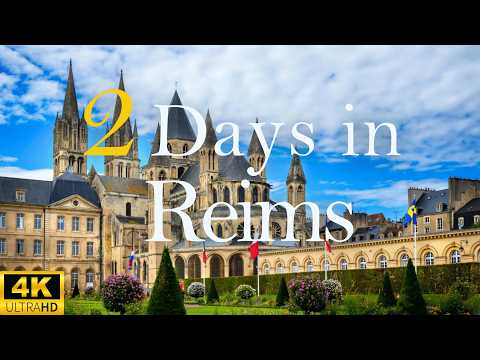
How to Spend 2 Days in REIMS France | Travel Itinerary
Exotic Vacation

TOP 10 Things to do in Reims, France!
The Travel Boss

6 MUST-VIST Places in Reims, Champagne ******
Madame LeVoyage
You are currently viewing a placeholder content from Vimeo. To access the actual content, click the button below. Please note that doing so will share data with third-party providers.
More InformationYou are currently viewing a placeholder content from YouTube. To access the actual content, click the button below. Please note that doing so will share data with third-party providers.
More InformationYou need to load content from reCAPTCHA to submit the form. Please note that doing so will share data with third-party providers.
More InformationYou are currently viewing a placeholder content from GetYourGuide. To access the actual content, click the button below. Please note that doing so will share data with third-party providers.
More Information