
Île du Levant: The Complete Travel Guide (2026)
Île du Levant Travel Guide: Everything You Need to Know (2026)
Île du Levant is a narrow Mediterranean island stretching just 8 km long, sitting 27 km off the coast of Toulon at 129 m elevation, and is home to a permanent population of only 100 residents. Founded as a naturist colony in 1931 by the Durville brothers, its village of Heliopolis covers roughly one-third of the island, while the French Navy controls the remaining two-thirds as a restricted military zone. This makes it one of the smallest and most unusual inhabited islands on the entire French Riviera.
Top 3 Highlights at a Glance
- Heliopolis Naturist Village — The oldest naturist resort in France, founded in 1931, where nudity is the norm in all public spaces.
- Plage des Grottes — A secluded rocky cove accessible only on foot, offering crystal-clear Mediterranean water with near-zero crowds.
- Military Zone Boundary Walk — The stark fence dividing civilian Heliopolis from the French Navy’s rocket-testing zone creates a surreal 2 km coastal trail.
Scroll down for our complete travel guide with tips on getting there, where to stay, costs and more.
Arrival & Airport
How do I get to Île du Levant?
Take a ferry from Hyères or Le Lavandou — there is no airport on Île du Levant and no bridge. In my experience, Le Lavandou is the most convenient departure port, with crossings taking approximately 35 minutes. Ferries are operated by TLV-TVM (Trans Med 2000) and run daily from April through October, with reduced winter schedules. Round-trip tickets cost approximately €30–€35 per adult. My tip: book your return ferry in advance during July and August, as sailings sell out fast. The caveat most guides omit: the last ferry back departs early — often by 17:00 in shoulder season — so missing it means an unplanned overnight stay.
Which airport is closest to Île du Levant?
Toulon-Hyères Airport (TLN) is the closest, approximately 25 km from the ferry port at Hyères. In my experience, TLN is small and has limited international connections, so most visitors fly into Nice Côte d’Azur Airport (NCE), which is roughly 130 km away. From NCE, take the train to Toulon (about 1 hour, €15–€25), then a bus or taxi to Le Lavandou or Hyères port. What surprised me: TLN occasionally has budget flights from Paris Orly on Transavia, making it a genuinely practical option if you catch the right fare. The honest trade-off: TLN’s schedule is sparse, so NCE offers far more flexibility.
How long does the journey to Île du Levant take from the mainland?
Door-to-island travel from Nice takes around 3 hours total. The breakdown: 90 minutes by train from Nice to Toulon or Le Lavandou, then up to 45 minutes by bus or taxi to the port, then 35 minutes by ferry to Île du Levant. From Paris by TGV to Toulon, add roughly 3.5 hours of rail travel. My tip: stay the night before in Le Lavandou to catch an early morning ferry and maximize your island time. The caveat: ferry connections from Hyères port versus Le Lavandou have different schedules, so always cross-check TLV-TVM’s timetable before booking your mainland transport.
Do I need a car to explore Île du Levant?
Absolutely not — cars are banned on Île du Levant entirely. The island’s civilian zone around Heliopolis is compact enough to walk end-to-end in under 30 minutes. All paths are pedestrian, and the only motorised vehicles belong to the French Navy in the restricted military zone. In my experience, this car-free reality is one of the island’s greatest assets — it feels genuinely peaceful. My tip: wear sturdy sandals rather than flip-flops, as the terrain is rocky and some coastal paths have steep drops. The trade-off: if you have mobility limitations, the uneven rocky paths can be genuinely challenging with no wheelchair-accessible transport available.
City Transport
What are the best areas to stay on Île du Levant?
The only place to stay is within the naturist village of Heliopolis — the rest of the island is a French military zone. Heliopolis itself is tiny, so your choice is essentially between the village centre near the main square and its cafés, or more isolated bungalows and guesthouses closer to the coastal paths. I recommend the village centre for first-time visitors — everything is within a 5-minute walk. What surprised me: while nudity is the norm throughout Heliopolis, the village has a surprisingly relaxed, non-sexual atmosphere, more commune than resort. The caveat: accommodation options are limited, and there is no luxury hotel on the island whatsoever.
What does accommodation cost on Île du Levant per night?
Expect to pay €80–€150 per night for a basic bungalow or guesthouse room in Heliopolis. Budget options are sparse — the island has no hostels or camping outside of the naturist resort’s own facilities. A simple studio bungalow at Hôtel Heliopolis or one of the small guesthouses runs roughly €90–€120 in July and August. In my experience, the price-to-quality ratio is poor by French Riviera standards — rooms are basic and air conditioning is not always guaranteed. My tip: if budget is a concern, stay in Le Lavandou on the mainland (€60–€90/night) and visit Île du Levant on a day trip via the 35-minute ferry.
How far in advance should I book accommodation on Île du Levant during high season?
Book at least 3–4 months in advance for July and August. With a permanent population of just 100 people and perhaps a dozen small guesthouses and bungalow rentals in Heliopolis, total accommodation capacity on the island is extremely limited — likely fewer than 200 beds in total. In my experience, the best bungalows with sea views are fully reserved by March for peak summer. My tip: contact Hôtel Heliopolis directly rather than relying on third-party booking platforms, as the island’s properties are not always well-listed online. The honest warning most guides skip: last-minute availability in July means you will likely end up on the mainland in Le Lavandou instead.
What special types of accommodation exist on Île du Levant?
The defining accommodation type on Île du Levant is the naturist bungalow, a simple stone or rendered cottage with a private terrace designed for outdoor, clothing-optional living. These are far more common than conventional hotel rooms. Some properties are privately owned holiday homes rented out seasonally through word of mouth or small French rental platforms like Abritel. In my experience, the appeal is the stripped-back simplicity — no TVs, no spas, just Mediterranean sun and silence. What surprised me: several bungalows have been in the same family for generations, giving the village an almost cult-like community feel. The trade-off: you will not find any branded hotels, pools, or resort amenities anywhere on the island.
Accommodation & Neighbourhoods
What are the absolute must-sees on Île du Levant?
Three things: Heliopolis village square, Plage des Grottes, and the military zone boundary trail. The village square in Heliopolis is the social heart — all 100 permanent residents and seasonal visitors converge here for coffee and pastis. Plage des Grottes is a rocky, crystalline cove a 15-minute walk from the village, consistently cleaner than anything on the overcrowded Côte d’Azur. The military boundary walk traces the fence line separating civilian life from the French Navy’s missile testing site — a genuinely surreal contrast. In my experience, the coastline viewpoints looking back toward the Massif des Maures on the mainland are the best free photo opportunity on the island.
What can I experience for free on Île du Levant?
The entire coastal trail network and all beaches on Île du Levant are free to access. There are no entry fees for any beach, cove, or path in the civilian zone. The walk from Heliopolis village to the eastern tip of the island takes about 45 minutes and costs nothing. In my experience, simply wandering the rocky shoreline in the late afternoon light — when the ferry-trippers have left — is the best free experience the island offers. My tip: the cliff-top paths toward the Pointe de l’Escampobariou at the western edge of the civilian zone offer the most dramatic views. The caveat: the military zone covering roughly two-thirds of the island is strictly off-limits and fenced — do not attempt to enter.
Which day trips are possible from Île du Levant?
The easiest day trip from Île du Levant is to neighbouring Île de Port-Cros, just 4 km away by boat. Port-Cros is a national park island with exceptional snorkelling in a protected marine reserve and no cars whatsoever. Île de Porquerolles, the largest of the Îles d’Hyères, is also reachable by ferry and offers sandy beaches and bike rental. In my experience, inter-island ferries run in summer through TLV-TVM, but you must return to the mainland hub at Hyères or Le Lavandou first, adding significant travel time. My honest tip: plan day trips carefully because ferry connections between the three islands are not always direct, and schedules change annually.
What local specialities should I try on Île du Levant?
Order the grilled sea bream and local rosé at any café terrace in Heliopolis — these are the two non-negotiable local pleasures. The island’s handful of restaurants and snack bars all serve Provençal staples: tapenade, fresh anchoiade, and ratatouille made with local vegetables. In my experience, the rosé from the nearby Côtes de Provence appellation, served ice-cold in a clay jug, tastes genuinely better here than anywhere else — the combination of heat, sea air, and relaxed nudism apparently enhances flavour. The honest caveat: food quality is uneven and prices are 20–30% higher than equivalent Riviera mainland restaurants because everything is ferried to the island. Avoid the plastic-wrapped sandwiches at the port snack bar.
Highlights & Must-Sees
What makes Île du Levant truly unique compared to other French islands?
No other inhabited French island splits its territory between a naturist commune and an active military zone. The juxtaposition of Heliopolis — Europe’s longest-running naturist resort, founded in 1931 — literally fenced off from a French Navy missile testing site is found nowhere else in the Mediterranean. In my experience, this creates an atmosphere unlike any resort island: part utopian social experiment, part Cold War throwback. What surprised me most: the 100 permanent residents have maintained the naturist community’s original philosophical ethos — body freedom as social equality — rather than commercialising it. The trade-off: this purity comes at the cost of tourist infrastructure, meaning the island deliberately resists the convenience that most travellers expect.
How many days should I spend on Île du Levant?
Two full days and one overnight stay is the ideal length for Île du Levant. The civilian zone of Heliopolis is compact enough to explore thoroughly in a single day, but staying overnight transforms the experience — after the day-trippers leave on the last ferry, the island shrinks to just its 100 permanent residents and a handful of overnight guests. In my experience, the early morning light on the eastern cliffs before 07:00, with no other tourists present, is the single best reason to stay overnight. The honest caveat: three days or more will feel slow unless you are specifically there to decompress from urban life. A day trip from Le Lavandou is perfectly viable if you simply want the beach experience.
When is the best time to visit Île du Levant?
June, July, and August are the best months, based on climate data — warm, dry Mediterranean weather with sea temperatures reaching 24–26°C. In my experience, June is the sweet spot: the ferry runs at full schedule, beaches are uncrowded compared to August, and the naturist village feels alive but not overwhelmed. July and August bring the full summer crush, with day-trippers arriving on every ferry. What surprised me: September offers nearly identical weather with dramatically fewer visitors and lower accommodation prices — a genuinely underrated window. The honest trade-off: visiting outside April–October risks severely reduced ferry schedules, and some guesthouses close entirely from November through March.
What is the weather like throughout the year on Île du Levant?
Île du Levant has a classic Mediterranean climate: hot, dry summers and mild, occasionally wet winters. Summer (June–August) sees temperatures consistently above 28°C with almost zero rainfall — ideal for the island’s outdoor naturist lifestyle. Spring and autumn are mild, around 18–22°C, with sporadic mistral wind events that can make the sea rough and ferry crossings choppy. In my experience, the mistral is the most underestimated weather hazard — it can cancel ferries with no warning, stranding you on the island or preventing you from reaching it. Winter lows rarely drop below 8°C, but the island essentially hibernates from November through March with minimal services operating.
Food & Drink
When does Île du Levant get overcrowded?
The island is at its most crowded between 10:00 and 17:00 on July and August weekends, when day-trippers from Le Lavandou and Hyères flood in on the morning ferries. Given the island’s tiny size, even 300–400 day visitors creates noticeable congestion on the main path between the port and Heliopolis village. In my experience, arriving on the first morning ferry and staying overnight completely sidesteps the crowd problem — the island empties dramatically after the last afternoon departure. My honest warning: French school holidays (last two weeks of July and all of August) are the worst periods for crowds. The shoulder weeks of late June and early September offer the same weather with a fraction of the visitors.
Is there a worthwhile shoulder season on Île du Levant?
Yes — early June and the entire month of September are the best-value windows on Île du Levant. Accommodation prices drop by roughly 20–30% compared to August peak, ferry seats are easy to book last-minute, and sea temperatures remain above 22°C through late September. In my experience, September on the island is almost magical — the light is golden, the naturist community feels like a private club again, and the few restaurants still open are actually attentive to customers. The caveat: some smaller guesthouses and snack bars close after mid-September, so check before you go. October onwards, ferry frequency drops sharply, and the island returns to its 100-person winter solitude.
What does a daily budget cost on Île du Levant?
Budget a minimum of €120–€150 per person per day including accommodation, food, and the ferry. The breakdown: ferry return from Le Lavandou €32, breakfast at a village café €8–€12, lunch at a terrace restaurant €18–€25, dinner with wine €35–€50, and a basic bungalow room split between two people €45–€75 per person. In my experience, there is almost no way to do Île du Levant cheaply — the island’s isolation inflates every price point. My tip: buy drinks and snacks at the small Heliopolis grocery store rather than café terraces to claw back a few euros. The honest trade-off: you are paying a premium for a genuinely rare experience, not for luxury.
Is Île du Levant more expensive than the French Riviera mainland?
Yes — expect to pay 20–35% more than equivalent mainland Côte d’Azur prices for food and accommodation. Every consumable on the island — from mineral water (€3 a bottle at cafés) to a simple pasta dish (€18–€22) — is priced to account for the cost of ferry transport. In my experience, only the beaches are free; everything else carries an island premium. The accommodation comparison is stark: a €90/night bungalow in Heliopolis would be a €65/night room in Le Lavandou at the same quality level. My honest tip: if budget is your primary concern, use Île du Levant as a day trip destination — the €32 return ferry is your only unavoidable cost, and the beaches are free.
Practical Tips
What expenses on Île du Levant are unavoidable?
The ferry ticket is the one truly unavoidable cost — approximately €32 return from Le Lavandou. Beyond that, food and drink on the island are expensive but technically skippable if you bring a packed lunch from the mainland — something I genuinely recommend. In my experience, the three costs that catch visitors off-guard are: the price of cold drinks (€4–€5 per bottle on café terraces), the complete absence of ATMs on the island (bring €100+ in cash before you board), and the occasional ferry surcharge for bicycles or large luggage at €5–€10 extra. My tip: purchase your ferry ticket online through TLV-TVM’s website at least a day ahead to avoid the queue surcharge at the port.
What does food cost on Île du Levant — local versus tourist prices?
There is effectively no price difference between ‘local’ and ‘tourist’ pricing on Île du Levant — the island has one captive market. A café breakfast of croissant, orange juice, and coffee runs €10–€14. A lunch plat du jour at a terrace restaurant is €18–€22. A full dinner with wine is €40–€55 per person. The one money-saving option: the Heliopolis village épicerie (grocery store) sells baguettes, cheese, tinned sardines, and local rosé at near-mainland prices — a DIY lunch assembled there costs about €10 per person. In my experience, eating one meal picnic-style on the rocks above Plage des Grottes while watching the sun drop toward the Var coast is the best value experience on the entire island.
How safe is Île du Levant?
Île du Levant is extremely safe — petty crime is virtually nonexistent in a community of 100 permanent residents. The naturist environment actually contributes to security: with no pockets, theft has nowhere to hide. In my experience, the only genuine safety concerns are environmental: the rocky coastal paths have no guardrails and can be slippery when wet, the mistral wind can make the sea dangerously rough for swimming without warning, and sun exposure on a clothing-optional island is severe — I burned badly in under 2 hours on my first visit. My tip: bring SPF 50 sunscreen in bulk from the mainland, as the island’s shop stocks limited supplies at premium prices. The military zone boundary is fenced and signed — respect it absolutely.
Is English widely spoken on Île du Levant?
Basic English is spoken by most restaurant and guesthouse staff in Heliopolis, but do not rely on it. The island’s visitors are overwhelmingly French, and the permanent community of 100 residents is entirely French-speaking. In my experience, a few words of French go a very long way here — even a simple ‘Bonjour, une table pour deux, s’il vous plaît’ dramatically improves service. The honest trade-off: unlike Nice or Cannes on the mainland, where tourist infrastructure assumes English speakers, Île du Levant has no English menus, no English-language signage, and staff may be genuinely unable to help beyond basic vocabulary. My tip: download Google Translate’s French offline pack before you leave the mainland, as mobile data on the island is unreliable.
More Destinations in Europe
Explore our complete travel guides for more Europe destinations: Nîmes Travel Guide (2026), Poitiers Travel Guide (2026), Avignon Travel Guide (2026), Île de Pomègues Travel Guide (2026), Cuenca Travel Guide (2026).
Île du Levant at a Glance
| Population | 100 |
|---|---|
| Currency | EUR (€) |
| Official language | French |
| Time zone | UTC+01:00 |
Source: Wikidata, retrieved August 2026.
Useful Resources for Planning Your Trip to Île du Levant
- Wikipedia: Île du Levant — history, geography and background
- Lonely Planet: Île du Levant — itineraries and travel inspiration
- TripAdvisor: Île du Levant — hotels, restaurants and traveller reviews
🎥 Île du Levant Travel Videos
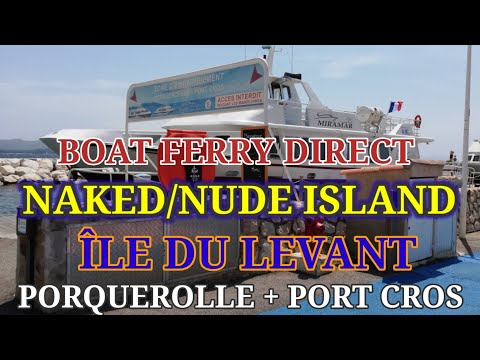
FERRY DIRECT TO NAKED NATURISTE BEACH Île du …
NY NGAKAN TV
ile du levant
patrick bladerider
You are currently viewing a placeholder content from Vimeo. To access the actual content, click the button below. Please note that doing so will share data with third-party providers.
More InformationYou are currently viewing a placeholder content from YouTube. To access the actual content, click the button below. Please note that doing so will share data with third-party providers.
More InformationYou need to load content from reCAPTCHA to submit the form. Please note that doing so will share data with third-party providers.
More InformationYou are currently viewing a placeholder content from GetYourGuide. To access the actual content, click the button below. Please note that doing so will share data with third-party providers.
More Information