
Mestia: The Complete Travel Guide (2026)
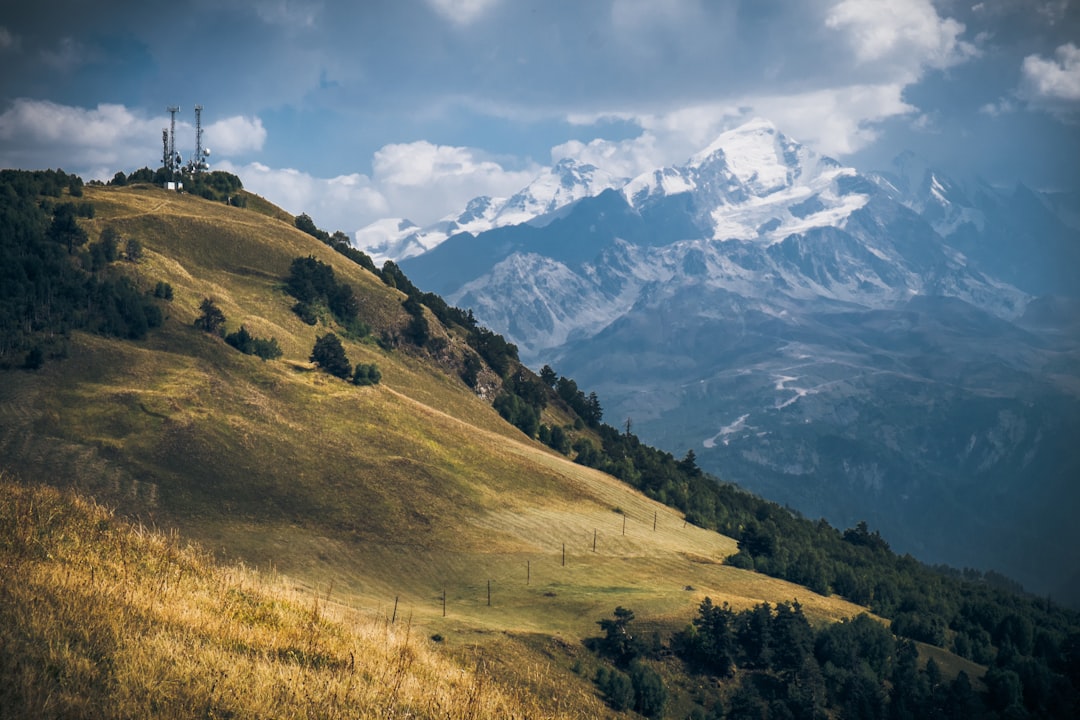
Mestia Travel Guide: Everything You Need to Know (2026)
Mestia is a highland townlet in the Svaneti region of northwest Georgia, sitting at 1,500 metres in the Greater Caucasus Mountains with a permanent population of just 1,798. Founded as a trading and cultural hub centuries ago, it serves as the gateway to some of the highest inhabited villages on Earth, including Ushguli at 2,200 metres. The iconic Svan defensive towers — over 200 still standing across the valley — make Mestia one of the most architecturally distinctive mountain settlements in the entire Caucasus.
Three Things Not to Miss in Mestia
- Svan Towers of Mestia — Over 200 medieval defensive towers still stand here, some dating to the 9th century — nowhere else in the Caucasus matches this density.
- Ushguli Day Trip — A 45 km drive from Mestia leads to Ushguli, one of Europe’s highest permanently inhabited villages at 2,200 metres.
- Hatsvali Ski Resort & Summer Trails — Chairlifts run year-round, giving panoramic views of the 5,201-metre Shkhara peak in under 20 minutes from Mestia.
Scroll down for our complete travel guide with tips on getting there, where to stay, costs and more.
Arriving in Mestia: Airport & Transfers
How do I get to Mestia — what are the realistic transport options?
Fly or take a marshrutka from Tbilisi — both work, but the road is the adventure. **Vanilla Sky Airlines** operates small propeller flights from **Natakhtari Airport near Tbilisi** directly to **Mestia Airport (MQE)**, taking roughly **50 minutes** and costing around **$60–80 one-way**. Alternatively, a shared marshrutka from **Tbilisi’s Didube bus station** departs daily at 7 am and takes **9–10 hours**, costing roughly **$10–12**. My tip: fly in, take the marshrutka out — you see the landscape on the return without the anxiety of a tight connection. The honest caveat: mountain flights cancel frequently due to cloud cover, sometimes for 2–3 consecutive days, so never book a non-refundable onward flight the same day you plan to land in Mestia.
Which airport is closest to Mestia?
**Mestia Queen Tamar Airport (MQE)** is the closest, sitting literally **2 km from the town centre**. It handles only small turboprop aircraft — **Cessna Grand Caravans** seating around 9 passengers — operated seasonally by Vanilla Sky Airlines. **Kutaisi Kopitnari Airport (KUT)** is the realistic backup at roughly **230 km away**, served by Wizz Air and other budget carriers from European cities. What surprised me: KUT is actually far more reliable for international arrivals connecting onward to Mestia, since a private taxi from **Kutaisi** to Mestia costs around **$80–100** and takes **4 hours** through spectacular gorge roads. I recommend booking KUT as your entry point if you are flying from Europe — it removes the weather-cancellation stress entirely.
How long does the journey to Mestia take from Tbilisi?
By air it is **50 minutes**, but door-to-door realistically takes **4–5 hours** including airport transfers. By marshrutka from **Didube station in Tbilisi** it is a solid **9–10 hours**. A private taxi from Tbilisi runs **12–14 hours** — nobody should do that without an overnight stop in **Zugdidi**, the last lowland city at the foot of the mountains, **130 km from Mestia**. In my experience, the best strategy is flying to Kutaisi, spending a night in the charming old town, then hiring a driver the next morning for the **4-hour mountain drive** through the **Enguri Gorge** — far less brutal than the full Tbilisi-Mestia slog. Caveat: the Enguri Gorge road has active landslide zones and can close after heavy rain with zero warning.
Do I need a car to explore Mestia and the surrounding Svaneti valley?
For Mestia town itself, no — it is entirely walkable in under **20 minutes** end to end. But to reach **Ushguli (45 km)**, the **Chalaadi Glacier (8 km)**, or the upper villages of **Zhabeshi and Adishi**, you absolutely need a 4WD vehicle. Local drivers in Mestia charge **$50–70 for a full-day Ushguli return trip**, which I recommend over self-driving unless you have serious off-road experience. Renting a 4WD from **Tbilisi** and driving it to Mestia costs roughly **$60–80 per day** from agencies like **Sixt or local operator Autorent**. My honest warning: the road to Ushguli is not a road — it is a riverbed with ambitions. Standard cars bottom out, and getting stuck costs more than a local driver ever would.
Getting Around Mestia
What are the best areas to stay in Mestia?
Mestia is small enough that location barely matters in the traditional sense — the whole town is walkable. That said, staying within **500 metres of the central Tamar Square** puts you near the main trail heads, the ethnographic museum, and the evening khinkali restaurants. **Lanchvali neighbourhood** slightly uphill gives better tower views and quieter nights. I recommend guesthouses over hotels here — families like **Nino’s Guesthouse on Rustaveli Street** serve home-cooked meals and act as informal mountain guides. Avoid booking anything down near the **Mestiachala river bank** in spring — snowmelt flooding is a real risk in May and June. My tip: the upper residential streets have the most photogenic Svan tower backdrops, which matters enormously for early-morning photography.
What does accommodation cost per night in Mestia?
Budget guesthouses in Mestia run **$15–25 per person** with breakfast included — outstanding value. Mid-range guesthouses with private bathrooms and dinner sit at **$35–55 per room**. The only hotel approaching international standard, **Mestia Inn or Hotel Svan Tower**, charges **$80–120 per night** in peak summer. In my experience, the family guesthouses at $25–40 consistently outperform the hotels on food quality and local knowledge — Svan cuisine alone is worth the choice. The honest trade-off: budget guesthouses often share bathrooms between **4–6 guests**, hot water can be intermittent in winter, and Wi-Fi speeds rarely exceed **5 Mbps** even in the better properties. Book with inclusion of dinner if available — restaurants outside guesthouses in Mestia close early and options shrink after 9 pm.
How far in advance should I book accommodation in Mestia during high season?
Book at least **6–8 weeks ahead** for July and August — Mestia’s best guesthouses sell out completely. What surprised me is that a town of only **1,798 residents** hosts thousands of trekkers during peak summer, and quality beds are genuinely limited. **Booking.com** lists some options, but the best family guesthouses in **Lanchvali and central Mestia** book via direct WhatsApp message — ask your Tbilisi hostel for contacts. My tip: if you arrive without a booking in August, head to the tourist information office on **Tamar Square** — staff maintain a live list of available rooms. The honest caveat: cancellation policies at family guesthouses are informal, so confirm your arrival time or they may give your room away after 6 pm without refund.
Are there special or unique accommodation types in Mestia worth seeking out?
Yes — staying in a **Svan tower guesthouse** is genuinely unique to this region on Earth. Several families in Mestia have converted the ground floors of their **9th–12th century defensive towers** into sleeping quarters, with stone walls over **1 metre thick** and medieval wooden staircases. Expect to pay **$40–60 per room** for this experience. **Chalet-style mountain lodges** near the **Hatsvali ski area** operate year-round and offer ski-in access in winter for around **$70–90 per night**. For the **Ushguli trek**, basic camping and shepherd hut stays along the **Svaneti Trek corridor** cost **$10–15** per night. My honest warning: tower room bookings are exclusively offline — no app lists them. The trade-off is zero comfort standardisation, but maximum authenticity.
Where to Stay in Mestia
What are the absolute must-sees in Mestia itself?
Three things are non-negotiable. First, the **Svaneti History and Ethnography Museum** on Tamar Square houses priceless medieval icons and gold crosses removed from local churches for safekeeping — entry costs **5 GEL (roughly $2)** and it is the single best repository of Svan culture anywhere. Second, walk the **Svan Tower Trail** through the residential streets — **14 towers** are clustered within the town boundary alone, and the viewpoint above **Lanchvali** at dusk is extraordinary. Third, the **Chalaadi Glacier hike**, an **8 km return trail** from town taking **3–4 hours**, brings you to the snout of a retreating glacier — free, well-marked, and genuinely dramatic. My tip: hire a local guide from the tourist office for the glacier trail; they know where the ice bridge is safe to cross and where it is not.
What can I experience for free in Mestia?
Quite a lot — the mountain landscape itself is free and relentless. The **Chalaadi Glacier trail** costs nothing and is one of the best hikes in the Caucasus. Walking the **tower district** streets costs nothing. The **Mestia Central Market** on weekend mornings is free and sells churchkhela, local honey, and Svan salt — budget **$5–10 for tastings**. The **Hatsvali viewpoint** is reachable on foot in **45 minutes** from town without paying the chairlift fee of around **15 GEL**. What surprised me: several Svan families invite passing trekkers for **chacha** (Georgian grape spirit) and conversation at zero cost — this is genuine hospitality culture, not a tourist performance. My honest caveat: the ethnography museum, at only **5 GEL**, is so worth paying that skipping it to save money would be a genuine mistake.
Which day trips from Mestia are worth making?
**Ushguli is the essential day trip** — **45 km each way** on a 4WD-only track, taking **2.5–3 hours** each direction, visiting one of Europe’s highest permanently inhabited villages with intact Svan towers. A local driver costs **$60–70 return**. The **Mazeri valley and Becho village** is a quieter alternative, **25 km from Mestia**, with views of the north face of **Ushba peak (4,710 m)** — arguably more dramatic than Ushguli and far less visited. A **helicopter flight over the Caucasus ridge** operates from Mestia Airport in summer for around **$150–200 per person** — worth every cent for the Shkhara glacier views. My honest caveat: the Ushguli road after heavy rain becomes impassable even in 4WD vehicles, and drivers will cancel last-minute — always build a buffer day into your itinerary.
What local specialities should I try when eating in Mestia?
**Kubdari** is the Svan answer to khachapuri — a thick bread stuffed with spiced meat and onion, baked in a wood oven, costing **$2–3 per piece** at local bakeries. It is found almost nowhere outside Svaneti. **Tashmijabi** is a uniquely Svan dish of mashed potato mixed with melted Sulguni cheese — rich, warming, and perfect at 1,500 metres. **Svan salt** (a blend of salt, garlic, fenugreek, and dried herbs) is used on everything and costs **$1–2 for a bag** at the market. Wash everything down with **home-brewed beer** — Svaneti has a distinct local beer culture separate from Georgian wine tradition. My honest tip: skip the restaurants near the central square that have English menus and laminated photos — walk **200 metres uphill** to family guesthouses that cook Svan food daily for their guests.
Mestia Highlights & Must-Sees
What makes Mestia genuinely unique compared to other mountain destinations?
The combination of **living medieval architecture, extreme altitude accessibility, and intact highland culture** found nowhere else in Europe or the Caucasus. Over **200 Svan defensive towers**, some 1,200 years old, still stand in private family yards — not as museum pieces but as actual property. The **Svan people** maintain a distinct language (Svan, spoken by roughly **30,000 people** worldwide) and customs that survived Soviet collectivisation largely intact. Skiing and glacier trekking operate from the same small town, year-round. No other destination I have visited combines **UNESCO-listed vernacular architecture** with **5,000-metre peaks** and **$15-a-night guesthouse hospitality**. The honest trade-off: infrastructure is still catching up — power cuts in winter, poor road surfaces, and patchy mobile data are part of the deal. But that rawness is precisely what makes Mestia irreplaceable.
How many days should I spend in Mestia to do it justice?
**Minimum 3 nights, ideally 5** — and build in a buffer day for weather. Day 1: arrive, walk the tower district, visit the ethnography museum. Day 2: Chalaadi Glacier hike (**8 km, 4 hours**). Day 3: full-day Ushguli trip. Day 4: Mazeri valley or Hatsvali chairlift for peak views. Day 5: buffer or the **Svaneti Trek segment toward Zhabeshi**. In my experience, travellers who book only 2 nights almost always extend — and those who don’t regret it. The honest caveat: if you are doing the full **5-day Mestia-to-Ushguli trek** on foot (**77 km**), plan **7–8 days** in the region total. Do not try to compress the trek — altitude, trail conditions, and weather make rigid scheduling dangerous.
When is the absolute best time to visit Mestia?
**August is the single best month** based on verified climate data — trails are fully open, snow has receded from high passes, and daylight runs past 9 pm. **July and early September** are excellent alternatives with slightly fewer crowds. What surprised me: **winter (December–March)** is increasingly worthwhile since **Hatsvali ski resort** expanded its lifts, offering Georgian powder skiing for **$20–30 per day lift pass** — a fraction of Alpine prices. Avoid **May** entirely — snowmelt turns the Ushguli road into a river and trail conditions are dangerous. **October** brings dramatic foliage to the Svaneti valley but expect trail closures above **2,500 metres** by mid-month. My tip: the first two weeks of August combine optimal weather with the annual **Mariamoba festival** (August 28), when Svan villages hold outdoor celebrations with traditional music.
How does Mestia’s weather affect what activities I can actually do?
Weather is the single biggest variable controlling your Mestia itinerary. The **Chalaadi Glacier trail** is accessible **June through October** — outside this window expect snow and ice requiring crampons. The **Ushguli road** is only reliably drivable **July through October**. Skiing at **Hatsvali** runs **December through March**, with the best snowpack in January and February. Summer afternoon thunderstorms are frequent above **2,000 metres** — always start mountain hikes before **9 am** to descend before lightning risk peaks around **2–4 pm**. In my experience, one in every **3 days** in Mestia in summer involves at least one afternoon of heavy rain — pack waterproofs and plan museum visits or guesthouse cooking experiences for those windows. The honest warning: Mestia Airport closes for days at a time during cloud cover — never plan a tight connection from here.
Eating & Drinking in Mestia
Are there local festivals in Mestia worth planning a visit around?
Yes — **Mariamoba on August 28** is the most atmospheric. It is a Georgian Orthodox festival with a distinctly Svan flavour: outdoor liturgies inside ancient churches, communal feasting on kubdari and beer, and impromptu polyphonic singing groups forming in village squares. **Lamaria**, the Svan spring festival in late April or early May, involves flower offerings at mountain shrines and is almost entirely unvisited by tourists — but the road conditions in May make attendance risky. The **Mestia Winter Festival** in February coincides with peak ski season and includes torch-lit descents and local food markets near Hatsvali. My honest tip: festivals dramatically increase accommodation demand — **book 10–12 weeks ahead** for Mariamoba weekend, as every bed within **50 km** fills. What surprised me is how genuinely local these events still feel despite growing tourism.
How crowded does Mestia get in peak season?
**July and August bring serious crowds** relative to the town’s infrastructure — a town of **1,798 residents** absorbing several hundred trekkers daily creates real pressure on accommodation and trail quality. The **Chalaadi Glacier trail** gets noticeably busy between **10 am and 3 pm** in August. The central square fills with tour groups arriving by marshrutka from Tbilisi. However, walk **10 minutes in any direction** and you are completely alone in the mountains — the crowds are concentrated and avoidable. Ushguli in peak August sees **50–80 visitors daily**, which for a remote village is already disruptive. My recommendation: visit in **early July or September** for 80% of the experience with 40% of the crowd. The honest trade-off: late September brings a genuine risk of the first snowfall closing the Ushguli road.
How safe is Mestia for solo travellers?
**Mestia is very safe** — petty crime is essentially non-existent in Svan culture, where hospitality codes are taken seriously. Solo female travellers report no street harassment, and the trekking community is collaborative rather than competitive. The real safety risks are **natural, not human**: river crossings on unmarked trails, afternoon lightning above treeline, and the Ushguli road itself in poor weather claim hikers every year. In my experience, the greatest danger is overconfidence — trails above **3,000 metres** require proper equipment and navigation skills. Always register your intended route at the **Mestia Emergency Management Service office** on the main street — it is free and they monitor conditions. My honest warning: mobile signal drops to zero within **5 km** of most trailheads. Offline maps via **Maps.me or Gaia GPS** are not optional — they are essential.
Is English widely spoken in Mestia?
**In tourist-facing businesses, yes — elsewhere, no.** Guesthouse owners catering to trekkers typically speak functional English, and the tourist information office on **Tamar Square** has English-speaking staff. Younger Georgians working in hospitality often speak surprisingly good English. However, older residents, market vendors, and drivers frequently speak only **Georgian and Svan**, with Russian as a third option for those over 40. My tip: learn **5 Georgian phrases** — even a poorly pronounced ‘madloba’ (thank you) generates extraordinary warmth. In my experience, the language barrier at local bakeries and the Saturday market costs nothing more than pointing and smiling — prices are low enough that miscommunication over quantities is funny rather than frustrating. Download **Google Translate with Georgian offline pack** before leaving Tbilisi, where data is reliable.
Practical Tips for Mestia
What does a daily budget in Mestia realistically look like?
**Budget travellers can manage $30–40 per day all-in.** A guesthouse bed with breakfast runs **$15–20**, a kubdari lunch costs **$3–4**, a sit-down dinner with beer is **$8–12**, and the ethnography museum entry is **$2**. Mid-range travellers spending $60–80 per day get a private room, three meals, one guided hike, and a marshrutka excursion. The main variable is day trips — a private driver to Ushguli adds **$60–70** to any budget day. What surprised me: Mestia is significantly cheaper than comparable mountain destinations in the Alps or Dolomites — a full activity day including guiding, lunch, and transport rarely exceeds **$50**. The hidden cost most guides omit: weather buffer days you did not plan cost money too — budget at least **one extra night’s accommodation** as contingency for flight or road cancellations.
How does public transport work in and around Mestia?
**Within Mestia town, everything is on foot** — there is no local bus network. Between Mestia and the outside world, a daily marshrutka departs for **Zugdidi at 9 am** (4 hours, **$7**) and another for **Tbilisi at 6 am** (9–10 hours, **$12**). Shared taxis to Ushguli are informal — ask at guesthouses or the tourist office to join groups forming for the next morning. In summer a seasonal marshrutka runs Mestia to Ushguli on alternating days for roughly **$10 per person**. The honest caveat: schedules are Georgian — meaning approximate. The 6 am Tbilisi marshrutka may leave at 6:15 or 7:00 depending on how many seats are filled. My tip: confirm departure time the evening before directly with the driver, whose number your guesthouse will have.
Which apps do you recommend for navigating Mestia and Svaneti?
**Maps.me is essential** — download the Georgia pack offline before leaving Tbilisi, where mobile data is fast and cheap. It covers every footpath in Svaneti including the full **Mestia-to-Ushguli trek corridor** with elevation profiles. **Gaia GPS** is the superior choice for serious trekking above **2,500 metres**, with topographic overlays that Maps.me lacks — a subscription costs **$20 per year**. **Google Maps** fails badly on mountain trails and the Ushguli road — avoid relying on it. For accommodation, **Booking.com** lists a fraction of available rooms — WhatsApp is the real booking platform here, so save your guesthouse’s number. **Windy.com** for mountain weather forecasting is far more accurate than standard apps at altitude. My honest tip: screenshot your guesthouse location on Google Maps before going offline — GPS coordinates matter when you have no signal and are arriving after dark.
Mestia at a Glance
| Population | 1,798 |
|---|---|
| Official language | Georgian |
Source: Wikidata, retrieved August 2026.
Georgia › Mestia
More Destinations in Georgia
Essential Resources for Planning Your Trip to Mestia
- The Ultimate Svaneti Itinerary for 3-7 Days of Travel — official visitor information, passes & events
- Wikipedia: Mestia — history, geography & background
- Wikivoyage: Mestia — community travel guide & practical tips
- Attractions – Svaneti History & Ethnography Museum — expert itineraries & travel inspiration
- THE 15 BEST Things to Do in Mestia (2026) — hotels, restaurants & traveller reviews
- A trip to Mestia. Can i help you travel to Svaneti in Mestia — how to get around
- Numbeo: Cost of Living in Mestia — current prices & cost comparison
- Timeanddate: Mestia Weather & Climate — forecasts & climate statistics
More Perspectives on Mestia
- The Ultimate Svaneti Itinerary for 3-7 Days of Travel
- Mestia – The Georgian Heaven On Earth
- Mestia Travel Guide 2026: Top Attractions, Things to do & …
Mestia Travel Videos
Watch these videos for a visual preview before your trip:
- Mestia Travel Guide: 15 Things You Shouldn’t Miss
- Mestia, Georgia – Why It Should Be on Your Travel List
- Svaneti Skiing Guide + Things to Do in Mestia in Winter
Mestia Travel Discussions on Reddit
Real traveller experiences and community advice:
- Mestia, Georgia : r/travel
- r/travel – Mestia and Ushguli Villages, Svaneti, Georgia
- Exploring the remote valleys and villages of the Upper …
Data Sources
This page was compiled using data from Wikipedia, Wikidata, Open-Meteo (climate), Numbeo (cost of living) and REST Countries. Information is updated regularly.