
Signagi: The Complete Travel Guide (2026)
Last reviewed: August 2026 · key facts checked against Wikidata
Signagi Travel Guide: Everything You Need to Know (2026)
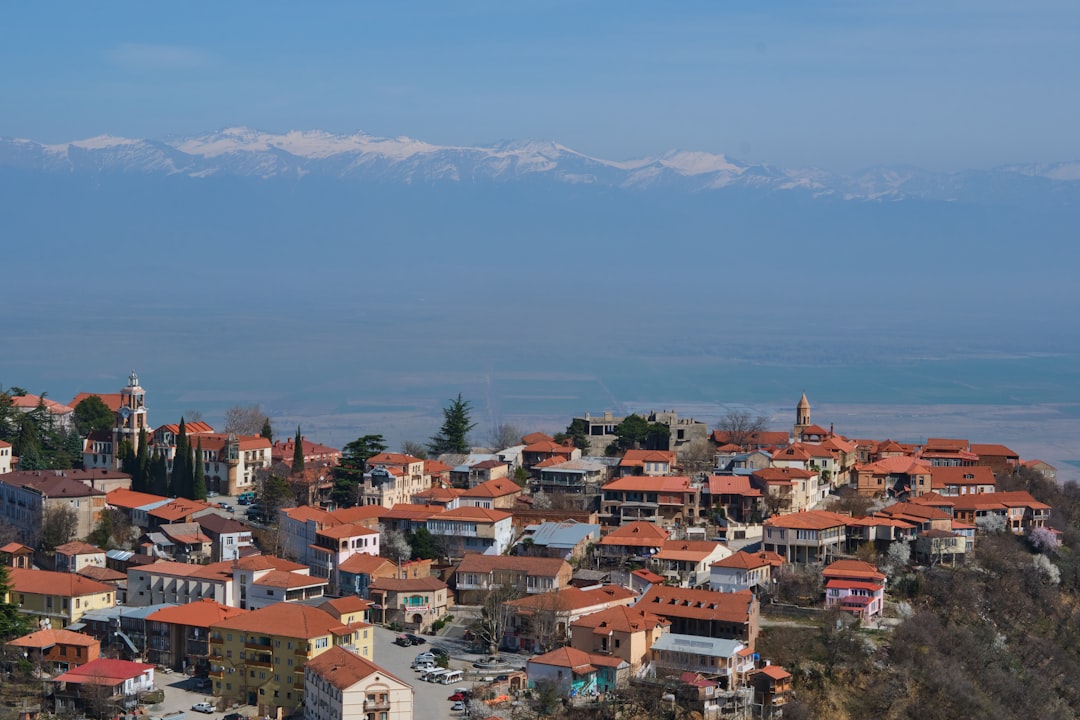
Signagi is a hilltop town of just 1,485 residents perched at 836 metres above sea level in Georgia’s Kakheti wine region, often called the ‘City of Love’ for its 24-hour wedding registry. Founded as a fortified settlement in the 18th century under King Erekle II, it commands sweeping panoramic views over the Alazani Valley toward the Caucasus Mountains. What surprised me is how much personality this tiny town packs — cobblestoned streets, terracotta-roofed houses, and some of Georgia’s finest natural wine all within a few walkable blocks.
Three Things Not to Miss in Signagi
- Signagi City Walls and Towers — An 18th-century fortification stretching nearly 4 km, offering unobstructed panoramic views over the Alazani Valley.
- Bodbe Monastery — A working Orthodox monastery just 2 km from town, housing the tomb of St. Nino, Georgia’s patron saint of Christianity.
- Pheasant’s Tears Winery — Georgia’s most celebrated natural wine producer, pouring amber qvevri-aged wines in a candlelit dining room in Signagi’s centre.
Scroll down for our complete travel guide with tips on getting there, where to stay, costs and more.
Arriving in Signagi: Airport & Transfers
How do I get to Signagi from Tbilisi?
Take a marshrutka from Tbilisi’s Samgori Bus Station — the most direct option, costing around 4 GEL (roughly $1.50 USD) and taking 2 to 2.5 hours. I recommend the morning departure around 9:00 AM. Taxis from Tbilisi run 60–80 GEL and cut the trip to under 2 hours. The honest caveat: marshrutka schedules are informal and the last return often leaves Signagi by 5:00 PM, so plan your day carefully or you will be stranded overnight — which, frankly, is not the worst outcome.
Which airport is closest to Signagi?
Tbilisi International Airport (TBS) is the closest airport, sitting approximately 120 km west of Signagi. There is no direct airport-to-Signagi shuttle, so you will connect via Tbilisi city. In my experience, the most efficient route is taking the Airport Express train to Tbilisi Central Station for 1 GEL, then crossing the city to Samgori Metro Station and catching a Signagi marshrutka. Budget at least 3.5 to 4 hours total transfer time from touchdown to Signagi doorstep. Kutaisi Airport (KUT) is technically in Georgia but adds 4+ hours of travel and is not a practical alternative.
How long does the journey to Signagi take from Tbilisi?
By marshrutka from Samgori Bus Station, the ride takes 2 to 2.5 hours covering roughly 115 km of winding mountain road. A private taxi or hired driver reduces that to 90 minutes. What surprised me is that the road quality is genuinely good for most of the route — it is the hairpin descent into Signagi itself that slows you down. I recommend hiring a driver round-trip for 120–150 GEL total if you plan to visit Bodbe Monastery and surrounding villages like Tsinandali on the same day, which a marshrutka simply cannot accommodate.
Do I need a rental car to explore Signagi and Kakheti?
For Signagi town itself, absolutely not — the entire historic centre is walkable in 20 minutes. But if you want to explore the broader Kakheti wine region — visiting Tsinandali Estate, Gremi Fortress, or the monastery clusters near Alaverdi — a rental car transforms the trip. Cars rent from 40–60 GEL per day through local agencies or platforms like Autorent Georgia. The honest warning: Georgian rural driving is aggressive, road markings are suggestions, and livestock crossing is a real hazard. If you are not comfortable with that, hire a local driver for 100–120 GEL per full day — they double as informal guides.
Getting Around Signagi
What are the best areas to stay in Signagi?
Signagi is small enough that neighbourhood distinctions barely apply, but I recommend staying on or just below Chavchavadze Street, the main pedestrian spine. Guesthouses here put you within 5 minutes’ walk of the city walls, the main square, and wine bars. The lower residential quarter below the walls is quieter and 15–20% cheaper, but the uphill return after dinner with a few glasses of Rkatsiteli in you is genuinely punishing. My tip: prioritise properties with a valley-facing terrace — waking up to Caucasus Mountain views over the Alazani Valley is the defining Signagi experience.
What does accommodation cost per night in Signagi?
A clean guesthouse with breakfast in Signagi runs 40–70 GEL per night (roughly $15–26 USD). Boutique hotels like Rooms Hotel Signagi or Old Signagi Hotel charge 150–250 GEL ($55–93 USD) for rooms with valley views. I stayed at a family guesthouse on the main street for 55 GEL including a homemade Georgian breakfast with churchkhela and fresh cheese — extraordinary value. The caveat: budget guesthouses rarely have air conditioning, which matters in July and August when temperatures inside stone buildings can feel stifling by afternoon.
How far in advance should I book accommodation in Signagi during high season?
Book at least 4–6 weeks ahead for June through September visits — Signagi’s accommodation stock is tiny for a tourist magnet, and the best-value guesthouses on Chavchavadze Street sell out fast. Weekend bookings require even more lead time because Tbilisi residents do the 2-hour drive for romantic mini-breaks, filling the town on Friday and Saturday nights. In my experience, trying to walk in on a summer Saturday is a near-certain disappointment. Outside peak season — October through May — you can book 3–5 days in advance without issue and often negotiate 20–30% off rack rates directly with guesthouse owners.
Are there special or unique accommodation types in Signagi?
Signagi’s standout accommodation quirk is the abundance of family-run guesthouses embedded in working wine households. Several families in the lower residential quarter offer rooms where you sleep under the same roof as their qvevri cellar — clay amphorae buried in the floor for fermenting wine. Hosts pour their own home-fermented Rkatsiteli or Saperavi at dinner for a nominal extra charge of 5–10 GEL per bottle. My tip: ask specifically for a guesthouse with an in-house marani (wine cellar) when booking — it transforms an overnight stay into a genuine cultural encounter that no hotel in Tbilisi can replicate.
Where to Stay in Signagi
What are the must-sees in Signagi?
The 18th-century city walls spanning nearly 4 km are non-negotiable — walk the full circuit at sunset for the Alazani Valley panorama. Bodbe Monastery, 2 km outside town, holds the tomb of St. Nino and a sacred spring pilgrims descend 300 steps to reach. The Signagi Museum on the main square holds a serious collection of Niko Pirosmani paintings and charges just 5 GEL entry. Finally, sit for a full wine tasting at Pheasant’s Tears — their amber wine poured from qvevri is a category-defining experience. What surprised me is how much content is packed into a town with fewer than 1,500 residents.
What can I experience for free in Signagi?
Walking the full 4 km circuit of the city walls and 28 towers is completely free and takes about 75 minutes at a relaxed pace. The panoramic viewpoints above the main square cost nothing and rival any paid lookout in the Caucasus. The town square itself functions as a social hub — locals gather here daily and impromptu polyphonic singing occasionally breaks out, a UNESCO-recognised Georgian tradition. My tip: arrive at the square around 7:00 PM in summer when the light hits the valley perfectly. The honest caveat: Signagi is compact and the free sights are exhausted in half a day — budget for paid wine tastings or you will feel under-stimulated.
Which day trips from Signagi are worth doing?
Tsinandali Estate, 35 km northwest, combines a restored 19th-century noble mansion, Europe’s second-oldest winery, and a landscaped English garden — entry is 15 GEL. Gremi Fortress and Church near Kvareli, roughly 60 km north, is a 16th-century citadel with almost no crowds. The Kvareli Lake area adds swimming to the day. I recommend pairing Tsinandali with a stop at Ikalto Monastery, one of Georgia’s ancient academy sites, into a single 5–6 hour loop. Without a car or hired driver, day trips are severely limited — the marshrutka network between Kakheti towns runs infrequently and schedules shift without notice.
What local specialities must I try in Signagi?
Kakheti is Georgia’s bread basket and wine heartland, so prioritise Kakhetian-style khinkali — dumplings here are meatier and less watery than Tbilisi versions. Shkmeruli (chicken roasted in garlic milk sauce) at a local guesthouse beats any Tbilisi restaurant version I have tried. The wine imperative is amber Rkatsiteli fermented in qvevri with extended skin contact — it tastes nothing like any white wine you have had before. For under 20 GEL, you can get a full Georgian spread including bread, cheese, walnut-stuffed vegetables, and a 500ml carafe of house wine at any family guesthouse. Do not leave without trying churchkhela made by street vendors — the local walnut-and-grape-must version is far superior to the tourist-market copies sold in Tbilisi.
Signagi Highlights & Must-Sees
What makes Signagi unique compared to other Georgian towns?
Signagi is the only Georgian town that operates a 24-hour wedding registry, which is why it earned the nickname ‘City of Love’ — couples genuinely drive up from Tbilisi at 2:00 AM to marry. At 836 metres elevation overlooking the Alazani plain, its visual drama is unmatched by any comparable town in Kakheti. The intact 18th-century fortification walls are among the best-preserved in the South Caucasus. What surprised me most is the cultural density: a world-class Pirosmani art collection, living qvevri wine tradition, and proximity to Bodbe Monastery — all within a 10-minute walk of each other in a town of 1,485 people. No other Georgian small town concentrates this much into this small a footprint.
How many days should I spend in Signagi?
2 full days covers Signagi town comprehensively — walls, museum, Bodbe Monastery, wine tastings, and a long guesthouse dinner. Add a 3rd day if you want to do a proper Kakheti wine-country drive hitting Tsinandali, Telavi, and the monastery circuit. A single overnight works as a Tbilisi day-trip extension but you will feel rushed and miss the essential pleasure of watching the Alazani Valley at dusk from the city walls with a glass of amber wine. My tip: arrive on a Thursday or Friday to avoid the weekend Tbilisi tourist surge, which doubles foot traffic on the main street and inflates guesthouse prices by roughly 20–30%.
When is the best time to visit Signagi?
June through September are the peak months based on climate data, with warm, stable conditions ideal for wall-walking and outdoor dining. My personal preference is late September and early October — the Rtveli grape harvest is underway across Kakheti, wineries open their doors for stomping sessions, and the valley shifts to amber and red tones that make every photograph look effortless. Temperatures drop to a comfortable 18–22°C during the day. The caveat: October weekends get crowded with harvest tourists, so mid-week visits are preferable. May is underrated — green vineyards, fewer crowds, and guesthouse rates 25% below peak.
Are there local festivals in Signagi worth attending?
The Rtveli Wine Harvest Festival in late September and early October is Kakheti’s defining annual event — participating families invite visitors to join grape-stomping in their courtyards and sample newly pressed juice fermenting into wine. Tbilisoba, Georgia’s national city celebration in October, also sees Signagi host street performances and open-air feasting. In my experience, showing up at a family guesthouse during Rtveli and asking to join their harvest the next morning is 100% accepted — Georgian hospitality makes spontaneous participation easy. The warning: accommodation during Rtveli weekend fills 8–10 weeks in advance and prices jump 40–50% above standard rates.
Eating & Drinking in Signagi
How does weather affect activities in Signagi?
Signagi’s 836-metre elevation means summer days are warm but rarely brutal — 25–30°C in July and August is comfortable for walking the walls compared to Tbilisi’s punishing 38°C heat. Afternoon thunderstorms are common in June and July, lasting 30–60 minutes before clearing. Winter — December through February — brings snow and temperatures dropping below 0°C, closing most guesthouses and wine bars. The honest caveat: the mountain road into Signagi becomes genuinely hazardous in icy conditions, and only 2–3 guesthouses operate year-round. Spring mud (March–April) limits access to the Bodbe Monastery sacred spring trail, which turns slippery on the 300-step descent.
How crowded does Signagi get during peak season?
Summer weekends — particularly July and August Saturdays — see the main street reach uncomfortable density for a town of 1,485 people. Tour buses from Tbilisi deposit groups at the main square between 11:00 AM and 3:00 PM, which is when wine bars queue and restaurants fill. In my experience, arriving by 8:30 AM lets you walk the city walls in near-total solitude before the first buses appear. Weekdays even in peak season are manageable. The Rtveli harvest weekend in late September is the single most crowded event of the year — more intense than any summer weekend. My tip: book a Sunday-to-Thursday stay and you will barely notice the tourist pressure.
How safe is Signagi for travellers?
Signagi is exceptionally safe — petty crime is virtually absent in a community of 1,485 people where everyone knows everyone. Georgia overall ranks well for traveller safety and Kakheti is among the most relaxed regions in the country. In my experience walking the walls alone after dark and leaving a camera bag unattended at a wine-bar table, nothing has ever gone wrong. The honest caveat: the road from Tbilisi involves aggressive overtaking from local drivers, and the hairpin descent into Signagi is genuinely steep — buckle up and avoid travelling that stretch after dark if you have a cautious driver. Traffic risk is the primary safety concern, not crime.
Is English widely spoken in Signagi?
In tourist-facing businesses — guesthouses, wine bars, the Signagi Museum — English is functional and often fluent among younger staff. Pheasant’s Tears winery staff speak excellent English. Outside those contexts, in local shops, the market, or with older residents, Georgian or Russian is the working language. My tip: download Google Translate with Georgian offline pack before arriving — the Georgian script is completely unlike any Latin or Cyrillic alphabet and reading signage without it is genuinely difficult. What surprised me is how far a few memorised Georgian phrases go — saying ’gamarjoba’ (hello) and ’madloba’ (thank you) visibly changes how locals interact with you.
Practical Tips for Signagi
What is the daily budget for visiting Signagi?
A comfortable mid-range day in Signagi costs 80–120 GEL per person ($30–45 USD). That covers a guesthouse room with breakfast (55–70 GEL), a full Georgian lunch with wine (20–30 GEL), museum entry (5 GEL), and a wine tasting at a boutique producer (15–25 GEL). Budget travellers sharing a dorm-style guesthouse room and eating at family kitchens can get by on 50–60 GEL per day. The unavoidable cost spike is transport — hiring a driver for a full Kakheti day-trip adds 100–120 GEL split between passengers. In my experience, the food and wine value here is the best in Georgia — you eat like a king for prices that feel implausible by any Western standard.
How does public transport work in Signagi?
Signagi has no internal public transport — the town is entirely walkable in under 20 minutes end to end. External connections rely entirely on marshrutkas (shared minibuses) running to Tbilisi’s Samgori Station for 4 GEL with departures roughly every 1–2 hours between 8:00 AM and 5:00 PM. There is no reliable marshrutka connecting Signagi directly to other Kakheti towns like Telavi or Kvareli — you typically backtrack to Tbilisi or hire local transport. The honest warning: marshrutka departure times are not published online, they fill and leave when full, and the last departure to Tbilisi typically runs no later than 5:30 PM, stranding late-arriving visitors overnight.
Which apps do you recommend for visiting Signagi?
Yandex Go is the dominant ride-hailing app in Georgia and works for booking taxis from Tbilisi to Signagi, typically 20–30% cheaper than street hailing. Maps.me with offline Georgia maps is essential — Google Maps coverage in rural Kakheti lanes is unreliable. Google Translate with the Georgian offline language pack is non-negotiable given the unique Georgian script. For wine discovery, Vivino helps you scan bottles at wine bars and track what you liked across your Kakheti tastings. My tip: save the contact of your guesthouse owner in WhatsApp the moment you arrive — they function as informal concierges, booking local drivers and recommending which winery is doing a harvest tasting that specific day.
Signagi at a Glance
| Population | 1,485 |
|---|---|
| Official language | Georgian |
Source: Wikidata, retrieved August 2026.
Georgia › Signagi
More Destinations in Georgia
Essential Resources for Planning Your Trip to Signagi
- Is it possible to visit Tbilisi, Kazbegi, Sighnaghi, Gori … — official visitor information, passes & events
- Wikipedia: Signagi — history, geography & background
- Wikivoyage: Signagi — community travel guide & practical tips
- Sighnaghi, Kakheti, Georgia, Europe — expert itineraries & travel inspiration
- THE 15 BEST Things to Do in Signagi (2026) — hotels, restaurants & traveller reviews
- Sighnaghi Travel Guide 2026: Top Attractions, Things to do … — how to get around
- Numbeo: Cost of Living in Signagi — current prices & cost comparison
- Timeanddate: Signagi Weather & Climate — forecasts & climate statistics
More Perspectives on Signagi
- 12 Alternative Things to Do in Sighnaghi, Georgia
- Sighnaghi Travel Guide 2026: Top Attractions, Things to do …
- The Best Things to Do in Sighnaghi, Georgia’s City of Love
Signagi Travel Videos
Watch these videos for a visual preview before your trip:
- WINE WAS INVENTED HERE (Signagi) Country of GEORGIA
- Georgia Day 3 | Kakheti, Wine Tasting, Signagi, Bodbe Monastery, Kakheti Traditional Winemaking
- Sighnaghi Beyond the Walls: 10 Offbeat Things to Do in Georgia’s Wine Country
Signagi Travel Discussions on Reddit
Real traveller experiences and community advice:
- r/travel – Signagi, Georgia – the City of Love
- Sighnaghi travel tips : r/Sakartvelo
- Travel options from Telavi to Sighnaghi : r/tbilisi
Data Sources
This page was compiled using data from Wikipedia, Wikidata, Open-Meteo (climate), Numbeo (cost of living) and REST Countries. Information is updated regularly.