
Asilah: The Complete Travel Guide (2026)
Asilah Travel Guide: Everything You Need to Know (2026)
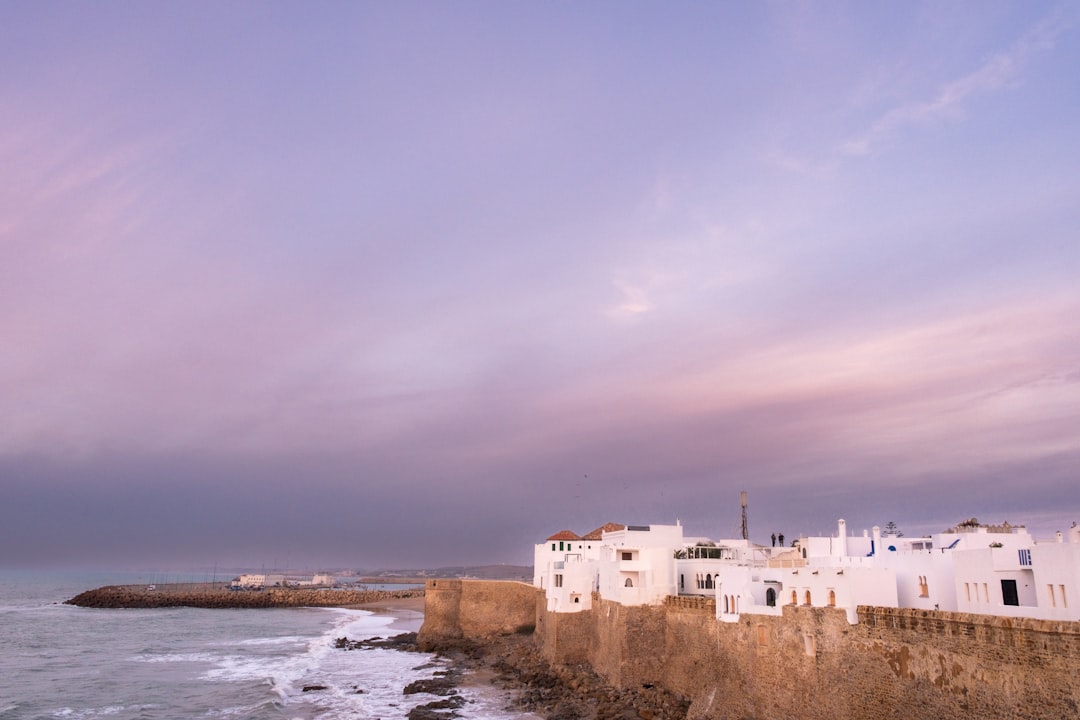
Asilah is a compact Atlantic coastal town of 36,039 residents perched just 31 km south of Tangier on Morocco’s northwest tip, sitting at a mere 2 metres above sea level. Its Portuguese-built ramparts from the 15th century stand fully intact and frame one of North Africa’s most photogenic medinas. What sets Asilah apart from Morocco’s inland imperial cities is that salt air, whitewashed walls, and a thriving street-art scene replace the usual souk chaos.
Three Things Not to Miss in Asilah
- Asilah’s Portuguese Ramparts — Fully intact 15th-century sea walls offer unobstructed Atlantic panoramas at golden hour — completely free to walk.
- Murals of the Medina — Since 1978, the Moussem festival has turned every medina wall into rotating street art — the world’s longest-running outdoor art event of its kind.
- Paradise Beach (Plage du Paradis) — A 3 km arc of uncrowded Atlantic sand just 2 km north of the medina, with calmer water than Tangier’s exposed beaches.
Scroll down for our complete travel guide with tips on getting there, where to stay, costs and more.
Getting to Asilah from the Airport
How do I get to Asilah?
Train is my top recommendation — ONCF runs direct services from Tangier Ville station and the journey takes **45 minutes**, costing roughly **DH 25–35** second class. From Casablanca, the train takes approximately **4 hours** and passes through Rabat. Grand taxis from Tangier’s taxi stand near the port cover the **31 km** for about **DH 50–70** per seat. In my experience, the train drops you closest to the medina and avoids the N1 highway traffic that bogs down taxis on summer weekends. Avoid arriving by bus if you’re carrying luggage — the CTM stop is a **15-minute walk** from the old town gates.
Which airport is closest to Asilah?
Tangier Ibn Battouta Airport (TNG) is your gateway — it sits **50 km** northeast of Asilah. In my experience, the easiest connection is a grand taxi from the airport to Tangier Ville train station (**DH 200–250** for the whole cab), then the **45-minute** ONCF train directly to Asilah. What surprised me is that no direct airport shuttle runs to Asilah, so factor in **90 minutes total** door-to-door. My tip: avoid renting a car at TNG unless you plan to explore the surrounding Rif region — Asilah itself is fully walkable and parking inside the medina walls is impossible.
How long does the journey to Asilah take from major Moroccan cities?
From Tangier the train takes **45 minutes**. From Rabat, expect **3 hours 30 minutes** by train via the high-speed Al Boraq to Kenitra then a regional connection, or **4 hours** on a standard service. From Casablanca Voyageurs station it is **4 hours** by direct train. From Marrakech, budget a full **6–7 hours** including one change at Casablanca. My tip: book ONCF tickets at least **48 hours** ahead in July and August — trains from Tangier to Asilah sell out on Friday afternoons when Tangerois escape south for the weekend. The honest caveat: Asilah has no high-speed rail stop, so Al Boraq travellers must change.
Do I need a rental car to explore Asilah and its surroundings?
No — Asilah’s medina is **800 metres** end to end and entirely pedestrianised. I did not use a car for **4 days** and missed nothing in town. However, if you want to reach Cap Spartel (**75 km** north) or the Caves of Hercules, a car saves time. Rentals from Tangier start at **DH 250–350 per day** for a basic Dacia Logan. The trade-off: parking near Asilah’s medina gate on Avenue Hassan II is free but chaotic in peak season, and leaving a rental car on the street overnight genuinely increases theft risk — confirmed by the guesthouse owners I spoke with. Grand taxis cover most day trips for **DH 40–80** per seat.
Moving Around Asilah
What are the best areas to stay in Asilah?
Stay inside or immediately adjacent to the medina — the walled city covers barely **0.3 sq km** so every riad puts you within **5 minutes** of the ramparts. The northern end near Bab Homar gate is quieter and faces the sea. The southern end near Place Zellaka has more café life but more motorbike noise after midnight. In my experience, Avenue Mansour Dahbi just outside the walls gives you modern amenities with a **3-minute walk** to the medina gate — good for families. My tip: avoid booking the hotel strip along the N1 highway, which is **1.5 km** from the old town and has no atmosphere whatsoever.
What does accommodation cost per night in Asilah?
Budget guesthouses inside the medina run **DH 200–350** per night for a double room with shared facilities. A mid-range riad with an en-suite bathroom and sea-view terrace costs **DH 500–800**. Boutique riads at the top end — think restored Portuguese-era houses with four rooms maximum — reach **DH 1,200–1,800** in July. What surprised me: Asilah is noticeably cheaper than Essaouira or Chefchaouen for comparable quality. The caveat most guides omit is that many medina guesthouses quote prices without breakfast — always confirm, because a full Moroccan breakfast added on-site costs an extra **DH 60–80** per person.
How far in advance should I book accommodation in Asilah during high season?
Book **8–10 weeks** ahead for July and August — Asilah’s Moussem Cultural Festival in August draws Moroccan and international visitors who fill the medina’s limited **200-odd** licensed beds within days of listings going live. For the Moussem week specifically (typically the second week of August), **3–4 months** in advance is not excessive. In my experience, shoulder months like April and October allow last-minute booking **1–2 weeks** out with no penalty. My tip: Booking.com has wider Asilah inventory than Airbnb. The honest warning: many charming unlisted riads accept WhatsApp direct bookings — ask your guesthouse owner for personal referrals once you arrive for a return visit.
What special accommodation types are available in Asilah?
Asilah’s standout option is the traditional Andalusian riad — a courtyard house with a central fountain, typically **4–8 rooms**, that dates from the town’s 19th-century Moroccan-Andalusian revival. Several owners have converted Portuguese-era tower houses into single-room retreats where one wall is literally the **15th-century rampart stone**. I recommend seeking these out specifically — the tactile experience of sleeping beside medieval stonework is genuinely found nowhere else in Morocco at this price point. Camping at the municipal site **1.5 km** north of the medina costs **DH 60–80** per pitch and has cold showers only — honest but basic. No international hotel chains operate in Asilah as of 2026.
Choosing a Neighbourhood in Asilah
What are the must-sees in Asilah?
Walk the full circuit of the **Portuguese ramparts** — the complete loop is **1.2 km** and takes **25 minutes** without stops, but plan an hour to photograph the Atlantic-facing bastions at sunset. The **Centre Hassan II des Rencontres Internationales** hosts rotating art exhibitions free of charge and was built inside a restored caïd’s palace. Climb **Al-Kamra Tower** for the best overhead view of the medina rooftops — it is open most mornings and entry is free. The murals concentrated around **Rue Ibn Khaldoun** represent the Moussem legacy and change partially each year, so even returning visitors find new works. My tip: the fish market at the port opens at **6:00 AM** and is over by **9:00 AM** — the freshest sardines in northwest Morocco.
What can I experience for free in Asilah?
The rampart walk, all medina street art, the fish market spectacle, and the beach are entirely free. Centre Hassan II exhibitions cost nothing. In my experience, the most underrated free activity is sitting at the **Bab el-Bahr** sea gate at dusk watching fishing boats return — locals gather there nightly and it is one of the most atmospheric **20 minutes** you will spend in Morocco. The Moussem festival’s outdoor concerts and mural unveilings are also free to attend, though food stalls and artisan markets cost money. My honest caveat: the medina mosques are not open to non-Muslims, which is a meaningful restriction compared to Morocco’s imperial cities.
Which day trips from Asilah are worth doing?
Tangier is the obvious choice — **31 km** north by grand taxi (**DH 40–50** per seat, **35 minutes**) and deserves a full day for the Kasbah, the Grand Socco, and the Musée de la Légation Américaine. Larache, **45 km** south, holds the ruins of ancient Lixus — a Roman-era city with a remarkable amphitheatre that sees a fraction of Asilah’s tourist traffic. Chefchaouen is **150 km** east (**2 hours 30 minutes** by grand taxi) and works as a long day or better as an overnight. In my experience, Larache is criminally underrated: I had the Lixus ruins to myself on a Tuesday morning in May, which would be unthinkable at Volubilis.
What local specialities should I try in Asilah?
Grilled sardines are the non-negotiable — Asilah’s Atlantic boats bring in sardines daily and a full plate of **6–8 fish** with bread and harissa costs **DH 25–40** at port-side stalls. Chermoula-marinated sea bass baked in clay tagines appears on nearly every medina restaurant menu and is genuinely excellent here. Try bastilla au lait — a sweet almond and milk pastry — at the cafés around Place Mohammed V for **DH 15–20** a portion. In my experience, the seafood couscous served on Fridays at family-run restaurants inside the medina walls is the single best meal Asilah offers, but you must arrive before **1:00 PM** or it runs out.
Top Sights in Asilah
What makes Asilah unique compared to other Moroccan coastal towns?
Three things set Asilah apart that I have found nowhere else in Morocco at comparable scale: fully intact Portuguese military ramparts that you can walk freely without a guide, a town-wide outdoor art programme (the Moussem) that has transformed street art from novelty to civic identity since **1978**, and a medina so small — barely **800 metres** across — that it never overwhelms. Unlike Essaouira which has been aggressively touristified, Asilah retains a functioning Moroccan neighbourhood: children play football in alleys where murals by international artists cost thousands of euros to commission. The town’s population of **36,039** means authentic daily life coexists with the art scene rather than being displaced by it.
How many days in Asilah are worthwhile?
**2 full days** covers every sight in Asilah itself — ramparts, murals, beach, port market, and a long lunch. I recommend **3 nights** as the sweet spot: it allows one day in Asilah, one day trip to Tangier or Larache, and a final morning to revisit your favourite medina corner without rushing. Anything beyond **4 days** requires your own agenda — long beach days, painting workshops, or fishing boat trips — because the town’s concentrated sights are genuinely exhausted in two days. The honest caveat: visitors expecting a busy souk or imperial-city scale will find Asilah too quiet after day two. It rewards people who slow down deliberately.
When is the best time to visit Asilah?
**April through September** offers the most reliable conditions based on climate analysis. My personal preference is **May or June** — sea temperatures reach **18–20°C**, the Atlantic breeze keeps daytime heat comfortable, and the medina is busy but not overwhelmed. August coincides with the Moussem Cultural Festival (second week), which is unmissable if art and music interest you, but accommodation fills completely and prices jump **30–40%**. In my experience, **October** is an underrated month: summer crowds thin dramatically, the sea stays warm from summer retention, and guesthouse owners are visibly more relaxed and generous with their time. Avoid January and February if you want reliable beach weather — Atlantic storms hit the ramparts hard.
Are there local festivals in Asilah worth attending?
The **Moussem Culturel International d’Asilah**, held annually since **1978**, is Morocco’s most important arts festival and Asilah’s defining event. It typically runs for **10 days** in August and combines live mural painting by international artists, literary symposiums, and open-air concerts — most events are free. The festival’s centrepiece is watching muralists work on the medina walls in real time, which is genuinely fascinating even if contemporary art is not your usual interest. My tip: arrive the first weekend when the new murals are freshest and artists are still on-site to talk. The caveat: every riad and guesthouse within **5 km** is booked solid — plan at least **3 months** ahead.
Where to Eat in Asilah
How does weather affect activities in Asilah throughout the year?
Asilah sits at sea level with Atlantic exposure, which moderates temperatures year-round — summers rarely exceed **28°C** and winters stay above **10°C**. The trade-off is wind: the northwest Atlantic swell makes swimming unpredictable between **November and March**, and the same wind that keeps July bearable can make beach umbrellas a liability. In my experience, the rampart walk is best on a breezy day when waves crash dramatically against the sea bastions — genuinely spectacular. Rain falls mostly between **November and February**. The medina itself is enjoyable in any weather because the narrow alleys provide shelter and the whitewash looks beautiful even under grey skies.
How crowded does Asilah get in peak season?
August is intense — Moroccan families from Casablanca, Rabat, and Tangier descend on Plage du Paradis and the medina simultaneously. The **800-metre** medina can feel genuinely congested between **11:00 AM and 3:00 PM** during Moussem week. That said, Asilah never reaches the suffocating density of Chefchaouen or the Fes medina in peak season — it is a manageable crowd. In my experience, arriving before **9:00 AM** gives you the medina virtually alone even in August. My honest warning: the N1 road into Asilah jams badly on Friday afternoons in July and August when weekend traffic from Tangier and Tetouan converges — build in **45 extra minutes** if driving then.
How safe is Asilah for travellers?
Asilah is one of Morocco’s safest towns for independent travellers — I walked the medina and ramparts at **11:00 PM** without any concern. Petty theft is rare compared to Tangier or Marrakech. The medina’s small size means locals recognise unfamiliar faces quickly, which creates natural community surveillance. Solo female travellers report Asilah as significantly more relaxed than Fes or Marrakech, though the usual caution about accepting directions from unofficial guides applies everywhere in Morocco. The honest caveat: the beach north of town beyond **Plage du Paradis** becomes isolated after dark and I would not walk it alone at night. Keep valuables in your riad safe — there are no left-luggage facilities at the train station.
Is English widely spoken in Asilah?
French is the dominant second language — most guesthouse owners, restaurant staff, and shopkeepers speak functional to fluent French. English is spoken at **roughly 40–50%** of medina businesses oriented toward international tourists, noticeably more than in inland Moroccan towns of comparable size. Spanish is surprisingly useful here: Asilah was under Spanish administration until **1956** and older residents in particular retain conversational Spanish. In my experience, a few words of Darija (Moroccan Arabic) — specifically ‘shukran’ (thank you) and ‘bzzaf’ (too much, useful for price negotiations) — unlock genuine warmth from locals that no amount of English politeness achieves. Google Translate’s camera mode handles Arabic signage adequately.
Before You Go to Asilah
What is the daily budget for travelling in Asilah?
A comfortable mid-range day costs **DH 400–600** (approximately €38–57 at current rates) including a medina guesthouse, three meals, beach time, and one café stop. Budget backpackers sharing a dorm-style room and eating sardines at port stalls can manage **DH 200–280** per day. A splurge day at a boutique riad with a seafood dinner and a day trip by grand taxi to Tangier reaches **DH 1,000–1,200**. In my experience, Asilah is **20–30% cheaper** than Essaouira for equivalent comfort. The hidden cost most guides omit: the hammam inside the medina charges **DH 15** entry but the obligatory kessa scrub and soap massage adds **DH 60–80** — budget for it because skipping feels wrong.
How does public transport work in and around Asilah?
Within Asilah itself, everything is **on foot** — the medina is **800 metres** across and no internal transport exists or is needed. Grand taxis from the stand on **Avenue Hassan II** (just outside the medina wall) connect to Tangier for **DH 40–50** per seat and Larache for **DH 35–45**. ONCF trains stop at Asilah station — **1 km** from the medina gate, walkable in **12 minutes** — running north to Tangier and south toward Kenitra and Casablanca. CTM buses stop on the N1 highway and are fine for longer hauls to Rabat or Casablanca. My tip: for Larache specifically, the grand taxi is faster and cheaper than waiting for an infrequent bus.
Which apps do you recommend for visiting Asilah?
**ONCF** (Morocco’s national rail app) is essential for booking and managing train tickets — book at least **48 hours** ahead in summer. **Maps.me** with Morocco offline maps downloaded before arrival is my preferred navigation tool because Google Maps has gaps in medina alley detail. **WhatsApp** is how every guesthouse, restaurant, and tour operator in Asilah communicates — having a local SIM (Maroc Telecom or Inwi, approximately **DH 30–50** for a tourist SIM with data at Tangier airport) makes everything smoother. **XE Currency** handles dirham conversions instantly. My honest warning: Uber and Careem do not operate in Asilah — do not rely on ride-share apps here. Grand taxi negotiation is the local standard.
Asilah at a Glance
| Population | 36,039 |
|---|---|
| Currency | Moroccan dirham (DH) |
| Official language | Arabic, Standard Moroccan Tamazight |
| Time zone | UTC+01:00 |
Source: Wikidata, retrieved September 2026.
Morocco › Asilah
More Destinations in Morocco
Essential Resources for Planning Your Trip to Asilah
- Travel info – Getting around Morocco — official visitor information, passes & events
- Wikipedia: Asilah — history, geography & background
- Wikivoyage: Asilah — community travel guide & practical tips
- Asilah travel – Morocco — expert itineraries & travel inspiration
- THE 15 BEST Things to Do in Asilah (2026) — hotels, restaurants & traveller reviews
- Travel info – Getting around Morocco — how to get around
- Numbeo: Cost of Living in Asilah — current prices & cost comparison
- Timeanddate: Asilah Weather & Climate — forecasts & climate statistics
More Perspectives on Asilah
- Ultimate Guide to Asilah, Morocco: Things to Do & Where …
- Asilah Morocco: Why This Quiet Coastal Town Should Be …
- For anyone who is visiting Morocco soon I highly …
Asilah Travel Videos
Watch these videos for a visual preview before your trip:
- ASILAH, Morocco 🇲🇦 | Why Visit?
- A day in my life in Morocco 🇲🇦 / #Asilah is a must visit city in Morocco #MoroccoTravel | silentvlog
- EAT FISH AND RELAX, is that all? Asilah -Morocco!
Asilah Travel Discussions on Reddit
Real traveller experiences and community advice:
- Travel: The City of Asilah : r/Morocco
- Traveling in Assilah : r/Morocco
- Morocco for two days only… Asilah, Tangier or Chefchaouen?
Data Sources
This page was compiled using data from Wikipedia, Wikidata, Open-Meteo (climate), Numbeo (cost of living) and REST Countries. Information is updated regularly.