
Catania: The Complete Travel Guide (2026)
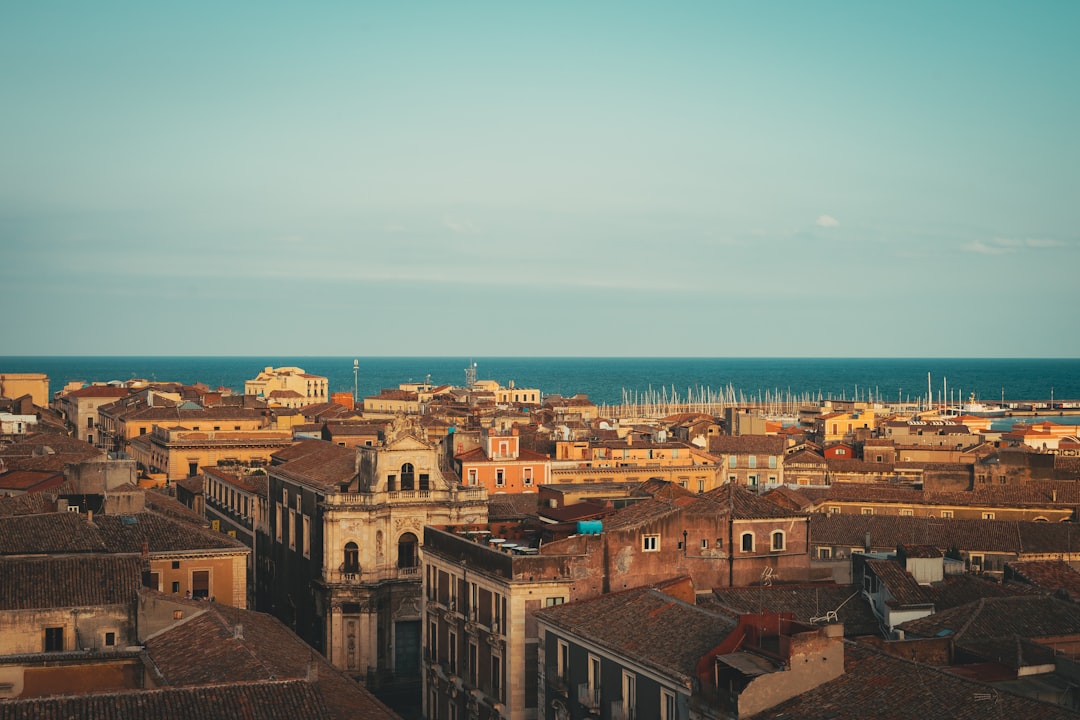
Catania Travel Guide: Everything You Need to Know (2026)
Catania is Sicily’s second-largest city with a population of 311,584, built almost entirely from black lava stone after the catastrophic 1693 earthquake flattened the original settlement. Sitting at just 7 metres above sea level at the foot of Mount Etna — Europe’s most active volcano — it offers a raw, authentic Sicilian energy that Palermo’s tourist circuit rarely delivers. The baroque old town, a UNESCO World Heritage Site since 2002, is compact enough to cover on foot yet deep enough to reward a week’s exploration.
Three Things Not to Miss in Catania
- Piazza del Duomo & Fontana dell’Elefante — Catania’s baroque heart, centred on a lava-stone elephant fountain dating to 1736 — the city’s beloved symbol.
- La Pescheria Fish Market — One of Sicily’s most theatrical markets, where tuna and swordfish are auctioned aloud from 6 a.m. every weekday.
- Mount Etna Crater Excursion — Active volcano summit at 3,357 metres, reachable by cable car and 4×4, delivering views across the entire Ionian coastline.
Scroll down for our complete travel guide with tips on getting there, where to stay, costs and more.
How to Reach Catania
How do I get to Catania?
Fly directly into **Catania Fontanarossa Airport (CTA)**, just **6 km** from the city centre — one of Italy’s busiest regional airports. In my experience, direct flights from most major European hubs (London, Amsterdam, Frankfurt) take under **3 hours** and cost as little as **€30–€80** one-way booked 6–8 weeks ahead on Ryanair or easyJet. From mainland Italy, a train from Rome via Villa San Giovanni and the Messina ferry takes around **8–9 hours** — scenic but slow. My tip: fly in and take the train or bus out northward toward Taormina. The honest caveat: Fontanarossa is being upgraded for 2026 and construction delays inside the terminal are genuinely disruptive during peak summer.
Which airport is closest to Catania?
**Catania Fontanarossa Airport (CTA)** is the closest and only practical option, sitting **6 km** southwest of **Piazza del Duomo**. It handles around 10 million passengers per year, making it Sicily’s busiest airport by volume. In my experience, the taxi from arrivals to the city centre costs a fixed **€20–€23** and takes roughly **15 minutes** outside rush hour. What surprised me: the Alibus shuttle (line 457) covers the same route for just **€4** and drops you at the central train station in about **20 minutes** — almost nobody on the plane knows about it. Palermo’s Falcone-Borsellino Airport is **220 km** away; ignore it unless you’re starting your trip there.
How long does the journey take to reach central Catania from the airport?
Getting from **Catania Fontanarossa** to **Piazza Stesicoro** or the central train station takes **15–25 minutes** depending on traffic. The fixed-fare taxi covers it in roughly **15 minutes** for **€20–€23**. The Alibus 457 shuttle takes **20 minutes** and costs **€4** — buy tickets from the machine at the bus stop immediately outside arrivals. In my experience, morning rush hour (7:30–9 a.m.) and the Via Etnea corridor near the Duomo can add 10 extra minutes. My tip: if you’re arriving with heavy luggage, the taxi fare is genuinely fair given Italian city standards; split between two travellers it’s barely more than two bus tickets and saves you the walk from the bus stop.
Do I need a car to explore Catania?
No — Catania’s historic centre is entirely walkable and driving there is a mistake. The ZTL (restricted traffic zone) covers almost all of **Via Etnea** and the baroque quarter; rental cars caught inside face automated fines of **€80–€160** that arrive weeks after you return home. In my experience, the city centre, fish market, castle, and most restaurants are within a **1.5 km** radius of **Piazza del Duomo**. For Mount Etna day trips, joining a guided excursion departing from outside the central train station (from around **€35–€55** per person) is smarter than renting a car. The honest trade-off: if you plan to explore rural villages like **Bronte** or **Randazzo** on Etna’s northern flank, a hire car for one day makes real sense — budget **€35–€60 per day** from Hertz or Europcar at the airport.
Catania Public Transport Explained
What are the best areas to stay in Catania?
I recommend the **Centro Storico** (old town) as the top base — staying within 5 minutes of **Piazza del Duomo** puts every key sight, market, and restaurant at your door. **Via Etnea** is the main commercial spine, lined with guesthouses and boutique B&Bs. The **Ognina** neighbourhood, about **3 km** north along the coast, is quieter, more residential, and used almost exclusively by Italians — a legitimate alternative if you want seafood restaurants without tourist markups. Avoid booking near the train station on **Piazza Papa Giovanni XXIII** — the area is visually bleak and has petty theft issues after dark. What surprised me: small family-run B&Bs inside converted baroque palazzi in **Via Crociferi** are often better value than branded hotels at a similar nightly rate.
What does accommodation cost per night in Catania?
A solid mid-range double room in **Centro Storico** runs **€70–€120** per night in 2026. Budget guesthouses and B&Bs start around **€45–€60** if you book via direct hotel sites rather than OTAs — most small operators give a 5–10% discount for direct reservations. Design boutique hotels inside restored lava-stone palazzi, like those along **Via Crociferi**, reach **€130–€180**. Luxury options near the Duomo push **€200+**. In my experience, the sweet spot is a 3-star palazzo B&B for around **€80–€95** including a proper Sicilian breakfast with granita and brioche. The caveat most guides skip: prices in Catania spike sharply during the **Festa di Sant’Agata** in early February — book 4–6 months ahead for that window.
How far in advance should I book accommodation in Catania during high season?
For July and August, book at least **8–10 weeks** ahead — good mid-range rooms in **Centro Storico** fill fast. For the **Festa di Sant’Agata** (February 3–5), which draws over 1 million visitors to a city of 311,584 residents, book **3–4 months** ahead or you will be priced out. In my experience, September and October — which are among Catania’s best travel months climatically — are easier, with **3–4 weeks** notice usually sufficient. My tip: check **Booking.com** for initial comparisons but always call the property directly; independent Sicilian B&Bs almost always match the price and throw in extras like airport pickup or late checkout. The hidden caveat: minimum stay requirements of 2–3 nights are common in August.
What special accommodation types are available in Catania?
Catania’s most distinctive stay is inside a **palazzo barocco** — centuries-old lava-stone mansions converted into boutique guesthouses with frescoed ceilings and internal courtyards, concentrated along **Via Crociferi** and **Via dei Crociferi**. Several offer rooftop terraces with direct Etna views. Agriturismo farms on Etna’s lower slopes, around **15–25 km** from the city near **Zafferana Etnea**, offer vineyard stays from **€65–€90** per night — genuinely unique. What surprised me: a handful of operators now offer crater-adjacent glamping on Etna itself, though these operate seasonally (June–September only) and cost **€150–€200** per night. For backpackers, **Ostello degli Elefanti** near the Duomo is the standout hostel, with dorms from around **€22–€28** per night.
Neighbourhoods of Catania
What are the must-see sights in Catania?
In my experience, these are non-negotiable: **Piazza del Duomo** with its 1736 lava-elephant fountain is the soul of the city. **La Pescheria** fish market (open 6 a.m.–1 p.m., Monday–Saturday) is one of the most visceral market experiences in all of Italy. **Castello Ursino**, a 13th-century Norman castle that once sat directly on the coastline before the 1669 lava flow extended the land, now houses a free civic museum. **Via Crociferi** is arguably Sicily’s finest baroque street. Mount Etna’s cable car and crater area (tickets from **€35** for the basic ascent) is a 45-minute drive from the centre. My tip: walk **Via Etnea** from the Duomo to **Villa Bellini** park at dusk — the alignment toward the volcano at sunset is extraordinary and costs nothing.
What can I experience for free in Catania?
Catania rewards the budget traveller generously. **Piazza del Duomo**, **Via Crociferi**, and the entire baroque quarter cost nothing to walk and photograph. **La Pescheria** fish market charges no entry fee — just arrive before 10 a.m. for peak atmosphere. **Villa Bellini**, a 19th-century public garden on **Via Etnea**, is free and perfect for an afternoon break. **Castello Ursino’s** courtyard is accessible without paying museum entry. The **Catania Cathedral (Duomo di Sant’Agata)** is free to enter outside of services. In my experience, simply wandering the black lava-stone streets of the **Civita** district between Piazza Stesicoro and the sea delivers more authentic Sicily than any paid tour. The honest caveat: many church interiors have irregular opening hours — check Google Maps listings the morning of your visit.
Which day trips are possible from Catania?
**Taormina** is the obvious choice — a spectacular clifftop town with a Greek theatre overlooking the sea, just **52 km** north by train (**€4.50**, 45 minutes). **Siracusa** is **60 km** south, with a Greek archaeological park that frankly rivals Athens; train takes about **1 hour 20 minutes** for **€7–€9**. Mount Etna summit excursions depart daily from **Piazza Giovanni XXIII**. **Ragusa Ibla**, a UNESCO baroque town, is **100 km** southwest — manageable by car but awkward by bus. In my experience, Taormina and Siracusa are the two strongest day trips from a pure value-per-hour perspective. The trade-off: Taormina in July–August is aggressively crowded between 11 a.m. and 4 p.m. — take the first train (departing around 7 a.m.) and leave before noon.
What local specialities should I try in Catania?
Catania has one of Sicily’s richest food identities. **Granita con brioche** for breakfast is non-negotiable — the almond or mulberry versions at **Caffè del Duomo** or **Spinella** on Via Etnea are exceptional. **Pasta alla Norma** was literally invented in Catania — aubergine, tomato, ricotta salata, named after Bellini’s opera. **Arancini** here are larger and more aggressively flavoured than Palermo’s version. **Stigghiola** (grilled lamb intestines) from street vendors near **La Pescheria** is confronting but authentic. The local **Etna DOC** wines — particularly Nerello Mascalese reds from volcanic soil — are world-class and often cheaper than equivalent Tuscan bottles. In my experience, a full Sicilian lunch with wine at a trattoria inside the market area costs **€14–€22** per person — far below the tourist-zone markup.
What to See in Catania
What makes Catania unique compared to other Sicilian cities?
Catania’s defining characteristic is its relationship with Mount Etna — not as a backdrop but as a lived presence. The entire city is literally built from black lava stone ejected by the volcano, giving it an architectural texture found nowhere else in Europe. Unlike Palermo, which can feel exhaustingly chaotic, Catania has a compact, walkable centre with a genuinely functioning university (founded **1434**, one of Italy’s oldest) that keeps the street culture young and lively. In my experience, Catania’s food scene — anchored by **La Pescheria** and the surrounding trattorie — is more honest and less performative than Palermo’s tourist-facing restaurants. The honest trade-off: Catania lacks Palermo’s museum depth and Siracusa’s ancient monuments, so if archaeology is your priority, it is better as a base than a primary destination.
How many days are worthwhile in Catania?
**3 full days** covers Catania’s centre thoroughly without padding. Day 1: **Piazza del Duomo**, Duomo interior, **Via Crociferi**, Castello Ursino, evening on **Via Etnea**. Day 2: Early morning at **La Pescheria**, then a Mount Etna excursion (half-day minimum, full day is better). Day 3: Day trip to **Taormina** or **Siracusa** by train. In my experience, travellers who stay 4–5 days use the extra time for a second Etna hike at a different altitude or an Etna wine-tasting tour near **Milo** — genuinely worthwhile if you’re interested in volcanic terroir. The honest caveat: Catania’s nightlife and restaurant scene is strong enough to absorb an extra evening, but the city’s sightseeing core is compact — don’t manufacture days just to fill a longer itinerary.
When is the best time to visit Catania?
Based on verified climate data, **June, August, September, and October** are Catania’s best travel months. My personal recommendation is **late September to mid-October** — temperatures are around **24–27°C**, the summer crowds have thinned, Etna excursions are fully operational, and grape harvest season means Etna wineries are open and buzzing. August is hot (regularly **32–35°C**), busy, and expensive but delivers the full Sicilian summer experience if that’s what you want. **June** offers long days and lower accommodation prices than August. The one month I’d avoid: **January** and **February** outside of the Sant’Agata festival — grey, wet, and with many restaurants on reduced hours. Spring (April–May) is pleasant but Etna’s upper trails can still be snow-covered through April.
Are there local festivals in Catania worth attending?
The **Festa di Sant’Agata** (February 3–5) is one of Italy’s largest religious festivals — over 1 million people line the streets of a city of 311,584 as an enormous silver reliquary is carried through the baroque quarter. In my experience, it is genuinely one of the most emotionally intense public events in southern Italy, completely unlike any staged tourist festival. Attend the candlelit procession after dark on February 4 for the full impact. The **Catania Jazz Festival** runs in July and uses outdoor venues around **Piazza del Duomo**. The Etna harvest festivals in **Zafferana Etnea** (October) celebrate local wine and honey with free tastings. The caveat: Sant’Agata accommodation must be booked months in advance and prices triple — but it is worth experiencing once.
Catania Food Scene
How does the weather affect activities in Catania?
In summer (**June–August**), heat above **32°C** makes midday city walking genuinely uncomfortable — schedule market visits and walking tours before **11 a.m.** and resume after **5 p.m.** Mount Etna’s crater area is accessible and snow-free from June through October, with cable car and 4×4 services running daily. In my experience, September is the ideal month: the sea is still warm enough for swimming at **Lido di Ognina** (water temperatures around **24°C**), Etna trails are clear, and the city is not baking. Winter rain (November–January) occasionally makes Etna’s upper slopes dangerous and closes crater-rim access. The underreported risk: Etna can erupt or emit significant ash at any time, which occasionally forces **Fontanarossa Airport** to close for **12–48 hours** — build buffer days into any winter or spring trip.
How crowded does Catania get in peak season?
Catania is significantly less overrun than Taormina or the Amalfi Coast but August still brings real pressure. **La Pescheria** market by 10 a.m. in August is shoulder-to-shoulder. Restaurant queues at popular trattorias near the Duomo stretch to **30–45 minutes** without a reservation. Etna excursion buses from the train station fill by 9 a.m. in July–August — book the day before. What surprised me: Catania absorbs summer tourism better than most Sicilian cities because its **311,584** local residents continue using the city normally — it never fully tips into a tourist-only zone the way Taormina does in August. My tip: even in peak season, walking 3 streets off **Via Etnea** into the **Civita** quarter drops the tourist density by 80% instantly.
How safe is Catania?
Catania is safe for tourists but requires basic urban awareness. Petty theft — bag snatching and phone grabs, sometimes from scooters — is the primary risk, concentrated around **Piazza Papa Giovanni XXIII** (the train station area) and at **La Pescheria** market. In my experience, keeping a crossbody bag worn in front eliminates 95% of the risk. The historic centre around **Piazza del Duomo** and **Via Etnea** is well-lit and busy until midnight in summer. Avoid the **San Cristoforo** and **Librino** districts entirely — these are peripheral residential areas with no tourist interest and active criminal activity. The honest caveat most guides omit: Catania has a higher petty crime rate than Palermo by some Numbeo metrics, so adjust your guard level accordingly — treat it like Naples rather than Florence.
Is English widely spoken in Catania?
English is functional but not universal in Catania. In tourist-facing restaurants along **Via Etnea** and around **Piazza del Duomo**, staff in their 20s–30s typically manage solid English. At **La Pescheria** market and in neighbourhood trattorias frequented by locals — like those in the **Civita** district — Italian is essential. In my experience, even basic Italian phrases (buongiorno, un caffè per favore, il conto) shift the interaction dramatically — Catanesi respond warmly to any effort. The university population keeps younger English-speaker density higher than in comparable southern Italian cities. My tip: download **Google Translate** with Italian offline pack and use the camera translation feature for menus — older trattorie rarely provide English menus and handwritten daily specials boards are common.
Local Know-How for Catania
What is the daily budget for visiting Catania?
Budget travellers can cover Catania on **€55–€70 per day** — hostel dorm around **€25**, market breakfast with granita **€3–€4**, a trattoria lunch **€12–€16** (verified average cheap meal: ~€16 at current rates), and street food dinner with a carafe of local wine. Mid-range travellers spending **€100–€140 per day** get a palazzo B&B, two sit-down restaurant meals, and a paid activity like an Etna cable car ticket (**€35**). In my experience, food costs in Catania run roughly **20–30% lower** than in Rome or Milan at equivalent quality levels. The hidden cost most guides ignore: Etna excursions and day trips to Taormina or Siracusa add **€30–€60** per excursion day — factor these separately rather than averaging them into a daily figure.
How does public transport work in Catania?
**AMT Catania** operates the city bus network with a single ride costing approximately **€1.50** (verified local transport fare). The most useful tourist routes run along **Via Etnea** connecting the train station to **Villa Bellini** park. A limited metro line (2 operative stations in the central zone as of 2026) is expanding but covers only a fraction of tourist needs. In my experience, the bus is reliable but infrequent after 9 p.m. — plan evening returns to your accommodation on foot or by taxi. **Trenitalia** regional trains connect Catania to Taormina (**€4.50**), Siracusa (**€7–€9**), and Messina (**€8–€10**) efficiently from **Stazione Centrale**. The caveat: Catania’s city buses rarely run on published timetables exactly — add **10–15 minutes** of buffer to any connection.
Which apps do you recommend for visiting Catania?
In my experience, these 5 apps are genuinely useful in Catania. **Trenitalia** or **Italo** for booking regional trains to Taormina and Siracusa — book same-day, no need for advance purchase on these short routes. **Google Maps** with offline Sicily map downloaded (the city centre has occasional dead spots). **TheFork** (called ElTenedor in some app stores) for restaurant reservations — Catania restaurants are increasingly listed, and a reservation saves you the peak-hour queue. **Google Translate** with Italian offline for market and trattoria menus. **Meteoam** (Italian meteorological authority app) for accurate Etna weather forecasts — standard weather apps consistently underestimate cloud cover at crater level. The honest caveat: there is no dedicated AMT Catania app worth using; check bus times via Google Maps instead.
Catania at a Glance
| Population | 311,584 |
|---|---|
| Currency | EUR (€) |
| Official language | Italian |
| Time zone | Europe/Rome |
Source: Wikidata, retrieved September 2026.
Italy › Catania
More Destinations in Italy
Essential Resources for Planning Your Trip to Catania
- Visit Catania: Things to do & Markets – Italia.it — official visitor information, passes & events
- Wikipedia: Catania — history, geography & background
- Wikivoyage: Catania — community travel guide & practical tips
- Catania travel – Lonely Planet | Italy, Europe — expert itineraries & travel inspiration
- THE 15 BEST Things to Do in Catania (2026) — hotels, restaurants & traveller reviews
- Catania: Style and Substance | Sophie’s World Travel Inspiration — how to get around
- Numbeo: Cost of Living in Catania — current prices & cost comparison
- Timeanddate: Catania Weather & Climate — forecasts & climate statistics
More Perspectives on Catania
- 13 Wonderful Things To Do in Catania | Sicily’s Alternative …
- A Local’s Favorite Things to Do in Catania
- Catania Guide for First-Time Visitors: A Sicilian’s Picks
Catania Travel Videos
Watch these videos for a visual preview before your trip:
- CATANIA, SICILY: What to Do in Catania and Why You Need to Visit
- Top 10 Things to do in Catania, Sicily! 🇮🇹
- Catania, Sicily: Exploring the Hidden Beauty, Food, and Warmth of a Misunderstood City
Catania Travel Discussions on Reddit
Real traveller experiences and community advice:
- Catania worth a visit? : r/sicily
- Honest opinion about Catania – help me put my mind at ease.
- Traveling to Sicily, Catania : r/sicily
Data Sources
This page was compiled using data from Wikipedia, Wikidata, Open-Meteo (climate), Numbeo (cost of living) and REST Countries. Information is updated regularly.