
Rhodes: The Complete Travel Guide (2026)
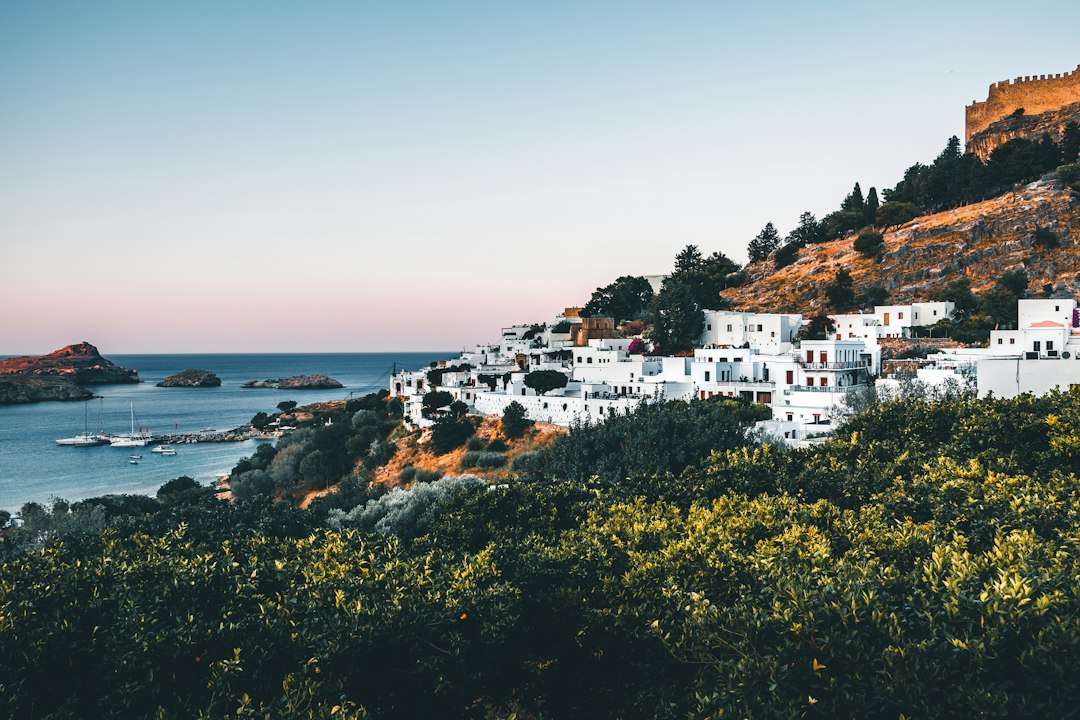
Last reviewed: October 2026 · key facts checked against Wikidata
Rhodes Weather by Month: When to Go
| Month | Day | Night | Sea | Rain days | Rain mm | Wind km/h | Good for |
|---|---|---|---|---|---|---|---|
| Jan | 15° | 11° | 19° | 13 | 84 | 24 | – |
| Feb | 16° | 11° | 18° | 8 | 54 | 23 | Hike |
| Mar | 17° | 12° | 18° | 8 | 52 | 24 | Hike |
| Apr | 21° | 14° | 18° | 6 | 31 | 22 | Hike |
| May | 25° | 18° | 20° | 4 | 19 | 23 | Hike |
| Jun | 30° | 22° | 24° | 1 | 4 | 23 | Swim |
| Jul | 33° | 25° | 27° | 0 | 3 | 23 | Swim |
| Aug | 33° | 25° | 28° | 0 | 1 | 23 | Swim |
| Sep | 30° | 23° | 27° | 1 | 5 | 23 | Swim |
| Oct | 25° | 20° | 25° | 4 | 28 | 19 | Swim |
| Nov | 21° | 16° | 23° | 7 | 69 | 19 | – |
| Dec | 17° | 12° | 21° | 10 | 91 | 22 | – |
Sources: ERA5 reanalysis via Open-Meteo, 2016–2025 (10-year average) for air temperature, rain and wind (average daily maximum); Open-Meteo Marine API, 2023–2025 for sea surface temperature. A rain day has at least 1 mm. Area averages; individual years vary.
Rhodes Travel Guide: Everything You Need to Know (2026)
Rhodes is the largest island of the Dodecanese archipelago, lying approximately 18 km off the Turkish coast at its closest point, with a population of 54,562 in the city proper. The island sits at just 10 metres above sea level along its coastal fringe and receives over 300 days of sunshine annually, making it one of the sunniest destinations in the Mediterranean. Founded as a unified city-state in 408 BC, historic Rhodes Town is a UNESCO World Heritage Site and one of the best-preserved medieval walled cities in Europe.
Three Things Not to Miss in Rhodes
- Palace of the Grand Master — A 14th-century citadel crowning the medieval walled city, with original mosaic floors salvaged from the island of Kos.
- Lindos Acropolis — A clifftop sanctuary of Athena Lindia perched 116 metres above a turquoise bay, reached by a 10-minute cobbled climb.
- Prasonisi Beach — A narrow sand spit at Rhodes’ southern tip that splits the Aegean and Mediterranean, creating ideal windsurfing conditions year-round.
Scroll down for our complete travel guide with tips on getting there, where to stay, costs and more.
Reaching Rhodes
How do I get to Rhodes — by flight or ferry?
Flight is the dominant choice, with direct international connections into Diagoras Airport. The ferry is viable but slow: the Piraeus–Rhodes sailing takes roughly 16–18 hours with operators such as Blue Star Ferries or ANEK Lines, departing from Athens’ port. For island-hopping travellers arriving from nearby Dodecanese islands like Kos (about 2.5 hours by fast ferry) or Symi (under 1 hour), the ferry makes practical sense. Worth knowing: flying is almost always faster and, outside summer, competitively priced. Ferry travel adds romance but check timetables carefully — services reduce sharply between November and March.
Which airport or port is the best starting point for Rhodes?
Diagoras International Airport (RHO) in Paradisi, roughly 14 km southwest of Rhodes Town, is the sole entry point by air. It handles direct charters from most European capitals and scheduled flights via Aegean Airlines and Ryanair, among others. The port of Rhodes Town (Kolona Harbour) serves ferry arrivals; cruise ships use the Commercial Harbour immediately adjacent. Both port areas are walkable to the Old Town. Tip: if arriving by ferry late at night, pre-book a taxi as port taxi ranks can be busy — the ride to Old Town takes under 10 minutes.
How long does the ferry crossing to Rhodes take?
It depends heavily on your departure point. From Piraeus (Athens), conventional ferries take 16–18 hours overnight; high-speed services (where available) cut this to around 9–10 hours but cost significantly more. From Kos, expect 2.5–3 hours on a conventional ferry or roughly 1 hour on a fast catamaran operated by Dodekanisos Seaways. From Symi, the journey is under 1 hour. Worth knowing: summer frequency increases dramatically — Blue Star Ferries typically runs daily from Piraeus in peak season, but winter drops to 3–4 sailings per week, so always verify the current schedule on openseas.gr or directly with the operator.
What does a flight or ferry to Rhodes cost?
Domestic flights from Athens (ATH) to Diagoras (RHO) start around €40–€80 one-way with Aegean Airlines if booked 6–8 weeks ahead, but peak July–August fares can exceed €150. Budget carriers from northern Europe often offer packages rather than standalone tickets. Overnight ferry from Piraeus in a basic deck seat runs roughly €35–€55; a cabin berth costs €80–€130 depending on class — check Blue Star Ferries for current pricing. The fast ferry from Kos costs approximately €15–€25 on Dodekanisos Seaways. Caveat: fuel surcharges and port taxes are added at checkout and are not always visible in headline prices.
Are overnight ferries to Rhodes worth it?
Yes, for travellers on a budget who don’t mind the time. An overnight cabin on Blue Star Ferries from Piraeus saves a night’s accommodation — a 4-berth cabin costs roughly €80–€130 total, less than a budget hotel in Rhodes Town. You arrive refreshed in the morning, bags in hand, ready to check in. The trade-off is a journey of 16–18 hours with limited onboard entertainment; the quality of cabins varies by vessel class. We recommend booking a 2-berth cabin rather than deck passage if you are travelling in August, when the decks are crowded and sleep is near-impossible.
Transport on Rhodes
Do I need a rental car or scooter on Rhodes?
Yes, if you want to explore beyond Rhodes Town and Lindos. The island is 79 km long — reaching Prasonisi in the south, the Valley of the Butterflies (Petaloudes), or the hilltop village of Embonas is impractical without wheels. Rental cars start around €30–€50/day through local agencies in Ialyssos and Faliraki or at the airport; international companies like Sixt and Europcar operate at Diagoras (RHO). Scooters from around €20/day suit day trips. Tip: the main east-coast road to Lindos (54 km from Rhodes Town) is well-paved, but narrow mountain tracks inland require an SUV or local knowledge. Verify age requirements — most agencies demand a minimum age of 21.
Are there buses between towns on Rhodes?
Yes, but service is limited outside the east coast. KTEL Rhodes operates two main intercity routes: the East Side line (Rhodes Town → Faliraki → Lindos) and the West Side line (Rhodes Town → Airport → Kameiros). The east-coast bus to Lindos runs roughly every 30–60 minutes in summer and costs approximately €4–€5 one way — check current schedules and fares at the KTEL terminal on Averof Street in Rhodes Town. The west-coast service to Ancient Kameiros is infrequent (2–3 times daily). Caveat: the southern third of the island — including Prasonisi — has no scheduled bus service, making a rental car or organised excursion necessary for those areas.
What does a rental car cost on Rhodes — and where do I hire one?
Expect €30–€60 per day for a compact car in shoulder season; peak July–August rates can climb to €60–€90/day. Local agencies near Diagoras Airport (RHO) and along the beachfront strip in Ialyssos typically undercut international operators by 20–30%. International brands such as Europcar, Sixt, and Hertz are available at the airport for guaranteed pick-up. Booking at least 3–4 weeks ahead in summer is strongly advised — inventories sell out. Worth knowing: Greek law requires an international driving licence if your national licence is not in Latin script, and collision damage waiver excess can be €500–€1,500 unless you purchase additional cover. Always photograph the vehicle thoroughly before driving off.
Which parts of Rhodes are accessible by public transport?
Rhodes Town, Faliraki, and Lindos are the most reliably served destinations by KTEL Rhodes buses. Within Rhodes Town, the distances are walkable — the Old Town measures roughly 1.4 km from Mandraki Harbour to the Gate of St John. The urban bus network (operated separately, marked RODA) covers Ialyssos and Rhodes Town suburbs for around €1–€2 per ride. Ancient sites like Kameiros have limited service; the valley village of Embonas and the southern beaches including Gennadi and Plimiri require private transport. Tip: from Rhodes Town, organised boat excursions to nearby Symi island depart daily from Mandraki Harbour and require no car.
Can I cycle around Rhodes island?
Cycling around the entire island is not practical for most visitors. At 220 km of coastline with significant inland hills, a full circuit demands a multi-day commitment and strong fitness. However, cycling within Rhodes Town’s Old Town and New Town is pleasant — the medieval streets are largely flat. Mountain biking is popular on trails around Profitis Ilias (798 m altitude) with rental shops in Rhodes Town offering bikes from roughly €10–€15/day. The coastal road between Rhodes Town and Faliraki (~14 km) is manageable by e-bike. Caveat: main roads lack dedicated cycling lanes and truck traffic on the east-coast highway makes them genuinely hazardous in high season.
Accommodation on Rhodes
Which town should I base myself in on Rhodes?
Rhodes Town is the best all-round base. It combines the UNESCO-listed Old Town with a full range of restaurants, ferries to day-trip islands, and the airport just 14 km away. Lindos village (54 km south) offers atmosphere and proximity to the acropolis but has limited accommodation, narrow streets with no parking, and crowds peaking at 10 am daily in July–August. Faliraki (15 km south of Rhodes Town) suits package holidaymakers seeking beach and nightlife but is largely resort-oriented with fewer cultural experiences. We recommend the Old Town or Ixia/Ialyssos fringe of Rhodes Town for a balance of character and convenience — and note that the neighbouring island of Symi, just 45 minutes by fast boat, makes a serene alternative base.
What does accommodation cost per night on Rhodes?
Economy hotels average around €70/night based on verified Numbeo data, though this varies sharply by location and season. A basic guesthouse in the Old Town runs €50–€80 in May or October; the same room can cost €120–€160 in August. Mid-range 4-star hotels along the Ixia beach strip or in Kalithea start around €90–€140 per night in shoulder season. Luxury resorts such as those in Ixia and Faliraki command €200–€400/night peak season. Tip: accommodation inside the medieval walls (Old Town) is atmospheric but narrow alleys mean no vehicle access — confirm bag-carry policies with your host before arriving.
Which area of Rhodes suits which travel style?
Old Town (Rhodes Town) suits history lovers — 4 km of medieval walls, the Street of the Knights, and the Palace of the Grand Master are walkable from any guesthouse within the walls. Ixia and Ialyssos (3–6 km west of the centre) attract windsurfers and watersports enthusiasts, with consistent northwest winds. Faliraki is the island’s party hub — dozens of bars clustered along the strip, with beach by day and club scene by night. Lindos appeals to boutique travellers seeking whitewashed lanes and sea views, though prices are high. Gennadi and Kiotari (south, ~70 km) offer quieter, uncrowded beaches best reached by rental car — a stark contrast to the north’s resort density.
How far in advance do I need to book accommodation on Rhodes?
Book at least 2–3 months ahead for July and August. Desirable rooms inside the Old Town sell out by late April for peak summer; boutique options in Lindos village are often gone even earlier. For May, June, September, or October travel — the recommended shoulder months — 4–6 weeks ahead is typically sufficient. Tip: if your plans are flexible, last-minute deals sometimes appear in early June or late September on platforms like Booking.com, but bet on this only if you have plan-B options. The island receives a large volume of package-holiday bookings from northern Europe (UK, Germany, Scandinavia), which locks up mid-range hotel blocks months in advance through tour operators.
Are there apartments or villas with sea views on Rhodes?
Yes — and they represent excellent value versus comparable hotels. Self-catering apartments with sea views are widely available through Airbnb, Booking.com, and specialist villa operators such as Olympic Holidays and James Villas. In the Lindos area, clifftop studios with private terraces overlooking Lindos Bay start around €80–€120/night in May–June. The Ladiko Bay area (between Rhodes Town and Faliraki) has small apartment complexes with sea-facing balconies from roughly €60–€90/night shoulder season. Larger villas with private pools in the Kalathos or Pefki areas of the east coast run €1,500–€3,000/week in peak season for 6–8 guests — per-person costs are competitive. Tip: read descriptions carefully as “sea view” sometimes means partial glimpse from one balcony corner.
Rhodes Season by Season
When is the best time to visit Rhodes?
May, June, September, and October offer the strongest combination of weather, value, and manageable crowds. Sea temperatures reach a swimmable 22–24°C from late May and stay warm through October. July and August deliver near-certain sunshine but daytime highs regularly exceed 35°C in the interior, accommodation prices peak, and popular sites like the Lindos Acropolis queue from 9 am. October is particularly rewarding — hotels drop 30–40% off August rates, the water remains warm (~22°C), and the Valley of the Butterflies (Petaloudes) path is pleasantly quiet. Avoid December–February unless specifically exploring the medieval Old Town off-season; most beach facilities and many restaurants close entirely.
What is the weather on Rhodes like throughout the year?
Rhodes has a classic eastern Mediterranean climate — hot dry summers and mild wet winters. Summers (June–September) are reliably sunny with minimal rainfall; July and August average highs around 33–35°C. Spring (April–May) brings occasional showers but comfortable temperatures in the mid-20s°C with wildflowers in bloom inland. Autumn remains warm into November. Winter is the trade-off: January and February see the most rainfall, some businesses in resort areas close, and temperatures drop to roughly 12–15°C daytime. The northwest meltemi wind is a defining feature of summer — beneficial for windsurfers at Ixia but potentially disruptive for boat excursions, particularly to Symi or Halki, on its strongest days (typically July–August afternoons).
When does Rhodes get overcrowded?
**Peak congestion hits from late June through August, with the absolute maximum in the last two weeks of July and first two of August. The Lindos Acropolis can see 2,000+ visitors per day in this window, with queues at the donkey-ride station (the cobbled lane to the top) from 9 am. Mandraki Harbour in Rhodes Town fills with day-trippers off cruise ships — sometimes 3 vessels simultaneously — between 10 am and 5 pm. Tip: visit the Old Town** before 8:30 am or after 6 pm in peak season to experience the atmosphere without crowds. Greek Easter week (April, date varies) brings a domestic tourism spike — book accommodation and restaurant tables in Lindos early for that weekend.
Is there a worthwhile shoulder season on Rhodes?
Yes — May and October are the standout shoulder months. In May, temperatures sit around 23–27°C, sea swimming is possible from mid-month, and hotel rates in areas like Ixia run roughly 30–40% below August peaks. Restaurants throughout the Old Town are fully open by May 1st. October keeps warm water (~22°C), offers golden-hour photography at uncrowded sites, and sees the Rhodes Marathon typically held in early November if athletic events interest you. The gap between September and October sees the most dramatic price drops for quality accommodation. Caveat: some beach bars, water-sports operators, and southern resort areas like Gennadi begin closing from mid-October, so verify specific facilities before booking late-season.
When does the beach and watersports season begin on Rhodes?
The beach season effectively opens in May with sea temperatures reaching approximately 20–22°C — cool but swimmable for most visitors. Water sports operators at Elli Beach (Rhodes Town) and Faliraki Beach typically open from late April. Windsurfing schools at Ixia, including operators affiliated with the ION Club, open from April and run through October, driven by the reliable northwest meltemi wind. Scuba diving operators such as Waterhoppers in Rhodes Town begin guided dives from April. Peak season for all facilities runs June–September. Tip: jellyfish (mauve stingers) occasionally affect northern beaches in late August — local beach bars post warnings and sell sting-relief gel for around €5–€8 if needed.
Budgeting for Rhodes
What does a daily budget cost on Rhodes?
A realistic mid-range daily budget is €80–€120 per person. Based on verified Numbeo data, a cheap meal costs around €12 (approximately $13 at current rates) and a mid-range dinner for two approximately €21 (approximately $23.40). Add a €70 economy hotel, local transport at roughly €1.30 per ride, plus entry fees (the Palace of the Grand Master costs approximately €6–€8) and a budget of €80/day is achievable with hostel accommodation and self-catering breakfasts. A comfortable mid-range day — sea-view accommodation, sit-down lunches, one paid attraction, and an evening meal in the Old Town — runs closer to €120–€150. July–August inflates all categories by 20–35%.
Is Rhodes more expensive than the Greek mainland?
Yes — island pricing adds a noticeable premium. Grocery prices on Rhodes run approximately 15–20% higher than in Athens due to transport costs for goods shipped to the island. Restaurant meals in Lindos and the Old Town are particularly elevated — a sit-down dinner for two at a view terrace can reach €55–€70 including wine. By contrast, a similar meal in a neighbourhood taverna in Athens’ Monastiraki costs €25–€35. Petrol is also around 10–15% more expensive than mainland average. Budget travellers can offset this by eating at local kafeneia outside tourist zones — the market area of Nea Agora in Rhodes Town has canteen-style lunches for under €10.
What expenses on Rhodes are unavoidable?
Transport is the main unavoidable cost. Without a rental car (from ~€35/day), exploring beyond the north is impossible unless you pay for organised excursions (~€30–€60 per person). Ferry port taxes apply to departures — typically €5–€10 per person — and are sometimes not included in ticket headline prices. Entry to the Palace of the Grand Master and the Archaeological Museum of Rhodes (both in the Old Town) each carry fees of approximately €6–€8. A combined ticket for Old Town museums offers better value — check the current offer at the ticket office on Ippoton Street. Sunscreen costs roughly €8–€15 for a 200ml bottle in resort shops; bring it from home.
What does food cost on Rhodes — local vs tourist prices?
Local prices are significantly cheaper than tourist-zone menus. A cheap meal at a neighbourhood taverna or souvlaki stand runs approximately €12 (Numbeo verified). A mid-range dinner for two with wine at a tourist-facing restaurant on the Street of the Knights or in Lindos village costs approximately €50–€70. A Greek coffee (ellinikos) at a local kafeneio away from the harbour is €1.50–€2; the same style of coffee at a harbour-view café near Mandraki runs €4–€5. Tip: the market stalls inside the Nea Agora (New Market) building in Rhodes Town serve fresh gyros and grilled meats at genuinely local prices — a full plate with bread costs around €8–€10.
What are the best beaches on Rhodes?
Tsambika, Anthony Quinn Bay, and Prasonisi stand out for different reasons. Tsambika Beach (24 km south of Rhodes Town) offers 700 metres of fine golden sand with shallow turquoise water, sun-bed rental from roughly €8/pair, and a beach bar — busy but well-organised. Anthony Quinn Bay (named after the actor who filmed scenes nearby) is a smaller, photogenic rocky inlet near Faliraki with clear snorkelling water and no lounger crowds. Prasonisi at the island’s southern tip (~90 km from Rhodes Town) is a windsurfer’s and kitesurfer’s paradise — the sand spit bisects two seas. Elli Beach in Rhodes Town centre is the most accessible urban beach, walkable from the Old Town, though it is crowded July–August.
What to Do on Rhodes
What are the top sights on Rhodes beyond the beaches?
The medieval Old Town, Lindos Acropolis, and Ancient Kameiros are the three pillars. The UNESCO-listed Old Town of Rhodes contains the 4 km walled circuit, the Palace of the Grand Master (a 14th-century citadel), and the Street of the Knights — Europe’s best-preserved medieval street. The Lindos Acropolis crowns a 116-metre cliff with 3rd-century BC Doric columns of the Sanctuary of Athena Lindia. Ancient Kameiros (33 km southwest of Rhodes Town) is a virtually undeveloped Hellenistic city ruin overlooking the sea — far fewer visitors than Lindos. The Valley of the Butterflies (Petaloudes) (25 km southwest) draws thousands of Jersey tiger moths from June to September. Entry fees across these sites range roughly €4–€8 each.
What watersports activities are available on Rhodes?
Windsurfing, kitesurfing, scuba diving, and boat charters are all well-established. Ixia Beach, 4 km west of Rhodes Town, is among the top-ranked windsurfing destinations in the Mediterranean — the ION Club operates a full centre there with equipment rental and tuition from around €50 for a 2-hour lesson. Kitesurfing is centred at Prasonisi (90 km south) where instructors from local schools offer 3-day beginner courses from roughly €250. Scuba diving with operators including Waterhoppers Diving Center in Rhodes Town starts at approximately €50 for a try-dive. Boat charter — bareboat or skippered — is bookable from Mandraki Harbour for day trips to Symi, Halki, or the Turkish coast (~18 km distant).
What is the culinary highlight of Rhodes?
Pitaroudia (chickpea fritters) and fresh-caught grilled fish are the signature dishes. Rhodes has its own Dodecanese culinary identity distinct from mainland Greece: pitaroudia (fried chickpea and herb patties) are served as mezedes in virtually every traditional taverna and cost around €4–€6 a portion. Marides (fried whitebait) from the Aegean, kolokythokeftedes (courgette fritters), and lamb slow-cooked with local thyme honey from the Attavyros mountain region are must-tries. The Old Town’s Socratous Street has tourist-facing restaurants; we recommend exploring the tavernas in the Jewish Quarter (Evraiki) near the Platia Evreon Martyron for less-inflated menus. Local Embonas village wine — produced 45 km southwest — is sold throughout the island.
Which parts of Rhodes are still off the beaten track?
The deep south and the inland mountain villages see a fraction of the north’s visitors. The coast between Gennadi and Plimiri (~75–85 km from Rhodes Town) has long sandy beaches without sun-bed infrastructure — arrive with your own supplies. The hilltop village of Siana (57 km southwest), known for its souma (local grape spirit) and wild thyme honey, receives almost no organised tour groups. Profitis Ilias (798 m altitude) has forested hiking trails and a 1930s Italian-built chalet hotel (the Elafos) that offers a surreal, rarely-visited contrast to beach Rhodes. The nearby island of Halki (accessible by ferry from Kameiros Skala in ~1 hour) functions as an entirely car-free escape with a population of around 300.
How many days do I need to see Rhodes properly?
5–7 days covers the essentials without feeling rushed. Dedicate 2 days to Rhodes Town — the Old Town alone warrants a full day; allow a second for Mandraki Harbour, the Monte Smith acropolis, and an evening in the New Town’s restaurant quarter. Allocate 1 full day to Lindos and the east coast (Tsambika, Anthony Quinn Bay). One day suits the west-coast route: Kameiros, Siana, and Embonas wine village. The south (Prasonisi, Gennadi beaches) requires its own day. Add a 1-day boat excursion to Symi (45 min by fast catamaran) to understand the Dodecanese beyond Rhodes. A 3-day visit is feasible but forces difficult choices — skip the south and west-coast ruins and focus on the Old Town and Lindos.
Rhodes at a Glance
| Population | 54,562 |
|---|---|
| Currency | EUR (€) |
| Official language | Greek |
| Time zone | UTC+02:00 |
Source: Wikidata, retrieved October 2026.
Greece › Rhodes
More Destinations in South Aegean Region
More Destinations in Greece
Essential Resources for Planning Your Trip to Rhodes
- Ministry of Tourism- Help Desk at the city of Rhodes — official visitor information
- Wikivoyage: Rhodes — community travel guide & practical tips
- Wikipedia: Rhodes — history, geography & background
- Traveling to Rhodes island in Greece — how to get there and around
Data Sources
Key facts on this page (population, currency, language, time zone) come from Wikidata, climate figures from Open-Meteo. The retrieval date is shown next to the facts table.