
La Graciosa: The Complete Travel Guide (2026)
Last reviewed: October 2026 · key facts checked against Wikidata
La Graciosa Weather by Month: When to Go
| Month | Day | Night | Sea | Rain days | Rain mm | Wind km/h | Good for |
|---|---|---|---|---|---|---|---|
| Jan | 19° | 14° | 20° | 2 | 8 | 23 | Hike |
| Feb | 20° | 14° | 19° | 4 | 19 | 24 | Hike |
| Mar | 20° | 15° | 19° | 4 | 11 | 26 | Hike |
| Apr | 21° | 16° | 20° | 4 | 13 | 25 | Hike |
| May | 22° | 17° | 20° | 2 | 7 | 26 | Hike |
| Jun | 23° | 18° | 21° | 2 | 5 | 26 | Hike |
| Jul | 25° | 20° | 21° | 1 | 2 | 29 | Hike |
| Aug | 26° | 21° | 22° | 0 | 1 | 28 | Swim |
| Sep | 25° | 20° | 23° | 2 | 11 | 24 | Swim |
| Oct | 25° | 19° | 23° | 3 | 14 | 21 | SwimHike |
| Nov | 23° | 17° | 22° | 3 | 14 | 22 | SwimHike |
| Dec | 20° | 15° | 21° | 3 | 11 | 23 | Hike |
Sources: ERA5 reanalysis via Open-Meteo, 2016–2025 (10-year average) for air temperature, rain and wind (average daily maximum); Open-Meteo Marine API, 2023–2025 for sea surface temperature. A rain day has at least 1 mm. Area averages; individual years vary.
La Graciosa Travel Guide: Everything You Need to Know (2026)
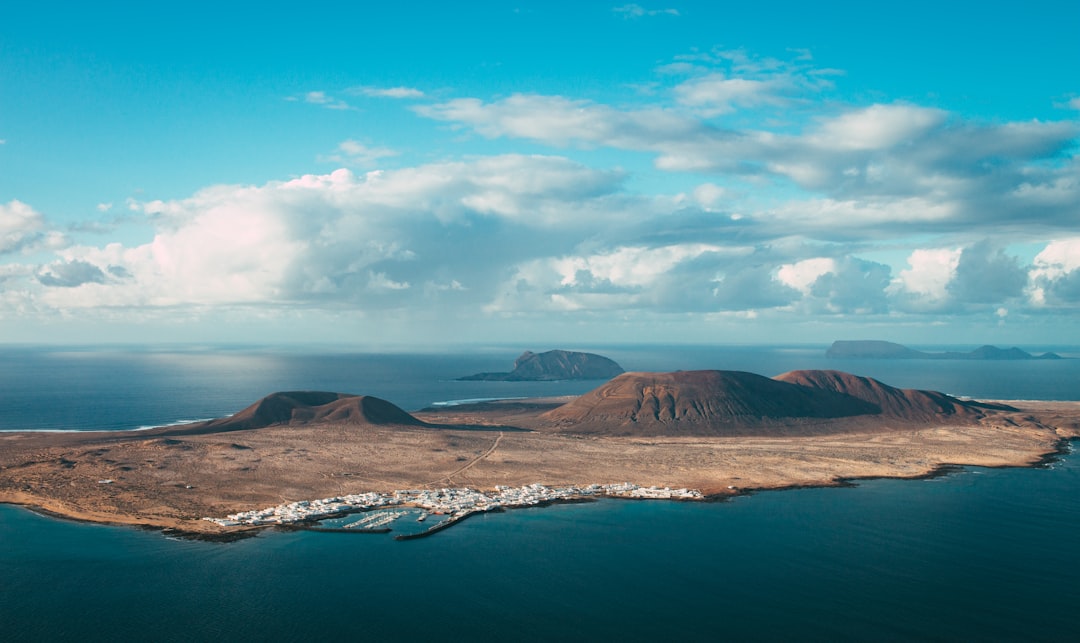
La Graciosa is a tiny volcanic island of just 734 permanent residents sitting 2 km north of Lanzarote across the Strait of El Río, at 266 m elevation at its highest point. It belongs to Spain’s Canary Islands and forms the heart of the Chinijo Archipelago Natural Park — the only Canarian island with no paved roads. What you get here is raw Atlantic wilderness, sandy tracks, and a pace of life that most of Europe has forgotten.
Top 3 Highlights at a Glance
- Playa de las Conchas — The island’s most spectacular beach stretches 1 km of untouched golden sand backed by the volcanic cone of Montaña Bermeja.
- Caleta de Sebo — The island’s only real village holds 700 residents and a waterfront of sand streets unlike anywhere else in Spain.
- Montaña Amarilla — This yellow volcanic crater drops directly into turquoise Atlantic water, offering the island’s most photogenic 360-degree viewpoint.
Scroll down for our complete travel guide with tips on getting there, where to stay, costs and more.
Arrival & Airport
How do I get to La Graciosa?
Ferry from Órzola (Lanzarote) is the only way in — no airport exists on La Graciosa. Líneas Romero operates the crossing daily, with 8-10 departures depending on season. The crossing takes 30 minutes and costs roughly €20 return. In my experience, book online at least a day ahead in July–August because the ferry fills fast with day-trippers. My tip: take the first morning ferry (~8:00) to reach Playa de las Conchas before crowds arrive. The caveat most guides omit — if winds exceed Force 6, the strait gets rough and crossings can be cancelled with no warning, so build buffer days into your schedule.
Which airport is closest to La Graciosa?
Lanzarote Airport (ACE) is your gateway — it sits about 35 km from the Órzola ferry dock. ACE receives direct flights from across Europe year-round, including budget carriers like Ryanair and easyJet from the UK and Germany. What surprised me: there is no direct bus from ACE to Órzola, so you must either rent a car, take a taxi (~€45-55), or piece together a bus to Arrecife and onward. I recommend renting a car at ACE, driving to Órzola, parking there (~€8/day in the public car park), and leaving the car — you won’t need it on La Graciosa since all roads are unpaved sand tracks.
How long does the journey from Lanzarote to La Graciosa take?
The ferry crossing itself is exactly 30 minutes, but budget 2.5 hours total from ACE airport. Driving from the airport to Órzola via the LZ-1 road takes about 55 minutes. Add parking time and waiting at the ferry terminal and you’re looking at a comfortable 2-2.5 hour door-to-door journey. In my experience, the road north through Haría and Máguez is stunning — stop at the Mirador del Río overlook for your first view of La Graciosa from above. The honest caveat: Órzola has no luggage storage, so if you’re bringing large bags, keep them compact — wheels don’t roll well on La Graciosa’s sand streets.
Do I need a car to explore La Graciosa?
Absolutely not — cars are effectively banned for tourists on La Graciosa. The island has zero paved roads and private vehicles are not permitted for visitors. Getting around means walking, cycling, or hiring a quad/buggy (~€60-80/day from local rental shops in Caleta de Sebo). I recommend renting a bicycle (~€10-15/day) — the island is only 29 km² and most beaches are reachable within 45 minutes by bike. The honest warning: sand tracks are deep and loose in places, so mountain bikes handle better than city bikes. If mobility is a concern, small local taxis (pickup trucks) operate on the island for around €5-10 per short trip.
City Transport
What are the best areas to stay on La Graciosa?
Caleta de Sebo is your only real base — it’s the island’s sole village with 700 residents. Pedro Barba is a second tiny settlement with private holiday homes but no hotel infrastructure or shops. Staying in Caleta de Sebo puts you 2 minutes from the ferry dock, next to the island’s restaurants, and within cycling range of every beach. In my experience, accommodations closer to the waterfront promenade give you sunset views over Lanzarote across the strait. The trade-off most guides ignore: Caleta de Sebo is genuinely small — expect sand streets, no supermarket chains, and a single ATM that occasionally runs out of cash on busy weekends.
What does accommodation cost per night on La Graciosa?
Expect to pay €80-150 per night for a decent room or apartment in Caleta de Sebo. Budget hostel-style rooms start around €45, while quality self-catering apartments — the most practical option here — run €90-130/night. There are no international hotel chains; accommodation is entirely local guesthouses, casas rurales, and rental apartments. In my experience, apartments booked directly through local operators in Caleta de Sebo offer better value than those on Airbnb. The honest caveat: total inventory is tiny — fewer than 30-40 licensed accommodation units exist on the whole island — so availability, not price, is your bigger problem in peak season.
How far in advance should I book accommodation on La Graciosa in high season?
Book at least 3-4 months ahead for July and August — this is not an exaggeration. La Graciosa has under 40 licensed beds across the entire island. What surprised me: the island can absorb 300+ day-trippers daily in summer but almost no overnight visitors, which means the few accommodation options are snapped up by late March for peak season. I recommend booking simultaneously with your flights to Lanzarote. For Easter week (Semana Santa) and the last two weeks of July, I’d push that to 5 months ahead. The silver lining: shoulder months like October and November often have availability just 2-3 weeks out, and you’ll have the beaches nearly to yourself.
Are there special or unique accommodation types on La Graciosa?
Yes — traditional Canarian fishing cottage rentals (casas de pescadores) are the island’s signature stay. These whitewashed, single-storey homes in Caleta de Sebo put you in the fabric of the island rather than a generic rental. Some have small rooftop terraces with direct views of Lanzarote’s cliffs. In my experience, these cottages rarely appear on major booking platforms — contact the Ayuntamiento de Teguise tourism office or search Facebook groups for La Graciosa rentals directly. A handful of eco-conscious glamping-style setups have also opened near the village perimeter. The honest trade-off: don’t expect air conditioning in most of these properties — the island stays comfortably cool thanks to the Trade Winds, but summer nights in August can still hit 24°C.
Accommodation & Neighbourhoods
What are the must-see sights on La Graciosa?
Three sights are non-negotiable: Playa de las Conchas, Montaña Amarilla, and the village of Caleta de Sebo itself. Playa de las Conchas on the north shore is a 1 km arc of pristine golden sand — powerful currents make swimming risky but the scenery is unmatched in the Canaries. Montaña Amarilla’s yellow volcanic crater drops straight into transparent water and takes 20 minutes to climb. Caleta de Sebo, despite its tiny population of 734, has a genuinely authentic waterfront with working fishing boats and no tourist-trap souvenir shops. In my experience, the Playa de la Francesa just 20 minutes from the village is the best swimming beach and is often overlooked in favour of las Conchas.
What can I experience for free on La Graciosa?
Almost the entire island is free — entry to the Chinijo Archipelago Natural Park costs nothing. Every beach, every volcanic trail, every viewpoint carries zero admission charge. The 6 km walk from Caleta de Sebo to Playa de las Conchas along the island’s western track is one of the finest coastal walks in the Canary Islands and completely free. I recommend the sunrise walk to the crater rim of Montaña del Mojón (295 m) — zero cost and a panorama that rivals paid viewpoints across Spain. The honest caveat: free access does not mean zero spending — the only way on and off the island costs €20 return by ferry, so budget that as an unavoidable baseline.
Which day trips from La Graciosa are worth doing?
The obvious day trip is Lanzarote — Jameos del Agua cave system and the Timanfaya National Park lava fields are each under 45 minutes from Órzola. The Timanfaya volcanic landscape — shaped by eruptions between 1730 and 1736 — is genuinely alien and unmissable. From La Graciosa, I recommend a single full-day loop: ferry to Órzola, rent a car, drive Timanfaya (€9 entry), lunch in Yaiza, then the César Manrique Jameos del Agua (~€11) on the return. What surprised me: Lanzarote itself is vastly underrated as a day trip destination from La Graciosa — most visitors do it the other way around. The caveat: check ferry return times before departing — last boat back to La Graciosa typically runs around 18:00-19:00.
What local specialities should I try on La Graciosa?
Fresh lapas (limpets) grilled with mojo verde sauce are the island’s defining dish — order them immediately. La Graciosa’s fishing fleet brings in daily catches of vieja (parrotfish), cherne (stone bass), and cabrilla (comber), all typically served grilled with papas arrugadas (wrinkled potatoes). In my experience, Restaurante El Girasol on the Caleta de Sebo waterfront serves the freshest fish at honest prices — a full grilled fish plate with sides costs around €16-22. The honest warning: avoid the 2-3 restaurants closest to the ferry dock — they cater to day-trippers with inflated prices and indifferent fish. Walk one block inland and quality goes up, prices drop by €4-6 per plate.
Highlights & Must-Sees
What makes La Graciosa unique compared to other Canary Islands?
La Graciosa is the only inhabited island in Spain with zero paved roads — that single fact defines everything. With a population of just 734, no traffic lights, no ATM chain, no shopping mall, and no international hotel brand, it operates on a scale closer to a fishing village of 1950 than a Canary Island resort of 2026. What surprised me most: despite being just 2 km from Lanzarote, the atmosphere is completely different — slower, quieter, and genuinely local. The Chinijo Archipelago Natural Park designation protects 97% of the island from development permanently. The honest caveat: this uniqueness comes at a cost — limited dining options, no nightlife, occasional supply shortages, and zero guarantee your ferry runs if the Atlantic decides otherwise.
How many days should I spend on La Graciosa?
3 nights is the sweet spot — enough to see everything without running out of things to do. Day 1: settle in, explore Caleta de Sebo, swim at Playa de la Francesa. Day 2: cycle to Playa de las Conchas and Montaña Bermeja — allow 6-7 hours. Day 3: climb Montaña Amarilla, snorkel the southern coves, final dinner on the waterfront. In my experience, visitors who stay just 1 night miss the island’s defining quality — total silence after the last day-tripper ferry departs around 18:00. The honest trade-off: 4+ nights can feel slow if you’re not genuinely comfortable with minimal infrastructure, no nightlife, and an island that is essentially 29 km² of sand and volcanic rock.
When is the best time to visit La Graciosa?
April through June and September through November are the optimal windows — warm, dry, and manageable crowds. Climate data confirms La Graciosa is visitable April through December, but July and August bring fierce day-tripper pressure from Lanzarote. Spring months (April-May) offer temperatures around 21-24°C, calm seas, and virtually empty beaches. I recommend October above all months — the Atlantic is at its warmest for swimming (~23°C), the light is golden for photography, and overnight visitors can sometimes have Playa de las Conchas entirely alone. The honest caveat: January through March sees cooler temperatures (~18°C), stronger Trade Winds, and occasional rough seas that can delay ferries — not ideal for a first visit.
What festivals and local events happen on La Graciosa?
**The Fiesta de Nuestra Señora del Carmen in mid-July is the island’s biggest annual event — a traditional maritime procession.** The patron saint festival sees fishing boats decorated and a flotilla parade across the bay, with the entire island’s 734 residents participating alongside visitors. In my experience, this is one of the most authentic small-island festivals left in the Canaries — no staged tourism, just a genuine community celebration with music, food, and the sea. The Carnival (Carnaval) in February is also celebrated with surprising energy for a village of this size. The honest caveat: both festivals compress accommodation demand dramatically — book 6 months ahead if you want to sleep on the island during Carmen week, or accept the day-tripper experience from Lanzarote.
Food & Drink
How does the weather on La Graciosa affect what activities I can do?
Wind is the defining weather factor on La Graciosa — the Trade Winds blow reliably from the northeast almost year-round. This makes the island excellent for kitesurfing and windsurfing (especially near Caleta de Sebo) but occasionally frustrating for swimmers seeking calm water. In summer (June-August), temperatures hit 28-30°C but persistent wind keeps it comfortable. In my experience, the western beaches like Playa de las Conchas are more sheltered from northern swells in summer, while the southern coast calms down in winter. The honest warning: wind also means sand — and on an island with no paved roads, that sand gets into everything during strong gusts. Pack a dry bag for cameras and electronics regardless of season.
How crowded does La Graciosa get in peak season?
In July and August, up to 500 day-trippers arrive daily on an island of 734 permanent residents — the ratio is brutal. Playa de la Francesa, the closest beach to the village, becomes genuinely packed between 11:00 and 17:00 during summer weekends. What surprised me: the island empties dramatically after the last afternoon ferry departs — by 19:00, tranquility is completely restored and the beaches return to near-solitude. My tip: if visiting in peak season, plan all beach activities either before 10:30 or after 17:30. The silver lining of crowds: more frequent ferry departures (10+ daily) and all restaurants open. In March, half the restaurants are closed and the island can feel deserted — genuinely a different experience.
How safe is La Graciosa for tourists?
**La Graciosa is exceptionally safe — petty crime is virtually nonexistent in a village of 734 people where everyone knows everyone.** I left a bicycle unlocked outside restaurants repeatedly without a second thought. The main genuine safety risks are natural: riptides at Playa de las Conchas are serious and have caused drownings — the beach is flagged as high-risk swimming and I strongly advise against entering the water there. Sun exposure is the other real danger — the Canary Islands latitude and Trade Winds create a deceptive combination where you feel cool but UV index hits 9-10 in summer. The honest caveat: the island has no hospital — the nearest medical facility is in Arrecife, Lanzarote, a ferry plus 30-minute drive away.
Is English widely spoken on La Graciosa?
**English is spoken at a basic functional level in most tourist-facing businesses — but Spanish is essential for anything beyond ordering food.** Unlike resort towns in Lanzarote, La Graciosa’s small population of 734 is entirely local Canarian and Spanish-mainland origin. Restaurant staff in Caleta de Sebo generally manage English well enough to take orders and give directions. In my experience, learning 10 basic Spanish phrases transforms interactions dramatically — locals respond with warmth and often extra portions when you make the effort. The honest caveat: the ferry ticket office in Órzola on the Lanzarote side sometimes has English-speaking staff, but the La Graciosa side and rental operators work primarily in Spanish. Download Google Translate with Spanish offline before boarding.
Practical Tips
What is the daily budget for visiting La Graciosa?
**Budget €70-90 per person per day covering accommodation, food, and activities — surprisingly high for such a simple destination. Breakdown: accommodation €45-75 per person sharing, meals €20-30 (breakfast at a café €4-6, lunch €10-14, dinner €16-22 for fresh fish), ferry €20 return amortised, bike rental €10-15/day. In my experience, the limited competition among the island’s 8-10 restaurants** keeps prices elevated — you pay a small-island premium for everything. The honest trade-off: La Graciosa is cheaper than Ibiza or the Balearics at equivalent remoteness, but more expensive than mainland Spain. A budget traveller camping illegally (which happens but is not permitted in the natural park) could drop this to €40/day — but risk fines up to €600.
How does public transport work on La Graciosa?
There is no formal public transport on La Graciosa — the island is 29 km² of sand tracks with zero bus service. Movement is entirely self-powered (walking, cycling) or by hiring local pickup truck taxis. On Lanzarote, Arrecife Bus (line 9) connects Arrecife to Órzola for about €3, running a limited 3-4 times daily schedule — check current timetables as they change seasonally. In my experience, the bus-ferry combination is viable if you’re not in a hurry, but the last bus from Órzola back to Arrecife sometimes departs before the last ferry returns from La Graciosa. I recommend renting a car in Arrecife or at ACE airport for the Lanzarote leg to avoid this timing trap entirely.
Which apps do you recommend for visiting La Graciosa?
**Wikiloc and Maps.me are the two essential apps — download offline maps before boarding the ferry because mobile data is weak on the island. Wikiloc has community-uploaded GPS tracks for all major La Graciosa routes, including the Conchas trail and Montaña Amarilla crater loop. Maps.me offline maps cover the sand tracks better than Google Maps in my experience. For the ferry, Líneas Romero’s own website is the booking platform — no dedicated app but the mobile site works fine. Windfinder** is genuinely useful here — check wind forecasts daily since conditions affect both ferry operations and which beaches are swimmable. The honest caveat: Citymapper and Google Maps transit are useless on La Graciosa itself — don’t rely on them once you step off the ferry.
La Graciosa at a Glance
| Population | 734 |
|---|---|
| Currency | EUR (€) |
| Official language | Spanish |
| Time zone | UTC±00:00 |
Source: Wikidata, retrieved October 2026.
Essential Resources for Planning Your Trip to La Graciosa
- Advice for Travelling to La Graciosa — official visitor information, passes & events
- Wikipedia: La Graciosa — history, geography & background
- Wikivoyage: La Graciosa — community travel guide & practical tips
- Which of the Canary Islands is best for you? — expert itineraries & travel inspiration
- THE 15 BEST Things to Do in Isla de Graciosa (2026) — hotels, restaurants & traveller reviews
- Advice for Travelling to La Graciosa — how to get around
- Numbeo: Cost of Living in La Graciosa — current prices & cost comparison
- Timeanddate: La Graciosa Weather & Climate — forecasts & climate statistics
More Perspectives on La Graciosa
- La Graciosa: what to see and do on this Canary Island in …
- Guide to Visiting La Graciosa
- La Graciosa: A Complete Guide to a Day on the Eighth …
La Graciosa Travel Videos
Watch these videos for a visual preview before your trip:
- LA GRACIOSA VLOG! Day trip to the SMALLEST CANARY ISLAND 🇮🇨
- Lanzarote Travel Guide: The Canary Island That Shocked Us! | Beaches, Volcanoes & La Graciosa
- What to see in La Graciosa in 1 day 🌴 Route through the best beaches and travel tips 💡
La Graciosa Travel Discussions on Reddit
Real traveller experiences and community advice:
- La Graciosa – which ferry company, and open tickets?
- Canary Islands March 2022, Lanzarote & Fuerteventura
- What to see and do in La Graciosa island (Canary …
Data Sources
This page was compiled using data from Wikipedia, Wikidata, Open-Meteo (climate), Numbeo (cost of living) and REST Countries. Information is updated regularly.
Spain › La Graciosa