
Lanzarote: The Complete Travel Guide (2026)
Last reviewed: October 2026 · key facts checked against Wikidata
Lanzarote Weather by Month: When to Go
| Month | Day | Night | Sea | Rain days | Rain mm | Wind km/h | Good for |
|---|---|---|---|---|---|---|---|
| Jan | 21° | 15° | 20° | 2 | 6 | 23 | Hike |
| Feb | 21° | 15° | 19° | 3 | 18 | 25 | Hike |
| Mar | 22° | 15° | 19° | 3 | 10 | 26 | Hike |
| Apr | 23° | 16° | 20° | 2 | 10 | 25 | Hike |
| May | 24° | 18° | 21° | 1 | 4 | 26 | Hike |
| Jun | 25° | 19° | 22° | 1 | 2 | 26 | – |
| Jul | 27° | 20° | 23° | 0 | 0 | 29 | Swim |
| Aug | 29° | 21° | 24° | 0 | 0 | 28 | Swim |
| Sep | 28° | 21° | 23° | 1 | 5 | 24 | Swim |
| Oct | 27° | 20° | 23° | 2 | 11 | 21 | Swim |
| Nov | 24° | 18° | 22° | 3 | 13 | 22 | SwimHike |
| Dec | 21° | 16° | 21° | 3 | 9 | 23 | Hike |
Sources: ERA5 reanalysis via Open-Meteo, 2016–2025 (10-year average) for air temperature, rain and wind (average daily maximum); Open-Meteo Marine API, 2023–2025 for sea surface temperature. A rain day has at least 1 mm. Area averages; individual years vary.
Lanzarote Travel Guide: Everything You Need to Know (2026)
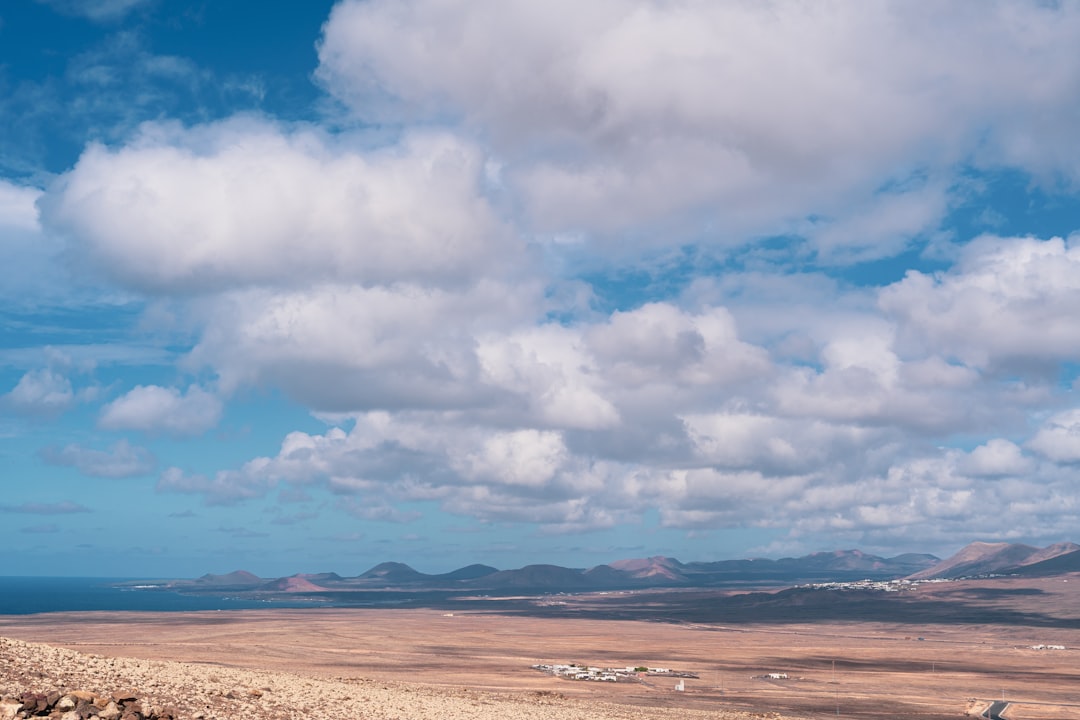
Lanzarote is a volcanic island of 163,467 residents sitting just 125 km off the African coast, making it the easternmost and most otherworldly of Spain’s Canary Islands. Declared a UNESCO Biosphere Reserve in 1993, it enforces strict building height limits — no structure taller than two storeys — preserving a landscape that looks like the moon met the Mediterranean. The island sits at roughly 200 m average elevation with the volcanic Timanfaya National Park covering 51 km² of raw lava fields.
Top 3 Highlights at a Glance
- Timanfaya National Park — Active geothermal field where ground temperatures reach 400°C just 10 m below the surface — nowhere else in Europe compares.
- Jameos del Agua — A lava tube-turned-concert-hall housing a unique blind albino crab species found only in this single cave system.
- Papagayo Beaches — Five sheltered coves of white sand and turquoise water at the island’s southern tip, often rated Spain’s finest Atlantic beaches.
Scroll down for our complete travel guide with tips on getting there, where to stay, costs and more.
Arrival & Airport
How do I get to Lanzarote?
Fly directly — Lanzarote has excellent international connections. César Manrique-Lanzarote Airport (ACE) receives direct flights from over 60 European cities, with journey times of 2h 45min from London, 4h from Berlin, and 2h 15min from Madrid. In my experience, Ryanair, easyJet, and Vueling offer the most competitive fares, often below €80 one-way if booked 8–12 weeks ahead. The trade-off: budget airlines frequently use inconvenient early-morning slots, so factor in hotel check-in timing. Ferry connections exist from Cádiz on the Spanish mainland (36–40 hours), but only make sense if you’re bringing a vehicle — otherwise flying is the clear choice.
Which airport is closest to Lanzarote?
César Manrique-Lanzarote Airport (IATA: ACE) is the only airport on the island, located just 5 km south of Arrecife, the capital. It’s a compact, efficient airport — I’ve cleared arrivals in under 20 minutes outside peak summer weeks. The terminal has one main hall, which means baggage claim is fast. My tip: avoid the overpriced airport car-hire desks and pre-book online instead. The caveat most guides skip: inter-island flights to Gran Canaria (30 min) or Tenerife (45 min) are surprisingly affordable with Binter Canarias, making Lanzarote an ideal hub for multi-island itineraries.
How long does the journey from the airport to central Lanzarote take?
Getting from ACE Airport to Arrecife takes 10–15 minutes by taxi costing approximately €12–15. To Puerto del Carmen, the main resort town, it’s 20 minutes and around €18–22. The public Line 23 bus runs to Arrecife for just €1.40 but operates infrequently — roughly every 40 minutes — and doesn’t serve most resort hotels directly. In my experience, for anything more than a solo backpacker trip with minimal luggage, a pre-booked transfer or rental car pickup at the airport is worth every euro. What surprised me: taxi queues on Saturday afternoons in July can stretch to 30-minute waits — book a private transfer if arriving then.
Do I need a car to explore Lanzarote properly?
Yes — a rental car is almost essential for experiencing Lanzarote beyond the resort strip. The island is 60 km long and 25 km wide, public buses are infrequent, and the best spots — Timanfaya, Jameos del Agua, El Golfo lagoon — are spread across the island. I rented a compact car for €25–35 per day through Cicar, the local Canarian company, which I strongly recommend over international chains for price and reliability. The honest trade-off: parking at popular sites like Timanfaya Park entrance fills by 10am in summer, so early starts are non-negotiable. If you’re staying in Puerto del Carmen and only want beaches, you could survive without a car for 3 days.
City Transport
What are the best areas to stay in Lanzarote?
Puerto del Carmen is the island’s main resort hub — 7 km of beach promenade, wall-to-wall restaurants, and the best nightlife. It suits first-timers and families. Playa Blanca in the south is quieter, upmarket, and closest to the stunning Papagayo coves — ideal for couples and villa holidays. Costa Teguise is family-friendly with a proper town feel and the best windsurfing beach. Arrecife itself is underrated — I stayed there to experience real local life, pay local prices, and walk the Charco de San Ginés lagoon at sunset. My honest caveat: avoid Puerto del Carmen’s old town zone if you’re a light sleeper — noise from bars carries until 3am in summer.
What does accommodation cost per night in Lanzarote?
Expect to pay €70–110 per night for a solid 3-star hotel or aparthotel in Puerto del Carmen or Costa Teguise in mid-season 2026. Budget studios in residential areas start at €45–60. High-end 5-star resorts like those in Playa Blanca’s Rubicón Marina zone run €180–280 per night. In my experience, self-catering apartments offer the best value — a one-bedroom apartment with a pool in Puerto del Carmen costs around €65–85/night and lets you skip expensive tourist-zone dinners. The caveat: all-inclusive resorts dominate the island, which can give a misleading impression of local prices — the real local economy in Arrecife is significantly cheaper.
How far in advance should I book accommodation in Lanzarote during high season?
Book at least 3–4 months ahead for July and August, and 6 months ahead if you want a specific villa or sea-view apartment in Playa Blanca. The winter sun season — December through February — fills up equally fast with Northern European retirees and sun-seekers escaping cold weather. What surprised me: Lanzarote operates on two distinct high seasons, unlike most Mediterranean destinations. My tip: October and November offer the best availability and still deliver 22–25°C temperatures — book just 4–6 weeks out and you’ll find excellent deals. Avoid booking peak dates without free cancellation, as airline schedule changes are common on island routes.
Are there special or unique accommodation types in Lanzarote?
Yes — cave houses (casas cueva) in the village of Jameos and around Haría are genuinely unique. These whitewashed volcanic-stone homes built into hillsides maintain a natural temperature of around 18°C year-round without air conditioning. Several are available on Airbnb for €80–130 per night. The island also has a handful of design hotels inspired by César Manrique’s aesthetic — black volcanic stone, white walls, lush courtyards — with Hotel La Geria near the wine region being my personal favourite for under €120/night. Glamping at Finca de Arrieta on the north coast is another genuinely off-the-beaten-track option, with yurts and eco-cabins from €95 per night.
Accommodation & Neighbourhoods
What are the must-see sights in Lanzarote?
Timanfaya National Park is the absolute centrepiece — geysers, camel rides, and a restaurant where food is cooked using geothermal heat at 400°C. Entry costs €12 per adult. Jameos del Agua and Cueva de los Verdes are twin lava tube experiences designed by César Manrique — together they cost €18 and take a half day. Jardín de Cactus near Guatiza is Manrique’s most underrated work — 1,420 cactus species in a stunning volcanic quarry for just €7. The El Golfo green lagoon is free and takes 30 minutes. In my experience, people skip La Geria wine valley — rows of vines growing in volcanic craters — which is hands-down the most visually surreal landscape on the island.
What can I experience for free in Lanzarote?
Lanzarote offers a surprising number of zero-cost highlights. El Golfo lagoon — a vivid emerald pool inside a volcanic crater — costs nothing and takes 30 minutes. The Papagayo beaches charge just €3 per car for parking (pedestrian access is free). Charco de San Ginés in Arrecife is a tidal lagoon surrounded by traditional whitewashed houses — a perfect free evening walk. Haría village market on Saturday mornings is free and authentically local. The MIAC contemporary art museum inside Castillo de San José in Arrecife has free entry on Sundays. My tip: the drive along LZ-67 through the La Geria wine valley is free and arguably more spectacular than any paid attraction on the island.
What day trips are possible from Lanzarote?
La Graciosa island is the finest day trip from Lanzarote — a 20-minute ferry from Órzola costing €20 return, landing you on a car-free island with white sand dunes and gin-clear water. Ferries run 4–6 times daily. The inter-island ferry to Fuerteventura takes 25 minutes from Playa Blanca with Líneas Romero (€40 return) and unlocks entirely different landscapes and beaches. Gran Canaria and Tenerife are reachable by 30–45 minute Binter flights for around €60–90 return. The honest trade-off: day trips to other Canary Islands require full-day commitment and eat into your Lanzarote time — I’d recommend only if you’re staying 7+ nights.
What local specialities should I try in Lanzarote?
Papas arrugadas — small wrinkled potatoes boiled in heavily salted water — served with mojo rojo (red pepper and cumin sauce) or mojo verde (cilantro and garlic) are the definitive Canarian staple. Lanzarote Malvasía wine from the La Geria volcanic crater vineyards is genuinely world-class and found nowhere else — a bottle costs €8–14 at the bodega. Sancocho canario is a slow-cooked salted fish dish served with gofio (toasted grain flour) and is the island’s most traditional main course. In my experience, Restaurante Casa Museo del Campesino near Mozaga offers the best authentic island menu at around €15–20 per person. Avoid any restaurant on Puerto del Carmen’s Avenida de las Playas promenade — these target tourists and sacrifice quality for volume.
Highlights & Must-Sees
What makes Lanzarote unique compared to other Canary Islands?
Lanzarote is the only Canary Island — and one of very few places on Earth — where you can visit an active geothermal zone (Timanfaya) without specialised equipment. The island’s UNESCO Biosphere Reserve status has enforced a building code since 1974 that prohibits billboard advertising and limits construction height to two storeys, meaning the landscape remains uncluttered. The work of local artist César Manrique is embedded into the island’s DNA — he personally designed six major attractions and shaped the island’s entire aesthetic philosophy. What surprised me most: La Geria is the world’s most visually unusual wine-growing region, with each vine planted in a hand-dug volcanic crater — there is simply nothing comparable on Gran Canaria, Tenerife, or anywhere in mainland Spain.
How many days do I need to explore Lanzarote properly?
5 to 7 days is the sweet spot for Lanzarote. In 3 days you can cover the headline attractions — Timanfaya, Jameos del Agua, Papagayo beaches — but you’ll feel rushed. 5 days lets you add La Graciosa day trip, the La Geria wine valley, Haría village, and a proper sunset at El Golfo. 7 days allows a comfortable pace, a Fuerteventura ferry crossing, and time to discover quieter corners like Arrieta and Órzola in the north. In my experience, most package tourists arrive on 7-night deals but spend 3 days entirely on the beach — which is a waste of what Lanzarote uniquely offers. My recommendation: rent a car, plan 2 driving days and 2 beach days minimum.
When is the best time to visit Lanzarote?
Based on verified climate data, the best months are June through November. October and November are my personal favourites — temperatures hover at 22–26°C, sea temperature stays above 22°C for swimming, crowds thin noticeably after the school holidays end, and prices drop by 20–30% versus August. July and August deliver reliably hot, sunny weather but bring the highest visitor numbers and peak pricing. The trade-off most guides ignore: January through March is legitimately pleasant at 18–21°C — excellent for cycling and hiking — and the island fills with long-stay Europeans escaping northern winters, giving a surprisingly lively atmosphere at lower hotel rates. Avoid Calima events (Saharan dust storms) which occur mainly in February–March and can reduce visibility for 2–3 days.
Are there local festivals in Lanzarote worth attending?
Carnaval in Arrecife runs in February or early March and rivals Tenerife’s version in costume creativity but with a fraction of the crowds — it’s genuinely one of Europe’s most underrated street festivals. Semana de Música Sacra (Holy Week) in April brings classical and choral concerts to historic churches across the island, often free. Fiesta de la Virgen del Carmen on 16 July sees fishing boats paraded through the harbour in Puerto del Carmen — a wholly local spectacle. In August, the Fiesta de San Ginés in Arrecife (the patron saint’s festival) includes fireworks over the lagoon and free open-air concerts. My tip: book accommodation in Arrecife 3 months ahead for Carnaval — hotel prices spike by 40% that week.
Food & Drink
How does the weather in Lanzarote affect which activities I can do?
Lanzarote’s weather is remarkably stable — it sits in a permanent Atlantic trade wind corridor that keeps summers from being oppressively hot and winters mild. Wind is the key variable: Costa Teguise and Famara beach receive reliable Force 4–5 winds almost year-round, making them prime windsurfing and kitesurfing spots, with the Famara surfing school operating October through April for the best swell. Beach swimming is best in July–October when sea temperatures peak at 23–24°C. Hiking the volcanic landscapes of Timanfaya is most comfortable October–April before midday heat makes it punishing. The honest caveat: even in “good” months, afternoon winds can whip sand on exposed beaches like Playa de Famara — bring a windbreak or choose sheltered Papagayo instead.
How crowded does Lanzarote get in peak season?
Lanzarote receives approximately 3 million tourists annually — nearly 18 times its resident population of 163,467 — making August genuinely busy. Timanfaya National Park limits daily visitor numbers and the mandatory bus tour can have 45-minute queue waits by 11am in July and August. Puerto del Carmen’s beachfront fills completely on weekends in summer. However, the island is large enough that Haría, Arrieta, and the north coast remain crowd-free even in peak weeks. My tip: at Jameos del Agua, arrive at 9:30am when it opens — by noon it’s packed with coach tours. The honest trade-off: if you visit in July for guaranteed sunshine and want beach space, go to Papagayo on a weekday morning and leave by noon.
How safe is Lanzarote for tourists?
Lanzarote is very safe by any European standard — petty theft is the main risk, not violent crime. Puerto del Carmen’s old town (around Calle Hierro) has occasional bag-snatching at night, particularly on weekends in summer. Rental car break-ins at beach parking areas like Playa de Papagayo are the most common issue affecting tourists — never leave valuables visible in a parked car, even for 10 minutes. Ocean safety is more concerning than street safety: Playa de Famara has a genuine rip current risk and is marked with regular red flags — I’ve seen tourists ignoring them, which is dangerous. The island has a 24-hour emergency number (112) and a main hospital in Arrecife (Hospital Doctor José Molina Orosa) with English-speaking staff.
Is English widely spoken in Lanzarote?
In tourist zones, English is universally spoken — Puerto del Carmen, Costa Teguise, and Playa Blanca have been British-tourist destinations for over 40 years, and most restaurant menus are printed in English first, Spanish second. In Arrecife and inland villages like Haría and Tinajo, Spanish is essential — locals appreciate even basic effort. In my experience, knowing 5–10 Spanish phrases transforms the experience in local restaurants and shops, and will often get you better service and occasionally a free tapa. The caveat most guides skip: German is the second most useful language after English on Lanzarote, not Spanish — the island has a massive German tourist base, and many businesses actually have German menus but not French or Italian ones.
Practical Tips
What is the daily budget for travelling in Lanzarote?
A realistic budget traveller spending on a hostel dorm (€25–35), self-catered meals, and free beaches can survive on €55–70 per day. A mid-range traveller staying in a 3-star hotel (€80), eating lunch and dinner at sit-down restaurants, and paying entry to 2 attractions per day should budget €130–160 per day. A comfortable traveller staying in a 4-star resort, renting a car (€30), and dining well will spend €200–250 per day. The hidden cost most people underestimate: attraction entry fees add up fast — Timanfaya (€12), Jameos (€10), Cueva de los Verdes (€9), Jardín de Cactus (€7) total €38 in one day before food. My tip: buy a Lanzarote Card bundling 4 Manrique attractions for €32, saving approximately €6 per person.
How does public transport work in Lanzarote?
ARRECIFE BUS (Intercity) operates the island’s network with 14 routes connecting major towns. The main routes are: Line 2 (Arrecife–Puerto del Carmen, €1.40, every 20 min), Line 7 (Arrecife–Costa Teguise, €1.55), and Line 6 (Arrecife–Playa Blanca, €3.75, journey time 75 min). Buses do not serve Timanfaya, Jameos del Agua, or most rural attractions directly. In my experience, the Arrecife–Puerto del Carmen bus is genuinely useful and frequent enough to skip a taxi for that corridor. The honest trade-off: the network is designed for residents commuting to Arrecife, not for tourists wanting to island-hop between attractions — a rental car covers the island in ways that no bus route can replicate. Download the Arrecife Bus app for live timetables.
Which apps do you recommend for visiting Lanzarote?
Google Maps works reliably for driving navigation across the island, though signal drops in the volcanic interior around Timanfaya — download offline maps before leaving your hotel. Windy.com is essential if you’re planning watersports or beach days — it gives precise wind forecasts by beach, critical given Lanzarote’s gusty trade winds. Arrecife Bus (official app) has real-time departure boards for all island bus routes. Cicar (the local car rental company) has a booking app with pickup/drop-off at the airport. For restaurants, TheFork lists genuine local venues in Arrecife with reviews in Spanish — better than TripAdvisor for avoiding tourist traps. My personal tip: download Wikiloc and search for Lanzarote hiking trails — the Caldera Blanca crater walk (6 km loop) is spectacular and completely free.
Lanzarote at a Glance
| Population | 163,467 |
|---|---|
| Currency | EUR (€) |
| Official language | Spanish |
| Time zone | UTC±00:00 |
Source: Wikidata, retrieved October 2026.
Useful Resources for Planning Your Trip to Lanzarote
- Wikipedia: Lanzarote — history, geography and background
- Lonely Planet: Lanzarote — itineraries and travel inspiration
- TripAdvisor: Lanzarote — hotels, restaurants and traveller reviews
Combine Lanzarote With These Europe Destinations
These destinations pair well with Lanzarote — close enough to visit in one trip: Fuerteventura, Gran Canaria, La Palma.
🎥 Lanzarote Travel Videos
5 Things I Wish I Knew Before Travelling to Lanzarote ☀️
Destination Well Known

Lanzarote Travel Guide: Lanzarote Top 10
Loz’s Leisure
Lanzarote Travel Guide: The Canary Island That Shocked Us …
TraveLike
You are currently viewing a placeholder content from Vimeo. To access the actual content, click the button below. Please note that doing so will share data with third-party providers.
More InformationYou are currently viewing a placeholder content from YouTube. To access the actual content, click the button below. Please note that doing so will share data with third-party providers.
More InformationYou need to load content from reCAPTCHA to submit the form. Please note that doing so will share data with third-party providers.
More InformationYou are currently viewing a placeholder content from GetYourGuide. To access the actual content, click the button below. Please note that doing so will share data with third-party providers.
More Information