
Lübeck: The Complete Travel Guide (2026)
Last reviewed: September 2026 · key facts checked against Wikidata
Lübeck Travel Guide: Everything You Need to Know (2026)
Lübeck, founded in 1143 and sitting just 13 metres above sea level on a river island in northern Germany, is home to 219,044 people and punches far above its weight as a UNESCO World Heritage City. The iconic Holstentor gate has appeared on the old 50-Deutsche-Mark note, and the city produced two Nobel Prize winners — Thomas Mann and Willy Brandt. It sits only 60 km northeast of Hamburg, making it one of the most accessible medieval cities in the whole of northern Europe.
Three Things Not to Miss in Lübeck
- Holstentor — Lübeck’s twin-towered 15th-century city gate is one of Germany’s most photographed medieval landmarks, leaning visibly due to soft ground.
- Niederegger Marzipan Salon — Founded in 1806, this legendary café-museum on Breite Straße is the birthplace of Lübecker Marzipan — a mandatory tasting stop.
- St. Mary’s Church (Marienkirche) — The tallest brick church in the world at 38.5 metres internally, with the world’s largest mechanical organ still in active use.
Scroll down for our complete travel guide with tips on getting there, where to stay, costs and more.
How to Reach Lübeck
How do I get to Lübeck?
Take the direct train from Hamburg Hauptbahnhof — it reaches Lübeck in 45 minutes and runs every 30 minutes. In my experience, this is by far the easiest approach. Tickets cost as little as €9 with a Schleswig-Holstein day pass. If you’re driving, the A1 motorway connects Hamburg to Lübeck directly in under an hour. My tip: avoid driving into the Altstadt — parking is scarce and expensive at around €2–3 per hour. The train drops you 5 minutes’ walk from the Holstentor, which is the perfect first impression of the city.
Which airport is closest to Lübeck?
Hamburg Airport (HAM) is your best bet, 56 km southwest of Lübeck’s centre. From HAM, take the S1 S-Bahn to Hamburg Hauptbahnhof (25 minutes), then a direct IC train to Lübeck (45 minutes). Total door-to-door time is around 90 minutes. Lübeck itself has a small airport, LBC (Lübeck Blankensee), but as of 2026 it handles almost no scheduled passenger traffic — don’t bank on it. What surprised me is how seamlessly Hamburg Airport connects to Lübeck via public transit; a taxi from HAM would cost around €120 and is simply not worth it.
How long does the journey to Lübeck take from Hamburg?
By direct train from Hamburg Hauptbahnhof, you arrive in 45 minutes — trains run every 30 minutes throughout the day. By car on the A1, the drive is roughly 55 km and takes 45–60 minutes depending on Hamburg traffic. My tip: travel mid-morning on weekdays to avoid Hamburg’s morning rush. What most guides omit is that the last direct train back from Lübeck to Hamburg leaves just before midnight, so late-night events at venues like Musik & Friendz in the Altstadt can occasionally strand you if you miss it.
Do I need a car to get around Lübeck?
Absolutely not — Lübeck’s Altstadt is a compact island roughly 1.5 km long and walkable end-to-end in 20 minutes. In my experience, a car is actually a liability here. The historic centre has limited parking and several pedestrianised zones. Buses run reliably across the wider city with a single ticket costing €2.70. The honest caveat: if you plan to visit Travemünde (the beach resort 20 km away), the train from Lübeck Hauptbahnhof takes just 35 minutes and runs hourly — making a car unnecessary even for that excursion.
Lübeck Public Transport Explained
What are the best areas to stay in Lübeck?
Stay in the Altstadt (UNESCO World Heritage island) for maximum atmosphere — you wake up surrounded by Gothic brick architecture. The streets around Engelsgrube and Mengstraße put you within a 5-minute walk of every major sight. Budget travellers should look at St. Jürgen district, just south of the Altstadt across the Puppenbrücke, which has cheaper guesthouses and is a 10-minute walk to the centre. I recommend avoiding hotels near Lübeck Hauptbahnhof unless you get a great deal — the station area lacks character and requires a 15-minute walk or bus to the sights.
What does accommodation cost per night in Lübeck?
A solid 3-star hotel in the Altstadt runs €90–€140 per night for a double room in 2026. Boutique guesthouses on streets like Fischergrube come in at €75–€110. Budget hostels near the centre charge €25–€35 per dorm bed. The honest trade-off: the most atmospheric Altstadt hotels are often in converted merchants’ houses with narrow stairs and no lift — if mobility is a concern, check this before booking. Top-end options like Hotel Anno 1216 push past €180 per night in summer. Breakfast is frequently not included, adding roughly €12–€18 per person if taken at the hotel.
How far in advance should I book accommodation in Lübeck during high season?
Book at least 8–10 weeks ahead for stays in July and August — Lübeck’s Altstadt has a limited number of quality rooms and they fill fast with Baltic coast holidaymakers. The Schleswig-Holstein Musik Festival in July draws visitors from across Germany, compressing availability sharply in a single weekend. I’ve seen prices jump 40% during that festival weekend compared to the week before. For shoulder months like May or September, 3–4 weeks ahead is usually sufficient. My tip: mid-week stays (Tuesday–Thursday) are consistently €20–€30 cheaper than weekend rates even in peak season.
Are there special or unique accommodation types in Lübeck?
Yes — Lübeck’s most distinctive stay is in one of the historic Gänge und Höfe (alleyway courtyard complexes), medieval social housing clusters now converted into atmospheric holiday apartments. Füchtingshof on Glockengießerstraße dates to 1639 and has rentable units right inside the UNESCO-listed complex. Several canal-facing apartments along the Trave riverside offer views of the old merchant warehouses. What surprised me is how affordable these are — canal-view apartments on platforms like Airbnb run €80–€120 per night, often cheaper than a comparable hotel room, and they give you a genuinely medieval street address.
Neighbourhoods of Lübeck
What are the must-sees in Lübeck?
The Holstentor museum (entry €8) is non-negotiable — it explains the entire Hanseatic trading empire from inside a 15th-century gate. Marienkirche (entry free, tower €3) contains the world’s largest mechanical organ. The Buddenbrookhaus on Mengstraße, Thomas Mann’s family home and now a literary museum (entry €10), is essential for anyone interested in German literature. Walk the Gänge und Höfe alleyway courtyards — they’re free and most tourists walk straight past them. My tip: buy a Lübeck Card for €11 covering all city museums plus unlimited bus rides for 24 hours.
What can I experience for free in Lübeck?
Lübeck rewards walkers who skip the ticket queues. The entire Altstadt UNESCO zone is free to stroll, and the seven church spires are visible from every corner. Marienkirche has free entry during non-service hours. The Holstentor exterior and waterfront promenade costs nothing and is one of the best photography spots in northern Germany. The medieval Gänge und Höfe courtyards like Glandorps Hof and Füchtingshof are freely accessible during daylight. What most guides omit: the Museum Holstentor harbour side at dusk gives an atmospheric free experience that rivals any paid attraction — and the crowds thin out after 6pm.
Which day trips are possible from Lübeck?
Travemünde, Lübeck’s own beach resort, is 35 minutes by train and has a long sandy Baltic beach — perfect for a half-day. Hamburg is just 45 minutes away and absolutely worth a day trip. Ratzeburg, a small island cathedral town, is 30 minutes by regional bus. Schwerin with its fairy-tale castle is 70 minutes by train. My honest caveat: Lübeck is often used as a day trip destination from Hamburg, but I’d argue the reverse works better — base yourself in Lübeck and day-trip to Hamburg, avoiding Hamburg’s inflated hotel prices which can be €50–€80 higher per night for equivalent quality.
What local specialities should I try in Lübeck?
Lübecker Marzipan is the undisputed star — try the original at Niederegger on Breite Straße, where a small marzipan loaf costs around €4. For savoury food, order Labskaus, a sailor’s hash of corned beef, beetroot and pickled herring topped with a fried egg — it’s an acquired taste but genuinely historic. Fresh Baltic herring (Hering) prepared in mustard sauce appears on most traditional menus. At the Schiffergesellschaft restaurant, a 1535-founded sailors’ guild hall, the atmosphere alone justifies the slightly elevated prices of around €16–€24 per main.
What to See in Lübeck
What makes Lübeck unique compared to other German cities?
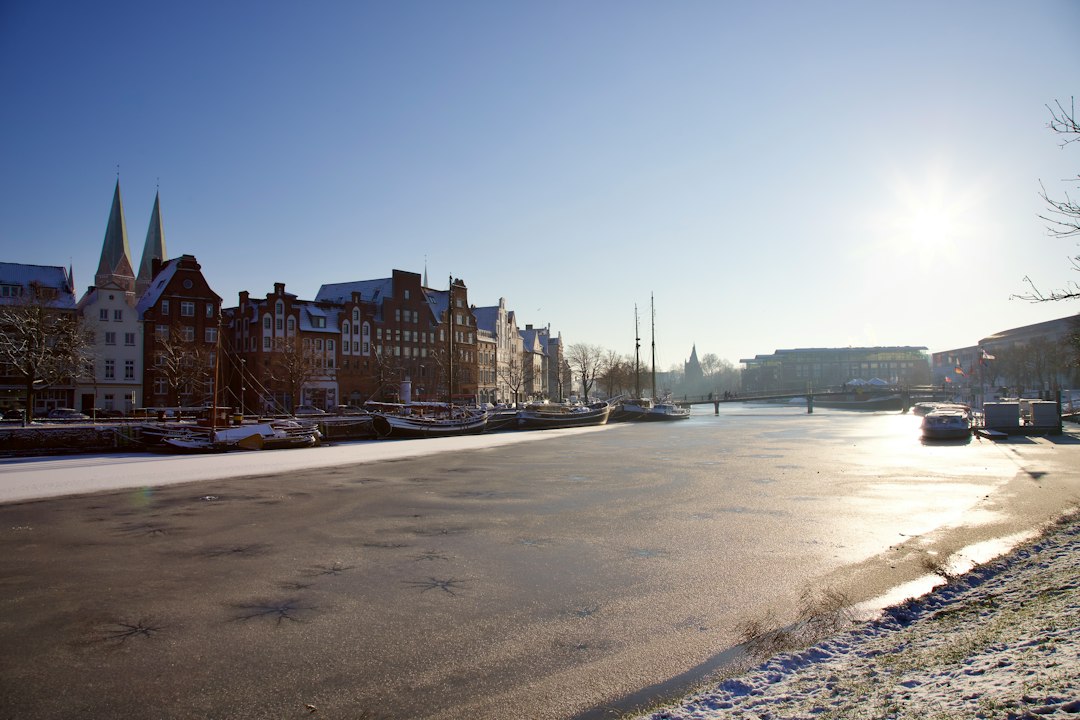
Lübeck is the only city in Germany where the entire Altstadt island is a UNESCO World Heritage Site — designated in 1987. It was the capital of the Hanseatic League, the medieval trading network that dominated Baltic commerce for 300 years. The brick Gothic architecture style that Lübeck pioneered spread across 15 countries from Estonia to Poland. What truly surprised me is the concentration: within a 1.5 km walk, you pass seven Gothic church spires, two Nobel Prize winners’ birthplaces, a 15th-century city gate, and medieval alleyway courtyards. No other German city of 219,000 people packs this density of medieval heritage.
How many days do I need in Lübeck?
2 full days covers all major sights comfortably. Day 1: Holstentor museum, Marienkirche, the Gänge und Höfe courtyards, and dinner at Schiffergesellschaft. Day 2: Buddenbrookhaus, St. Annen-Museum, a Trave boat tour (€12, 50 minutes), and the Niederegger Marzipan salon. Add a 3rd day if you want to reach Travemünde beach or take the Hamburg day trip. What most guides omit: don’t rush the evening Altstadt walk — after 7pm the tour groups evaporate and the brick facades in golden light are genuinely extraordinary. I’d rather have 2 unhurried days than 3 rushed ones.
When is the best time to visit Lübeck?
June is the sweet spot based on climate data — long daylight hours, warm temperatures, and crowds that haven’t yet peaked to July-August levels. Late May is equally good. What surprised me is how appealing December is: Lübeck’s Christmas market on Rathausmarkt is one of Germany’s oldest and runs from late November, and the brick Gothic architecture looks spectacular under winter light. Avoid the last two weeks of July if you dislike crowds — German school summer holidays bring heavy domestic tourism. The honest trade-off: September offers nearly identical weather to June with noticeably lower accommodation prices and thinner crowds at the Holstentor.
What local festivals are worth attending in Lübeck?
The Schleswig-Holstein Musik Festival (July–August) brings world-class classical concerts to historic venues including Marienkirche — tickets range from €25–€80. The Lübecker Hafenfest harbour festival in August packs the Trave waterfront with tall ships, food stalls and free concerts. Weihnachtsmarkt (late November–December) on Rathausmarkt is one of Germany’s most atmospheric Christmas markets, free to enter. My tip: book the Musik Festival programme at least 6 weeks ahead — the Marienkirche organ concerts specifically sell out. What most guides miss: the Literaturwochen Lübeck literary festival in October is free and genuinely absorbing for book lovers.
Lübeck Food Scene
How does the weather in Lübeck affect activities throughout the year?
Lübeck’s Baltic coastal climate means mild but unpredictable weather. June–August averages around 20–23°C and allows canal boat tours, outdoor café dining on Fischmarkt, and Travemünde beach visits. Winter (November–February) is cold and grey but never extreme — temperatures rarely drop below -5°C. The honest caveat: Baltic winds make it feel colder than thermometers suggest year-round, so pack a wind layer even in July. April and October bring beautiful low-angle light for photography but expect a rain day every 3–4 days. Church interiors and the Holstentor museum make this a genuinely all-weather destination.
How crowded does Lübeck get in peak season?
The Holstentor and Marienkirche see genuine queues from 10am–3pm in July and August — arrive before 9:30am or after 4pm to walk straight in. The Altstadt fills with day-trippers from Hamburg on weekends; by Monday morning it’s a different, calmer city. In my experience, peak Saturday afternoons on Breite Straße feel uncomfortably crowded for a city of 219,000. My tip: the Gänge und Höfe courtyards are always quieter than the main streets — even at peak hour, turn off the main drag and you’ll find yourself almost alone. Book Niederegger café table visits for weekday mornings.
How safe is Lübeck for travellers?
Lübeck is very safe — standard German city precautions apply and nothing more. The Altstadt is well-lit and populated until late evening. Pickpocketing is the only realistic threat, mainly in the crowded Holstentor area and Markt on summer weekends. The Kücknitz and parts of Buntekuh districts have a rougher reputation but you have zero reason to visit them as a tourist. What surprised me: even late at night, walking alone around the Trave riverside and the historic alleys feels genuinely comfortable. The honest caveat: the area directly around Lübeck Hauptbahnhof after midnight can be unpleasant — stick to taxis or the night bus if returning late.
Is English widely spoken in Lübeck?
English is spoken reliably at hotels, major tourist attractions, and restaurants in the Altstadt. Staff at the Holstentor museum and Buddenbrookhaus offer English-language audio guides and some English-speaking staff. At local bakeries, supermarkets, and neighbourhood restaurants outside the tourist zone, expect German only — a translation app is useful. What surprised me: Lübeck is far less internationally tourist-heavy than Hamburg or Berlin, so English fluency is patchier than in those cities. My tip: learn 5 basic German phrases — even a broken “Entschuldigung, sprechen Sie Englisch?” opens doors noticeably faster than just launching into English.
Local Know-How for Lübeck
What is the daily budget for travelling in Lübeck?
A realistic budget traveller spends €65–€80 per day — hostel dorm at €30, two sit-down meals at €25, and one paid attraction at €10. A mid-range traveller in a 3-star Altstadt hotel budgets €150–€180 per day including a good dinner and two museum entries. The Lübeck Card at €11 saves money if you plan to visit 3+ museums. What most guides omit: Lübeck is noticeably cheaper than Hamburg for equivalent quality — restaurant mains average €13–€18 versus Hamburg’s €18–€26. My tip: buy lunch at the Markt bakery stalls for under €6 and save budget for a proper dinner at one of the Altstadt restaurants.
How does public transport work in Lübeck?
Lübeck’s bus network, operated by Stadtwerke Lübeck, covers the entire city with frequent services. A single ticket costs €2.70 and a day pass runs €6.90, covering unlimited rides across all city zones. In my experience, the Altstadt itself needs no bus — everything is walkable in under 20 minutes. Buses are most useful for reaching the Hauptbahnhof from outer districts or getting to Travemünde (bus 30, roughly 35 minutes). The honest trade-off: Lübeck has no tram or U-Bahn, so late-night frequency drops sharply after 11pm on weekdays. Download the SH.digital app for real-time schedules and mobile ticketing.
Which apps do you recommend for visiting Lübeck?
SH.digital is essential for all regional public transport booking including trains to Hamburg and Travemünde — it sells discounted digital tickets. DB Navigator handles all German rail connections. Google Maps offline (download the Lübeck region before arrival) works well for Altstadt navigation. The Lübeck City App offered by Lübeck Tourismus gives audio guides for self-guided heritage walks — free to download. For restaurant bookings, OpenTable has limited Lübeck coverage; use quandoo.de instead. My tip: download Komoot if you plan to cycle along the Trave riverside path to Travemünde — the 42 km route is flat and clearly mapped.
Lübeck at a Glance
| Population | 219,044 |
|---|---|
| Currency | EUR (€) |
| Official language | German |
| Time zone | UTC+01:00 |
Source: Wikidata, retrieved September 2026.
Germany › Lübeck
More Destinations in Germany
Essential Resources for Planning Your Trip to Lübeck
- How about a trip to Lübeck? The city is a great destination … — official visitor information
- Wikivoyage: Lübeck — community travel guide & practical tips
- Wikipedia: Lübeck — history, geography & background
- Lübeck Travel Guide: Historic City in Germany — how to get there and around
- Hanseatic City of Lübeck
Data Sources
Key facts on this page (population, currency, language, time zone) come from Wikidata, climate figures from Open-Meteo. The retrieval date is shown next to the facts table.