
Weimar: The Complete Travel Guide (2026)
Last reviewed: September 2026 · key facts checked against Wikidata
Weimar Travel Guide: Everything You Need to Know (2026)
Weimar, a city of 65,611 residents sitting at 208 metres above sea level in the heart of Thuringia, punches far above its weight culturally — it was home to Goethe, Schiller, and Liszt, and gave its name to the Weimar Republic founded here in 1919. The city sits just 20 km east of Erfurt and holds two UNESCO World Heritage Sites within walking distance of each other. For a city this size, the density of world-class history, architecture, and intellectual legacy is genuinely staggering.
Three Things Not to Miss in Weimar
- Goethe-Nationalmuseum & Goethe’s Residence — Johann Wolfgang von Goethe lived here for 57 years — his preserved rooms remain exactly as he left them in 1832.
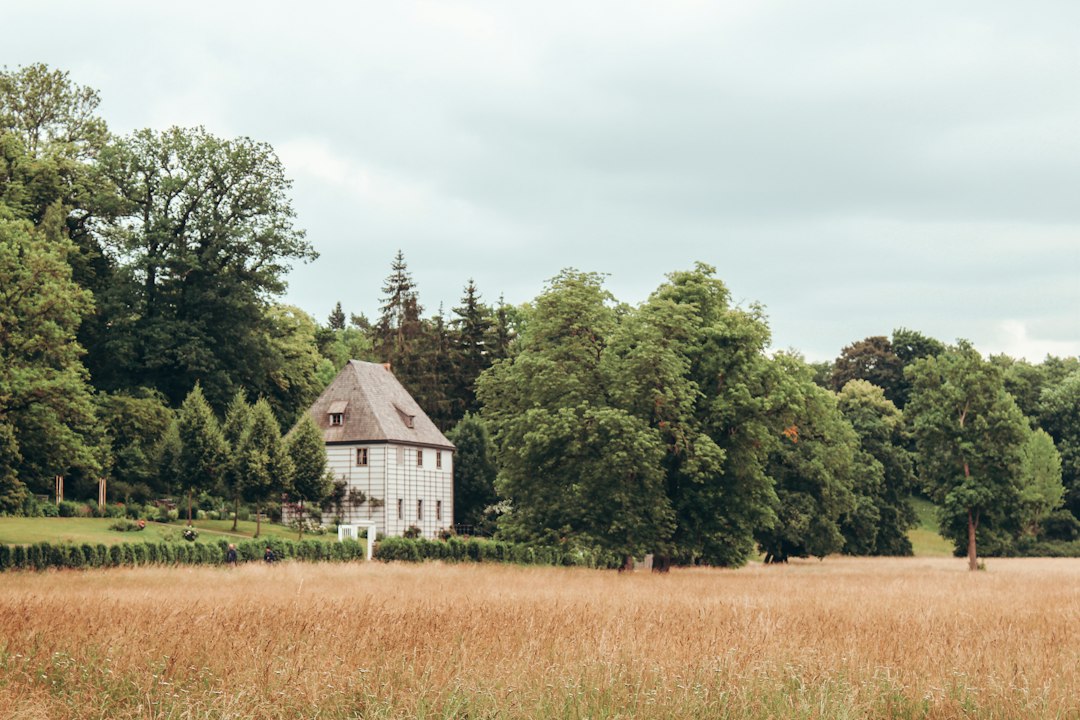
- Park an der Ilm — A 58-hectare English landscape park hugging the Ilm River, free to enter and lined with Classicist pavilions.
- Bauhaus Museum Weimar — The original Bauhaus school was founded here in 1919 — this 2019-opened museum houses over 13,000 artefacts.
Scroll down for our complete travel guide with tips on getting there, where to stay, costs and more.
How to Reach Weimar
How do I get to Weimar from major German cities?
Take a direct train — it is the fastest and most convenient option. Weimar Hauptbahnhof sits on the main Erfurt–Leipzig–Dresden rail corridor. From Leipzig, trains run in under 45 minutes; from Frankfurt, expect around 2 hours via Erfurt on ICE services. From Berlin, the journey takes roughly 2 hours 15 minutes by ICE. In my experience, booking through the Deutsche Bahn app at least a week ahead gets you Sparpreis tickets from €19–€29 one-way. One caveat most guides skip: weekend trains toward Weimar during summer festivals fill entirely — book seats, not just tickets.
Which airport is closest to Weimar?
Erfurt-Weimar Airport (ERF) is your closest option, sitting just 18 km west of Weimar city centre. A taxi from ERF costs around €25–€35 and takes roughly 20 minutes. However, I recommend flying into Leipzig/Halle Airport (LEJ), 90 km away, instead — it has dramatically better international connections including long-haul flights, with the S-Bahn S5 line connecting Leipzig airport to the main station, then a direct train to Weimar. ERF mainly handles seasonal charter flights, so treat it as a backup rather than a primary gateway.
How long does the journey take to reach Weimar from Frankfurt or Berlin?
From Frankfurt am Main Hauptbahnhof, the ICE to Weimar takes 1 hour 55 minutes to 2 hours 10 minutes depending on the service — trains run roughly every 2 hours. From Berlin Hauptbahnhof, the fastest ICE takes 2 hours 15 minutes. What surprised me: there is no direct ICE from Munich — you connect in Erfurt, adding 30 minutes and pushing total journey time to around 3 hours 45 minutes. My tip: always confirm the connection at Erfurt has a 10-minute minimum layover; the platform transfer is quick but rushing with luggage is stressful.
Do I need a rental car to explore Weimar?
No — Weimar’s historic core is entirely walkable within a 20-minute radius on foot. Every major UNESCO site, museum, and restaurant sits within 2 km of Weimar Hauptbahnhof. Regional trains connect you to Erfurt in 12 minutes and Jena in 18 minutes without a car. I recommend skipping the car entirely unless you plan to visit Buchenwald Memorial, which sits 8 km uphill — bus line 6 runs there from the main station. The honest caveat: parking in the Altstadt is genuinely awkward, spaces are scarce, and the pay zones extend further than they appear on maps.
Weimar Public Transport Explained
What are the best areas to stay in Weimar?
Stay within the Altstadt (Old Town) triangle bounded by Goetheplatz, Schillerstraße, and the Ilm Park — everything worth seeing is walkable, and evening atmosphere is concentrated here. The Jakobsviertel neighbourhood just north of the station suits budget travellers, with quieter streets and cheaper guesthouses. I stayed near Herderplatz on my last visit and walked to every major sight in under 10 minutes. Avoid booking hotels near the Hauptbahnhof’s western side — it borders a featureless commercial strip with zero charm and no restaurants worth mentioning.
What does accommodation cost per night in Weimar?
A solid 3-star hotel in Weimar’s Altstadt costs €80–€120 per night. The iconic Hotel Elephant on Marktplatz — where Goethe, Schiller, and later Thomas Mann all stayed — runs €150–€220 for a standard double in 2025. Budget guesthouses and well-rated hostels like Labyrinth Hostel charge €25–€45 per dorm bed or €65–€90 for privates. Holiday apartments via direct booking sites undercut hotel prices by 20–30%. My honest warning: during the Kunstfest Weimar festival in late August, prices jump 40–60% and availability collapses entirely within 72 hours of arrival.
How far in advance should I book accommodation in Weimar during high season?
Book 3–4 months ahead for July and August, and at least 6 months ahead if your dates overlap with Kunstfest Weimar (late August) or the Weimarer Zwiebelmarkt onion market festival in October — the largest folk festival in Thuringia, drawing over 300,000 visitors across 3 days. In my experience, the window between early June and mid-September sees consistent pressure on the best Altstadt properties. Shoulder months like April, May, and October allow last-minute bookings, often with 15–25% discounts. Never rely on walk-in availability during any weekend in summer.
Are there special or unique accommodation types in Weimar?
Yes — Hotel Elephant on Marktplatz is genuinely special, a heritage hotel operating since 1696 with Bauhaus-influenced interiors and a rooftop terrace overlooking the square. For something more intimate, the Gästehaus am Park offers rooms inside a 19th-century Classicist villa directly bordering Park an der Ilm, with views of Goethe’s garden house. I recommend checking Thuringia-based booking platforms for historic manor stays in the surrounding villages — the Gutshof Krauthausen, 15 km west, converts beautifully for countryside overnights. Weimar also has a DJH youth hostel in a converted historic building near the park, costing around €30–€40 per person.
Neighbourhoods of Weimar
What are the absolute must-sees in Weimar?
Three sights are non-negotiable. First, Goethe’s Residence on Frauenplan — his actual preserved home, not a reconstruction, where he lived from 1782 until his death in 1832; entry costs €13. Second, the Bauhaus Museum Weimar, opened in 2019 on Stéphane-Hessel-Platz, housing the world’s oldest Bauhaus collection; entry €8.50. Third, Buchenwald Memorial — the former concentration camp 8 km from the city centre, free to enter, and one of the most sobering and important historical sites in Germany. What surprised me is how few visitors combine all three in a single trip, yet doing so takes only 2 full days.
What can I experience for free in Weimar?
Surprisingly much. Park an der Ilm — 58 hectares of UNESCO-listed landscape park — is entirely free and includes Goethe’s Garden House exterior, the Roman House, and the Borchardtstein stone. The Marktplatz with its Renaissance Stadtschloss façade costs nothing to admire. The Historischer Friedhof (Historic Cemetery) where both Goethe and Schiller are buried in the Fürstengruft vault is free to walk through. My tip: the Herder Church (Stadtkirche St. Peter und Paul) contains a genuine Lucas Cranach the Elder altarpiece — no entry fee, just respectful behaviour. Free cultural depth per square kilometre here rivals cities ten times Weimar’s size.
Which day trips from Weimar are most worthwhile?
Erfurt is the standout — just 12 minutes by regional train, and its medieval Krämerbrücke (bridge lined with inhabited shops since 1325) is unlike anything else in Germany. Jena, 18 minutes east, has the Zeiss Planetarium (the world’s oldest, operating since 1926) and excellent university-district bars. Naumburg Cathedral — a UNESCO World Heritage Site — is 45 minutes by train and astonishingly uncrowded. My honest caveat: Buchenwald deserves its own half-day and feels wrong rushed into a multi-stop itinerary — give it 3–4 dedicated hours and go on a separate morning. Bus line 6 from Goetheplatz reaches it in 15 minutes.
What local specialities should I eat in Weimar?
Order Thüringer Rostbratwurst — the region’s grilled sausage, served at virtually every market stall for €2.50–€3.50, and protected by EU geographical indication, meaning the recipe is legally defined. Thüringer Klöße (potato dumplings, half raw/half cooked) with Sauerbraten is the definitive sit-down meal; find it at Gasthaus Zum Weißen Schwan on Frauentorstraße, one of the oldest restaurants in Weimar, where Goethe himself was a regular. For beer, Köstritzer Schwarzbier — a black lager brewed 35 km south in Bad Köstritz since 1543 — is the local pour. Skip tourist-oriented schnitzel menus; they are not Thuringian in any meaningful way.
What to See in Weimar
What makes Weimar unique compared to other German cities?
Weimar is the only city in Germany where you can walk in 20 minutes between a Goethe museum, a UNESCO Bauhaus building, a Cranach altarpiece, Schiller’s home, and a landscape park — all in a city under 70,000 people. It was simultaneously the birthplace of German Classicism, the Bauhaus modernist movement, and the Weimar Republic — three world-shaping cultural moments in one small city. In my experience, no other German city of this scale carries this density of intellectual and artistic legacy. The honest caveat: Weimar has almost no nightlife, minimal shopping, and very few contemporary cultural surprises — it rewards people who genuinely love history and art, not those seeking buzz.
How many days should I spend in Weimar?
2 full days covers the essential Weimar sights comfortably. Day 1: Goethe’s Residence, Schiller’s Residence, Marktplatz, and an evening at Gasthaus Zum Weißen Schwan. Day 2: Bauhaus Museum, Park an der Ilm, and the afternoon at Buchenwald Memorial. Add a 3rd day if you want Erfurt as a day trip or plan to visit the Duchess Anna Amalia Library (which requires advance ticket booking — slots sell out 4–6 weeks ahead). I would not stay longer than 3 nights unless you’re attending a specific festival — the city is compact and complete within that window.
When is the best time to visit Weimar?
July and September are the optimal months based on climate data — warm, manageable crowds, and full museum opening hours. September is my personal favourite: harvest-season market stalls appear, the Kunstfest Weimar has just ended (meaning prices drop), and the Park an der Ilm turns golden. July is peak season with the longest days and most outdoor events but hotel prices are at maximum. April and May offer excellent value with spring blossom in the park. Avoid late December to February unless you specifically want Christmas markets — many secondary attractions run reduced hours or close entirely during January and February.
Are there local festivals in Weimar worth planning around?
Three festivals deserve deliberate planning. Kunstfest Weimar runs for 3 weeks in late August, mixing contemporary theatre, music, and performance art across historic venues — programme tickets start at €15. The Zwiebelmarkt (Onion Market) in October is the largest folk festival in Thuringia, drawing over 300,000 visitors across its 3-day run with onion-braided crafts, regional food, and live music — free to enter but accommodation books out months in advance. Weimarer Schillertage in November celebrates Schiller with readings and theatre at €8–€20 per event. My tip: the Kunstfest programme is published in April — book as soon as it drops.
Weimar Food Scene
How does Weimar’s weather affect what activities are possible?
Park an der Ilm and all outdoor sights are best from late April through October — Weimar’s continental Thuringian climate means reliable warm summers but cold, grey winters from November to March. Indoor museum experiences — Goethe’s Residence, Bauhaus Museum, Duchess Anna Amalia Library — are completely weather-independent and actually less crowded on rainy days, which I find ideal. Buchenwald Memorial is poignant in any weather but emotionally harder in cold rain — a grey November visit hits differently. One thing guides rarely mention: summer afternoon thunderstorms are common in July and August, so carry a compact umbrella if you plan a full park day.
How crowded does Weimar get during peak season?
Peak crowding hits during July, August, and the Zwiebelmarkt weekend in October. In July and August, Goethe’s Residence sees queues of 30–45 minutes without pre-booked timed entry — buy tickets online at least 48 hours ahead. The Marktplatz fills with tour groups between 10:00 and 14:00 daily. My strategy: arrive at major sights before 9:30 or after 15:30 to avoid the bulk of day-tripper coaches. What surprised me is that even in peak season, the Park an der Ilm never feels truly overcrowded — it absorbs visitors across its 58 hectares with ease. Shoulder months like May and September feel noticeably calmer at every site.
How safe is Weimar for tourists?
Weimar is very safe — Germany’s overall crime rate is low, and Weimar specifically has no neighbourhoods I would advise avoiding as a tourist. The Altstadt is well-lit and populated until late evening. Petty theft is the only realistic concern: keep bags zipped at the Zwiebelmarkt festival when crowds are densest. I’ve walked every part of the city at night without any issue. One honest caveat: far-right political demonstrations occasionally pass through Thuringia — Weimar itself is not a regular venue for these, but if you’re visiting during a politically sensitive anniversary date, check local news. Emergency number in Germany is 112.
Is English widely spoken in Weimar?
English is spoken reliably at hotels, major museums, and tourist information points — all staff at Goethe’s Residence, the Bauhaus Museum, and the Stadtschloss speak functional to fluent English. At Gasthaus Zum Weißen Schwan and most Altstadt restaurants, at least one staff member handles English orders without difficulty. The honest caveat: at local bakeries, small neighbourhood cafes, and the Wochenmarkt (weekly market on Marktplatz), older vendors often speak no English — a handful of German phrases goes a long way. Danke (thank you), Einmal bitte (one please), and Die Rechnung bitte (the bill please) will solve 80% of daily interactions.
Local Know-How for Weimar
What is a realistic daily budget for travelling in Weimar?
Budget travellers spending €60–€80 per day can cover a hostel bed (€30–€45), Thüringer Rostbratwurst lunches (€3–€5), and 1–2 museum entries. Mid-range travellers should plan €130–€170 per day, covering a 3-star Altstadt hotel (€80–€110), a sit-down dinner at a local restaurant (€20–€30 for two courses with a beer), and full museum access. Splurging at Hotel Elephant with dinner in their restaurant pushes a couple’s daily spend to €350+. My tip: the Weimar Card (€22 for 72 hours) bundles unlimited buses plus museum entry discounts — it pays for itself within the first museum visit if you plan to see 3 or more attractions.
What public transport options exist within and around Weimar?
Within Weimar, bus lines 1–8 cover the city grid, operated by Stadtwerke Weimar — a single ticket costs €2.10, a day pass €5.50. For the Altstadt core, walking is faster than any bus. Bus line 6 is the critical route, connecting Goetheplatz to Buchenwald Memorial in 15 minutes. Regional trains from Weimar Hauptbahnhof run to Erfurt every 20 minutes (€5.40 single) and Jena every 30 minutes (€6.20 single). The Deutschlandticket (currently €49/month) covers all regional buses and trains and is worth buying if you’re staying 5+ days or combining Weimar with other Thuringian cities. It is available at any DB ticket machine.
Which apps do you recommend for visiting Weimar?
Four apps genuinely improve a Weimar visit. DB Navigator (Deutsche Bahn) for all train booking, live departure boards, and regional connections — essential. VMT App (Verkehrsverbund Mittelthüringen) for local Weimar bus tickets, cheaper to buy in-app than at the machine. Klassik Stiftung Weimar has their own app with audio guides for UNESCO sites — free download, works offline, and saved me €4 per person in audio guide rental fees. Maps.me with Weimar downloaded offline covers the city thoroughly when Wi-Fi is spotty. One app to skip: Google Maps works fine for navigation but its transit routing in Thuringia occasionally misses the fastest regional train options that DB Navigator catches immediately.
Weimar at a Glance
| Population | 65,611 |
|---|---|
| Currency | EUR (€) |
| Official language | German |
| Time zone | UTC+01:00 |
Source: Wikidata, retrieved September 2026.
Germany › Weimar
More Destinations in Germany
Essential Resources for Planning Your Trip to Weimar
- Journey to Weimar — official visitor information
- Wikivoyage: Weimar — community travel guide & practical tips
- Wikipedia: Weimar — history, geography & background
- Weimar Germany – travel guide and information from … — how to get there and around
- Weimar Haus | Germany | Attractions — itineraries & inspiration
Data Sources
Key facts on this page (population, currency, language, time zone) come from Wikidata, climate figures from Open-Meteo. The retrieval date is shown next to the facts table.