
Lüneburg: The Complete Travel Guide (2026)
Last reviewed: September 2026 · key facts checked against Wikidata
Lüneburg Travel Guide: Everything You Need to Know (2026)
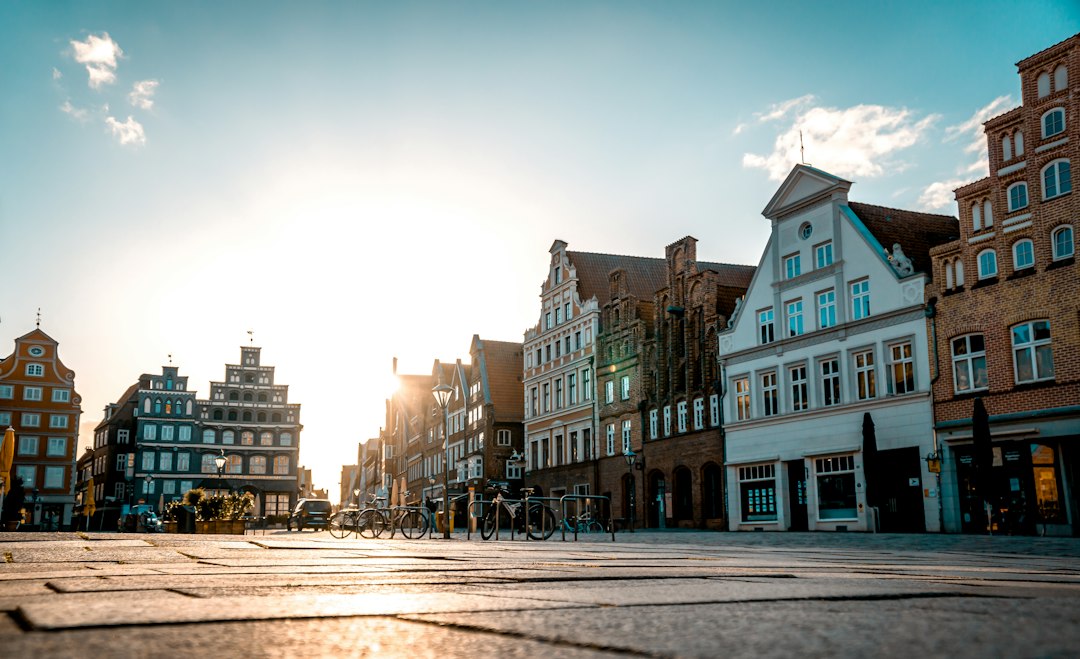
Lüneburg is a medieval Hanseatic city of 77,511 residents in Lower Saxony, sitting just 17 meters above sea level and about 50 km southeast of Hamburg. Founded around 956 AD, it grew rich from salt mining — the Lüneburg salt works operated for over 1,000 years and literally caused the old town to sink, creating the famously tilted buildings you see today. That geological quirk, combined with 1,200 intact medieval buildings, makes it one of northern Germany’s most architecturally distinctive small cities.
Three Things Not to Miss in Lüneburg
- Am Stintmarkt Waterfront — The crooked, colorful crane houses along the Ilmenau River date to the 15th century and lean visibly due to salt-subsidence beneath.
- Deutsches Salzmuseum — Installed in the original 1800s salt works, it is Europe’s largest salt museum with 700 years of industrial history on display.
- St. Johanniskirche Bell Tower — The 108-meter Gothic tower tilts 2.2 meters off vertical — a legendary local story says the drunken architect survived his fall by landing in a hay cart.
Scroll down for our complete travel guide with tips on getting there, where to stay, costs and more.
Getting to Lüneburg from the Airport
How do I get to Lüneburg?
Take a direct train from Hamburg Hauptbahnhof — it is the fastest and most practical option. Regional trains (RE4 or RB41) run every 30 minutes and reach Lüneburg in 32–38 minutes, costing around €14–18 for a standard single ticket, or less if you use a Deutschlandticket (€49/month flat rate for all regional trains). In my experience, driving from Hamburg saves no time given city traffic and Lüneburg’s limited parking. Arriving by car from the south via the A7 autobahn is straightforward if you are touring Lower Saxony. Caveat most guides omit: Lüneburg’s train station is a 15-minute walk from the old town — budget that into your arrival plan.
Which airport is closest to Lüneburg?
Hamburg Airport (HAM) is the clear choice, roughly 55 km northwest of Lüneburg. From HAM, take the S-Bahn S1 to Hamburg Hauptbahnhof (25 minutes), then switch to the regional train to Lüneburg — total door-to-door time is about 75–90 minutes. My tip: avoid Hannover Airport (LIM), which is 120 km south and adds unnecessary complexity. What surprised me: there is no direct bus from Hamburg Airport to Lüneburg, so the train connection via the main station is non-negotiable. Taxis from HAM direct to Lüneburg cost roughly €120–150, which is rarely worth it unless you have heavy luggage or are traveling as a group of four.
How long does the journey to Lüneburg take from Hamburg?
By regional train from Hamburg Hauptbahnhof, you arrive in Lüneburg in 32–38 minutes — one of the easiest intercity connections in northern Germany. By car on the A250/A7 corridor the drive takes 45–60 minutes depending on Hamburg traffic, which is genuinely terrible during rush hour. In my experience, the train wins every time: it drops you near the pedestrian center, while parking in Lüneburg costs €1.50–2.50 per hour in the central zones. One caveat worth knowing: on Sunday mornings, train frequency drops to once per hour, so check the DB Navigator app before you travel.
Do I need a car to explore Lüneburg?
No — Lüneburg’s old town is entirely walkable and a car actively works against you. The historic core covers roughly 2 km², and every major sight — Am Stintmarkt, the Salzmuseum, St. Johanniskirche, the Marktplatz — is reachable on foot within 20 minutes from the station. I recommend skipping the car entirely if you are staying in the city. The honest trade-off: if you want to explore the Lüneburger Heide heath landscape surrounding the city — particularly during the August–September heather bloom — a rental car or bicycle is genuinely useful. Day-hire bikes at Fahrradverleih am Bahnhof cost around €12–15 per day, which covers most regional excursions.
Moving Around Lüneburg
What are the best areas to stay in Lüneburg?
Stay in or immediately around the Altstadt (old town) — full stop. The compact medieval center puts you within walking distance of every worthwhile sight and the best restaurants. Am Stintmarkt and the streets around Ritterstraße are the most atmospheric addresses. My tip: the blocks just east of St. Johanniskirche offer quieter nights than the riverfront, which fills with outdoor bar-goers in summer. Avoid booking hotels near the train station if atmosphere matters to you — it is a functional but charmless zone. The trade-off: old-town accommodation books out fastest in August when the heather tourism peaks, so the further you wait, the more you compromise on location.
What does accommodation cost per night in Lüneburg?
Budget €70–100 per night for a decent 3-star hotel in the Altstadt. Boutique guesthouses in converted merchant houses — like properties along Bei der Ratsmühle — run €90–130. A 4-star option such as the Bergström Hotel, housed in a historic mill on the Ilmenau, costs €130–180 per night. Hostels are scarce: Lüneburg Hostel near the station offers dorms from €28–35. What surprised me: weekend rates in summer often jump 20–30% over weekday prices because Hamburg day-trippers convert into overnight guests. Self-catering apartments via local agencies average €75–110 per night and become cost-effective for stays of 3+ nights.
How far in advance should I book accommodation in Lüneburg during high season?
Book at least 6–8 weeks ahead for summer visits, particularly August, when the Lüneburger Heide heather bloom (typically mid-August to mid-September) drives demand sharply. The city’s 77,511 residents host a disproportionately small hotel inventory for the tourist footfall it receives. In my experience, waiting until 2 weeks out in August means settling for a dated chain property near the ring road rather than a character guesthouse in the Altstadt. The caveat mainstream guides ignore: the Lüneburg University semester (roughly October–January and April–July) also compresses availability because visiting academics book long-stay rooms. For October–March travel, 2–3 weeks notice is generally sufficient.
Are there special or unique accommodation types in Lüneburg?
Yes — the most distinctive option is staying in one of the converted Hanseatic merchant houses along the old harbor quarter near Am Stintmarkt, where thick brick walls and timber beams are original 15th-century fabric. The Bergström Hotel in a restored mill is genuinely impressive: a millstream runs beneath the building. For something unusual outside the center, farmhouses on the Lüneburger Heide offer heath-side rooms from €65–90 per night and are ideal if you are combining city and nature. My honest warning: several ‘historic’ guesthouses in Lüneburg market character but deliver poorly soundproofed rooms above street-level restaurants — read recent reviews on Booking.com specifically filtering for noise before committing.
Choosing a Neighbourhood in Lüneburg
What are the must-sees in Lüneburg?
Three sights I consider non-negotiable: Am Stintmarkt waterfront with its leaning crane houses is the defining image of the city. The Deutsches Salzmuseum (entry €9 adults, €6 concessions) is one of Europe’s best industrial heritage museums — genuinely riveting even if you think salt sounds dull. St. Johanniskirche, with its 108-meter tilted tower, rewards a climb for panoramic views over the brick-red roofscape. Beyond those, walk Große Bäckerstraße for the highest concentration of intact medieval facades, and check out the Rathaus, whose facade spans 6 centuries of architectural styles. What surprised me: Lüneburg has zero bad sight — the entire old town IS the attraction.
What can I experience for free in Lüneburg?
Quite a lot — and this is where Lüneburg genuinely overdelivers. Walking the Altstadt costs nothing and takes at least 3 hours to do properly. The Marktplatz, lined with stepped gable facades, is free and beautiful. St. Johanniskirche itself (excluding tower climb) is free to enter. The Ilmenau riverside walk from Am Stintmarkt south through the Wasserviertel (Water Quarter) is a free 45-minute stroll with photogenic angles at every turn. My tip: the Kalkberg hill, site of the medieval salt castle, gives a free elevated view over the city and takes 10 minutes to climb. One honest note: the Salzmuseum is the one paid attraction genuinely worth the €9 — do not skip it to save money.
Which day trips are possible from Lüneburg?
Hamburg is the obvious choice — 38 minutes by train and endlessly rewarding for a full day. For nature, the Lüneburger Heide (Lüneburg Heath) begins virtually at the city edge; the village of Wilsede at the heath’s heart is reachable by bus and on foot for a half-day excursion. Lübeck, another Hanseatic city with a UNESCO old town and the best marzipan in Germany, is 75 minutes by regional train. My recommendation: Celle, 60 km south, pairs a half-timbered old town with a baroque palace and gets a fraction of Lübeck’s tourist numbers. The trade-off: public transport to the deep heath is infrequent on weekdays — the Heide-Shuttle bus runs reliably only on weekends from May to October.
What local specialities should I try in Lüneburg?
Lüneburg sits in heath country, so Heidschnucken — a lean, gamey breed of heath sheep — is the signature local meat. Try it braised at Zum Alten Zöllner restaurant in the Altstadt, where a main course runs €16–22. Heather honey (Heidehonig) is produced locally and sold at the weekly Marktplatz market (Wednesday and Saturday mornings) for €5–8 per jar — far better value than airport shops. Salt-cured products turn up on menus as a nod to the city’s history. For pastry, Lüneburger Heidebraut (heath cake, a layered pastry with berries) appears in local bakeries. My honest note: mainstream restaurants around Am Stintmarkt are scenic but pricey — walk one block inland for the same quality at 15–20% lower prices.
Top Sights in Lüneburg
What makes Lüneburg unique compared to other German cities?
Lüneburg’s uniqueness is structural and literal: over 1,200 medieval buildings visibly tilt, lean, and sag because centuries of salt mining dissolved underground brine deposits and the city slowly subsided into itself. No other German city wears its industrial past so physically on its buildings. It was also one of the wealthiest cities in northern Europe between 1200–1600, financing much of Hamburg’s early growth with salt revenue. What surprised me: unlike Lübeck or Quedlinburg, Lüneburg has no UNESCO label yet draws comparable medieval architecture — which means fewer tour buses, lower prices, and streets that still feel like a living city rather than a theme park. That authenticity is the single strongest reason to visit.
How many days are worthwhile to spend in Lüneburg?
2 full days covers Lüneburg properly without rushing. Day one: walk the Altstadt thoroughly, visit the Salzmuseum (allow 2 hours), climb St. Johanniskirche tower, and end the evening at Am Stintmarkt. Day two: morning market on the Marktplatz (Wednesday or Saturday), a half-day excursion into the Lüneburger Heide, and a long dinner at a local restaurant. A third day makes sense only if you want to day-trip to Hamburg or Lübeck without leaving your Lüneburg base. In my experience, one night is genuinely too short — you miss the city at dusk and early morning when the crooked facades are most atmospheric and tourist crowds thin to almost nothing.
When is the best time to visit Lüneburg?
June is the optimal month based on climate analysis — warm temperatures, low rainfall, and long daylight hours without the August peak-season crowds. The August heather bloom (mid-August to mid-September) is spectacular but brings maximum tourist numbers and hotel price hikes of 20–30%. May and early September are strong shoulder alternatives: comfortable weather, open terraces, and noticeably calmer streets. Winter (November–February) is quiet and atmospheric — Lüneburg’s Christmas market on the Marktplatz runs for 4 weeks in December and is genuinely charming rather than corporate. My honest caveat: July and August weekend afternoons see heavy day-tripper traffic from Hamburg, which makes Am Stintmarkt feel uncomfortably crowded between noon and 4 pm.
Are there local festivals in Lüneburg worth attending?
The Lüneburger Stadtfest (city festival) takes over the Altstadt for a long weekend in late July — free entry, live music across multiple open-air stages, and regional food stalls. The Heide-Spektakel at the nearby heath during August combines guided heather walks with open-air cultural events. The Lüneburg Christmas Market on the Marktplatz runs late November through December 23rd and occupies one of the most photogenic market squares in Lower Saxony. My tip: the Lüneburger Kulturnacht (Culture Night) in September opens private historic buildings normally closed to the public for a single evening — entry is €10–15 and it is the best insider experience the city offers. Most visitors miss it entirely because it is under-marketed internationally.
Where to Eat in Lüneburg
How does the weather in Lüneburg affect activities?
Lüneburg sits at just 17 meters above sea level in the North German Plain, giving it a temperate maritime climate with no dramatic extremes. Summer (June–August) averages 20–24°C, making outdoor dining, walking, and heath excursions comfortable. Autumn is reliably dry into October, which I consider underrated for photography — the low light on medieval brick facades is extraordinary. Winter temperatures hover 2–6°C with occasional frost but rarely snow that disrupts travel. The practical impact: the Ilmenau riverside terraces operate May through September only. Heath walks are possible year-round but the famous heather bloom lasts just 4–6 weeks in August–September. Rain gear is worth packing regardless of season — North German weather changes fast.
How crowded does Lüneburg get in peak season?
Busy, but manageable — Lüneburg never approaches the crushing density of Rothenburg ob der Tauber or the Rhine Valley. August weekends are the pressure point: Hamburg day-trippers arrive in force, and Am Stintmarkt and the Marktplatz become genuinely packed between 11 am and 5 pm. My tip: visit those spots before 9:30 am or after 6 pm and you get them almost to yourself. Weekdays even in August are significantly calmer. The honest trade-off: the heather bloom that causes August congestion is also the most visually spectacular reason to visit — you need to decide whether the crowds are worth the payoff. I say yes, but only if you plan your timings carefully and book accommodation 8+ weeks in advance.
How safe is Lüneburg?
Lüneburg is extremely safe by any standard. Petty crime is low — I have never felt uncomfortable at any hour in the Altstadt or around the train station. The student population (Leuphana University enrolls around 10,000 students) keeps the city lively and the bar areas sociable without aggression. The areas around the Kaltenmoor district (a residential suburb) are unremarkable but not dangerous — they simply offer nothing of tourist interest. Standard European precautions apply: watch your bag in crowded market areas on Saturday mornings and do not leave valuables visible in parked cars near the Heide trailheads. Emergency number is 112 (pan-European). In my experience, Lüneburg is one of the most relaxed cities I have visited in Germany.
Is English widely spoken in Lüneburg?
Yes, more than you might expect for a city its size. The Leuphana University presence means a significant international student body, and staff at hotels, restaurants, and tourist sites in the Altstadt reliably speak functional to fluent English. The Salzmuseum offers English audio guides and English-language guided tours on request. My honest note: venture into local bakeries, the weekly market, or neighborhood supermarkets and you will encounter older residents who speak little English — basic German phrases go a long way and are warmly received. “Entschuldigung” (excuse me), “Danke” (thank you), and “Einmal das, bitte” (one of that, please) will carry you through 90% of daily interactions without stress.
Before You Go to Lüneburg
What is the daily budget for visiting Lüneburg?
Budget traveler: €60–80 per day (hostel dorm at €30, supermarket lunches, one paid attraction, self-guided walking). Mid-range: €130–170 per day (3-star Altstadt hotel at €85, sit-down lunch and dinner, Salzmuseum entry, a boat trip on the Ilmenau). Comfortable: €200–250 per day (boutique hotel, 2-course dinners with wine, guided tours). Lüneburg is notably cheaper than Hamburg for equivalent quality — expect to pay 15–25% less for food and accommodation. The unavoidable costs: the Salzmuseum at €9 and a Heidschnucken dinner at €18–22 are both worth budgeting for. My tip: the Deutschlandticket at €49/month transforms your transport budget if you are touring northern Germany beyond just Lüneburg.
How does public transport work in Lüneburg?
Within the city, KVG buses (Kraftverkehrsgesellschaft) cover all neighborhoods with tickets at €2.40 per single ride or €5.80 for a day pass. Honestly, you will rarely need a bus — the Altstadt is compact enough that walking beats waiting. For regional connections, DB Regional trains from Lüneburg station link Hamburg (38 min), Uelzen (25 min), and Lübeck (75 min) throughout the day. The Deutschlandticket (€49/month) covers all KVG buses and regional trains across Germany and is worth buying if you are staying more than 3 days or combining Lüneburg with other cities. My caveat: late-night bus frequency after 11 pm on weekdays is poor — taxi apps like FREE NOW cover the gap reliably.
Which apps do you recommend for visiting Lüneburg?
DB Navigator is essential for all train connections and real-time delays — download it before you travel and set the interface to English. KVG App handles local bus schedules and ticketing. For navigation inside the Altstadt, Maps.me with offline Lower Saxony maps outperforms Google Maps when mobile data is patchy in thick-walled historic buildings. FREE NOW is the dominant taxi booking app in Lüneburg — link a payment card before arrival. For the Lüneburger Heide day trips, the Heide-App (published by the regional tourism board) shows trail maps, heather bloom status, and shuttle bus timetables in one place. My tip: Booking.com with the price alert feature set for Lüneburg will flag drops in Altstadt hotel rates if your travel dates are flexible.
Lüneburg at a Glance
| Population | 77,511 |
|---|---|
| Currency | EUR (€) |
| Official language | German |
| Time zone | UTC+01:00 |
Source: Wikidata, retrieved September 2026.
Germany › Lüneburg
More Destinations in Germany
Essential Resources for Planning Your Trip to Lüneburg
- Lüneburg Tourism — official visitor information
- Wikivoyage: Lüneburg — community travel guide & practical tips
- Wikipedia: Lüneburg — history, geography & background
- 2026 Luneburg Travel Guide: must-see attractions, popular … — how to get there and around
Data Sources
Key facts on this page (population, currency, language, time zone) come from Wikidata, climate figures from Open-Meteo. The retrieval date is shown next to the facts table.