
Passau: The Complete Travel Guide (2026)
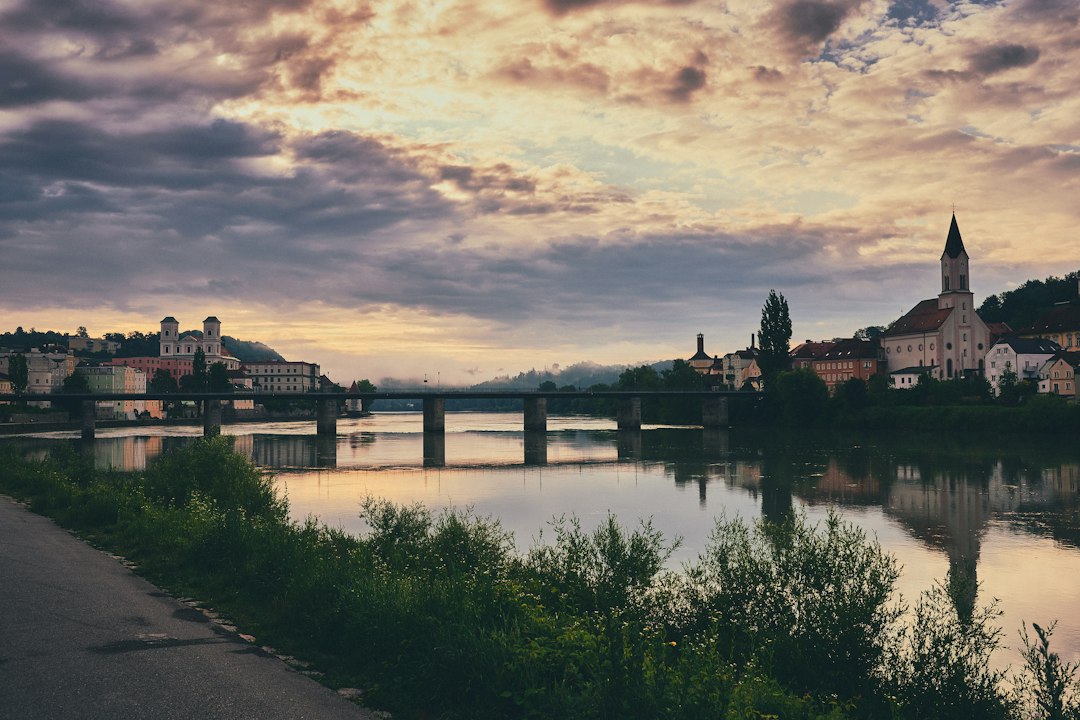
Last reviewed: September 2026 · key facts checked against Wikidata
Passau Travel Guide: Everything You Need to Know (2026)
Passau sits at 312 metres above sea level in Lower Bavaria, where three rivers — the Danube, Inn, and Ilz — converge at a single dramatic point, earning it the name Dreiflüssestadt (City of Three Rivers). With a population of 54,401, this compact baroque gem punches well above its weight architecturally, thanks largely to Italian master builders who rebuilt it after a devastating 1662 fire. The old town sits on a narrow peninsula that feels more like Venice than Bavaria, and it anchors the classic Passau-to-Vienna Danube cycling route that draws thousands of riders every summer.
Three Things Not to Miss in Passau
- Dreiflüsseneck (Three Rivers Corner) — The exact confluence where the green Inn meets the brown Danube and the dark Ilz — visible from the Veste Oberhaus fortress 70 metres above.
- St. Stephan’s Cathedral — Home to the world’s largest cathedral organ with 17,974 pipes — daily noon recitals run from May to October.
- Veste Oberhaus Fortress — A 13th-century hilltop citadel with a regional museum and the best panoramic view over all three rivers in Passau.
Scroll down for our complete travel guide with tips on getting there, where to stay, costs and more.
Getting to Passau from the Airport
How do I get to Passau — by train, car, or bus?
Train is the easiest and most practical option — no debate. Direct ICE and IC services run from Munich in 1 hour 45 minutes and from Vienna in 2 hours 40 minutes. Passau Hauptbahnhof sits a flat 10-minute walk from the old town peninsula. By car, Passau is on the A3 motorway linking Regensburg and Linz. FlixBus also serves the city, though journey times from Munich stretch to 3 hours versus the train. My tip: arrive by rail — parking in the old town is genuinely painful, with most streets pedestrianised. What surprised me is how well-connected this small city is for international travel, with direct Austrian rail links making a Passau–Salzburg–Vienna triangle trip effortless.
Which airport is closest to Passau?
Munich Airport (MUC) is your best gateway — it sits approximately 180 km west of Passau. From MUC, take the S-Bahn to Munich Hauptbahnhof, then a direct train to Passau: total door-to-door time is roughly 3 hours. Linz Airport (LNZ) in Austria is closer at about 80 km, but it handles far fewer international routes, mostly within Europe. In my experience, flying into Munich and riding the train east is the smoothest option — the train from Munich Hbf to Passau costs around €25–€50 depending on how far in advance you book. The honest caveat: Linz only makes sense if you’re already flying Austrian domestically or on a budget carrier like Ryanair.
How long does the journey to Passau take from Munich or Vienna?
From Munich, the direct IC train takes 1 hour 45 minutes. From Vienna Hauptbahnhof, direct Railjet services reach Passau in 2 hours 40 minutes. Driving from Munich on the A94/A3 takes roughly 2 hours in normal traffic, but parking costs and old-town restrictions make this less appealing than the train. From Prague, a car journey via Česky Krumlov runs about 3 hours 30 minutes and makes a logical scenic route. My tip: buy a Bayern Ticket (€29 for one person, €6 per additional person) for regional trains within Bavaria — it dramatically cuts costs if you’re basing yourself in Munich and doing a day trip to Passau.
Do I need a rental car to explore Passau and the surrounding area?
For Passau itself, absolutely not — the old town is walkable in under 20 minutes end to end. However, if you plan to explore the Bavarian Forest National Park (about 40 km north), a car becomes genuinely useful, since bus connections are infrequent. The famous Danube Cycling Path (Donauradweg) is another car-free alternative for exploring the region — rental bikes are available from €15–€20 per day at the main station. In my experience, spending 2–3 days in Passau requires zero motorised transport. The honest warning: if you do hire a car, know that the old town has almost no public parking — use Parkhaus Römerplatz on the edge of the peninsula and walk in.
Moving Around Passau
What are the best areas to stay in Passau?
The Altstadt (Old Town) peninsula is the obvious first choice — you wake up inside the baroque streetscape, steps from the cathedral and the river confluence. It’s compact, atmospheric, and everything is walkable. Innstadt, across the Inn river, offers quieter streets, slightly lower prices, and lovely views back across the water — I genuinely prefer it for a longer stay. The Hauptbahnhof area is practical if you’re arriving late or leaving early, with budget hotels clustered nearby. My tip: avoid staying in the industrial Heining district — it has zero charm and requires a bus to reach anything interesting. The honest trade-off: Altstadt accommodation sells out fast in summer, so Innstadt becomes the smart backup that still delivers the atmosphere.
What does accommodation cost per night in Passau?
Budget travellers can find a hostel bed in Passau’s Altstadt for around €25–€35 per night. A solid mid-range hotel — think Hotel Wilder Mann or Pension Rössner — runs €80–€130 per double. Design boutique hotels and the top riverside options push to €160–€220. Breakfast is often included in German Pension-style accommodation, which genuinely saves €10–€15 per person daily. In my experience, the sweet spot is a three-star Altstadt gästehaus at around €95 per night — you get location, character, and reasonable comfort. The caveat most guides skip: Passau has limited total hotel inventory, so prices spike sharply during St. Stephan’s organ festival weeks in May and the summer cycling season.
How far in advance should I book accommodation in Passau during high season?
Book at least 8–10 weeks ahead for June through August stays — this is non-negotiable for quality Altstadt properties. Passau hosts tens of thousands of Danube cyclists passing through from May to September, and with only 54,401 residents, the city’s accommodation supply is genuinely limited. The European Week of Church Music in July fills the town completely. In my experience, showing up without a booking in July is a gamble that usually ends with you staying in Hauzenberg or Waldkirchen (20 km out) and commuting in. For shoulder months — April, May, September, October — 2–3 weeks notice is usually fine. My tip: book directly with the hotel to avoid booking-platform fees, and always check the local events calendar at passau.de before finalising dates.
Are there special or unique accommodation types in Passau?
Yes — and the most memorable is sleeping on or beside the river. Boat hotels occasionally moor on the Danube near the old town during summer, offering a genuinely unusual night. The Veste Oberhaus fortress area has a youth hostel inside the 13th-century citadel walls — €28–€38 per night — which I consider one of the most characterful budget sleeps in Bavaria. Several historic patrician townhouses in the Altstadt now operate as boutique guesthouses with original baroque interiors and river-facing windows. For cyclists doing the Donauradweg, dedicated cyclist-friendly guesthouses (Radfahrerhotels) offer bike storage, early breakfasts, and drying rooms — look for the official Bett+Bike certification logo. These are practical, not just gimmicky.
Choosing a Neighbourhood in Passau
What are the absolute must-sees in Passau?
Three experiences define Passau. First, the Dreiflüsseneck — stand at the precise tip of the old-town peninsula where all three rivers meet. Take the short ferry (€3.50) to see it from the Bavarian Forest bank. Second, St. Stephan’s Cathedral: attend the noon organ recital (€5 entry, May–October) — those 17,974 pipes fill the entire baroque nave with sound that’s physically overwhelming. Third, climb to Veste Oberhaus — either via the steep 250-step path or the shuttle bus (€2) — for the panoramic river view that appears on every postcard. My honest opinion: skip the Glass Museum unless you’re specifically passionate about glassware; it’s competent but not unmissable compared to those three anchors.
What can I experience for free in Passau?
Quite a bit of Passau’s best content costs nothing. Walking the Altstadt lanes between Residenzplatz and the Inn riverbank is free and endlessly photogenic — the Italian baroque facades are the attraction. The Dreiflüsseneck viewpoint from the old town tip costs nothing. Hiking up to Veste Oberhaus on foot is free (the shuttle costs €2 but the walk is genuinely pleasant). The Mariahilf Pilgrimage Church across the Inn in Innstadt has free entry and extraordinary river panoramas from its hilltop position. In my experience, a full day of exploring Passau’s exterior architecture, riverbanks, and hilltop viewpoints costs literally €0 — the paid experiences (organ concert, fortress museum) are worth adding but not mandatory for a satisfying visit.
Which day trips are possible from Passau?
Linz, Austria is the standout — 40 minutes by train (€15–€22 each way) and a completely different city character, with excellent modern art at the Lentos Museum and the futuristic Ars Electronica Center. Český Krumlov in the Czech Republic sits about 80 km north — accessible by bus (2 hours) and one of Central Europe’s most beautiful UNESCO-listed towns. The Bavarian Forest National Park is 40 km away and worth a half-day for the ancient spruce forests. For cyclists, a 30 km round trip to Vilshofen along the Danube is a gentle, scenic pedal. My honest warning: don’t attempt Salzburg as a day trip from Passau — it’s 2 hours 30 minutes each way by train and deserves its own overnight.
What local specialities should I eat in Passau?
Passau sits at the junction of Bavarian and Austrian food cultures, which makes it culinarily interesting. Dampfnudeln (steamed yeast dumplings with vanilla sauce) are the regional sweet specialty — find them at Zum Heizwerk or traditional Gasthäuser. Hecht (pike) from the Danube and Ilz rivers appears on better restaurant menus — order it pan-fried when available. Bavarian staples like Schweinsbraten (slow-roasted pork) with potato dumplings are done very well here, typically costing €12–€18 for a full plate. The Inn quarter has a small cluster of Austrian-influenced cafes serving superior Viennese-style coffee and Apfelstrudel. My tip: avoid the overpriced tourist restaurants directly on Residenzplatz — walk two streets back for the same food at 30% lower prices.
Top Sights in Passau
What makes Passau unique compared to other Bavarian cities?
Passau is the only major German city built on a river peninsula between three converging rivers — a geography that makes it feel architecturally compressed and dramatically framed from every viewpoint. Unlike Munich or Regensburg, its entire old town was rebuilt in a unified Italian baroque style after 1662, giving it a Mediterranean coherence rare in Germany. It also sits at the cultural crossroads of Bavaria, Austria, and Bohemia — you feel all three influences in the food, architecture, and dialect. The Donauradweg makes it Europe’s most popular long-distance cycling start point. In my experience, Passau has the highest density of genuinely beautiful streetscapes per square kilometre of any city in Bavaria — it’s compact enough that nothing is diluted by sprawl.
How many days should I spend in Passau?
2 full days covers Passau thoroughly without rushing. Day 1: old town on foot, cathedral organ concert at noon, afternoon at Veste Oberhaus, evening drinks at a riverside Biergarten. Day 2: Innstadt and Mariahilf Church in the morning, Dreiflüsseneck ferry crossing, Glass Museum if it interests you, afternoon free for cycling or a boat trip. A third day is worth it only if you’re adding the Bavarian Forest or a day trip to Český Krumlov. As a pure transit stop on the Danube cycling route, many riders allocate just one night — which works but feels slightly rushed. The honest caveat: Passau’s charms are real but finite; 4+ days risks exhausting the city’s main offerings unless you’re deeply into river cruises or regional hiking.
When is the best time to visit Passau?
June and September are the optimal months — based on climate analysis, these deliver reliable warm temperatures, lower rainfall, and the full range of attractions open without peak-July overcrowding. June brings the organ concert season in full swing and the cycling crowds are manageable. September sees the Danube cycling season winding down, accommodation easier to find, and the surrounding forests beginning their autumn colour. July and August are peak season with maximum crowds from the cycling route and river cruises. March and November are the weakest months — cold, grey, and with reduced opening hours at attractions. In my experience, a mid-September visit hits the sweet spot: golden light, warm enough for riverbank sitting, and hotel prices 15–20% lower than peak July.
Are there local festivals in Passau worth timing a visit around?
Yes — three stand out. The European Week of Church Music (Europäische Wochen) runs July through August and brings world-class classical performances to the cathedral and fortress, with tickets from €15–€45. It’s genuinely prestigious and worth planning around. The Stadtfest (city festival) typically occupies a July weekend with free open-air stages across the Altstadt. The Christkindlmarkt (Christmas market) from late November to December 23rd fills Residenzplatz — one of the more atmospheric smaller markets in Bavaria, without the overwhelming scale of Nuremberg’s. My honest tip: the organ concert series (May–October, daily at noon) isn’t a festival per se, but it’s the single most reliable high-quality cultural experience in Passau and costs only €5 to attend.
Where to Eat in Passau
How does the weather affect activities in Passau throughout the year?
At 312 metres elevation in the Bavarian foothills, Passau gets proper seasons. Summer (June–August) averages around 22–26°C and is ideal for riverbank activities, cycling, and terrace dining — but afternoon thunderstorms are common in July. Autumn brings crisp air perfect for forest hiking and the colours around the Bavarian Forest are spectacular in October. Winter from December to February brings genuine cold — occasionally below -5°C — and some river-view restaurants close. The Danube floods occasionally in spring (March–April) and can inundate parts of the lower old town — check flood warnings at hochwassernachrichtendienst.bayern.de if visiting in March. In my experience, only winter limits activities meaningfully; the city functions well across all other seasons.
How crowded does Passau get in peak season?
July is legitimately busy — Danube cycling route traffic peaks, river cruise ships dock daily, and coach tours from Munich arrive by mid-morning. The old town peninsula is only a few hundred metres wide, so crowds concentrate quickly around the Dreiflüsseneck, cathedral, and Residenzplatz. By 10:00, these spots are packed; arriving before 8:30 gives you the city almost to yourself. The good news: Passau never reaches the oppressive saturation of Rothenburg ob der Tauber or Hallstatt — it’s a real working city with 54,401 residents, which dilutes the tourist concentration. My tip: visit the Veste Oberhaus at 17:00 when the day-tripping coach groups have left — you’ll often have the fortress terrace nearly to yourself with perfect afternoon light on the rivers.
How safe is Passau for tourists?
Passau is extremely safe — one of the lower-risk cities in Germany for visitors. Violent crime targeting tourists is essentially non-existent. The main realistic risks are bicycle theft (use two locks, always) and pickpocketing around the Hauptbahnhof during busy summer weekends, which is minor compared to Munich or Frankfurt. The Altstadt feels completely safe at any hour, including late-night walks along the Inn riverbank. One warning most guides skip: the Danube flooding is a genuine physical hazard in March and April — lower old-town streets can submerge within hours when the rivers rise, and the city posts watermarks on building walls showing historical flood levels. Follow local emergency instructions if a flood event is forecast during your visit.
Is English widely spoken in Passau?
Better than you’d expect for a city this size. Passau University brings approximately 12,000 students to a city of 54,401, and the international cycling route means tourism infrastructure is well-adapted to English. Staff at hotels, restaurants in the Altstadt, and all major attractions speak functional to fluent English. In my experience, ordering food, buying tickets, and asking directions in English works without difficulty in the tourist zones. The honest caveat: step into a local Gasthof in the Innstadt or Hacklberg neighbourhoods and German-only menus become common — carry the DeepL app (far superior to Google Translate for German nuance) and a few basic German phrases. Learning “Bitte” (please), “Danke” (thank you), and “Die Rechnung bitte” (the bill, please) earns genuine goodwill.
Before You Go to Passau
What is a realistic daily budget for visiting Passau?
A budget traveller staying in the Veste Oberhaus hostel, eating Brotzeit lunches from bakeries, and sticking to free sights can manage on €45–€60 per day. A mid-range traveller — hotel at €95–€110, two restaurant meals, organ concert ticket, and one paid attraction — should budget €130–€160 per day. A comfortable traveller with a boutique Altstadt hotel and proper restaurant dinners will spend €200–€260. Food is the pleasant surprise: a full Schweinsbraten lunch with beer costs €14–€18 at a proper Gasthof, which is excellent value by German city standards. The hidden cost most overlook: river boat excursions (€12–€25 for a 1-hour tour) are genuinely worthwhile and should be factored into the budget.
How does public transport work within Passau?
The Stadtbus Passau network covers the city with several lines, but the honest truth is: you barely need it for the old town. The entire Altstadt peninsula is walkable in 15–20 minutes end to end. City buses become useful for reaching Innstadt (Bus 1 and 4), the university area, and outer residential districts. A single bus ticket costs €1.80 and a day pass runs €4.50. The Veste Oberhaus shuttle bus runs from the old town in summer for €2 each way — a useful alternative to the steep footpath. Taxis are available but rarely necessary given the compact geography. In my experience, the most useful “transport” in Passau is renting a bike from Fahrrad Stanglmeier near the station for €15–€18 per day to cover both the city and riverside paths.
Which apps do you recommend for visiting Passau?
Five apps that genuinely earn their place on your phone for Passau. DB Navigator (Deutsche Bahn) for all train bookings and real-time platform updates — essential for managing connections to Munich or Linz. MVV-App for Bavarian regional transport if you’re day-tripping. Komoot for cycling — the Donauradweg route from Passau to Vienna is mapped in detail with elevation profiles and waypoints. DeepL for German translation, especially for menus in non-tourist Gasthäuser. Hochwassernachrichtendienst Bayern (bookmark the website rather than an app) if visiting March–April — it gives real-time flood level data for the Danube and Inn. My tip: download offline Google Maps of the Passau area before arrival; mobile data dead zones exist along some river paths.
Passau at a Glance
| Population | 54,401 |
|---|---|
| Currency | EUR (€) |
| Official language | German |
| Time zone | UTC+01:00 |
Source: Wikidata, retrieved September 2026.
Germany › Passau
More Destinations in Bavaria
More Destinations in Germany
Essential Resources for Planning Your Trip to Passau
- Germany: Old town of Passau with the site of the fort at … — official visitor information
- Wikivoyage: Passau — community travel guide & practical tips
- Wikipedia: Passau — history, geography & background
- Travelling by public transport on the Road of Emperors and … — how to get there and around
- Germany: Old town of Passau with the site of the fort at …
Data Sources
Key facts on this page (population, currency, language, time zone) come from Wikidata, climate figures from Open-Meteo. The retrieval date is shown next to the facts table.