
Positano: The Complete Travel Guide (2026)
Last reviewed: September 2026 · key facts checked against Wikidata
Positano Travel Guide: Everything You Need to Know (2026)
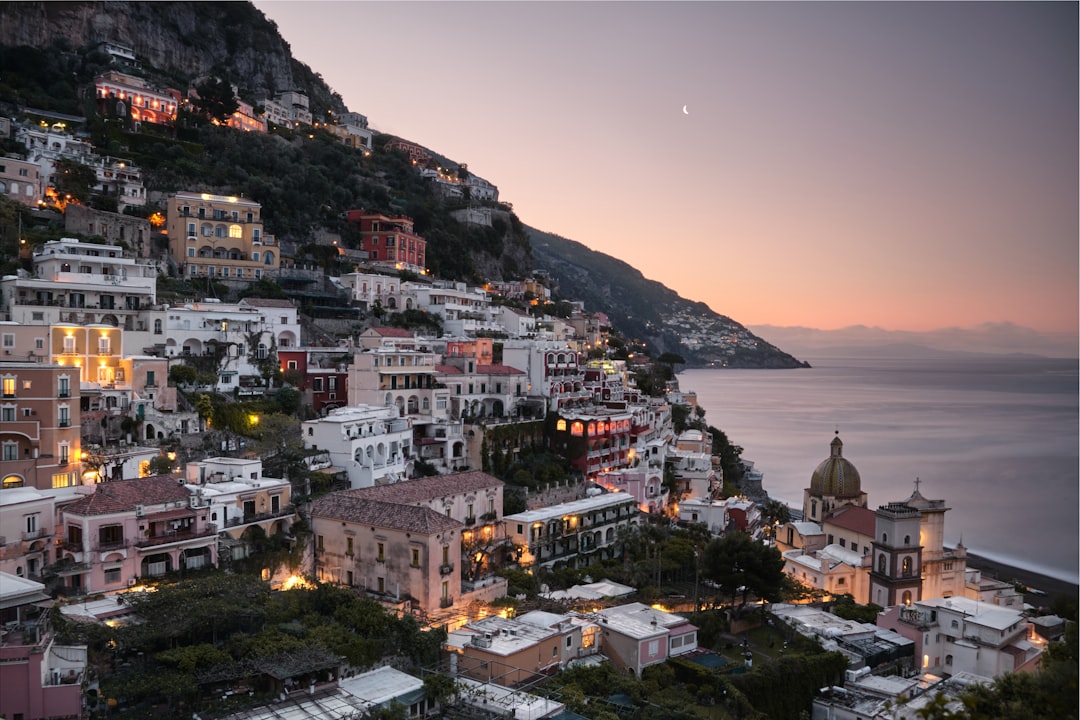
Positano clings to the cliffs of the Amalfi Coast at 142 metres above sea level, a vertical village of 3,729 residents that tumbles in pastel layers straight into the Tyrrhenian Sea. Founded as a Roman settlement and later a prosperous medieval maritime republic, it sits roughly 57 km south of Naples and has become one of southern Italy’s most photographed destinations. John Steinbeck called it ‘a dream place that isn’t quite real’ in Harper’s Bazaar in 1953 — and the crowds that arrive every summer prove he was onto something.
Three Things Not to Miss in Positano
- Chiesa di Santa Maria Assunta — The majolica-tiled dome is Positano’s defining icon, housing a 13th-century Byzantine Black Madonna inside.
- Spiaggia Grande — The town’s main beach stretches 300 metres of dark volcanic sand directly below the cascading clifftop village.
- Path of the Gods (Sentiero degli Dei) — This 7.8 km clifftop trail above Positano delivers the most dramatic coastal panorama on the entire Amalfi Coast.
Scroll down for our complete travel guide with tips on getting there, where to stay, costs and more.
How to Reach Positano
How do I get to Positano?
Fly into Naples Capodichino (NAP), then take a SITA bus or ferry — there is no train station in Positano. In my experience, the ferry from Naples Molo Beverello (about 1 hour 45 minutes, roughly €25) is faster and far more scenic than the road in summer. The SITA bus from Sorrento takes around 50 minutes and costs €2.50, but the road is brutally narrow and prone to hour-long traffic jams in July and August. My tip: avoid arriving by private car if you can — parking is brutally scarce and expensive (up to €30/day) and the one-way coast road creates gridlock daily.
Which airport is closest to Positano?
Naples Capodichino Airport (NAP) is the closest airport, sitting approximately 55 km northwest of Positano. In my experience, it connects well to major European hubs with direct flights on Ryanair, easyJet, Lufthansa, and ITA Airways. What surprised me: there is no direct airport shuttle to Positano — you must either take a taxi to Naples port (€20–25) and catch a ferry, hire a private transfer (around €120–150 door-to-door), or take the Alibus shuttle to Napoli Centrale and connect via the Circumvesuviana railway to Sorrento, then a SITA bus. The honest caveat: allow at least 3 hours of total travel time between landing and your hotel.
How long does the journey to Positano take?
From Naples Capodichino Airport to your Positano hotel, budget a minimum of 2.5 hours by the fastest realistic route. The ferry option — taxi to port, ferry to Positano pier, then funicular or steps to your hotel — is usually around 2 hours 30 minutes and the most stress-free. Private transfer by road takes 1 hour 30 minutes off-season but easily 2 hours 30 minutes in July and August due to the SS163 Amalfitana coast road bottleneck. My tip: book a 6 AM or after 7 PM arrival if you’re driving, when the coast road is manageable. Never underestimate the final climb to uphill hotels — some require a 15-minute stair walk from the drop-off point.
Do I need a car to explore Positano?
No — a car in Positano is genuinely more hindrance than help. The town itself is pedestrian-only below the main road, accessed entirely by staircases and narrow alleys. I recommend arriving car-free and using the SITA bus along the SS163, ferries between coastal towns, and water taxis for flexibility. For day trips to Ravello or Paestum, a rental from Sorrento (around €60–80/day) makes sense — but park in Sorrento and ferry back to Positano. The honest warning: Positano’s municipal car park has only about 80 spaces and fills by 9 AM in peak season. Walking is not optional here — even short errands involve steep steps, so anyone with mobility issues should plan accommodation on the upper road level.
Positano Public Transport Explained
What are the best areas to stay in Positano?
Stay in Fornillo for a quieter, more local experience — it’s a 10-minute walk west from Spiaggia Grande along a coastal path and has fewer tour groups. The Upper Town (Via Cristoforo Colombo area) suits travellers who want sweeping views and easier bus access but don’t mind the 200-step descent to the beach. The Lower Town around Spiaggia Grande puts you closest to restaurants and the ferry dock but is the noisiest and most expensive zone. What surprised me: hotels marketed as ‘sea view’ on booking platforms often have partial views obscured by terraces — always request specific room photos before booking. My tip: Fornillo strikes the best balance between atmosphere and sanity.
What does accommodation cost per night in Positano?
Positano is one of southern Italy’s most expensive overnight destinations. Budget travellers will struggle — the cheapest private rooms start around €100/night in shoulder season at guesthouses like Pensione Maria Luisa. A mid-range hotel with a terrace view runs €180–280/night in June and September. In peak July–August, expect €300–500/night for anything decent. The iconic Le Sirenuse charges upwards of €900/night. Self-catering apartments are the best value: a one-bedroom with a sea view in Fornillo can be found for €130–180/night in early June. The caveat most guides omit: nearly all hotels require a minimum 3-night stay in July and August, and many charge a €3–5/person/night municipal tourism tax on top.
How far in advance should I book accommodation in Positano during high season?
Book 6 to 9 months ahead for July and August — this is not an exaggeration. In my experience, sought-after mid-range hotels like Hotel Brikette and Casa Albertina are fully booked by February for the following summer. September is slightly more forgiving: 3–4 months ahead is usually sufficient. The honest trade-off: cancellation policies in Positano are strict — most properties require non-refundable payment 30–60 days before arrival. Always read the fine print before clicking confirm. For late bookers, checking lastminute.com within 2 weeks of arrival occasionally yields cancellations, but room choice is minimal. My tip: target late May or early October if flexibility matters more than guaranteed sunshine.
Are there special or unique accommodation types in Positano?
Yes — Positano’s most distinctive stays are its cliff-carved hotels with private terraces cantilevered over the sea. Properties like Il San Pietro di Positano embed rooms directly into the limestone cliff face with private elevators descending 60 metres to a sea-level pool and dock. Several old pescatori (fishermen’s) cottages in Fornillo have been converted into intimate rental villas, sleeping 4–6 people, with outdoor kitchens and unobstructed sea views. What surprised me: a handful of agriturismi operate in the hillside lemon groves above town — notably around Montepertuso village, 4 km uphill — offering simple rooms for €70–90/night, a fraction of the beachfront price, with the same jaw-dropping panorama from the terrace.
Neighbourhoods of Positano
What are the must-see sights in Positano?
Three non-negotiables: Chiesa di Santa Maria Assunta with its Byzantine Black Madonna, the Path of the Gods (Sentiero degli Dei) hiking trail, and the boat trip to the Grotta dello Smeraldo near Conca dei Marini. Beyond those, the Spiaggia di Fornillo is lovelier than the main beach — quieter, with better water clarity and two excellent beach bars. Walk the Viale Pasitea staircase route at golden hour when the light turns the facades amber and the tourist crowds thin slightly. My tip: enter Santa Maria Assunta early morning — by 10 AM tour groups block the nave. The caveat: the Path of the Gods requires a bus to Bomerano (about 40 minutes) to start the trail at the correct end, then ferry back from Nocelle steps — allow a full day.
What can I experience for free in Positano?
More than you’d expect. Walking the Sentiero degli Dei costs nothing — just the bus fare to Agerola/Bomerano (€2.50). The Chiesa di Santa Maria Assunta has free entry. Spiaggia Grande itself is a public beach — the sand is free, though renting a sunbed and umbrella runs €20–30/set/day. My tip: walk the coastal path to Fornillo at sunrise — deserted, stunning, and completely free. The harbour fish market near the ferry dock operates mornings in summer and costs nothing to browse. What most guides omit: the clifftop village of Nocelle, a 45-minute walk uphill from Positano, offers a completely unchanged medieval hamlet and panoramic terrace with zero entry fee and almost no tourists.
Which day trips from Positano are possible?
Amalfi town by ferry takes 35 minutes and €10 each way — the highlight is the Cathedral of Sant’Andrea and the medieval paper mills of Valle delle Cartiere. Ravello is a 1-hour bus ride and home to the Villa Rufolo gardens (entry €7), a clifftop concert venue with 365-degree coast views. Capri by fast ferry takes about 40 minutes from Positano (€25–30 each way) — go on a Tuesday or Thursday when day-trippers from Naples are fewer. Paestum’s Greek temples are reachable in 90 minutes by ferry to Salerno then bus — genuinely one of the most underrated ancient sites in Europe and only €12 entry. In my experience, Capri and Amalfi are best visited before 9 AM or after 4 PM to avoid peak crowds.
What local specialities should I eat in Positano?
Start with scialatielli ai frutti di mare — thick, hand-cut pasta with mixed seafood — this is the signature Amalfi Coast dish and Positano’s restaurants do it well at €16–22 a plate. Totani e patate (flying squid with potatoes) is the authentic fisherman’s staple, best at Da Adolfo on Laurito beach, accessible only by boat. The sfogliatella riccia pastry for breakfast costs €2–3 from the bakery on Via dei Mulini. Local limoncello made from the Amalfi Coast’s sfusato amalfitano lemon — longer and more aromatic than standard lemons — is worth buying directly from producers in Montepertuso. My warning: restaurants on the Spiaggia Grande boardwalk charge €5–7 for a beer and the food quality rarely justifies the sea-view premium.
What to See in Positano
What makes Positano unique compared to other Amalfi Coast towns?
Positano is the only town on the coast where the entire village is essentially a vertical staircase — there are no flat streets, and the architecture stacks in photogenic tiers directly into the hillside in a way neither Amalfi nor Ravello replicates. Its fashion identity is also singular: Positano-style resort wear — hand-painted linen trousers, sandals made to measure on the spot — has been exported globally since the 1960s jet-set era when Sophia Loren and Franco Zeffirelli were regulars. What surprised me most: despite its postcard fame, the working fishing community in Fornillo still operates at dawn, nets and all, creating a genuine dual identity that most hyper-touristed Italian towns have completely lost.
How many days should I spend in Positano?
3 full days covers Positano properly without feeling rushed. Day 1: arrive, walk the town, swim at Fornillo beach, evening on the main piazza. Day 2: full day on the Path of the Gods hike. Day 3: boat trip to Capri or ferry to Amalfi. If you want to add Ravello and a day on a rented boat exploring hidden coves, stretch to 5 days. The honest caveat: Positano is tiny — 3,729 residents in a space you can walk end-to-end in 25 minutes. More than 5 days and the novelty fades; by day 4 you’ve seen every alley. My tip: use Positano as a coastal base and spend half-days in neighbouring towns rather than treating it as a destination that requires a full week.
When is the best time to visit Positano?
Late May, June, and September are the sweet spots — warm enough to swim (sea temperature hits 22–24°C), uncrowded enough to actually enjoy the town, and prices are 20–35% lower than July–August peak. Climate data confirms July, August, and September as the warmest months, but July and August bring near-unbearable crowds: the staircase alleys gridlock with tour groups by 10 AM. October is genuinely underrated — the sea stays warm until mid-month, hotel rates drop sharply, and the town regains a meditative quiet. My warning: avoid the Easter–May 1st window — Italian domestic tourism creates a short but intense mini-peak with high prices and full ferries. Positano essentially closes from November through March, with most restaurants and hotels shuttered.
Are there local festivals in Positano worth attending?
Feast of the Assumption (August 15th) — the biggest local event, centred on Chiesa di Santa Maria Assunta — includes a dramatic nighttime re-enactment of a Saracen raid on the beach with costumed soldiers and fireworks over the sea. It is genuinely spectacular and free to watch from the beach or any terrace. The Positano Premia la Danza international dance festival runs in late July, drawing companies from across Europe for performances on the clifftop terrace of Hotel San Pietro. My tip: book accommodation for August 14–16 at least 8 months ahead — it’s the single busiest weekend of the year. The warning most guides skip: the August 15th fireworks delay the last ferry back to Amalfi and Sorrento, stranding day-trippers who didn’t book accommodation.
Positano Food Scene
How does Positano’s weather affect activities?
The Path of the Gods hike becomes genuinely dangerous in the midday heat of July and August — start before 7 AM or after 5 PM and carry 1.5 litres of water minimum. Beach days are perfect from June through September; outside those months, the sea is swimmable but cool below 18°C. Boat trips to coves and caves are weather-dependent — the Grotta dello Smeraldo closes when swells exceed 1 metre, which happens frequently in October and March. Rain is rare in summer but the narrow staircase paths become treacherously slippery when wet — wear grip-soled shoes, not flip-flops, for any hill walking. What surprised me: even in August, evenings above 300 metres altitude at Montepertuso are cool enough to need a light jacket after 9 PM.
How crowded does Positano get in peak season?
Brutally crowded. In July and August, Spiaggia Grande is shoulder-to-shoulder by 10 AM, the Via Positanesi d’America staircase becomes one-directional pedestrian traffic, and ferry queues at the dock stretch 45 minutes. Day-tripper buses disgorge visitors continuously between 10 AM and 5 PM — during those hours, photography without strangers in every shot is essentially impossible. My tip: reclaim the town by being on the main beach at 7 AM (deserted, golden light, magical) and retreating to your terrace or a boat between 10 AM and 4 PM. The honest trade-off: Fornillo beach stays calmer because most day-trippers don’t walk the 10-minute coastal path to reach it — use that knowledge ruthlessly.
How safe is Positano?
Positano is extremely safe by any European standard — violent crime is essentially non-existent in this community of 3,729 people. The main risks are physical, not criminal: the steep staircases with uneven stone cause more tourist injuries than anything else, especially after evening drinking. Wear shoes with grip. Petty theft is rare but not zero — the ferry dock and Spiaggia Grande in peak season attract occasional bag-snatchers operating by scooter; keep phones in front pockets. The coast road (SS163) is legitimately dangerous — narrow, with blind corners and fast local drivers — so stay on the marked paths rather than walking the road shoulder. I have never felt unsafe in Positano itself, but the drive up from Sorrento after dark is an experience that requires full concentration.
Is English widely spoken in Positano?
Yes — English fluency in Positano is exceptionally high by Italian small-town standards. The tourism economy has ensured that virtually every hotel, restaurant, ferry operator, and shop worker speaks functional to excellent English. In my experience, staff at mid-range hotels like Brikette and Palazzo Murat often speak three or four languages. The exception: the SITA bus drivers and older residents in Montepertuso speak minimal English — a translation app handles those moments easily. Learning three phrases genuinely helps: ’Buongiorno’ (good morning), ’Il conto, per favore’ (the bill, please), and ’Quanto ci vuole?’ (how long does it take?) — locals visibly warm to any effort, however minimal, and it occasionally produces a free limoncello at the end of a meal.
Local Know-How for Positano
What is the daily budget for visiting Positano?
Positano is expensive — budget €150–200/day per person for a comfortable mid-range experience including accommodation, meals, one activity, and transport. Breakdown: accommodation at €90–140/person (sharing a mid-range double), breakfast €5–8, lunch at a local trattoria €18–25, dinner €30–45, ferry or bus transport €10–15, and one paid activity like a boat tour (€35–60). A genuine budget traveller staying in the cheapest guesthouse, eating one sit-down meal and one supermarket picnic, and using only buses could survive on €100/day — but Positano is not a budget destination and fighting that reality makes the trip miserable. What surprised me: a day trip from Sorrento (base cost €50–70 round trip) lets you experience Positano without the premium accommodation price.
What public transport is available in and around Positano?
Three main options: SITA buses run along the SS163 coast road connecting Positano to Sorrento (€2.50, 50 minutes) and Amalfi (€2.50, 40 minutes) year-round, though summer frequency is higher. Ferries operate April through October linking Positano to Amalfi (€10), Sorrento (€12), Capri (€25), and Naples (€25) — timetables are published by Travelmar and NLG. Within Positano itself, an orange local minibus runs from the top of town to the beach for €1.50 — a lifesaver after a full day of stair climbing. The honest caveat: ferry services reduce dramatically after October 31st and can be suspended entirely in rough weather with less than 2 hours’ notice, leaving you reliant on the bus. Always have a bus backup plan.
Which apps do you recommend for visiting Positano?
Travelmar app for real-time ferry schedules and booking — essential, as peak-season ferries sell out 2–3 hours ahead. Maps.me with offline Amalfi Coast maps loaded before arrival, because mobile data can be patchy in the cliff-carved alleys. Komoot for the Path of the Gods trail with elevation profiles — the ascent to the Bomerano trailhead is steeper than most descriptions admit. TheFork (ElTenedor) for restaurant reservations in Positano, where dinner without a booking at places like Da Vincenzo or La Tagliata means a long wait or rejection. My tip: download Trenitalia for the Circumvesuviana train connection via Sorrento, which forms the backbone of a car-free coastal strategy. Google Translate with Italian downloaded for offline use handles the SITA bus timetable boards, which are Italian-only.
Positano at a Glance
| Population | 3,729 |
|---|---|
| Currency | EUR (€) |
| Official language | Italian |
| Time zone | Europe/Rome |
Source: Wikidata, retrieved September 2026.
Italy › Positano
More Destinations in Amalfi Coast
More Destinations in Italy
Essential Resources for Planning Your Trip to Positano
- Wikivoyage: Positano — community travel guide & practical tips
- Wikipedia: Positano — history, geography & background
- UNESCO World Heritage tour of Campania — how to get there and around
- Italy Travel Guides — itineraries & inspiration
Data Sources
Key facts on this page (population, currency, language, time zone) come from Wikidata, climate figures from Open-Meteo. The retrieval date is shown next to the facts table.