
Stepantsminda: The Complete Travel Guide (2026)
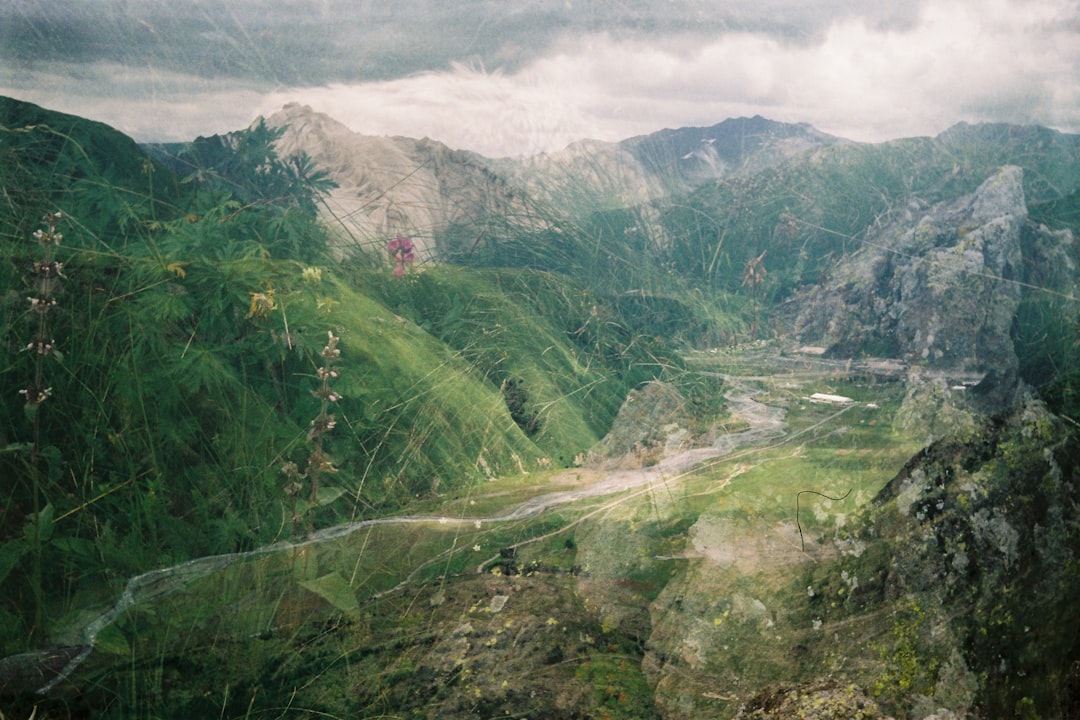
Stepantsminda Travel Guide: Everything You Need to Know (2026)
Stepantsminda sits at **1,740 m above sea level** in Georgia’s Greater Caucasus range, a townlet of just **1,326 residents** that serves as the administrative centre of Kazbegi Municipality in the Mtskheta-Mtianeti region. The iconic Gergeti Trinity Church crowns the ridge above town at roughly **2,170 m**, making this one of the most dramatically situated settlements in the entire Caucasus. What surprises most visitors is how this remote mountain outpost — historically part of the ancient Khevi province — has transformed into Georgia’s premier alpine destination without losing its raw, frontier character.
Three Things Not to Miss in Stepantsminda
- Gergeti Trinity Church — A 14th-century Georgian Orthodox church perched at 2,170 m with a direct view of 5,047 m Mount Kazbek.
- Mount Kazbek Trek Base Camp — The trail from Stepantsminda to Meteo Station base camp gains 1,500 m and rewards with glacier views unlike anywhere in Georgia.
- Georgian Military Highway Views — The 212 km road from Tbilisi cuts through the Dariali Gorge, delivering canyon scenery that rivals anything in the Alps.
Scroll down for our complete travel guide with tips on getting there, where to stay, costs and more.
Getting to Stepantsminda from the Airport
How do I get to Stepantsminda from Tbilisi or other major hubs?
Take a marshrutka from Tbilisi’s Didube bus station — it’s the fastest and cheapest option. In my experience, the shared minibus departs roughly every 2 hours from **7:00 AM**, costs around **5 GEL (roughly $2 USD)**, and covers the **157 km** in about **3 hours** depending on the Jvari Pass road conditions. Private taxis from Tbilisi run **80–120 GEL** and offer door-to-door comfort. The honest caveat: the Jvari Pass road can close with zero warning in winter or after heavy rain, stranding travellers for hours or even days. Always check road conditions via the Georgian Road Department app before departure.
Which airport is closest to Stepantsminda?
**Tbilisi International Airport (TBS)** is the closest and only practical entry airport, sitting approximately **170 km** south of Stepantsminda. In my experience, no shuttle connects the airport directly to Stepantsminda — you must travel to Didube bus terminal first, a **30–40 minute** metro or taxi ride from TBS. My tip: take the Tbilisi Metro Line 2 to Didube for **1 GEL**, then board the marshrutka. Flying into Kutaisi’s **KUT** airport saves nothing here — it adds 3 extra hours. What surprised me: there is no domestic flight option to anywhere near Kazbegi, so the road trip is unavoidable and genuinely spectacular.
How long does the journey from Tbilisi to Stepantsminda take?
By marshrutka the journey takes **2.5 to 3.5 hours** covering **157 km**. In my experience, the final 30 km through the Dariali Gorge slows progress considerably due to tight curves and occasional construction. Private car with a driver cuts this to **2.5 hours** if you leave Tbilisi before 9:00 AM to avoid city traffic. The caveat most guides skip: the **Jvari Pass at 2,379 m** is the journey’s pinch point — snow or ice between November and April can add 1–2 hours or force a complete closure. I recommend building a buffer day into your itinerary if visiting outside peak summer months.
Do I need a rental car to explore Stepantsminda and the surrounding Kazbegi region?
For Stepantsminda town itself and the Gergeti Church hike, you do not need a car. However, for reaching **Truso Valley**, **Juta village**, or **Sno Valley** independently, a 4WD rental is essential — these roads are unpaved and punishing. In my experience, renting a **Niva or Mitsubishi Delica** locally from guesthouses costs **80–120 GEL per day**. Tbilisi car rentals are cheaper at **60–90 GEL** but agencies often prohibit off-road use and will void insurance on mountain tracks. My honest warning: Georgian mountain roads have zero guardrails in places, and overconfident drivers cause accidents every summer. Hire a local driver for **100–150 GEL per day** if you are not experienced with high-altitude gravel driving.
Moving Around Stepantsminda
What are the best areas to stay in Stepantsminda?
Stay in the **central village area** near the Aragvi River bridge for the best balance of trail access and guesthouse density. In my experience, guesthouses on the eastern slope facing Gergeti Church offer the most dramatic morning light — worth the slight uphill walk. The **Gergeti neighbourhood** directly below the church trail is quieter and attracts serious hikers. Avoid booking on the main highway strip (**Georgian Military Highway**) — lorry noise starts at 5:00 AM and ruins sleep. My tip: the handful of guesthouses in **Arsha village**, 8 km south, offer genuine calm and lower prices if you have your own transport.
What does accommodation cost per night in Stepantsminda?
Budget guesthouse beds with breakfast included run **30–50 GEL per person** — genuinely excellent value. Mid-range private rooms in guesthouses with en-suite bathrooms cost **80–150 GEL per night**. The top-end option, **Rooms Hotel Kazbegi**, charges **400–800 GEL per night** depending on season, and its panoramic Kazbek views justify the price for one splurge night. In my experience, the breakfast-included guesthouse model is standard and saves you **15–25 GEL daily** on food costs. The caveat: hot water supply in budget guesthouses is solar-heated and often lukewarm after cloudy days — always ask before booking if reliable hot showers matter to you.
How far in advance should I book accommodation in Stepantsminda during high season?
Book **at least 4–6 weeks ahead** for July and August, which are peak season. In my experience, quality mid-range guesthouses along the Gergeti-facing slope fill completely by May for the summer. **Rooms Hotel Kazbegi** sells out 3 months in advance for July weekends — book the moment dates are confirmed. The honest trade-off: Georgian guesthouses rarely have cancellation policies and most require a direct bank transfer or cash deposit. For shoulder season — **June and September** — 2 weeks’ notice is usually sufficient. What surprised me: Georgian long weekends in May cause full town sell-outs even outside peak summer, so check the Georgian public holiday calendar.
Are there special or unique accommodation types worth trying in Stepantsminda?
The family-run guesthouses are the authentic Stepantsminda experience — not a quirky novelty but a genuine local institution. In my experience, staying with a **Khevi-region family** means home-cooked khinkali dinners, mulberry vodka at 9:00 PM, and insider hiking advice that no tour operator provides. For glamping, a handful of yurt camps have appeared in **Juta Valley**, 15 km from Stepantsminda, charging **120–180 GEL per night** with mountain views that dwarf anything in the main town. My tip: book yurt camps directly via Georgian hiking Facebook groups — middlemen add **30–40%** markup. The caveat: glamping camps operate June through September only and have no heating, so cold nights at 2,200 m require a good sleeping bag.
Choosing a Neighbourhood in Stepantsminda
What are the absolute must-sees in Stepantsminda?
The **Gergeti Trinity Church** hike is non-negotiable — a 1,200-step climb rewarded by a 14th-century stone church backdropped by the **5,047 m Kazbek glacier**. The **Meteo Station hike** (base camp at 3,653 m) is the second essential experience for fit travellers — a full-day 18 km return trek. In my experience, the **Dariali Gorge** drive and the ruins of **Dariali Fortress** 12 km north toward the Russian border are chronically undervisited and historically extraordinary — a Georgian military watchtower dating to the 4th century. My warning: skipping Gergeti Church because of clouds is a mistake — the mist-shrouded version is arguably more dramatic than the clear-day postcard shot.
What can I experience for free in Stepantsminda?
The **Gergeti Trinity Church** has no entry fee — the hike itself costs nothing beyond physical effort. Wandering the **Aragvi riverbank** trails below town is free and genuinely beautiful. In my experience, the best free experience is arriving at the church at **6:00 AM** for sunrise, when you have the entire ridge to yourself before the day-tripper jeeps arrive at 9:00 AM. The **Stepantsminda town cemetery** above the main road holds remarkable medieval stone carvings worth 20 quiet minutes. My honest caveat: the jeep service up to the church charges **50–80 GEL per car** — it is worth paying once if your knees demand it, but the free hike is superior in every other respect.
Which day trips from Stepantsminda are most worthwhile?
**Juta Valley** is the best day trip — a **15 km** drive on rough track followed by a hike to the Chaukhi massif, offering dramatic rocky peaks that rival Dolomite scenery. **Truso Valley** toward the Russian border, **18 km** from town, contains mineral springs, a ghost village, and an otherworldly sulphur-stained landscape. In my experience, Truso is the most underrated excursion in all of Georgia. The **Dariali Monastery** complex, only **12 km** north, takes 2 hours and is easily combined with the gorge drive. My caveat: Truso requires a 4WD and is completely inaccessible in wet weather — confirm trail conditions the morning you plan to go.
What local specialities should I eat in Stepantsminda?
Order **khinkali** — the Georgian dumpling — immediately upon arrival. In Stepantsminda’s guesthouses, khinkali are hand-made daily and filled with spiced mountain beef, **priced at 1–1.50 GEL each**. The correct technique: hold by the knot, bite a small hole, drink the broth first, then eat — never use a fork. In my experience, the best khinkali in town come from the kitchen of guesthouse **Nino’s** near the river bridge, not from any restaurant. **Kubdari**, the Svan meat pastry, is worth seeking out. Locally distilled **chacha** (grape pomace spirit) is served free in guesthouses and is 60%+ alcohol — treat it seriously. My warning: tourist restaurants near the main square charge **double** what guesthouse kitchens charge for identical food.
Top Sights in Stepantsminda
What makes Stepantsminda genuinely unique compared to other Georgian destinations?
Stepantsminda delivers the rarest combination in Georgia: extreme verticality, living Orthodox tradition, and a settlement small enough that local culture has not been diluted by tourism infrastructure. The **Gergeti Trinity Church at 2,170 m** with Kazbek rising another **2,900 m** behind it is a sight with no genuine equivalent in the Caucasus. In my experience, nowhere else in Georgia do you fall asleep to the sound of cowbells and wake to glacier views from a guesthouse bed costing **40 GEL**. The **Khevi mountain culture** — distinct dialect, specific dress traditions, and ancient watchtower architecture — is preserved here in ways impossible in Tbilisi or even Kazbegi’s rival, Svaneti. The honest caveat: the town is being built over aggressively with concrete hotels, and this authenticity has a limited lifespan.
How many days should I spend in Stepantsminda?
A minimum of **3 full days** allows you to hike Gergeti, do one valley day trip, and recover. I recommend **4–5 days** to reach Meteo Station base camp (requires 2 days: hike up, sleep at the meteorological station at **3,653 m**, return), add Truso Valley, and genuinely absorb the mountain pace. In my experience, visitors who allot only 1 day from Tbilisi leave frustrated — the Gergeti hike alone takes **4–5 hours** return, consuming the entire day. The honest trade-off: 5 days in Stepantsminda means skipping Svaneti or Kakheti, both of which deserve equal time. Georgia rewards slow travel — budget **10–14 days** total for the country if you want to include all three mountain zones.
When is the best time to visit Stepantsminda?
**June through September** are the optimal months based on verified climate data. In my experience, **late June and September** are the sweet spots — stable weather, fewer crowds than July-August, and the high alpine meadows at their most vivid green. July and August bring the maximum visitor pressure and afternoon thunderstorms at elevation that can strand hikers. **October** surprises with golden larch trees and near-empty trails but temperatures drop to near 0°C at night and mountain huts close. The hard truth most blogs omit: **November through April**, the Jvari Pass can close for days at a time and Gergeti Church becomes inaccessible without crampons and ice-axe experience — plan accordingly.
Are there local festivals or events in Stepantsminda worth timing a trip around?
The **Kazbegoba festival**, held annually in **August** in Stepantsminda, celebrates Khevi regional culture with traditional horse racing, music, and food stalls — genuinely authentic rather than tourist-packaged. In my experience, the horse racing along the Aragvi riverbed is spectacular and draws Georgian families from across the country rather than international tourists. The **Georgian Orthodox feast of the Transfiguration** in August draws pilgrims up to Gergeti Trinity Church for an all-night service — witnessing this at **2,170 m** by candlelight is extraordinary. My caveat: festival weekends cause accommodation to triple in price and sell out 2 months ahead — book the moment you decide to attend. Check exact dates via the Georgian National Tourism Administration, as they shift annually.
Where to Eat in Stepantsminda
How does mountain weather in Stepantsminda affect activities throughout the year?
Weather at **1,740 m** is genuinely alpine and changes within 30 minutes — a clear morning can become a thunderstorm by 1:00 PM. In my experience, always begin high-altitude hikes by **7:00 AM** and aim to be below **2,500 m** by noon in July and August. The Meteo Station trail becomes dangerous with afternoon lightning exposure above the treeline. **September** offers the most stable weather windows — 70% of days are clear for the entire day rather than just the morning. My honest warning: Georgian guesthouses and local guides frequently understate weather risk to secure bookings. Check **meteoblue.com** for Kazbegi specifically, not a general Georgia forecast, and carry a waterproof layer regardless of the morning sky.
How crowded does Stepantsminda get in peak season and is it still worth visiting?
**July and August weekends** bring genuine overcrowding — the Gergeti Church trail sees **300–500 hikers daily** and the summit ridge can feel like a queue. In my experience, the town’s main street transforms into a traffic jam of jeeps and tour minibuses between **10:00 AM and 4:00 PM**. The solution is simple: hike by **6:00 AM**, avoid the jeep road entirely by taking the direct footpath from the **Gergeti village** side, and the experience remains magical. Midweek visits in July are roughly **40% quieter** than weekends. The honest answer: yes, it is still absolutely worth visiting in peak season — the landscape overwhelms any crowd — but manage your timing ruthlessly.
How safe is Stepantsminda for travellers?
Stepantsminda is exceptionally safe by any international standard — petty crime is virtually nonexistent in a town of **1,326 people** where everyone knows everyone. In my experience, I have never felt unsafe at any hour in the village itself. The genuine safety risk here is **mountain terrain**: the Gergeti and Kazbek trails cause injuries and occasional fatalities every year among unprepared hikers attempting routes above **3,500 m** without proper gear. Do not hike above the church without trekking poles, solid boots, and a weather window. A secondary risk: the road approaching **Dariali Gorge** near the Russian border has a Georgian military checkpoint — carry your passport and do not attempt to cross into Russia from this point without prior visa arrangements.
Is English widely spoken in Stepantsminda?
English is spoken by guesthouse owners catering to tourists but is essentially absent among older locals and market vendors. In my experience, **Russian** functions as the practical second language in Stepantsminda — more guesthouse owners speak it fluently than English. Learning 10 Georgian words transforms interactions: **gmadlobt** (thank you), **gamarjoba** (hello), and **ra ghirs** (how much?) open every door. The **Google Translate Georgian offline pack** handles menus and signs adequately. My honest caveat: in a mountain emergency — injury on trail, car breakdown on a remote valley road — clear communication is critical. Download the **112 Georgia emergency app** and save the Kazbegi Municipality contact number **+995 322 93 00 11** before you go.
Before You Go to Stepantsminda
What is a realistic daily budget for Stepantsminda?
A comfortable budget traveller spends **60–90 GEL per day** covering a guesthouse bed with breakfast (**40 GEL**), lunch (**10–15 GEL**), dinner (**15–20 GEL**), and one shared jeep excursion split between 4 people (**20–25 GEL per person**). In my experience, it is genuinely difficult to spend more than **120 GEL per day** unless you book **Rooms Hotel Kazbegi**. Mid-range comfort — private room, two full meals, one guided valley hike — runs **150–200 GEL per day**. The hidden cost most visitors miss: **jeep hire for remote valleys** at **150–200 GEL per vehicle** is unavoidable if you travel solo without your own 4WD. Split costs aggressively with fellow guesthouse guests.
What public transport options exist in and around Stepantsminda?
The **Tbilisi–Stepantsminda marshrutka** runs daily from **Didube station** for **5 GEL** and is the backbone of public access. Within Stepantsminda and to surrounding valleys, public transport does not exist — there are no local buses. In my experience, the informal jeep network operated by local drivers fills this gap entirely: a shared jeep to **Juta** costs roughly **10–15 GEL per seat** when filled with 4 passengers. The return marshrutka to Tbilisi departs Stepantsminda at around **8:00 AM** and **2:00 PM** — confirm times locally as schedules shift seasonally. My caveat: there is no taxi app like Bolt or Yandex functioning reliably in Stepantsminda — all transport is negotiated in person or via your guesthouse host.
Which apps do you recommend for travelling to and around Stepantsminda?
Install **maps.me** with the Georgia offline map before leaving Tbilisi — it shows hiking trails and valley roads that Google Maps omits entirely. In my experience, **Windy.com** is more accurate than any Georgian weather service for forecasting conditions on the **Kazbek massif** above **3,000 m**. **Bolt** works in Tbilisi for airport-to-Didube transport but stops functioning the moment you leave the capital. Download **Google Translate** with the Georgian offline pack for menu and sign reading. The **112 Georgia** emergency app is mandatory — it connects to mountain rescue services and shares your GPS coordinates automatically. My honest tip: download **WhatsApp** and get your guesthouse host’s number — in Stepantsminda, WhatsApp messages arrange jeeps, dinner, and weather advice faster than any app built for tourism.
Stepantsminda at a Glance
| Population | 1,326 |
|---|---|
| Official language | Georgian |
| Time zone | UTC+04:00 |
Source: Wikidata, retrieved August 2026.
Georgia › Stepantsminda
More Destinations in Georgian Military Highway
More Destinations in Georgia
Essential Resources for Planning Your Trip to Stepantsminda
- Wikipedia: Stepantsminda — history, geography & background
- Wikivoyage: Stepantsminda — community travel guide & practical tips
- Stepantsminda travel – Lonely Planet | Georgia, Europe — expert itineraries & travel inspiration
- THE 15 BEST Things to Do in Stepantsminda (2026) — hotels, restaurants & traveller reviews
- How to get to the Caucasus mountains from Tbilisi, Georgia? — how to get around
- Numbeo: Cost of Living in Stepantsminda — current prices & cost comparison
- Timeanddate: Stepantsminda Weather & Climate — forecasts & climate statistics
More Perspectives on Stepantsminda
- Stepantsminda Kazbegi & Gergeti – AleksBlog.com
- Things to do in Stepantsminda
- Visit Kazbegi, Georgia in 2026:The Ultimate Kazbegi Guide
Stepantsminda Travel Videos
Watch these videos for a visual preview before your trip:
- Epic Things to Do in Stepantsminda Kazbegi Georgia Travel
- The Most Beautiful Hike in Georgia 🇬🇪 | Kazbegi, (Stepantsminda)
- Risking Our Lives in Stepantsminda, Georgia? (RUSSIA Border) 🇬🇪🇷🇺
Stepantsminda Travel Discussions on Reddit
Real traveller experiences and community advice:
- A Week in Tbilisi and Stepantsminda, Georgia, My favorite …
- Georgia- Vardzia or Stepantsminda? : r/travel
- Trip to Stepantsminda next week : r/Sakartvelo
Data Sources
This page was compiled using data from Wikipedia, Wikidata, Open-Meteo (climate), Numbeo (cost of living) and REST Countries. Information is updated regularly.