
Strasbourg: The Complete Travel Guide (2026)

Last reviewed: September 2026 · key facts checked against Wikidata
Strasbourg Travel Guide: Everything You Need to Know (2026)
Strasbourg, home to 293,771 residents, sits at 150m elevation on the Rhine River border between France and Germany, founded as a Roman camp called Argentoratum in 12 BC. It uniquely hosts the European Parliament, making it one of two official EU capitals alongside Brussels — a political distinction no other French city outside Paris holds. The medieval Grande Île was UNESCO-listed in 1988, the first entire city centre to receive that honour.
Top 3 Highlights at a Glance
- Cathédrale Notre-Dame de Strasbourg — A Gothic masterpiece completed in 1439, once the world’s tallest building at 142m, with a famous 16th-century astronomical clock.
- La Petite France — Strasbourg’s most photogenic quarter, a tangle of half-timbered tanners’ houses straddling canals dating to the 15th century.
- European Parliament Visitor Centre — Free guided tours let you sit inside the actual hemicycle where 705 MEPs legislate — completely unique to Strasbourg.
Scroll down for our complete travel guide with tips on getting there, where to stay, costs and more.
Arrival & Airport
How do I get to Strasbourg?
Fly into Strasbourg Airport (SXB) or take a direct TGV train — that’s my first recommendation. In my experience, the train wins decisively: Paris Gare de l’Est to Strasbourg takes just 1h47min by TGV, with tickets from €19 booked early on SNCF. Frankfurt Airport is 145km away and reachable by direct train in under 2 hours, making it a strong alternative for international arrivals. Basel-Mulhouse Airport (BSL) is 90km south and serves budget carriers like Ryanair. The honest caveat: SXB itself is tiny with limited international routes, so most travellers connect through Paris, Frankfurt, or Basel rather than flying direct.
Which airport is closest to Strasbourg?
Strasbourg Airport (SXB) is the closest, sitting just 12km southwest of the city centre in Entzheim. My tip: the TER train from Entzheim-Aéroport station runs every 15 minutes to Strasbourg city centre in 9 minutes flat, costing around €2 with a local transport ticket. What surprised me is how small SXB is — fewer than 20 routes operate year-round, mostly within Europe. If you’re coming from outside Europe, Frankfurt Airport (FRA) offers far more connections and a direct ICE train to Strasbourg in about 1h45min, making it a genuinely superior entry point despite the extra distance.
How long does the journey to Strasbourg take from major hubs?
Journey times vary sharply depending on your origin. From Paris Gare de l’Est, the TGV covers the distance in 1 hour 47 minutes — faster than many domestic flights once you factor in airport time. From Frankfurt, the ICE train takes 1 hour 45 minutes. From Basel, it’s a 35-minute regional train ride. My honest warning: driving into Strasbourg’s Grande Île area is punishing — the centre is heavily pedestrianised and parking is scarce and expensive at roughly €2–3 per hour in central car parks. I recommend arriving by rail and not touching a car until you leave.
Do I need a car to explore Strasbourg?
No — a car is actively counterproductive inside Strasbourg. I recommend leaving it entirely. The Grande Île UNESCO zone is mostly pedestrianised, and the city’s tram network (lines A through F) covers every major sight efficiently for around €2 per journey. The Vélhop bike-share system has over 500 stations and a 24-hour pass costs just €5 — and Strasbourg’s flat terrain makes cycling genuinely effortless. The trade-off: if you plan day trips to Alsatian wine villages like Riquewihr or Obernai, a rental car or organised tour becomes worthwhile, as bus connections to those villages are infrequent and slow.
City Transport
What are the best areas to stay in Strasbourg?
Stay on or immediately around Grande Île — it’s where everything worth seeing is concentrated. The Krutenau neighbourhood just southeast of the island offers cheaper hotels and a local bar scene without the tourist premium of the cathedral square. Petite France itself is atmospheric but hotel prices there spike heavily. My tip: Neustadt, the Imperial German quarter north of the canal, is walkable to the centre in 10 minutes and significantly quieter at night. I’d avoid booking anything near Gare Centrale on a budget — that area has a noticeably rough after-dark atmosphere that most guides skip mentioning.
What does accommodation cost per night in Strasbourg?
Budget correctly for €85/night for an economy hotel, which buys a clean but basic room — that’s the verified Numbeo baseline. Mid-range hotels in Petite France or near the Cathedral run €130–180/night for a double. In my experience, Krutenau and Neustadt cut those prices by 20–30% for equivalent quality. Boutique guesthouses in half-timbered buildings exist but charge a premium of €150+ even for small rooms purely for the aesthetic. The honest caveat: European Parliament session weeks (usually one week per month) inflate prices city-wide by 15–25%, so always check the EP plenary calendar before booking.
How far in advance should I book accommodation in Strasbourg during high season?
Book at least 3 months ahead for the Strasbourg Christmas Market, which runs late November through December 24 and is the largest in France with over 300 stalls — hotels sell out completely and prices triple. For summer (June–August), 6–8 weeks ahead is sufficient for most mid-range options. My tip: European Parliament plenary sessions are the hidden pressure point — check the EP official session calendar and book 2 months out for those specific weeks year-round. I once arrived during a plenary week without booking and spent 45 minutes finding an available room at 3x the usual rate. September, one of the best travel months, books up faster than you’d expect due to trade fairs.
Are there special accommodation types worth trying in Strasbourg?
Yes — staying in a colombages (half-timbered) guesthouse is genuinely different from a standard hotel and worth the premium once. Hôtel Régent Petite France occupies a converted 16th-century ice factory on the canal and is the most atmospheric option at around €180–220/night. For a cheaper version of the same character, look at chambres d’hôtes (French B&Bs) in Neustadt’s Wilhelminian-era buildings — typically €80–110/night with breakfast included. The honest trade-off: Airbnb supply in the central zone is restricted by Strasbourg’s municipal short-term rental rules, so availability is thinner than in Paris, and some listed apartments operate in a legal grey area.
Accommodation & Neighbourhoods
What are the must-see sights in Strasbourg?
Three are non-negotiable. First, Cathédrale Notre-Dame: climb the 66-metre platform (the highest public viewing point at 142m total) for a rooftop panorama — entry to the tower is €5. Second, La Petite France: walk the Ponts Couverts (covered bridges) and the Barrage Vauban at dawn when tour groups haven’t arrived — it’s free. Third, the European Parliament Visitor Centre: free guided tours run Monday–Saturday and let you enter the actual debating chamber. What surprised me is how many visitors skip the Musée Alsacien on Quai Saint-Nicolas — a brilliantly curated folk museum that explains Alsatian culture better than any guidebook, for just €7.50 entry.
What can I experience for free in Strasbourg?
Strasbourg rewards the budget traveller well. The Grande Île UNESCO streetscape itself costs nothing — wandering Rue du Bain-aux-Plantes in Petite France is the city’s best free activity. The European Parliament public gallery during non-plenary weeks is free with passport registration. Parc de l’Orangerie, 2km northeast of the centre, has a free stork sanctuary — Strasbourg’s official city symbol. The Musée d’Art Moderne et Contemporain (MAMCS) on the riverbank offers free entry on the first Sunday of each month. My tip: the Barrage Vauban rooftop terrace gives a panoramic view over the Ponts Couverts at zero cost — better than many paid viewpoints I’ve visited.
Which day trips from Strasbourg are worth doing?
The Alsatian Wine Route (Route des Vins d’Alsace) is the standout — Riquewihr, 65km south, is the most photogenic village and genuinely earns its reputation. From Strasbourg by car it’s 1 hour; by train to Colmar (30 minutes, €10) then local bus it’s 90 minutes total. Colmar itself deserves a half-day — its Little Venice canal district rivals Strasbourg’s Petite France. Mont Sainte-Odile, a 7th-century abbey at 763m altitude, is 40km away and offers hiking with Rhine valley panoramas. The honest caveat: Heidelberg (Germany) is 90km north and 1 hour by direct train — architecturally magnificent, but most Strasbourg visitors overlook it completely.
What are the local specialities I should eat in Strasbourg?
Strasbourg is the capital of Alsatian cuisine, which blends French technique with German heartiness. Choucroute garnie — sauerkraut with 5–7 different cured meats and sausages — is the defining dish and costs €18–24 at a proper winstub (Alsatian tavern). Flammekueche (tarte flambée), a thin-crust flatbread with crème fraîche, lardons, and onions, is the cheaper option at €10–14. Baeckeoffe, a slow-baked meat and potato casserole, requires ordering 24 hours ahead at most restaurants. My tip: pair everything with Alsatian Riesling or Gewurztraminer — local wine is exceptional and a glass costs €4–6 in neighbourhood winstubs, not the tourist-price €9 near the Cathedral.
Highlights & Must-Sees
What makes Strasbourg unique compared to other French cities?
Strasbourg is the only city in the world that simultaneously serves as a seat of the European Parliament, the Council of Europe, and the European Court of Human Rights — all within 3km of each other. Its Alsatian identity is genuinely bicultural: street signs are in French and Alsatian dialect, architecture is half French baroque and half German timber-frame, and the food vocabulary switches mid-menu. It changed nationality 4 times between 1871 and 1945. In my experience, no other French city feels so fundamentally un-French in character while remaining entirely French in administration — it’s a singularity that Lyon, Bordeaux, or Marseille simply cannot replicate.
How many days do I need to explore Strasbourg properly?
3 full days covers Strasbourg thoroughly. Day 1: Grande Île, Cathedral tower, Petite France, and the Barrage Vauban. Day 2: European Quarter (Parliament, Palais de l’Europe), Neustadt Imperial district, and Musée Alsacien. Day 3: a day trip to Colmar (30 minutes by train) or a self-drive through 3–4 Wine Route villages. The honest caveat: 2 days is enough to see the highlights but leaves you rushing, while 4+ days is genuinely too long unless you have a specific interest like wine touring or cycling the EuroVelo 15 Rhine route, which runs directly through the city. I left wishing I’d allocated that third day earlier in my planning.
When is the best time to visit Strasbourg?
June and September are the verified optimal months based on climate analysis. June brings long days, outdoor café culture in full swing, and no Christmas market crowds. September offers the harvest season on the Wine Route — Alsatian vineyards are at their most photogenic, and the European Wine Harvest Festival in Barr runs the last weekend of the month. My honest trade-off: December is transformatively magical during the Christmas Market but comes with tripled hotel prices, thick crowds on the Grande Île, and temperatures around 2–5°C. July–August is warm but brings peak European tourism, with tour groups clogging Petite France from 10am onwards. Avoid February–March if you want outdoor dining.
Are there local festivals in Strasbourg worth attending?
Strasbourg Christmas Market (Marché de Noël) is the headline event — running since 1570, it’s France’s oldest and largest, with over 300 chalets across 11 sites and roughly 2 million visitors annually. The Musica Festival in late September focuses on contemporary classical music across 10 days and attracts serious music travellers. Jazz d’Or runs in November with free and ticketed concerts across city venues. My tip: the Fête de la Musique on June 21st is free, city-wide, and genuinely local — every neighbourhood sets up live music from noon to midnight. What surprised me is how aggressively the Christmas Market is marketed versus how under-promoted September’s wine harvest events are — the latter has far shorter queues.
Food & Drink
How does Strasbourg’s weather affect activities?
Strasbourg has a semi-continental climate with genuine winters — temperatures drop to 0–3°C in January and snow is possible, which makes outdoor cycling and canal-side dining impractical. Summer peaks at 25–28°C in July, ideal for the Vélhop bike network and Rhine-side walking. The key activity impact: the Barrage Vauban rooftop and Cathedral tower platform are miserable in heavy rain, so build those into clear-day mornings. In my experience, Strasbourg’s tram network makes rain largely irrelevant for sightseeing — you can reach every major indoor attraction without prolonged exposure. The wine village day trips are weather-dependent and genuinely disappointing under grey skies, so keep those flexible in your itinerary.
How crowded does Strasbourg get in peak season?
Peak crowding hits two separate windows: July–August summer tourism and November–December Christmas market season. During summer, Petite France is gridlocked with tour groups by 10am — I recommend arriving before 8:30am or after 6pm for photographs without crowds. Christmas market period is the more extreme case: the Pont du Corbeau and Cathedral square areas become genuinely difficult to walk through on weekends between December 1–20. The honest insight most guides skip: European Parliament plenary weeks add a distinct wave of business travellers that fills mid-range hotels fast but doesn’t create tourist-site crowding. September and early October deliver 90% of the scenery at 40% of the crowd density.
How safe is Strasbourg for travellers?
Strasbourg is safe for standard tourist activity. The Grande Île, Petite France, and European Quarter are low-risk at all hours. The honest warning: the area around Gare Centrale (the main train station) and the Neudorf district southeast of the centre have higher petty crime rates, particularly after dark, and I’d avoid lingering there unnecessarily. Pickpocketing targets the Christmas market crowds specifically — keep cards in a front pocket during December visits. The city has a notable drug-related crime issue concentrated in certain suburban zones like Hautepierre, which tourists have no reason to visit. Overall Strasbourg ranks comfortably in the safer half of French cities of comparable size.
Is English widely spoken in Strasbourg?
Yes — better than almost anywhere else in provincial France. In my experience, English is spoken confidently at hotels, restaurants, and tourist sites throughout the Grande Île area. The European institutions bring thousands of English-speaking expats and international staff, which normalises English use across service industries. Staff at the European Parliament Visitor Centre operate natively in English. The caveat: step into neighbourhood winstubs in Krutenau or Robertsau and French becomes essential — Google Translate handles menus fine, but ordering confidently in French earns noticeably warmer service and occasionally a free digestif. German is also widely understood, given the city’s history and 145km proximity to Frankfurt.
Practical Tips
What is the daily budget for travelling in Strasbourg?
Budget realistically by tier. Backpacker level: €65–80/day — hostel dorm (~€30), flammekueche lunch (~€12), self-catered dinner from a market, tram day pass (~€5). Mid-range: €150–200/day — economy hotel (~€85), proper winstub dinner (~€35 including wine), Cathedral tower entry, and a Vélhop bike day pass. Comfort level: €250+/day — boutique hotel, two restaurant meals, guided tours, and a wine tasting at a Route des Vins cave. The hidden cost most visitors underestimate: Wine Route day trips by rental car add €60–80 in fuel, car hire, and wine purchases. Cheap meal baseline is verified at ~€15, making lunch affordable even on tight budgets.
How does Strasbourg’s public transport work?
Strasbourg runs one of France’s best urban tram networks — 6 lines (A through F) covering the city and inner suburbs, with trams running every 4–6 minutes during peak hours. A single ticket costs €2 and is valid for 1 hour including transfers. A 24-hour pass costs €5.30, making it the obvious choice for day visitors. The Vélhop bike-share integrates with the tram system — stations sit outside every major tram stop. My tip: buy tickets at tram-stop machines rather than onboard to avoid the €1.50 surcharge for driver-sold tickets. The honest limitation: the European Parliament and Palais de l’Europe are a 15-minute tram ride from the Cathedral on line E — plan that leg, as it’s farther than maps suggest.
Which apps do you recommend for navigating Strasbourg?
Four apps cover everything you need. Cts-strasbourg.eu app (or Google Maps integrated with CTS timetables) handles all tram and bus routing with real-time departures. Vélhop app manages bike-share rentals — register before arrival to save 10 minutes at the kiosk. SNCF Connect is essential for booking TGV trains to Paris or regional TER trains to Colmar; early booking unlocks €19 fares versus €50+ walk-up prices. Waze only if you’re driving for wine village day trips — Strasbourg’s one-way street system punishes navigation by memory alone. My honest addition: Strasbourg Tourism’s official app has augmented-reality overlays on the Cathedral’s facade that are surprisingly impressive and genuinely informative, not gimmicky.
More Destinations in Europe
Explore our complete travel guides for more Europe destinations: Fuerteventura Travel Guide (2026), Clermont-Ferrand Travel Guide (2026), Sevilla Travel Guide (2026), Crete Travel Guide (2026), Formentera Travel Guide (2026).
Strasbourg at a Glance
| Population | 293,771 |
|---|---|
| Currency | EUR (€) |
| Official language | French |
| Time zone | UTC+01:00 |
Source: Wikidata, retrieved September 2026.
Useful Resources for Planning Your Trip to Strasbourg
- Wikipedia: Strasbourg — history, geography and background
- Lonely Planet: Strasbourg — itineraries and travel inspiration
- TripAdvisor: Strasbourg — hotels, restaurants and traveller reviews
🎥 Strasbourg Travel Videos
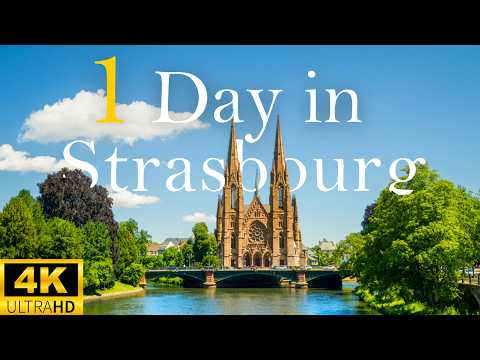
How to Spend 1 Day in STRASBOURG France | Travel Itinerary
Exotic Vacation
STRASBOURG Travel Guide 2026 | 10 Best Things To Do In …
Alp Galip Travels
First time in Strasbourg France? Don’t Visit Strasbourg Before …
Alp Galip Travels
You are currently viewing a placeholder content from Vimeo. To access the actual content, click the button below. Please note that doing so will share data with third-party providers.
More InformationYou are currently viewing a placeholder content from YouTube. To access the actual content, click the button below. Please note that doing so will share data with third-party providers.
More InformationYou need to load content from reCAPTCHA to submit the form. Please note that doing so will share data with third-party providers.
More InformationYou are currently viewing a placeholder content from GetYourGuide. To access the actual content, click the button below. Please note that doing so will share data with third-party providers.
More Information