
Zakynthos: The Complete Travel Guide (2026)
Last reviewed: October 2026 · key facts checked against Wikidata
Zakynthos Weather by Month: When to Go
| Month | Day | Night | Sea | Rain days | Rain mm | Wind km/h | Good for |
|---|---|---|---|---|---|---|---|
| Jan | 11° | 6° | 17° | 14 | 127 | 21 | – |
| Feb | 12° | 7° | 17° | 9 | 69 | 20 | – |
| Mar | 13° | 7° | 17° | 11 | 71 | 20 | – |
| Apr | 16° | 10° | 17° | 7 | 31 | 18 | Hike |
| May | 20° | 13° | 20° | 6 | 36 | 18 | Hike |
| Jun | 25° | 18° | 24° | 3 | 17 | 18 | SwimHike |
| Jul | 28° | 20° | 27° | 1 | 7 | 20 | Swim |
| Aug | 28° | 21° | 27° | 2 | 10 | 18 | Swim |
| Sep | 24° | 18° | 26° | 7 | 69 | 18 | Swim |
| Oct | 20° | 15° | 23° | 9 | 109 | 17 | – |
| Nov | 16° | 12° | 22° | 13 | 168 | 19 | – |
| Dec | 13° | 8° | 19° | 13 | 128 | 19 | – |
Sources: ERA5 reanalysis via Open-Meteo, 2016–2025 (10-year average) for air temperature, rain and wind (average daily maximum); Open-Meteo Marine API, 2023–2025 for sea surface temperature. A rain day has at least 1 mm. Area averages; individual years vary.
Zakynthos Travel Guide: Everything You Need to Know (2026)
Zakynthos — known internationally as Zante — is a Greek island in the Ionian Sea covering 405.55 km² with a coastline stretching 123 km. Home to a permanent population of 41,180, the island sits at an average elevation of 758 m at its highest peaks, contrasting dramatically with its flat eastern coast where most resorts cluster. The island shelters the famous Navagio shipwreck beach and the nesting grounds of the endangered loggerhead sea turtle (Caretta caretta), making it one of the Ionian’s most ecologically significant destinations.
Three Things Not to Miss in Zakynthos
- Navagio (Shipwreck) Beach — An iconic cove accessible only by boat, framing a rusted 1983 shipwreck against near-white limestone cliffs.
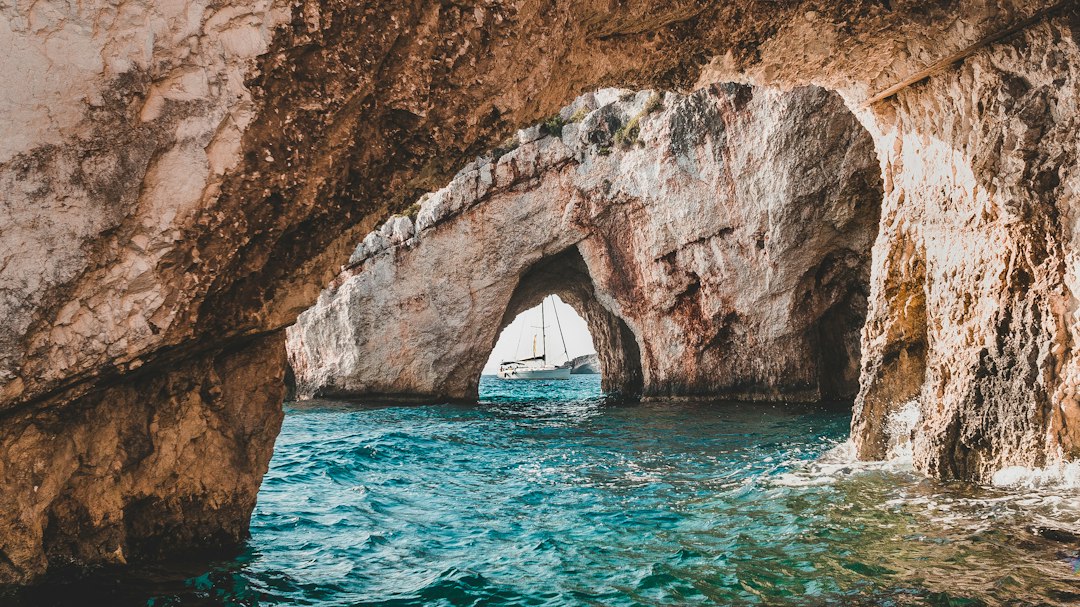
- Blue Caves, Cape Skinari — Sea-level grottos at the island’s northern tip where refracted light turns the water electric cobalt-blue.
- Laganas Bay Turtle Nesting Area — One of the Mediterranean’s most important Caretta caretta nesting beaches, protected by a national marine park.
Scroll down for our complete travel guide with tips on getting there, where to stay, costs and more.
Getting to Zakynthos: Ferry or Flight
How do I get to Zakynthos — by flight or ferry?
Flying is the fastest and most practical option for reaching Zakynthos. Zakynthos International Airport (ZTH) receives direct charter and scheduled flights from most major European cities, especially April–October. Alternatively, you can reach the island by ferry from Kyllini port on the Peloponnese mainland — a crossing of approximately 1 hour. Ferries also connect from Patras via Kyllini. Worth knowing: outside summer, international flight frequency drops sharply; most winter visitors fly to Athens and then take an onward domestic flight or a combination of bus and ferry via Kyllini. Budget accordingly for the extra leg.
Which airport or port is the best starting point for Zakynthos?
Zakynthos International Airport Dionysios Solomos (ZTH) is the clear best starting point — it sits just 6 km south of Zakynthos Town and handles direct European routes throughout summer. For ferry arrivals, Zakynthos Port in the town centre is the main terminal, receiving boats from Kyllini year-round. Tip: if flying via Athens, check Olympic Air and Sky Express for domestic connections to ZTH; check current timetables on their official websites. Arriving by ferry gives you immediate access to car and scooter hire at the port, which is useful if you plan to explore the island independently.
How long does the Zakynthos ferry crossing from the mainland take?
The ferry from Kyllini (Peloponnese) to Zakynthos Port takes approximately 1 hour under normal sea conditions. Ferries are operated by Ionian Ferries and Levante Ferries — check their official websites for current timetables, as frequency varies from around 6 sailings daily in summer to fewer in winter. The crossing is generally smooth because the Ionian Sea is calmer than the Aegean. Worth knowing: during the July–August peak, vehicle queues at Kyllini can add 1–2 hours of waiting time to your journey; foot passengers board more quickly and can book tickets on arrival.
What does a flight or ferry to Zakynthos cost?
Ferry tickets from Kyllini to Zakynthos cost roughly €10–€15 per person for a foot-passenger ticket; taking a car adds approximately €35–€60 depending on vehicle size — verify exact fares on Ionian Ferries or Levante Ferries official sites. Direct charter flights from northern Europe can cost anywhere from €80 to €250 return depending on season and booking lead time. Scheduled flights via Athens with Olympic Air or Sky Express typically run €60–€120 one-way. Caveat: fuel surcharges and luggage fees are not always included in advertised flight prices; always check the total at checkout before booking.
Are overnight ferries to Zakynthos worth it?
Overnight ferries do not currently serve the Zakynthos route. The Kyllini–Zakynthos crossing takes only about 1 hour, making a sleeper service impractical. If you are travelling from Athens, the most common approach is to take a KTEL bus or drive to Kyllini (roughly 3.5 hours from Athens), then board a daytime ferry. Worth knowing: Patras to Zakynthos via Kyllini is a popular route for travellers arriving from Italy on Adriatic ferries, allowing you to reach the island without backtracking through Athens. The Patras–Kyllini leg by road is approximately 90 km.
Getting Around Zakynthos
Do I need a rental car or scooter on Zakynthos?
Yes — a rental car is strongly recommended for Zakynthos. The island covers 405.55 km² and many of its best beaches and villages are inaccessible by public bus. Rental cars are available from €30–€60 per day in shoulder season, rising to €60–€100 in August — compare prices via local agencies in Zakynthos Town or at ZTH Airport. ATV and scooter hire is cheaper, around €20–€40 per day, but mountain roads toward Navagio viewpoint and Volimes are steep and narrow. Caveat: international driving licence is not required for EU nationals, but non-EU visitors should carry an IDP. Book hire vehicles in advance for July–August.
Are there bus connections between towns on Zakynthos?
Public buses on Zakynthos are limited and serve mainly the route between Zakynthos Town and major resort strips such as Laganas, Argassi, and Alykes. The KTEL Zakynthos network operates these lines, with tickets costing around €1.40–€2 per journey. However, buses run infrequently — typically 4–8 times daily on main routes — and stop well before midnight. They do not reach Navagio Beach, Cape Skinari, or most northern villages. Tip: for destinations like Anafonitria or Volimes, a rental car or organised taxi tour is the only practical option. Check the KTEL Zakynthos official website for current timetables before arrival.
What does a rental car cost on Zakynthos — and where do I hire one?
Rental cars on Zakynthos cost approximately €35–€55 per day in May–June and September–October, rising to €70–€100 per day in July–August. Major hire desks operate at ZTH Airport (international companies including Europcar and Sixt) and along Lomvardou Street in Zakynthos Town. Smaller local agencies in resort areas like Laganas and Tsilivi can offer competitive rates. Worth knowing: cars booked through aggregator sites like Discover Cars or Rentalcars.com are often 15–20% cheaper than walk-up airport prices. Full insurance cover and a credit card for the deposit hold are required — debit cards are frequently not accepted at desks.
Which parts of Zakynthos are accessible by public transport?
Public transport on Zakynthos covers only the eastern coastal corridor reliably. KTEL Zakynthos buses connect Zakynthos Town with Laganas (approx. 9 km, about 20 minutes), Argassi, Tsilivi, and Alykes with reasonable frequency in summer. The town itself is easily explored on foot. However, the entire western coast — including the Navagio viewpoint, Anafonitria Monastery, and Blue Caves at Cape Skinari — is not accessible by bus. Worth knowing: boat excursions departing from Agios Nikolaos Port (north coast) and Zakynthos Town Port reach Navagio and the Blue Caves, so you can see those highlights without a car if you book a day-trip boat tour.
Can I cycle around Zakynthos island?
Cycling around the entire island is not practical for most visitors. Zakynthos reaches elevations up to 758 m in its mountainous western interior, and main roads lack dedicated cycling infrastructure. The flat eastern strip between Zakynthos Town and Tsilivi (roughly 7 km) is manageable by bike, and some resorts rent standard bicycles for around €10–€15 per day. E-bikes are increasingly available and make the hilly terrain more approachable. Caveat: summer heat regularly exceeds 30°C in July–August, making long-distance cycling physically demanding. We recommend cycling only for short resort-to-town hops, and using a car or boat tour for the island’s scenic western highlights.
Where to Stay on Zakynthos
Which town should I base myself in on Zakynthos?
Zakynthos Town (Chora) is the best all-round base: it has the ferry port, best restaurant variety, cultural sights including Saint Dionysios Church and the Byzantine Museum, and central road access to the whole island. For beach-focused holidays, Tsilivi (about 5 km north of town) offers a calmer, family-friendly alternative to the busy nightlife of Laganas. Alykes, 28 km north of town, suits travellers wanting a quieter base near the northern boat trips to the Blue Caves. Worth knowing: Laganas is the loudest resort on the island — its beach bar scene runs until dawn in peak season, which suits party travellers but not families or light sleepers.
What does accommodation cost per night on Zakynthos?
Budget travellers can find economy hotel rooms from approximately €75 per night based on Numbeo data. Mid-range hotels in Tsilivi or Zakynthos Town typically cost €100–€160 per night in July–August, dropping to €60–€90 in May–June and September. Boutique stays in villages like Keri or Volimes in the hills can match or exceed resort prices for character accommodation. Self-catering apartments remain the most cost-effective option for families — a studio in Argassi might run €55–€80 per night in shoulder season. Caveat: prices during the last two weeks of August spike significantly; properties in popular areas sell out months in advance for that period.
Which area of Zakynthos suits which travel style?
Laganas (south coast) suits party travellers and young groups — it has the densest concentration of clubs and beach bars, but sits within the National Marine Park buffer zone, so behaviour near the beach at night is regulated to protect turtle nesting. Tsilivi suits families and couples seeking a relaxed beach base with good water-sport facilities. Zakynthos Town suits culture-focused travellers wanting easy access to museums, restaurants, and the ferry network. Alykes and Alykanas in the north suit those prioritising the Blue Caves and Navagio boat trips. The hillside villages of Keri and Machairado suit travellers wanting authentic, crowd-free Zakynthos away from the resort belt entirely.
How far in advance do I need to book accommodation on Zakynthos?
Book at least 3–4 months ahead for travel in July and August. The most sought-after properties in Tsilivi, Zakynthos Town, and beachfront Laganas sell out by April or May for peak summer. For the last two weeks of August — the busiest period — some in-demand hotels fill 6 months in advance. Shoulder season travel in May, June, September, and October gives much more flexibility; booking 4–6 weeks ahead is generally sufficient. Tip: villas and apartments listed on platforms like Airbnb or Booking.com often have free cancellation up to a certain date — useful if your plans are not yet fixed when booking early.
Are there good apartments or villas with sea views on Zakynthos?
Yes — Zakynthos has a wide range of self-catering villas and apartments with sea views, particularly around Argassi and Porto Zoro on the southeastern coast, and in the hillside areas above Tsilivi. Villas with private pools and Ionian views typically cost €150–€350 per night in peak season depending on size. Platforms like Booking.com, Airbnb, and specialist Greek villa operators such as Ionian Island Holidays list hundreds of options. Worth knowing: properties marketed as “sea view” on Zakynthos vary widely — cliffside villas near Keri Lighthouse offer dramatic panoramas, while some “sea view” rooms in flat resort areas only glimpse the water at an angle. Read reviews carefully and request photos.
Best Time to Visit Zakynthos
When is the best time to visit Zakynthos?
Based on verified climate analysis, the best travel months for Zakynthos are June, July, August, and October. June offers warm sea temperatures, long days, and noticeably lower crowds than peak summer. July and August deliver guaranteed sunshine and the full range of boat tours and water sports, but at maximum prices and visitor numbers. October is an excellent choice for warm weather, calm seas ideal for snorkelling, olive harvest atmosphere in inland villages, and significantly cheaper accommodation. Caveat: Zakynthos has a distinct winter off-season from November through March when the majority of resort hotels, restaurants, and tourist businesses close entirely — the island reverts to quiet local life.
What is the weather on Zakynthos like throughout the year?
Zakynthos enjoys a Mediterranean climate with hot, dry summers and mild, wet winters. Summer (June–August) is reliably sunny with temperatures regularly reaching 30–34°C; sea temperatures hit 24–26°C by August, ideal for swimming. Spring (April–May) is warm and green — a good time for hiking the island’s interior. Autumn (September–October) remains warm enough for beach visits — expect 22–27°C in September. Winter (November–March) brings the bulk of the island’s annual rainfall; temperatures average 10–15°C and most tourist infrastructure is shut. Worth knowing: the Ionian receives more annual rainfall than the Aegean islands, which is why Zakynthos stays greener — but this means real rain is possible even in May and October.
When does Zakynthos get overcrowded?
Zakynthos is most crowded from mid-July through late August, when charter flights from the UK, Germany, and Scandinavia bring the peak of arrivals. Navagio Beach (Shipwreck Beach) becomes especially congested — tour boats queue up and visitors on the clifftop viewpoint can number in the hundreds simultaneously. Laganas beach fills to capacity on August afternoons. For a noticeably less crowded experience, target the first two weeks of July or the first half of September — weather remains excellent but visitor density drops. Tip: boat tours to Navagio departing at 8:00–9:00 in the morning beat the mid-day rush by at least 1–2 hours at the beach.
Is there a worthwhile shoulder season on Zakynthos?
May, June, and September–October represent the most rewarding shoulder season. In May, wildflowers blanket the hillsides, turtle nesting begins in Laganas Bay, and most businesses have reopened — temperatures reach around 22–26°C. September delivers peak-summer sunshine with markedly lower accommodation prices and fewer boats at Navagio. October is increasingly popular for walking, cycling the eastern flats, and wine tourism — the island produces its own Verdea white wine. Caveat: some northern-tip restaurants near Cape Skinari and a portion of boat tour operators begin closing after mid-October; always confirm operations in advance by contacting operators directly when planning a late-season trip.
When does the beach and watersports season begin on Zakynthos?
The beach season on Zakynthos effectively begins in late April to early May, when sea temperatures reach around 19–20°C — cold for swimming but manageable for the hardier visitor. Most sunbed and parasol operators on main beaches like Tsilivi and Laganas open by 1 May. Watersports operators — offering jet skiing, parasailing, banana boats, and paddleboarding — typically open from mid-May and are fully operational by 1 June. Snorkelling and boat tours to the Blue Caves run from around April onwards, weather permitting. Worth knowing: the National Marine Park in Laganas Bay imposes restrictions on watersports within nesting zones from 1 June to 31 October to protect Caretta caretta turtles; check permitted activity zones before booking.
What Zakynthos Costs
What does a daily budget cost on Zakynthos in 2026?
A realistic daily budget on Zakynthos breaks down as follows. Budget travellers staying in a basic hotel (~€75/night) eating cheap meals (~€12 per meal) and using public buses (~€1.40 per ride) can manage on roughly €100–€120 per day including boat trips. Mid-range travellers — apartment, taverna dinners, and a hire car — should budget €150–€200 per day per person. A comfortable couple staying in a mid-range hotel and dining out should expect around €280–€350 per day combined. Caveat: the hire car alone at peak season adds €70–€100 per day and is the single largest variable in any Zakynthos budget. Entrance fees are generally low — most beaches and viewpoints are free.
Is Zakynthos more expensive than the Greek mainland?
Yes — Zakynthos is noticeably more expensive than equivalent destinations on the Peloponnese mainland. A mid-range dinner for two on the island costs roughly €23–€35 compared to €18–€25 in a comparable mainland town like Patras (about 3.5 hours away by road and ferry). Accommodation runs 20–30% higher than in non-resort mainland areas. The comparable Ionian island of Kefalonia sits at a similar price level, while Lefkada — connected to the mainland by a causeway and accessible without a ferry — can be slightly cheaper overall due to lower transport surcharges. Worth knowing: supermarket prices in Zakynthos Town are close to mainland rates; self-catering significantly reduces daily costs versus eating out at resort-strip restaurants.
What expenses on Zakynthos are unavoidable?
Three costs are essentially unavoidable on Zakynthos. First, transport to and within the island — either a return flight to ZTH or the combined bus-ferry via Kyllini, plus a rental car for at least part of the stay. Second, boat excursions: Navagio Beach is reachable only by sea, and a standard half-day boat tour costs approximately €20–€35 per person — check operators at Agios Nikolaos Port or Zakynthos Town Port for current pricing. Third, accommodation costs are non-negotiable given limited budget options in July–August. Tip: pack reef-safe sunscreen from home — on-island prices for branded sun protection are markedly higher than in Greek supermarkets or online, particularly in resort shops.
What does food cost on Zakynthos — local versus tourist prices?
A cheap meal on Zakynthos averages approximately €12–€13 based on Numbeo data, while a mid-range dinner for two runs roughly €23–€35. Local-oriented tavernas in Zakynthos Town — particularly around Platia Agiou Markou — serve grilled fish, moussaka, and salads for €8–€14 per main course. Resort-strip restaurants in Laganas and along the beach in Tsilivi charge tourist premiums, with mains often running €15–€22. The cheapest eating option is the local bakeries (fournos) selling tiropita and spanakopita for under €2. Worth knowing: a fresh fish meal priced by the kilo — common in harbour tavernas — can easily reach €30–€50 per person and is sometimes not flagged clearly on menus; always confirm the price per kilo before ordering.
What are the best beaches on Zakynthos?
Navagio (Shipwreck) Beach is the island’s most photographed — accessible only by boat, it delivers a theatrical setting of white pebbles and turquoise water framed by vertical cliffs. Porto Katsiki-rival Gerakas on the southeastern tip is a long sandy beach within the marine park, prized for its calm shallows and occasional turtle sightings. Xigia Beach (north coast) has naturally sulfurous springs bubbling up through the sand, said to have therapeutic properties. Porto Zoro near Argassi offers clear water and a relatively small-crowd experience compared to Laganas. Caveat: Laganas Beach — the longest sandy stretch at about 9 km — imposes nighttime access restrictions between 1 June and 31 October to protect nesting turtles; avoid the nesting zones after dark.
Beaches & Experiences on Zakynthos
What are the top sights on Zakynthos beyond the beaches?
Saint Dionysios Church in Zakynthos Town holds the silver reliquary of the island’s patron saint and is the most revered religious site on Zakynthos. The Byzantine Museum on Platia Solomou houses exceptional post-Byzantine icons rescued after the 1953 earthquake that destroyed much of the island. The Navagio viewpoint on the clifftop above the shipwreck is free to reach by car and offers one of the most photographed panoramas in Greece. Anafonitria Monastery in the western hills dates to the 15th century and is linked to Saint Dionysios himself. Worth knowing: Zakynthos Town was almost entirely rebuilt after the 1953 Ionian earthquake — the current Venetian-inspired arcade architecture is a deliberate reconstruction, not original.
What watersports activities are available on Zakynthos?
Zakynthos offers a full range of watersports in summer. Jet skiing and banana boat rides operate from the beaches of Tsilivi, Argassi, and Alykes. Parasailing is available from Laganas and Tsilivi beaches, typically costing €40–€60 per flight. Scuba diving is popular — operators like Nero Sport Diving Center in Tsilivi offer PADI courses and guided dives to caves and underwater reefs. Sea kayaking along the northern cape near Blue Caves is increasingly offered by eco-tour operators. Caveat: within the National Marine Park boundaries in Laganas Bay, jet skis, speedboats, and anchoring are restricted or banned in designated zones — confirm permitted areas with your operator before booking any motorised activity in the south.
What is the culinary highlight of Zakynthos?
Ladotyri — a firm, peppery cheese preserved in olive oil — is the island’s most distinctive food product and is unique to Zakynthos. Local tavernas serve it grilled or as part of a meze platter; look for it at the Zakynthos Town central market. Skordalia (garlic and potato dip) served alongside fried cod is a traditional local pairing. Verdea, a dry white wine produced from indigenous grape varieties grown on the island’s western slopes, is the regional drink worth trying — produced by the Callinico Winery among others. Worth knowing: pasteli (sesame and honey bars) and local honey from the island’s herb-rich hills are excellent and inexpensive gifts to bring home, available at markets and delis in Zakynthos Town.
Which parts of Zakynthos are still off the beaten track?
The island’s mountainous western interior remains largely tourist-free. Villages like Loucha, Gyri, and Kampi see only a trickle of independent travellers — Kampi has a dramatic clifftop cross memorial with sunset views that rival Navagio without the crowds. The Vasilikos Peninsula south of Argassi has quieter beaches like Dafni and Banana Beach that fill up later in the day than the main resort strips. Keri Lighthouse on the southwestern tip requires a car but rewards with panoramic views and a tiny fishing harbour below. Compared to the packed eastern resort corridor from Laganas to Alykes, these western and southern areas feel genuinely off-grid. Tip: a detailed road map app like Maps.me with offline data is useful as signage in the interior is inconsistent.
How many days do I need to see Zakynthos properly?
5–7 days is the ideal length for a thorough visit to Zakynthos. With 5 days you can cover a Navagio and Blue Caves boat trip (1 day), explore Zakynthos Town and its museums (half a day), visit the Vasilikos Peninsula beaches (1 day), drive the western villages and Kampi viewpoint (1 day), and allow a beach or watersports day. Seven days adds time for the Keri Lake boat trips, a relaxed inland drive through Machairado and the olive groves, and a slower pace overall. Worth knowing: Zakynthos is notably compact at 405.55 km² — day-trippers from Kefalonia (about 2 hours by ferry via Kyllini–Argostoli routes) occasionally visit for Navagio alone, but the island genuinely rewards a longer stay over a single-day excursion.
Zakynthos at a Glance
| Population | 41,180 |
|---|---|
| Currency | EUR (€) |
| Official language | Greek |
| Time zone | UTC+02:00 |
Source: Wikidata, retrieved October 2026.
Greece › Zakynthos
More Destinations in Ionian Islands
More Destinations in Greece
Essential Resources for Planning Your Trip to Zakynthos
- Wikivoyage: Zakynthos — community travel guide & practical tips
- Wikipedia: Zakynthos — history, geography & background
- Zakynthos Travel Guide: Beaches, Hotels & Things to Do — how to get there and around
- Zakynthos travel – Ionian Islands, Greece, Europe — itineraries & inspiration
Data Sources
Key facts on this page (population, currency, language, time zone) come from Wikidata, climate figures from Open-Meteo. The retrieval date is shown next to the facts table.