
Rome: The Complete Travel Guide (2026)

Rome Travel Guide: Everything You Need to Know (2026)
Rome, founded in 753 BC according to Roman tradition, is a city of 2.7 million people sprawling across 1,287 km² in central Italy — making it the third most populous city in the European Union. At just 21 metres above sea level along the Tiber River, it packs 28 centuries of continuous urban history into walkable neighbourhoods, from the Palatine Hill to Trastevere. With over 7 million international tourists annually, it ranks among Europe’s five most visited cities, which makes timing and planning absolutely critical.
Top 3 Highlights at a Glance
- The Colosseum — The world’s largest ancient amphitheatre once held 80,000 spectators — book skip-the-line tickets at least 3 weeks ahead.
- Vatican Museums & Sistine Chapel — Home to Michelangelo’s ceiling painted between 1508–1512, with 6 million visitors annually making early entry non-negotiable.
- Trastevere at Night — Rome’s most atmospheric medieval neighbourhood transforms after 8 PM into a labyrinth of candlelit trattorias and ivy-draped piazzas.
Scroll down for our complete travel guide with tips on getting there, where to stay, costs and more.
Arrival & Airport
How do I get to Rome?
Fly into Rome Fiumicino (FCO) — it handles 90% of international traffic and is 30 km from the city centre. From FCO, the Leonardo Express train runs direct to Roma Termini every 15 minutes and costs €14 for a 32-minute journey — the fastest and most reliable option. In my experience, avoid the private taxi touts inside arrivals; the official fixed-rate taxi from FCO to the historic centre is €50. What surprised me: Ciampino Airport (CIA), used by Ryanair and easyJet, is only 15 km out but has no direct train — you need a bus transfer to Ciampino train station or a direct coach to Termini (around €6, 40 minutes). My tip: arriving at Ciampino saves money on flights but costs 20 extra minutes of stress.
Which airport is closest to Rome?
Rome Fiumicino (FCO) is the primary gateway, located 30 km southwest of the city centre. It’s Italy’s busiest airport, handling over 40 million passengers per year. Ciampino (CIA) sits just 15 km southeast and serves budget carriers exclusively. In my experience, FCO wins for convenience every time — the Leonardo Express to Termini is fast, air-conditioned, and runs until midnight. The honest caveat: FCO’s Terminal 1 and Terminal 3 are far apart, and connections between them require 20 minutes on foot or an inter-terminal shuttle, so always check your departure terminal the night before. My tip: if flying Ryanair into CIA, pre-book the Terravision coach online for €6 rather than paying €8 on the day.
How long does the journey from the airport to central Rome take?
From Fiumicino (FCO), the Leonardo Express train reaches Roma Termini in exactly 32 minutes — door to door with hotel check-in typically takes 75 minutes total. From Ciampino (CIA), a direct coach to Roma Termini takes around 40–50 minutes depending on traffic. What surprised me: the official fixed-taxi from FCO takes 45–70 minutes depending on Roman traffic and costs a flat €50 — not faster than the train, just more comfortable with luggage. My tip: avoid road transfers from FCO during the 7–9 AM and 5–7 PM rush, when the Grande Raccordo Anulare ringroad turns into a standstill. The train is always the smarter call. The honest trade-off: Termini station itself is chaotic, so keep one hand on your bag the moment you arrive.
Do I need a car in Rome?
Absolutely not — a car in central Rome is a liability, not an asset. The ZTL (Zona a Traffico Limitato) restricts vehicle access across virtually all of the historic centre, and cameras automatically fine foreign-registered cars €80–€165 per infraction. Parking costs €2–€4 per hour in legal zones, and illegal parking earns instant towing. In my experience, the metro, bus, and legs cover everything tourists need. My tip: if you plan day trips to Ostia Antica, Tivoli, or Castelli Romani, train or bus connections work perfectly without a car. The one honest exception: if you’re spending 3+ nights in the Lazio countryside or driving to Tuscany, pick up a rental at Fiumicino on departure day only — never keep a car parked in Rome itself.
City Transport
Which areas of Rome are best to stay in?
Centro Storico (around Piazza Navona and the Pantheon) puts you within 10 minutes’ walk of the top sights but costs the most. Trastevere is my personal favourite — atmospheric, walkable, and slightly cheaper, though its cobblestones are brutal with wheeled luggage. Prati, just north of the Vatican, is quiet, residential, and a 15-minute walk to St. Peter’s Square. What surprised me: Testaccio is genuinely local, has Rome’s best food market, and metro line B connects it to Termini in 8 minutes — yet hotels here cost 20–30% less than Centro Storico. My honest caveat: Termini station area is convenient for transport but uncomfortable at night, with persistent hustlers on Via Giolitti — I wouldn’t base myself there unless budget forces it.
What does accommodation cost per night in Rome?
Budget correctly for Rome’s wide range. An economy hotel runs around €70 per night based on verified Numbeo data. A solid mid-range 3-star in Trastevere or Prati costs €110–€160 per night. Design boutique hotels in Campo de’ Fiori or Monti push to €180–€260. In my experience, the sweet spot is a B&B or apartment in Testaccio or Pigneto at €75–€100/night — you get real neighbourhood life and often a full kitchen. The honest trade-off: hotels inside the ZTL zone charge €20–€35 per night for tourist tax on top of the room rate, which catches many travellers off guard at checkout. My tip: always check if tourist tax is included in the quoted price — in Rome, it almost never is.
How far in advance should I book accommodation in Rome during high season?
Book at least 8–10 weeks ahead for July and August, and 4–6 weeks for September — Rome’s confirmed best travel months based on climate data. For Easter week and the Jubilee Year 2025/2026, I’d push that to 3–4 months minimum; the Vatican draws millions of extra pilgrims during Holy Years and availability collapses entirely. What surprised me: late September drops to 3-week lead times comfortably, but October is increasingly popular with European travellers avoiding summer heat, so don’t assume shoulder season means flexible booking. My tip: Monti and Esquilino have more independent guesthouses that hold rooms longer than chain hotels. The honest caveat: non-refundable rates in Rome can be 25–40% cheaper than flexible rates — only book them if your flights are confirmed.
Are there special or unique accommodation types in Rome?
Yes — and they’re worth seeking out. Rome has convents and monasteries that rent rooms to travellers; Casa di Santa Brigida near Campo de’ Fiori is one of the most atmospheric, with cloister views and rates around €100–€130 per night. Palazzos with frescoed ceilings are available as vacation rentals through platforms like Airbnb in the Prati and Parioli neighbourhoods — genuinely unlike anywhere else in Europe. In my experience, rooftop apartments above Testaccio offer views of the Pyramid of Cestius and the Aventine Hill for the price of a standard hotel room. The honest caveat: many historic buildings lack elevators, and carrying a suitcase up 4 flights of original Roman-era stairs is not romantic after a 6-hour flight. Always confirm floor and elevator access before booking.
Accommodation & Neighbourhoods
What are the must-see sights in Rome?
The Colosseum, Roman Forum, and Palatine Hill are sold as a single combined ticket for €18 and represent 1,500 years of history in one site. The Vatican Museums with the Sistine Chapel cost €20 and require 3–4 hours minimum. The Pantheon began charging €5 entry in 2023 — worth every cent for a building completed in 128 AD with a 43-metre unreinforced concrete dome. What surprised me: the Borghese Gallery is arguably Rome’s best museum per square metre, holding Bernini sculptures and Caravaggio paintings, but entry is capped at 360 visitors per 2-hour slot and books out 3–4 weeks ahead. My tip: the Palatine Hill sunset view over the Roman Forum is free once you have the combined ticket and is the single most cinematic moment in the city.
What can I experience for free in Rome?
More than almost any major European city. The Pantheon exterior, Trevi Fountain, Piazza Navona, Campo de’ Fiori, Spanish Steps, and every single one of Rome’s 900+ churches are free to enter. St. Peter’s Basilica itself is free — only the Vatican Museums cost money. In my experience, the Pincian Hill terrace above Villa Borghese delivers the best panoramic view of Rome at zero cost. The Testaccio Market (open Tuesday–Saturday until 2 PM) is free to walk and genuinely local. My honest caveat: ‘free’ churches in Rome are some of the most art-dense spaces on earth — Santa Maria Maggiore, San Luigi dei Francesi (three Caravaggio originals), and San Clemente (with its 12th-century mosaics) would cost €15+ each in any other country. Download the free audioguide on the Roma Pass app before entering.
Which day trips from Rome are possible and worth doing?
Ostia Antica is my top recommendation — Rome’s ancient harbour city 30 km away is reachable by train in 35 minutes from Porta San Paolo station for just €1.50, and entry costs €12. It’s the Pompeii of central Italy with 95% fewer tourists. Tivoli with Hadrian’s Villa and Villa d’Este is 31 km east — trains from Termini take 1 hour and run hourly. Orvieto (85 km north) has a cathedral facade that rivals Notre-Dame and is 1 hour 20 minutes on the regional train. The honest trade-off: Pompeii is a 2.5-hour train ride each way — doable in one long day but exhausting; I’d rather base myself in Naples overnight instead. My tip: buy Ostia Antica tickets online to skip the morning queue.
What are the local specialities to eat in Rome?
Roman cuisine is offal-forward and unapologetically carb-heavy — embrace it. Cacio e pepe (pasta with pecorino and black pepper) and carbonara (eggs, guanciale, pecorino — never cream) are the two dishes Rome does better than anywhere on earth. Supplì (fried rice balls with mozzarella filling) from Supplì Roma on Via San Francesco a Ripa in Trastevere cost €2 each and are the city’s best street snack. Artichokes cooked alla giudia (deep-fried, Jewish-style) in the Ghetto neighbourhood are a flavour unlike anything else in Italian cooking. In my experience, Testaccio is the correct neighbourhood for offal dishes like trippa and coda alla vaccinara — try Roscioli Salumeria for top-quality cold cuts and natural wines. The honest caveat: ‘authentic carbonara’ near the Colosseum almost certainly contains cream and costs €18. Walk 10 minutes into Celio instead.
Highlights & Must-Sees
What makes Rome unique compared to other European cities?
Rome is the only city on earth where a single walk passes a 2,000-year-old temple, a medieval church, a Renaissance palazzo, and a Baroque fountain within 500 metres — all still actively used. The Pantheon has functioned continuously since 125 AD, making it the world’s oldest intact large-scale concrete building. What surprised me: Rome has 280 functioning fountains fed by ancient aqueducts, and you can drink from them for free anywhere in the city — they’re called nasoni and deliver better-tasting water than most bottled brands. The honest trade-off: this density of history also means construction projects routinely stop when workers hit a buried Roman ruin — causing chronic infrastructure delays that frustrate locals and tourists alike. In my experience, no other city makes the past feel so physically, stubbornly present.
How many days do I need to see Rome properly?
4 full days is my honest minimum for first-time visitors. Day 1: Colosseum, Roman Forum, Palatine Hill. Day 2: Vatican Museums, Sistine Chapel, St. Peter’s. Day 3: Pantheon, Piazza Navona, Trastevere evening. Day 4: Borghese Gallery, Pincian Hill, Testaccio food market. With 5 days you can add Ostia Antica as a half-day trip. What surprised me: most people budget 2 days and leave feeling overwhelmed and incomplete — Rome cannot be rushed. The honest caveat: 7+ days is only for architecture obsessives or those doing the Jubilee pilgrimage circuit; after day 5, decision fatigue from constant historical input sets in. My tip: build one genuinely empty afternoon into your itinerary — sit at a bar in Monti, drink a €2 espresso, and let the city come to you.
When is the best time to visit Rome?
July and September are the verified optimal months based on climate analysis. July is hot (regularly 34°C) but the city’s outdoor summer events — including the Caracalla opera season — are in full swing. September drops to a bearable 27–29°C with shorter queues and better light for photography. In my experience, late September is the single best week of the Roman year — golden light, warm evenings, and crowds that have thinned by 30% from peak. The honest caveat: August sees thousands of Romans flee the city, which closes many neighbourhood restaurants and makes the city simultaneously more touristy and more eerily empty. Easter week is spiritual and spectacular but accommodation prices triple and Vatican queues extend to 4-hour waits. My tip: book the Jubilee 2026 period with extreme caution — pilgrim crowds will compress the entire spring calendar.
What local festivals and events in Rome are worth attending?
Estate Romana (Roman Summer) runs June through September with free outdoor cinema, concerts, and theatre across the city — the Isola Tiberina film festival is particularly atmospheric, held on a Tiber island every July. Natale di Roma on April 21 celebrates the city’s legendary founding in 753 BC with historical processions and free events at the Circus Maximus. The Lungo il Tevere riverside festival runs all summer with food stalls and live music along the Tiberina embankment. In my experience, the White Night (Notte Bianca) in late September — when museums open until 3 AM for free — is genuinely unmissable. The honest caveat: the 2026 Catholic Jubilee will front-load massive crowds into the Vatican area from January through December; plan Vatican visits for Tuesday or Wednesday mornings at 8 AM regardless of season.
Food & Drink
How does Rome’s weather affect what activities I can do?
Rome’s heat in July and August (peaking at 34–36°C) makes mid-afternoon sightseeing genuinely uncomfortable — the Colosseum and Roman Forum have almost no shade and feel brutal from noon to 4 PM. In my experience, the museum strategy is essential: do outdoor sites before 10 AM, retreat to air-conditioned museums from noon to 3 PM, then return outside for the golden hour. November through February brings cool, damp weather (8–12°C) — indoor museums are uncrowded and hotels are cheapest, but the Spanish Steps and Trevi Fountain feel forlorn in rain. The honest trade-off: Rome has no meaningful rainy season — it can rain heavily in any month, but storms are usually short. My tip: pack a compact umbrella even in July; a 20-minute summer thunderstorm can drench the entire city without warning.
How crowded does Rome get in peak season?
Brutally crowded — and I use that word deliberately. The Trevi Fountain in July sees 3,000+ people per hour packed into a space designed for a quiet neighbourhood. The Vatican Museums sell up to 25,000 tickets per day in August. What surprised me: even the Colosseum queue, despite advance ticketing, involves a 45-minute security screening wait in summer. The honest trade-off: arriving at the Colosseum at 8:00 AM (opening time) gives you 40 minutes of near-solitude before tour groups arrive — it’s worth the early alarm. My tip: the Trevi Fountain at 6 AM is genuinely empty, dramatically lit by streetlamps, and costs nothing — this is the only time it resembles the place in your imagination. Peak-season crowds in Rome are not a minor inconvenience; they are the defining challenge of a Roman holiday.
How safe is Rome for travellers?
Rome is safe for violent crime — I’ve never felt physically threatened in dozens of visits. The real threat is pickpocketing, which operates at a professional level on Metro Line A (particularly between Termini and Spagna), at the Trevi Fountain, and on the 64 bus to the Vatican — this bus is notorious enough that Romans call it the ‘pickpocket express.’ In my experience, a money belt or an inner jacket pocket eliminates 95% of risk. The honest caveat: Termini station after 11 PM attracts aggressive beggars and occasional hustlers — stay alert and walk confidently. Trastevere and Monti feel completely safe even late at night. My tip: keep your phone in a front pocket when taking photos — phone snatch-and-run from scooters is a growing problem near Piazza Navona and the Pantheon specifically.
Is English widely spoken in Rome?
In tourist areas, yes — extensively. Staff at the Colosseum, Vatican, Borghese Gallery, and virtually every hotel in Centro Storico speak fluent English. The honest caveat: step into a bar in Pigneto or a trattoria in Garbatella and English drops to near zero — which I consider a feature, not a bug. In my experience, learning 5 Italian phrases transforms how Romans treat you: ‘Vorrei…’ (I’d like), ‘Il conto, per favore’ (the bill, please), ‘Dov’è?’ (where is?), ‘Quanto costa?’ (how much?), and ‘Grazie mille’ (many thanks). Rome is not a city where locals are hostile to non-Italian speakers — but they visibly warm to any attempt at the language. My tip: use Google Translate’s camera mode to read menus in neighbourhood trattorias; it works offline and saves enormous confusion.
Practical Tips
What is the daily budget for travelling in Rome?
A realistic breakdown: budget traveller (hostel dorm, supplì lunches, one museum per day) — €60–€75 per day. Mid-range (economy hotel at ~€70/night, sit-down lunches at ~€15, two paid sights) — €120–€150 per day. Comfortable (boutique B&B, dinner for two at ~€32.50, Borghese Gallery plus Vatican) — €180–€220 per day. What surprised me: the €15 cheap meal benchmark from Numbeo data is accurate for a lunch menu (first course, water, bread) at a neighbourhood trattoria — but tourist restaurants near the Pantheon charge €25–€35 for the same food. The honest caveat: tourist tax (€3–€7 per person per night depending on hotel category) adds €15–€35 to a 5-night stay and is never included in online booking prices. My tip: buy a 48-hour transit pass for €7 to cut transport costs sharply.
How does public transport work in Rome?
Rome’s network combines 2 metro lines (A and B), over 300 bus routes, and 3 tram lines. A single ticket costs €1.50 and is valid for 100 minutes across all modes. A 48-hour pass costs €7, a 72-hour pass €12 — both excellent value for tourists. In my experience, Metro Line A is the tourist workhorse: it connects Termini to Spagna (Spanish Steps), Flaminio (Piazza del Popolo), and Ottaviano (Vatican) in one straight line. The honest caveat: Rome’s bus network is extensive but chronically unreliable — the ATAC app shows real-time arrivals but buses frequently run 10–20 minutes late or skip stops entirely. My tip: always validate your ticket at the orange machines before boarding or entering the metro — inspectors operate in plainclothes and the fine is €100 on the spot, non-negotiable.
Which apps do you recommend for visiting Rome?
Six apps I actually use in Rome: ATAC (official bus and metro real-time tracker — free, essential), Moovit (better interface than ATAC for route planning), Timed Entry on the CoopCulture website (official Colosseum and Roman Forum tickets — not an app but bookmark it), TheFork (restaurant reservations with occasional 20–30% discount promotions), Google Maps (offline Rome map — download it at your hotel on Wi-Fi before you leave), and Vatican Museums official app for pre-booked timed entry. What surprised me: the Roma Pass app includes a free audioguide for major sites — activate it before going inside each monument. The honest caveat: many third-party ‘Rome travel’ apps are essentially resellers charging €3–€8 markup on Colosseum tickets that cost the same directly from CoopCulture. Always book attractions directly from official sources.
More Destinations in Europe
Explore our complete travel guides for more Europe destinations: Limousin Travel Guide (2026), Saint-Tropez Travel Guide (2026), Orléans Travel Guide (2026), Île du Gaou Travel Guide (2026), Colmar Travel Guide (2026).
Rome at a Glance
| Population | 2,748,109 |
|---|---|
| Currency | EUR (€) |
| Official language | Italian |
| Time zone | Europe/Rome |
Source: Wikidata, retrieved August 2026.
Useful Resources for Planning Your Trip to Rome
- Wikipedia: Rome — history, geography and background
- Lonely Planet: Rome — itineraries and travel inspiration
- TripAdvisor: Rome — hotels, restaurants and traveller reviews
🎥 Rome Travel Videos
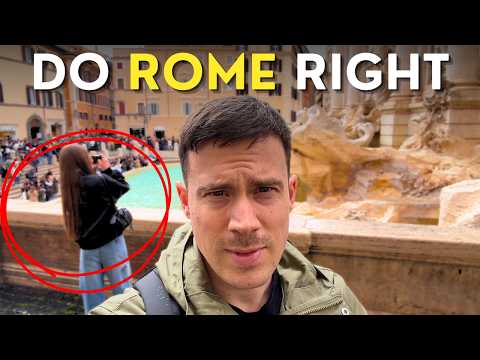
Before You Go to Rome (Avoid These Mistakes)
Destination Well Known

20 Things I Wish I Knew Before Visiting Rome
Destination Well Known

18 Tips I Wish I Knew Before Visiting Rome, Italy
Camden David
You are currently viewing a placeholder content from Vimeo. To access the actual content, click the button below. Please note that doing so will share data with third-party providers.
More InformationYou are currently viewing a placeholder content from YouTube. To access the actual content, click the button below. Please note that doing so will share data with third-party providers.
More InformationYou need to load content from reCAPTCHA to submit the form. Please note that doing so will share data with third-party providers.
More InformationYou are currently viewing a placeholder content from GetYourGuide. To access the actual content, click the button below. Please note that doing so will share data with third-party providers.
More Information