
Vendee: The Complete Travel Guide (2026)
Last reviewed: October 2026 · key facts checked against Wikidata
Vendee Travel Guide: Everything You Need to Know (2026)
Vendée is a Atlantic-coast department in France’s Pays de la Loire region, home to 713,609 residents and stretching across 6,720 km² of marshland, bocage, and sandy shoreline. The department’s coastline runs for over 250 km, anchored by the Île de Noirmoutier and Île d’Yeu offshore. Founded as a department in 1790, it gained historical infamy through the brutal Vendée Wars against the Revolutionary government — a story most visitors completely overlook.
Top 3 Highlights at a Glance
- Puy du Fou — World-class historical theme park voted Best Theme Park in the World in 2012, drawing 2.3 million visitors annually with zero rides.
- Île de Noirmoutier — A tidal island reachable via the Passage du Gois causeway — only crossable 3 hours either side of low tide.
- Marais Poitevin — A 96,000-hectare ‘Green Venice’ of canals and wetlands navigable only by flat-bottomed punt boat.
Scroll down for our complete travel guide with tips on getting there, where to stay, costs and more.
Getting There
How do I best reach Vendée?
By TGV train to La Roche-sur-Yon or by car via the A83/A87 motorway — both are fast and practical. In my experience, driving is the most flexible option since Vendée’s highlights are spread across the department. From Paris by car, the journey takes roughly 4 hours via the A11 and A83. TGV from Paris Montparnasse reaches La Roche-sur-Yon in under 2.5 hours with direct services. My tip: if you’re visiting Puy du Fou or the coastal marshes, a car is non-negotiable once you arrive — public connections between these sites are genuinely poor.
Which airport is closest to Vendée?
Nantes Atlantique Airport (NTE) is the closest major airport, sitting roughly 70 km north of La Roche-sur-Yon. What surprised me is how few people use it — most international visitors fly into Paris and take the TGV instead. Nantes Atlantique handles flights from London, Dublin, Amsterdam, and major French cities. A second option is La Rochelle Airport (LRQ), about 90 km south, which serves UK destinations seasonally via Ryanair and easyJet. The honest caveat: car rental at Nantes airport is expensive in summer — expect to pay €60–€90/day in July and August for a small car if you haven’t pre-booked months ahead.
How long is the journey from Paris to Vendée?
By TGV from Paris Montparnasse, La Roche-sur-Yon is under 2.5 hours — one of France’s most underrated fast rail connections. By car via the A11 and A83, count on 3.5 to 4 hours without major traffic. What most guides omit: Friday afternoon departures from Paris in July and August can stretch that drive to 5.5–6 hours due to notorious summer congestion on the A11 around Le Mans. My tip is to depart before 11am or after 8pm on Fridays in peak season. The TGV eliminates this entirely and advance tickets from Paris can cost as little as €25 each way if booked early.
Are there direct bus connections to Vendée?
Direct bus connections exist but are limited — regional FlixBus routes link Nantes to La Roche-sur-Yon. The Pays de la Loire regional bus network Aléop operates routes within Vendée, but services are infrequent and not tourist-optimised. In my experience, the Nantes–La Roche-sur-Yon bus takes around 1 hour 20 minutes and costs roughly €5–€12. The honest caveat: if you want to reach the coast, Puy du Fou, or the Marais Poitevin by bus, expect timetables with massive gaps — sometimes 3–4 hours between departures — and services that stop entirely on Sundays in smaller villages. Bus travel works for La Roche-sur-Yon itself, not for exploring the department.
Is a rental car necessary to explore Vendée?
Yes — a rental car is essentially mandatory for exploring Vendée properly. In my experience, without a car you’ll be stuck in La Roche-sur-Yon or dependent on taxis that cost €30–€50 for a single coastal transfer. Puy du Fou, the Marais Poitevin, the Île de Noirmoutier causeway, and the beaches of Saint-Jean-de-Monts are all served by minimal public transport. Rental rates at Nantes Airport start around €35–€45/day in May or June if pre-booked at least 6 weeks ahead. My tip: book with Europcar or Hertz at Nantes NTE rather than at La Roche-sur-Yon station — selection is better and prices are more competitive.
Accommodation
Which towns in Vendée make good bases?
Les Sables-d’Olonne is my top pick for coastal visitors — a genuine working town with a 3-km beach, a real fishing port, and a market that locals actually use. La Roche-sur-Yon suits those prioritising transport links, sitting centrally and served by TGV. For Puy du Fou, base yourself in Les Épesses or Bressuire (just over the departmental border) to be within 15 km of the park. For the Marais Poitevin, Coulon is a picturesque base with flat-bottomed boat rental on the doorstep. I recommend against basing yourself in Saint-Gilles-Croix-de-Vie — it’s popular but traffic in August is genuinely brutal.
Where should I stay in Vendée?
Stay in Les Sables-d’Olonne for coast and atmosphere, or in a gîte in the bocage countryside for authenticity. Vendée has one of France’s highest concentrations of campings with mobile homes and chalets — many are excellent, family-run operations along the coast near Saint-Jean-de-Monts. If you want hotels, Les Sables-d’Olonne’s seafront has three- and four-star options. For a splurge, Le Logis de la Couperie near La Roche-sur-Yon is a charming chambres d’hôtes in a historic farmhouse. What surprised me: many coastal campings offer surprisingly comfortable fixed-unit accommodation at €70–€120/night — genuinely better value than hotels in July.
What does accommodation cost in Vendée?
Budget €80–€140/night for a decent mid-range hotel in Les Sables-d’Olonne in peak summer. In my experience, a three-star hotel in July costs around €110–€130/night — noticeably cheaper than comparable Brittany or Côte d’Azur options. Gîtes and holiday rentals sleep 4–6 people for €800–€1,500/week in high season, bringing per-person costs down sharply. B&B chambres d’hôtes typically run €65–€90/night including breakfast. The honest caveat: coastal prices in the last two weeks of July and first two weeks of August spike by 30–40% — a room that costs €90 in June hits €130 in peak August. Booking February onwards for summer is essential.
How far in advance should I book accommodation in Vendée?
For July and August, book no later than February — and ideally in October or November the year before for the best coastal properties. In my experience, Les Sables-d’Olonne seafront hotels and popular campings near Saint-Jean-de-Monts are fully booked by March for peak summer weeks. What most guides omit: the last week of July coincides with the French school holiday peak — availability drops off a cliff for that specific window. Shoulder months of May, June, and September offer genuine last-minute flexibility, and booking 2–3 weeks ahead is usually sufficient. For Puy du Fou shows, book park tickets at least 8 weeks in advance as the evening Cinéscénie sells out months early.
When is the best time to visit Vendée?
June and September are the best months — warm, less crowded, and cheaper than July–August. June delivers 23–25°C average temperatures, virtually no rain, and beach conditions that rival August without the crowds. September holds warmth well, with sea temperatures around 19–20°C — perfect for swimming. July and August are ideal for families with school-age children but come with trade-offs: traffic, packed beaches, and elevated prices. What surprised me: May in Vendée is genuinely underrated — the bocage is green, Puy du Fou is open, and you can have Les Sables-d’Olonne’s 3-km beach almost to yourself on a weekday. Avoid late October through March unless you’re specifically visiting for birdwatching in the marshes.
Best Time to Visit
How does the weather affect activities in Vendée?
Vendée’s Atlantic climate means reliable warmth from June to September but genuine wind and rain from October to April. Beach and watersports work best June through mid-September, with sea temperatures peaking at 21°C in August. Puy du Fou opens from April to November and is enjoyable in any dry weather — outdoor shows do get cancelled in heavy rain, which the park handles with show swaps or vouchers. My tip: the Marais Poitevin boat tours operate year-round and are arguably more atmospheric in spring when vegetation is lush. The honest caveat: Atlantic weather can deliver a grey, windy week even in July — pack a waterproof layer regardless of the forecast.
Are there local festivals in Vendée worth attending?
Puy du Fou’s Cinéscénie is the headline event — a nocturnal outdoor spectacle involving 1,200 performers on a lake-stage, running weekends from May to September. It’s the world’s largest son-et-lumière show and worth planning an entire trip around. The Vendée Globe race departure from Les Sables-d’Olonne happens every 4 years (next in November 2028) and draws enormous crowds. Summer markets in Noirmoutier-en-l’Île run daily in July–August and showcase local salt, mimosa, and potatoes. What surprised me: the Fête de la Saint-Gilles in Saint-Gilles-Croix-de-Vie each August is a genuine local fishing festival — free, packed with tuna and sardine tastings, and attended almost exclusively by French visitors.
When does Vendée get crowded?
Vendée is France’s third most-visited department for domestic tourism — it gets seriously crowded from July 5 to August 20. Les Sables-d’Olonne’s seafront road becomes gridlocked, and the Passage du Gois causeway to Noirmoutier has queues of 45 minutes on summer weekends. In my experience, Saint-Jean-de-Monts is the most overwhelmed coastal town — 200,000 tourists descend on a town of 8,000 residents in August. My tip: visit Puy du Fou on a Tuesday or Wednesday in early July for the shortest queues. The Marais Poitevin around Coulon stays relatively uncrowded even in August because most beachgoers don’t venture inland.
What does a daily budget cost in Vendée?
Budget realistically on €80–€110 per person per day covering accommodation, food, and one attraction. A breakdown: mid-range hotel share at €55–€70, three meals at €25–€35 eating local, and Puy du Fou day ticket at €45 amortised over your stay. Travelling as a couple sharing a gîte and self-catering some meals, you can manage €60–€75/person/day. What most guides omit: Vendée’s coastal restaurants charge €15–€22 for a plat du jour at lunch, which is genuinely good value for Atlantic seafood — far cheaper than similar coastal dining in Normandy. My tip: buy wine and local charcuterie at a Leclerc supermarket rather than tourist shops to cut food costs significantly.
Is Vendée cheaper or more expensive than other French regions?
Vendée is 20–30% cheaper than Brittany or the Côte d’Azur for equivalent quality accommodation. A three-star hotel that costs €180/night in Biarritz runs €110–€130 in Les Sables-d’Olonne. Restaurant prices are genuinely moderate — a moules-frites lunch costs €13–€16 vs €20+ in Saint-Malo or Nice. Puy du Fou day tickets at €45 compare favourably against Disneyland Paris at €109. The honest caveat: petrol/fuel costs are unavoidable since a car is essential, adding roughly €15–€20/day to a typical touring itinerary. Coastal accommodation in high season is the one area where prices approach Breton levels — rent a gîte inland to save 40%.
Budget
What free highlights are there in Vendée?
Vendée’s coastline, marshes, and markets deliver substantial free value. The 3-km Grande Plage in Les Sables-d’Olonne costs nothing to access and is one of the finest urban beaches in western France. The Passage du Gois causeway walk to Noirmoutier at low tide — a 4.2 km crossing — is a genuinely dramatic free experience. Coulon village and the Marais Poitevin footpaths along the canals are free to walk; only boat rental costs money (€12–€18/hour). In my experience, the Remembrance Trail (Circuit du Souvenir) through Vendée War sites like Saint-Laurent-sur-Sèvre is historically fascinating and completely free. The weekly market in La Roche-sur-Yon on Saturday mornings is also excellent and costs nothing to browse.
What do local specialities cost in Vendée?
Vendée’s signature dishes are accessibly priced at market and restaurant level. A jar of Mogettes de Vendée (the region’s white beans, a protected IGP product) costs €3–€5 at a market. A restaurant portion of Vendée ham (jambon de Vendée) as a starter runs €8–€12. The famous brioche vendéenne — a rich, slightly sweet bread — costs €4–€7 at a bakery. Fresh oysters from the Baie de Bourgneuf cost around €7–€9 per dozen at a market stall. What surprised me: a full seafood plateau (plateau de fruits de mer) for two at a Les Sables-d’Olonne seafront restaurant costs €45–€65 — exceptional value for Atlantic shellfish of this quality compared to Cancale or Arcachon prices.
Which route do you recommend for 5–7 days in Vendée?
Day 1: Arrive Nantes, drive to Les Sables-d’Olonne (1 hour), settle in, walk the seafront. Day 2: Morning at the Sables fish market, afternoon at the Île d’Olonne salt marsh bird reserve — 15 minutes north. Day 3: Full day at Puy du Fou including the evening Cinéscénie show — book in advance. Day 4: Drive north, cross the Passage du Gois to Noirmoutier at low tide, explore the island, return via the bridge. Day 5: Head to Coulon and the Marais Poitevin for a morning punt tour, lunch in the village. Days 6–7: Back to the coast at Saint-Gilles-Croix-de-Vie or relax at Bretignolles-sur-Mer before departing. Total driving: roughly 350 km across the week — manageable.
What are the must-see sights in Vendée?
Puy du Fou sits at the absolute top — it’s unlike anything else in Europe and regularly beats European theme parks in global rankings despite having zero conventional rides. The Passage du Gois tidal causeway is a visceral Atlantic experience that disappears entirely under seawater twice daily. The Marais Poitevin wetlands around Coulon offer France’s most intact canal landscape — covering 96,000 hectares. Les Sables-d’Olonne’s Remblai seafront is the most architecturally coherent belle époque seafront in western France. For history, the Historial de la Vendée in Les Lucs-sur-Boulogne is an outstanding museum covering the 1793–94 Vendée Wars — a chapter of French history that remains genuinely controversial.
What natural highlights does Vendée offer?
Vendée packs three distinct natural ecosystems into one department. The Marais Poitevin is France’s second-largest wetland — a UNESCO-listed area of flooded meadows, ancient canals, and alder forest. The Marais Breton north of Saint-Jean-de-Monts is a major bird migration corridor — the Île de Noirmoutier hosts 20,000 migratory birds in autumn. The bocage interior — a landscape of sunken lanes, ancient hedgerows, and mixed woodland — is excellent for cycling and walking year-round. The coastline around Bretignolles-sur-Mer has dramatic wave-cut cliffs that most visitors skip entirely in favour of the sandy beaches. In my experience, the cliff path between Bretignolles and Saint-Gilles-Croix-de-Vie is one of the finest Atlantic coastal walks in France.
Routes & Highlights
What local specialities should I try in Vendée?
Jambon de Vendée is the essential starting point — an air-dried, brandy-rubbed ham with protected status, eaten thinly sliced. Brioche vendéenne is a pillow-soft sweet bread traditionally eaten at Easter but available year-round. Mogettes (white beans slow-cooked with butter) are the regional legume — eat them alongside duck or with the local ham. Noirmoutier potatoes (La Bonnotte variety) are among the most expensive potatoes in France at €500–€600/kg at auction — try them simply boiled at a restaurant in April or May. Oysters from the Baie de Bourgneuf and Atlantic tuna from Les Sables-d’Olonne’s fishing fleet round out the essential food list. Skip the tourist crêpes — they’re not a Vendée thing.
What activities are available in Vendée?
Surfing and bodyboarding dominate the Atlantic coast — Les Sables-d’Olonne and Bretignolles-sur-Mer both have surf schools with lessons from €35/90 minutes. Cycling is superb across the department: the Vélo Francette long-distance route passes through Vendée along nearly 600 km of marked trail. Sailing lessons and yacht charter are available at Les Sables-d’Olonne’s marina — home port of the Vendée Globe race. Flat-bottomed punt hire in the Marais Poitevin costs €12–€18/hour and is the defining local experience. Puy du Fou’s historical shows run from April to November. Birdwatching around Noirmoutier and the Marais Breton is world-class in October–November for migratory species without any crowds.
What distinguishes Vendée from other French regions?
Three things set Vendée apart completely. First, Puy du Fou — there is genuinely nothing comparable to this cultural spectacle anywhere in Europe; it draws 2.3 million visitors annually and French families treat it as a pilgrimage. Second, the Passage du Gois tidal crossing — a public road that disappears under the Atlantic twice daily, stranding drivers who miscalculate. Third, the Vendée Wars of 1793–94 — a civil war within the French Revolution that killed an estimated 713,609–713,609 people in this department alone, a history almost unknown outside France. What surprised me: Vendée also holds the departure port of the Vendée Globe — the world’s most demanding solo round-the-world yacht race — making Les Sables-d’Olonne a pilgrimage for sailing enthusiasts.
Which day trips are possible from Vendée?
Nantes is the obvious day trip — 70 km north of La Roche-sur-Yon, reachable in under an hour, with the magnificent Château des Ducs de Bretagne and the extraordinary Les Machines de l’Île mechanical elephant attraction. La Rochelle lies 90 km south — a beautiful walled harbour city with the famous Vieux Port towers. The Île d’Yeu is a ferry day trip from Fromentine pier — a 35-minute crossing costing around €34 return — delivering a car-free island with dramatic clifftop cycling. Fontenay-le-Comte, just inside the neighbouring department, has a beautiful Renaissance old town almost unknown to tourists. My tip: combine Noirmoutier and the Marais Breton into one inland–coastal loop — both fit comfortably into a single day.
Are there language barriers in Vendée?
English is spoken less widely in Vendée than in Paris, Bordeaux, or the French Riviera — plan accordingly. In my experience, Les Sables-d’Olonne marina staff, Puy du Fou (which offers English commentary), and Nantes-area tourism offices handle English well. In smaller coastal towns and the bocage interior, French is essential. Puy du Fou provides English audio guides for its daytime shows, and the park’s app has real-time English translation. My tip: download Google Translate with the French offline package before arriving. What surprised me: in the Marais Poitevin villages like Coulon, even basic tourist transactions require French — menus, boat hire agreements, and market stalls are almost entirely French-language only.
Practical Tips
Which apps do you recommend for visiting Vendée?
Puy du Fou’s official app is essential if you’re visiting the park — it shows real-time queue information and allows in-app ticket management. Visorando is my top recommendation for hiking and cycling trails across the bocage and coastal paths — it has hundreds of Vendée-specific routes with GPS tracks. SNCF Connect handles all train bookings including the TGV to La Roche-sur-Yon. Marée.info (or any tidal app) is non-negotiable if you plan to cross the Passage du Gois — crossing without checking tide times risks a genuine rescue situation. Maps.me with offline France maps is useful in the bocage interior where mobile coverage drops. For restaurant bookings, TheFork (LaFourchette) works well in Les Sables-d’Olonne.
Are there medical facilities in Vendée?
Medical provision is adequate for a French department but has real gaps in rural areas. La Roche-sur-Yon’s Centre Hospitalier Départemental is the main hospital — a full-service facility with A&E open 24 hours. Les Sables-d’Olonne has a clinic (clinique) and several pharmacies, including one that operates extended summer hours on the seafront. The honest caveat: GP availability (médecin généraliste) is tight across rural Vendée — the department has a recognised medical desert problem in the bocage interior, meaning non-emergency consultations can require a 3–5 day wait. For EU visitors, carry your European Health Insurance Card (EHIC); non-EU travellers need comprehensive travel insurance. Pharmacies can handle minor ailments and are the fastest first-stop option for most issues.
How safe is Vendée?
Vendée is one of France’s safest departments — petty crime is low and violent crime is rare. In my experience, leaving cameras or bags visible at a beach is the primary risk, particularly on packed beaches near Saint-Jean-de-Monts in August. Car break-ins at forest car parks near coastal walking trails occur sporadically — don’t leave valuables in vehicles at the Île d’Olonne bird reserve car park. The Passage du Gois is the genuine safety risk: drivers who misjudge tidal timing get stranded and require emergency services — check Marée.info and the posted tide tables every single time. Road safety is a consideration in August when Paris-registered drivers unfamiliar with rural lanes speed through the bocage. Overall risk for standard tourists is negligible.
What are common traveller mistakes in Vendée?
The biggest mistake is attempting to visit Puy du Fou without advance tickets — turning up on a summer Saturday without booking guarantees a sold-out Cinéscénie and long queues for daytime shows. The second major error is crossing the Passage du Gois without checking tide tables — the causeway floods in under 40 minutes and emergency rescues happen every summer. Booking accommodation for July without reserving by March is a third classic mistake — prime Les Sables-d’Olonne seafront rooms are gone by February. What surprised me: most visitors spend their entire trip on the coast and completely miss Puy du Fou and the Marais Poitevin — two of France’s most exceptional experiences sitting just 40–60 km inland. Don’t rent a car in Les Sables-d’Olonne town centre in August — parking is a nightmare; use the Remblai seafront car parks with timed entry instead.
Which accommodation types suit Vendée best?
Gîtes ruraux (self-catering country cottages) are the ideal Vendée accommodation — they put you within 10 minutes of beaches, bocage trails, and markets without paying hotel prices. Book through Gîtes de France or Clévacances for quality-certified properties from €500–€900/week for a 4-person house in May or September. Coastal campings with mobile homes are genuinely excellent for families — operations like Camping La Yole near Saint-Jean-de-Monts offer pools, direct beach access, and chalet accommodation at €80–€120/night. Classic hotels work best in Les Sables-d’Olonne for a 2–3 night stay. Chambres d’hôtes (B&Bs) in the bocage are the most atmospheric option for the Marais Poitevin and Puy du Fou area — warm, French-speaking hosts and homemade breakfasts at €70–€95/night including breakfast.
More Destinations in Europe
Explore our complete travel guides for more Europe destinations: Île de Béniguet Travel Guide (2026), Besançon Travel Guide (2026), Île dOléron Travel Guide (2026), Île de Groix Travel Guide (2026), Bretagne Travel Guide (2026).
Vendee at a Glance
| Population | 713,609 |
|---|---|
| Currency | EUR (€) |
| Official language | French |
| Time zone | UTC+01:00 |
Source: Wikidata, retrieved October 2026.
Useful Resources for Planning Your Trip to Vendee
- Wikipedia: Vendee — history, geography and background
- Lonely Planet: Vendee — itineraries and travel inspiration
- TripAdvisor: Vendee — hotels, restaurants and traveller reviews
🎥 Vendee Travel Videos
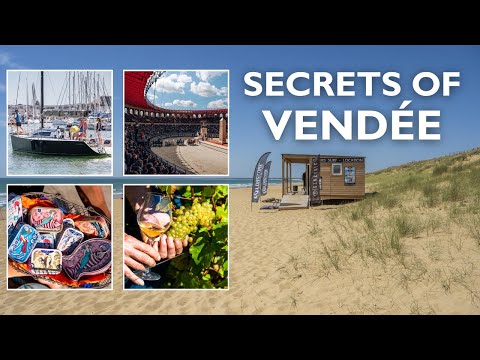
Secrets of Vendée: The Hidden Gem of Western France
France Today
You are currently viewing a placeholder content from Vimeo. To access the actual content, click the button below. Please note that doing so will share data with third-party providers.
More InformationYou are currently viewing a placeholder content from YouTube. To access the actual content, click the button below. Please note that doing so will share data with third-party providers.
More InformationYou need to load content from reCAPTCHA to submit the form. Please note that doing so will share data with third-party providers.
More InformationYou are currently viewing a placeholder content from GetYourGuide. To access the actual content, click the button below. Please note that doing so will share data with third-party providers.
More Information