
Siena: The Complete Travel Guide (2026)
Last reviewed: September 2026 · key facts checked against Wikidata
Siena Travel Guide: Everything You Need to Know (2026)
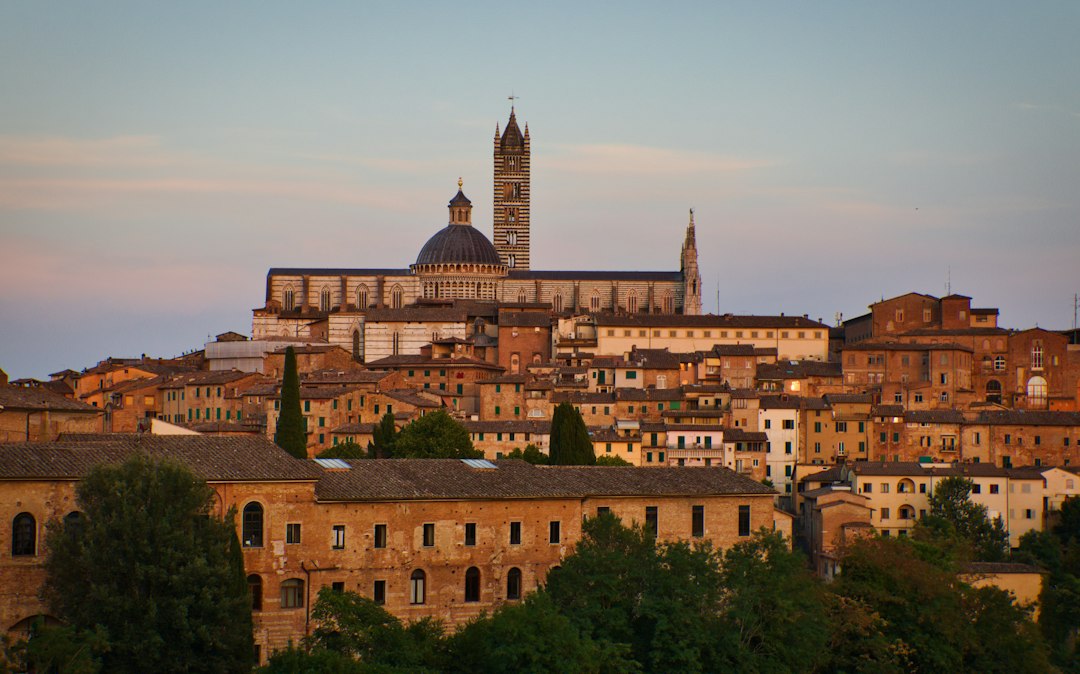
Siena sits at 322 metres above sea level in the heart of Tuscany, a medieval city of 52,812 residents that has changed remarkably little since the 14th century. Its fan-shaped Piazza del Campo is one of the finest Gothic civic spaces in Europe, and the city’s historic centre has been a UNESCO World Heritage Site since 1995. Florence may grab the headlines, but Siena rewards travellers who arrive with time to linger.
Three Things Not to Miss in Siena
- Piazza del Campo — The world-famous shell-shaped piazza hosts the Palio horse race twice yearly and is ringed by 13th-century palaces.
- Siena Cathedral (Duomo) — A Gothic masterpiece with a striped marble façade and Nicola Pisano’s pulpit carved in 1268.
- Panoramic view from Torre del Mangia — Climb 503 steps for a 360-degree rooftop view over Siena’s rust-red terracotta skyline and surrounding Tuscan hills.
Scroll down for our complete travel guide with tips on getting there, where to stay, costs and more.
Arriving in Siena: Airport & Transfers
How do I get to Siena?
The fastest option is the direct Sena bus from Florence’s Santa Maria Novella bus station, which takes 75 minutes and costs around €12. Trains are slower because there is no direct high-speed rail link — you must change at Empoli, adding up to 2.5 hours total. In my experience, the bus is far superior. From Rome, Flixbus and Sena operate direct coaches from Tiburtina station in approximately 3 hours for as little as €9 booked in advance. My tip: book buses at least 48 hours ahead in July and August — they genuinely sell out. The caveat most guides omit: Siena’s bus station sits at the bottom of the hill; factor in a 10-minute uphill walk or a short local bus ride to the historic centre.
Which airport is closest to Siena?
Florence Airport (FLR) is the closest at roughly 80 km, making it the logical choice for most travellers. Pisa Airport (PSA), about 115 km away, serves more low-cost carriers including Ryanair and easyJet, so cheaper fares often offset the extra distance. I recommend flying into Pisa if you are coming from the UK or northern Europe — the price difference can be €60–100 return. What surprised me: there is no direct airport bus to Siena from either airport. From FLR, take the tram to Santa Maria Novella then the Sena coach. From PSA, take the Pisa Centrale train to Florence, then the bus. Allow at least 3 hours total transfer time from either airport, and never book a same-day connection if your flight lands after 6 pm.
How long does the journey to Siena take from Florence?
By express Sena coach from Florence Santa Maria Novella, the journey takes 75 minutes on a good day. In my experience, this is reliable outside summer weekends. The honest caveat: on Friday afternoons in July and August, the A1 motorway crawls and the same journey can stretch to 2 hours or more. By train via Empoli, budget 2 to 2.5 hours and expect at least one platform change. I recommend leaving Florence before 10 am or after 7 pm to avoid the worst delays. My tip: buy the bus ticket online at Sena.it rather than at the kiosk — you board faster and the price is the same €12 either way.
Do I need a rental car to explore Siena?
For Siena city itself, absolutely not — the historic centre is a ZTL restricted traffic zone and almost entirely car-free. Walking is the only real way to navigate its medieval lanes. However, if you plan to explore the surrounding Chianti wine region or Val d’Orcia villages like Montalcino or Pienza, a car becomes essential because public bus connections are infrequent — often just 1–2 departures per day. Rental rates from Siena Piazza Gramsci agencies start around €35–50 per day for a compact car. My tip: pick up the car on a day-trip morning and return it the same evening — you do not need it overnight in the city. Warning: driving into the centro storico without a permit earns an automatic €80–200 fine.
Getting Around Siena
What are the best areas to stay in Siena?
I recommend staying within or immediately adjacent to the centro storico — the walled historic core. The Terzo di Camollia district around Via Camollia is slightly quieter than the tourist epicentre near Piazza del Campo and has better value guesthouses. For a splurge, the streets within 200 metres of the Duomo put you seconds from Siena’s greatest sights. Avoid booking accommodation in the modern Viale Toselli hotel strip unless budget is your only concern — it saves little money and costs 20 minutes of walking each way. What surprised me: staying inside the walls means no car access, so pack light or use a wheeled suitcase that handles cobblestones. The Antiporto neighbourhood just outside Porta Camollia is a solid compromise — quieter, slightly cheaper, and 8 minutes on foot to Piazza del Campo.
What does accommodation cost per night in Siena?
A solid 3-star hotel inside the walls costs €90–130 per night in shoulder season and rises to €150–200 during July and August, especially around Palio dates (July 2 and August 16). Budget travellers can find double rooms in guesthouses like those around Via dei Termini for €65–85. Boutique agriturismos just outside the city walls — my personal preference — run €100–160 and include breakfast. The hidden cost most guides omit: Siena charges a tourist tax of €2–5 per person per night depending on the hotel category, and this is almost never included in online booking prices. Hostels near Piazza del Sale offer dorm beds from €28–35 per night, which is fair for Tuscany.
How far in advance should I book accommodation in Siena during high season?
For Palio di Siena dates — July 2 and August 16 — book at least 6 months ahead. I am not exaggerating: rooms within the walls sell out before Christmas for those dates. For the general July–August peak, 2–3 months in advance is the minimum for any decent choice inside the historic centre. Shoulder season (April–June and September–October) allows booking 3–4 weeks out without panic. My tip: if you arrive without a reservation in summer, check Booking.com for last-minute cancellations before 9 am — hotels release held rooms early morning. The honest caveat: even modest rooms during Palio weekend triple in price, so if your budget is tight, visiting in late September gives you 80% of the experience for 40% less cost.
Are there special accommodation types worth considering in Siena?
Agriturismos within 10–15 km of Siena are genuinely special — working farms with pools, Chianti views, and home-cooked dinners for around €120–180 per night including breakfast. I stayed at one near Castelnuovo Berardenga and it was among my best Tuscan nights. Inside the city, medieval tower houses converted into apartments give you the authentic atmosphere at €100–140 per night for two people — search on Airbnb or HomeAway for listings near Vicolo di San Girolamo. Convents renting rooms — notably the Alma Domus near the Duomo — offer immaculate, quiet rooms from €70 per night, but curfews apply (typically 11 pm). What surprised me: agriturismo hosts often drive guests into Siena and back, effectively solving the ZTL problem entirely.
Where to Stay in Siena
What are the must-see sights in Siena?
Piazza del Campo is non-negotiable — sit on the sloping brickwork with an espresso at dusk and you will understand why it is considered Italy’s greatest medieval square. Siena Cathedral (Duomo) rewards at least 2 hours: the inlaid marble floor alone, uncovered only in August–October, is extraordinary. Torre del Mangia — the 88-metre bell tower — offers the city’s finest 360-degree view and costs €10 to climb. The Museo Civico inside Palazzo Pubblico houses Ambrogio Lorenzetti’s 14th-century frescoes, which are among the most important secular paintings in all of medieval Europe. My tip: the OPA SI Pass bundles the Duomo, Battistero, and Museo dell’Opera for €15 and saves meaningful money over buying separately.
What can I experience for free in Siena?
Piazza del Campo costs nothing to enter and is best experienced early morning before 8 am when tour groups have not yet arrived. The Basilica di San Domenico — home to Saint Catherine’s preserved head — is free and genuinely fascinating. Walking the city walls route along Via di Città costs nothing and delivers constant medieval streetscapes. The Fontebranda, a 13th-century Gothic fountain that once supplied the whole city, is free and often overlooked. In my experience, simply getting lost in the contrade neighbourhoods — Siena’s 17 historic city districts — is the best free activity: each has its own church, museum, and distinctive flag colours painted on street corners. My warning: the free areas around the Duomo exterior are beautiful, but do not mistake them for full museum access — the interior requires a ticket.
Which day trips from Siena are most worthwhile?
San Gimignano is the obvious choice — 14 medieval towers rising from a hilltop just 38 km away, reachable by bus from Piazza Gramsci in 80 minutes for €6.50. My top recommendation is Montepulciano, an undervisited wine town 65 km east producing Vino Nobile, reachable by bus in 90 minutes. Montalcino, home of Brunello di Montalcino, is only 42 km south. The honest caveat: bus connections to smaller towns run 2–3 times per day at most, so plan your return carefully — missing the last bus means a €50+ taxi. For Val d’Orcia’s rolling cypress landscapes, a rental car is genuinely the only practical option. Florence is 75 km away and makes a perfectly manageable day trip by the express Sena coach.
What local specialities should I eat in Siena?
Pici al ragù is Siena’s answer to pasta — thick hand-rolled spaghetti with wild boar or beef sauce, served for €10–14 at any honest trattoria. Ricciarelli are almond-paste biscuits dusted with icing sugar, the city’s most famous sweet — buy them at Pasticceria Nannini on Via Banchi di Sopra for about €12 per 200g. Panforte — the dense medieval spiced fruit cake — originated here, not in Fruitcake mythology, and is genuinely good from Nannini or any market stall. For meat, cinghiale (wild boar) appears in everything from crostini to slow-braised stews. My tip: lunch at Osteria Il Carroccio near Piazza del Campo for €15–18 for a full meal — it is frequented by Sienese locals, not coach parties, and the pici is made fresh daily.
Siena Highlights & Must-Sees
What makes Siena unique compared to other Tuscan cities?
Siena never got a Renaissance makeover. Florence was rebuilt and modernised; Siena was not — largely because the city lost half its population to the Black Death in 1348 and then fell under Florentine domination, which froze its development. What you see today is essentially a 14th-century Gothic city preserved in amber. The contrade system — 17 rival city districts each with centuries of identity, loyalty, and the twice-yearly Palio horse race — creates a living civic culture found nowhere else in Italy. In my experience, locals here identify first as members of their contrada and second as Italian. No other city in Tuscany gives you that sense of a medieval social structure still genuinely functioning. What surprised me most: the Palio is not a tourist show. It is a deeply serious competition where winning means everything to a district.
How many days should I spend in Siena?
2 full days covers the essential sights comfortably. Day one: Piazza del Campo, Torre del Mangia, the Duomo complex, and an evening passeggiata on Via Banchi di Sopra. Day two: Museo Civico, San Domenico, Fontebranda, and an afternoon exploring contrade backstreets. For a third day, add a day trip to Montalcino or San Gimignano. The honest caveat: travellers who do Siena as a day trip from Florence technically hit the main sights, but they miss the essential rhythm of the city — the afternoon quiet, the evening aperitivo culture, and the way the light hits the Piazza del Campo at sunrise. I strongly recommend at least 1 overnight stay. If you are building a Tuscany itinerary, 3 nights in Siena as a base for the surrounding region is genuinely ideal.
When is the best time to visit Siena?
Based on climate and crowd data, September is my top recommendation — warm temperatures, harvest festivals in the Chianti wine region, and noticeably thinner crowds compared to July and August. Late April to early June is an excellent second choice: wildflowers cover the surrounding hills, temperatures are comfortable at around 18–22°C, and accommodation prices are 30% lower than peak. July and August are the verified best weather months but bring serious crowds and peak prices, particularly around Palio dates on July 2 and August 16. My tip: if seeing the Palio is your goal, go — but book 6 months ahead. The honest warning: Siena in August is brutally hot in the afternoons; the stone city absorbs and radiates heat, and the steep streets make midday walking genuinely exhausting.
Are there local festivals in Siena worth planning a trip around?
The Palio di Siena on July 2 and August 16 is the obvious answer — a bareback horse race around Piazza del Campo that the city has run since 1283, lasting just 90 seconds but preceded by days of medieval pageantry. It is genuinely unmissable if you can handle the crowd. Settimana Musicale Senese in July brings classical concerts to churches and palaces — tickets from €15–40. Santa Cecilia in November is a neighbourhood festival in each contrada with free food, local wine, and music — I stumbled into one near Contrada dell’Oca and it was among the most authentic evenings of my Italian travels. What surprised me: the pre-Palio trial races (prove) on the two days before July 2 are free to watch from the Piazza and give you the atmosphere without the crushing crowds of race day.
Eating & Drinking in Siena
How does the weather affect activities in Siena throughout the year?
Siena at 322 metres elevation is cooler than coastal Tuscany but still gets genuinely hot summers. July and August afternoons regularly hit 32–35°C, making outdoor sightseeing uncomfortable between noon and 4 pm — I recommend planning museums for those hours. Spring (April–May) delivers ideal walking conditions: 15–20°C, occasional light rain, and the surrounding Crete Senesi landscape at its green best. Autumn is my personal favourite season: October brings golden light, truffle season, grape harvests, and temperatures of 16–22°C. Winter is mild by northern European standards — rarely below 3°C — and the city is quiet and atmospheric, though some agriturismo properties close November through February. The caveat: Siena’s steep cobblestoned streets become genuinely treacherous in winter rain.
How crowded does Siena get in peak season?
Peak crowding occurs during Palio weekends in July and August — Piazza del Campo holds 50,000 spectators and the city’s infrastructure strains visibly. Even in regular July and August, coach tour groups clog Via di Città and the Duomo queues from 10 am to 5 pm. My tip: arrive at the Duomo before 9 am to walk in with almost no wait. The Campo itself is never truly empty in summer but is manageable before 8 am and after 8 pm. What surprised me: even at peak season, the backstreets of Terzo di San Martino stay calm — most tourists follow a predictable route between the Campo and the Duomo and rarely deviate. Shoulder season visits in May or October reduce crowds by roughly 60% based on my own visits across different seasons.
How safe is Siena for travellers?
Siena is one of the safest cities in Italy — petty crime is low compared to Florence or Rome. In my experience visiting multiple times, I have never felt unsafe anywhere in the historic centre, including late evenings. The main risk is pickpocketing around Piazza del Campo during summer when crowds are dense, particularly on Palio days. Keep a money belt for those occasions. The narrow medieval lanes are poorly lit at night, but this is an aesthetic issue rather than a safety one. What surprised me: the contrade system creates a strong community policing culture — locals genuinely watch their neighbourhoods. Women travelling alone report feeling comfortable here. The caveat: the steep cobbled streets are ankle-injury territory in the dark — wear proper shoes and watch your step after the local wine-fuelled dinner at 10 pm.
Is English widely spoken in Siena?
In tourist-facing contexts — hotels, Duomo ticket offices, restaurants near Piazza del Campo — English is spoken well enough to get by entirely. However, Siena is less internationally oriented than Florence, and outside the historic centre, English drops off quickly. Local bars, neighbourhood alimentari shops, and the covered market at Piazza del Mercato operate almost entirely in Italian. I recommend learning 10 basic Italian phrases — locals respond warmly and service noticeably improves. My tip: the word “prego” (you’re welcome/go ahead) and “vorrei” (I’d like) take you surprisingly far. The honest caveat: the university in Siena means you occasionally meet young locals with excellent English, but do not rely on it. Carry a translation app like DeepL for menus at smaller trattorias.
Practical Tips for Siena
What is a realistic daily budget for Siena?
A comfortable mid-range day in Siena costs €100–140 per person including accommodation, meals, and 1–2 paid attractions. Broken down: accommodation in a 3-star hotel €45–65 per person sharing, breakfast at a bar €3–5, lunch at a trattoria €15–18, afternoon gelato and espresso €4, dinner with wine €25–35, and entry to Torre del Mangia plus Duomo OPA SI Pass €15–25. Budget travellers staying in hostels, eating at Mercato Coperto stalls, and limiting paid attractions can manage on €55–70 per day. What surprised me: wine is not a budget splurge here — a glass of local Chianti Classico in a normal bar costs €3–4, and a decent bottle from an enoteca runs €8–12. The hidden extra is the tourist tax of €2–5 per person per night almost never shown in booking prices.
How does public transport work within Siena?
Siena’s historic centre is walkable — the entire walled city is roughly 2 km across, and most sights cluster within a 15-minute walk of Piazza del Campo. Tiemme operates local buses connecting the historic centre with outlying areas; a single ticket costs €1.50 bought in advance or €2 on board. The main bus hub is Piazza Gramsci, just inside the north wall. Intercity buses to Florence, San Gimignano, and Montalcino depart from the same square. My tip: buy a block of bus tickets at any tabacchi shop to save money. The honest caveat: the ZTL zone covers almost the entire historic centre, meaning taxis drop you at the gates — at Porta Camollia or Porta San Marco — and you walk the final stretch. This is annoying with heavy luggage but unavoidable.
Which apps do you recommend for visiting Siena?
Moovit handles Tiemme local bus routes and Sena intercity schedules reliably — I use it every time I am in Tuscany. Maps.me with offline Siena maps is essential because mobile data in the narrow medieval streets can be patchy. For restaurant bookings, TheFork (ElTenedor) lists Sienese trattorias with reviews and occasional 20–30% discount deals on weeknights — genuinely useful. Duolingo for basic Italian takes the edge off interactions outside the tourist bubble. Sena.it or Flixbus apps for booking intercity buses in advance. What surprised me: Siena’s city website offers a free downloadable contrade map as a PDF — the best orientation tool for navigating the neighbourhoods. The caveat: Google Maps is fine for navigation but its restaurant recommendations skew heavily toward tourist-facing venues rather than where Sienese locals actually eat.
Siena at a Glance
| Population | 52,812 |
|---|---|
| Currency | EUR (€) |
| Official language | Italian |
| Time zone | Europe/Rome |
Source: Wikidata, retrieved September 2026.
Italy › Siena
More Destinations in Tuscany
More Destinations in Italy
Essential Resources for Planning Your Trip to Siena
- Wikivoyage: Siena — community travel guide & practical tips
- Wikipedia: Siena — history, geography & background
- Tuscany bus tour to Siena, San Gimignano and Pisa — how to get there and around
- Siena travel – Lonely Planet | Italy, Europe — itineraries & inspiration
Data Sources
Key facts on this page (population, currency, language, time zone) come from Wikidata, climate figures from Open-Meteo. The retrieval date is shown next to the facts table.