
San Gimignano: The Complete Travel Guide (2026)
Last reviewed: September 2026 · key facts checked against Wikidata
San Gimignano Travel Guide: Everything You Need to Know (2026)
San Gimignano is a UNESCO-listed medieval hill town of 7,480 residents perched at 324 metres above sea level in the province of Siena, Tuscany. Founded in the 10th century, it is nicknamed the ‘Manhattan of the Middle Ages’ for its 14 surviving medieval tower houses — once there were 72. The historic centre draws over 2 million visitors annually, making it one of Italy’s most visited small towns relative to its population.
Three Things Not to Miss in San Gimignano
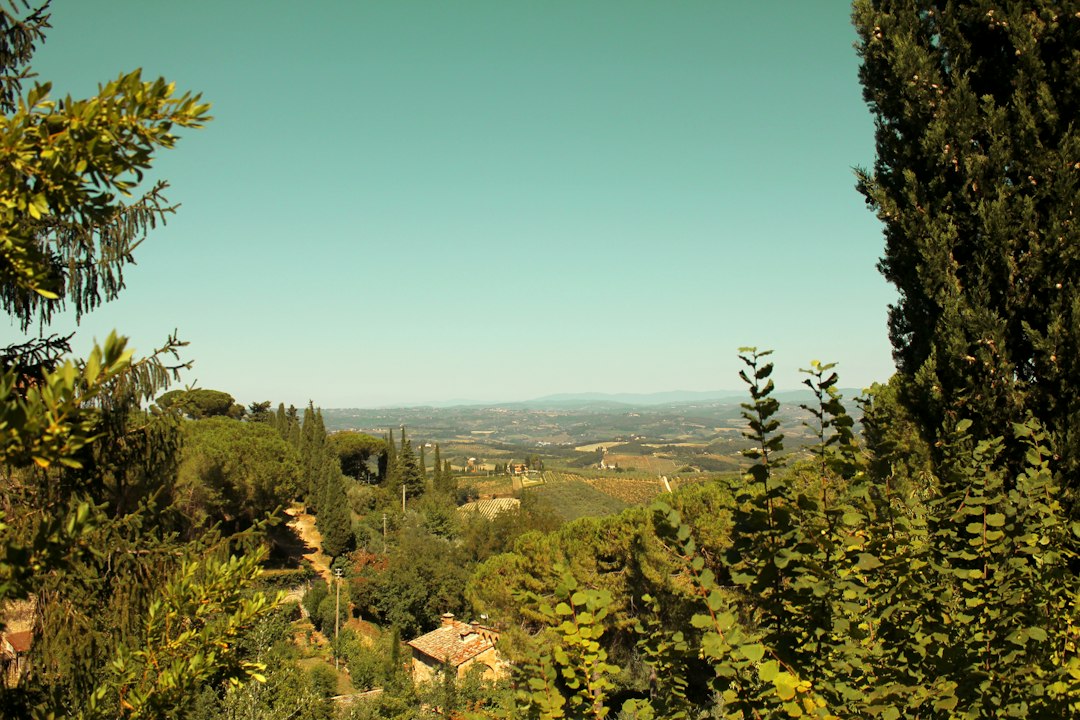
- Torre Grossa — Climb the tallest surviving tower at 54 metres for a panoramic view over the Tuscan hills — no other vantage point compares.
- Piazza della Cisterna — A perfectly preserved 13th-century triangular piazza centred on a 1287 stone well — the town’s living medieval heart.
- Vernaccia di San Gimignano Wine Tasting — Italy’s first DOC white wine, Vernaccia, is produced exclusively here — taste it at source in a medieval cellar.
Scroll down for our complete travel guide with tips on getting there, where to stay, costs and more.
Getting to San Gimignano from the Airport
How do I get to San Gimignano?
Take a bus or taxi from Florence or Siena — no train reaches San Gimignano directly. The fastest option is the Tiemme bus from Siena (bus line 130), which takes roughly 50 minutes and costs around €3.50. From Florence, take a SITA Nord bus to Poggibonsi (~1 hour 15 minutes), then change to the local bus to San Gimignano (20 minutes, ~€2). I recommend basing yourself in Siena or Florence and doing San Gimignano as a day trip. My tip: buy combined tickets at the bus station in advance. Driving your own car is the most flexible option, but beware — no cars are allowed inside the walled centre, so you’ll park outside and walk in.
Which airport is closest to San Gimignano?
Florence Airport (FLR, Amerigo Vespucci) is the closest international airport, sitting approximately 60 km northeast of San Gimignano. Pisa Airport (PSA, Galileo Galilei) is about 80 km west and often has cheaper European low-cost flights on Ryanair and easyJet. In my experience, flying into Pisa and renting a car at the airport gives you maximum flexibility for exploring the Tuscan hill towns. What surprised me: there is no direct shuttle from either airport to San Gimignano, so you must change in either Florence or Poggibonsi. Budget 2 to 2.5 hours total travel time from FLR, and 2.5 to 3 hours from PSA without a rental car.
How long does the journey to San Gimignano take from Florence or Siena?
From Florence by public transport, plan for 1 hour 45 minutes to 2 hours total, including the bus change at Poggibonsi. By car from Florence it is around 55 minutes via the SS2 Cassia road. From Siena the Tiemme bus 130 takes 50 minutes and is the most straightforward public route. My tip: avoid arriving by car on summer Saturday mornings between July and August — the SP1 road into San Gimignano backs up for over a kilometre and parking at Parcheggio Giubileo fills by 9am. The honest trade-off is this: public transport is cheap and stress-free but severely limits how early or late you can arrive, with the last bus back to Siena departing around 7:30pm.
Do I need a car to visit San Gimignano?
No, you do not need a car — but it significantly improves your trip. San Gimignano itself is entirely walkable once you are inside the walls, covering the entire historic centre in a comfortable 30-minute walk end to end. However, the surrounding Vernaccia vineyards, the hilltop hamlet of Monteriggioni, and villages like Volterra are very difficult to reach without a car. In my experience, renting a car from Florence or Siena for a 2-day loop through the Chianti and Val d’Elsa is the smartest approach. The caveat most guides omit: parking outside the walls at Parcheggio Giubileo costs €2 per hour, and spaces are extremely limited in July and August.
Moving Around San Gimignano
What are the best areas to stay in San Gimignano?
Stay inside or just outside the Porta San Giovanni gate for the best access to all sights. The southern end of the walled town near Via San Giovanni is quieter at night than the central piazzas and still puts you within a 10-minute walk of Torre Grossa and Piazza della Cisterna. For a more rural experience, agriturismo stays in the surrounding Val d’Elsa hills — roughly 5 to 10 km outside the walls — offer stunning views and include breakfast. What surprised me: staying inside the walls means you experience the town after the day-trippers leave by 6pm, which transforms the atmosphere completely. My recommendation is to spend at least one night inside the walls to witness that magic.
What does accommodation cost per night in San Gimignano?
A mid-range hotel inside or near the walls costs €110 to €180 per night in peak season (July–August). Budget guesthouses and B&Bs start at around €70 per night. Agriturismos in the surrounding countryside typically charge €90 to €160 per night, often including breakfast and a pool. The honest trade-off: accommodation inside the historic centre is expensive for what you get in room size — these are converted medieval buildings with steep stairs and no lifts. For luxury, Hotel L’Antico Pozzo on Via San Matteo is a converted 15th-century palazzo priced at around €200 per night in peak season but worth it for the architecture alone. Off-season in November, rates drop by 30 to 40 percent.
How far in advance should I book accommodation in San Gimignano during high season?
Book at least 3 to 4 months ahead for July and August stays inside the walls. San Gimignano has a tiny accommodation stock relative to visitor numbers — fewer than 50 hotels and guesthouses exist within or immediately around the historic centre. I made the mistake of booking 6 weeks out for a mid-August stay and found only one overpriced room left. My tip: set alerts on Booking.com for cancellations if you miss the window. Agriturismos in the Val d’Elsa countryside are slightly easier to book last-minute, but the best-reviewed ones like Podere La Marronaia still fill up by May for summer. For shoulder season in May or September, 4 to 6 weeks advance booking is sufficient.
Are there special or unique accommodation types in San Gimignano?
Absolutely — staying in a medieval tower apartment is the experience that sets San Gimignano apart from every other Tuscan town. Several of the private tower houses have been converted into self-catering apartments, letting you sleep inside a 13th-century structure with walls over a metre thick. Search specifically on Airbnb and HomeAway using the filter for historic centre properties. Agriturismos with working vineyards are the other standout option — estates like Fattoria Poggio Alloro near the walls offer rooms, wine tasting, and views over the Vernaccia vines. The caveat: medieval buildings have no air conditioning in most cases, which makes them genuinely uncomfortable during August heatwaves when temperatures exceed 35°C.
Choosing a Neighbourhood in San Gimignano
What are the must-sees in San Gimignano?
Three experiences are non-negotiable. First, climb Torre Grossa (€9 entry, 218 steps) for the best elevated view of the surrounding Tuscan landscape — no other tower in town is open to visitors. Second, visit the Collegiata di Santa Maria Assunta, a Romanesque cathedral with frescoes by Ghirlandaio covering entire walls, entry €5. Third, taste Vernaccia di San Gimignano at the Vernaccia wine museum, Rocca di Montestaffoli, which combines a ruined medieval fortress with a free wine shop. In my experience, most visitors rush through all three in 3 hours without pausing — take time in the Collegiata because the Last Judgment fresco alone is worth a dedicated 30 minutes.
What can I experience for free in San Gimignano?
Walking through the Porta San Giovanni gate and along Via San Giovanni costs nothing and delivers the full medieval streetscape experience. The Piazza della Cisterna — centred on its 1287 stone well — is entirely free to sit in and absorb. The exterior view of all 14 towers from the road below the walls on the eastern approach via Via delle Romite is one of Italy’s great free panoramas. What most guides omit: the Rocca di Montestaffoli, a 14th-century fortress with a public park and views rivalling Torre Grossa, charges no entry fee for the grounds. My tip: arrive before 8:30am when the streets are empty and the light on the towers is extraordinary — and it costs nothing.
Which day trips are possible from San Gimignano?
Siena is the obvious first choice, only 38 km southeast by car (about 45 minutes), and its Piazza del Campo is among Europe’s greatest medieval squares. Volterra, a dramatically situated Etruscan hill town, is 30 km west and takes about 40 minutes by car — far less visited than San Gimignano. Monteriggioni, a perfectly circular walled village with 14 medieval towers on its perimeter, is 20 km south and takes just 25 minutes — it makes a superb quick stop. My honest caveat: without a car, day trips are very difficult because bus connections between these hill towns are infrequent — often only 2 to 3 buses per day — and timetables are designed for locals, not tourists.
What local specialities should I try in San Gimignano?
Vernaccia di San Gimignano white wine is the non-negotiable local speciality — Italy’s first-ever DOC wine, dating to 1966, produced from Vernaccia grapes grown exclusively in the surrounding hills. A glass in a local enoteca costs €4 to €6. The other essential is saffron, which has been cultivated here since the medieval period and appears in local pasta dishes like pici al zafferano — handmade thick spaghetti with saffron sauce. For dessert, Gelateria Dondoli on Piazza della Cisterna has won the World Gelato Championships twice and its Vernaccia-flavoured gelato is genuinely unique. A cone costs €2.50 to €3.50. What surprised me: locals eat at Trattoria La Mangiatoia on Via Mainardi, not at the piazza restaurants that charge tourists double.
Top Sights in San Gimignano
What makes San Gimignano unique compared to other Tuscan hill towns?
The 14 surviving medieval towers — built as status symbols by rival noble families between the 12th and 13th centuries — make San Gimignano’s skyline unlike anything else in Europe. At its peak the town had 72 towers; only this town preserved so many due to economic stagnation after the Black Death of 1348, which paradoxically froze its medieval character in place. In my experience, no other Tuscan town — not Siena, not Volterra, not Montepulciano — delivers this vertical drama of the Middle Ages from a single viewpoint. The honest caveat: that uniqueness is universally known, which means 2 million annual visitors crowd into a walled area barely 500 metres across, making solitude impossible between 10am and 6pm in summer.
How many days are worthwhile in San Gimignano?
1 full day covers all the key sights comfortably; 2 nights lets you experience the town before and after the day-trip crowds arrive and leave. I strongly recommend at least one overnight stay for the evening atmosphere once the coach tours depart after 6pm — the piazzas and lanes are transformed. A second day is best used for cycling or driving the Vernaccia wine route through the surrounding hills, visiting estates like Fattoria San Donato for tastings. Any more than 2 nights and you will have exhausted the town’s sights, though it works well as a base for day trips to Siena and Volterra. The common mistake: treating it as a 2-hour stop, which means leaving before the afternoon light hits the towers at its best.
When is the best time to visit San Gimignano?
September is the best month — harvest season brings the Vernaccia grape picking, temperatures sit around a comfortable 24°C, and crowds thin noticeably compared to July and August. Climate data confirms July, August, and September as the optimal travel window for weather. May is the second-best choice: wildflowers cover the Val d’Elsa hills, temperatures hover around 20°C, and accommodation costs 20 to 30 percent less than peak. I avoid August specifically because midday heat frequently exceeds 35°C in the town’s stone streets with minimal shade, and the daily visitor numbers make Piazza della Cisterna feel like a festival with no festival. The honest trade-off: winter (November–February) offers near-empty streets and atmospheric fog, but half the restaurants and hotels close.
Are there local festivals in San Gimignano worth attending?
Ferie delle Messi in June is San Gimignano’s flagship medieval festival, recreating 14th-century life with archery contests, flag-throwing, and a costumed procession through the historic centre — it runs across the third weekend of June and entry to street events is free. The Vernaccia harvest festival in September (late September, exact dates vary yearly) includes open-cellar days at local estates and wine tastings from €10 to €15 per person. What most guides omit: Estate Sangimignanese, a summer-long programme from June to August, brings classical concerts to Piazza della Cisterna at night — check the Comune di San Gimignano website for the annual programme. These evening concerts, typically €8 to €15 entry, are one of the most atmospheric experiences the town offers.
Where to Eat in San Gimignano
How does weather affect activities in San Gimignano throughout the year?
Summer heat above 33°C in July and August makes midday sightseeing in the unshaded stone streets genuinely draining — I recommend visiting Torre Grossa and the Collegiata before 10am and retreating to a cantina or restaurant between noon and 3pm. Spring (April–May) brings mild temperatures and the hills around town are covered in poppies and wildflowers, making the drive or cycle along the Vernaccia wine route particularly rewarding. Winter fog is common in December and January at 324 metres elevation — it creates dramatic imagery if you are a photographer but can obscure the tower views entirely. Autumn (September–October) combines the best light, the grape harvest, and temperatures ideal for walking the town walls circuit in under 2 hours.
How crowded does San Gimignano get in peak season?
Peak season crowding in San Gimignano is extreme by any standard — on a typical July or August Saturday, over 10,000 day visitors pass through a walled area roughly 500 metres wide. The main street, Via San Giovanni, becomes shoulder-to-shoulder by 11am. Coach tour groups from Florence arrive in waves between 10am and 2pm, creating genuine gridlock at Torre Grossa ticket lines. In my experience, the only way to beat this is to arrive before 9am or after 5pm — the town genuinely empties of day-trippers after 6pm and a different, quieter San Gimignano emerges. The honest trade-off: the summer crowds are unavoidable if you want the best weather, but May or September visits cut crowd density by at least half.
How safe is San Gimignano for visitors?
San Gimignano is extremely safe — petty crime in the historic centre is minimal and violent crime is essentially unheard of in this rural Tuscan town of 7,480 residents. The main risk is pickpocketing in the crowded Piazza della Cisterna during peak tourist hours in July and August, when the sheer density of visitors creates opportunity. My tip: use a front-facing money belt and avoid carrying your passport unnecessarily — a photo on your phone suffices for Italian ID requirements for EU travellers. The parking areas outside the walls (Parcheggio Giubileo) are well-lit and supervised. What surprised me: the night-time town — even at midnight in summer — feels completely safe for solo travellers walking the empty medieval lanes.
Is English widely spoken in San Gimignano?
English is spoken well in all tourist-facing businesses — hotels, restaurants on the main drag, ticket offices, and wine shops all have English-speaking staff as a baseline. However, step into the local Bar Combattenti on Via San Matteo where residents eat breakfast, or shop at the weekly market in Piazza del Duomo on Thursdays, and Italian becomes essential. In my experience, learning 5 Italian phrases — including ’vorrei assaggiare il Vernaccia’ (I would like to taste the Vernaccia) — generates immediate warmth from locals who are somewhat fatigued by mass tourism. The honest caveat: San Gimignano receives so many English and German tourists that some staff have slipped into a transactional tourist-service mode — speaking Italian first always breaks that wall.
Before You Go to San Gimignano
What is a realistic daily budget for visiting San Gimignano?
A budget traveller spending one night can manage on €80 to €100 per day — a B&B bed for €70, picnic lunch from the deli on Via San Matteo for €8, tower entry at €9, and a simple trattoria dinner for €22. A mid-range traveller should budget €150 to €200 per day including a historic-centre hotel, sit-down lunch, wine tasting, and dinner with Vernaccia. Splurge travellers at Hotel L’Antico Pozzo with full restaurant dinners should plan for €280 to €350 per day. What most guides omit: the €2-per-hour parking fee adds up fast if you drive, and combined museum passes (Civic Museums ticket covering Torre Grossa plus 3 other sites) at €13 save money over individual entries.
How does public transport work in and around San Gimignano?
San Gimignano has no internal public transport — the walled historic centre is entirely pedestrianised and compact enough that everything is within a 10-minute walk. External connections run via Tiemme buses (the Siena provincial bus company): line 130 connects San Gimignano to Siena (€3.50, ~50 minutes), and connections to Poggibonsi link onward to Florence. Bus frequency is limited — typically 6 to 8 departures per day in each direction, with reduced Sunday timetables. My honest warning: the last bus back to Siena often departs around 7:30pm, which catches many visitors off guard and forces them to take a taxi (~€45 to Siena). Download the Tiemme app or check moovitapp.com before travel — timetables are not well-signed at the bus stop near Porta San Giovanni.
Which apps do you recommend for visiting San Gimignano?
Four apps are genuinely useful for San Gimignano. Moovit handles bus timetables for Tiemme regional services and shows real-time departure times from Porta San Giovanni bus stop. Maps.me works fully offline — essential in the countryside around town where mobile data is patchy. Wikiloc has user-submitted hiking and cycling trails through the Vernaccia vineyards, including a 12 km loop starting at the Porta San Matteo gate. TheFork (ElTenedor) lets you book restaurant tables and often offers 25 percent discounts at participating San Gimignano restaurants outside peak hours — useful for avoiding tourist-trap pricing. What surprised me: Google Maps consistently underestimates walking times inside the walled centre because it cannot account for cobblestone gradient changes near the tower district.
San Gimignano at a Glance
| Population | 7,480 |
|---|---|
| Currency | EUR (€) |
| Official language | Italian |
| Time zone | Europe/Rome |
Source: Wikidata, retrieved September 2026.
Italy › San Gimignano
More Destinations in Tuscany
More Destinations in Italy
Essential Resources for Planning Your Trip to San Gimignano
- Visit San Gimignano | Tourist Information — official visitor information
- Wikivoyage: San Gimignano — community travel guide & practical tips
- Wikipedia: San Gimignano — history, geography & background
- San Gimignano bus transfer tips and recommendations — how to get there and around
- Historic Centre of San Gimignano – UNESCO World Heritage …
Data Sources
Key facts on this page (population, currency, language, time zone) come from Wikidata, climate figures from Open-Meteo. The retrieval date is shown next to the facts table.