
Pisa: The Complete Travel Guide (2026)
Last reviewed: September 2026 · key facts checked against Wikidata
Pisa Travel Guide: Everything You Need to Know (2026)
Pisa sits at just 4 metres above sea level on the banks of the Arno River in Tuscany, a city of 88,737 residents that most visitors reduce to a 90-minute photo stop — yet it rewards those who stay longer with 20-plus historic churches, a medieval university district alive since 1343, and an authentic Tuscan city almost entirely free of the souvenir-shop monoculture strangling Florence.
Three Things Not to Miss in Pisa
- Piazza dei Miracoli (Field of Miracles) — The Leaning Tower tilts at a 3.97-degree angle — climb all 294 steps for rooftop views over Tuscany.
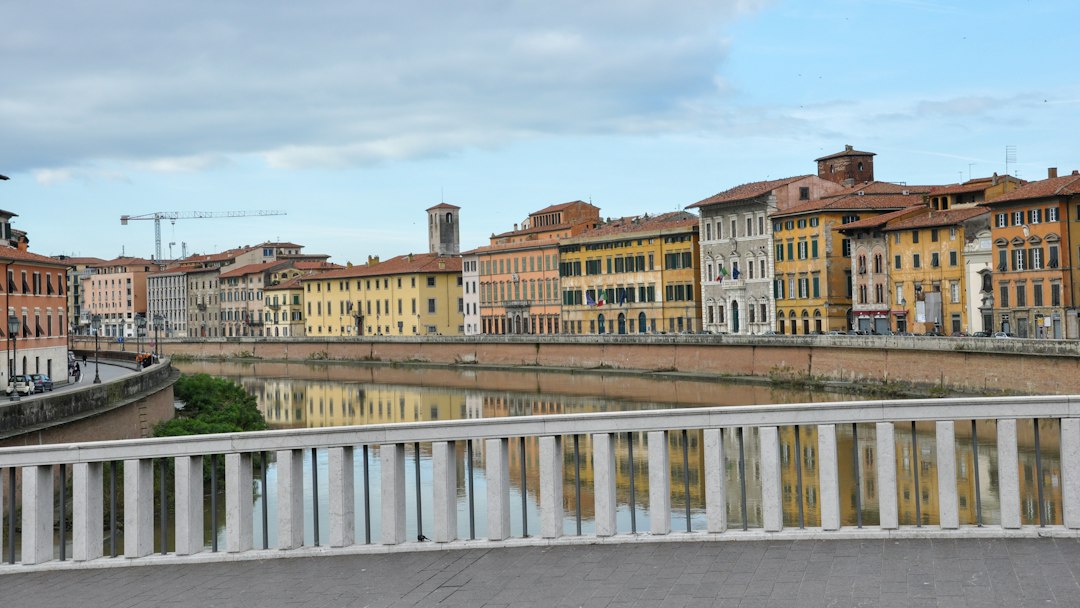
- Lungarno Mediceo at Golden Hour — The riverside palazzo strip glows amber at sunset, rivalling Florence’s Arno views without the crowds.
- Camposanto Monumentale — A Gothic cemetery enclosing soil allegedly shipped from Jerusalem in 1278 — almost no tourists inside.
Scroll down for our complete travel guide with tips on getting there, where to stay, costs and more.
Arriving in Pisa: Airport & Transfers
How do I get to Pisa from abroad or from within Italy?
Fly directly into Pisa Galileo Galilei Airport (PSA), which is the most convenient entry point by far — it sits just 2 km from the city centre. In my experience, the LAM Rossa bus connects the terminal to Pisa Centrale train station in under 10 minutes for €1.30. From Florence, regional trains run every 30 minutes and take 1 hour. From Rome, a fast Frecciarossa reaches Pisa in 2.5 hours. Warning most guides omit: PSA handles budget carriers like Ryanair, so bag fees can inflate your ‘cheap’ fare significantly — factor €25–€50 extra each way.
Which airport is closest to Pisa?
Pisa Galileo Galilei Airport (PSA) is essentially inside the city — 2 km from Piazza dei Miracoli. It is the only airport you need to consider. Florence Airport (FLR) is 85 km away and adds unnecessary complexity. I recommend landing at PSA whenever routes allow. My tip: the airport has a direct train connection called PisaMover linking it to Pisa Centrale station in 5 minutes for €2.70 — faster than any taxi in peak traffic. Caveat: PSA has limited long-haul connections, so North American travellers will typically connect through Rome Fiumicino (FCO) or Milan Malpensa (MXP).
How long does the journey to Pisa take from major Italian cities?
From Florence Firenze Santa Maria Novella, the regional train takes 1 hour and runs every 30 minutes — this is the most popular feeder route. From Rome Termini, the fastest Frecciarossa reaches Pisa Centrale in 2 hours 45 minutes. From Milan Centrale, expect 3 hours 15 minutes on the high-speed line. In my experience, buying tickets on Trenitalia.com at least 7 days ahead saves roughly 40% versus walk-up pricing. Honest caveat: regional trains between Florence and Pisa are occasionally delayed by 20–30 minutes due to infrastructure works — always build buffer time before a connecting flight at PSA.
Do I need a rental car to explore Pisa and the surrounding area?
No — you absolutely do not need a car for Pisa itself. The entire historic centre is a ZTL (Zona Traffico Limitato), meaning private vehicles face automatic fines of €80–€160 if they enter without a permit. I recommend staying car-free inside the city. My tip: rent a car only if you plan day trips to Volterra, San Miniato, or the Cinque Terre hinterland, where trains don’t reach efficiently. Hertz and Europcar both have desks at PSA. Honest warning: parking near Piazza dei Miracoli costs €2.50 per hour and fills by 9 a.m. in summer — a car becomes a liability, not an asset.
Getting Around Pisa
What are the best areas to stay in Pisa?
Stay within the Centro Storico, specifically between Borgo Stretto and Piazza dei Cavalieri — you’ll walk everywhere and sleep inside the genuine medieval fabric of the city. Borgo Stretto is Pisa’s elegant arcaded main street, lined with café terraces and within 600 metres of the Field of Miracles. For a quieter atmosphere with local character, Quartiere di Mezzogiorno south of the Arno offers authentic trattorie and cheaper accommodation. I recommend avoiding hotels immediately adjacent to the Leaning Tower — they charge a 30–50% premium for the view and the noise from tour groups starting at 7 a.m. is genuinely disruptive.
What does accommodation cost per night in Pisa?
A solid 3-star hotel in the Centro Storico runs €85–€130 per night in shoulder season. Boutique options like Hotel Relais dell’Orologio on Via della Faggiola come in at €180–€220 per night but include a genuinely historic palazzo experience. Budget travellers can find clean B&Bs near Piazza Dante for €55–€75 per night. In my experience, Pisa is noticeably cheaper than Florence for equivalent quality — often 25–35% less. Honest caveat: prices spike to €150–€200 for even mid-range properties during the Luminara di San Ranieri festival in June and the Giugno Pisano events, when rooms sell out 3 months in advance.
How far in advance should I book accommodation in Pisa during high season?
For July and August, book a minimum of 8–10 weeks ahead — the city receives a disproportionate flood of day-trippers who decide to stay overnight, draining inventory fast. For the Luminara di San Ranieri on June 16, book 3 months ahead without hesitation. In my experience, September — one of the best travel months based on Pisa’s actual climate data — books out 4–6 weeks in advance for decent mid-range properties. My tip: use Booking.com with free cancellation options rather than locking in non-refundable rates, because Tuscan weather in late September can occasionally bring rainy stretches that change itinerary plans.
Are there special or unique accommodation types worth booking in Pisa?
What surprised me: Pisa has a growing stock of agriturismo stays within 15 km of the city centre, particularly toward the Tenuta di San Rossore natural park, where you wake to pinewood and deer rather than tour-group commentary. The Pisa University district near Piazza dei Cavalieri offers well-priced apartment rentals through Airbnb — ideal for stays of 3 nights or more, often at €70–€100 per night for a full apartment. Honest caveat: truly luxury five-star hotels do not exist inside Pisa — the top end stops at upper-four-star level. For five-star experiences, guests typically stay in Florence and day-trip, which I think is the wrong approach entirely.
Where to Stay in Pisa
What are the absolute must-sees in Pisa beyond the Leaning Tower?
The Camposanto Monumentale is criminally undervisited — a 14th-century marble cloister cemetery whose frescoed walls include the haunting ’Triumph of Death’ (post-1944 restoration). The Museo Nazionale di San Matteo on Lungarno Mediceo holds one of Italy’s finest collections of medieval Pisan sculpture and Romanesque art for just €5 entry. Piazza dei Cavalieri, the former political heart of the medieval Pisan Republic, designed by Vasari, is genuinely magnificent and free to walk. In my experience, the Battistero acoustics inside the Field of Miracles complex are unmissable — staff demonstrate the dome’s echo every 30 minutes and it’s one of the most extraordinary sound experiences in Italy.
What can I experience for free in Pisa?
Pisa’s free highlights punch well above average. Piazza dei Cavalieri costs nothing to explore and rivals any piazza in Tuscany. The Lungarno riverside walk from Ponte di Mezzo to Ponte della Fortezza is a 2.5 km stroll past medieval palaces with zero entry fee. Santa Maria della Spina, a tiny Gothic gem built into the Arno embankment on Lungarno Gambacorti, is free to admire externally and occasionally open for free. My tip: the exterior view of Piazza dei Miracoli — including the Leaning Tower silhouette — is free from the grass perimeter. Honest caveat: you cannot actually enter the Tower, Baptistery, Cathedral, or Camposanto without paid tickets starting at €5–€20.
Which day trips from Pisa are most worthwhile?
Lucca is the standout day trip — just 30 minutes by train (trains every 30 minutes, costing €4) and entirely different in character: intact Renaissance walls you can cycle on top of, no mass tourism compared to Pisa’s Field of Miracles. Volterra, the Etruscan hilltop city, is 50 km by car and worth 5–6 hours for its alabaster workshops and Roman theatre. Cinque Terre is reachable in 1 hour 20 minutes by train from Pisa Centrale — I recommend Vernazza as the prettiest village. Honest warning: Cinque Terre trails in July are genuinely overcrowded; go on a weekday and start hiking before 8 a.m.
What are Pisa’s local culinary specialities?
Pisa’s signature dish is cecina — a thin, oven-baked chickpea pancake sold by the slice for €1.50–€2.50 at bakeries along Borgo Stretto. It is nothing like anything served in tourist restaurants and is genuinely Pisan in origin. Torta co’ bischeri is a sweet tart with rice, chocolate, and candied fruit unique to the Pisa area, sold in the Mercato delle Vettovaglie market. For seafood, Pisa’s proximity to the Tyrrhenian coast means excellent cacciucco (Livornese fish stew) and grilled branzino at riverside trattorias. My recommendation: Osteria di Culegna near Via delle Belle Torri for authentic local cooking at non-tourist pricing.
Pisa Highlights & Must-Sees
What makes Pisa unique compared to other Tuscan cities?
Pisa is the only major Tuscan city that functions as a genuine working university town — with 50,000 students enrolled at institutions including the prestigious Scuola Normale Superiore (founded 1810), one of Europe’s top research universities. This creates a real local pulse: aperitivo bars fill with students at 6 p.m., bookshops thrive, and the city doesn’t hibernate when tour groups leave at sunset. What surprised me: Pisa’s medieval maritime republic controlled Sardinia, Corsica, and the Balearics — the wealth of that empire is visible in every marble facade. Unlike Siena or Lucca, Pisa also has a real working port city DNA along the Arno, which gives it a slightly rougher, more authentic energy.
How many days should I spend in Pisa to see it properly?
2 full days is the honest minimum to see Pisa properly rather than just ticking the Tower. Day 1: the Campo dei Miracoli complex (budget 4 hours including Tower climb), then an afternoon in Piazza dei Cavalieri and an aperitivo on Borgo Stretto. Day 2: Museo Nazionale di San Matteo, the Lungarno walk, and the market at Piazza delle Vettovaglie in the morning. Add a third day if you want a day trip to Lucca or Volterra. Honest caveat: most travellers treat Pisa as a 3-hour stop en route to Florence — this is the single biggest mistake made in Tuscany and guarantees you miss 90% of what makes the city genuinely interesting.
When is the best time to visit Pisa?
July and September are the best months based on Pisa’s verified climate data. July delivers long, reliably dry days ideal for the Campo dei Miracoli and outdoor dining, though peak tourist pressure is highest. September is my personal preference — the summer heat eases to around 24–26°C, accommodation prices drop by 15–20% versus August, and the university population returns, giving the city life after 7 p.m. I recommend arriving for the Luminara di San Ranieri on June 16 if you can — the Arno is illuminated by 100,000 candles along the riverbanks and it is one of the most beautiful evenings in all of Tuscany. Avoid August 10–20 — the city empties of locals and fills with tourists.
Are there local festivals in Pisa worth attending?
Luminara di San Ranieri on June 16 is non-negotiable — the entire Lungarno is lined with 100,000 oil candle lamps in terracotta holders, and the Arno reflects the light in a spectacle that has no equivalent in Italy. The Gioco del Ponte on the last Saturday of June is a medieval re-enactment battle on Ponte di Mezzo between north and south Pisan teams in Renaissance armour — free to watch from the embankment. The Regata di San Ranieri on June 17 is a rowing race between the four historic districts. My tip: book accommodation for the June 15–17 weekend at least 3 months ahead — this is Pisa’s most competitive accommodation period of the year.
Eating & Drinking in Pisa
How does the weather in Pisa affect what activities I can do?
Pisa’s weather directly dictates strategy. Summer heat peaks at 32–34°C in July and August — visit the Camposanto and indoor museums between 11 a.m. and 3 p.m., and save the Tower climb (exposed, no shade) for early morning or after 5 p.m. Winter (December–February) brings cool, occasionally rainy days but virtually empty museums — I’ve had the Museo Nazionale di San Matteo entirely to myself in January. Spring and autumn are optimal for cycling the Parco Regionale di Migliarino-San Rossore pinewood, just 5 km west. Honest warning: the Arno occasionally floods its lower banks in November and early December — the Lungarno Gambacorti walkway can become impassable for 24–48 hours.
How crowded does Pisa get in peak season?
Piazza dei Miracoli in July and August is genuinely overwhelming between 10 a.m. and 4 p.m. — tour buses disgorge thousands of visitors simultaneously and the queue for Tower tickets can reach 2 hours without pre-booking. What surprised me: walk 300 metres south into the medieval streets around Via Santa Maria and the crowds vanish almost entirely. The Battistero interior sees a fraction of Tower visitor numbers despite being equally impressive. My firm advice: pre-book Tower entry online at least 2 weeks ahead for €18 per person — walk-up tickets sell out by 9 a.m. in peak season. The rest of Pisa remains accessible even in August without meaningful queuing.
How safe is Pisa for tourists?
Pisa is very safe by any objective measure — violent crime affecting tourists is exceptionally rare. The primary risk is pickpocketing around Piazza dei Miracoli and on the LAM Rossa bus from the airport, which carries densely packed tourists with luggage. I carry a front-pocket wallet and keep my camera strap around my wrist in the square. The area around Pisa Centrale station — specifically the streets directly south — can feel slightly gritty after dark, but ‘gritty’ means slightly scruffy, not dangerous. The student-heavy Piazza delle Vettovaglie area is animated and safe until midnight. Honest caveat: fake ‘friendship bracelet’ vendors operate aggressively near the Tower — a firm ‘no grazie’ and walking away is all that’s needed.
Is English widely spoken in Pisa?
English is functional across tourist-facing businesses — hotels, restaurant staff near the Campo, and museum ticketing all operate comfortably in English. What surprised me: in the university district around Piazza dei Cavalieri, many young locals speak excellent English due to Pisa’s strong international academic community. Away from tourist zones — in the Mercato delle Vettovaglie, neighbourhood bars, and the Quartiere di Mezzogiorno — Italian is the working language and a few phrases go a long way. My tip: learn at minimum ‘un tavolo per due’ (a table for two), ‘il conto per favore’ (the bill please), and ‘dov’è il bagno?’ — these three phrases will handle 80% of your daily interactions in local establishments.
Practical Tips for Pisa
What is a realistic daily budget for visiting Pisa?
A budget traveller spending €55–€75 per day covers a B&B bed, cecina lunch, one museum, a local trattoria dinner, and bus transport. A mid-range traveller at €130–€180 per day gets a 3-star hotel, sit-down lunches, Tower entry (€18), and evening dining with wine. A cheap meal costs approximately €22 (equivalent to the verified Numbeo price of ~$21.95 USD), and a mid-range dinner for two runs around €40 (~$39.51 USD). In my experience, Pisa is 20–25% cheaper than Florence for food and accommodation at equivalent quality. Honest caveat: the Campo dei Miracoli ticket combinations — Tower plus Baptistery plus Cathedral plus Camposanto — cost €27–€30 combined, so budget this as a fixed day-one expense.
How does Pisa’s public transport work for getting around?
Pisa’s historic centre is compact enough to walk entirely — the distance from Pisa Centrale station to the Leaning Tower is exactly 1.6 km on foot (roughly 20 minutes). The CPT bus network covers the wider city with a single ride costing approximately €1.50 (~$2.66 USD equivalent). The LAM Rossa and LAM Verde lines are the most useful, connecting the station, airport area, and hospital. In my experience, you will almost never need a bus inside the historic centre — the city is designed for walking. My tip: the PisaMover automated transit pod between the airport and Pisa Centrale runs every 8 minutes, costs €2.70, and is faster than any taxi during morning rush hour.
Which apps do you recommend for navigating and enjoying Pisa?
Trenitalia (or Italo for high-speed routes) is essential for booking trains to Florence, Lucca, and Rome — download before arrival. Google Maps works reliably in Pisa including walking navigation through the medieval lanes. For the Campo dei Miracoli complex, book Tower tickets directly on opapisa.it — third-party booking platforms charge unnecessary surcharges of €3–€5 per ticket. TheFork (called ElTenedor in some markets) lists Pisan restaurants with genuine reviews and occasional 50% discount promotions on set-price lunches — I’ve eaten well for €12–€14 using it. Honest caveat: Italian cell coverage drops inside thick medieval stone buildings — download offline Google Maps for the city before your hotel’s WiFi becomes unavailable.
Pisa at a Glance
| Population | 88,737 |
|---|---|
| Currency | EUR (€) |
| Official language | Italian |
| Time zone | Europe/Rome |
Source: Wikidata, retrieved September 2026.
Italy › Pisa
More Destinations in Tuscany
More Destinations in Italy
Essential Resources for Planning Your Trip to Pisa
- From Pisa Airport to Pisa Centrale train station — official visitor information
- Wikivoyage: Pisa — community travel guide & practical tips
- Wikipedia: Pisa — history, geography & background
- The ultimate insider’s travel guide to Pisa — how to get there and around
- Pisa Travel 2026 – Italy — itineraries & inspiration
Data Sources
Key facts on this page (population, currency, language, time zone) come from Wikidata, climate figures from Open-Meteo. The retrieval date is shown next to the facts table.