
Corfu: The Complete Travel Guide (2026)
Last reviewed: October 2026 · key facts checked against Wikidata
Corfu Travel Guide: Everything You Need to Know (2026)
Corfu (Kerkyra) is a Greek island of 100,854 residents sitting at the northernmost tip of Greece’s Ionian coast, separated from Albania by just 3 km at its narrowest point. The island’s Old Town was designated a UNESCO World Heritage Site, and its Venetian-influenced architecture sets it apart from the Cycladic whitewash typical of most Greek islands. Corfu lies roughly 1,350 km from Athens by road and sea, making direct international flights the practical entry point for most visitors.
Three Things Not to Miss in Corfu
- Corfu Old Town (UNESCO) — A Venetian-built maze of narrow alleyways called ‘kantounia’, enclosed by two imposing Venetian fortresses built from the 15th century onward.
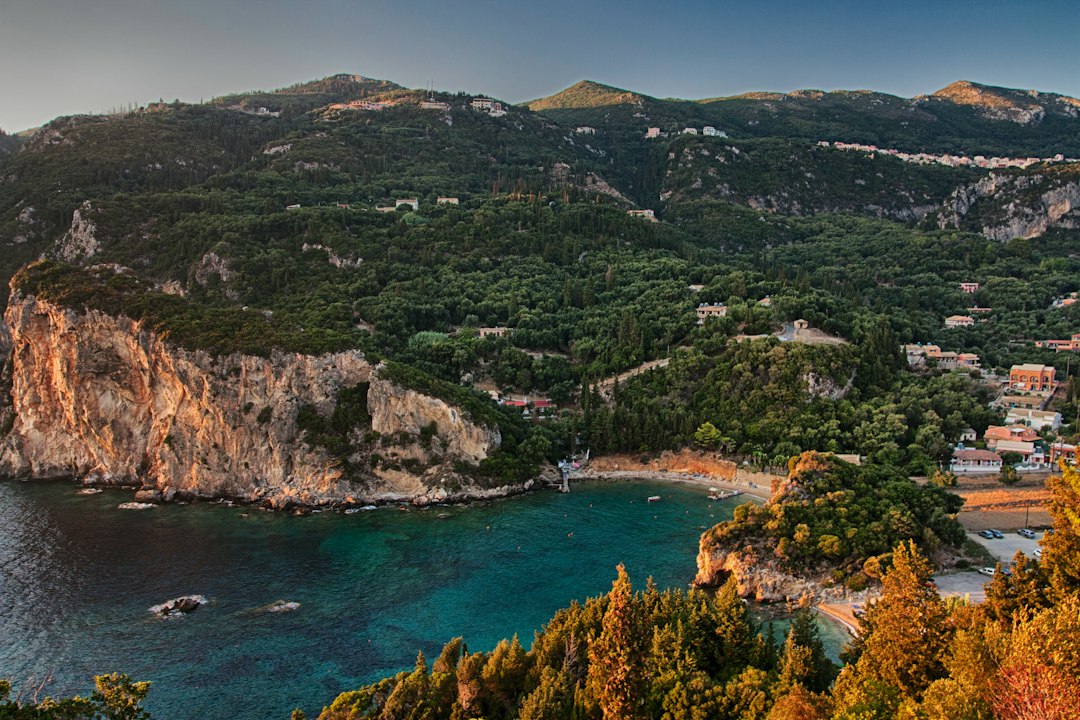
- Paleokastritsa — Six crescent-shaped turquoise bays on the northwest coast, widely regarded as Corfu’s most photographed coastal scenery.
- Achilleion Palace — A 19th-century neoclassical palace built for Empress Elisabeth of Austria in 1890, set in terraced gardens above the village of Gastouri.
Scroll down for our complete travel guide with tips on getting there, where to stay, costs and more.
Getting to Corfu: Ferry or Flight
How do I get to Corfu — by flight or ferry?
Flying is faster and usually cheaper for most European visitors. Direct flights serve Corfu International Airport (CFU) from over 50 European cities, with flight times of roughly 2.5 hours from London or 1.5 hours from Rome. The ferry alternative connects the Greek mainland port of Igoumenitsa (crossing: 45–90 minutes) or Patra (overnight, approximately 8 hours), which is useful if you are already travelling through Greece with a car. Worth knowing: ferries from Italy (Brindisi, Ancona, Venice) dock directly in Corfu Town, making them a practical option if you are doing a broader Adriatic road trip.
Which airport or port is the best starting point for Corfu?
Corfu International Airport (CFU), also called Ioannis Kapodistrias Airport, is the single airport on the island and sits just 3 km south of Corfu Town. Almost all visitors arrive here. The port of Corfu Town (Neo Limani) is the main ferry terminal, receiving boats from Igoumenitsa, Patra, and Italian Adriatic ports. We recommend landing at CFU and basing yourself in or near Corfu Town for the first night, as onward buses and taxis fan out across the island from there. Worth knowing: the airport road can gridlock in July and August, so allow an extra 20 minutes for transfers during peak season.
How long does the ferry crossing to Corfu take?
The shortest crossing is Igoumenitsa to Corfu Town at 45–90 minutes, operated mainly by Ionian Ferries and Lefkimmi Lines (which also serves the southern port of Lefkimmi). The Patra–Corfu route takes approximately 6–8 hours and is often done overnight. Italian routes from Brindisi take roughly 8–9 hours, while ferries from Ancona or Venice run 20–25 hours and are effectively overnight crossings. Tip: check current schedules and book cabins through Ferryhopper or Directferries, as timetables change seasonally and some routes operate only from April to October.
What does a flight or ferry to Corfu cost?
Return flights from the UK typically range from about €60–€200 on budget carriers such as easyJet and Ryanair, rising to €250–€400+ in peak August. Charter seats bundled with packages can be cheaper. The Igoumenitsa–Corfu ferry costs approximately €10–€15 per passenger one way; taking a car adds roughly €25–€45 depending on vehicle length — confirm current fares with Ionian Ferries. Italian crossings (e.g. Grimaldi Lines from Brindisi) run around €60–€100 per passenger in a seat, or €120–€200+ for a cabin. Caveat: fuel surcharges and port taxes are added at checkout and can add €10–€30 to ferry bookings.
Are overnight ferries to Corfu worth it?
Overnight ferries are worth it primarily if you are travelling from Patra or an Italian port and want to save a night’s accommodation cost. The Patra–Corfu leg (operated by Minoan Lines and others) departs in the evening and arrives early morning, meaning you save roughly one hotel night. A shared cabin typically adds €30–€60 to the base ticket price. However, if you are flying from northern Europe, an overnight ferry adds significant travel time with no cost advantage. Caveat: cabin quality on older vessels can be basic, and summer sea conditions in the Ionian are generally calm but not guaranteed.
Getting Around Corfu
Do I need a rental car or scooter on Corfu?
Yes, a rental car is strongly recommended for exploring beyond Corfu Town. The island is 60 km long with many beaches and villages unreachable by bus. Economy cars start at roughly €30–€55 per day in shoulder season, rising to €60–€90+ in August — confirm current rates with operators such as Avis Corfu or local firms at the airport. Scooters (from about €20–€30/day) suit the narrow lanes of the north and centre but are risky on the main coastal road, which carries heavy summer traffic. Caveat: parking in Corfu Town is very limited in July–August; staying outside the old town and walking in is more practical.
Are there buses between towns on Corfu?
Yes, KTEL Corfu operates two bus networks: the blue urban buses within Corfu Town (fare approximately €1.40) and the green long-distance buses to villages such as Paleokastritsa, Sidari, Benitses, and Kavos. Long-distance tickets cost roughly €2–€5 one way. The main green bus terminal is on I. Theotoki Street in Corfu Town. Frequency drops sharply outside summer — some routes run only 2–3 times daily. Worth knowing: the bus network covers main tourist corridors reasonably well, but remote beaches such as those around Agios Georgios Pagon (northwest) or Agios Stefanos Sinies (northeast) require a car or taxi.
What does a rental car on Corfu cost, and where do I hire one?
Expect to pay €30–€55 per day for a small economy car in May–June, rising to €65–€90 per day in peak July–August — verify current rates on Rentalcars.com or directly with operators. Avis, Hertz, and Europcar all have desks at Corfu Airport (CFU), and a cluster of local agencies operates along Ethnikis Antistaseos Street in Corfu Town, often at slightly lower prices. We recommend booking at least 4–6 weeks ahead for July and August, as compact cars sell out quickly. Caveat: full-to-full fuel policies and mandatory CDW insurance can add €10–€20 per day to the headline price — read the terms before signing.
Which parts of Corfu are accessible by public transport?
The main tourist corridors are covered: Corfu Town, Paleokastritsa, Sidari, Roda, Kassiopi, Kavos, Benitses, and Moraitika all have at least one KTEL green bus connection from town. Corfu Town itself is very walkable, and the blue urban buses reach the nearby suburb of Kanoni (home of the famous Mouse Island viewpoint). However, the northeast coast villages (Agios Stefanos Sinies, Kalami, Kouloura) and many interior mountain villages such as Lakones or Strinilas are effectively car-only. Worth knowing: water taxis operate informally between some northwest coast bays in summer, connecting spots like Paleokastritsa and smaller coves not reachable on foot.
Can I cycle around Corfu?
Cycling around the entire island is not practical — Corfu’s terrain is hilly, the main coastal road carries fast summer traffic, and the island is 60 km long. Dedicated cycle lanes are virtually non-existent outside Corfu Town. That said, mountain biking on interior trails around Troumpeta Pass and the Pantokrator massif (the island’s highest point at 906 m) is genuinely rewarding. Bike rentals are available in Corfu Town and larger resorts for roughly €10–€20 per day. We recommend cycling only for specific inland or coastal segments, not as a primary transport method. A local operator such as Corfu Mountainbike Shop in Corfu Town can advise on trail conditions.
Where to Stay on Corfu
Which town on Corfu should I base myself in?
Corfu Town (Kerkyra) is the strongest base for first-time visitors: it has the UNESCO Old Town, the best restaurant choice, and bus connections island-wide. For beach-focused holidays, the northwest resort of Paleokastritsa (30 km from town) offers the most scenic bay setting. The northeast village of Kassiopi (36 km from town) suits travellers wanting a quieter fishing-village feel with water access. The south resort of Kavos is strictly a party destination and poorly positioned for sightseeing. Compared to Lefkada (another Ionian island, about 3 hours south by road and ferry), Corfu Town offers far richer urban and cultural content alongside beach access.
What does accommodation on Corfu cost per night?
Budget travellers can find economy hotel rooms or guesthouses from roughly €70 per night in shoulder season (verified via Numbeo). Mid-range hotels in Corfu Town or Dassia typically run €100–€160 per night in June–September. Luxury resorts such as Grecotel Corfu Imperial in Kommeno start at €300–€500+ per night in peak summer. Self-catering apartments in villages like Kalami or Agios Gordios offer better value for stays of 5 nights or more. Caveat: prices in August can be 30–50% higher than the same property in May or October, and cancellation terms tighten considerably for peak-season bookings.
Which area of Corfu suits which travel style?
Corfu Town suits culture and food lovers: Venetian architecture, the Liston promenade, and a dense restaurant scene are all walkable. The northeast coast (Kassiopi, Kalami, Agni) is the quietest and most upscale area, popular with sailing visitors and villa renters. The northwest (Paleokastritsa, Agios Georgios Pagon) balances scenery with watersports. The west coast (Agios Gordios, Mirtiotissa) has dramatic cliffs and longer sandy beaches suited to surfers and campers. The south (Kavos, Lefkimmi) is purely resort-oriented with a loud nightlife scene. Families tend to concentrate around Dassia and Ipsos on the east coast, roughly 10–14 km from Corfu Town.
How far in advance do I need to book accommodation on Corfu?
For July and August, book at least 3–4 months ahead — popular mid-range hotels in Corfu Town and Paleokastritsa sell out by May. Luxury villas in the northeast coast (areas like Kalami or Agni) are often fully booked by January for peak summer weeks. For May, June, September, and October, booking 4–6 weeks out is usually sufficient, and last-minute deals appear more frequently. Tip: if your dates are fixed, book non-refundable rates early, then monitor for price drops — Booking.com and Airbnb both show Corfu inventory and allow price comparison across the island’s distinct microregions.
Are there good apartments or villas with sea views on Corfu?
Yes — Corfu has an exceptionally strong villa rental market, particularly along the northeast coast between Kassiopi and Agni. Villas with private pools and Ionian Sea views sleep 4–8 guests and typically cost €1,500–€5,000+ per week in July–August — well above equivalent properties in the Cyclades. Specialist agencies such as CV Villas and Simply Corfu curate vetted northeast-coast properties. Budget sea-view apartments (studio to 2-bedroom) exist in Paleokastritsa and Nissaki from approximately €70–€120 per night. Caveat: hillside villas with the best views usually require a car, as the steep access roads are unsuitable for walking with luggage.
Best Time to Visit Corfu
When is the best time to visit Corfu?
June and August are the statistically optimal months based on climate analysis, combining warm temperatures, reliable sunshine, and fully open facilities. June is particularly attractive: the island is green after spring rains, sea temperatures reach about 24°C, crowds are lighter than August, and prices are 15–25% lower than peak. Late September offers genuine shoulder-season value with sea temperatures still warm enough for swimming (around 23°C) and far fewer tourists. Avoid July–August if crowd sensitivity is a priority, especially around Paleokastritsa and the Liston in Corfu Town. Winter months (November–March) see most resorts and many restaurants closed.
What is the weather on Corfu like throughout the year?
Corfu has a Mediterranean climate with mild, wet winters and hot, dry summers. Summer (June–September) is sunny and dry with temperatures regularly reaching 30–34°C in July–August; the island is one of Greece’s greener ones precisely because it receives more rainfall than the Cyclades — roughly 1,300 mm annually. Spring (March–May) is lush and pleasant with temperatures from 15–22°C but some rain. Autumn (October–November) brings the first significant rains from mid-October. Winters are mild (8–14°C) but consistently rainy and windy, with the Tramontane north wind noticeable on the northeast coast. Worth knowing: the island’s microclimate means the north can be windier and slightly wetter than the sheltered southeast.
When does Corfu get overcrowded?
August is peak crowding: the Liston and Old Town, the road to Paleokastritsa, and popular beaches like Glyfada and Sidari become genuinely congested. The airport processes over 1 million passengers in summer, and traffic jams on the main Corfu–Paleokastritsa road (approximately 26 km) can add 45 minutes to a journey. Easter week (Greek Orthodox Easter, which may differ from Western Easter) brings a major local festival to Corfu Town — atmospheric but very busy. The northeast coast villages are comparatively calmer even in August. Caveat: Corfu is a package-holiday staple for British and German travellers, so resort towns like Dassia and Ipsos feel heavily commercialised in July–August.
Is there a worthwhile shoulder season on Corfu?
May and September–early October offer the best shoulder-season experience. In May, olive groves and wildflowers make the island visually stunning, temperatures sit around 20–24°C, and most restaurants and boat trips are open. In September, sea temperatures peak at roughly 25°C — actually warmer than June — and resort crowds thin noticeably after the first week. Prices drop 20–35% compared to August. Worth knowing: compared to Zakynthos (another Ionian island about 140 km south), Corfu’s shoulder season is slightly shorter because its cooler northwest position means autumn rain arrives earlier, typically by mid-October. We recommend early September as the single best week-for-week value window.
When does the beach and watersports season on Corfu begin?
Beach infrastructure (sun-lounger rentals, beach bars, pedalo hire) is operational from approximately late April at major beaches like Glyfada and Paleokastritsa. Watersports operators — offering jet-skiing, parasailing, and kitesurfing — typically open in early May at resorts such as Dassia and Sidari. Sea temperatures are comfortable for swimming from late May (around 21°C) and peak in August–September at approximately 25°C. Scuba diving with operators such as Corfu Diving (based in Agios Gordios) runs from May to October. Caveat: the northwest coast beaches face more swell and wind than the sheltered east coast bays, which matters for paddleboarding and kayaking — check conditions locally.
What Corfu Costs
What does a daily budget on Corfu cost?
A budget traveller staying in a hostel or basic guesthouse, using buses, and eating at local tavernas can get by on roughly €60–€75 per day — factoring in the Numbeo-verified cheap meal price of approximately €11 and local bus fares of approximately €1.40. A mid-range couple sharing a hotel room, renting a car, and eating at sit-down restaurants should budget €130–€180 per person per day. A comfortable touring budget including a mid-tier rental car, mid-range hotel, and daily restaurant dinners (Numbeo mid-range dinner for two approximately €20) runs about €100–€140 per person per day. Caveat: resort beach clubs and cocktail bars in Paleokastritsa can inflate daily spend significantly.
Is Corfu more expensive than the Greek mainland?
Slightly yes — island logistics add cost. Dining prices in tourist-facing restaurants in Corfu Town are broadly comparable to Thessaloniki but noticeably higher than small mainland towns. Economy hotel rooms start at about €70 per night (Numbeo-verified), which is on par with central Athens guesthouses but more expensive than rural mainland Greece. Rental cars cost more than on the mainland because of limited island fleet sizes. Grocery shopping at AB Vassilopoulos or local markets in Corfu Town is comparable to mainland prices and remains the best cost-control tool. Worth knowing: the island’s strong British package-holiday market has pushed seafront restaurant prices upward in resort zones like Dassia and Kavos relative to authentic village tavernas.
What expenses on Corfu are unavoidable?
Transport is the biggest unavoidable cost: a rental car for 7 days at peak-season rates adds €350–€630 to a trip budget, and petrol across the island’s 102 km² road network adds more. Ferry port fees and airport taxes are embedded in ticket prices but real. Sunbed hire at popular beaches runs €8–€16 for a pair per day at Glyfada or Paleokastritsa — there is limited free beach access without walking. Entry to the Achilleion Palace costs about €10 per adult (verify current price at the site). Tip: pack a beach mat to avoid mandatory sunbed fees, and note that several beaches on the northeast coast — such as those near Kassiopi — still have freely accessible sand.
What does food cost on Corfu — local taverna vs tourist restaurant prices?
A simple meal at a local taverna (grilled fish, salad, house wine) runs roughly €12–€18 per person, in line with the Numbeo-verified cheap meal benchmark of approximately €11. A tourist-facing seafront restaurant in Paleokastritsa or the Liston promenade in Corfu Town charges €20–€35 per person for the same food. A mid-range two-person dinner with wine costs approximately €22 (Numbeo-verified). Local gyros from a Corfu Town souvlaki shop costs about €3–€4. Worth knowing: village tavernas inland — in Spartilas, Strinilas, or Agios Markos — serve authentic food at noticeably lower prices than coastal tourist strips, and the views from the mountain villages are often better.
What are the best beaches on Corfu?
Paleokastritsa (northwest, 26 km from Corfu Town) offers the island’s most dramatic scenery: six connected bays with turquoise water and cliff backdrops. Glyfada (west coast, 16 km from town) is the longest sandy beach with consistent surf. Mirtiotissa (west coast, clothing-optional, accessible via a 15-minute walk from the car park) is lauded for its natural setting. Porto Timoni (northwest, reached by a 25-minute hike from Afionas village) offers a stunning double-bay view. The northeast coast beaches near Kassiopi and Avlaki are calmer and pebblier. Caveat: Sidari and its famous Canal d’Amour are scenically interesting but heavily commercialised and the water clarity is lower than the west coast.
Beaches & Experiences on Corfu
What are the top sights on Corfu beyond the beaches?
Corfu Old Town (UNESCO) is the centrepiece: the Old Fortress (Palaio Frourio), dating from the Byzantine era and rebuilt by the Venetians, and the New Fortress (Neo Frourio), built in the 16th century, both offer sweeping sea views. The Achilleion Palace in Gastouri (built 1890) has ornate gardens and a striking Achilles statue. The Mon Repos Estate in Corfu Town was the birthplace of Prince Philip in 1921 and now houses an archaeological museum. The village of Lakones, perched above Paleokastritsa at about 200 m altitude, offers the best panoramic photography of the northwest bays. The Pantokrator Monastery at the island’s summit (906 m) rewards visitors with cross-border views to Albania.
What watersports activities are available on Corfu?
The island offers a wide range: scuba diving with Corfu Diving (based in Agios Gordios) and Calypso Diving (near Paleokastritsa) exploring wrecks and reefs from 5–30 m depth. Kayaking and paddleboarding are available at most beach resorts; sea-kayak tours of the northeast coast caves near Kassiopi run approximately 3–4 hours. Parasailing and jet-ski hire operate from Dassia and Ipsos. Kitesurfing is possible on the west coast near Agios Georgios Argyrades (south), where the prevailing wind is more consistent. Sailing charters depart from Corfu Town marina — a 7-day bareboat charter to the surrounding Ionian islands costs roughly €1,500–€3,500 depending on vessel size; check operators via Sailing Europe.
What is the culinary highlight of Corfu?
Sofrito — thin-sliced veal or beef braised slowly in white wine, garlic, parsley, and white pepper — is Corfu’s most distinctive dish, a Venetian culinary legacy found almost nowhere else in Greece. Order it at long-established Corfu Town restaurants such as To Tavernaki tis Marinas or Rex Restaurant on Kapodistriou Street. Pastitsada (slow-cooked rooster or beef in spiced tomato sauce over thick pasta) is another Venetian-influenced staple. Local kumquat liqueur, produced from the small citrus fruit that thrives only in Corfu’s microclimate, makes an unmissable souvenir. Corfu’s olive oil — the island has roughly 3 million olive trees — is used generously in almost every dish and is markedly fruity compared to mainland varieties.
Which parts of Corfu are still off the beaten track?
The northeast coast villages between Agios Stefanos Sinies and Agios Spiridon see a fraction of the tourist volume hitting Paleokastritsa or Sidari. The mountain village of Strinilas (altitude approximately 600 m) and the surrounding Pantokrator Trail attract serious hikers rather than package tourists. The Diapontian Islands — Othonoi, Erikoussa, and Mathraki — lie 20–40 km northwest of Corfu and are accessible by ferry from Agios Stefanos Avliotes (summer schedule only); Othonoi is the westernmost point of Greece. Compared to the heavily visited west coast, the south of the island around Lefkimmi feels authentically local, with a working port and untouristy tavernas.
How many days do I need on Corfu?
5–7 days is the minimum to cover the island’s distinct zones without rushing. Day 1–2: Corfu Town (Old Town, both fortresses, Mon Repos). Day 3: northwest (Paleokastritsa, Lakones village, Agios Gordios beach). Day 4: northeast coast (Kassiopi, Kalami, Agios Stefanos Sinies). Day 5–6: interior mountains (Pantokrator, Strinilas) and west-coast beaches (Glyfada, Mirtiotissa). Add a day for the Diapontian Islands ferry trip if you want the full archipelago experience. Compared to smaller Ionian neighbours such as Lefkada (which can be seen well in 3–4 days), Corfu’s size, cultural depth, and variety of distinct landscapes justify a longer stay. A 10-day trip allows genuinely unhurried exploration.
Corfu at a Glance
| Population | 100,854 |
|---|---|
| Currency | EUR (€) |
| Official language | Greek |
| Time zone | UTC+02:00 |
Source: Wikidata, retrieved October 2026.
Greece › Corfu
More Destinations in Ionian Islands
More Destinations in Greece
Essential Resources for Planning Your Trip to Corfu
- What to Expect After Landing at Corfu Airport — official visitor information
- Wikivoyage: Corfu — community travel guide & practical tips
- Wikipedia: Corfu — history, geography & background
- Exploring Corfu, Kerkira using public transport from … — how to get there and around
Data Sources
Key facts on this page (population, currency, language, time zone) come from Wikidata, climate figures from Open-Meteo. The retrieval date is shown next to the facts table.