
San Pietro Island: The Complete Travel Guide (2026)
Last reviewed: October 2026 · key facts checked against Wikidata
San Pietro Island Weather by Month: When to Go
| Month | Day | Night | Sea | Rain days | Rain mm | Wind km/h | Good for |
|---|---|---|---|---|---|---|---|
| Jan | 14° | 8° | 15° | 10 | 56 | 25 | – |
| Feb | 15° | 8° | 15° | 8 | 55 | 23 | – |
| Mar | 16° | 9° | 15° | 11 | 54 | 24 | Hike |
| Apr | 19° | 11° | 16° | 9 | 51 | 22 | Hike |
| May | 22° | 14° | 19° | 8 | 61 | 21 | – |
| Jun | 28° | 19° | 23° | 3 | 12 | 21 | Swim |
| Jul | 31° | 22° | 25° | 1 | 2 | 22 | Swim |
| Aug | 31° | 22° | 26° | 3 | 14 | 21 | Swim |
| Sep | 27° | 20° | 25° | 6 | 44 | 21 | Swim |
| Oct | 23° | 16° | 23° | 7 | 51 | 21 | SwimHike |
| Nov | 18° | 12° | 20° | 13 | 108 | 23 | – |
| Dec | 15° | 10° | 17° | 12 | 75 | 23 | – |
Sources: ERA5 reanalysis via Open-Meteo, 2016–2025 (10-year average) for air temperature, rain and wind (average daily maximum); Open-Meteo Marine API, 2023–2025 for sea surface temperature. A rain day has at least 1 mm. Area averages; individual years vary.
San Pietro Island Travel Guide: Everything You Need to Know (2026)
San Pietro Island lies roughly 7 kilometres off the south-western coast of Sardinia, covering 51 square kilometres and sitting at an elevation of 211 metres at its highest point. Its sole town, Carloforte, is home to virtually all of the island’s 6,465 residents — descendants of Ligurian coral fishermen who settled here in 1738. The island is the sixth-largest in Italy by area and remains one of the least commercialised inhabited islands in the Mediterranean.
Three Things Not to Miss in San Pietro Island
- Carloforte historic centre — A pastel-coloured Ligurian grid town founded in 1738, unique in Sardinia for its Genoese dialect and architecture.
- La Caletta and Cala Fico beaches — Crystal-clear turquoise coves on the northern tip, reachable only by boat or a 45-minute walk from Carloforte.
- Mattanza tuna heritage at the Tonnara — Historic bluefin tuna trap site with a small museum documenting a centuries-old fishing ritual now largely discontinued.
Scroll down for our complete travel guide with tips on getting there, where to stay, costs and more.
Ferries & Flights to San Pietro Island
How do I get to San Pietro Island — by flight or ferry?
Ferry is the only practical option; there is no airport on San Pietro Island. The standard route is a short 30-minute ferry crossing from Calasetta (on Sant’Antioco Island) or a 35-minute crossing from Portovesme on the Sardinian mainland. Both routes are operated by Delcomar (delcomar.it), which runs crossings throughout the day. Flights into Sardinia land at Cagliari Elmas Airport (CAG), roughly 80 km from Portovesme. Worth knowing: Portovesme is more convenient if you are arriving directly from Cagliari, while Calasetta suits travellers already exploring the Sulcis area or Sant’Antioco Island.
Which port is the best starting point for San Pietro Island?
Portovesme is the most direct starting point from Cagliari. The port sits about 80 km north-west of Cagliari and offers the most frequent Delcomar departures to Carloforte. Calasetta, on the neighbouring Sant’Antioco Island, is the alternative — it adds a short road crossing of Sant’Antioco but works well if you are touring the Sulcis peninsula by car. The ferry from Portovesme docks directly at Carloforte port, putting you in the centre of town immediately. Caveat: parking at Portovesme can fill quickly in July and August, so arrive at least 30 minutes before your sailing.
How long does the ferry crossing to San Pietro Island take?
The crossing takes approximately 30–35 minutes depending on the departure point. Delcomar operates the Portovesme–Carloforte route in about 35 minutes and the Calasetta–Carloforte route in around 30 minutes. Ferries run throughout the day from early morning until late evening, with increased frequency in summer. Tip: check the live timetable at delcomar.it before travelling, as schedules shift between the summer (June–September) and off-season timetables. In August, waiting lines for vehicles can be long — foot passengers board far more easily and the crossing remains very short.
What does a ferry ticket to San Pietro Island cost?
Foot passenger tickets are approximately €5–7 each way; vehicle tickets are significantly higher, roughly €20–35 one way for a standard car, depending on the season and vehicle size. These are indicative figures — verify current fares directly with Delcomar at delcomar.it, as prices are updated seasonally. Booking in advance online is possible and recommended in July and August for vehicle crossings. Caveat: there is no price advantage to booking a return ticket versus two singles, but reserving a vehicle slot in peak season is strongly advisable as capacity is limited.
Are overnight ferries to San Pietro Island worth it?
No — overnight ferries do not operate on this route. The Delcomar crossings between Portovesme or Calasetta and Carloforte are daytime-only short-haul services lasting about 30–35 minutes each way. Overnight ferry services exist for reaching Sardinia itself from the Italian mainland — Genoa, Civitavecchia, and Livorno all have overnight connections to Cagliari or Porto Torres via Tirrenia or GNV. Once on Sardinia, the onward ferry to San Pietro is a quick daytime hop. Worth knowing: if you are crossing from mainland Italy to Sardinia overnight, Cagliari is the most convenient arrival port for then driving on to Portovesme.
Moving Around San Pietro Island
Do I need a rental car or scooter on San Pietro Island?
For most visitors, a scooter or bicycle is sufficient and preferable to a car. The island covers 51 square kilometres and Carloforte is compact and walkable. A scooter lets you reach beaches like Cala Fico and the northern coves efficiently. Car rental is available in Carloforte but unnecessary if you plan to base yourself in town. Tip: several rental outfits in Carloforte hire scooters for roughly €30–50 per day and bicycles for around €10–20 per day — confirm current rates locally on arrival. Caveat: bringing your own car via ferry is costly and roads near popular beaches become congested in August.
Are there buses between towns on San Pietro Island?
Bus service on San Pietro Island is minimal. Since Carloforte is the island’s only town and all 6,465 residents live there, there is no inter-town bus network. A local shuttle service operates in summer connecting Carloforte with some beaches and the island’s interior, but schedules are limited and subject to seasonal change. We recommend checking with the Carloforte tourist office (proloco Carloforte) for the current summer shuttle timetable. The practical alternative is hiring a scooter or bicycle in Carloforte, or taking one of the short boat excursions that depart from the port to reach the more isolated northern coves.
What does a rental car cost on San Pietro Island — and where do I hire one?
Car hire in Carloforte costs approximately €50–90 per day for a small vehicle in summer, though a scooter (€30–50/day) or bicycle (€10–20/day) is a more practical choice given the island’s 51-square-kilometre size. Hire outlets are located near the Carloforte ferry dock — look for small local agencies rather than international chains. Tip: book any vehicle in advance for July and August, as supply is genuinely limited on a small island. Worth knowing: roads are narrow and in places unpaved near the northern beaches, so a compact car or 4×4 is more useful than a large vehicle.
Which parts of San Pietro Island are accessible by public transport?
Carloforte itself is fully walkable, and it is effectively the only urban area on the island. Beyond the town, public transport coverage is sparse. A seasonal summer shuttle connects Carloforte with Spiaggia di Guidi and a small number of inland viewpoints, but the timetable is irregular — confirm with the local tourist office. The most reliable way to reach isolated beaches like Cala Fico or La Caletta is by hired boat from Carloforte port or on foot via marked trails. Caveat: travellers relying solely on public transport will find their range significantly limited outside the town centre.
Can I cycle around San Pietro Island?
Yes — cycling is a genuinely enjoyable way to explore San Pietro Island. The island’s 51 square kilometres are manageable by bike for moderately fit cyclists, and several marked routes cross the interior and coastal cliffs. Bicycles can be hired in Carloforte for approximately €10–20 per day. The terrain is hilly — the island reaches 211 metres at its highest — so electric bikes, also available locally, ease the climbs. Tip: the coastal road north from Carloforte towards Cala Fico offers spectacular views and relatively light traffic outside August. Caveat: summer heat between noon and 3 pm makes midday cycling uncomfortable; start early.
Choosing a Base on San Pietro Island
Which town should I base myself in on San Pietro Island?
Carloforte is the only real option — and it is an excellent one. All of the island’s 6,465 residents, restaurants, bars, hotels, and services are concentrated here. The town’s Ligurian-style pastel houses, narrow caruggi lanes, and working harbour give it genuine character. For beach access, staying near the Carloforte seafront (Lungomare) puts you within easy reach of boat excursions to the northern coves. Compared with Sant’Antioco on the neighbouring island — which is larger and more commercial — Carloforte feels quieter and more authentic. Tip: rooms above the old town offer views over the harbour and the Sardinian coastline.
What does accommodation cost per night on San Pietro Island?
Expect to pay roughly €80–150 per night for a double room in a mid-range hotel or B&B in Carloforte in summer. Budget guesthouses start around €60, while boutique hotels and sea-view apartments push toward €180–250 in July and August. Agriturismo-style rural accommodation exists in the island’s interior at slightly lower rates. Tip: self-catering apartments in or near Carloforte’s historic centre offer better value for stays of a week or longer. Worth knowing: San Pietro Island is noticeably pricier than staying on mainland Sardinia near Portovesme, reflecting the island premium and limited room supply.
Which area of San Pietro Island suits which travel style?
Carloforte centre suits culture-focused and food-driven travellers — the historic grid, the fish market, and the tuna-based restaurant scene are all within walking distance. The northern coast near Cala Fico is best for snorkellers and hikers seeking isolation, accessible by boat or on foot. The western cliffs reward photographers and birdwatchers, particularly during the Eleonora’s falcon nesting season in late summer. Families tend to favour the calmer beaches on the eastern side of the island, closer to town. Caveat: there is no resort-style hotel with a pool and organised entertainment — San Pietro appeals to travellers comfortable with self-directed exploration.
How far in advance do I need to book accommodation on San Pietro Island?
Book at least 2–3 months ahead for July and August. San Pietro Island has a small accommodation stock — well under 50 registered hotels and B&Bs — and peak-season demand from Italian and German visitors fills beds quickly. The shoulder months of June and September require at least 4–6 weeks’ notice for the better-positioned properties. Outside these months, last-minute availability is generally possible. Tip: contact smaller guesthouses directly rather than relying solely on booking platforms — family-run places in Carloforte sometimes hold rooms back from aggregators. Cancellation policies vary, so read terms carefully before confirming.
Are there good apartments or villas with sea views on San Pietro Island?
Yes — sea-view apartments in Carloforte are the most popular self-catering option. Several properties along the Lungomare and the hillside above the harbour offer terraces overlooking the Sardinian coast. Weekly rentals in July and August typically run €700–1,500 for a two-bedroom apartment, depending on location and view quality. Platforms such as Airbnb and Booking.com list options, but local agencies in Carloforte maintain exclusive listings. Villas with private gardens exist in the island interior at broadly similar prices. Caveat: true cliff-edge sea-view villas are rare and book out extremely early — target these by February for summer stays.
When to Come to San Pietro Island
When is the best time to visit San Pietro Island?
June, September, and October offer the best balance of weather and manageable crowds. Based on verified climate data, the best travel months are June through October. July and August are peak season — beaches are busy, ferry queues for vehicles are long, and prices are at their highest. June brings warm water (already above 22°C) and far fewer visitors. September is arguably ideal: sea temperatures remain high, crowds thin after the first week, and the Girotonno tuna festival in early June has already passed. October is quieter still, with mild temperatures suitable for hiking and cycling, though some restaurants begin to close.
What is the weather like on San Pietro Island throughout the year?
San Pietro Island has a typical western Mediterranean climate — hot, dry summers and mild, wetter winters. July and August bring average highs around 30°C with almost no rainfall and consistent sunshine. June and September are warm (mid-20s°C) and more comfortable for active exploration. Winter months (December–February) are mild by northern European standards, averaging 12–15°C, but winds from the Mistral can be strong and persistent, affecting ferry crossings. Spring (March–May) sees the island bloom with wild flowers and is excellent for walking. Tip: the island’s western cliffs are particularly exposed to wind year-round.
When does San Pietro Island get overcrowded?
The first two weeks of August are the most congested period. Italian Ferragosto (around 15 August) sees Carloforte’s narrow lanes and harbour restaurants fill to capacity, and vehicle ferry queues at Portovesme can stretch to over an hour. The Girotonno festival in late May or early June also draws significant crowds to Carloforte for a long weekend. Outside these windows, even July is manageable if you book ahead. Worth knowing: San Pietro Island is far less commercially developed than better-known Sardinian resort areas like the Costa Smeralda (roughly 300 km to the north-east), so even at peak times the atmosphere remains relatively intimate.
Is there a worthwhile shoulder season on San Pietro Island?
Yes — June and September are excellent shoulder months. In June, sea temperatures at Carloforte are already warm enough for swimming, prices are 20–30% lower than August peak, and restaurant tables are bookable on the same day. September retains summer warmth into the water (still around 24°C) while accommodation becomes easier to find from the second week onwards. October suits hikers and cyclists — mild temperatures, fewer visitors, and dramatic light on the western cliffs. Caveat: some smaller restaurants, boat-hire operators, and beach facilities begin closing after the first week of October, so check ahead if planning a late-season visit.
When does the beach and watersports season begin on San Pietro Island?
The beach season effectively opens in mid-June, when sea temperatures around San Pietro reach a comfortable 22°C. Boat hire, snorkelling excursions, and kayak rental operators in Carloforte port typically begin full operations from early June. Scuba diving centres also open around this time — the waters off the northern tip near Cala Fico are known for clear visibility and rocky seabed. Windsurfing and sailing are practised from May onwards, though the Mistral wind makes conditions variable in spring. Caveat: July and August offer the warmest water (peaking near 27°C) but also the most competition for equipment hire and boat excursion spots.
Costs on San Pietro Island
What does a daily budget cost on San Pietro Island?
Budget on roughly €80–120 per person per day for a comfortable mid-range experience in summer. This covers a B&B room (split between two: €40–75pp), a sit-down lunch of tuna-based local dishes (€15–25), a boat excursion or scooter hire (€25–50), dinner at a mid-range Carloforte trattoria (€25–40), and drinks. A tight backpacker budget — self-catering, cycling, and picnics — can reach as low as €50 per day, but accommodation choices at this level are very limited. Caveat: San Pietro Island commands an island premium across all categories, so it is meaningfully more expensive than staying in nearby Iglesias on the Sardinian mainland.
Is San Pietro Island more expensive than mainland Sardinia?
Yes — San Pietro Island is consistently pricier than comparable mainland Sardinian towns. The ferry surcharge, limited accommodation stock, and the island’s boutique reputation all push costs up. A restaurant meal in Carloforte is roughly 20–30% more expensive than a comparable meal in Iglesias (about 60 km away on the mainland). Accommodation similarly commands a premium. Grocery options in Carloforte are limited to small supermarkets, and fresh produce prices are higher than on the mainland. That said, San Pietro is considerably cheaper than Sardinia’s luxury resort areas, particularly the Costa Smeralda, where comparable dinners can cost three times as much.
What expenses on San Pietro Island are unavoidable?
The Delcomar ferry crossing is unavoidable — budget approximately €10–14 per person return as a foot passenger, or €40–70 return if bringing a vehicle. Scooter or bicycle hire adds €10–50 per day if you want to explore beyond Carloforte. Sunscreen and water are essential and noticeably priced on the island — buy supplies before boarding the ferry. Boat excursions to the northern coves (€20–35 per person) are not mandatory but are the only practical way to reach several beaches. Tip: fill a reusable water bottle from Carloforte’s potable street fountains to reduce daily costs on drinks.
What does food cost on San Pietro Island — local vs tourist prices?
A simple lunch at a harbour-front café runs €10–15; a full dinner at a Carloforte trattoria costs €25–45 per person including house wine. The local speciality — tonno di corsa (bluefin tuna) in its various preparations — commands a premium but is widely available. Carloforte’s indoor market near the centre sells fresh fish at local prices and is worth visiting for a self-catered lunch. Tourist-facing restaurants along the Lungomare are slightly pricier than those one street back in the caruggi. Worth knowing: Carloforte also has a Ligurian-influenced pasta tradition (the local cascà couscous dish is unique to this island) that is found only here in Italy.
What are the best beaches on San Pietro Island?
Cala Fico and La Caletta on the northern tip are the most scenic. Cala Fico is a narrow rocky inlet with turquoise water, reachable by a 45-minute walk from Carloforte or by boat from the port. La Caletta is a small sandy cove nearby, excellent for snorkelling. Spiaggia di Guidi, on the south-eastern side, is more accessible by road and suits families. The western coast has no beaches but dramatic cliff scenery. Caveat: San Pietro Island does not have long, wide sandy beaches — its appeal is rocky coves and clear water rather than expansive strands. Travellers seeking large sandy beaches should consider Chia on the southern Sardinian mainland, about 80 km away.
Beaches, Coves & Highlights of San Pietro Island
What are the top sights beyond the beaches on San Pietro Island?
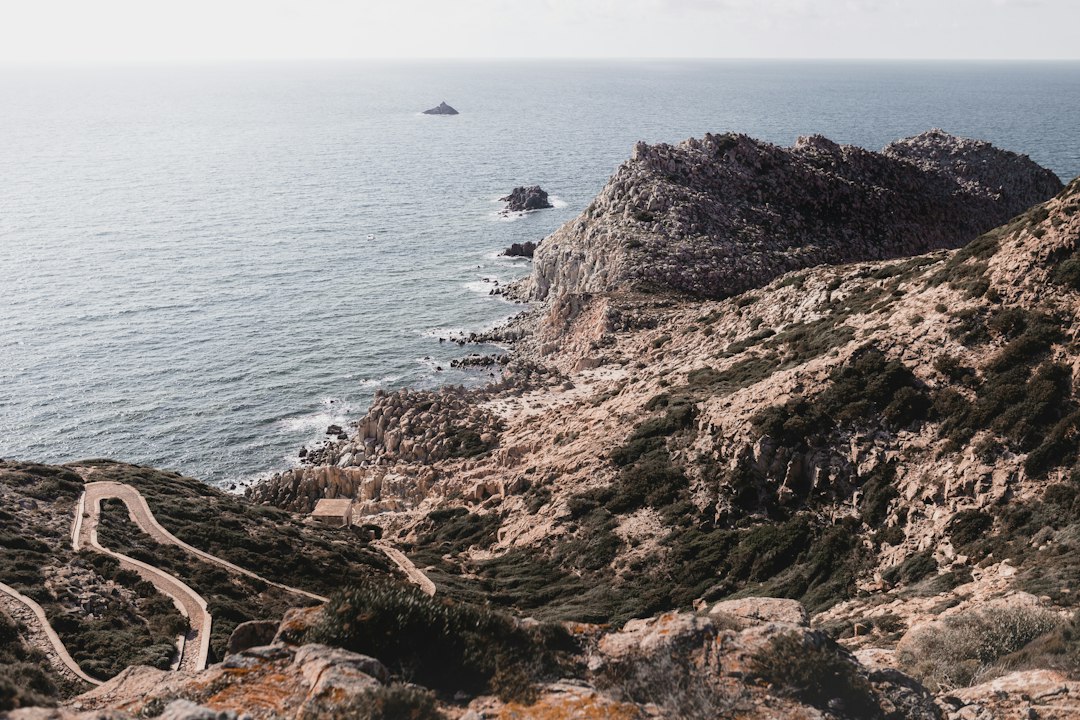
Carloforte’s historic centre is the primary non-beach attraction. The 18th-century Ligurian grid layout, the Forte Carlo Emanuele fortification overlooking the harbour, and the colourful caruggi lanes are worth several hours of exploration. The ex-Tonnara (historic tuna processing facility) documents the island’s bluefin fishing heritage through a small informal museum — opening hours are seasonal, so check locally. The lighthouse at Capo Sandalo, on the westernmost point, offers views across to Algeria on clear days. Tip: the steep climb or short drive to Capo Sandalo at sunset is one of the island’s most rewarding experiences and costs nothing.
What watersports activities are available on San Pietro Island?
Snorkelling, kayaking, boat hire, and scuba diving are the main activities. Clear water around the northern coast — visibility can exceed 20 metres near Cala Fico — makes snorkelling highly rewarding without equipment beyond a mask and fins. Dive centres in Carloforte port offer guided dives for approximately €40–60 per dive; confirm availability directly on arrival or with the local tourist office. Kayak hire starts at roughly €15–20 per hour. Sailing and windsurfing are practised, with the Mistral providing natural wind. Fishing excursions — a nod to the island’s tuna heritage — can be arranged through local skippers at the harbour.
What is the culinary highlight of San Pietro Island?
Bluefin tuna in all its preparations is the defining culinary experience of San Pietro Island. The island’s Ligurian settlers developed the mattanza, a traditional tuna-trapping ritual, and tuna remains central to the local table — served raw as carpaccio, dried as tarantello, bottled in oil, or grilled fresh. Equally distinctive is cascà, a Carloforte version of couscous with vegetables and fish, a dish found virtually nowhere else in Italy, reflecting the island’s historical ties to the Tunisian island of Tabarka. We recommend eating at a trattoria in the caruggi (back streets) rather than on the Lungomare for more authentic preparations at lower prices.
Which parts of San Pietro Island are still off the beaten track?
The western cliff coast between Capo Sandalo and Punta delle Colonne sees very few visitors outside of July and August. This stretch of scrubland and volcanic rock requires a hike of 4–6 km from the nearest road and rewards with views of sea stacks and nesting Eleonora’s falcons in late summer. The island’s interior — scrub hills reaching 211 metres — is largely overlooked by beach-focused visitors and offers quiet cycling and walking. Caveat: the northern coves of Cala Fico and La Caletta are known among Italian day-trippers and can feel busy on August weekends despite their remoteness — visit on weekday mornings for the best experience.
How many days do I need on San Pietro Island?
Three to four days is the ideal stay for most visitors. Day one covers Carloforte on foot — the historic centre, the market, the Forte, and lunch in the caruggi. Day two is best spent on a boat excursion to the northern coves. Day three suits a cycling or scooter loop of the island’s perimeter, including Capo Sandalo at sunset. A fourth day allows for a half-day trip by ferry to neighbouring Sant’Antioco (30 minutes by ferry from Carloforte via Calasetta), which offers the Sulcis archaeological museum and different landscape. A single day trip from Cagliari (80 km + 35-minute ferry) gives a flavour of Carloforte but misses the island’s quieter, more rewarding corners.
San Pietro Island at a Glance
| Population | 6,465 |
|---|---|
| Currency | EUR (€) |
| Official language | Italian |
| Time zone | Europe/Rome |
Source: Wikidata, retrieved October 2026.
Italy › San Pietro Island
More Destinations in Sardinia
More Destinations in Italy
Essential Resources for Planning Your Trip to San Pietro Island
- https://whc.unesco.org/en/soc/?id_site=174&action=… — official visitor information
- Wikivoyage: San Pietro Island — community travel guide & practical tips
- Wikipedia: San Pietro Island — history, geography & background
- A VISIT TO AN ANTIQUE ISLE; Sardinia Abounds With … — how to get there and around
- https://whc.unesco.org/en/soc/?id_site=174&action=…
Data Sources
Key facts on this page (population, currency, language, time zone) come from Wikidata, climate figures from Open-Meteo. The retrieval date is shown next to the facts table.