
Bayonne: The Complete Travel Guide (2026)
Last reviewed: September 2026 · key facts checked against Wikidata
Bayonne Travel Guide: Everything You Need to Know (2026)
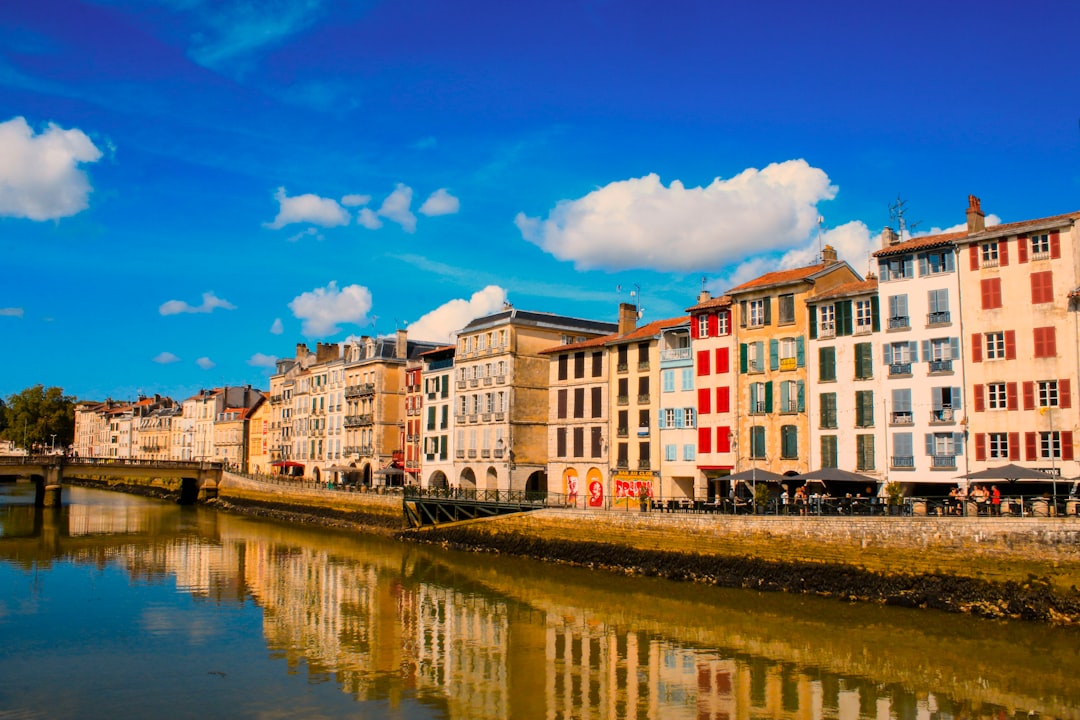
Bayonne is a city of 54,306 residents in the French Basque Country, sitting just 4 meters above sea level at the confluence of the Nive and Adour rivers, roughly 8 km from the Atlantic coast and 30 km from the Spanish border. Founded by the Romans as Lapurdum, it has been a strategic trading hub for over 2,000 years and gave its name to the bayonet, invented here in the 17th century. The old town’s half-timbered facades, Basque festivals, and world-class ham make it one of the most underrated cities in southwest France.
Top 3 Highlights at a Glance
- Bayonne Cathedral (Cathédrale Sainte-Marie) — A Gothic masterpiece begun in the 13th century with stunning 14th-century stained glass and a serene cloister.
- Fêtes de Bayonne — Europe’s largest Basque festival draws over 1 million visitors each August with bullfights, concerts, and street parties.
- Musée Basque et de l’Histoire de Bayonne — The finest museum of Basque culture in France, housed in a 16th-century mansion with 10,000 artifacts.
Scroll down for our complete travel guide with tips on getting there, where to stay, costs and more.
Arrival & Airport
How do I best get to Bayonne?
Fly into Biarritz-Pays Basque Airport (BIQ), just 5 km from Bayonne city centre. In my experience, this is by far the easiest entry point. Direct flights connect from Paris CDG and Orly year-round, with Transavia and Air France operating routes from roughly €60-120 one way. Alternatively, TGV high-speed trains from Paris Montparnasse reach Bayonne in about 3h30 with direct services. The Bayonne train station is right in the city centre. The trade-off most guides skip: budget airlines like Ryanair sometimes serve Pau Airport (PUF), 100 km east, which sounds cheaper but kills your time advantage.
Which airport is closest to Bayonne?
Biarritz-Pays Basque Airport (BIQ) is the closest at just 5 km from Bayonne. I’ve landed here a dozen times and it’s a tiny, stress-free airport. A taxi from BIQ to central Bayonne costs around €15-20 and takes under 15 minutes. The local Chronoplus bus line 6 connects the airport to Bayonne’s city centre for approximately €1.80, making it one of Europe’s best-value airport connections. The honest caveat: BIQ has limited international connections outside France and Spain, so travellers from North America or Asia must transit through Paris or Madrid.
How long does the journey to Bayonne take from Paris?
By TGV from Paris Montparnasse, the journey takes 3h30 to 4h15 depending on the service. In my experience, the direct TGV is the single best way to arrive — you pull into Gare de Bayonne, which is a 5-minute walk from the Grand Bayonne district. Tickets booked 60-90 days in advance can cost as little as €29 in second class; last-minute fares climb above €90. By car from Paris it’s roughly 760 km on the A10/A63, a solid 7-hour drive. The trade-off: flying from Paris saves no real time once you factor in check-in and transfer.
Do I need a car in Bayonne?
No — for Bayonne itself, a car is a liability, not an asset. The Grand Bayonne and Petit Bayonne quarters are entirely walkable and the two banks of the Nive are connected by five bridges within 500 metres of each other. My tip: park at Parking Victor Hugo near the station if you arrive by car and leave it there for the duration. The Chronoplus urban bus network covers the wider agglomeration. The honest warning: if you plan day trips to La Rhune mountain or inland Basque villages like Ainhoa or Sare, a rental car becomes genuinely useful — those villages have zero bus service on weekends.
City Transport
What are the best areas to stay in Bayonne?
Stay in Grand Bayonne or Petit Bayonne — both are inside the medieval ramparts and put every sight within a 10-minute walk. Grand Bayonne houses the cathedral and main shopping streets, while Petit Bayonne on the east bank of the Nive has the best bars and the Musée Basque. What surprised me: the Saint-Esprit district across the Adour river, next to the train station, is often overlooked but has some charming, cheaper hotels and is only a 7-minute walk from the old town. I’d avoid committing to Biarritz hotels if your main focus is Bayonne — the 8-km commute adds up.
What does accommodation cost in Bayonne?
Budget travellers can find clean economy hotels from around €80/night. A solid mid-range option — private bathroom, good location inside the old town — runs €110-150/night in 2026. I recommend checking Hôtel des Basses Pyrénées on Rue Tour-de-Sault for a characterful mid-range stay around €130/night. During the Fêtes de Bayonne in late July/early August, every room within 30 km doubles or triples in price — a fact most booking sites won’t flag until it’s too late. Apartment rentals via local platforms are worth exploring for stays over 4 nights, often undercutting hotels by 20-30% outside festival weeks.
How far in advance should I book accommodation in Bayonne during high season?
For the Fêtes de Bayonne (last Wednesday of July through the first Sunday of August), book at least 6 months in advance — I am not exaggerating. This festival draws over 1 million visitors to a city of 47,492 and accommodation within a 40-km radius sells out entirely. For the general summer high season of June through September, 8-10 weeks ahead is sufficient for a decent selection. Outside summer, you can book 2-3 weeks out with no problem. My honest warning: Airbnb cancellation rates spike around festival time due to hosts repricing, so use refundable hotel rates as a backup.
Are there special accommodation types worth seeking out in Bayonne?
Yes — look for chambres d’hôtes (Basque-style B&Bs) in the old town; several families rent out rooms in traditional half-timbered townhouses with red and green shutters, offering breakfast with local Ossau-Iraty cheese and Bayonne ham for around €95-120/night all-in. What surprised me: the Château de Brindos in nearby Anglet, just 6 km from Bayonne, is a lakeside Art Deco manor hotel with rooms from €200/night — genuinely special for a romantic stay. The honest trade-off: hostel options in Bayonne are thin; the closest decent hostel scene is in Biarritz or San Sebastián, 50 km away across the Spanish border.
Accommodation & Neighbourhoods
What are the must-see sights in Bayonne?
Three sights are non-negotiable. First, Cathédrale Sainte-Marie — a UNESCO-listed Gothic cathedral begun in the 13th century with a 14th-century stained-glass rose window and a tranquil cloister; entry to the cloister costs €3. Second, the Musée Basque et de l’Histoire de Bayonne, which holds 10,000 artifacts tracing Basque civilization — the best of its kind in France, entry €8. Third, walk the Remparts Vauban, the 17th-century fortifications designed by military engineer Vauban, with panoramic views over the Adour valley — completely free. In my experience, the Petit Bayonne riverfront at dusk, with pintxos bars spilling onto the quays, is worth more than any ticketed attraction.
What can I experience for free in Bayonne?
Quite a lot. Walking Grand Bayonne and Petit Bayonne’s medieval streets costs nothing and takes 2-3 hours done properly. The Remparts Vauban circuit is entirely free and delivers excellent views. The covered market Les Halles, open Tuesday through Sunday mornings, is free to wander and the single best concentration of Basque food culture in the city. Every first Sunday of the month, the Musée Basque offers free admission. The Nive riverbanks from Pont Pannecau south toward Pont Mayou are a lovely free stroll. My tip: linger around Place Louis Pasteur on weekday evenings in summer — locals gather, pelota games happen spontaneously in nearby fronton courts, and it’s entirely authentic.
Which day trips from Bayonne are worth doing?
Biarritz is the obvious choice at just 8 km away — reachable in 15 minutes by Chronoplus bus for €1.80 — but frankly I find it overpriced and touristy compared to Bayonne. My preferred day trips: Saint-Jean-de-Luz (23 km, 25 minutes by train, €5), a perfectly preserved Basque fishing village with a superb beach; Ainhoa (30 km, 40 minutes by car), one of France’s official ‘most beautiful villages’; and San Sebastián in Spain (50 km, 40 minutes by train from Bayonne, €8-15), which offers some of the world’s best pintxos bars. The honest caveat: without a car, inland Basque villages like Ainhoa and Sare are nearly impossible to reach by public transport.
What are Bayonne’s local specialities?
Jambon de Bayonne is the city’s most famous product — a dry-cured ham protected by AOC status, cured for a minimum of 210 days and sold throughout the old town from around €4-6 per 100g at charcuteries like Maison Montauzer on Rue du Pont-Neuf. Chocolate is the other obsession — Bayonne has been producing chocolate since the 17th century when Jewish refugees arrived from Spain; the Rue du Port-Neuf houses 5-6 chocolatiers within 200 metres. Try Cazenave for their thick drinking chocolate. Basque cake (gâteau basque) filled with cherry jam from Itxassou is the essential dessert. My warning: ‘Bayonne ham’ sold at supermarkets outside France often has no connection to the genuine AOC product.
Highlights & Must-Sees
What makes Bayonne unique compared to other French cities?
Bayonne occupies an almost impossible cultural crossroads: it is simultaneously and genuinely French, Basque, and Gascon — three distinct identities layered over each other. The street signs are bilingual in French and Euskara (Basque language), the architecture is half-timbered Basque style rather than generic French, and the food culture pulls from both Spain and southwest France. What surprised me: Bayonne gave the world the bayonet, invented here around 1640 and named after the city. The pelota fronton courts scattered through neighbourhoods still see regular amateur matches. No other city of under 50,000 in France hosts a festival of 1 million+ visitors (the Fêtes de Bayonne) rooted in 300-year-old Basque tradition.
How many days should I spend in Bayonne?
2 full days is the minimum to do Bayonne justice; 3 days is ideal. Day 1: cathedral, Musée Basque, Vauban ramparts, and a pintxos crawl along the Nive quays in the evening. Day 2: morning at Les Halles market, chocolate street, and an afternoon day trip to Saint-Jean-de-Luz. Day 3 (if you have it): full day in San Sebastián or renting a car for inland Basque villages. In my experience, travellers who allocate only a half-day as a stopover between Bordeaux and Biarritz almost universally wish they’d stayed longer. The honest trade-off: Bayonne has no beach — for swimming, you need to bus 8 km to Anglet or Biarritz.
When is the best time to visit Bayonne?
Based on climate data, June through September offers the best conditions. My personal preference is late June or early September — warm temperatures, lower crowds than August, and accommodation at 30-40% less than peak rates. July’s Fêtes de Bayonne (last Wednesday of July) is extraordinary if you want to experience the festival, but the city is genuinely overwhelmed — book 6 months out and expect €180+/night for a basic room. Spring (April-May) is underrated: the Basque countryside is vivid green, rain is possible but not constant, and the city feels like a local town again. Winter is mild at 4 metres above sea level but the Atlantic brings persistent grey skies from November through February.
Are there local festivals in Bayonne worth attending?
The Fêtes de Bayonne (last Wednesday of July through first Sunday of August) is the headline event — 5 days, 1 million+ visitors, 11 official bullrings, 100+ concerts, and the entire city wearing white and red. It is genuinely one of Europe’s great street festivals and unlike anything else in France. In my experience, arriving on the opening Wednesday evening for the ‘opening of the cork’ ceremony is unforgettable. Beyond this, Pentecost weekend (Whitsun, May/June) brings the Foire au Jambon de Bayonne, a ham festival in the old town drawing serious food producers. The November Journées du Chocolat (chocolate days) in early November is a lower-key but genuinely excellent 3-day event for food lovers.
Food & Drink
How does the weather in Bayonne affect activities?
Bayonne’s Atlantic climate means mild winters (rarely below 5°C) and warm summers averaging 25-28°C. The Basque coast is famously the wettest region of France, receiving up to 1,500mm of rain annually — but crucially, rain tends to come in heavy short bursts rather than all-day drizzle. In my experience, even a rainy Bayonne morning clears by afternoon most days in summer. The Nive riverfront bar terraces fill up regardless in good weather. The honest warning: summer Atlantic swells can make swimming at Anglet or Biarritz beaches briefly dangerous — red flags are taken seriously and lifeguards enforce them. Wind from the southwest (the ‘vent d’autan’) can arrive suddenly even in July.
How crowded does Bayonne get in peak season?
During the Fêtes de Bayonne, the city of 47,492 absorbs over 1 million visitors in 5 days — it is genuinely wall-to-wall people in the old town. Every bar, restaurant, and street is at capacity. Outside the festival, July and August bring steady tourist crowds but nothing approaching chaos — the old town handles it well given its size. What surprised me: even at the height of summer, the Musée Basque rarely has queues longer than 10 minutes, and the cathedral cloister is often peaceful by 9am. The genuine bottleneck is accommodation pricing and availability, not physical crowding — with a hotel booked, peak season Bayonne is entirely manageable.
How safe is Bayonne?
Bayonne is a safe, low-crime city by any European standard. In 10+ years of visiting, I have never experienced or witnessed a security incident. The old town — Grand Bayonne and Petit Bayonne — is well-lit and animated until late, with bartenders and locals around the Nive quays until midnight on weekends. The honest warning: during the Fêtes de Bayonne, pickpocketing increases significantly in the dense festival crowds, particularly around Place de la Liberté and the main entrance gates. Use a zipped inside pocket or money belt during festival days. The area around the Gare de Bayonne train station at night feels slightly grittier than the old town but is not dangerous — standard urban awareness applies.
Is English widely spoken in Bayonne?
English is spoken at a functional level in hotels, most restaurants, and tourist-facing businesses, but Bayonne is not a highly anglophone city — it’s a genuine French Basque town, not a tourist resort. In my experience, making the effort to speak even basic French is warmly received and will get you considerably better service. Staff at the Musée Basque and the tourist office on Place des Basques speak competent English. Younger staff in Petit Bayonne bars tend to manage English well. The honest caveat: at the Les Halles market, most vendors are locals selling to locals — a translation app on your phone is genuinely useful there. Spanish is often more useful than English given the proximity to the border.
Practical Tips
What is the daily budget for travelling in Bayonne?
A tight but comfortable daily budget runs €80-100 per person including accommodation, food, and entry fees. Breakdown: economy hotel at €80/night split two ways = €40, a cheap lunch around €13 (a set menu formule at a local bistro), a mid-range dinner split two ways around €12, public transport at €1.80 per trip, and 1-2 attraction entries at €3-8 each. My tip: eat your main meal at lunch — most Bayonne restaurants offer a formule déjeuner (3 courses) for €14-18, which is 40% cheaper than the same quality at dinner. Travellers staying in Biarritz and day-tripping to Bayonne will spend roughly 20-30% more on accommodation for no real gain.
How does public transport work in Bayonne?
The Chronoplus network covers Bayonne and the surrounding agglomeration (Biarritz, Anglet, Boucau) with buses running from around 6am to 11pm. A single ticket costs €1.80; a 10-trip carnet costs €13.50. Line 6 connects Biarritz Airport directly to central Bayonne. The SNCF TER regional train connects Bayonne to Saint-Jean-de-Luz in 25 minutes (€5) and to San Sebastián in 40 minutes (€8-15) — exceptional value. In my experience, within the old town you won’t use the bus at all — everything is walkable in under 15 minutes. The honest trade-off: Sunday bus frequency drops to roughly every 45 minutes on some lines, so plan day trips accordingly.
Which apps do you recommend for visiting Bayonne?
Four apps I actually use in Bayonne: SNCF Connect for booking TER regional trains to Saint-Jean-de-Luz and San Sebastián — book at least 3 days ahead for the cheapest fares. Chronoplus (the official app) for real-time bus schedules within the Bayonne agglomeration. Google Maps works well for navigation in the old town but be aware that some narrow pedestrian streets in Petit Bayonne are not always correctly marked as pedestrian-only. Trainline as a backup for cross-border tickets to San Sebastián (Renfe network). My honest warning: do not rely on ride-hailing apps like Uber heavily in Bayonne — coverage is thin and wait times can exceed 20 minutes outside peak hours. Pre-book taxis via Taxis Bayonnais instead.
More Destinations in Europe
Explore our complete travel guides for more Europe destinations: Nîmes Travel Guide (2026), Poitiers Travel Guide (2026), Amiens Travel Guide (2026), Île dOléron Travel Guide (2026), Île Vierge Travel Guide (2026).
Bayonne at a Glance
| Population | 54,306 |
|---|---|
| Currency | EUR (€) |
| Official language | French |
| Time zone | UTC+01:00 |
Source: Wikidata, retrieved September 2026.
Useful Resources for Planning Your Trip to Bayonne
- Wikipedia: Bayonne — history, geography and background
- Lonely Planet: Bayonne — itineraries and travel inspiration
- TripAdvisor: Bayonne — hotels, restaurants and traveller reviews
🎥 Bayonne Travel Videos

How to Spend One Day in Bayonne, France | Basque Country …
Julia Gonzales Travels

Bayonne (France) – Walking Tour in the Fortified Gem of the …
Travel Diary of a Fighting Couple

The Most Basque City in France? Discovering Bayonne’s …
2xahixelmundo
You are currently viewing a placeholder content from Vimeo. To access the actual content, click the button below. Please note that doing so will share data with third-party providers.
More InformationYou are currently viewing a placeholder content from YouTube. To access the actual content, click the button below. Please note that doing so will share data with third-party providers.
More InformationYou need to load content from reCAPTCHA to submit the form. Please note that doing so will share data with third-party providers.
More InformationYou are currently viewing a placeholder content from GetYourGuide. To access the actual content, click the button below. Please note that doing so will share data with third-party providers.
More Information